I grew up believing my father was a superhero in a gray IBM suit—equal parts Clark Kent and Anthony Nelson from I Dream of Jeannie. He carried a leather briefcase that smelled like pipe tobacco and was filled with mysterious implements of tech sorcery: slide rules, mechanical pencils, drafting rulers, protractors. To my wide-eyed, baklava-smeared face, he wasn’t just an engineer—he was The Engineer, an astronaut of logic and slide-calculation who probably held dominion over the machines of the future.
There’s a particular memory that still shimmers with childhood awe: we were at an IBM science exhibit, and there was a robot—yes, a real robot—shaking hands with people like it was running for mayor of Tomorrowland. My father and the robot exchanged pleasantries, and even at seven years old, I could tell who was in charge. The robot was the help. My dad was management.
On the ride home from a Greek deli, sitting shotgun in my father’s red MGB convertible (a car that felt like a rocket ship with leather seats), I asked him how far the Earth was from the sun. “Ninety million miles,” he replied without hesitation, as if he’d just returned from measuring it himself. “How’d you know that?” I asked. “I’m your father. Fathers know everything.” And I believed him. I believed him.
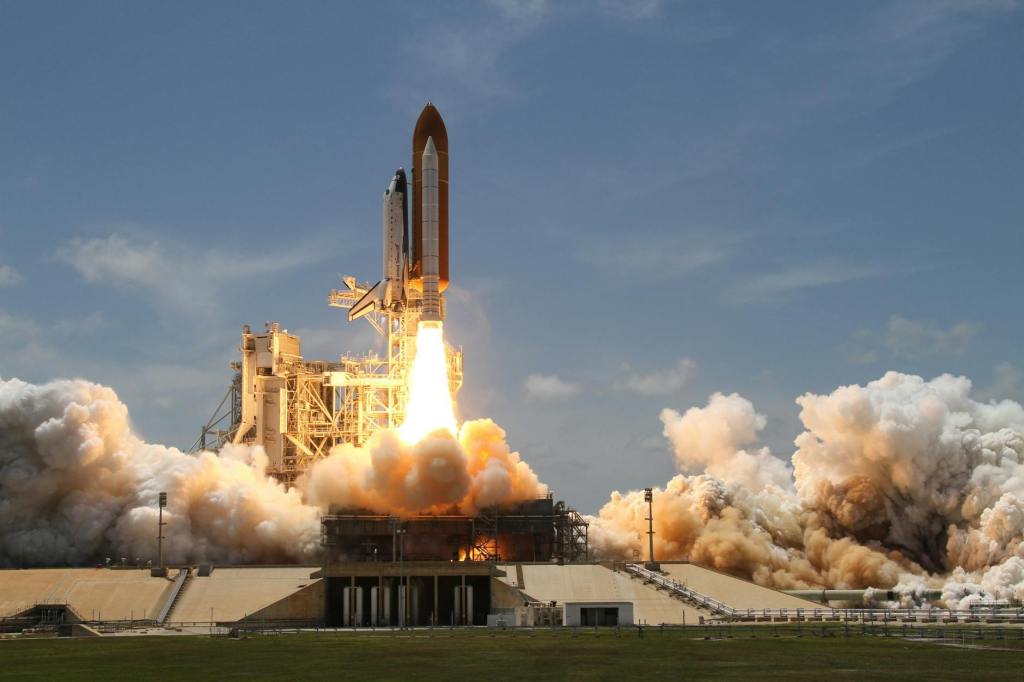
So deeply did I believe, in fact, that I told every kid at our apartment playground that my dad could attach rocket boosters to the jungle gym and take us to Mars. We camped out in the carport like cult followers awaiting a prophet. And when that red MGB finally purred into its space—the exhaust trailing behind it like a comet—we erupted into cheers. Mars was within reach.
But when I presented our request, my father, ever the civic-minded Boy Scout, informed us that launching a rocket ship from the Royal Lanai Apartments without FAA clearance would be a federal offense. “I could go to prison,” he said gravely. Naturally, we accepted this logic. What was Mars compared to civic responsibility?
Then came the cracks.
First, the red MGB started overheating. Constantly. It preferred fog to sunshine and finally coughed its last in a Jiffy Lube parking lot. He traded it in for a turquoise Chrysler Newport—the vehicular equivalent of orthopedic shoes. I watched that red convertible vanish into memory like a fallen deity. The myth of my father’s invincibility began to wobble.
Next came the toast. One morning, I watched him mangle a slice of Wonder Bread with a cold slab of butter and curse under his breath, “There are three things I hate in this life: death, taxes, and hard butter.” The man who could explain orbital mechanics couldn’t conquer spreadability. It was a blow.
Then he tried to cook. Once. His chicken cacciatore effort triggered the smoke alarm, three fire trucks, and the sincere question of whether we were insured for “chef-related catastrophe.”
But the real unraveling happened when we moved to Venado Court, a suburban cul-de-sac so idyllic it could have been sketched by Norman Rockwell and pressure-washed by a Stepford wife. While other dads were grilling in polo shirts and dockers, mine was shirtless in the front yard, yanking weeds from the juniper bushes in low-slung Army jeans with his butt crack on full display. He had an Army tattoo on one arm and the defiant posture of a man who didn’t care if you judged his lower lumbar. And I, poor fool, tried to save him.
“Dad, your butt crack is showing,” I whispered with the urgency of someone reporting a biohazard spill. He just grunted. Again. And again.
Eventually, I gave up on words and assumed a new role in our family drama: The Guardian of the Butt Crack. I stood behind him like a human modesty panel, my small frame casting a loyal shadow over his defiant anatomy. I lived in fear of pedestrians. If a neighbor approached, I shifted like a Secret Service agent guarding state secrets. I was prepared to dive in front of scandal.
But deep down, I knew the truth: my father didn’t care. He was a country boy from Michigan who grew up wrestling snakes in Florida swamps. He’d survived Army barracks and IBM corporate life. No HOA newsletter was going to break him. And eventually, I had to let go. The crack would remain, and the world would keep spinning.
He was still my dad. Maybe not a superhero—but certainly a super character.
 Cinemorphosis
Leave a comment