Author: Jeffrey McMahon

  • The Death of Truth: Vince McMahon, the Algorithm, and the Rise of Unreality

    The Death of Truth: Vince McMahon, the Algorithm, and the Rise of Unreality

    In “The Rise and Fall of Vince McMahon,” New Yorker writer Vinson Cunningham stares into the sideshow funhouse mirror of American public life and recoils at what stares back: a nation wading chest-deep in a swamp of “public unreality,” where reason drowns and absurdity floats like a bloated carnival prize. He paints a disquieting tableau: one political figure visibly unraveling into cognitive soup while handlers chirp, “Nothing to see here!”—and another candidate howling about alien intruders abducting and gobbling the nation’s household pets. As if things weren’t deranged enough, an assassination attempt unfolds before our eyes—and instead of ducking for cover, the former President rises like a messianic pro-wrestler, bloody and defiant, pumping his fist in glorious kayfabe triumph. In that moment, Cunningham writes, he isn’t just a politician—he’s a character on the WWE stage. And just like that, the cultural script is flipped: he’s the babyface, and his critics are heels.

    This unreality show has a ghostwriter, and his name is Vince McMahon. As Cunningham brilliantly argues, the Netflix docuseries Mr. McMahon is not simply the chronicle of a wrestling mogul—it’s a grim allegory for how American storytelling devolved into moral junk food. McMahon, the snarling CEO of WWE, pioneered a brutal formula: distort narrative, vilify truth, exalt spectacle. He didn’t just conquer the wrestling world—he scripted a worldview that has metastasized into the nation’s political bloodstream. The WWE, Cunningham reminds us, is the prototype of reality TV, the primordial ooze from which influencer culture, troll politics, and clickbait populism have crawled.

    In McMahon’s moral universe, lying is a skill, cruelty is charisma, and domination is the only virtue. So long as you win—and do it with flair—you’re golden. Sound familiar? This cartoon villainy, once confined to the ring, now governs the debate stage. It infects our civic discourse like a virus in a locker room. Cunningham doesn’t just lament this transformation—he diagnoses it with the precision of someone who’s watched democracy tap out to the roar of an overstimulated crowd.

    For Cunningham, Mr. McMahon is a documentary about wrestling in the same way Jaws is about fishing. It’s a cautionary tale about the American mind: how we’ve flattened good and evil into caricature, how we crave cheap catharsis and blood-soaked redemption arcs, how dopamine-dripping spectacle has replaced the hard work of truth and critical thought. WWE fans were just the beta testers—social media made us all marks. And if you think it can’t get worse, Cunningham points you to wrestling’s most grotesque era, the “Attitude Era,” when the distinction between hero and villain disintegrated entirely. No good guys, no bad guys—just degenerates in speedos vying for attention through escalating acts of moral collapse. A decade later, Twitter took notes.

    Cunningham’s alarm is more than justified. American politics isn’t just flirting with the WWE playbook—it’s plagiarizing it. We are no longer governed by statesmen but by characters playing to the cheap seats. When every tweet is a finishing move, every debate a promo, and every scandal a setup for the next storyline, democracy isn’t just weakened—it’s kayfabe’d. And Vince McMahon, smirking from his throne of steroid-soaked storylines, already wrote the script.

  • Digital Narcissus: How Social Media Is Hollowing Out the Mind and Endangering Democracy: A College Essay Prompt

    Digital Narcissus: How Social Media Is Hollowing Out the Mind and Endangering Democracy: A College Essay Prompt

    Essay Prompt: In Jonathan Haidt’s essay “Why the Past 10 Years Have Made America Uniquely Stupid,” he argues that social media has eroded the psychological foundations of democracy by fostering tribalism, outrage, and intellectual shallowness. Sherry Turkle’s TED Talk “Alone, together?” offers a related diagnosis: that our reliance on devices has replaced meaningful connection with curated performances and hollow validation. The Black Mirror episodes “Nosedive,” “Fifteen Million Merits,” and “Smithereens” dramatize these arguments by depicting dystopian futures in which people are addicted to digital approval, trapped in echo chambers, and rendered incapable of genuine autonomy or critical thought.

    In a well-structured argumentative essay, respond to the following claim:

    Social media is a malignant force that has caused a cultural dumbing-down, infantilization, self-fragmentation, and dopamine addiction. It has shortened attention spans, eroded critical thinking, and undermined the civic maturity necessary to sustain a free democracy.

    Your essay should:

    • Take a clear and defensible stance on the claim.
    • Analyze how each text (Haidt’s essay, Turkle’s talk, and the three Black Mirror episodes) supports or complicates the claim.
    • Consider counterarguments (e.g., potential benefits of digital platforms or examples of responsible online engagement).
    • Use specific examples and quotes from each source.
    • Explore how the cultural symptoms portrayed in these texts might reflect or distort our own digital behaviors.

    9-Paragraph Essay Outline

    I. Introduction

    • Hook: A vivid image or anecdote that illustrates digital dysfunction in everyday life.
    • Context: Introduce the central concern shared by Haidt, Turkle, and Black Mirror: social media’s corrosive influence on cognition and civic life.
    • Thesis: While social media was once hailed as a democratizing force, Haidt, Turkle, and Black Mirror reveal it as a malignant system that fragments identity, fuels addiction, and erodes the intellectual maturity required to sustain democratic culture.

    II. Haidt’s Argument: The Breakdown of Collective Intelligence

    • Summarize Haidt’s diagnosis of how social media rewards tribalism and outrage.
    • Analyze his claim that platforms like Twitter and Facebook are incompatible with democratic deliberation.

    III. Turkle’s Argument: From Connection to Isolation

    • Explain Turkle’s concept of being “alone together.”
    • Analyze her argument that technology has infantilized us emotionally and eroded our tolerance for authentic conversation.

    IV. “Nosedive”: Performing Ourselves to Death

    • Discuss how the episode satirizes a world of curated identity and dopamine-driven status games.
    • Connect to Haidt’s and Turkle’s points about fragile selfhood and emotional dependence on validation.

    V. “Fifteen Million Merits”: Entertainment Overload and Intellectual Starvation

    • Explore how the episode portrays a society addicted to entertainment, spectacle, and passive consumption.
    • Link to Haidt’s fear of attention scarcity and Turkle’s concern about emotional shallowness.

    VI. “Smithereens”: Addiction, Control, and the Collapse of Autonomy

    • Analyze the protagonist’s breakdown as a metaphor for dopamine dependency and loss of agency.
    • Connect to real-world attention economy and surveillance capitalism.

    VII. Counterargument: Can Social Media Be Used Responsibly?

    • Acknowledge arguments that social media can empower marginalized voices or promote awareness.
    • Respond by showing how the structural incentives of the platforms still reward impulsivity over depth.

    VIII. Synthesis and Broader Implications

    • Tie together all five texts.
    • Argue that the symptoms depicted are not exaggerated fiction but recognizable in our own habits.
    • Reflect on what kind of reform or resistance is needed.

    IX. Conclusion

    • Reaffirm the thesis.
    • Offer a final insight: perhaps the most urgent democratic act today is to reclaim our attention, agency, and intellectual dignity from the machines designed to erode them.

  • Out of the Sunken Place: Literacy, Identity, and Resistance in American Media and History: A College Essay Prompt

    Out of the Sunken Place: Literacy, Identity, and Resistance in American Media and History: A College Essay Prompt

    Essay Prompt:

    In Jordan Peele’s Get Out, the “Sunken Place” is a haunting metaphor for racial oppression, psychological erasure, and the paralysis of learned helplessness. In Childish Gambino’s “This Is America,” we witness the chaos and spectacle that distract from—and contribute to—that same systemic dehumanization. Across both works, the Sunken Place is not just a cinematic device—it is a chilling representation of the Black American experience under white supremacy, media manipulation, and cultural exploitation.

    Meanwhile, in Narrative of the Life of Frederick Douglass and Spike Lee’s movie Malcolm X, we see two historical figures who not only diagnosed their own versions of the Sunken Place but fought like hell to escape it—and to pull others out with them. Both men confront the dehumanizing force of racism, the danger of false identity imposed by the dominant culture, and the urgent need for self-definition through education, oratory, and rhetorical power.

    Your Task:

    Write a well-structured, argumentative essay in which you compare and analyze how the Sunken Place operates as a metaphor for racial oppression in Get Out and “This Is America,” and then examine how Frederick Douglass and Malcolm X function as heroes because they:

    • Identified and articulated the psychological and cultural dimensions of the Sunken Place,
    • Used literacy and self-education to transform their consciousness and identity,
    • Embraced self-reinvention to reject the roles society had written for them,
    • And wielded rhetoric, public speech, and writing as tools of resistance and uplift.

    Your Essay Should:

    • Develop a clear thesis that connects all four texts and takes a position on why Douglass and Malcolm X are essential in the larger conversation about the Sunken Place.
    • Use specific evidence from the film Get Out, the music video “This Is America,” Narrative of the Life of Frederick Douglass, and Spike Lee’s Malcolm X.
    • Analyze how self-reinvention and literacy act as tools of resistance in both historical and contemporary contexts.
    • Explore the power of rhetoric and performance—whether in speeches, writing, or visual media—as a means of disrupting oppression.
    • Consider how media, identity, and oppression intersect across the past and present.

    Length: 1,700–2,000 words

    Format: MLA, double-spaced, 12-point Times New Roman

    Sample 9-Paragraph Essay Outline: Out of the Sunken Place

    I. Introduction

    • Hook: A striking image or quote from Get Out or Douglass’s memoir that captures the feeling of being silenced, erased, or controlled.
    • Context: Briefly introduce the concept of the Sunken Place and how it serves as a metaphor for racial oppression in both modern media and historical reality.
    • Thesis: Jordan Peele’s Get Out and Childish Gambino’s “This Is America” depict the Sunken Place as a form of psychological and cultural imprisonment, while Frederick Douglass and Malcolm X represent heroic resistance through literacy, self-reinvention, and rhetoric—tools they used to break free from the false identities imposed by a racist society and to help others escape as well.

    II. Paragraph 1: The Sunken Place as Metaphor in Get Out

    • Analyze the concept of the Sunken Place in Peele’s film as a visual and psychological metaphor for helplessness, erasure, and loss of agency.
    • Discuss how the character of Chris embodies this forced subjugation.
    • Connect the visual metaphor to systemic racism and cultural silencing.

    III. Paragraph 2: Spectacle and Distraction in “This Is America”

    • Analyze how Childish Gambino’s video presents Black suffering behind the mask of American entertainment and spectacle.
    • Examine the use of chaos, dance, and violence as metaphorical distractions from systemic oppression.
    • Connect to the Sunken Place as a cultural state where truth is obscured by media performance.

    IV. Paragraph 3: Douglass Diagnoses and Escapes the Sunken Place

    • Show how Douglass identifies slavery not just as physical bondage but as psychological erasure.
    • Analyze how literacy becomes his path out of the Sunken Place.
    • Use key moments from the memoir (e.g., learning to read, confrontation with Covey).

    V. Paragraph 4: Malcolm X and the Power of Self-Reinvention

    • Explore how Malcolm X’s transformation (Malcolm Little → Detroit Red → Malcolm X) illustrates his escape from imposed identity.
    • Discuss how the prison-to-platform arc parallels Douglass’s journey.
    • Emphasize the role of reading, writing, and faith in his transformation.

    VI. Paragraph 5: Literacy and Rhetoric as Weapons of Resistance

    • Compare how both men use writing and oratory as tools of liberation.
    • Show how speeches, autobiographies, and essays were used to expose racism and awaken others.
    • Draw parallels to how modern media (like Get Out) also aims to awaken.

    VII. Paragraph 6: Counterargument & Rebuttal

    • Acknowledge the claim that historical figures and modern entertainers operate in fundamentally different spaces.
    • Rebut by showing that both use performance and storytelling to fight cultural amnesia and reclaim Black identity.

    VIII. Paragraph 7: Synthesis of Past and Present Resistance

    • Tie together the works: How Douglass and Malcolm X laid the rhetorical groundwork that Peele and Gambino build on.
    • Emphasize the continuity of struggle and evolution of the Sunken Place.

    IX. Conclusion

    • Reaffirm the thesis with renewed emphasis.
    • Reflect on what it means to escape the Sunken Place in today’s cultural landscape.
    • End with a powerful final thought about the ongoing power of education, identity, and resistance.

  • The Wired Warrior: Football, Technology, and the Price of Glory: Is the Modern Athlete a Gladiator, a Lab Experiment, or Both? A College Writing Prompt

    The Wired Warrior: Football, Technology, and the Price of Glory: Is the Modern Athlete a Gladiator, a Lab Experiment, or Both? A College Writing Prompt

    Football is more than a game—it’s a national ritual built on sacrifice, spectacle, and, increasingly, moral controversy. As medical research continues to link tackle football to chronic traumatic encephalopathy (CTE), long-term disability, and early death, the sport faces growing scrutiny. Critics like Malcolm Gladwell, Kathleen Bachynski, and Steve Almond argue that football is an unethical institution that profits from the pain of young men—especially those from lower-income communities—who are treated more like commodities than people. Others defend football as a legitimate form of personal agency and cultural identity, where athletes like Ronnie Coleman and other elite performers knowingly risk their bodies for glory, pride, and a path to opportunity.

    At the same time, advances in technology—including smart helmets, biometric tracking, and AI-powered safety protocols—promise to make the game significantly safer. Some see these developments as the key to football’s survival, while others fear that a “watered-down” version of the sport would strip it of the danger, drama, and warrior ethos that fans crave.

    In a well-structured argumentative essay, respond to the following question:

    Should football be fundamentally reformed in response to CTE research and emerging safety technologies, or should it remain a high-risk sport built on personal choice, cultural tradition, and the pursuit of greatness?


    Your essay should:

    • Take a clear, defensible position on the central question.
    • Consider multiple perspectives, including ethical critiques, technological optimism, and the value of personal agency.
    • Engage with course materials such as Killer Inside, Evolution of the Black Quarterback, CTE case studies, and relevant authors (e.g., Gladwell, Almond, Bachynski).
    • Explore how reform could affect not only players and fans, but also the future cultural identity of the sport.

    Here is a 9-paragraph argumentative essay outline that follows the Toulmin structure, tailored specifically to your prompt on football, ethics, and technology:


    Title: Challenging the Football Status Quo: Risk, Reform, and the Future of the Game


    I. Introduction

    • Hook: Open with a vivid image of a high-stakes NFL game—stadium roaring, players colliding, the quarterback limping off the field.
    • Context: Briefly explain how football’s cultural dominance is being challenged by increasing awareness of CTE, exploitation, and emerging safety technologies.
    • Thesis (Claim): Football must be fundamentally reformed in response to CTE research and technological advances—not to destroy the sport, but to preserve its integrity, protect its players, and allow it to evolve ethically in a changing society.

    II. Background

    • Define CTE and its connection to tackle football.
    • Summarize how football traditionally valorizes physical sacrifice and risk.
    • Introduce the ethical controversy: entertainment vs. exploitation.

    III. Point 1 – The Moral Imperative to Reform

    • Warrant: If a system knowingly causes irreversible harm, society has a duty to intervene.
    • Evidence: Reference studies on CTE and examples of players suffering post-retirement (e.g., Junior Seau, Aaron Hernandez).
    • Tie-in: Reform isn’t a moral overreach—it’s damage control.

    IV. Point 2 – Technology Makes Reform Feasible

    • Claim: Smart helmets, AI-driven impact analysis, and biometric wearables can reduce injury without eliminating physicality.
    • Evidence: Cite current innovations and their projected benefits.
    • Warrant: Technological reform isn’t fantasy—it’s already happening.

    V. Point 3 – True Player Choice Requires Full Awareness

    • Claim: Arguing that players “know the risks” assumes informed consent—but many players start young and lack full knowledge of long-term effects.
    • Evidence: Use Bachynski’s critique of youth football and the financial coercion tied to poverty.
    • Warrant: Informed choice is only valid when other viable opportunities exist.

    VI. Counterargument – The Tradition of Risk is Central to the Game

    • Present the argument: Football, like MMA or bodybuilding, is about voluntary risk and personal glory.
    • Use Noah’s and Daniel’s perspectives from Bodenner’s essay to show how some players accept risk with pride.
    • Acknowledge the emotional weight of this argument.

    VII. Rebuttal – Spectacle Doesn’t Justify Preventable Harm

    • Response: Cultural tradition is not a moral defense; sports have evolved before.
    • Use comparisons: NASCAR added safety after deaths, boxing implemented concussion protocols.
    • Argue that reform can preserve the game’s intensity without making sacrifice its currency.

    VIII. Broader Implications

    • Claim: Reforming football could ripple outward—setting ethical standards for other sports and youth programs.
    • Connect to societal values: Is our entertainment worth the human cost?
    • Suggest that football can remain powerful and inspiring without being a bloodsport.

    IX. Conclusion

    • Reaffirm thesis: Reform is not the death of football—it’s the only path to preserving it responsibly.
    • Emphasize the dual benefit: safer players and a sport that aligns with evolving cultural ethics.
    • Leave readers with a final image: a new generation of players thriving in a game that challenges them without destroying them.
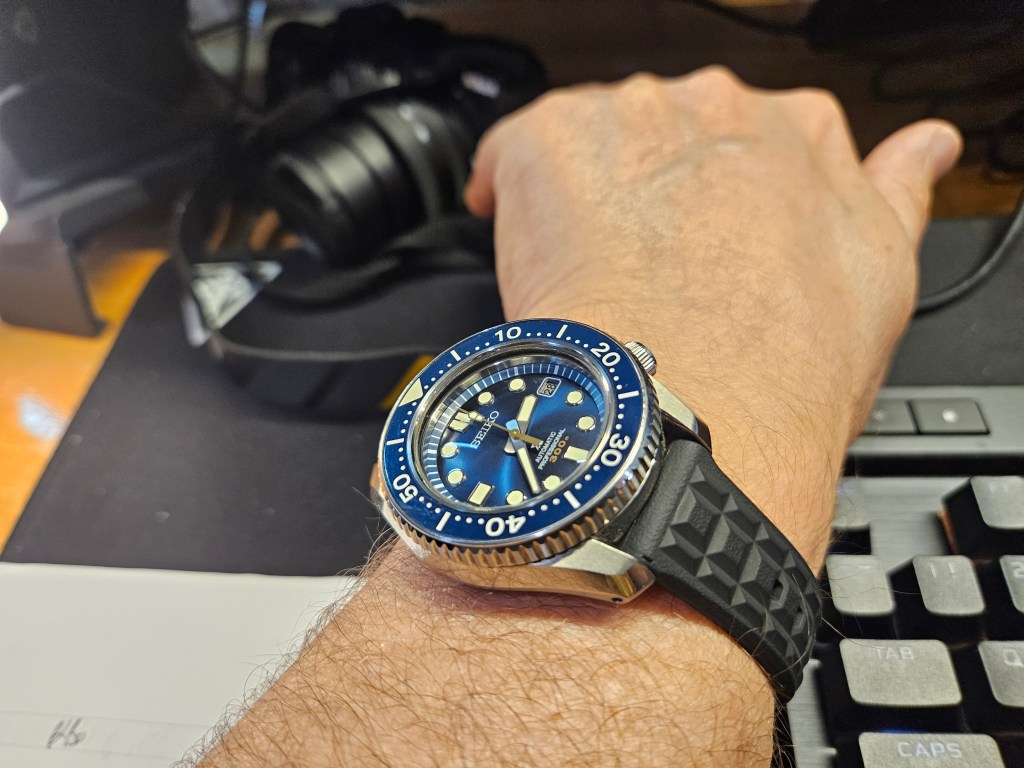
  • The Watch Slow-Down: Confessions of a Reformed Wrist Addict

    The Watch Slow-Down: Confessions of a Reformed Wrist Addict

    At 63, the tectonic plates of my watch obsession finally shifted—and not with a polite tick-tock, but with the guttural crack of a midlife epiphany. For two decades, I was wrist-deep in the horological trenches, swapping bracelets for straps at 61 like it was some major spiritual awakening. Little did I know, that change was a mere amuse-bouche before the main course: total psychological detachment from the game. The forums? The drop chatter? The breathless anticipation of this week’s 44mm status symbol? I’ve danced that jittery dopamine jig too many times. The thrill is gone—and thank God for that.

    There’s also the inconvenient matter of time, that precious commodity I once used to justify swapping three watches before lunch. These days, I’m not auditioning for a Bond reboot, nor am I pacing the boardroom like a man with a GMT and something to prove. I don’t need a “hero piece” to validate my existence. I’m not branding myself in public spaces anymore—I’m inhabiting a quieter, more deliberate orbit, where the only eyes on my wrist are my own. Six or seven watches now feel like a well-edited playlist. The days of horological hoarding are over.

    I’ve thought about unpacking this transition on my YouTube channel, but the idea of filming another selfie in bad lighting feels absurd. I don’t need to see myself on screen clutching another dive watch like it’s the Holy Grail. Mortality, it turns out, is a hell of a lens to look through—and it’s clarified what actually matters. I don’t crave applause from collectors. I crave integrity, focus, sweat, creativity. I’m dropping weight, playing piano, swinging kettlebells, and gearing up to teach my next writing class—one populated entirely by college football players who will be writing about the ethics and technology of brain trauma in their own sport. That’s not just a syllabus. That’s a mission.

    Watches? I still love them. Deeply. But they no longer squat in the center of my brain, stirring up late-night eBay searches and existential unrest. That relationship has matured—or maybe just mellowed. The romance isn’t over, but the mania is. And in its place is something better: clarity, purpose, and a little more room on the wrist for life itself.

  • Bloodlust or Civic Ritual? The Moral Dilemma of Watching Football

    Bloodlust or Civic Ritual? The Moral Dilemma of Watching Football

    In his Guardian column, American football is too dangerous, and it should be abolished,” David Bry doesn’t just critique the sport—he indicts its audience. Football, he argues, is not merely unsafe; it’s immoral. He anticipates the backlash to this charge and admits, with self-deprecating honesty, that he’s no moral saint himself—he still eats foie gras, knowingly prioritizing his pleasure over a duck’s suffering. But to him, there’s a moral line between indulging in ethically murky cuisine and consuming a sport that rewards the destruction of human bodies for mass entertainment. If he values human life more than duck life, he cannot, in good conscience, support a game that feeds off head trauma and early death.

    Bry insists the game can’t be meaningfully reformed. The violence is not incidental—it’s structural. Helmets and rule changes may offer cosmetic fixes, but the fundamental problem lies in the collisions themselves: the brain, he writes, “sloshes around and smashes against its bone casing.” No amount of tweaking can erase that brutal fact. While his friend Todd defends the freedom of adults to play if they choose, Bry shifts the focus from the players to the fans. The deeper immorality, he claims, lies not on the field but in the stands and living rooms, where audiences cheer and fund the spectacle that maims its participants.

    This position challenges evolutionary theorists like Jonathan Gottschall, who argue that violent sports are hardwired into us. From his view, sports like football are not moral failures, but social adaptations—ritualized combat that establishes hierarchies and offers a controlled outlet for natural male aggression. If we don’t have football, we’ll invent some other surrogate for the same primal thrill.

    And here lies the moral paradox: If we are biologically inclined to enjoy violence in symbolic form, can we still be held ethically accountable for watching it? Or does evolutionary determinism become a convenient alibi that masks complicity? Is football a barbaric indulgence we should outgrow—or a necessary safety valve that prevents worse outcomes?

    This tension gets at the philosophical core of the football debate. Are we morally responsible for what we watch, or are we acting out ancient instincts that override reason and empathy? If Bry is right, we’re sanitized Romans in bleachers, watching men destroy themselves for our pleasure. If Gottschall is right, those same bleachers might be the only thing keeping us from something darker, something more chaotic, something even harder to justify.

    Ultimately, the question is not whether football is violent—we know it is—but whether our appetite for it can be governed by ethics or will simply reinvent itself in another uniform, another arena, another “acceptable” outlet. Are we spectators or just better-dressed predators?

  • Brains for Glory: How Football Became the Lottery of the Left Behind

    Brains for Glory: How Football Became the Lottery of the Left Behind

    In Alana Semuels’ “The White Flight from Football,” we meet Shantavia Jackson, a single mother working the night shift at Home Depot. With three sons—ages 11, 12, and 14—she turns to youth football not just for recreation but as a form of structure, mentorship, and protection. Coaches become surrogate father figures, teaching discipline and teamwork. For her son Qway, who lives with a mental disorder, football provides a stabilizing force: a team that functions as his support system.

    For Shantavia, football isn’t just a sport—it’s an escape hatch. She can’t afford to send her sons to college, and she sees football as the only viable route out of a life circumscribed by poverty. It’s a desperate gamble, but in communities like hers, desperate gambles are often the only kind available.

    Against this backdrop, research continues to pile up showing that tackle football can cause severe and irreversible brain trauma. In response, many parents—particularly white and affluent—are pulling their children out of youth leagues. The ability to make that choice is, at its core, an expression of privilege. While white participation in youth football declines, Black participation remains disproportionately high: 44 percent of Black boys play tackle football, compared to just 29 percent of their white peers. This racial divide plays out on the national stage: today, Black athletes make up nearly half of all Division I college football players, up from 39 percent in 2000, while white athletes have dropped from 51 percent to 37 percent.

    The implication is grim: Black children are more likely to accept long-term risks because they have fewer short-term options. White children, cushioned by economic security and broader educational opportunities, can afford to walk away. The more the science reveals about the dangers of early head trauma, the more it becomes clear who is left holding the risk.

    And the science is damning. A 2017 Boston University study found that athletes who began playing tackle football before age 12 were twice as likely to develop behavioral problems and three times as likely to suffer from clinical depression. A separate study by Wake Forest University revealed that boys who played just one season of tackle football between the ages of 8 and 13 showed diminished brain function. The greatest fear is CTE—chronic traumatic encephalopathy—a degenerative brain disease caused by repeated hits to the head, not just concussions. Even subconcussive blows can cause lasting damage. In 2017, researchers examined the brains of 111 deceased NFL players. They found CTE in 110 of them.

    In response, some former players and medical experts now advocate delaying tackle football until high school, when bodies are more physically mature and kids are better able to understand and implement safe tackling techniques. But the sport is growing, not shrinking, and its profitability only reinforces the risk. At Texas A&M University, football generates $148 million a year. That revenue stream depends on a constant influx of young talent—often from families like Shantavia’s—eager for a scholarship and a shot at something better.

    The decision to play football, or not to, has become yet another expression of America’s racial wealth divide. As of 2021, the median wealth of white households was $250,400—about 9.2 times that of Black households, which stood at just $27,100. Though there have been modest gains in Black wealth, the gap remains vast. In 2022, the median wealth for Black households rose to $44,890—still far behind the $285,000 median for white households. This disparity isn’t merely numerical; it’s structural, baked into the opportunities people can or cannot access.

    In this context, football becomes less a sport and more a bloodletting ritual—one that disproportionately brutalizes the bodies of those with the fewest alternatives. For children growing up in neighborhoods with failing schools, limited healthcare, and short life expectancies, football isn’t just a game. It’s a high-stakes wager: risk your brain for a future, or settle for no future at all.

  • Glory or Exploitation? The Ethics of Football in a Culture Addicted to Spectacle: A College Argumentative Writing Prompt

    Glory or Exploitation? The Ethics of Football in a Culture Addicted to Spectacle: A College Argumentative Writing Prompt


    Essay Prompt:

    Football is more than just a sport—it’s a cultural ritual defined by sacrifice, danger, and, increasingly, moral controversy. With mounting evidence linking the game to brain trauma, long-term disability, and early death, critics such as Malcolm Gladwell, Kathleen Bachynski, and Steve Almond argue that football is not only dangerous but exploitative: a spectacle built on the suffering of young men whose bodies and futures are traded for profit and entertainment. Others defend the sport, insisting that football—like MMA, gymnastics, or bodybuilding—simply demands extreme physical sacrifice, and that athletes like Ronnie Coleman embody the right to choose that pain in pursuit of greatness. Meanwhile, cases like Aaron Hernandez raise disturbing questions about whether teams prioritize talent and profit over the psychological well-being and humanity of their players.

    The central argument you will address is this: Is football an unethical and exploitative institution that sacrifices player welfare for public entertainment, or is it a legitimate arena of personal choice, physical excellence, and cultural tradition?

    In your essay, take a clear position on this question and support it with evidence from Concussion, Ronnie Coleman: The King, Killer Inside: The Mind of Aaron Hernandez, and at least three essays from our course materials. As you develop your claim, consider related issues such as:

    • Whether colleges and the NFL commodify athletes or empower them;
    • Whether spectators are morally complicit in the harm done;
    • Whether banning football would protect vulnerable individuals or create worse unintended consequences;
    • And whether the pursuit of greatness necessarily involves bodily sacrifice—and if so, whether that sacrifice is a noble choice or a form of exploitation.

    Use 4 or more of the following sources to construct a well-argued position:

    1. “Youth Football Is a Moral Abdication” by Kathleen Bachynski
    2. “The White Flight from Football” by Alana Semuels
    3. “American football is dangerous, and it should be abolished” by Dave Bry
    4. “Exactly How Dangerous Is Football?” by Ingfei Chen
    5. “Offensive Play” by Malcolm Gladwell
    6. “Is It Immoral to Watch the Super Bowl?” by Steve Almond
    7. “Diehard Fans Defend the Game” by Matt Vasilogambros
    8. “Is It Patronizing to Say Football Players Are Exploited?” by Chris Bodenner
    9. “Book review: ‘Why Football Matters,’ and ‘Against Football’” by James Trefil
    10. Concussion (2015 movie on Amazon Prime)
    11. The Cost of Winning (2020 documentary on HBO)
    12. Student Athlete (2018 documentary on HBO)
    13. Killer Inside: The Mind of Aaron Hernandez (2020 3-part series on Netflix)

    Sample 9-Paragraph Outline


    Title: Blood, Glory, and Profit: The Ethical Dilemma of American Football


    Paragraph 1: Introduction (Choose One)

    • Hook: Start with a vivid image—an NFL player lying motionless on the turf while the crowd cheers for the next play.
    • Context: Football’s status as a national ritual, its cultural significance, and the growing controversy surrounding its dangers.
    • Introduce the central debate: Is football exploitative, or is it a legitimate, even noble, pursuit of greatness?

    Paragraph 2: Thesis (Claim)

    • Example of thesis that opposes football: Football has become an ethically compromised institution that commodifies its players for entertainment and profit, often under the illusion of personal choice—making reform, not abolition, a moral imperative.
    • Example of a thesis that supports football: While football is a physically demanding sport, it is not an exploitative institution—it is a legitimate, voluntary arena where athletes exercise personal agency, pursue greatness, and knowingly accept risk. Far from being ethically compromised, football represents a cultural tradition that honors sacrifice, fosters opportunity, and should be preserved without further moral panic or unnecessary reform.

    Paragraph 3-6: Your supporting paragraphs that explain the reasons behind your thesis or argument. 

    Paragraphs 7 and 8: Your 2 counterarguments and 2 rebuttals to those counterarguments.

    Paragraph 9: Your conclusion, a dramatic restatement of your thesis.

    ***

    Unintended Consequences of Banning Football (to address in your counterargument-rebuttal section)

    Here is a full list of unintended consequences you may need to address to make your argument more persuasive:

    Banning football might sound like a bold ethical stance, but it would unleash a cascade of unintended consequences—cultural, economic, psychological, and even moral. Here’s a breakdown of what might happen if the most popular sport in America were outlawed:


    1. Loss of Opportunity for Marginalized Youth

    • Unintended Consequence: For many young men, especially from under-resourced communities, football is a rare (and sometimes only) path to higher education and upward mobility.
    • Result: Banning the sport could cut off scholarships and recruitment pipelines, exacerbating socioeconomic inequality rather than alleviating harm.

    2. Black Market Football

    • Unintended Consequence: If football goes underground, it doesn’t disappear—it just gets more dangerous.
    • Result: Unregulated leagues may spring up, especially in areas with strong football culture. Without safety oversight, proper coaching, or medical supervision, injury rates could worsen.

    3. Economic Collapse of Local Ecosystems

    • Unintended Consequence: Football is a multi-billion-dollar industry with deep ties to universities, cities, and small towns.
    • Result: A ban could devastate local economies dependent on Friday night lights or Saturday college games—hotels, restaurants, sports vendors, media jobs, and more would be gutted.

    4. Identity Crisis in American Masculinity

    • Unintended Consequence: Football, like it or not, is one of the last culturally sanctioned rituals of toughness, aggression, and team-based male bonding.
    • Result: Without football as a socially accepted outlet, young men may turn to other riskier or more alienating behaviors to express identity or test resilience.

    5. Decline in College Enrollment and Funding

    • Unintended Consequence: At many universities, football programs are major revenue engines—not just for athletics, but for branding and student recruitment.
    • Result: Removing football could lead to reduced enrollment, cutbacks in academic programs, and tuition hikes as schools scramble to replace lost revenue.

    6. Loss of Cultural Cohesion and Civic Ritual

    • Unintended Consequence: Football games are communal rituals—tailgates, traditions, and team pride bind communities together.
    • Result: Banning football could fracture local identity, particularly in the South and Midwest, where the sport acts as social glue.

    7. Displacement of Violence to Other Arenas

    • Unintended Consequence: Football channels aggression into rules, teams, and strategy.
    • Result: Without that structure, we might see more unchanneled aggression, risk-taking behavior, or violence manifesting in less regulated spaces (gangs, reckless driving, amateur fighting).

    8. Moral Hypocrisy and Slippery Slope Questions

    • Unintended Consequence: Singling out football raises the question: what about boxing, MMA, rugby, or even ballet and gymnastics?
    • Result: Banning football opens the door to more bans—or worse, selective enforcement that reeks of moral inconsistency and political backlash.

    9. Undermining of Bodily Autonomy

    • Unintended Consequence: While the intent is to protect, the act of banning a sport removes agency from individuals who knowingly choose risk.
    • Result: This could spark debates about freedom, personal sovereignty, and whether society has the right to intervene in personal decisions about pain and sacrifice.

    The Relevance of Killer Inside: The Mind of Aaron Hernandez:

    The documentary Killer Inside: The Mind of Aaron Hernandez is a chilling, necessary companion to any serious discussion of the moral crisis surrounding football. Hernandez, a star athlete groomed through the college football system and elevated to NFL glory, was both a product and a casualty of a sport that prized performance over personhood. The film exposes how institutions—from the University of Florida to the New England Patriots—enabled and ignored warning signs: violence, erratic behavior, and deep psychological instability. These weren’t just isolated red flags; they were systemic blind spots, fostered by a culture that commodifies players as disposable assets in a billion-dollar entertainment machine. Hernandez’s case forces students to confront the darker truth behind athletic excellence: when fame, concussions, and unchecked aggression intersect, the results can be lethal.

    Moreover, the documentary complicates the question of self-agency. Yes, Hernandez made choices—but were they truly free? Killer Inside makes a compelling case that chronic traumatic encephalopathy (CTE), diagnosed in Hernandez posthumously, contributed to his instability. It raises hard questions about whether players fully understand the long-term cost of participation, and whether teams, coaches, and fans are complicit in a cycle that glamorizes sacrifice while suppressing inconvenient consequences. As students grapple with the ethics of spectatorship and institutional responsibility, this documentary offers a haunting portrait of how far a system will go to protect its profit, even if it means nurturing a time bomb in shoulder pads.

  • Nostalgia Is a Liar and a Thief

    Nostalgia Is a Liar and a Thief

    Romanticizing the past isn’t just foolish—it’s morally bankrupt. To coddle nostalgia is to buy into the comforting lie that things were once better, purer, simpler. They weren’t. That “beautiful past” you’re pining for? Fiction. A curated highlight reel edited by your dopamine-addled memory. In clinging to it, you’re not just turning your back on the present—you’re scorning the real, imperfect people around you in favor of ghostly caricatures from a fantasy world.

    Worse, nostalgia doesn’t just lie—it sedates. It lulls you into a syrupy, maudlin stupor where forward motion feels sacrilegious. Why build something new when your mind’s already rented a timeshare in 1983? The more you indulge it, the more you stall out—emotionally, spiritually, and socially.

    And let’s not ignore the narcissism at its core. Nostalgia gives self-pity a golden frame. You’re not grieving a lost time; you’re grieving the version of yourself you imagined you were back then. The tragedy? That person never existed. You’ve built an altar to an illusion—and now you’re feeding it your present.

    In the end, nostalgia doesn’t connect you to anything. It isolates you. It invents a wound and then forces you to mourn it. Regret follows, not because you lost something real, but because you’ve convinced yourself you did. It’s time to stop romanticizing the fog and start walking through it.

  • Why Ritualized Combat Still Needs a Line You Don’t Cross

    Why Ritualized Combat Still Needs a Line You Don’t Cross

    In The Professor in the Cage, Jonathan Gottschall argues that sports like football aren’t just games—they’re stylized duels, ritualized combat wrapped in pads and broadcast rights, and they function on one essential currency: honor. Strip away the cleats and helmets, and you’re left with the same ancient male impulse—to fight, to dominate, and to prove you’re not the rabbit in a room full of wolves.

    But here’s the twist Gottschall doesn’t miss: even in the most violent games, there are rules—rituals that separate man from animal, performance from savagery. The football field, the octagon, the prison yard, the nightclub—they’re all arenas of testosterone-laced theater where men assert dominance, but with an agreed-upon script. Break that script, and you don’t just commit a foul—you commit a cultural sin.

    Trash Talk, But Make It Sacred

    We tend to think of trash talk as disrespectful—and, sure, it often is. But it’s also part of the ritual. Mind games, verbal jabs, icy stares, even the headbutt-in-slow-motion during a coin toss—it’s all within the monkey dance. The key is: you stay within the choreography. There’s a line you don’t cross.

    Bill Romanowski didn’t just cross the line—he nuked it. In 1998, the white Denver Broncos linebacker spit on Black 49ers receiver J.J. Stokes. Not trash talk. Not gamesmanship. Spit. A loaded gesture, freighted with the filth of American racial history—slavery, Jim Crow, the days when white men spat on Black men to reduce them to less than human.

    Romanowski’s act wasn’t just disgusting. It was ritual desecration. So offensive, his own teammates were furious. Shannon Sharpe, on national television, looked ready to turn in his mic for a helmet and hunt Romo down himself. Tom Jackson—veteran linebacker, no stranger to violence—said it plain: “If a white man had spit on me, I’d have told him, ‘Do it again and I’ll kill you.’”

    That’s the level of violation we’re talking about. Because saliva isn’t just gross—it’s symbolic. In the world of ritualized combat, putting your spit on someone is not communication—it’s provocation. It’s the opening move in a fight, not a play.


    The Gum on the Ashtray: A Nightclub Parable

    Gottschall’s theory doesn’t just live on the field. I’ve seen it firsthand—in 1989, at a nightclub in Bakersfield. I was a new writing instructor, sitting with some Nigerian colleagues, when a crew of men—hardened, street-weathered, violent-looking—decided they didn’t like our presence. One of them walked over, pulled the gum from his mouth, smashed it into our ashtray with theatrical contempt, and walked off.

    Let me decode that for you: he spit on our table without actually spitting. He made a saliva-based gesture designed to start something. And the unspoken law was clear: respond, or leave and accept that you’ve been punked.

    I left. Because I wasn’t ready to fight five guys who looked like they’d fought their way out of worse places than any writing conference I’d ever attended.

    But the principle was unmistakable: once the ritual starts, you have to define yourself. Are you food, or are you the one eating?


    The Prison Equation: No Bananas, No Mercy

    Gottschall brings it full circle with prison—the pressure cooker of male hierarchy. There, the rules are stripped to the bone. If you don’t retaliate, you don’t just lose a banana—you lose your humanity. You become “the rabbit.” The food. The one they take from, laugh at, exploit.

    He writes, “If you fail the heart test, the other inmates will take your food, exploit your commissary privileges, extort your relatives, and make you a slave.” In other words: show weakness once, and you’re done.


    Football, Violence, and the Unspoken Law

    Now take that mindset to football. When a linebacker stares down a quarterback after a sack, or a cornerback jaw-jacks a wideout after a deflection, they’re not just showing off—they’re broadcasting: “I am not the rabbit. I am not food.”

    That’s why we watch. Beneath the helmets, we’re witnessing status battles in real time, under stadium lights. It’s ritualized war with a rulebook and highlight reels. And we love it. Because something ancient inside us recognizes the stakes, even if we don’t name them.

    But even here, in the modern Coliseum, the honor code must hold. Break it—spit on your opponent, stomp a head, ignore the script—and you’re not just a dirty player. You’re a violator of the sacred order. You’re chaos in a world that depends on containment.


    Conclusion: Spit Happens, But It Shouldn’t

    So yes, ritualized combat is part of our DNA. We can’t scrub it out any more than we can stop blinking. But it only works when the rules of engagement are followed. Trash talk is theater. Respect is the scaffolding. And spit—literal or symbolic—is a bridge too far.

    Because when men fight, they must fight with rules.
    And if they don’t?
    It’s not sport anymore.
    It’s just violence.