Author: Jeffrey McMahon

  • The Pillar of Salt

    The Pillar of Salt

    Few things are as dangerously addictive as mainlining nostalgia, that sweet, brain-rotting drug that turns the past into a golden-hued fantasy while reality rots at your feet. One minute, you’re basking in euphoria over a memory that probably wasn’t that great to begin with; the next, you’re sinking into a pit of melancholy so deep you might as well set up permanent residence. Keep it up long enough, and—just like Lot’s wife—you’ll calcify into a bitter, immovable pillar of salt.

    Which brings me to today’s piano piece: “Pillar of Salt.” Watch closely, and you’ll see me gradually ossify into a brine-crusted relic—equal parts tragic and well-seasoned.

  • Deli Boys on Hulu is out; Adolescence on Netflix is in

    Deli Boys on Hulu is out; Adolescence on Netflix is in

    A friend recommended Deli Boys on Hulu, a crime comedy about two Pakistani brothers who inherit their father’s underground empire, fronted by a chain of liquor stores. On paper, this should have been an instant win: the actors are likable, the absurdity flows in generous doses, the style is confident, and the episodes are short and snappy—like a cousin of Barry, one of my favorite comedies of the past decade.

    And yet, something felt off. Four episodes in, I kept turning to my wife and muttering, “I should love this. Why don’t I?”

    Then it hit me: Deli Boys is Barry without the bite. It’s a second-generation clone—talented cast, crisp pacing, solid comic timing—but missing the animating spirit that made its influences great. Worse, it feels dated, an imitation of better shows rather than a fresh take on the crime-comedy genre. Without a real thematic core, it’s just another slick, highly-stylized caper that goes down easy but leaves no lasting impression.

    So, with a mixture of relief and mild disappointment, my wife and I pulled the plug. Instead, we’re shifting gears to Adolescence on Netflix, a show critics are buzzing about—including The Watch podcast’s Chris Ryan and Andy Greenwald: a brutal four-part series about a thirteen-year-old accused of murdering a classmate. A tough watch, no doubt, but at least it promises substance beneath the style. And hey, it’s only four episodes—might as well see what all the fuss is about.

  • Study of Elizabeth Anderson’s Essay “If God Is Dead, Is Everything Permitted?”

    Study of Elizabeth Anderson’s Essay “If God Is Dead, Is Everything Permitted?”


    The Death of God and the Birth of Morality: Elizabeth Anderson’s Scorching Rebuttal

    Elizabeth Anderson’s essay “If God Is Dead, Is Everything Permitted?” dismantles the common theological lament that without divine oversight, humanity will descend into a chaotic orgy of depravity. Many theists clutch their pearls at the thought, insisting that without a celestial referee to mete out cosmic penalties, civilization will spiral into anarchy. Thomas Hobbes famously argued that without the fear of God (or at least a brutal state to keep us in check), the world would devolve into barbaric lawlessness. Many religious folks echo the same sentiment: God is the architect of morality, and without Him, we’d be adrift in a sea of moral relativism where anything goes.

    Anderson, however, is unconvinced. And she has receipts.

    The Empirical Case Against Divine Morality

    Over the years, I’ve encountered countless students from families who don’t pray before meals, recite scripture, or fear the wrath of an omnipotent sky judge. Yet, somehow, these irreligious households manage to produce people who value love, loyalty, and self-sacrifice. It’s almost as if morality emerges from human relationships rather than from divinely dictated rulebooks.

    Moreover, if belief in God were the key to moral enlightenment, we’d expect religious people to be paragons of virtue. Instead, experience tells us otherwise—history is littered with holy men committing unholy acts. For every saint, there’s a scoundrel who weaponizes faith for personal gain. Anderson, recognizing this discrepancy, launches a blistering critique of the idea that belief in God is a prerequisite for moral decency.

    The ‘Evil Tree’ of Secularism: A Christian Argument

    Anderson begins with what she calls the “Common Christian Argument,” which holds that atheism, evolution, and secularism are the roots of an evil tree bearing the bitter fruits of abortion, homosexuality, drugs, rock music, and general debauchery. The moral panic here is clear: take God out of the equation, and civilization collapses. William Lane Craig, ever the dutiful Christian apologist, insists that without a divinely ordained moral code, we’d have no objective way of distinguishing good from evil. Anderson sees this argument for what it is—an emotional appeal rather than a reasoned position.

    Hell as a Moral Deterrent?

    Some argue that the threat of eternal damnation is the only thing keeping humanity from degenerating into lawless hedonism. Jesus himself, according to the Gospels, encouraged people to love God and fear hell in order to stay on the straight and narrow. But Anderson challenges this premise. She suggests that morality isn’t something to be coerced through fear of divine torture chambers. After all, mature adults don’t need the threat of punishment to act ethically—immorality, by its very nature, is often its own punishment, just as virtue is its own reward.

    Morality: A Human Invention, Not a Divine Mandate

    Anderson argues that morality is not a celestial decree but a social construct, evolving naturally to promote stability and cooperation. Every functioning society—religious or otherwise—has independently developed prohibitions against murder, theft, and deception. These moral codes existed long before Moses chiseled the Ten Commandments into stone. People, it turns out, don’t need divine instruction to figure out that killing each other is a bad idea.

    But Were Pagan Societies Morally Inferior?

    Of course, not everyone agrees with Anderson’s take. Elaine Pagels, for instance, points out that in the ancient world, pagans were known to abandon unwanted infants to die in the streets—an atrocity that Christians condemned. If we accept this historical tidbit, it complicates Anderson’s argument. Perhaps religious morality has provided unique moral advancements. But even so, that doesn’t mean belief in God is necessary for morality today.

    The Big Twist: Religion Isn’t Just Unnecessary for Morality—It’s Often an Obstacle

    Anderson’s essay takes a sharp turn when she argues that religion isn’t just an optional framework for morality—it’s often a hindrance. Not only does atheism not lead to moral rot, but theism, particularly in its more fundamentalist forms, frequently produces moral atrocities. The God of the Bible, she points out, is capricious, cruel, and unrestrained by human moral intuitions. If morality is whatever God decrees, then anything—genocide, slavery, child sacrifice—can be justified as divinely ordained.

    Anderson gleefully catalogs the Bible’s greatest moral abominations: wars, plagues, ethnic cleansings, infanticide, slavery, and stonings—all endorsed by the divine. The Old Testament, she argues, reads less like a guide to righteousness and more like a blood-soaked manifesto for tribal supremacy.

    The New Testament doesn’t escape her ire, either. Jesus’ “family values” leave much to be desired, and Anderson finds the idea of vicarious atonement—Jesus dying for humanity’s sins—particularly repugnant. In her view, the doctrine of substitutionary atonement contradicts the very idea of personal responsibility. If God is all-powerful, why does He need to kill His own son to offer forgiveness? Shouldn’t an omnipotent being be capable of forgiving people without engaging in cosmic blood sacrifice?

    Slavery: A Biblical Blind Spot

    Anderson also takes aim at the Bible’s endorsement of slavery. If the Bible were truly the ultimate moral guide, wouldn’t it have offered an unambiguous denunciation of human bondage? Instead, scripture treats slavery as an ordinary, even divinely sanctioned, institution. If biblical morality is timeless, why does it reflect the ethical blind spots of its era?

    The Rorschach Bible: Faith as a Projection of Our Moral Biases

    In one of her most incisive observations, Anderson compares the Bible to a Rorschach test: people emphasize the passages that align with their existing moral inclinations while ignoring the rest. Whether one fixates on “love thy neighbor” or the mass extermination of Canaanites depends more on personal character than divine revelation.

    She also critiques the way people worship power rather than goodness. Quoting Hobbes, she suggests that religious reverence often stems from awe at raw power rather than admiration for moral virtue. This, she argues, explains why believers have historically tolerated and even celebrated the authoritarian and often tyrannical nature of their deities.

    The Fragile Authority of Religious Belief

    Anderson skewers the self-assured claims of religious certainty, mocking the way different faiths confidently declare themselves the one true religion while dismissing all others as absurd. She sees little distinction between the great world religions and the cults of L. Ron Hubbard, Joseph Smith, or Sun Myung Moon. All rely on unverifiable revelations, dubious miracles, and ancient testimonies passed down through unreliable chains of transmission.

    Her conclusion? These so-called divine truths, so often contradictory and morally suspect, deserve no privileged position in our ethical deliberations.

    So Where Does Moral Authority Come From?

    If God isn’t the source of morality, what is? Anderson argues that moral authority comes not from divine fiat but from us—from human beings negotiating ethical principles based on mutual accountability. Morality isn’t about obeying decrees from on high; it’s about navigating the complexities of human coexistence through reason, empathy, and shared experience.

    Anderson’s argument is as compelling as it is unsettling. I wish I had her unshakable confidence in atheism. While I still wrestle with the vestigial fear of eternal damnation (an unfortunate byproduct of early indoctrination), I can’t deny the force of her reasoning. If nothing else, “If God Is Dead, Is Everything Permitted?” is one of the sharpest, most relentless critiques of theism I’ve ever read.

  • The Forgotten Song of Misfit Island: My Long, Bitter Feud with Rudolph the Red-Nosed Reindeer

    The Forgotten Song of Misfit Island: My Long, Bitter Feud with Rudolph the Red-Nosed Reindeer

    The most exhausting piece I have ever composed—the one that wrings my soul dry after playing its three relentless movements—is called “The Forgotten Song of Misfit Island.” This sonata, a labor of love and obsession spanning forty years, began as something else entirely: my childhood fury at the televised nightmare known as Rudolph the Red-Nosed Reindeer.

    Like millions of children before me, I was supposed to cherish this 1964 Christmas special as a heartwarming tale of holiday spirit and triumphant underdogs. Instead, I watched it with horrified disbelief, my small, traumatized brain barely able to process the cruelty inflicted upon the most tragic figures in holiday television: the Misfit Toys.

    These weren’t just defective playthings with minor quirks. They were abandoned children, exiled to an arctic hellscape, sentenced to a slow death on a barren glacier. They were ill-equipped for survival, dressed in flimsy rags with no food, no warmth, no shelter from the Abominable Snowman, a giant carnivorous beast stomping the ice sheets with the inevitability of fate itself. Who knows how long they had suffered? Years? Decades? An eternity? And for what crime? Simply being different. The authorities of Christmas had spoken: an ostrich-riding cowboy, a Charlie-in-the-Box, and a melancholy doll were abominations, unfit for the joys of holiday consumerism.

    Defenders of Rudolph will no doubt remind me of the “joyous rescue” at the film’s climax, when Santa Claus swoops in to distribute the Misfit Toys to “good homes.” But let’s examine that so-called rescue. These toys, who had only survived through their deep bond and shared trauma, are now forcibly separated and flung into random households. Santa, in his infinite wisdom, has decided that what these emotionally shattered creatures need is total isolation from the only community that has ever accepted them.

    Santa Claus, the supposed symbol of holiday cheer, is, in fact, an unapologetic tyrant—a man who exploits child labor, forces elves into unregulated factory work, and belittles an aspiring dentist for daring to dream beyond toy-making. My paleontologist friend, Dr. Zachary J. Rasgon, once pointed out another moment of unhinged brutality: the scene where Yukon Cornelius casually yanks out every tooth from the mouth of an endangered hominid—and we’re all supposed to be a-okay with that.

    For over fifty years, this grim portrait of abuse and forced assimilation has been celebrated as a beloved Christmas tradition. And yet, I alone seem to recognize its horrors. I have made my case countless times, but the world continues to revere Rudolph as an “iconic” holiday classic. My protestations fall on deaf ears, branding me as something of a misfit myself.

    And so, I have learned to let go of my rage. Or, at least, I have tried.

    Turning Rage into Music

    As a child, unable to rewrite history, I began rewriting Rudolph. I imagined the Misfit Toys as restless insomniacs, huddled together for warmth, singing a song to ease their suffering. It was a song born of necessity—a celestial hymn of comfort, a melody so powerful that it could momentarily trick them into believing they were loved.

    But in my revised ending, their exile ends only to bring a new torment. Ripped away from each other and cast into separate homes, the toys struggle to recall the song that once gave them solace. They catch fragments of it in dreams, in whispers on the wind, but the full melody is lost to them. The song—the very essence of their shared survival—could only exist when they were together.

    The only solution? A reunion.

    In the version that played in my head for years, an older, wiser, and absurdly wealthy Rudolph, finally understanding the true cruelty of Santa’s decree, takes it upon himself to find and reunite the Misfit Toys. He brings them to a sprawling Tuscan villa, where they can feast under the warm Mediterranean sun and, at long last, remember the song in its full glory. The world hears their melody once more, and it becomes legendary—a song of defiance, resilience, and enduring love.

    This imaginary song, the one that saved the Misfit Toys from oblivion, became the foundation for my most demanding piano composition. It took decades—forty years of reworking, revising, and searching for the perfect sequence of notes.

    A Lifelong Symphony of Misfits

    Even now, I cannot shake my affinity for misfits. My mind is overrun with them: Sidney the Elephant, Kermit the Frog, Tooter Turtle, Beaver Cleaver, Kwai Chang Caine (a.k.a. Grasshopper), Mr. Peabody, George of the Jungle, Milton the Monster. They, too, deserve their own melodies, their own compositions, their own forgotten songs.

    Until I write those songs, I will imagine them all gathered together, sipping wine in that Tuscan vineyard, basking in the company of Rudolph and his long-lost misfit family. And in that imagined paradise, I, too, find a place to belong.

  • Claustrophobia Reveals Your True Soul to the World

    Claustrophobia Reveals Your True Soul to the World

    There are many ways to expose your raw, unfiltered self to the world. Some people achieve this through a near-death experience, a public meltdown, or a bout of food poisoning on an international flight. For me, claustrophobia is the great revealer, an unrelenting force that strips away every ounce of composure and leaves me flailing like a man trapped in quicksand. It doesn’t matter if I’m in a dentist’s chair or strapped into a sadistic amusement park ride—when the walls start closing in, I become the star of my own public humiliation showcase.

    The first great revelation of my soul came at Universal Studios, where I made the tragic miscalculation of sacrificing my personal comfort for my wife and twin daughters. A father’s love is boundless, but so, unfortunately, was my terror. The very air of the place reeked of Las Vegas grift, stale churros, and desperate cash grabs. Every corner had some overenthusiastic performer in mothball-scented epaulets or a handlebar-mustached imposter butchering a French accent for a paycheck. But nothing could have prepared me for the medieval horror that awaited on the Harry Potter Forbidden Journey ride.

    After standing in line for an eternity, I found myself wedged into an airplane seat designed for a malnourished Victorian child. A heavy metal harness slammed down on my 52-inch chest like a bear trap, and within seconds, my body entered full-blown rebellion mode. My lungs went on strike, my heart pounded out an emergency evacuation order, and my brain whispered, You are about to die in the most embarrassing way possible. As the conveyor belt dragged me toward a dark, swirling vortex of Hogwarts-themed doom, I did what any reasonable person would do—I began screaming like a man being lowered into a pit of snakes.

    “STOP THE RIDE! I’M HAVING A HEART ATTACK!” I wailed, flailing like an air dancer outside a used car lot.

    At first, no one in charge seemed to care, but the fellow prisoners trapped beside me picked up on my panic and began chanting my cause like a medieval mob: “STOP THE RIDE! STOP THE RIDE!” Finally, a burly security officer in an FBI-grade sport coat emerged, walkie-talkie in hand, and surveyed my meltdown with the practiced patience of a man who had seen worse. I looked up at him, sheepish and sweaty, and asked, “Do you need to take me to a debriefing room?” He chuckled, helped me out of my restraints, and sent me shuffling out of Universal Studios, a broken man.

    But the universe was not done exposing my fragility.

    The Dentist’s Chair: A Torture Chamber Disguised as Healthcare

    Around the same time as the Universal Studios fiasco, I had a similarly catastrophic loss of dignity at Dr. Howard Chen’s dental office. The appointment started out fine—numbing shots, ear-splitting drills, the usual dance with mortality. But then the bite block came out. For those blissfully unaware, a bite block is a rubber wedge designed to keep your mouth open during dental procedures, but in my case, it may as well have been a medieval jaw clamp designed by Torquemada himself.

    The second it locked my mouth open, my brain fired off the same claustrophobic distress signal as it had on the Harry Potter ride. I couldn’t swallow, which meant I couldn’t breathe, which meant I was about to die, right there, in a flannel shirt, under a fluorescent light, to the soft rock stylings of The Carpenters.

    Before I could stop myself, I ripped off my shirt, launched myself out of the dental chair, and began gasping like a shipwreck survivor.

    “Are you going to be okay, Jeff?” Dr. Chen asked, his voice dripping with the calm patience of a man who has dealt with neurotics before.

    “I CAN’T HAVE THIS RUBBER THING IN MY MOUTH,” I announced, holding the bite block aloft like a relic from an exorcism.

    Dr. Chen nodded, his eyes a mix of concern and professional detachment. “Okay, we’ll do it without the bite block.” He gestured toward the chair. “Go ahead and sit back down.”

    I obeyed, heart pounding, and the rest of the drilling continued without further catastrophe. But the damage to my dignity was irreversible.

    Sensory Hell: The Dentist’s Office Smells Like Death

    The claustrophobia is bad enough, but what really pushes me over the edge is that I am what some might call a “super smeller.” Lying in the dental chair, I am forced to marinate in an unholy stew of:

    • Clove oil
    • Formaldehyde
    • Acrylic
    • Glutaraldehyde
    • Latex gloves
    • The lingering decay of other patients’ tooth dust

    It is the aroma of death itself. I am not a dental patient—I am a cadaver in the early stages of embalming.

    And while I fight off nausea, my mind spirals into a full existential crisis. Something about lying prone, mouth pried open, surgical tools scraping at my enamel, makes me contemplate my soul more than any other moment in my life. The sheer vulnerability of the position mimics some prelude to the afterlife, and I am left with only my own morbid thoughts for company.

    Morbidity Hits Different with 1970s Soft Rock

    As if my anxiety needed any further provocation, Dr. Chen’s office plays 1970s easy listening on a continuous loop. The Carpenters, Neil Diamond, John Denver—songs that transport me straight back to my early years as a melancholic prepubescent. Suddenly, I am ten years old again, scribbling dramatic diary entries about my unrequited love for Patty Wilson, the rosy-cheeked blonde girl from fourth grade who never knew I existed.

    But before I can fully dissolve into a puddle of nostalgic despair, Dr. Chen interrupts.

    “You’re brushing too hard,” he warns. “You’re murdering your gum line.”

    “But I don’t trust the Sonicare to do the job!” I protest.

    “You need to have faith in the Sonicare, Jeff.”

    “But I am a man of doubt.”

    Dr. Chen sighs, shaking his head. “I can see that.”

    Final Humiliation: The Dentist Knows I’m Crazy

    During my latest visit, he threw a new horror into the mix: the possibility of a root canal.

    “What can I do to avoid it?” I asked, racked with dread.

    “Relax, Jeff,” he said. “All this stress is hurting your immune system. You need a strong immune system to fight decay.”

    Great. Now I have to worry about stress-induced tooth rot.

    As I staggered out of the office, I nearly reversed into an angry SUV driver, who honked with the force of a nuclear siren. But what truly shattered me was the sight of Dr. Chen, peering through his office window, watching the entire debacle unfold.

    And in that moment, as our eyes met, I knew—I was, without a doubt, the most unhinged patient he had ever seen. There would be no coming back from this.

    Claustrophobia, once again, had revealed my true soul to the world.

  • Gilded Cages and Bourbon Hangovers: The Tragicomedy of Southern Charm

    Gilded Cages and Bourbon Hangovers: The Tragicomedy of Southern Charm

    Gilded Cages and Bourbon Hangovers: The Tragicomedy of Southern Charm

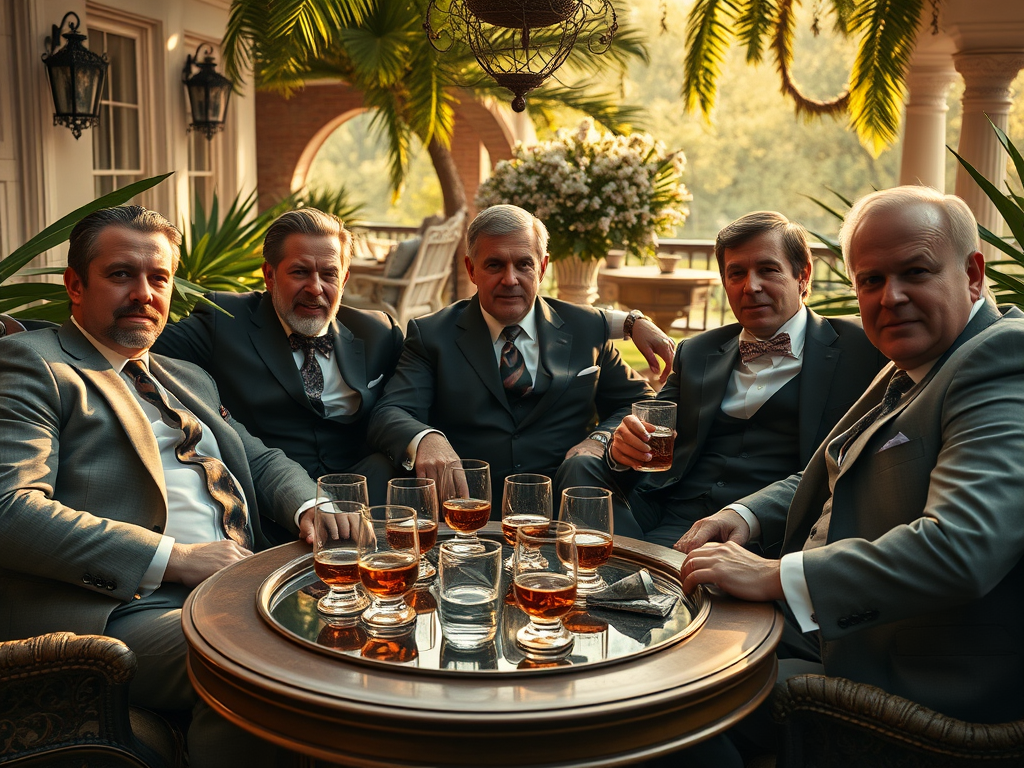
    There’s an old saying: declaw a cat, and it can’t survive in the wild. But what happens when the cat doesn’t want to leave its velvet-cushioned cage? Welcome to Southern Charm, a reality show that parades a peculiar species—the overgrown man-child, trapped by privilege, mediocrity, and the reassuring hum of an ever-flowing bourbon decanter.

    These men, ranging from their thirties to their fifties, are not so much participants in life as they are well-dressed relics, embalmed in their own vices. Work is an abstract concept, something dabbled in between brunches and boat parties. Women are recreational pastimes, sampled and discarded like seasonal cocktails. And the ultimate validation? The cooing, slurred approval of their doting mothers, who, in between vodka tonics, assure their progeny that they are, indeed, true Southern gentlemen.

    But Southern Charm isn’t just about individual arrested development—it’s about a collective one. Nowhere is this more apparent than in the show’s occasional detours into the grotesque theater of old-money delusion. Take, for example, the time disgraced politician Thomas Ravenel dined with his father, Arthur, a former U.S. Representative. Over lunch, Arthur casually revealed his habit of quickly getting rid of five-dollar bills because Abraham Lincoln’s face still irks him. That’s right—Lincoln, the president who ended slavery, remains a personal affront to this withered artifact of the antebellum South.

    If I had to sum up Southern Charm in a single word, it would be imprisonment. These men are locked in a gilded purgatory, shackled by tradition, vice, and a desperate fear of anything beyond their insular Charleston bubble. They know their world is suffocating, yet they can’t—or won’t—leave it. And that’s what makes Southern Charm such a mesmerizing trainwreck: watching these men wriggle and rationalize, making their slow-motion deal with the devil, one bourbon at a time.

  • Bill Burr’s Drop Dead Years: Rage, Reflection, and the Long Road to Emotional Literacy

    Bill Burr’s Drop Dead Years: Rage, Reflection, and the Long Road to Emotional Literacy

    At 56 years old, Bill Burr strides onto the stage looking like a man who hasn’t just survived middle age but has trained for it—lean, sharp, and decked out in a blue sweatshirt, jeans, and sneakers, the unofficial uniform of a guy who’s seen some things but hasn’t yet gone full sweatpants. His latest special, Drop Dead Years (streaming on Hulu), finds him at a crossroads: He’s entered the danger zone—the phase of life where men his age can drop dead at any second. And so, standing before a Seattle crowd, a city he awards first prize in rain-soaked despair, he does what any man staring down mortality would do—he takes stock of his life.

    Burr has baggage, and he knows it. Anger issues? Check. Outdated, offensive language? His wife is on him about it. Emotionally repressed male conditioning? Oh, absolutely. For decades, he’s kept his demons on a leash by staying busy, but when the work stops, his personal hellscape begins. He decides to test a theory: After returning from a tour, instead of distracting himself with projects, he sits in a corner, stares at the TV, and marinates in his own misery. His wife, alarmed, asks if he’s okay. For the first time in his life, he admits the truth: I’m sad. A historic moment for a man raised on the doctrine of shut up and push through.

    But does Burr actually offer any solutions for his emotional demolition derby? Not really—at least not in the special. While he drops breadcrumbs in radio interviews about his self-improvement quest, including the occasional reference to psilocybin therapy, the special mostly stays in the realm of self-awareness rather than self-help. And don’t worry—the fangs are still sharp. Burr unloads on racist conservatives and hypocritical, self-congratulatory liberals with equal fervor, and despite the obvious political leanings of his Seattle audience, no one seems too offended. Maybe that’s part of Burr’s charm—he’s an equal-opportunity agitator, and the crowd knows they’re getting a sermon with a punchline, not a TED Talk.

    Here’s the thing: While I love Burr, I found Drop Dead Years a little… safe. The premise—that wisdom comes with age, that unchecked emotions can consume us, and that kindness and patience improve relationships—is undeniably true but hardly groundbreaking. The performance is solid, his honesty is refreshing, and his intelligence undeniable, but I couldn’t shake the feeling that he was more compelling when I heard him on Terry Gross’ Fresh Air a couple of weeks earlier. There, in a rare good-natured sparring match with the NPR icon, Burr revealed more of himself—and in funnier ways—than he did in his actual special.

    That said, Bill Burr is always worth watching. Even when he’s not at his absolute peak, he’s still one of the sharpest, most brutally honest voices in comedy. So, do I recommend Drop Dead Years? Absolutely. But if you want peak Burr, you might want to queue up that Fresh Air interview right after.

  • The Pitt: A Baptism by Fire in Plato’s Cave

    The Pitt: A Baptism by Fire in Plato’s Cave

    The Pitt is less a hospital drama and more a relentless, fluorescent-lit purgatory where bodies materialize and vanish like restless spirits. It is Plato’s Cave with a heart monitor, a place where suffering is both immediate and endless, and where every decision carries the weight of life and death. At the center of this beautiful chaos stands Robby, played with raw, bruising complexity by Noah Wyle. Robby doesn’t just run the ER—he absorbs it. His darting, anxious eyes scan the ward like a battlefield general, cataloging the wounded, the dying, and the barely surviving.

    Robby is an enigma—both maternal and paternal, a protector and a disciplinarian. His underlings fear and revere him in equal measure. His bedside manner shifts unpredictably: one moment a wellspring of compassion, the next a storm of exasperation. He can soothe, scold, or shatter, but his presence is undeniable. At times, he seems on the verge of simultaneously breaking down, lashing out, and achieving enlightenment. He is less of a boss and more of a priest, a confessor of secrets, a reluctant oracle whose wisdom carries the weight of his own flaws. In a world where suffering is currency, his counsel is invaluable precisely because he is not perfect—he is simply the one who endures.

    At the heart of The Pitt is fatigue—not just the bone-deep exhaustion of long shifts and too many bodies, but the existential fatigue of staring into a bottomless abyss of suffering and death. How does Robby keep going? How does he drag himself out of the wreckage of his own depletion and continue to fight for those who can’t fight for themselves? He is not just the hospital’s flawed hero—he is its high priest, a force of nature holding together new doctors, overwhelmed nurses, and the terrified patients who see him as their last hope.

    But The Pitt doesn’t just immerse us in Robby’s world—it traps us inside it. Like the flickering shadows in Plato’s Cave, the hospital’s chaos and claustrophobia force us to confront the very nature of entertainment. Watching the ER through Robby’s weary, battle-worn eyes becomes more than just storytelling—it is a disorienting reminder of how fragile, how fleeting, and how utterly real the world outside the screen truly is.

  • I Was the Worst College Student Ever

    I Was the Worst College Student Ever

    I was the worst college student ever. But before we get to that, let’s start at the beginning. I attended the university in the fall of 1979. I was seventeen. I was an Olympic Weightlifting champion and a competitive bodybuilder with aspirations of going big–winning the Mr. Universe and Mr. Olympia titles and leveraging my fame to open a gym in the Bahamas. My goals were as clear as they were simple: I would have a beautiful body and my work environment would optimize my ability to maintain my beautiful body. As an added perk, I was comforted by the thought that living in the tropics would ensure that I would never have to wear clothes, only Speedos. Clothes made me so claustrophobic that the first thing I wanted to do after getting dressed was to rip my clothes off. The solution? Spend the rest of my life on an island in bodybuilder briefs with tanning oil slathered all over my shaved body. 

    Whenever I’d share my dream with my recently-divorced mother, she would say, “Don’t be a nincompoop. You can’t isolate yourself from the world on some tropical island.”

    And I’d say, “Don’t worry, Mom. I’ll be well connected. I’ll invite my friends–Frank Zane, Tom Platz, Robbie Robinson, Kalman Szkalak, Danny Padilla, Ron Teufel, Pete Grymkowski, and Rudy Hermosillo–to hang out with me. I’ll give them pineapple protein shakes and tell them how bodybuilding became a catalyst for my personal metamorphosis.”

    “You sound ridiculous. For one thing, those aren’t your friends. They’re from your muscle magazines. I’m not stupid.”

    Contradicting the stereotype of being a musclehead, I got straight As in high school, but my high school, like most public schools, was dumbed down to the point that getting a 4.0 GPA was meaningless. One of my classes, for example,  was called “Money Matters.” We learned how to balance a checkbook and plan a budget so that we were saving more than we were spending. At best, you’re looking at first-grade math, a workbook full of simple percentages and fractions. Busy work like this was proof that our school didn’t want to educate us so much as keep us contained all day in an institution so our parents could take a breather from us. Public schools were part of society’s unwritten social contract with adults. Send your children to our schools so you can work enough to live in the suburbs and get a break from the headaches of parenting.

    Another class was called “Popular Lit.” There were no lectures or tests. For the semester, we read any three books we wanted from the library and wrote three one-page book reports. You didn’t have to read the book. You could present chicken scratch on the book report form or make up some crazy dream you had. It didn’t matter. As long as you turned in the book report, you got an A. The teacher was a woman in her sixties who seemed determined to never engage with us. She told us to do “quiet reading” while she sat at her desk reading magazines, paying her bills, and clipping her fingernails. She was ghoulishly pale, she had long, uncombed dyed black hair, overly dark lipstick, and puffy bags under her eyes. No matter the weather, she wore wool coats that smelled of old sweat and bodily decay. Had you not told me she was a teacher, I would have assumed she was a homeless person scavenging the school for discarded cafeteria food from the high school’s trash cans.

    My classes were so dumb I felt like I was in continuation school for juvenile delinquents. Clearly, the teachers weren’t preparing us to become members of the professional class. They wanted us to learn to follow rules so we’d stay out of prison and be satisfied with a blue-collar job or some minimum-wage gig in the service industry. As I heard one teacher say out of the side of his mouth in the corridor to one of his colleagues: “We’re training them to become burger-flippers.”

    The teachers’ contempt for us and their pessimistic belief that only a small remnant of us would attend college meant nothing to me because college was not part of my master plan. Becoming an international bodybuilding sensation and operating a lucrative health club in the Bahamas was. 

    Signs of my imminent success were abundant. Not only was my muscular physique well developed for a seventeen-year-old, but I also had extraordinary networking skills that spoke well of my future business prospects. For example, at The Weight Room in Hayward, I was working out with NFL defensive end star John Matusak who had taken a liking to me. Between sets of bench presses, T-Bar rows, and seated behind-the-neck presses, we would sing along with the songs blaring from the gym’s radio. Watching the Tooz and I sing along with Nicollette Larson doing a cover of Neil Simon’s “Lotta Love” was a sight to behold. People spoke of the defensive end’s ill temper, but when Matusak and I trained, it was a constant Kumbaya moment. 

     You may have seen Matuszak on TV many times, but that would not have prepared you for what you would have seen in person. He was close to seven feet and 300 pounds. His long limbs made him appear slender yet huge at the same time. He had a beard, wild long hair, and the predatory eyes of a hawk. 

    One afternoon, Matuszak was sitting on the bench while the gym’s speakers played England Dan and John Ford Coley’s “Love Is the Answer.” Matuszak seemed offended by the song’s sentimentality. He curled his lips, looked at me, and said, “Bullshit,” before proceeding to rep 400 pounds while repeating his curse as if energized by it.

    In addition to networking with Matuszak, I established a strong bond with fitness salesman and local legend Joe Corsi. In addition to being the number-one salesman of bodybuilding supplements and fitness equipment in the San Francisco East Bay, Corsi had appeared with Arnold Schwarzenegger on an episode of Streets of San Francisco. Corsi’s fitness store was next to The Weight Room and he would often stop by to pay his respects to me. He was in his late sixties. He wore a black single-piece Jack Lalanne-style jumpsuit with no sleeves and a gold zipper, unzipped to reveal his black hairy chest. His biceps were full, round, and veiny for a man his age though showing a bit of sagginess. His hair was dyed jet black. His eyebrows were black, thick, and shiny. His overall appearance was that of a former bodybuilder who had aged into a geriatric Dracula. Whenever he saw me training with the Tooz at the gym, he praised my amazing potential, said I had exceptional physical structure, and was a young man who clearly had the drive to become a world champion. I imagined it would not be long before Corsi would sponsor me the way Joe Weider sponsored Arnold Schwarzenegger. Soon, Corsi would have his people deliver an array of supplements, protein powders, and butcher-paper-wrapped T-bone steaks to my front door. When that happened, my mother would know that I wasn’t joking about becoming a professional bodybuilder for whom going to college was a big waste of time. 

    After I graduated high school, my mom bugged me every day about what I was going to do with my future. I told her I had a clear plan and that Joe Corsi would be my sponsor. She’d say, “This morning I got up, opened the front door to get the newspaper and I didn’t see a bunch of T-bone steaks on the front porch. You sure you’ve got a lock on this?”

    In August, I came home one afternoon from my workout. I entered the  kitchen and saw on the counter a yellow, slimy chicken. The plucked bird looked forlorn, a leper sulking on the cutting board. Mother was standing next to the chicken holding a cleaver. She scowled at the chicken like it was an adversary that needed to be put in its place. 

    “You need to learn to clean out this chicken,” she said, puffing on a cigarette.

    “I don’t want to touch it. It’s disgusting.”

    “You better learn to handle a raw chicken. Otherwise, you’ll never be able to achieve intimacy with a woman.”

    “That’s the most disgusting thing I’ve ever heard, Mother.” 

    “You can worry about that later. Have you made plans for the fall?”

    “What do you mean?”

    “College. I’m thinking that’s your best option.”

    I stormed out of the kitchen, walked into my room, turned on my clock radio full blast to the rock station, KYA-FM, and did some finishing-touch dumbbell curls.  Listening to Roxy Music’s “Love Is the Drug,” I visualized myself being a world-famous bodybuilder living on a tropical island and drinking mango juice from halved coconuts while surrounded by hordes of beautiful women helplessly drawn to my masculine allure. 

    I was bathed in sweat when Mother walked into the room with an envelope. 

    “Your high school counselor sent you something. I think you should open it.”

    She tossed the letter on my bed. I wiped off my sweat and tore open the letter. My counselor Mrs. Toscher congratulated me for my 4.0 GPA during my senior year and said it was a certainty that I could attend one of the local Cal States. I told Mother and she said, “Unless you’ve got other options, this is all you got.”

    “What about Joe Corsi?”

    “What about him?”

    “He could be my ticket to bodybuilding greatness.”

    “Unless you’ve got something in writing, you’ve got nothing.”

    I figured I had one last chance with Corsi. The next day after my workout with Matusak, I paid Corsi a visit at his fitness store. He was sitting at his desk when I approached him. 

    “I hear you offer professional guidance to up-and-coming bodybuilders,” I said.

    “Yes, I offer the best supplements in Northern California. I’ve got everything you need.”

    “I’m only seventeen and I’ve come a long way.”

    “You’re big for your age.”

    “When Arnold Schwarzenegger moved from Austria to America, Joe Weider promoted him. They essentially made each other famous.”

    “Yes, it’s a great story. I know both of them, by the way. Great guys.”

    “Well, that’s where you come in. I’m available for promotion.”

    “I see. I’ll tell you what I can do. Young man, do you have a valid California driver’s license?”

    I nodded.

    “Excellent. Here’s the deal. My brother Louie runs a meat business. Best cuts of meat you can get. Steaks, ground sirloin, turkey legs, Cornish game hens, prime rib, all-beef hot dogs. He even sells Philadelphia cheesecake, a big hit with customers. You sell them door to door, and you typically get a fifteen percent commission, but because you know me and because I want to support the local bodybuilding community, I’ll have Louie jack up your commission to twenty percent. I can say with the utmost confidence that if you show some hustle, you’ll pocket close to five hundred a week. You’ll have all the money you need for supplements and then some.”

    “That’s a lot of money,” I said.

    “Yes, but bear in mind, you’ll have to pay for the meat up front. But with profits being what they are, you’ll double your money in a week.”

    “Did you say upfront costs?” 

    “You’ll need to come up with a grand to get into this opportunity. But because I like you, I may be able to talk Louie down to seven hundred. Mind you, he’s providing the van and the meat freezers.” Corsi leaned toward me and whispered, “I’d essentially be helping you to steal my brother’s money, but, hey, you’re young. I’d like to lend a helping hand.”

    “I’ll have to think about it.”

    “Let me know soon. My brother is interviewing several people who already have sales experience. This opportunity isn’t going to last much longer. And remember, everyone eats meat. Everyone loves barbecue. This is an opportunity of a lifetime.”

    As I drove home, I was thinking that going to college would be less taxing physically and less of a financial burden than selling butchered meats door to door. The cost of attending college at Cal State in 1979 was seventy-eight dollars a quarter. That was far cheaper than paying Joe Corsi’s brother a minimum of seven hundred dollars. In addition, I could use my title as a “college student” as a front while I continued my bodybuilding. Going to college would essentially be a delay tactic I could use until I achieved bodybuilding greatness. I would capitulate to Mother’s demand to attend college, but I knew I didn’t belong there. I knew I would be the worst college student ever. 

    I was a terrible student in part because I could not regardless of their achievements admire my professors. I envied them because they were so educated and appeared to have everything I didn’t. They had impressive credentials, world travels, including African safaris, to provide scintillating stories while lecturing; nice clothes, not store-bought but made by celebrity tailors; a well-curated persona enhanced by professional voice lessons; an impressive zip code that made them neighbors of politicians and socialites; membership to various tennis, bird-watching, and yoga clubs and intellectual committees; literacy in multiple languages, mastery of at least three musical instruments, and fluency in gourmet cooking. During lectures, they talked about how they prepared extravagant meals that required lemon zest, capers, and ice baths, and they beamed with pride as they rhapsodized over the pleasures of making homemade puttanesca. I had never met a group of people from one profession who were so in love with themselves. 

    My Ethics professor, who was also the Dean of Philosophy, had recently dumped his wife for his young secretary. He seemed rather oblivious to the rich irony of his life choices and rode his Porsche convertible over the faculty parking lot, apparently unaware of the way his toupee would flop off his bald head like a flying squirrel every time his Porsche caromed over a speed bump. A lack of self-awareness seemed to serve my Ethics professor rather well. I despised him. 

    My bitter envy for my professors was only matched by my spectacular ignorance. I was deemed so illiterate that the university was not content with demoting me from Freshman Composition class into the remedial class, more commonly referred to at the time as Bonehead English. To let me know my place in this world, the university made it clear that even Bonehead English was too advanced for a pariah like myself. I was quickly demoted from Bonehead and placed in the Pre-Bonehead class, a level held in such contempt that the classroom was in the Humanities Building basement next to the boiler room. Broad-shouldered maintenance men wearing denim overalls would frequently peek into the room and cackle at us for being at a level of remediation that was such an embarrassment as to be the equivalent of leprosy. 

    Being envious of my professors and feeling like a college outcast, I was in a constant state of depression and demoralization. This did not bode well as a predictor for my academic success. To add another nail to my coffin, I may have just been plain stupid. I was stupid to judge my professors for having everything I lacked. Had I been smart, I would have humbled myself before them and looked at them as role models so that someday with lots of hard work I would become just like them. I was also stupid for feeling insulted for being placed in the Pre-Bonehead English class. Had I been smart, I would have been grateful for the fact that the university had provided resources for hopeless cases like mine rather than expel me from the university altogether. 

    There were also signs that I was stupid, not just on an academic level but in terms of lacking common sense and what would later be known as “emotional intelligence.” A case in point is that during my first two years of college, there was a lot of distressing news about AIDS and its devastation throughout the world. As a straight person who had not yet entered the world of dating and romance, I was not exactly what you would call high-risk, but that did not stop me from being terrified of getting AIDS. One afternoon, a neighbor’s Siberian Husky greeted me by licking me all over my face and I remember the dog’s wet tongue brushing over my lips. Could I get AIDS from a dog’s kiss? For several days, I couldn’t get the thought out of my mind. Then a week later, KGO Talk Radio had a segment in which a doctor would answer callers’ questions about AIDS. I think I was the first caller. I told the doctor about my neighbor’s dog kissing me on the lips. Was I in danger of getting AIDS? In a very sweet voice, the doctor told me that I was completely safe and that I could kiss dogs to my heart’s content. 

    After the call, I stood in the kitchen almost in tears with a great sense of relief. But then shortly after, my mother came out of her bedroom and said, “Was that you on the radio?”

    I nodded.

    She said, “You thought a dog licking your face could give you AIDS? You need to cool it, buster.”

    Hearing my mother admonish me allowed me at that moment to see how hopelessly stupid I was. I couldn’t believe I had survived so long on this planet. I couldn’t believe I had gotten accepted into a university. Clearly, I was on my way to becoming the worst college student ever. 

    My failings as a college student were rooted in part in my inability to find a major, and my indecision made me miserable. I took a criminal justice class, but the books were mired in lawyer-speak. As a result, the sentences were larded with provisos, caveats, and contingencies reflected in elongated sentences in which I had to wade through several dependent clauses before I reached the independent clause. These sentences were so tedious and convoluted that I felt I had to go through the obstacle course on American Gladiators before I got to the sentence’s main idea. This drove me into a state of madness.

    Then I tried sociology and psychology, but the books were immersed in self-satisfied academic jargon in which self-evident observations were made to look sophisticated and authoritative by virtue of the indecipherable, pretentious and self-indulgent verbiage. Being forced to read these textbooks, I imagined brandishing a machete and slashing through a jungle thick with words like positivity, codependency, external validation, inner child, interconnectivity, facilitate, mindset, marginalization, multi-faceted, dichotomy, and contemporaneously. Hacking my way through this forest of phony language made me tighten my body with so much hostility that I feared I would suffer a self-induced inguinal hernia. 

    Then I gave history a crack. The sheer volume of facts, dates, and places seemed to have compelled the authors to write in a mundane, almost remedial prose style with no distinctive point of view. The result was that I was bored out of my mind. 

    Oceanography was mildly interesting; however, the oceanography professor seemed to have a pathological fixation on the words “denitrification,” “liminal zone,” and “viscosity” so that it reached the point that every time he repeated those words I would skyrocket off my seat like a lab rat receiving an electrical shock. 

    Accounting was even worse. On the first day, the professor bombarded us with algebraic equations, the Index Matrix, the Nullspace, and homogeneous linear systems. Within ten minutes, I made an exit for the door. The professor asked me my name.

    “That won’t be necessary,” I said at the doorway. “You’ll never see me again.”

    In my first year of college, I dropped accounting, criminal justice, and sociology. I also failed a remedial algebra class. In the late spring of my first year, the university sent me a letter explaining that I was officially on academic probation. I could not drop any more classes and I would need to improve my GPA. Otherwise, I would be expelled.

    For me, the letter was more than just a warning. It was an indictment of my entire existence. You hear about struggling writers bearing the repeated pain of rejection slips as they are told their stories and books cannot be, for a variety of reasons, published. The academic letter of probation was a sort of rejection slip, but not for something I had produced. Rather, it was a censure against me as a dysfunctional human being. The university had handed me my ass on a stick. 

    In moments of hitting rock bottom, we must find some kind of strategy or other to climb out of our hole, but my prospects were bleak. I had no college major, no purpose, and no self-confidence. I wasn’t making any money as a bodybuilder. I did not have any romances on the horizon so I could not be energized by the hope of be transformed by the powers of love. I was a young man who, having nothing, was eager for a quick solution. I found myself grasping for straws. I could get a tech degree in refrigeration, become a piano mover, or join the military. There was also a guy at the gym whom we jokingly referred to as The Garbologist who said he could get me a job as a garbage man. The way he described the job to me, working from 5 to 10:30 in the morning, becoming a garbage man seemed like my best bet. 

    I was eager to tell my father about my new plan. He had moved into an apartment about a half-hour away from our home since the divorce, and once a month he’d pick me up, take me to his apartment, and make me a barbecued steak dinner. One evening, we were eating on his patio, and he asked me how I was doing in college. I told him about the probation letter and my lack of interest in higher education. What I wanted was a job that paid well and had good hours so I’d have time to go to the gym.  I had made friends at the gym who worked in sanitation, and one guy said he could get me full-time work as a sanitation engineer.

    My father laughed at me and said, “You can’t be a garbage man.”

    “Why not?”

    “Because you’re too vain.”

    “What’s that supposed to mean?”

    “Imagine this. You’re at a cocktail party and everyone is introducing themselves. Doctor, engineer, lawyer, computer programmer, business executive. Then they get to you. You’re going to tell them you’re a garbage man? Bullshit.”

    “I’m vain?”

    “Of course you are. I’ve never seen a kid check himself out in the mirror as often as you do.”

    “Oh my God, I’m driven by vanity and social status.”

    “You’re finally waking up to the obvious. Now finish your steak and make things right with your college before they expel you.”

    Driving home, it occurred to me that I had rejected criminal justice, sociology, psychology, and history because the books I had to read in those classes were so poorly written that they offended me. It occurred to me that I hungered for a certain quality of writing and that this hunger pointed me to the English major.

    It also occurred to me that my fidgety personality did not learn well in the classroom. My anxieties made it impossible for me to sit inside a classroom with thirty-five other students and comprehend the professors’ lectures. I knew that I would have to be self-taught if I were to get any kind of meaningful education. Therefore, the best thing to do was to purchase my own grammar handbook. From that day on, I resolved to teach myself grammar. 

    Once I learned the basics of grammar, it seemed as essential to life as breathing. I considered that small children without any formal learning were already fluent in the most elaborate sentences. Grammar was proof that life had a clear structure, order, and harmony. To learn all the names of the grammatical parts was to understand the harmony of the universe. When I thought of grammar, I saw rivulets flowing into the streams, streams flowing into the great rivers, and the great rivers flowing into the ocean. 

    For the first time, I understood what Nietzsche meant in Twilight of the Gods where he writes that “I am afraid we are not getting rid of God because we still have faith in grammar.” What he meant is that by studying grammar, I could find order and convalescence from nearly two decades of mainlining the glorification of selfish pleasure-seeking and chaos. Part of my recovery as a probationary student was enlisting in a Twelve-Step Program, and one of the steps was grammar. 

    My recovery was swift and relentless with my GPA spiking to close to 4.0. The university seemed impressed with my reformation. Shortly after hiring me in the Tutoring Center, they offered me teaching positions for freshman composition. The university that had once threatened to expel me had now hired me to teach. I was on my way to becoming the worst college professor ever. 

  • Selling Out, Buying In: The Savage Brilliance of Matt LeBlanc in Episodes

    Selling Out, Buying In: The Savage Brilliance of Matt LeBlanc in Episodes

    Originally unleashed on Showtime in 2011, Episodes ran for five seasons of razor-sharp satire, skewering the soulless machinery of Hollywood with a precision so brutal it felt like watching a vivisection—if vivisections were hilarious. It remains one of my all-time favorite comedies, a savage yet oddly affectionate takedown of the industry’s relentless appetite for mediocrity.

    The setup is fiendishly simple: Sean and Beverly Lincoln, a charmingly acerbic British writing duo, are lured to Los Angeles with promises of creative control and prestige. What they get instead is an artistic hostage situation. Their critically beloved, whip-smart series is promptly shoved through the Hollywood meat grinder, emerging as an insipid, laugh-tracked monstrosity. Worse, they are forced to resurrect the career of Matt LeBlanc, who plays a delightfully monstrous version of himself—a washed-up sitcom relic clinging to his former Friends glory.

    LeBlanc, padding around in a haze of regret, is a masterclass in self-loathing charisma. He’s paunchier, jowlier, and carries the heavy-lidded exhaustion of a man who has realized, too late, that charm has an expiration date. The sad creases around his eyes whisper, How come the world doesn’t love me the way it used to? He’s a man-child accustomed to zero boundaries, collateral damage in his wake—including an estranged wife and an industry that has moved on. His interactions with the Lincolns are electric: he resents their moral standards, mocks their dignity, and yet, slowly, insidiously, starts craving their approval like a lost toddler looking for parental validation.

    The Lincolns, meanwhile, aren’t just losing creative control—they’re losing themselves. Forced to dumb down their art while simultaneously parenting an emotionally stunted former sitcom star, they begin to absorb some of LeBlanc’s gleeful nihilism, just as he, in turn, starts to thaw under their reluctant affection. The show’s central tension becomes a delicious question: Who will corrupt whom first? By the end, they’ve all been irrevocably changed, bound by a bizarre, dysfunctional, and strangely touching camaraderie.

    LeBlanc’s slow, grudging evolution is nothing short of a masterpiece. Stephen Mangan and Tamsin Greig, as Sean and Beverly, deliver a spectacular performance of unrelenting exasperation, their bewildered expressions a constant gauge of Hollywood’s never-ending barrage of crassness. The result is a show so brilliant, so deftly written, that watching it once wasn’t enough—I devoured it twice, only to appreciate it even more the second time around. Beneath its cynical wit and industry grotesquerie, Episodes is ultimately about the absurd yet undeniable bonds that form when people are forced to suffer together. And in that suffering, something close to love—however warped—takes shape.