Author: Jeffrey McMahon

  • Farewell to the High-Flame Watch Obsession

    Farewell to the High-Flame Watch Obsession

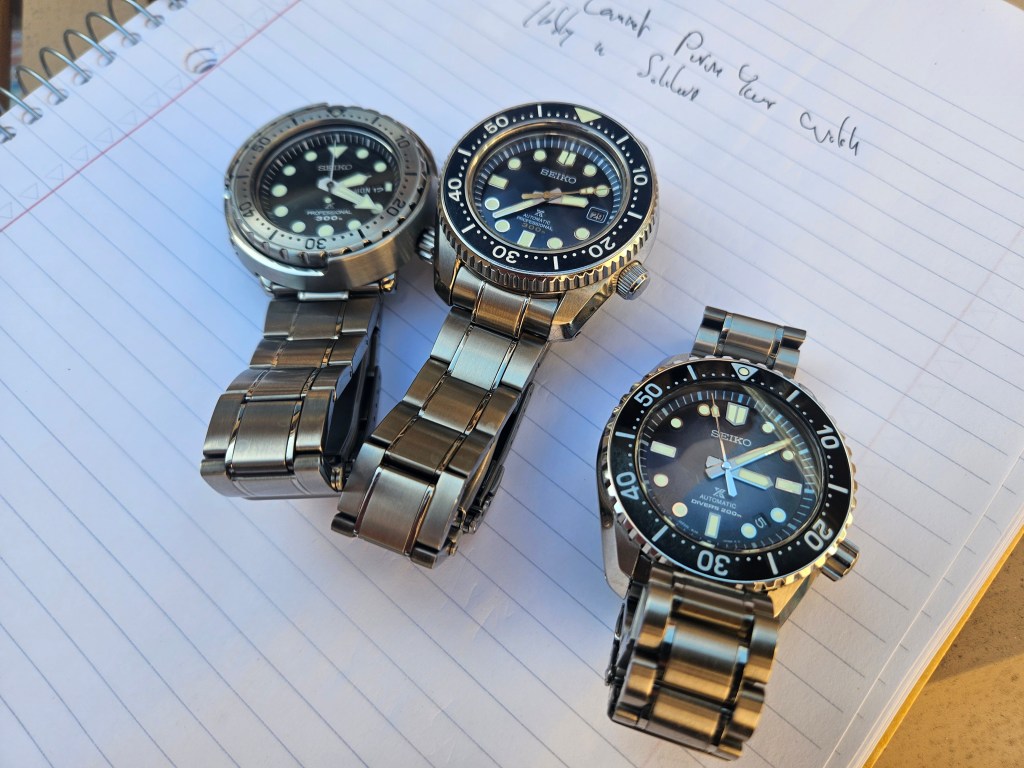
    If someone asks, “Are you still into watches?” the honest answer is yes—but only in the slow-cooker sense of the word. The blaze that once roared is now a gentle simmer. I still enjoy my small, modest collection, but the thermonuclear fervor that once powered my YouTube monologues has cooled to something approaching sanity. For a decade I curated my watch fixation online with the zeal of a man possessed. That’s part of the job: intensity, enthusiasm, obsession on command. You don’t just talk about watches; you produce engagement about the engagement, feeding the ouroboros of social media in which people watch reaction videos about reaction videos reacting to the initial spark. It’s performance art—performance about performance.

    But those days are over. I am retired from the high-flame watch world. Age has something to do with it—priorities recalibrate whether you consent or not. At sixty-four, the thrill of “wrist presence” and the quiet barbarism of masculinity farming with a steel hockey puck strapped to my arm don’t summon the same dopamine. The fantasy of a watch transforming me into a rugged Alpha Male now feels like cosplay designed by an exhausted algorithm.

    The bigger shift, though, is psychological. I haven’t bought a watch in five months. I no longer spray Instagram with daily wrist shots. I no longer agonize over whether to vaporize five grand on this dial or that bezel or which “ultimate rotation” best aligns with my personal mythology. The absence of that noise feels like relief—a weight lifted, a gratitude bordering on spiritual.

    Low-flame mode offers a different kind of bandwidth. I can sit at my desk in the morning with no cravings, no micro-desires, no consumer fantasies tugging at my neurons. I can actually face the quiet—deal with the emptiness directly rather than embalming it with luxury steel. That absence is clarifying. It demands something of me besides swiping a credit card.

    Does low-flame mode mean I’ve quit watches? No—it means I’ve quit a particular orientation toward watches. This essay grew out of a small revelation I had yesterday: you don’t retire from X entirely, and X doesn’t retire from you entirely either. Instead, you negotiate a polite breakup. You acknowledge each other’s contributions, exchange your things, and move on. The High-Flame Watch Obsession and I have parted ways. We won’t be seen in public together again.

    Do I mourn this? Not really. I have complicated feelings, sure, but I don’t feel like Lot’s Wife, craning my neck for one last look at the fever swamp of my own compulsions. Mostly, I feel relieved. Mostly, I feel curious—what will life look like now that my brain is no longer a storage unit for lug widths, torque tolerances, and bracelet micro-adjustments? The quiet is unsettling, but it’s also promising. I finally have room for something else.

  • Breakfast Grains and Other Existential Threats As I Embark Upon a Two-Month Vacation

    Breakfast Grains and Other Existential Threats As I Embark Upon a Two-Month Vacation

    Today is my last day of class before I’m loosed into a two-month intermission—a stretch of time that must be handled like a late-arrival character in a film. This visitor has a history with me, knows my flaws, and demands that I greet him with something better than the usual slouch and shrug.

    Naturally, I’ll rehab the shoulder, write, and play the piano. Exercise will take care of itself; addiction is nothing if not reliable. Food, however, is the saboteur lurking in my blind spot. My emotional attachments to breakfast grains would make a Freudian blush: buckwheat groats, steel-cut oats, rolled oats, vanilla protein powder, cinnamon, berries, nuts. The whole wholesome choir. Trouble is, those virtuous bowls can turn caloric faster than a Hallmark plot twist.

    These cereals, if I’m honest, are less about hunger and more about the psychic umbilical cord. They point back to Mother, the Womb, or—in Phil Stutz’s terms—the Comfort Zone, the Warm Bath. Linger too long in that morning porridge spa, and the scale begins to stage an intervention. Add in my peculiar habit of finding solace in true-crime documentaries—an activity best described as athletic only in its couch commitment—and the trajectory is clear: weight gain, sloth, entropy.

    Fortunately, I do maintain countermeasures. Kettlebells and the Schwinn Airdyne stand ready like loyal foot soldiers. Reading, writing, and piano practice also help stave off the creeping rot. And yes, I’ll continue shaving, if only to avoid becoming the bearded oracle wandering the streets muttering about glycemic index.

    This two-month hiatus is really a dress rehearsal for retirement, which is now only eighteen months and three semesters away. It would be dishonest to pretend the prospect doesn’t rattle me. Maintaining purpose without the scaffolding of a teaching schedule is its own moral test. I’m fortunate to have reached this threshold, but fortune alone won’t keep me from misusing it. All I can do is stay awake, practice discipline, and ask my Maker for the humility to spend the limited time left with intention rather than drift.

  • Gemini Has Taken Away the Mystique from ChatGPT

    Gemini Has Taken Away the Mystique from ChatGPT

    Matteo Wong’s “OpenAI Is in Trouble” reports that Gemini is crushing ChatGPT in the AI race. Marc Benioff of Salesforce spent just two hours on Gemini–all the time he needed to realize he’s leaving ChatGPT after three years. As he wrote on X: “I’ve used ChatGPT every day for 3 years. Just spent 2 hours on Gemini 3. I’m not going back. The leap is insane.” Meanwhile, a troubled Sam Altman has announced a “code red” in a memo to his employees. It appears to be a sink or swim situation. But Wong points out that this is more of a horse race with one company in the lead, then another, and then another, with frequent fluctuations. But even if ChatGPT can gain lost ground, it loses mystique. In the words of Wong: “More than ever, OpenAI seems like just another chatbot company.” 

    One possible cause of ChatGPT losing ground is its focus on commercial ventures, wanting to be “a one-stop-shop for anything” so that the platform helps you in your consumerism. Another factor is its focus on engagement, which has made ChatGPT tweaked in a way as to become a super sycophant. Wong writes: “Those tweaks, in turn, may have made some versions of ChatGPT dangerously obsequious–it has appeared to praise and reinforces some users’ darkest and most absurd ideas–and have been the subject of several lawsuits against OpenAI alleging that ChatGPT fueled delusional spirals and even, in some cases, contributed to suicide.”

    Another challenge for OpenAI is Google’s sheer size. Google can integrate Gemini into its “existing ecosystem” with billions of users. 

    I’ve been on ChatGPT for three years, impressed with it as an editing tool, and confess I have some FOMO when it comes to the current iteration of Gemini. An argument could be made that I should switch to Gemini, not just because it’s embedded in the Google Chrome that I use, but that I shouldn’t get too comfortable with one form of AI, as I have with ChatGPT, over the last three years. It might be wise to see ChatGPT less as a companion and more of a manipulating agent designed to capture my engagement so that I am serving its business interests more than my self-interests. 

    Another voice inside me, though, says Gemini will eventually do the same thing. Unless I find that Gemini will be a game-changer, in ways that ChatGPT isn’t, I suspect both should be treated cautiously: use these platforms as tools but don’t let them hijack your brain. 

  • How Luxury Spaces Produced the Last Man (college essay prompt)

    How Luxury Spaces Produced the Last Man (college essay prompt)

    Over the last two decades, American consumer spaces—from sports arenas to airport terminals—have been redesigned to prioritize comfort, insulation, curated experience, and a sense of premium belonging. These spaces promise elevated existence: velvet-rope exclusivity, controlled environments, personalized amenities, and buffers that shield patrons from inconvenience, unpredictability, or discomfort. In other words, they promise a life free from friction.

    Two recent New Yorker essays vividly capture this shift. In “How the Sports Stadium Went Luxe,” John Seabrook traces the transformation of professional sports stadiums from gritty, communal, occasionally chaotic spaces into stratified luxury environments where spectators increasingly consume the spectacle from suites, clubs, micro-environments, and upgraded “experiences” designed for a privileged few. The stadium, once a rowdy democratic gathering where masses cheered together, now resembles a branded theme park of status tiers—where the game itself recedes behind the performance of being someone who can afford to be in the right section.

    Zach Helfand’s “The Airport-Lounge Wars” extends this critique to modern travel. Airports now offer a bifurcated universe: the cramped, stressful, gate-area masses and the plush, curated lounges where passengers sip fruit-infused water under soft lighting while charging their devices and sampling “elevated” snacks. Helfand describes these lounges as “slightly better than nothing”—a telling phrase that captures the absurdity of luxury whose chief purpose is to soothe adult anxiety rather than provide meaningful enrichment. In both essays, the consumer becomes less a citizen than a carefully handled customer—shielded, pacified, and cocooned.

    This convergence of comfort, curated experience, and luxury has resulted in what many cultural critics call infantilization: the softening of the adult individual into a person who increasingly depends on structures of comfort, performs curated identity, avoids discomfort, and loses tolerance for challenge. Nietzsche warned of such a figure in Thus Spoke Zarathustra when he described the Last Man—a being who seeks comfort above all else, avoids risk, avoids conflict, avoids intensity, avoids suffering, and declares smugly, “We have invented happiness.” The Last Man lives in a society that confuses convenience with flourishing, comfort with meaning, and safety with virtue.

    Your task is to analyze how Seabrook’s and Helfand’s essays each illustrate the rise of infantilization through the growing cultural obsession with luxury, curated experience, and personal insulation. You will argue how both writers, in different contexts, reveal a society drifting toward Nietzsche’s Last Man—where people are increasingly coddled, increasingly fragile, increasingly comfort-dependent, and increasingly detached from the communal, unpredictable, and occasionally uncomfortable experiences that once defined adulthood.

    To build your argument, consider the thematic questions and analytic frameworks below. You may address several of them or focus deeply on a smaller selection, but your essay must ultimately make a clear, debatable claim about how the phenomenon of infantilization unfolds in both essays.


    1. Luxury as Surrogate Identity: The Cosplay of Importance

    Seabrook describes stadiums where spectators no longer attend to watch the game—they attend to be seen in a particular environment, to signal aura, to inhabit a curated identity. Luxury boxes, clubs, insulated corridors, private entrances, and gastronomic stations function not as amenities but as props for self-presentation. Patrons “cosplay” as elites through their seating choices. Helfand observes the same phenomenon in airport lounges: passengers use lounge access to projects status, gravitas, and “importance.” The lounge becomes a stage where individuals perform adulthood through perks.

    Analyze how luxury becomes a kind of identity cosplay. How does performance replace participation? How does curated environment become a psychological crutch for fragile egos?


    2. Comfort as a Psychological Drug

    Both essays describe environments designed to eliminate discomfort: cushioned seating, privacy, temperature-controlled rooms, abundant amenities, and curated calm. Patrons no longer tolerate cold seats, crowds, unpredictable noise, or the chaos of public life.

    In Nietzsche’s framing, this desire for frictionless existence is the defining trait of the Last Man: a person who fears intensity and pain more than insignificance.

    Examine how both essays portray comfort not as a neutral good, but as a chemical sedative—an anesthetic that dulls the senses and diminishes the human appetite for challenge.


    3. Infantilization Through Convenience and Insulation

    Helfand’s lounges function like nurseries for adults: soft lighting, soothing music, easily accessible snacks, staff catering to passengers’ needs, and gentle removal from the stressful “real world” of airports. Seabrook’s luxury stadiums behave similarly: they protect spectators from bad weather, loud crowds, long lines, and general inconvenience.

    Ask: What happens to adults who no longer encounter difficulty or discomfort in public spaces? How do these environments promote emotional regression, fragility, or dependency? How do cushioned experiences erode resilience?


    4. The Collapse of the Communal Experience

    Traditional stadiums were communal crucibles: strangers hugging after a touchdown, fans screaming in unison, unified collective identity. Luxe stadiums fracture that experience into premium sections, exclusive clubs, and tiered access.

    Airports once functioned as equalizers—everyone endured the same wait, the same lines, the same discomfort. Now, lounges separate the “important” travelers from the masses.

    How does segregation by luxury contribute to infantilization? Does comfort isolate individuals in echo chambers of curated ease? How does the decline of communal friction foster narcissism and social detachment?


    5. Emotional Labor and Passivity

    Luxury environments demand certain emotional performances: politeness, calmness, carefully managed pleasantness. In lounges, passengers adopt a soft demeanor; in stadium clubs, patrons behave with polite detachment rather than unruly fandom.

    Adults become well-behaved children: quiet, controlled, pacified.

    Discuss how both essays show the replacement of passionate, authentic emotional expression with sanitized, polite, passive behavior. How does this behavioral shift align with the Last Man’s avoidance of intensity?


    6. Tiered Access, Fragile Status, and the Anxiety of Comfort

    Both essays highlight how luxury spaces create hierarchies: VIP vs general admission, club members vs regular fans, lounge patrons vs the gate-area masses. These hierarchies foster anxiety because comfort becomes contingent on status—and status becomes fragile.

    In Nietzsche’s Last Man, community is replaced by individualistic comfort-chasing. How do tiered luxury systems cultivate insecurity, status-dependence, and infantilized anxiety?


    7. Authenticity as Inconvenience

    In both essays, authenticity of experience is subtly mocked or sidelined. The real stadium experience—mess, discomfort, unpredictability—gets replaced by cushioned sterility. The real airport experience—crowds, lines, irritation—is smoothed into a curated simulation of adult life.

    Nietzsche warned that the Last Man despises authenticity because authenticity requires discomfort.

    How do Seabrook and Helfand portray authenticity as an endangered species—and how does its absence produce infantilization?


    Write a 1,700-word comparative essay that argues:

    How and why a society obsessed with curated luxury and frictionless experience becomes an infantilized culture that resembles Nietzsche’s Last Man. John Seabrook’s “How the Sports Stadium Went Luxe” and Zach Helfand’s “The Airport-Lounge Wars” provide complementary case studies of how comfort, status-tiering, and curated identity hollow out adult resilience, diminish communal life, and normalize passivity.

    Your essay must:

    1. Develop a strong, debatable thesis about how infantilization manifests in both essays.
    2. Analyze key passages from Seabrook and Helfand with close reading.
    3. Compare how each writer critiques luxury culture through examples, tone, description, and anecdote.
    4. Incorporate Nietzsche’s concept of the Last Man as a theoretical grounding.
    5. Include a counterargument—for example, that comfort is a legitimate human good, that luxury enhances experience, or that curated spaces improve efficiency or mental health.
    6. Rebut the counterargument with evidence from the essays and your own reasoning.
    7. Conclude with broader implications—what kind of citizens does luxury culture produce? What happens to democracy, community, or adulthood when society builds padded rooms for the affluent?

    Your writing should demonstrate intellectual rigor, clarity of organization, and precise control of prose. Engage deeply with the texts. Show the reader how these essays illuminate not just consumer culture, but the deeper philosophical question Nietzsche raised: What kind of humans are we becoming?

  • Weapons of Fear: Epistemic Collapse in Eddington and Weapons (college writing prompt)

    Weapons of Fear: Epistemic Collapse in Eddington and Weapons (college writing prompt)

    Over the last decade, American culture has undergone a profound crisis of shared reality—what scholars call an epistemic collapse. In the vacuum created by fractured institutions, algorithm-driven outrage, political opportunism, and a populace trained to distrust expertise, communities have turned inward, building their own private universes of truth. Two recent films—Ari Aster’s Eddington (2024) and Zach Cregger’s Weapons (2025)—stand at the center of this cultural conversation. While their genres differ—Eddington as a neo-Western political drama and Weapons as a folk-horror anthology—both films dramatize the same underlying catastrophe: when people no longer agree on what is real, they become dangerously easy to manipulate, divide, and weaponize.

    In Eddington, the small New Mexico town is already fractured before the plot begins. The COVID-19 pandemic becomes the spark that exposes deep fault lines: anti-mask sheriff Joe Cross stokes resentment and paranoia, pro-mandate Mayor Ted Garcia attempts to preserve public health in a community that no longer trusts him, and the town’s institutions melt under the weight of political rage, conspiracy theories, and personal vendettas. Masks, lockdowns, land rights, and municipal policy become symbols of existential war. Citizens drift into echo chambers where identity outweighs truth and where “freedom” can be invoked to justify violence. Through these tensions, Eddington examines how tribal politics, misinformation, and fear transform ordinary people into agents of chaos—into what the film metaphorically frames as “weapons.”

    Weapons begins in a seemingly different register—a folk-horror narrative involving children, trauma, and community superstition—but it ultimately reveals itself as a story about the same phenomenon: collective panic filling the void left by failed institutions. When mysterious events shake the town, people reach not for evidence, reason, or communal deliberation, but for myths. Rumors calcify into “truth,” grief mutates into paranoia, and the community turns against itself in a desperate search for someone to blame. In this atmosphere, children, grief-stricken parents, and unstable townspeople all become susceptible to narratives that promise clarity and purpose, even at the price of cruelty. Like Eddington, Weapons suggests that the human need for certainty can be exploited, turning vulnerable people into instruments of violence.

    Both films take place in communities that feel abandoned—by government, by truth, by stability, by the social contract. In Eddington, the pandemic reveals a town already primed for collapse: neighbors distrust each other, public servants abuse their power, and media ecosystems churn conspiracies at a devastating pace. In Weapons, the terror centers on mysterious disappearances and supernatural dread, but the underlying cause is similar: when people feel unmoored, they grasp at stories—however irrational—that make sense of suffering. In both cases, the crisis is not just external; it is psychological, emotional, and cultural. These films argue that a society that no longer shares a framework of truth inevitably begins producing its own monsters.

    Your task is to write a comparative, argumentative essay that analyzes how both Eddington and Weapons depict the collapse of shared reality and the transformation of ordinary individuals into “weapons”—tools of fear, ideology, grief, or superstition. You will argue how each film uses different storytelling techniques to illuminate the same cultural trauma: a nation where trust in institutions has eroded, where truth is increasingly privatized, and where communities respond to uncertainty with tribalism, scapegoating, and paranoia.

    To frame your argument, consider the following thematic questions:

    1. Epistemic Crisis: What happens when communities no longer share the same reality?

    In Eddington, the pandemic becomes a catalyst for unraveling collective trust. Sheriff Joe Cross exploits the crisis for personal power, leveraging fear and resentment to undermine public-health directives. Misinformation spreads faster than illness, and political theater replaces governance. In Weapons, suspicion and folk belief dominate; characters construct supernatural explanations for grief they cannot otherwise process. How do these fictional communities illustrate the broader national struggle to maintain a shared understanding of truth?

    2. Scapegoating and Manufactured Monsters

    Both films show societies that create monsters when reality becomes intolerable. In Weapons, grief and superstition lead to scapegoating—outsiders, children, even supernatural entities become symbols of community anxiety. In Eddington, “the monster” is political: masks, mandates, immigrants, liberals, conservatives—whatever the tribe defines as the existential threat. Analyze how each film uses its respective genre (horror vs. political drama) to critique the human impulse toward blame when confronted with collective fear.

    3. The Weaponized Individual: When people become instruments of chaos

    Sheriff Cross turns himself into a political weapon; Vernon weaponizes conspiracy thinking; Brian transforms a viral video into a career. Meanwhile, characters in Weapons become pawns of rumor and superstition. How do the films examine the way individuals can be radicalized or repurposed by fear, trauma, or ideological narratives?

    4. Institutional Failure and the Vacuum It Creates

    In Eddington, institutions collapse under pressure: public health, municipal leadership, local law enforcement, media, and even basic civic trust. In Weapons, institutions either fail or play no meaningful role, leaving individuals to fill the void with folklore and violent improvisation. Compare how each film portrays the consequences of institutional breakdown—and how that vacuum shapes community behavior.

    5. The Loss of Humanity in a Post-COVID World

    Even though Weapons is not explicitly a pandemic film, its emotional landscape reflects post-COVID anxieties: loneliness, grief, mistrust, and the longing for clear explanations. Eddington addresses the pandemic head-on, depicting how fear strips people of empathy and connection. In both films, humanity erodes as people prioritize survival, identity, or belonging over compassion. Analyze how each story portrays this transformation.

    6. The Role of Media, Algorithmic Influence, and Storytelling

    Eddington explicitly critiques media spectacle and algorithmic manipulation; Weapons does so more subtly through mythmaking and rumor. Compare how each film reveals the power of narrative—factual or fictional—to shape belief, identity, and behavior. What does each film suggest about the modern American hunger for stories that confirm our fears, validate our tribal loyalties, or simplify our grief?

    7. The Nietzschean Last Man: A Society Without Higher Purpose

    For extra depth, you may choose to integrate the concept of Nietzsche’s “Last Man”—the individual who seeks comfort over purpose, safety over meaning, distraction over responsibility. Which characters in each film exemplify this drift toward nihilism? Does each film suggest that the Last Man is a symptom of cultural decay—or part of its cause?


    Write a comparative essay of 1,800–2,200 words that argues how Eddington and Weapons portray the following intertwined themes:

    • the breakdown of shared reality
    • the rise of tribalism and paranoia
    • the transformation of ordinary people into “weapons”
    • the creation of monsters—psychological, political, or supernatural—to fill the void left by institutional failure
    • the erosion of humanity in a culture defined by fear, spectacle, and algorithmic influence

    Your thesis must make a clear, debatable claim about what these films reveal about post-COVID American society. You must support your analysis with close reading of key scenes, comparison of cinematic techniques, and sustained argumentation.

    Your essay must also include:

    1. A Counterargument

    Acknowledge at least one opposing view—for example, the claim that Eddington is primarily about political extremism while Weapons is primarily about horror and grief, and therefore the comparison is forced. Then rebut that view by showing that genre differences sharpen, rather than undermine, the thematic parallels.

    2. A Rebuttal

    Explain why your central claim still holds. You may argue that both films are ultimately parables about epistemic breakdown and human vulnerability in the absence of trusted institutions.

    3. A Conclusion That Opens Outward

    Discuss what these films suggest about where American culture may be heading if fragmentation, mistrust, and weaponized narratives continue.

    Your writing should demonstrate:

    • analytical depth
    • clarity
    • engagement with cinematic detail
    • strong comparative structure
    • thoughtful paragraph organization
    • precise sentence-level control

    This essay invites you not only to compare two compelling films, but also to reflect on the cultural moment that shaped them—and the uncertain landscape we now inhabit.

  • Confessions of a College Writing Instructor in Transition

    Confessions of a College Writing Instructor in Transition

    Yesterday morning at the college, I ran into the Writing Center director and asked whether AI had thinned out the crowds of students seeking help. To his surprise, the numbers were down only slightly—less than ten percent. I told him I’m retiring in three semesters and have no idea what the job of a writing instructor will look like five years from now. He nodded and said what we’re all thinking: we’re in the middle of a technological tectonic shift, and no one knows where the fault lines lead.

    When I got home, I realized that when I meet my students face-to-face in Spring 2026, I’ll need to level with them. Something like this:

    Hello, Students.

    I won’t sugarcoat it. Writing instructors are in transition, and many of us don’t quite know our role anymore. We’re feeling our way through the dark. To pretend otherwise would be less than honest, and the one thing we need right now is credibility. 

    In this class, you’ll write three essays—each roughly two thousand words. The first examines GLP-1 drugs like Ozempic and the messy question of free will in weight management: are we outsourcing discipline to pharmaceuticals? The second explores our dependence on emerging technologies that claim to build new skills while quietly eroding old ones—a process known as de-skillification. The final essay tackles ultra-processed foods and the accusation that eating them is a form of self-poisoning. We’ll examine that claim in a world where food technology, especially for people on GLP-1 medications, promises affordability, convenience, and enhanced nutrition. All three assignments orbit the same theme: technology’s relentless disruption of daily life.

    And speaking of disruption, we need to talk about large language models—ChatGPT, Gemini, Claude, Llama, and whatever else arrives next Tuesday. It’s obvious that students are already using these tools to write and edit their work. Many of you have used them throughout high school; for you, AI isn’t cheating—it’s normal.

    I don’t expect you to avoid these tools. They’re part of being a functioning human in a rapidly changing world. The real question isn’t whether you use them, but how. If you treat them like wish-granting genies spitting out essays on command, you’ll produce communication with all the nuance of an emoji—slick, shallow, and dead on arrival. If you use AI for quick-and-dirty summaries, your brain will soften like a forgotten banana. But if you treat these tools as collaborators—writers’ room partners who help you brainstorm, clarify arguments, test counterarguments, and refine your prose—then you’re not just surviving college, you’re evolving.

    College is where you learn to use tools that shape your professional future. But it’s also where you sharpen the questions that determine how you live: Why am I here? What does it mean to live well? Those aren’t academic abstractions; they’re the spine of adulthood. You can’t separate your ambitions from your identity.

    AI can’t give you a soul. It can’t recall your first heartbreak, your deepest disappointment, or the electricity of a song that arrived at exactly the right moment. But it can help you articulate experience. It can help you think more clearly about who you are, how you plan to work, and how to live with an intact conscience.

    The critical thinking and communication skills we practice in this class exist for that purpose—and always will.

  • Flashback to Tony Banks’ “Afterglow”

    Flashback to Tony Banks’ “Afterglow”

    The podcast conversation between Andrew Sullivan and George Packer left me with a kind of Boomer melancholia: the sense that the world is shifting beneath our feet while we stand rooted in place. The young don’t believe in our institutions, our democracy, or our economic promises. We no longer share a common reality; instead, we inhabit digital bunkers curated by conspiracy brokers who can elevate grifters to national power. Boomers—myself included—feel sidelined, stunned, and a little ghostlike as a new world rises and shrugs us off. I carry that heaviness alongside the throb of my torn rotator cuff, which still jerks me awake at two in the morning. My shoulder and my generation feel similarly compromised: stiff, unreliable, and unable to perform the way they once did.

    These thoughts ambushed me this afternoon as I walked into my bedroom to grab my things before picking up my daughters from high school. Out of nowhere, a song from my teens surfaced—Genesis’s “Afterglow,” written by Tony Banks. It appears on A Trick of the Tail, but the definitive version is Phil Collins’s live performance on Seconds Out, where the ache in his voice makes the song feel like a confession. The narrator wakes from a spiritual coma to realize the world he trusted is gone and he’s broken along with it. In that ruin, he yearns to surrender himself to something higher—love, purpose, the purifying clarity of devotion. It reminded me of Nick Cave’s conversation on Josh Szeps’s Uncomfortable Conversations, where Cave describes his own devotional temperament and his hunger for transformation. “Afterglow” feels like the soundtrack to that kind of awakening.

    But not everyone hungers for that kind of epiphany. I’m not sure my heroes Larry David, George Carlin, or Fran Lebowitz would ever have an Afterglow Moment, and I don’t think they should be judged for it. Some people thrive without chasing transcendence. I know that I, like Nick Cave, feel broken in a broken world and remain open to whatever cleansing revelation might come. But I don’t mistake that for a universal template. If I ever had an Afterglow Moment and found myself at dinner with Fran Lebowitz, I’d keep the whole thing to myself. There’s no reason to evangelize the converted—or the happily unconcerned.

  • Aura Farming in the Age of the Priority Pass

    Aura Farming in the Age of the Priority Pass

    Zach Helfand’s New Yorker piece “The Airport-Lounge Wars” reads like the natural sequel to John Seabrook’s “How the Sports Stadium Went Luxe.” Both writers chart America’s drift into a soft feudalism—an economy built on velvet ropes, curated vanity, and the tyranny of creature comforts. Exclusivity is our reigning civic religion. Helfand opens with a thesis as blunt as a boarding announcement: “Airport lounges are about who gets in and who does not.” In today’s America, you must cultivate an aura—what my teenage daughters call “aura farming,” the strategic cultivation of mystique, importance, and manufactured nonchalance. Airports have become the perfect stage for this theater of status. You either inhabit the drab terminal with its cracked vinyl seats and public coughing contests, or you ascend to the glowing Xanadu behind frosted glass. My own family acts out the class divide: my wife and daughters breeze through TSA with their PreCheck halos while I shuffle through the cattle chute, sacrificing my bottled water, removing my belt, and enduring laptop shaming before rejoining them, a humbler, poorer man.

    These airport Xanadus have grown so seductive that some travelers go full pilgrim. One Malaysian businessman, drunk on his Priority Pass privileges, missed his flight to Kuala Lumpur and drifted through lounges for eighteen days, forging boarding passes like a monk copying sacred texts—until he was arrested and relocated to the Prison Lounge, where the amenities are famously lacking.

    Wanting a taste of this strange devotion, Helfand spent a week touring New York’s airport lounges with his own Priority Pass. At the HelloSky Lounge at JFK, he marinated in what historian Kevin James calls “an enhanced experience of stasis.” Translation: high-thread-count boredom. Even this, Helfand notes, is aspirational—CBS travel editor Peter Greenberg says lounges aim for nothing more noble than inspiring customers to murmur, “Well, it’s better than nothing.” Indeed, the holy trinity of “better than nothing” turns out to be fruit-infused water, padded leather walls, and chandeliers in the bathroom. Civilization marches on.

    Airports are designed to grind the soul down to a nub, so perhaps this “slightly better than nothing” aesthetic is our cultural Valium. A tranquilizer bubble for people waiting to be herded onto aluminum tubes. Pay the fee, flash the pass, and anesthetize the existential dread of a three-hour layover. As Helfand puts it, “Waiting can make one feel needy, like a baby.” Maybe that’s why lounges feel like nurseries for adults: dim lighting, soft chairs, snacks within arm’s reach. The more infantile we become, the grander the titles on the door—V.I.P., Admiral, Ambassador. It’s a fantasy nobility designed to distract us from the truth: we are tired, displaced, sleep-deprived, and longing for our beds, our routines, and—let’s be honest—our blankies.

  • Skyboxes for the Last Man

    Skyboxes for the Last Man

    There’s a primitive hunger in us to feel supersized—elevated, exalted, briefly spared from our mortal smallness. We chase that sensation in crowds: at concerts, festivals, theme parks, and megachurches, all promising communion without requiring introspection. The catch is the port-o-potty, that plastic temple of human despair, which can sour the entire pilgrim’s progress. People want collective rapture without the stench of the collective. Enter the “premium experience”—fast passes, VIP wristbands, and, at sports stadiums, full-blown oligarch cosplay. That’s John Seabrook’s target in “How the Sports Stadium Went Luxe,” an essay that quietly fillets America’s economic feudalism, vanity, and reliance on sugar-spun spectacle in place of anything resembling meaning.

    The roots of this gilded circus stretch back to the 1966 Houston Astrodome: AstroTurf, orange-suited groundskeepers in space helmets, and a scoreboard colossal enough to make Orwell’s telescreen look provincial. Roger Angell attended a game there and sensed rot beneath the novelty. As Seabrook notes, Angell was already wary of skyboxes—those proto-citadels of privilege that foretold today’s “arms race” among stadium owners hell-bent on turning a public ritual into a private entitlement. Half a century later, Angell’s suspicion reads like prophecy. The luxury fever he glimpsed has metastasized into a full-blown industry. As Seabrook puts it, “An entire economy of luxury fan experiences in sports and entertainment has grown out of the sad soft caves Angell spelunked in Houston, and I wanted to have one of those experiences, too.”

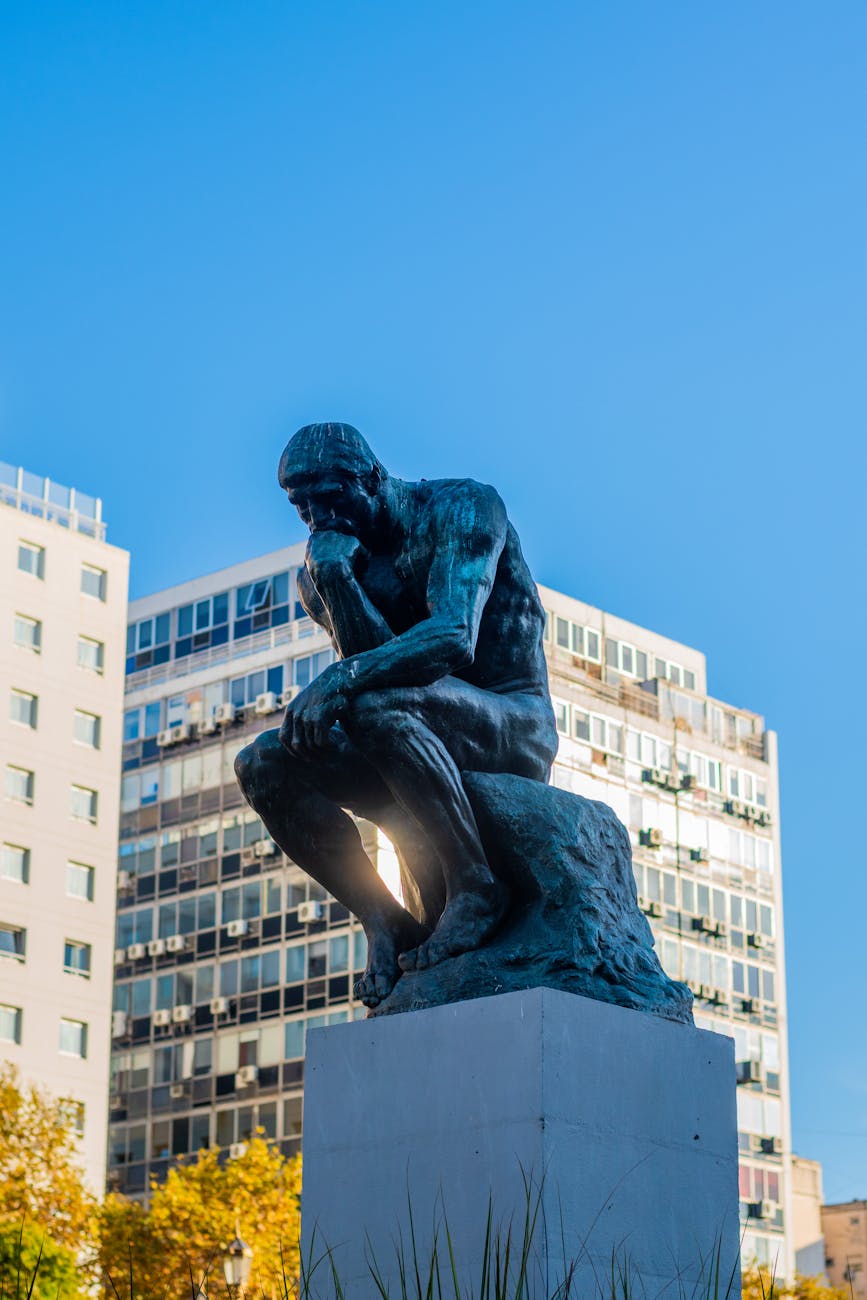
    To understand the psychology of elevated fandom, Seabrook consults Lance Evans, the architect behind SoFi Stadium—Inglewood’s cathedral of curated transcendence. There, patrons select from a menu of “premium experiences,” each priced to “align with their place in the world.” That genteel phrasing hides a darker truth: class isn’t simply an economic tier; it’s a personality trait. Your place in the world becomes a performance, and the show requires props—preferably props that remind you of the people beneath you. These pleasures are petty, but they endure. In the age of performative living, they flourish. As Seabrook notes, SoFi bristles with more than two hundred sixty speakers and fifty-six 5G antennas because it’s not enough to enjoy your rarefied moment; your followers must witness your transcendence in real time. Nietzsche’s Last Man hovers here like an unwanted mascot: a society drained of belief, numbing itself with spectacle and status.

    Seabrook also channels Robert Putnam’s Bowling Alone, the great chronicle of our national loneliness. Stadiums, he argues, act as “secular megachurches”—sites where the spiritually unmoored gather to celebrate, lament, and play dress-up. I thought of his words when I dropped my wife and daughters at Camp Flog Gnaw, watching teens in eye-catching costumes that looked equal parts ritual attire and thirst-trap armor.

    But this communal longing is now fully monetized. Every inch of the stadium belongs to capitalism’s mining operation. “Stadiums may be the most rigorously monetized spaces on earth,” Seabrook writes—and he understates the point. Once the Cowboys unveiled their high-end palace in 2009, the modern luxury-experience arms race took off. The model is simple: fewer fans, more premium fans. After all, more than 95 percent of football viewers remain home with their televisions. The 5 percent who attend spend half the game staring at their phones anyway, toggling through fantasy scores. The real revenue doesn’t come from seats; it comes from broadcasting rights and the ultra-wealthy patrons willing to pay for the illusion of insider status. With twenty-four million millionaires and nearly a thousand billionaires available as clientele, teams happily offer “ultimate fan experiences”—exclusive flights on replica team jets, photo ops with executives and legends, and other Gatsby-themed hallucinations of proximity to greatness.

    This fetish for elevation isn’t confined to stadiums. Seabrook argues we now inhabit a full “Age of the Premium Experience”: luxury shopping, chauffeured rides, curated airport lounges, tiered airplane cabins, hotels engineered for flawless self-regard. The stadium is simply the loudest expression of a 24/7 lifestyle meant to insulate the affluent from the ambient dread of being ordinary.

    But the heart of Seabrook’s essay is not abundance—it’s spiritual malnutrition. These luxury patrons, wealthy as they are, drift through life with the soul-flat affect of Nietzsche’s Last Man. They mistake gaudy comforts for transcendence. They mistake proximity for identity. They mistake curated envy for connection. They are, in Seabrook’s telling, extravagantly fleeced and blissfully unaware, convinced that sitting near the machinery of professional sports confers meaning by osmosis. They pay a fortune for the privilege of being expertly duped.

  • A Slow-Motion Collapse: Reading The Emergency

    A Slow-Motion Collapse: Reading The Emergency

    George Packer’s The Emergency has been marketed as a dystopian novel. I tried to resist reading it, but after hearing Packer discuss it with Andrew Sullivan—especially the idea that democracies die not from foreign invasion but from self-inflicted wounds—I felt compelled to give it a go. The book declares its thesis on page one: The Emergency is a fading empire that decays slowly at first and then all at once. The world people once recognized disintegrates into something unthinkable. A population that once shared a common reality through the Evening Verity now lives in fractured, dopamine-soaked silos dominated by tribal influencers. The country divides into two warring classes: the educated Burghers in the cities and their resentful counterparts, the Yeomen in the hinterlands.

    In the opening chapter, this polarization erupts into “street fighting,” looting, the disappearance of law enforcement, and the flight of the ruling elite from the capital. Dr. Rustin delivers this bleak news to his family over dinner. His daughter Selva’s first concern is whether the unrest will interrupt her academic trajectory. She has worked relentlessly to climb to the top of her class, and the thought of a civil conflict jeopardizing her college prospects strikes her as the height of unfairness. In a single scene, Packer exposes the insularity of the laptop class—how they can read about national collapse yet continue to focus unblinkingly on résumé-building.

    Rustin shares his daughter’s blind spot. He believes his rationality and status shield him from whatever chaos brews outside their comfortable home, so he heads to the Imperial College Hospital as if nothing has changed. But when he arrives, he finds a skeleton staff, no leadership, and a pack of teenage looters closing in on the building, shouting about reclaiming a city stolen from them by Burghers. Their anger echoes the real-world contempt for Boomers—our generation’s hoarding of wealth, property, and opportunity, and the young’s belief that the American Dream was stolen and the ladder kicked away. The looters are led by Iver, a young man who once sat beside Selva in school. Rustin learns Iver is desperate to get medicine for his mother, who can no longer access care in the collapsing system. The gang consists of young men who failed in school and have no future—Hoffer’s True Believers in the flesh, clinging to nihilism because it’s the only story left to them.

    Their attempted looting is half-hearted; they’re too exhausted to fully ransack the hospital. Rustin placates them by promising free medical care for Iver’s mother. The moment marks a turning point for him. He once believed Burghers and Yeomen could coexist if they simply treated each other with decency, a kind of soft humanism. But Chapter One hints that civility may be dead—that the Burghers have grown complacent, valuing comfort more than democracy, drifting toward Nietzsche’s Last Man: a class so lulled by ease that it failed to maintain the institutions holding the nation together.

    It’s a bruising first chapter. As Andrew Sullivan noted, the novel “hits too close to home.” The subject matter is painful, but its resonance is undeniable. Though I haven’t been a diligent novel reader for over a decade, this one has enough voltage to keep me turning pages.