Author: Jeffrey McMahon

  • Five Comedians and One Saint: A Comedy of Eternal Stakes

    Five Comedians and One Saint: A Comedy of Eternal Stakes

    Today on Press Play, Madeleine Brand interviewed Lorraine Ali about her book No Lessons Learned: The Making of Curb Your Enthusiasm as Told by Larry David and the Cast and Crew. As I listened, I realized how strange it is that Larry David belongs to a small circle of people I’ve felt connected to for decades. When I made the mental list—David, Richard Lewis, Fran Lebowitz, Don Rickles, Rodney Dangerfield—it was obvious they were all Jewish, secular, and uncompromisingly themselves. They taught me to laugh at the absurdity of existence, and to find humor in the bruised places most people hide. 

    That realization sent me down a darker corridor: Paul the Apostle and Christianity, both of which have shadowed me with sermons about sin, salvation, and the terror of eternity. The comedians insist life is a spectacle of flaws; Paul insists life is a judgment. 

    I sometimes imagine the five humorists sitting with Paul on Andy Cohen’s set, trading insults, jokes, and aphorisms while Paul urges repentance. Would he recognize their brilliance or just try to convert them? I don’t know. I only know that part of my soul reaches for laughter and part of me reaches for salvation, and the tension between them has left me unsettled and heavy-hearted.

  • French Kiss and the Death of Romance: When Below Deck Became a Funeral

    French Kiss and the Death of Romance: When Below Deck Became a Funeral

    Lionel Richie’s memoir Truly apparently shocked a reviewer who couldn’t fathom how a man who wrote love ballads for The Commodores and crooned “Hello” into the hearts of millions might secretly doubt the existence of love. If the critic wants evidence, there’s no need to psychoanalyze Lionel; just watch the single most soul-evaporating hour of television I’ve ever endured: Below Deck Mediterranean, Season 10, Episode 8—“French Kiss.”

    Normally I treat Below Deck like a sushi boat of human dysfunction: the ostentation, the vanity, the moral anemia. It’s a circus, and I laugh at the performers. But this episode wasn’t a circus. It was a funeral for romance. The premise is already laughable: a 47-year-old bachelor named Joe “auditions” several women to be his wife. He speaks to them like he’s onboarding interns at a failing startup. He uses phrases like “I need your input” and “I’m sorry you find this challenging,” as though he’s gently disciplining HR for mishandling toner orders.

    The beloved stewardess Aesha started off as the show’s only beacon of naive hope. She snacks on popcorn and chirps, “Watching people find love before my eyes—how could I be anything but happy?” By midpoint, that optimism has withered. She, like the viewer, recognizes the obvious: there is no love—only a clumsy negotiation between bored women and a man who reeks of conditional stock options.

    The contestants have the haunted eyes of veterans who’ve survived multiple seasons of “influencer courtship.” They aren’t seeking affection; they’re calculating ROI. Joe himself looks twenty years older than his claimed 47. He carries the aesthetic of a divorced CFO who hasn’t smiled sincerely since the recession. He is oily without passion, exhausted without wisdom—exactly the kind of man who believes communication is a spreadsheet. Instead of a heartbeat, he has a lexicon of “deliverables.”

    His problem, though, isn’t age or looks—it’s the dead chill of someone who sold his soul years ago and is now smug about the deal. He assumes that murmuring corporate jargon at the women like an AI trained on LinkedIn posts will hypnotize them into matrimony. It doesn’t. They recoil. They see a man who mistakes “calm negotiation” for charisma, and professionalism for intimacy.

    Bravo should have buried this episode in a vault. It is the franchise’s Everest of bad judgment. Aesha says as much near the end, visibly deflated, calling the whole experiment depressing. And then comes the exit: Joe limps away from the yacht, placing an arm around one contestant who tolerates him the way one tolerates a damp dog during a neighborhood walk. The moment the cameras cut, you know she’ll ghost him with the velocity of a SpaceX launch.

    If you adore Lionel Richie but want to taste the sour, loveless void that haunts his darker thoughts, skip the therapy and watch “French Kiss.” Romance will die before your eyes, and you’ll understand exactly why a man who wrote “Endless Love” now wonders whether love exists at all.

  • The Great Port Panic: Notes from a Man Who Bought Two Mac Minis

    The Great Port Panic: Notes from a Man Who Bought Two Mac Minis

    My wife’s seven-year-old iMac has slowed to a crawl, spinning that cursed “wheel of death” like a medieval torture device. My own seven-year-old laptop, lashed to a monitor like a patient in an ICU, hasn’t exactly delivered the clarity and comfort I need at my desk. For years I procrastinated on upgrades for the usual reasons—data migration, password authentication, DPI settings, monitor heights, the question of whether the mouse goes left or right. Every new computer setup promises productivity but arrives with a Costco-sized migraine.

    At Thanksgiving, my brother-in-law delivered the slap: “Get off your butt and replace them. RAM prices are exploding. AI is eating the supply.” He said it with the urgency of a man who has watched a tech apocalypse montage on fast-forward.

    I went back and forth between a Lenovo business mini PC and a Mac Mini, like a man choosing between two religions, neither of which he fully trusts. In the end I rolled the dice on Cupertino. I bought two identical Mac Minis—M4, 32GB RAM, 1TB SSD. I’m either a pragmatic genius or the biggest sucker Apple has netted since the butterfly keyboard years.

    Last night I couldn’t sleep. I lay in the dark obsessing over the only question that matters to men of a certain age: Does it have enough ports? I have a mechanical keyboard, a mouse, Edifier speakers, two 27-inch monitors, a printer, an SD reader for my Nikon Z30, and ethernet. Eight connections. The Mac Mini has two USB-A ports and some USB-C wizardry that feels like a riddle designed by a monk from the USB Consortium. So I bought an Anker multi-port hub. But of course the hub isn’t self-sufficient—you must also buy the 100W charger, and the 100W cable, like tech accessories sold separately from your dignity.

    Then there’s the setup. I’ll have to dive into Apple System Settings and tell the machine who I am: configure the mechanical keyboard, calibrate the Dell and Asus monitors, coax the printer to speak in the dialect of Cupertino. I haven’t used macOS in years. My engineering friend—who worships his MacBook Pro like it’s Thor’s hammer—assures me, “The extra you pay for Apple is stupid tax.” I’m not sure whether I’m buying ease of use or a velvet rope to my own humiliation.

    But the final boss isn’t the ports, or the migration, or the learning curve. It’s the aesthetics. I will have a quiet four-inch metal cube powering two gleaming monitors. I want the desk to look like a minimalist command station, not the back room of a RadioShack circa 1997. Every cable threatens the illusion. Every adapter is a serpent in Eden. The rat’s nest must not be allowed to encroach.

    This is why I waited so long to replace the old machines. Not because I feared expense or inconvenience—but because I feared myself. The arrival of a new computer flips my OCD switch like a Vegas neon sign. For the next week, I’ll be pacing my office like an engineer at Cape Canaveral—sleepless, wiring my life together one USB-C at a time.

  • Learning to Thread the Needle with ChatGPT

    Learning to Thread the Needle with ChatGPT

    I’ve been using ChatGPT for personal writing, and with my college writing students, for three years now. I don’t see ChatGPT as a savior or a demon, more like something in between. 

    My review of it is mixed. First the good: It’s a great editor. I can use it to polish grammar, syntax, and sentence clarity. I can use it to come up with essay and story titles that are better than my originals. I can find humorous similes that I couldn’t summon on my own. I can use it to help students do similar editing with their writing and teach them how to use the appropriate prompts to get the desired results. 

    Now for some things to watch for: If I’m not careful, I can let it take over my authorial presence so that I lose my writing voice. Usually this is because the prose is overwritten. I have to be careful that I don’t attenuate to this overwritten prose because florid writing pushes the reader away. My goal is to forge a connection, not put a wedge between me and the reader. 

    The other problem is one my students and I talk about all the time: Over time, we get lazier and lazier and expect AI to do the muscle work while we become Non Player Characters.

    Over time, your goal should be to thread the needle: Use ChatGPT to edit for clarity. Avoid it or tell it to do a “light edit” when it starts to overwrite your content and render you a bloviating machine.  

  • A Torn Rotator Cuff Is an Eviction from Paradise

    A Torn Rotator Cuff Is an Eviction from Paradise

    A torn rotator cuff turned me into a petulant adolescent in a sixty-four-year-old body. I stomped around the house muttering, “I don’t want to be sixty-four. I want to be sixteen.” My mind went backwards, desperate for the simpler theology of youth. I remembered the golden afternoon my father drove me to San Francisco to see the 1977 premiere of Pumping Iron. Arnold Schwarzenegger was more than a bodybuilder; he was a secular god of eternal optimism and immortal sinew, a bronze statue come alive to assure troubled boys like me that discipline and a protein shake could conquer the universe.

    I inhaled that movie like scripture. Mike Mentzer became my Saint Paul; Arnold was my Messiah. I tanned religiously at the beach, layering banana-coconut oil on my chest like a fragrant magical elixir. After a workout, my pecs and biceps ballooned into two radiant promises of self-confidence. I would come home euphoric, still buzzing from the iron. My mother, who had only known me as a brooding kid with a permanent rain cloud, once looked at me and asked, “Did you fall in love? You look so happy.”

    I had fallen in love—with iron. Pumping iron was my El Dorado, my personal Fountain of Youth. I borrowed my motto from a forgotten champion in Strength & Health: “As long as God gives me the power to breathe, I will work out to my dying days.”

    But what happens when God stops lending you the breath you need? What happens when the garage—my sanctuary, my temple of kettlebells and dumbbells—becomes forbidden terrain? A torn rotator cuff is an eviction notice from paradise. Suddenly, I wasn’t a mystic of muscle—I was a sixty-four-year-old with a crippled shoulder. I pitied myself like a toddler denied candy.

    The nostalgia was seductive. I wanted to crawl back through time to the late seventies and wrap myself in the cinematic glow of Pumping Iron. But nostalgia is the Devil’s lure. Lot’s Wife looked back once, and the universe crystallized her into a shaker of driveway salt. If I kept staring at the past I’d become the same: frozen, brittle, lifeless. Moving forward was no longer inspirational—it was survival.

    Phil Stutz, in his book Lessons for Living, makes the same argument without biblical theatrics. To be fully alive, he says, you must move forward. His chapter “Just an Illusion” is a scalpel to the throat of consumer culture: reality is struggle, pain, and constant work. But the culture we live in insists that happiness is an on-demand product—a smoothie of ease, dopamine, and perpetual comfort. If you don’t have it, the problem is you.

    This illusion is comically persistent. We spend our lives chasing it like gamblers who “almost won last time.” We train harder, earn more, buy more, upgrade constantly—believing that one more paycheck, one more gadget, one more dollar will finally transport us to the utopia of optimized living. It never arrives. We try again. The illusion endures.

    The media parades its demigods to keep the fantasy alive. They are beautiful, wealthy, self-assured, and cosmically adored. Their bodies are perfect; their futures are certain; their Instagram bios glow like prophecy. They live outside Stutz’s five brutal facts of reality, and so they are not human—they are hallucinations.

    And here I was, injured and marinating in the opposite myth: I am not the optimized self. My shoulder is a wreck. Therefore, I am a loser. The recovery will be incomplete. It will be permanent. I will never be whole again. Therefore, why go on?

    This is the psychological trap of real injury. It does not simply hurt the body—it hacks the mind. It whispers doom so convincingly that you start to believe your life is a long prologue to defeat. My rotator cuff isn’t just testing the limits of my shoulder; it’s testing the limits of my mental durability. And some days, I fear I am failing the exam.

  • Misaligned with the Modern World

    Misaligned with the Modern World

    My torn rotator cuff was a warning of something I should have seen coming: creeping toward your mid-sixties is less a rite of passage than a crisis of competence. Or, to be precise, it’s a progressive misalignment with the modern world. You drop references to Danish Go-Rounds, Screaming Yellow Zonkers, Tooter Turtle, Super Chicken, and All in the Family and watch blank faces stare back at you. You still assume that appliances are built with the sturdiness of yesteryear, only to find that today’s models disintegrate if you breathe on them sideways. This misalignment breeds a special kind of incompetence—egregious, preventable, humiliating.

    You can swallow vats of triglyceride omega-3 fish oil, but the short-term memory still slips away without mercy. You forget where you parked your socks (on the couch), that you meant to watch the final episode of that crime docuseries on Netflix, that a Costco-sized case of 12-gallon trash bags lurks in the garage, or that you already ground tomorrow’s coffee beans. The indignities pile up like unopened mail.

    These lapses, coupled with your fossilized references to extinct foods and beloved TV shows, render you a creature out of phase with the universe—an alien with wrinkles, blinking in confusion, flashing your unearned senior discount at the box office like it’s a badge of relevance.

    You can flex all you want against this verdict. Wolf down 200 grams of protein daily, clang kettlebells in the garage, and polish yourself into the semblance of a beaming bodybuilder who could pass for forty-four instead of sixty-four. But that delusion ends the second you get behind the wheel at night. Your depth perception is a cruel joke. The glare of headlights and streetlamps slices into your worn irises like laser beams, reminding you that biology—not discipline—is running the show.

    Like it or not, you’re aging in real time, a public spectacle of decline, the unwelcome prophet of mortality who shatters the younger generation’s illusion that time is indefinite. To them, you are as pleasant a presence as a neighbor’s dog barking at a squirrel at six a.m.—loud, unnecessary, and impossible to ignore.

    Congratulations–you’ve become the world’s unwanted alarm clock.

    My sense of misalignment with the world—along with the creeping incompetence that tags along with it—hit me square in the jaw in late September 2025, one month shy of my sixty-fourth birthday.

    It happened on a Saturday evening. My wife, a spring chicken at fifty, had night-driving duty, which now includes chauffeuring our teen daughters to and from Knott’s Berry Farm at closing time. She can handle glare and depth perception; my irises, however, are shot, so I stay home.

    Before leaving, she reminded me she’d be back in ninety minutes with not only our daughters but two of their friends, who would pile into the living room for a horror movie called Weapons. My task was humble: BLTs for the horde. She had assembled the sourdough, bibb lettuce, mayonnaise, and beefsteak tomatoes. All I had to do was bake two packages of turkey bacon. I asked when to start. She told me: cook it at five, eat my dinner alone, and she’d prep sandwiches for herself and the kids when they returned. And, since the girls had dibs on the living room, she and I would retreat to the bedroom to watch TV.

    So I dutifully cooked the bacon (in one tray, but we’ll get to that), made myself a sandwich, and felt ridiculously proud. I had suggested adding BLTs to our dinner rotation and here was proof that my idea, embraced by my family, tethered me—however briefly—into alignment with them.

    I capped off the meal with apple slices and mission figs, then decided to test the three-year-old Samsung QLED in our bedroom, which hadn’t been turned on since I’d moved it from the living room. That spot had been usurped by our new LG OLED. The LG was fine, except its remote summoned a ghastly leaf cursor on-screen, forcing you to point and shoot instead of just pressing buttons. A tremor in the hand and you’d select the wrong thing. Still, we had it tuned to Cinema Mode to dodge the dreaded “soap opera effect,” and the LG performed well enough.

    Around six p.m., I plopped on the bed and powered up the Samsung. To my horror, half the screen was draped in black vertical lines, like a digital funeral shroud. The likely culprit? With a torn rotator cuff in my right shoulder, I stupidly did a solo clean-and-jerk onto the dresser—an Olympic lift without chalk, belt, or applause. The pain in my left shoulder was minimal. However, the impact probably fractured the TVs internal circuits invisible to the eye. Or perhaps a ribbon cable had shaken loose from the T-Con board, the kind of thing you might fix if you were comfortable performing micro-surgery with tweezers. I am not. That Samsung was marched to my office and exiled to the growing eWaste Waiting Area, a mausoleum for electronics that had lost their duel with me.

    But I was not done failing. I headed to my daughter’s room for Samsung Number Two—a two-year-old set I’d given her after last week’s reshuffling. The plan: reclaim the Samsung, and saddle her with the eleven-year-old 43-inch LG, which weighs twice as much as the supposedly bigger Samsungs.

    Hubris, however, is a loyal companion. Samsung Number Two sat high on her dresser. I approached like a gorilla in a hurry, arms eagle-spread. My right thumb betrayed me: it pressed into the panel with a sickening crackle, leaving a dent in the digital flesh. In a fit of magical thinking, I told myself, “It probably bounced back.” Reality arrived the moment I powered it on: fresh black lines glared from the wound, precisely where my Hulk thumb had struck.

    Two lessons seared themselves into my brain in those five minutes. First: modern TVs are absurdly fragile, delicate to the point of parody compared to their beefy ancestors. Second: I am unspeakably stupid.

    When my wife came home, the girls claimed the living room. She inspected the bacon and recoiled. “You didn’t spread it out,” she scolded. “You piled it on one tray. You should have used two.”

    “But two trays don’t fit in the toaster oven,” I countered.

    “Use the big oven.”

    “The bacon was fine,” I insisted, noting how transcendent my sandwich had been. She remained unmoved, cooked another batch herself, and then I broke the news about the TVs. She immediately texted her friends, who replied with the rolling-eye emoji. She rarely shares the emojis her friends lob back at my antics, but even she couldn’t suppress this one.

    The next morning, I texted my engineering friend Pedro, who invited me to lug the broken Samsungs to his place. He loaded them into his car and promised to take them to his jobsite’s eWaste disposal. That act of disappearance soothed my wife. For closure, I bought a $300 Roku TV for the bedroom. This time, no clean-and-jerks—just white velvet gloves.

    And no grunting.

    But the adjustments keep coming. I’ve learned not to talk too loudly in the morning while the twins sleep. I remember to rest my thumb on the bathroom lock so the door doesn’t fire off a pistol-crack at 2 a.m. during a bladder run.

    Still, no matter how many tweaks I make, I feel perpetually out of alignment. My torn rotator cuff reminds me that I am an old car with bald tires: once-grippy treads worn down to slick rubber, skidding across every patch of life. Just as a car with crooked alignment wobbles down the road, tugging against the driver’s will, so too does an old soul with fading memory and fossilized references lurch out of sync with the modern world. Both make unsettling noises, both grind themselves into uneven wear, and both provoke the same grim thought in bystanders: maybe it’s time for a realignment—or at least a new set of wheels.

  • How a Torn Rotator Cuff Tried to Break Me

    How a Torn Rotator Cuff Tried to Break Me

    A rotator cuff injury is an affront to the human desire for control. You follow instructions and protocols to avoid injury and get stronger, but the pain reminds you that you can’t control the trajectory of recovery. Complete rest could be its own disaster. You’re choosing between two bad options.

    Not only do you lose control of your body in ways you never imagined—you can’t optimize.

    If you’re an exercise buff who struggles with weight and is waiting for affordable versions of GLP-1 drugs, as I am, the compromises forced by a shoulder injury are disconcerting.

    My workout on November 29, with kettlebells integrated with shoulder rehab exercises, was not encouraging. My shoulder felt worse afterward. When the Motrin wore off and I woke up at two in the morning, I could tell the training had aggravated it. I began thinking about giving up the Farmer’s Walk with a 45-pound kettlebell in each hand. Perhaps that was too much. My entire training life has been a process of eliminating one exercise after another.

    With my shoulder still aggravated from the workout, on November 30 I decided to try my Schwinn Airdyne again, but this time I wouldn’t use my left arm to row the lever. I would rest my hand on it and rely mostly on my legs. The problem was psychological. Using my arms fully, I had burned 600 calories in about 50 minutes—probably more, since the calorie monitor doesn’t calculate body weight, and several forums claim that an hour on an air bike burns around 1,000 calories. Not using my arms would reduce my output, which, in a gamified world, is demoralizing. Still, even without using my arms, the calorie burn would exceed that of walking the neighborhood for an hour while worrying about stray dogs and car fumes.

    Exactly a week before—on the day my Airdyne workout was followed by nerve pain shooting down my left arm—I burned 600 calories in 52 minutes, which comes to 11.54 calories per minute. A week later, three days after seeing the doctor, I tried the Airdyne again with a significant disadvantage: I couldn’t row with my left hand. During the session, I protected my shoulder with three strategies. I rested my hand on the lever with no pushing or pulling; I gripped my towel with the left hand while my right arm did the rowing; or I grabbed the towel draped over my neck with both hands. Not surprisingly, I didn’t burn as many calories as the week before. I burned 601 in 57 minutes, which was 10.54 calories per minute. My calorie-burn efficiency was down 9.5 percent.

    Despite the significant drop in efficiency, the experiment was half successful: I still reached my goal of 600 calories.

    The real test remained: an hour after the workout, how would my shoulder feel?

    I showered, ate lunch, did some mild isometrics for my shoulder, and did not experience the shooting nerve pain I had a week earlier, so perhaps I was in the clear with the Airdyne provided I don’t row with my injured side.

    I would take this minor victory. The last three months I felt insulted by the difficulty in wrapping a towel around my waist, taking off a sweat-soaked tank top, putting on a belt, closing the driver-side car door, reaching for something in the back of the fridge, and using my left hand to soap my right armpit. Being able to burn 600 calories on the Airdyne was a sweet morsel of consolation. 

    In this war with a rotator cuff injury, I was willing to take whatever tiny victories I could get. 

    A small expression of gratitude might help my morose disposition and the self-pity that I had indulged in over the last three months. If I ever were to write and publish a book on my ordeal, I would probably title it Shoulder, Interrupted: How a Torn Rotator Cuff Tried to Break Me

  • Hope in the Form of a Lab Coat

    Hope in the Form of a Lab Coat

    For three months I slogged through shoulder pain armed with nothing but a self-diagnosis and stubborn pride. I refused to see a doctor. Why submit myself to some exhausted clinician who’d never lifted a kettlebell in his life and would prescribe the usual pablum—ice, rest, and advice I could have gotten from the comments section of Wikipedia?

    Then something happened that forced a reckoning. To compensate for the kettlebell exile, I doubled down on the Schwinn Airdyne—hour-long sessions of fan-bike misery that combine pedaling with lever rowing. I felt no pain… until a week before Thanksgiving. After a brutally satisfying session, a nerve fired down my arm like a live wire. The message was unmistakable: I had graduated from “irritation” to “we’re-squeezing-your-spinal-cord-for-fun.” Something was pinched, something was furious, and it was no longer optional.

    I made a YouTube video to announce the cosmic irony: my watch addiction was cured, but the cure was a torn rotator cuff. The floodgates opened. Dozens of comments poured in from people who had endured surgeries, magnets, injections, cortisone cocktails, or endless physical therapy. One old friend emailed: ten years of chronic pain, zero recovery, restricted motion for life. The road, it turns out, is paved with hope and ends in a ditch.

    It was clear: I didn’t need more voices, I needed data. I called Kaiser and booked an appointment. Someone would see me the day before Thanksgiving.

    That afternoon I met Dr. Cherukuri, a woman in her late thirties with the energy of someone who actually likes her profession. She examined my shoulder, commented that the bulge was visible even through my T-shirt, pressed around the joint, put me through a series of movements, and diagnosed left rotator cuff syndrome with left biceps tendinopathy. She ordered X-rays and an ultrasound and, pending results, believed three months of rehab could put me back together.

    She put me on Motrin three times a day for two weeks to bring the inflammation down—enough to make rehab possible. She also agreed I should continue kettlebell work for muscle maintenance. A doctor who understands the importance of preserving muscle mass? I nearly wept. The catch was predictable: no chest or shoulder presses, no biceps curls. My hypertrophy would be confined to legs, glutes, traps—maybe some trickle-down gains from rehab exercises if the gods were kind.

    She handed me a list of movements, which I combined with ones I learned from YouTube: cow-cat yoga pose, broomstick flexion, wall push-ups, wall flexion, forearm planks, plank shoulder taps, narrow-position knee push-ups, light dumbbell rotations, and more. Anything that required me to lift my arms overhead or behind me felt like sticking my shoulder into a hornet nest.

    The mandate was fifteen minutes of rehab every day. On kettlebell days, I’d slip the movements between lifts three days a week. The other four days were rehabilitation only—an entire week built around mending the wounded joint.

    Psychologically, the appointment was a relief. First, the diagnosis proved I wasn’t a lunatic or some melodramatic malingerer. Second, I needed structure. I needed a plan, a weapon—something to push against instead of drifting through pain, anxiety, and the unknowable. When I’m saddled with a problem, I don’t need platitudes; I need targets and artillery. Seeing the doctor was the moment I picked up a rifle instead of a white flag.

    But I was still blind. I had no idea how severe the tear was, whether rehab would work, whether I could heal without surgery, or how to navigate the distress of shoulder pain so sharp that turning my steering wheel wrong or sliding a backpack strap across my arm sent shockwaves that lingered for minutes.

    Going to a doctor was a necessary first step. But I still knew nothing. All I understood was how much I still needed to know if I hoped to climb out of this hole. The thirst for clarity, for diagnostic certainty, became my new obsession—one that bulldozed my watch addiction.

    My YouTube followers were devastated.
    “We need you back, bro. We need you to commiserate with us about the watch madness.”

    God bless them. They needed me to get better—not only for me, but for them, so we could suffer together in peace.

  • A Cure Worse Than the Disease

    A Cure Worse Than the Disease

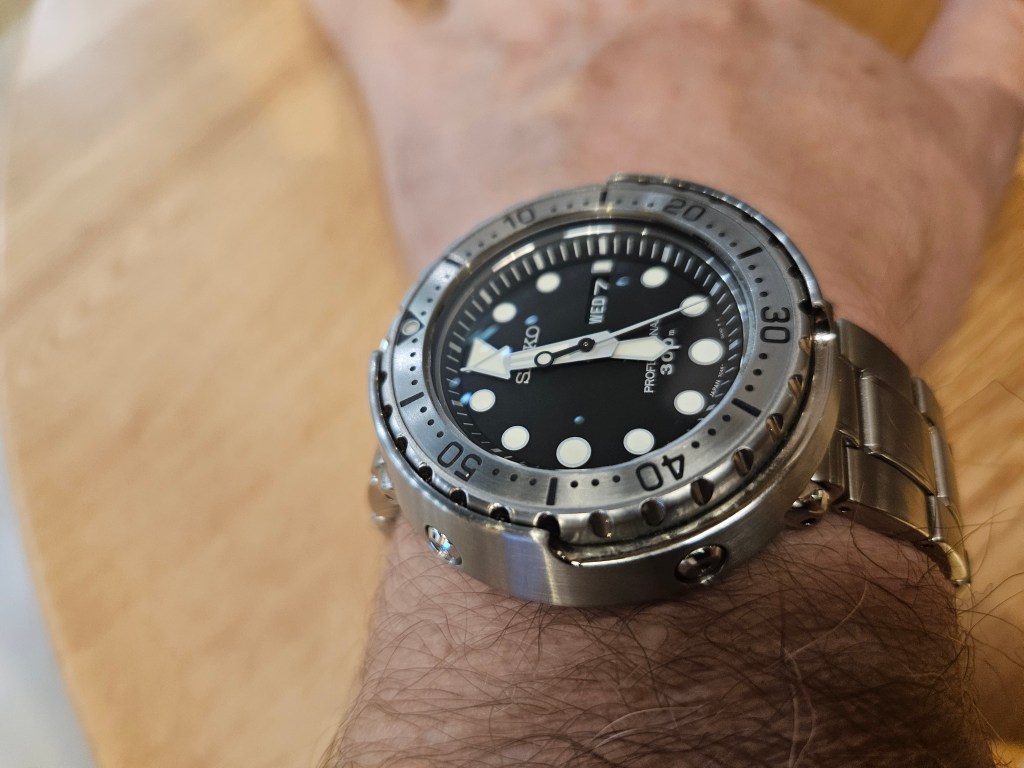
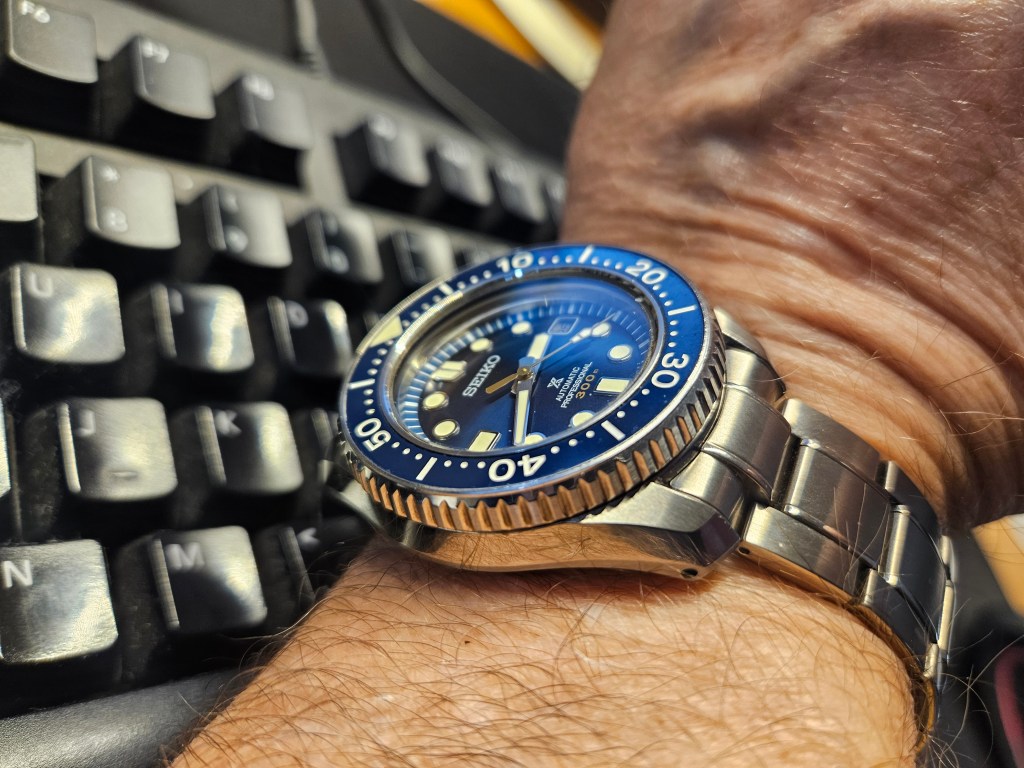
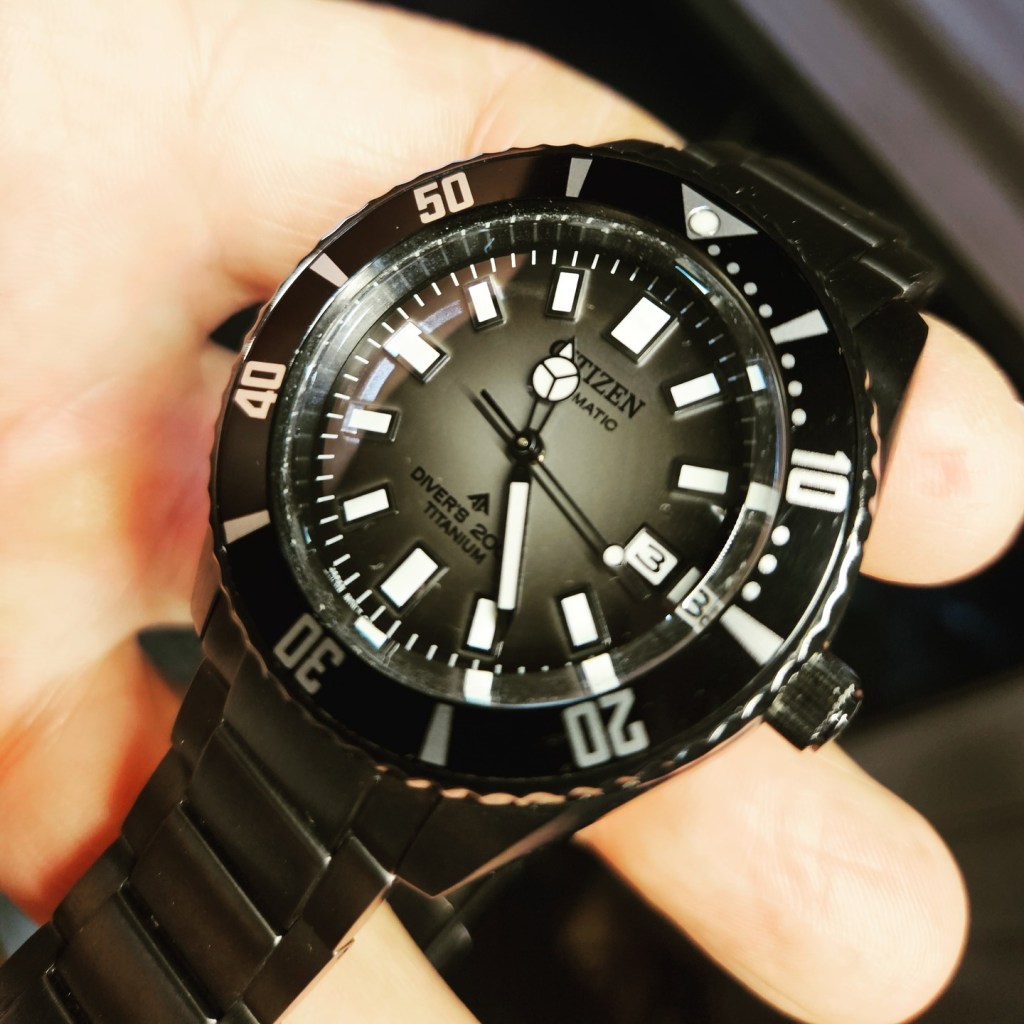
    Be careful what you wish for. I spent twenty years begging the universe to cure my watch obsession, one that caused me to blow several thousand dollars a year on diver watches I’d unbox for my YouTube followers, flip, rebuy, and then sell again—a watch-obsessive’s fever dream. For twenty years, I tried to get off the hamster wheel of crazy, but the powers of social media and diver-watch eye candy kept pulling me back in.

    I finally got my cure: a torn rotator cuff. In late August of 2025, I remember lying on my back and doing single-arm, 50-pound kettlebell presses. I didn’t feel anything severe, just a tightness in my left shoulder.

    The next day, my left shoulder felt like a disgruntled rental car—everything squeaked, nothing moved smoothly, and I dreaded putting my arm through a sleeve.

    I knew what a torn rotator cuff felt like. I’d had them in both shoulders three times in my life. The first was when I was a thirteen-year-old Olympic weightlifter. On a rainy day in PE, the teacher, Mr. Bishop, had us play “volleyball” with a giant 72-inch Earth Ball, and when I tried to hit it with my right arm, the arm went backward and I was out of weightlifting for nine months.

    In the mid-nineties and early two-thousands, it happened twice more during heavy bench presses. Both occurrences took about nine months to heal.

    So I knew what I was dealing with. Usually, I’d need nine months.

    Of course, I had to modify my workouts into physical therapy sessions where I stare at resistance bands as if they’re punishment devices from a Stalin-era prison camp.

    The pain seemed to be more intense after workouts. I thought of ditching them altogether, but I read that no activity could lead to muscular atrophy and render the shoulder frozen and immobile. I wasn’t sure, though. How big and deep was the tear? Was my age—now 64—a factor working against me? Why did the rehab exercises performed by medical doctors on YouTube make my shoulder feel worse?

    These questions took up all my mental bandwidth, rendering my watch obsession nil. Wanting a healthy shoulder, I would gladly trade every diver, every limited edition, every bracelet and waffle strap for a shoulder that didn’t scream like a violin in a garbage disposal. So yes—my addiction was cured. Unfortunately, the cure was worse than the disease.

  • Anatomy of a Rotator Cuff Meltdown

    Anatomy of a Rotator Cuff Meltdown

    A torn rotator cuff doesn’t just hurt—it becomes the project manager of your mood swings and mental health. Every everyday gesture gets interrogated like a crime scene: How high can I raise this arm? Which angle is the assassin? When will the orthopedic surgeon enter stage left and demand a sacrificial tendon? You find yourself mentally policing every muscle fiber in the chest, shoulders, and biceps—formerly your prized territories, now embargoed like Cold War no-man’s lands. And then comes the flashback reel: Was it the single-arm kettlebell press? The swing? The curl? Maybe it wasn’t a heroic injury at all, just the slow, bureaucratic decay of connective tissue over time—aging’s signature insult.

    The constant vigilance is corrosive. Shoulder injuries have support groups because sufferers eventually learn the catastrophic secret: it’s not the rotator cuff that breaks first—it’s the psyche. The shoulder, like the back and knees, is a psychological choke point. When it fails, it takes your mood, your sleep, and your sense of invincibility hostage. Physical rehab becomes inseparable from emotional rehab. The body limps, and the mind limps with it, muttering under its breath.

    It’s been three months and I’m starting to resent the job of being my own orthopedic babysitter. I’m grateful I can still sleep without feeling like someone is driving a railroad spike through my scapula. I have enough forward and lateral mobility to get dressed without a prayer circle. I can still train legs, glutes, and abs like a functioning primate. But the lesson is brutal: a torn rotator cuff grants no mercy, no sanctuary from overthinking, and no reprieve from the quieter forms of psychological sabotage.

    A torn rotator cuff is no country for sniveling, navel-gazing men. The challenge now is to un-snivel, un-navel-gaze, and rebuild myself without the luxury of denial.