Author: Jeffrey McMahon

  • AI High School Graduates Are Here—and They’re Better Cheaters Than We Are Teachers

    AI High School Graduates Are Here—and They’re Better Cheaters Than We Are Teachers

    Lila Shroff argues that education has entered its Wild West phase in her essay “The AI Takeover of Education Is Just Getting Started,” and she’s right in the way that makes administrators nervous and instructors tired. Our incoming college students are not stumbling innocents. They are veterans of four full years of AI high school. They no longer dabble in crude copy-and-paste plagiarism. That’s antique behavior. Today’s students stitch together outputs from multiple AI models, then instruct the chatbot to scuff the prose with a few grammatical missteps so it smells faintly human and slips past detection software. This is not cheating as shortcut; it is cheating as workflow optimization.

    Meanwhile, high school teachers may be congratulating themselves for assigning Shakespeare, Keats, and Dostoevsky, but many are willfully ignoring the obvious. Students are using AI constantly—for summaries, study guides, feedback, and comprehension scaffolding. AI is CliffsNotes on growth hormones, and pretending otherwise is an exercise in institutional denial.

    Educators, of course, are not standing outside the saloon wagging a finger. They are inside, ordering drinks. Shroff notes that teachers now use AI to design assignments, align curriculum to standards, grade against rubrics, and complete the paperwork that keeps schools legally hydrated. Nearly a third of K–12 teachers reported weekly AI use last year, and that number has only climbed as profession-specific tools like MagicSchool AI churn out rubrics, worksheets, and report-card comments on demand. The teacher as craftsman is quietly becoming the teacher as editor.

    AI’s grip tightens most aggressively where schools are already bleeding resources. In districts short on tutors and counselors, AI steps in as a substitute for services that were never funded in the first place. It is not reform; it is triage. And once institutions get a taste of saving money by not hiring tutors and counselors, it is naïve to think that teaching positions will remain untouchable. Cost-saving rarely stops at the first ethical boundary it crosses.

    That is why this feels like the Wild West. There is no shared map. Some schools welcome AI like a messiah. Others quarantine it like a contagious disease. Many simply shrug and admit they are baffled. Policy is reactive, inconsistent, and often written by people who do not understand the technology well enough to regulate it intelligently.

    I see the consequences weekly in my college classroom. I read plenty of AI slop—essays with perfect grammar and no pulse, paragraphs that gesture toward ideas they never quite touch. Some students have clearly checked out, outsourcing not just sentences but thinking itself. And yet AI is also an undeniable equalizer. Students emerging from underfunded schools with sixth-grade literacy levels are submitting essays with clean syntax and logical structure. They are using AI to outline arguments, test thesis ideas, and stabilize skills they were never taught. The tool giveth and the tool holloweth out.

    People like to invoke “too big to fail,” but the analogy is incomplete. We do not know which AI—ChatGPT, Gemini, Claude, or some yet-unseen contender—will dominate. What we do know is that AI is already embedded in education, culture, and the economy. There is no reversing this process. The toothpaste is not going back in the tube, no matter how sternly we lecture it.

    So I tell my students the only honest thing left to say: we don’t know what we’re doing. Our roles are unsettled. Our identities are unstable. We are feeling our way through a dark cave without a map and without guarantees. There may be light ahead, or there may not. The only sane posture is humility—paired with curiosity, caution, and a sober gratitude that even a force this disruptive may yield benefits we are not yet wise enough to recognize.

  • The Copy-Paste Generation and the Myth of the Fallen Classroom

    The Copy-Paste Generation and the Myth of the Fallen Classroom

    There is no ambiguity in Ashanty Rosario’s essay title: “I’m a High Schooler. AI Is Demolishing My Education.” If you somehow miss the point, the subtitle elbows you in the ribs: “The end of critical thinking in the classroom.” Rosario opens by confessing what every honest student now admits: she doesn’t want to cheat with AI, but the tools are everywhere, glowing like emergency exits in a burning building. Some temptations are structural.

    Her Exhibit A is a classmate who used ChatGPT to annotate Narrative of the Life of Frederick Douglass. These annotations—supposed evidence of engaged reading—were nothing more than “copy-paste edu-lard,” a caloric substitute for comprehension. Rosario’s frustration reminds me of a conversation with one of my brightest students. On the last day of class, he sat in my office and casually admitted that he uses ChatGPT to summarize all his reading. His father is a professor; he wakes up at five for soccer practice; he takes business calculus for fun. He is not a slacker. He is a time-management pragmatist surviving the 21st century. He reads the AI summaries, synthesizes them, and writes excellent essays. Of course I’d love for him to spend slow hours with books, but he is not living in 1954. He is living in a culture where time is a scarce resource, and AI is his oxygen mask.

    My daughters and their classmates face the same problem with Macbeth. Shakespeare’s language might as well be Martian for a generation raised on TikTok compression and dopamine trickle-feeds. They watch film versions of the play and use AI to decode plot points so they can answer the teacher’s study questions without sounding like they slept through the Renaissance. Some purists will howl that this is intellectual cheating. But as a writing instructor, I suspect the teacher benefits from students who at least know what’s happening—even if their knowledge comes from a chatbot. Expecting a 15-year-old to read Macbeth cold is like assigning tensor calculus to a preschooler. They haven’t done their priors. So AI becomes a prosthetic. A flotation device. A translation machine dropped into a classroom years overdue. To blame AI for the degradation of education is tempting, but it’s also lazy. We live in a society where reading is a luxury good and the leisure class quietly guards the gates.

    In the 1970s, I graduated from a public high school with literacy skills so thin you could read the room through them. I took remedial English my freshman year of college. If I were a student today, dropped into 2025 with those same deficits, I would almost certainly lean on AI just to keep my head above water. The difference is that today’s students aren’t just supplementing—they’re optimizing. They tell me this openly: over ninety percent of my students use AI because their skills don’t match the workload and because, frankly, everyone else is doing it. It’s an arms race of survival, not a moral collapse.

    Still, Rosario is right about the aftermath. She writes: “AI has softened the consequences of procrastination and led many students to avoid doing any work at all. There is little intensity anymore.” When thinking becomes optional, students drift into a kind of algorithmic sleepwalking. They outsource cognition until they resemble NPCs in a glitching video game—avatars performing human imitation rather than human thought. My colleagues and I see it, semester after semester: the fade-out, the disengagement, the slow zombification.

    Colleges are scrambling to respond. Should we police AI with plagiarism detectors? Should we ban laptops and force students to write essays in composition books under watchful eyes like parolees in a literary halfway house? Should we pretend the flood can be stopped with a beach towel?

    Reading Rosario’s lament about “cookie-cutter AI arguments,” I thought of my one visit to Applebee’s in the early 2000s. The menu photos promised ambrosia. The food tasted like something engineered in a lab to be technically edible yet spiritually vacant. Applebee’s was AI before AI—an assembly line of flavorless simulacra. Humanity gravitates toward the easy, the prepackaged, the frictionless. AI didn’t invent mediocrity. It merely handed it a megaphone.

    Rosario, clearly, is not an Applebee’s soul. She’s Michelin-level in a world eager to eat microwaved Hot Pockets. Of course her heart sinks when classmates settle for fast-food literacy. I want to tell her that if she were in high school in the 1970s, she’d still witness an appetite for shortcut learning. The tools would be different, the essays less slick, but the gravitational pull toward mediocrity would be the same. The human temptation to bypass difficulty is not technological—it’s ancestral. AI simply automates the old hunger.

  • Artificial Intelligence and the Collapse of Classroom Thinking (college essay prompt)

    Artificial Intelligence and the Collapse of Classroom Thinking (college essay prompt)

    Artificial intelligence now drafts thesis statements, outlines arguments, rewrites weak prose, and gives students a shortcut past the cognitive struggle that learning used to require. Some critics warn that AI corrodes motivation, weakens mastery, and turns students into spectators of their own minds. Others argue that AI is merely revealing the truth we refused to confront: that modern education was already driven by templates, disengagement, and shallow assessment long before ChatGPT arrived. Still others suggest the two forces interact in a feedback loop—an educational system already limping is now asked to carry a technological weight it cannot bear.

    Write an argumentative essay in which you address the following question:

    To what extent is AI responsible for the erosion of student learning, and to what extent does it merely amplify the structural weaknesses already embedded in contemporary education?

    Your position may argue that:

    • AI is the primary driver of decline,
    • systemic failures are the primary driver,
    • or both forces interact in a way that cannot be separated.
      This is not a binary assignment—your task is to map the relationship between these forces with precision and evidence.

    Assigned Readings

    You must use at least four writers from the following list as central sources in your essay.
    You may also draw from additional credible sources.

    Critics who argue AI is damaging education

    1. Ashanty Rosario — “I’m a High Schooler. AI Is Demolishing My Education.”
    2. Lila Shroff — “The AI Takeover of Education Is Just Getting Started.”
    3. Damon Beres — “AI Has Broken High School and College.”
    4. Michael Clune — “Colleges Are Preparing to Self-Lobotomize.”

    Writers who shift the crisis away from AI

    1. Ian Bogost — “College Students Have Already Changed Forever.”
    2. Tyler Austin Harper — “The Question All Colleges Should Ask Themselves About AI.”
    3. Tyler Austin Harper — “ChatGPT Doesn’t Have to Ruin College.”
    4. John McWhorter — “My Students Use AI. So What?”

    Your Essay Must Include the Following Components

    1. Analyze one critic who argues AI is corrosive.

    Choose one writer who describes how AI erodes motivation, mastery, identity, intellectual struggle, or authentic thinking.
    Identify the mechanism of harm:
    How does AI disrupt learning—and where, exactly, does the breakdown occur?

    2. Analyze one writer who shifts blame away from AI.

    Choose a writer who argues that the crisis originates in curriculum design, academic culture, standardized writing templates, disengagement, or institutional inertia.
    Explain their diagnosis:
    What was broken before AI entered the classroom?

    3. Develop your own argument that maps the relationship between these forces.

    Your task is to explain how AI and the educational system interact.
    Does AI accelerate a decline already underway?
    Does it expose weaknesses the system refuses to address?
    Or does it create problems the system is too brittle to manage?
    Define the threshold:
    When does AI function as a constructive learning tool, and when does it become a crutch that erases struggle and depth?

    4. Include a substantial counterargument and rebuttal.

    Address the strongest opposing viewpoint—not a caricature—and respond with evidence and reasoning.

    Requirements

    • Minimum of 4 credible sources (MLA)
    • At least 4 assigned essays
    • MLA Works Cited
    • An essay that argues, rather than summarizes

    Guiding Question

    What kind of intellectual culture emerges when AI becomes normal—and who (or what) is ultimately responsible for shaping that culture?

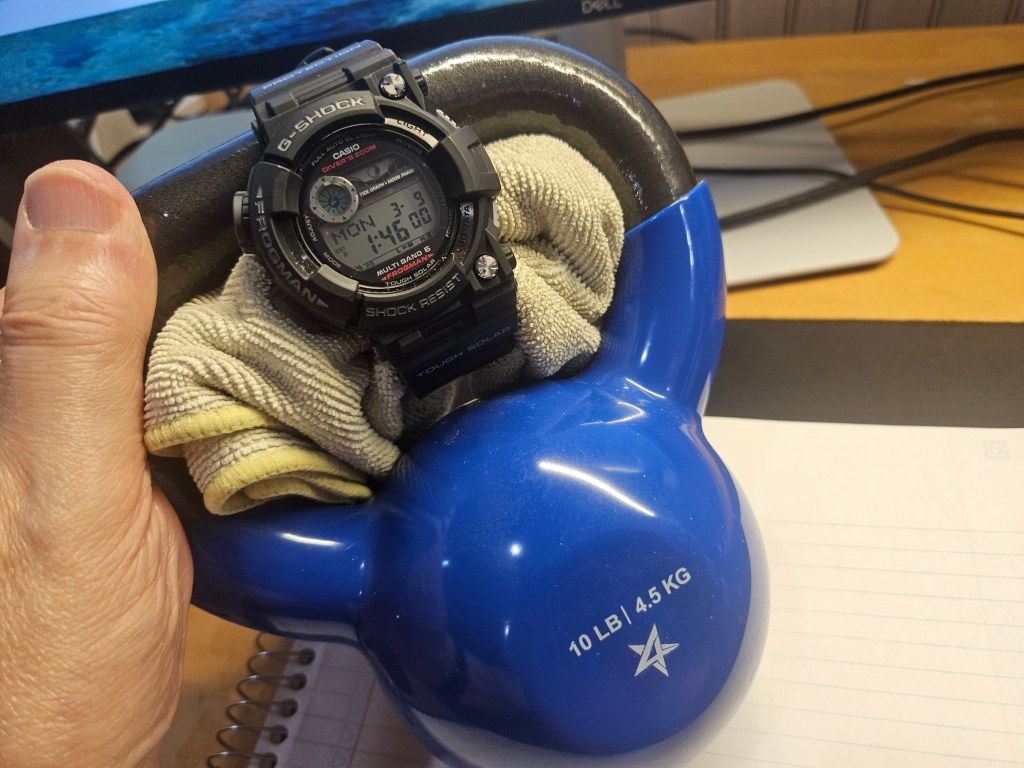
  • Farewell to the High-Flame Watch Obsession

    Farewell to the High-Flame Watch Obsession

    If someone asks, “Are you still into watches?” the honest answer is yes—but only in the slow-cooker sense of the word. The blaze that once roared is now a gentle simmer. I still enjoy my small, modest collection, but the thermonuclear fervor that once powered my YouTube monologues has cooled to something approaching sanity. For a decade I curated my watch fixation online with the zeal of a man possessed. That’s part of the job: intensity, enthusiasm, obsession on command. You don’t just talk about watches; you produce engagement about the engagement, feeding the ouroboros of social media in which people watch reaction videos about reaction videos reacting to the initial spark. It’s performance art—performance about performance.

    But those days are over. I am retired from the high-flame watch world. Age has something to do with it—priorities recalibrate whether you consent or not. At sixty-four, the thrill of “wrist presence” and the quiet barbarism of masculinity farming with a steel hockey puck strapped to my arm don’t summon the same dopamine. The fantasy of a watch transforming me into a rugged Alpha Male now feels like cosplay designed by an exhausted algorithm.

    The bigger shift, though, is psychological. I haven’t bought a watch in five months. I no longer spray Instagram with daily wrist shots. I no longer agonize over whether to vaporize five grand on this dial or that bezel or which “ultimate rotation” best aligns with my personal mythology. The absence of that noise feels like relief—a weight lifted, a gratitude bordering on spiritual.

    Low-flame mode offers a different kind of bandwidth. I can sit at my desk in the morning with no cravings, no micro-desires, no consumer fantasies tugging at my neurons. I can actually face the quiet—deal with the emptiness directly rather than embalming it with luxury steel. That absence is clarifying. It demands something of me besides swiping a credit card.

    Does low-flame mode mean I’ve quit watches? No—it means I’ve quit a particular orientation toward watches. This essay grew out of a small revelation I had yesterday: you don’t retire from X entirely, and X doesn’t retire from you entirely either. Instead, you negotiate a polite breakup. You acknowledge each other’s contributions, exchange your things, and move on. The High-Flame Watch Obsession and I have parted ways. We won’t be seen in public together again.

    Do I mourn this? Not really. I have complicated feelings, sure, but I don’t feel like Lot’s Wife, craning my neck for one last look at the fever swamp of my own compulsions. Mostly, I feel relieved. Mostly, I feel curious—what will life look like now that my brain is no longer a storage unit for lug widths, torque tolerances, and bracelet micro-adjustments? The quiet is unsettling, but it’s also promising. I finally have room for something else.

  • Breakfast Grains and Other Existential Threats As I Embark Upon a Two-Month Vacation

    Breakfast Grains and Other Existential Threats As I Embark Upon a Two-Month Vacation

    Today is my last day of class before I’m loosed into a two-month intermission—a stretch of time that must be handled like a late-arrival character in a film. This visitor has a history with me, knows my flaws, and demands that I greet him with something better than the usual slouch and shrug.

    Naturally, I’ll rehab the shoulder, write, and play the piano. Exercise will take care of itself; addiction is nothing if not reliable. Food, however, is the saboteur lurking in my blind spot. My emotional attachments to breakfast grains would make a Freudian blush: buckwheat groats, steel-cut oats, rolled oats, vanilla protein powder, cinnamon, berries, nuts. The whole wholesome choir. Trouble is, those virtuous bowls can turn caloric faster than a Hallmark plot twist.

    These cereals, if I’m honest, are less about hunger and more about the psychic umbilical cord. They point back to Mother, the Womb, or—in Phil Stutz’s terms—the Comfort Zone, the Warm Bath. Linger too long in that morning porridge spa, and the scale begins to stage an intervention. Add in my peculiar habit of finding solace in true-crime documentaries—an activity best described as athletic only in its couch commitment—and the trajectory is clear: weight gain, sloth, entropy.

    Fortunately, I do maintain countermeasures. Kettlebells and the Schwinn Airdyne stand ready like loyal foot soldiers. Reading, writing, and piano practice also help stave off the creeping rot. And yes, I’ll continue shaving, if only to avoid becoming the bearded oracle wandering the streets muttering about glycemic index.

    This two-month hiatus is really a dress rehearsal for retirement, which is now only eighteen months and three semesters away. It would be dishonest to pretend the prospect doesn’t rattle me. Maintaining purpose without the scaffolding of a teaching schedule is its own moral test. I’m fortunate to have reached this threshold, but fortune alone won’t keep me from misusing it. All I can do is stay awake, practice discipline, and ask my Maker for the humility to spend the limited time left with intention rather than drift.

  • Gemini Has Taken Away the Mystique from ChatGPT

    Gemini Has Taken Away the Mystique from ChatGPT

    Matteo Wong’s “OpenAI Is in Trouble” reports that Gemini is crushing ChatGPT in the AI race. Marc Benioff of Salesforce spent just two hours on Gemini–all the time he needed to realize he’s leaving ChatGPT after three years. As he wrote on X: “I’ve used ChatGPT every day for 3 years. Just spent 2 hours on Gemini 3. I’m not going back. The leap is insane.” Meanwhile, a troubled Sam Altman has announced a “code red” in a memo to his employees. It appears to be a sink or swim situation. But Wong points out that this is more of a horse race with one company in the lead, then another, and then another, with frequent fluctuations. But even if ChatGPT can gain lost ground, it loses mystique. In the words of Wong: “More than ever, OpenAI seems like just another chatbot company.” 

    One possible cause of ChatGPT losing ground is its focus on commercial ventures, wanting to be “a one-stop-shop for anything” so that the platform helps you in your consumerism. Another factor is its focus on engagement, which has made ChatGPT tweaked in a way as to become a super sycophant. Wong writes: “Those tweaks, in turn, may have made some versions of ChatGPT dangerously obsequious–it has appeared to praise and reinforces some users’ darkest and most absurd ideas–and have been the subject of several lawsuits against OpenAI alleging that ChatGPT fueled delusional spirals and even, in some cases, contributed to suicide.”

    Another challenge for OpenAI is Google’s sheer size. Google can integrate Gemini into its “existing ecosystem” with billions of users. 

    I’ve been on ChatGPT for three years, impressed with it as an editing tool, and confess I have some FOMO when it comes to the current iteration of Gemini. An argument could be made that I should switch to Gemini, not just because it’s embedded in the Google Chrome that I use, but that I shouldn’t get too comfortable with one form of AI, as I have with ChatGPT, over the last three years. It might be wise to see ChatGPT less as a companion and more of a manipulating agent designed to capture my engagement so that I am serving its business interests more than my self-interests. 

    Another voice inside me, though, says Gemini will eventually do the same thing. Unless I find that Gemini will be a game-changer, in ways that ChatGPT isn’t, I suspect both should be treated cautiously: use these platforms as tools but don’t let them hijack your brain. 

  • How Luxury Spaces Produced the Last Man (college essay prompt)

    How Luxury Spaces Produced the Last Man (college essay prompt)

    Over the last two decades, American consumer spaces—from sports arenas to airport terminals—have been redesigned to prioritize comfort, insulation, curated experience, and a sense of premium belonging. These spaces promise elevated existence: velvet-rope exclusivity, controlled environments, personalized amenities, and buffers that shield patrons from inconvenience, unpredictability, or discomfort. In other words, they promise a life free from friction.

    Two recent New Yorker essays vividly capture this shift. In “How the Sports Stadium Went Luxe,” John Seabrook traces the transformation of professional sports stadiums from gritty, communal, occasionally chaotic spaces into stratified luxury environments where spectators increasingly consume the spectacle from suites, clubs, micro-environments, and upgraded “experiences” designed for a privileged few. The stadium, once a rowdy democratic gathering where masses cheered together, now resembles a branded theme park of status tiers—where the game itself recedes behind the performance of being someone who can afford to be in the right section.

    Zach Helfand’s “The Airport-Lounge Wars” extends this critique to modern travel. Airports now offer a bifurcated universe: the cramped, stressful, gate-area masses and the plush, curated lounges where passengers sip fruit-infused water under soft lighting while charging their devices and sampling “elevated” snacks. Helfand describes these lounges as “slightly better than nothing”—a telling phrase that captures the absurdity of luxury whose chief purpose is to soothe adult anxiety rather than provide meaningful enrichment. In both essays, the consumer becomes less a citizen than a carefully handled customer—shielded, pacified, and cocooned.

    This convergence of comfort, curated experience, and luxury has resulted in what many cultural critics call infantilization: the softening of the adult individual into a person who increasingly depends on structures of comfort, performs curated identity, avoids discomfort, and loses tolerance for challenge. Nietzsche warned of such a figure in Thus Spoke Zarathustra when he described the Last Man—a being who seeks comfort above all else, avoids risk, avoids conflict, avoids intensity, avoids suffering, and declares smugly, “We have invented happiness.” The Last Man lives in a society that confuses convenience with flourishing, comfort with meaning, and safety with virtue.

    Your task is to analyze how Seabrook’s and Helfand’s essays each illustrate the rise of infantilization through the growing cultural obsession with luxury, curated experience, and personal insulation. You will argue how both writers, in different contexts, reveal a society drifting toward Nietzsche’s Last Man—where people are increasingly coddled, increasingly fragile, increasingly comfort-dependent, and increasingly detached from the communal, unpredictable, and occasionally uncomfortable experiences that once defined adulthood.

    To build your argument, consider the thematic questions and analytic frameworks below. You may address several of them or focus deeply on a smaller selection, but your essay must ultimately make a clear, debatable claim about how the phenomenon of infantilization unfolds in both essays.


    1. Luxury as Surrogate Identity: The Cosplay of Importance

    Seabrook describes stadiums where spectators no longer attend to watch the game—they attend to be seen in a particular environment, to signal aura, to inhabit a curated identity. Luxury boxes, clubs, insulated corridors, private entrances, and gastronomic stations function not as amenities but as props for self-presentation. Patrons “cosplay” as elites through their seating choices. Helfand observes the same phenomenon in airport lounges: passengers use lounge access to projects status, gravitas, and “importance.” The lounge becomes a stage where individuals perform adulthood through perks.

    Analyze how luxury becomes a kind of identity cosplay. How does performance replace participation? How does curated environment become a psychological crutch for fragile egos?


    2. Comfort as a Psychological Drug

    Both essays describe environments designed to eliminate discomfort: cushioned seating, privacy, temperature-controlled rooms, abundant amenities, and curated calm. Patrons no longer tolerate cold seats, crowds, unpredictable noise, or the chaos of public life.

    In Nietzsche’s framing, this desire for frictionless existence is the defining trait of the Last Man: a person who fears intensity and pain more than insignificance.

    Examine how both essays portray comfort not as a neutral good, but as a chemical sedative—an anesthetic that dulls the senses and diminishes the human appetite for challenge.


    3. Infantilization Through Convenience and Insulation

    Helfand’s lounges function like nurseries for adults: soft lighting, soothing music, easily accessible snacks, staff catering to passengers’ needs, and gentle removal from the stressful “real world” of airports. Seabrook’s luxury stadiums behave similarly: they protect spectators from bad weather, loud crowds, long lines, and general inconvenience.

    Ask: What happens to adults who no longer encounter difficulty or discomfort in public spaces? How do these environments promote emotional regression, fragility, or dependency? How do cushioned experiences erode resilience?


    4. The Collapse of the Communal Experience

    Traditional stadiums were communal crucibles: strangers hugging after a touchdown, fans screaming in unison, unified collective identity. Luxe stadiums fracture that experience into premium sections, exclusive clubs, and tiered access.

    Airports once functioned as equalizers—everyone endured the same wait, the same lines, the same discomfort. Now, lounges separate the “important” travelers from the masses.

    How does segregation by luxury contribute to infantilization? Does comfort isolate individuals in echo chambers of curated ease? How does the decline of communal friction foster narcissism and social detachment?


    5. Emotional Labor and Passivity

    Luxury environments demand certain emotional performances: politeness, calmness, carefully managed pleasantness. In lounges, passengers adopt a soft demeanor; in stadium clubs, patrons behave with polite detachment rather than unruly fandom.

    Adults become well-behaved children: quiet, controlled, pacified.

    Discuss how both essays show the replacement of passionate, authentic emotional expression with sanitized, polite, passive behavior. How does this behavioral shift align with the Last Man’s avoidance of intensity?


    6. Tiered Access, Fragile Status, and the Anxiety of Comfort

    Both essays highlight how luxury spaces create hierarchies: VIP vs general admission, club members vs regular fans, lounge patrons vs the gate-area masses. These hierarchies foster anxiety because comfort becomes contingent on status—and status becomes fragile.

    In Nietzsche’s Last Man, community is replaced by individualistic comfort-chasing. How do tiered luxury systems cultivate insecurity, status-dependence, and infantilized anxiety?


    7. Authenticity as Inconvenience

    In both essays, authenticity of experience is subtly mocked or sidelined. The real stadium experience—mess, discomfort, unpredictability—gets replaced by cushioned sterility. The real airport experience—crowds, lines, irritation—is smoothed into a curated simulation of adult life.

    Nietzsche warned that the Last Man despises authenticity because authenticity requires discomfort.

    How do Seabrook and Helfand portray authenticity as an endangered species—and how does its absence produce infantilization?


    Write a 1,700-word comparative essay that argues:

    How and why a society obsessed with curated luxury and frictionless experience becomes an infantilized culture that resembles Nietzsche’s Last Man. John Seabrook’s “How the Sports Stadium Went Luxe” and Zach Helfand’s “The Airport-Lounge Wars” provide complementary case studies of how comfort, status-tiering, and curated identity hollow out adult resilience, diminish communal life, and normalize passivity.

    Your essay must:

    1. Develop a strong, debatable thesis about how infantilization manifests in both essays.
    2. Analyze key passages from Seabrook and Helfand with close reading.
    3. Compare how each writer critiques luxury culture through examples, tone, description, and anecdote.
    4. Incorporate Nietzsche’s concept of the Last Man as a theoretical grounding.
    5. Include a counterargument—for example, that comfort is a legitimate human good, that luxury enhances experience, or that curated spaces improve efficiency or mental health.
    6. Rebut the counterargument with evidence from the essays and your own reasoning.
    7. Conclude with broader implications—what kind of citizens does luxury culture produce? What happens to democracy, community, or adulthood when society builds padded rooms for the affluent?

    Your writing should demonstrate intellectual rigor, clarity of organization, and precise control of prose. Engage deeply with the texts. Show the reader how these essays illuminate not just consumer culture, but the deeper philosophical question Nietzsche raised: What kind of humans are we becoming?

  • Weapons of Fear: Epistemic Collapse in Eddington and Weapons (college writing prompt)

    Weapons of Fear: Epistemic Collapse in Eddington and Weapons (college writing prompt)

    Over the last decade, American culture has undergone a profound crisis of shared reality—what scholars call an epistemic collapse. In the vacuum created by fractured institutions, algorithm-driven outrage, political opportunism, and a populace trained to distrust expertise, communities have turned inward, building their own private universes of truth. Two recent films—Ari Aster’s Eddington (2024) and Zach Cregger’s Weapons (2025)—stand at the center of this cultural conversation. While their genres differ—Eddington as a neo-Western political drama and Weapons as a folk-horror anthology—both films dramatize the same underlying catastrophe: when people no longer agree on what is real, they become dangerously easy to manipulate, divide, and weaponize.

    In Eddington, the small New Mexico town is already fractured before the plot begins. The COVID-19 pandemic becomes the spark that exposes deep fault lines: anti-mask sheriff Joe Cross stokes resentment and paranoia, pro-mandate Mayor Ted Garcia attempts to preserve public health in a community that no longer trusts him, and the town’s institutions melt under the weight of political rage, conspiracy theories, and personal vendettas. Masks, lockdowns, land rights, and municipal policy become symbols of existential war. Citizens drift into echo chambers where identity outweighs truth and where “freedom” can be invoked to justify violence. Through these tensions, Eddington examines how tribal politics, misinformation, and fear transform ordinary people into agents of chaos—into what the film metaphorically frames as “weapons.”

    Weapons begins in a seemingly different register—a folk-horror narrative involving children, trauma, and community superstition—but it ultimately reveals itself as a story about the same phenomenon: collective panic filling the void left by failed institutions. When mysterious events shake the town, people reach not for evidence, reason, or communal deliberation, but for myths. Rumors calcify into “truth,” grief mutates into paranoia, and the community turns against itself in a desperate search for someone to blame. In this atmosphere, children, grief-stricken parents, and unstable townspeople all become susceptible to narratives that promise clarity and purpose, even at the price of cruelty. Like Eddington, Weapons suggests that the human need for certainty can be exploited, turning vulnerable people into instruments of violence.

    Both films take place in communities that feel abandoned—by government, by truth, by stability, by the social contract. In Eddington, the pandemic reveals a town already primed for collapse: neighbors distrust each other, public servants abuse their power, and media ecosystems churn conspiracies at a devastating pace. In Weapons, the terror centers on mysterious disappearances and supernatural dread, but the underlying cause is similar: when people feel unmoored, they grasp at stories—however irrational—that make sense of suffering. In both cases, the crisis is not just external; it is psychological, emotional, and cultural. These films argue that a society that no longer shares a framework of truth inevitably begins producing its own monsters.

    Your task is to write a comparative, argumentative essay that analyzes how both Eddington and Weapons depict the collapse of shared reality and the transformation of ordinary individuals into “weapons”—tools of fear, ideology, grief, or superstition. You will argue how each film uses different storytelling techniques to illuminate the same cultural trauma: a nation where trust in institutions has eroded, where truth is increasingly privatized, and where communities respond to uncertainty with tribalism, scapegoating, and paranoia.

    To frame your argument, consider the following thematic questions:

    1. Epistemic Crisis: What happens when communities no longer share the same reality?

    In Eddington, the pandemic becomes a catalyst for unraveling collective trust. Sheriff Joe Cross exploits the crisis for personal power, leveraging fear and resentment to undermine public-health directives. Misinformation spreads faster than illness, and political theater replaces governance. In Weapons, suspicion and folk belief dominate; characters construct supernatural explanations for grief they cannot otherwise process. How do these fictional communities illustrate the broader national struggle to maintain a shared understanding of truth?

    2. Scapegoating and Manufactured Monsters

    Both films show societies that create monsters when reality becomes intolerable. In Weapons, grief and superstition lead to scapegoating—outsiders, children, even supernatural entities become symbols of community anxiety. In Eddington, “the monster” is political: masks, mandates, immigrants, liberals, conservatives—whatever the tribe defines as the existential threat. Analyze how each film uses its respective genre (horror vs. political drama) to critique the human impulse toward blame when confronted with collective fear.

    3. The Weaponized Individual: When people become instruments of chaos

    Sheriff Cross turns himself into a political weapon; Vernon weaponizes conspiracy thinking; Brian transforms a viral video into a career. Meanwhile, characters in Weapons become pawns of rumor and superstition. How do the films examine the way individuals can be radicalized or repurposed by fear, trauma, or ideological narratives?

    4. Institutional Failure and the Vacuum It Creates

    In Eddington, institutions collapse under pressure: public health, municipal leadership, local law enforcement, media, and even basic civic trust. In Weapons, institutions either fail or play no meaningful role, leaving individuals to fill the void with folklore and violent improvisation. Compare how each film portrays the consequences of institutional breakdown—and how that vacuum shapes community behavior.

    5. The Loss of Humanity in a Post-COVID World

    Even though Weapons is not explicitly a pandemic film, its emotional landscape reflects post-COVID anxieties: loneliness, grief, mistrust, and the longing for clear explanations. Eddington addresses the pandemic head-on, depicting how fear strips people of empathy and connection. In both films, humanity erodes as people prioritize survival, identity, or belonging over compassion. Analyze how each story portrays this transformation.

    6. The Role of Media, Algorithmic Influence, and Storytelling

    Eddington explicitly critiques media spectacle and algorithmic manipulation; Weapons does so more subtly through mythmaking and rumor. Compare how each film reveals the power of narrative—factual or fictional—to shape belief, identity, and behavior. What does each film suggest about the modern American hunger for stories that confirm our fears, validate our tribal loyalties, or simplify our grief?

    7. The Nietzschean Last Man: A Society Without Higher Purpose

    For extra depth, you may choose to integrate the concept of Nietzsche’s “Last Man”—the individual who seeks comfort over purpose, safety over meaning, distraction over responsibility. Which characters in each film exemplify this drift toward nihilism? Does each film suggest that the Last Man is a symptom of cultural decay—or part of its cause?


    Write a comparative essay of 1,800–2,200 words that argues how Eddington and Weapons portray the following intertwined themes:

    • the breakdown of shared reality
    • the rise of tribalism and paranoia
    • the transformation of ordinary people into “weapons”
    • the creation of monsters—psychological, political, or supernatural—to fill the void left by institutional failure
    • the erosion of humanity in a culture defined by fear, spectacle, and algorithmic influence

    Your thesis must make a clear, debatable claim about what these films reveal about post-COVID American society. You must support your analysis with close reading of key scenes, comparison of cinematic techniques, and sustained argumentation.

    Your essay must also include:

    1. A Counterargument

    Acknowledge at least one opposing view—for example, the claim that Eddington is primarily about political extremism while Weapons is primarily about horror and grief, and therefore the comparison is forced. Then rebut that view by showing that genre differences sharpen, rather than undermine, the thematic parallels.

    2. A Rebuttal

    Explain why your central claim still holds. You may argue that both films are ultimately parables about epistemic breakdown and human vulnerability in the absence of trusted institutions.

    3. A Conclusion That Opens Outward

    Discuss what these films suggest about where American culture may be heading if fragmentation, mistrust, and weaponized narratives continue.

    Your writing should demonstrate:

    • analytical depth
    • clarity
    • engagement with cinematic detail
    • strong comparative structure
    • thoughtful paragraph organization
    • precise sentence-level control

    This essay invites you not only to compare two compelling films, but also to reflect on the cultural moment that shaped them—and the uncertain landscape we now inhabit.

  • Confessions of a College Writing Instructor in Transition

    Confessions of a College Writing Instructor in Transition

    Yesterday morning at the college, I ran into the Writing Center director and asked whether AI had thinned out the crowds of students seeking help. To his surprise, the numbers were down only slightly—less than ten percent. I told him I’m retiring in three semesters and have no idea what the job of a writing instructor will look like five years from now. He nodded and said what we’re all thinking: we’re in the middle of a technological tectonic shift, and no one knows where the fault lines lead.

    When I got home, I realized that when I meet my students face-to-face in Spring 2026, I’ll need to level with them. Something like this:

    Hello, Students.

    I won’t sugarcoat it. Writing instructors are in transition, and many of us don’t quite know our role anymore. We’re feeling our way through the dark. To pretend otherwise would be less than honest, and the one thing we need right now is credibility. 

    In this class, you’ll write three essays—each roughly two thousand words. The first examines GLP-1 drugs like Ozempic and the messy question of free will in weight management: are we outsourcing discipline to pharmaceuticals? The second explores our dependence on emerging technologies that claim to build new skills while quietly eroding old ones—a process known as de-skillification. The final essay tackles ultra-processed foods and the accusation that eating them is a form of self-poisoning. We’ll examine that claim in a world where food technology, especially for people on GLP-1 medications, promises affordability, convenience, and enhanced nutrition. All three assignments orbit the same theme: technology’s relentless disruption of daily life.

    And speaking of disruption, we need to talk about large language models—ChatGPT, Gemini, Claude, Llama, and whatever else arrives next Tuesday. It’s obvious that students are already using these tools to write and edit their work. Many of you have used them throughout high school; for you, AI isn’t cheating—it’s normal.

    I don’t expect you to avoid these tools. They’re part of being a functioning human in a rapidly changing world. The real question isn’t whether you use them, but how. If you treat them like wish-granting genies spitting out essays on command, you’ll produce communication with all the nuance of an emoji—slick, shallow, and dead on arrival. If you use AI for quick-and-dirty summaries, your brain will soften like a forgotten banana. But if you treat these tools as collaborators—writers’ room partners who help you brainstorm, clarify arguments, test counterarguments, and refine your prose—then you’re not just surviving college, you’re evolving.

    College is where you learn to use tools that shape your professional future. But it’s also where you sharpen the questions that determine how you live: Why am I here? What does it mean to live well? Those aren’t academic abstractions; they’re the spine of adulthood. You can’t separate your ambitions from your identity.

    AI can’t give you a soul. It can’t recall your first heartbreak, your deepest disappointment, or the electricity of a song that arrived at exactly the right moment. But it can help you articulate experience. It can help you think more clearly about who you are, how you plan to work, and how to live with an intact conscience.

    The critical thinking and communication skills we practice in this class exist for that purpose—and always will.

  • Flashback to Tony Banks’ “Afterglow”

    Flashback to Tony Banks’ “Afterglow”

    The podcast conversation between Andrew Sullivan and George Packer left me with a kind of Boomer melancholia: the sense that the world is shifting beneath our feet while we stand rooted in place. The young don’t believe in our institutions, our democracy, or our economic promises. We no longer share a common reality; instead, we inhabit digital bunkers curated by conspiracy brokers who can elevate grifters to national power. Boomers—myself included—feel sidelined, stunned, and a little ghostlike as a new world rises and shrugs us off. I carry that heaviness alongside the throb of my torn rotator cuff, which still jerks me awake at two in the morning. My shoulder and my generation feel similarly compromised: stiff, unreliable, and unable to perform the way they once did.

    These thoughts ambushed me this afternoon as I walked into my bedroom to grab my things before picking up my daughters from high school. Out of nowhere, a song from my teens surfaced—Genesis’s “Afterglow,” written by Tony Banks. It appears on A Trick of the Tail, but the definitive version is Phil Collins’s live performance on Seconds Out, where the ache in his voice makes the song feel like a confession. The narrator wakes from a spiritual coma to realize the world he trusted is gone and he’s broken along with it. In that ruin, he yearns to surrender himself to something higher—love, purpose, the purifying clarity of devotion. It reminded me of Nick Cave’s conversation on Josh Szeps’s Uncomfortable Conversations, where Cave describes his own devotional temperament and his hunger for transformation. “Afterglow” feels like the soundtrack to that kind of awakening.

    But not everyone hungers for that kind of epiphany. I’m not sure my heroes Larry David, George Carlin, or Fran Lebowitz would ever have an Afterglow Moment, and I don’t think they should be judged for it. Some people thrive without chasing transcendence. I know that I, like Nick Cave, feel broken in a broken world and remain open to whatever cleansing revelation might come. But I don’t mistake that for a universal template. If I ever had an Afterglow Moment and found myself at dinner with Fran Lebowitz, I’d keep the whole thing to myself. There’s no reason to evangelize the converted—or the happily unconcerned.