Author: Jeffrey McMahon

  • Joyface and the Gooseberry Lie

    Joyface and the Gooseberry Lie

    In the short story “Gooseberries,” Chekhov builds a quiet indictment of false contentment. The story opens with Ivan Ivanich, a veterinarian, and his friend Bourkin, the schoolmaster, soaked from rain and flushed from vigorous exercise. There’s a rugged, life-affirming joy in their discomfort—an honest happiness born from movement, exposure, and the humbling vastness of the natural world.

    This raw joy stands in mocking contrast to Ivan’s brother, Nikolai, a man who has spent years grinding away at bureaucratic tedium, nursing a fantasy of rural bliss. His goal? To retreat to the country and become a minor land baron, surrounded by gooseberry bushes and sycophantic peasants. Ivan, ever the clear-eyed cynic, knows this is no pastoral ideal—it’s a death wish in disguise. He describes his brother’s dream as “six feet of land,” a nod not to acreage, but to a coffin.

    Drenched and weary, Ivan and Bourkin seek shelter with their friend Aliokhin at his mill. There, Chekhov offers fleeting pleasures: the warmth of hospitality, the intimacy of shared conversation, the sensual revival of a hot bath. These are the real joys of life—ephemeral, yes, but earned and communal.

    And then the story pivots. Ivan launches into his monologue about Nikolai, who finally escaped the city by marrying (and then outliving) an “ugly old widow,” purely to fund his pastoral delusion. The transaction is grotesque in its coldness—he’s not marrying for love but for the deed to a fantasy. When the widow dies, he buys his estate, plants twenty gooseberry bushes, and gorges himself in bloated isolation.

    Ivan visits and is appalled. His brother, the red dog, and the cook—all puffed and pampered—look like livestock awaiting slaughter. They have the physicality of pigs and the spirituality of corpses. Nikolai dotes on his gooseberries with religious fervor, insisting on his happiness. But Ivan sees through it. This isn’t happiness—it’s Joyface, a self-inflicted psychosis, a desperate mask slapped over a hollow life.

    What horrifies Ivan is not merely his brother’s delusion, but its implication: that many of the world’s so-called happy people are just as corrupt, just as morally dead. These are the bloated rich, insulated from suffering, convinced of their own virtue while causing quiet devastation to the world around them.

    To witness such delusion is to lose faith in people altogether. Ivan begins to spiral into misanthropy, seeing humanity not as a noble species, but a swarm of narcissists chasing comfort, stroking their chimeras, and calling it joy.

  • Why I Finally Quit Amazon Vine

    Why I Finally Quit Amazon Vine

    This morning, after 17 years, I finally quit Amazon Vine. The decision was overdue. Over the years, the quality and appeal of the products had steadily declined. Gone were the days of testing laptops and high-end gear. In their place: flimsy gadgets, unvetted accessories, and a parade of plastic odds and ends I never asked for.

    What made it worse was the imbalance. I was doing the product testing and writing detailed reviews complete with photos and “insightful” commentary. In return, I got stuff I didn’t really want and a tax bill for my trouble. Amazon got free labor. I paid the IRS. That’s not a perk. That’s a hustle.

    The required output of 80 reviews every six months might’ve been justifiable when the items were exciting. But lately, writing thoughtful reviews for phone cases, cheap jewelry, and off-brand supplements felt like donating my time to a billion-dollar corporation. It became clear: this was no longer a good use of my energy.

    The moment I quit, I felt an enormous sense of relief. If I want something now, I’ll buy it with my own money. No strings. No tax forms. No obligation to prop up Amazon’s quality control department for free.

    Maybe others are having a better experience with Vine. I hope they are. But after 17 years of watching the program morph into something transactional and thankless, I knew it was time to walk away. This was my experience. I’m glad to be done. Vine used to be fun. It no longer is, so this is the end of an era for me. 

  • Operation 2B: Writing at the Edge of Madness

    Operation 2B: Writing at the Edge of Madness

    Last night, I dreamed I was recruited into a top-secret engineering project. Why? I have no idea. I’m not an engineer. I don’t calculate. I conjugate. But apparently, someone in a conference room with clearance and questionable judgment decided that this classified operation needed… a writer.

    They dropped me into a government-issue apartment compound, a cheerless complex filled with bunking engineers and low-grade existential dread. I was assigned a shared unit with mismatched strangers. One of them, a single mother, had laid out a modest spread of peanut butter, celery, and crackers for her toddler—a rationed still life of parental competence. “Eat,” she told me. “You’ll need fuel for the project.” And so I did—voraciously, like a man preparing to write the Constitution on deadline.

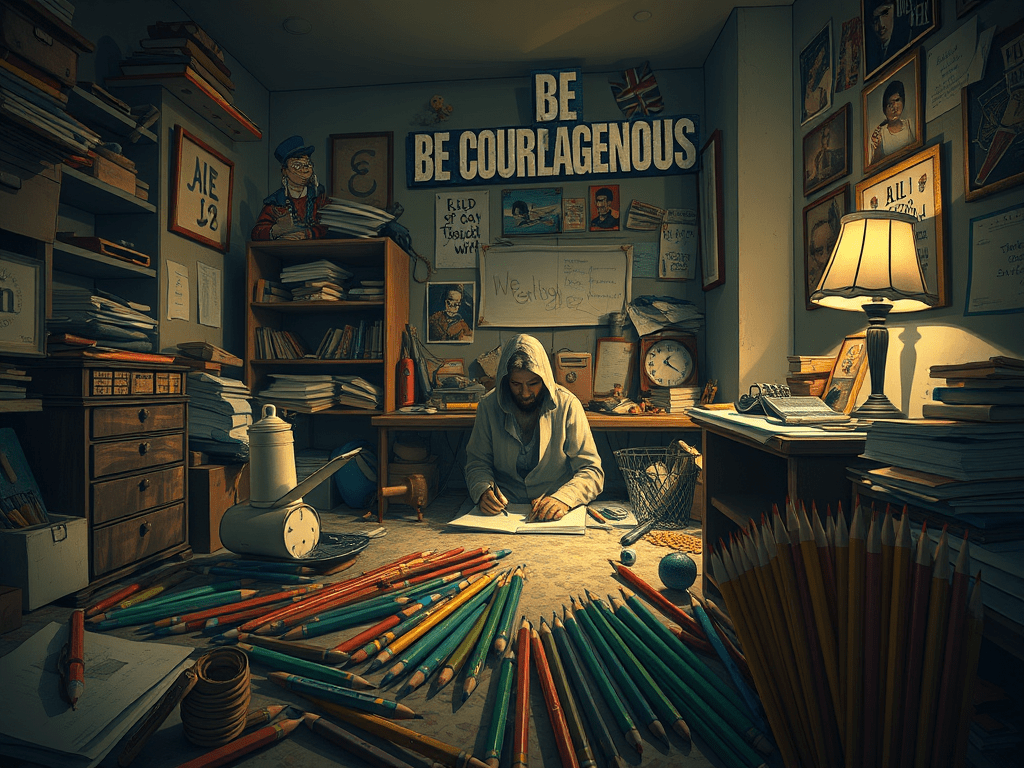
    One by one, my roommates peeled off to private rooms. There was a charming British expat with a silver beard and a childhood photo of himself in a Bentley—Old Money in exile. Despite his aristocratic roots, he was delightfully upbeat, the kind of man who would whistle while burying landmines. But soon, he too was reassigned. It became clear that my “team” had evaporated, and I had been left behind. Not fired. Not forgotten. Just… chosen. To work alone. On a project I didn’t understand. Surrounded by a sea of mechanical pencils. Hundreds of them, like offerings at the altar of Bureaucratic Futility.

    Feeling the weight of vague responsibility, I walked to the project site—a sprawl of white dust and scattered canopies that looked more like a failed music festival than a classified facility. Under one tent, I found two twenty-somethings playing at adulthood. I asked the woman which pencil I should use. She shrugged but confessed the 2B graphite was easiest on her eyes. A clue. A preference. A hierarchy of legibility. I realized she would be my proofreader, my silent companion in this ridiculous odyssey.

    Then came the sign. A man appeared—former military, highly decorated, looking like a character drafted from a Tom Clancy novel. Without a word, he walked up to my apartment door and placed a sign the size of a license plate in the window frame: BE COURAGEOUS. The kind of sign you see right before a high-stakes mission or a TED Talk.

    And that was it. My mission was mine alone. A 500-page manuscript I had to read to prepare myself for the project. No advisor, no support, no backup—just me, a pile of pencils, and a shadowy proofreader who preferred 2B. I awoke shortly after, microwaved some buckwheat groats, brewed a pot of dark roast coffee, and stared into my kitchen tiles wondering if this was a dream about writing… or about surviving it.

  • Spiritual Kitsch and the Muscle Gods of Sedona

    Spiritual Kitsch and the Muscle Gods of Sedona

    In the early 90s, my brother managed a spa restaurant at the Grand Wailea in Maui—a temple of eucalyptus steam and $18 cucumber water. His girlfriend, the head chef, ruled the kitchen with the calm authority of a health-conscious empress. I visited one summer and found myself one morning alone at breakfast, sipping coffee and trying to look like a man deep in thought rather than a tourist waiting on papaya boats.

    At the table next to mine sat a striking brunette with the kind of diamond on her finger that doubles as a paperweight. She started talking. To me. Boldly, intimately, as if we were two old conspirators.

    She was thirty-five, married, and bored. Grew up in Santa Monica. Modeled a little. Dabbled in chaos. Now she was married to a man forty years her senior—a retired Navy officer turned business tycoon currently swimming laps in the resort pool while his wife flirted with the help. She pointed out one of the servers, a freckled boy in his early twenties pouring her orange juice with the dreamy smile of a man about to be devoured.

    “I’m sleeping with him,” she said, as casually as if she were announcing she’d tried the papaya last time and found it too sweet.

    She spoke of her marriage like a real estate deal: mutually beneficial, emotionally vacant, and efficiently managed. Her husband financed her yoga retreats. She provided him with public companionship and discreet absence. After breakfast, she was off to a vegetarian cooking class to learn how to live forever.

    She told me she was researching longevity, obsessed with health, and that she was trying to convince her husband to move to Sedona, Arizona—“the best place in the country to live a long life,” she said.

    Back then, I filed Sedona away in the brain folder labeled someday. That place. The Holy Grail of Health. A desert Shangri-La where your body becomes pure and your soul gets exfoliated.

    I didn’t make it there until a few weeks ago.

    We drove in from Prescott, and I’ll admit it: the landscape is jaw-dropping. Red rock formations that looked carved by gods on steroids. Mountains with biceps. Cliffs that scowl. One ridge looked like Zeus doing a lat spread.

    Then we hit the town.

    One-lane highway. Organic restaurants. Shops selling mystical crystals and dreamcatchers made in China. Every storefront promising to “align your energy” or “awaken your inner light”—assuming you have a functioning credit card.

    We took a bus tour. The guide cheerfully explained that tech billionaires ship their Lamborghinis in on trucks just to drive them through town for a week of synchronized flexing, tantric massages, and moon-circle manifesting.

    The mysticism was so heavy-handed it became farce. At a matcha tea stand, a man with unblinking eyes dropped a sugar butterfly into my daughter’s drink and, with complete sincerity, instructed her to make a wish so the butterfly could “help it manifest.”

    That was the moment.

    That was when I realized I hated Sedona. Not the place—God no. The place is stunning. I hated the idea of Sedona.

    Sedona the place is geology and wonder.
    Sedona the idea is a branded hallucination.

    It’s the lie that you can downshift your soul into first gear while screaming through town in a Lamborghini. It’s the peacock strut of spiritual materialism—buying essential oils and amethyst pendants as if they’ll excuse the $5 million home and the $10 million ego inside it.

    Sedona wants you to believe you can live forever if you just buy enough gluten-free sage bundles and whisper affirmations into your Yeti thermos.

    The sugar butterfly? It’s not a wish. It’s a warning.

  • The Ascent of Paper Towel Man

    The Ascent of Paper Towel Man

    Last night, my subconscious staged a farce: I was back on my old college campus, nervously ordering textbooks for my freshman comp classes—because that’s how my brain parties at night. After hours in the academic underworld of ISBNs and course numbers, I stumbled home under a moonless sky only to be seized by a grim realization: I forgot to order a crucial book.

    Panic.

    In this emergency, I reached not for Xanax, but a dark green landline phone, the color of envy or perhaps bureaucratic despair. I called the English Chair. Except in dream logic, the English Chair was not the overworked academic I know—but Scott Galloway, the sarcastic podcaster and economics professor. 

    I told him he had to submit the textbook order by midnight.

    True to form, he lobbed verbal grenades at me. Taunts, jabs, snide remarks. His voice had that tone—the kind that leaves you wondering if you’re being insulted or inducted into a secret society of useful idiots.

    I said, “Don’t joke over the phone. Only mock me in person.”

    He replied, “Fine. Come over. I’m having a dinner party.”

    Naturally.

    So, in the witching hour, I opened my front door—expecting a miles-long slog up a mountain—and instead, in the way only dreams and luxury real estate can allow, I was already at Casa Galloway, perched perilously on stilts over a cliff like some Bond villain’s hideout with a podcast studio.

    He was charming in person—gregarious, warm, practically glowing with hospitality. He led me into a dimly lit dining room where guests laughed and angel hair pasta sat arranged like delicate tumbleweeds on silver trays. White sauce shimmered like divine lubrication.

    “Take as much as you like,” he said, arms open.

    I hesitated. Did he make enough? Should I pretend restraint for the optics? Was this a test of my caloric discipline?

    I took a tiny, tragic portion.

    He raised an eyebrow. I mumbled something about “leaving enough for everyone,” which seemed to impress him. He praised my selflessness, as if I’d just refused seconds at a famine relief banquet.

    After eating my guilt-ridden noodle clump and participating in some effervescent dinner chatter, I left and returned home to my modest flat at the bottom of the hill. But before I could nestle into my bed of neuroses, it hit me: Galloway might be short on paper towels after his soirée.

    And I had a Costco-sized case.

    I threw the rolls under my arm and charged up the mountain like a sentient Amazon Prime delivery. My quads flexed with purpose. I was the Paper Towel Man, delivering absorbency and justice. I swung the rolls from hand to hand like batons of competence.

    I found him on the front porch—a cliffside slab barely larger than a yoga mat, with a waterfall crashing nearby like some sort of capitalist Shangri-La.

    “I’ve brought reinforcements,” I said, brandishing the paper towels like sacred scrolls.

    He smiled, then warned me: “The last fifty feet are treacherous.”

    Of course they were. The final ascent required mountaineering skills I didn’t have—jagged rocks, sudden drops, the kind of climb you’d expect in a spiritual thriller set in Tibet.

    But I was determined. Galloway had ordered my textbook and served me pasta. Reciprocity was sacred. I would reach that porch if it killed me.

    And then I woke up. Standing in my kitchen. Brewing coffee. Scribbling this fever dream into a notebook, trying to decide if it meant anything—or just meant I shouldn’t eat carbs after 9 p.m.

  • The Gospel According to the CEO: Why Work Became Worship

    The Gospel According to the CEO: Why Work Became Worship


    Antonio García Martínez, author of Chaos Monkeys and veteran of the tech world, argues that many recent college graduates, adrift without a guiding philosophy or any grounding in the psychological architecture of religion, redirect their spiritual hunger toward the workplace. In particular, they latch onto tech companies as secular stand-ins for organized faith. These firms offer more than a paycheck—they offer a sense of belonging, higher purpose, and the illusion of transcendence.

    The tech campus becomes a modern monastery, where the faithful eat, sleep, exercise, and labor. With its cappuccino bars, Michelin-level cafeterias, on-site laundry, yoga studios, wellness centers, and libraries, the workplace becomes not just a job, but a lifestyle. Employees live in an upgraded dormitory fantasy—one where comfort masks control.

    At the heart of this corporate spirituality is the CEO, the charismatic founder who plays the role of messiah. Workers are fed lofty slogans about “changing the world” and “disrupting paradigms” while toiling for long hours in service of a vision that often benefits only the top brass. The leader isn’t just admired—he’s revered. The Kool-Aid is organic, gluten-free, and laced with grandiosity.

    This phenomenon has become cultural fodder, explored with increasing skepticism in shows like Silicon Valley, Severance, WeCrashed, The Dropout, and Devs. Documentaries such as The Inventor, WeWork: Or the Making and Breaking of a $47 Billion Unicorn, and Fyre: The Greatest Party That Never Happened expose the blend of megalomania, fraud, and collective delusion behind these so-called missions.

    What drives this mass suspension of disbelief? Part of the answer lies in what Derek Thompson calls “Workism”—the belief that one’s job is the core of one’s identity and life’s meaning. Combined with groupthink and CEO idolatry, Workism completes a trifecta of modern manipulation. In this new faith, the altar is a standing desk, and salvation is just one IPO away.

  • Too Good to Sip: My Toxic Romance with Coffee

    Too Good to Sip: My Toxic Romance with Coffee

    I should probably quit drinking coffee—not because it’s bad for me, but because it’s too good, like a lover who ruins you for everyone else.

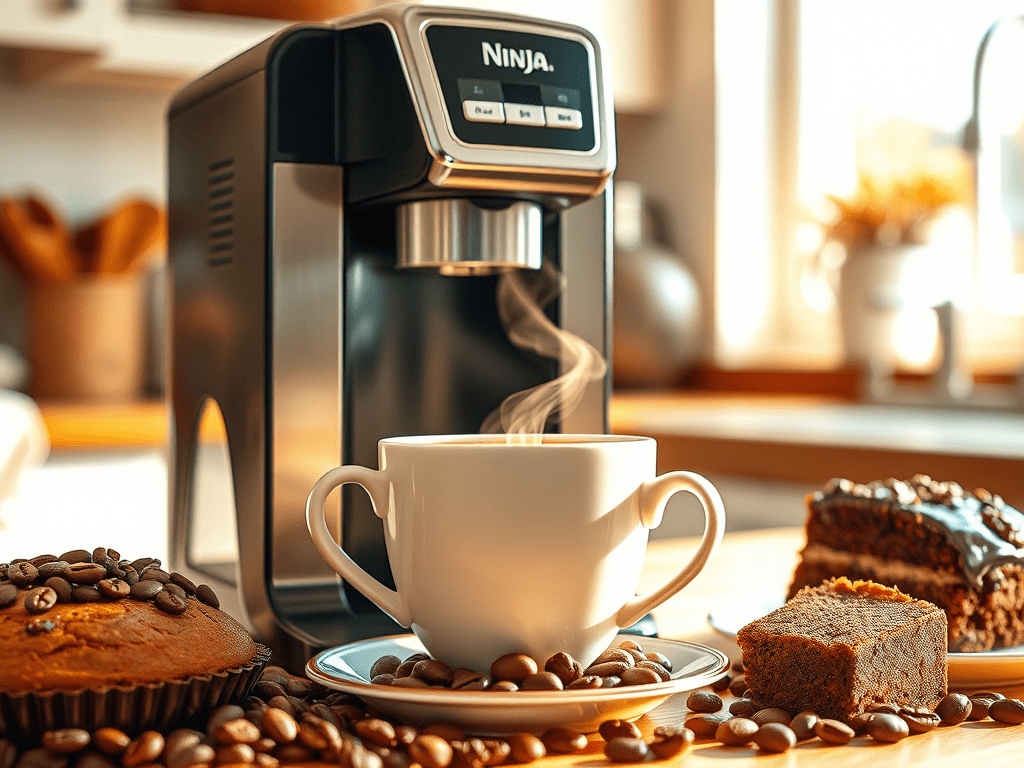
    This revelation smacked me in the face after a visit to my in-laws in Prescott Valley. There, in the quiet altitude of Arizona suburbia, I encountered coffee nirvana via a Ninja coffee maker—a machine that makes my Keurig taste like it was brewed through a gym sock. The Ninja’s brew was hotter, stronger, bolder. It had the depth of a Russian novel and the intensity of a Quentin Tarantino monologue. I immediately bought one for myself, eager to elevate my mornings into spiritual events. And elevate them I did—too far.

    Now my life has become tragically front-loaded. The coffee is too exquisite. It’s an overachiever. Nothing that follows—emails, errands, workouts, social obligations—can match its rich, scalding glory. My day peaks at 7:12 a.m., and everything after is a slow descent into lukewarm mediocrity. My existence has become a parade of yawns between two cups of perfection.

    This isn’t living. It’s a caffeine cult. And I’m the high priest.

    So what am I to do? Only one solution remains: renounce coffee. Banish the beans. Crawl out of this roasted rut and reinvent myself as a man unshackled from the tyranny of joy. I will become someone who experiences life itself—not just life plus Arabica.

    Or so I’d like to believe. Because deep down, I know I’ll just replace one ritual with another. Like that British expat novelist who lives in Tunisia, the one with the butler who brings him tea and a giant slab of cake every afternoon. That’ll be me. Earl Grey at four, carrot cake on Monday, German chocolate on Tuesday, and so on. I’ll swap a vice, rename it “ritual,” and carry on.

    Coffee may be gone, but the cravings will simply find new costumes.

  • The Gospel of Iron: How Weightlifting Became My Religion

    The Gospel of Iron: How Weightlifting Became My Religion

    In 1974, at the age of thirteen, I began weightlifting under the guidance of Lou Kruk, my junior high P.E. teacher and Junior Olympic weightlifting coach. Lou wasn’t just teaching kids to hoist iron—he was shaping futures. He handed me a barbell and lit the fuse. Soon, I was consuming protein powders and flipping through Strength & Health and Muscle Builder, the gospel according to Bob Hoffman and Joe Weider.

    From garage gyms to commercial ones, from clunky bench presses to rusted barbells, I trained. I flirted briefly with gimmicks—a Bullworker here, a Power Yoga phase there—but nothing kept me grounded like the iron. Eventually, I found kettlebells: odd, compact, brutally effective. And fifty-one years later, I’m still at it. The protein, the lifting—they’re no longer habits; they’re rituals.

    I don’t work out to chase aesthetics or to stave off decay. I train because not training feels like suffocating. My routine gives shape to my days, the way grammar gives shape to language. Without it, life would collapse into chaos. I marvel at those who drift through their hours without structure, snacking at whim, binge-watching shows, darting between texts and chores like pinballs. A life without scaffolding feels not just unsatisfying—it feels dangerous.

    Sometimes I wonder: what if I’d never met Lou Kruk? What if weightlifting had never entered my life? Would I have found some other sacred structure to cling to, or would I have been swallowed by drift? Yes, I play piano. Yes, I write. But I’m no professional writer unless you count me as a “professional navel-gazer.” These activities are merely sidelines—dilettante pursuits. It’s the iron that makes me whole.

    Maybe weightlifting saved my life. Maybe it still does. I could psychoanalyze this, wax poetic about addiction to ritual and the fear of entropy. Or I could walk into the garage, chalk my hands, and get lost in goblet squats and Turkish Get-Ups until the world makes sense again. I think you already know what I’m going to choose.

  • The Cult of Cool: How Fashion Brands Turned Insecurity Into Gold

    The Cult of Cool: How Fashion Brands Turned Insecurity Into Gold

    Three documentaries—White Hot: The Rise & Fall of Abercrombie & Fitch, Brandy Hellville and the Cult of Fast Fashion, and Trainwreck: The Cult of American Apparel—reveal a sobering truth: some of the most iconic youth fashion brands haven’t just sold clothes; they’ve trafficked in identity, manipulated insecurity, and run full-scale psychological cons dressed up as marketing.

    These brands built empires on seductive illusions—creating tight-knit aspirational worlds where beauty, desirability, and social status were pre-packaged into a logo and sold at a premium. The catch? Entry required blind conformity to a narrow aesthetic, behavioral uniformity, and uncritical loyalty. This wasn’t fashion—it was Groupthink in skinny jeans. And behind it all pulsed the emotional engine of modern consumer culture: FOMO, the fear of being left out, unseen, unchosen.

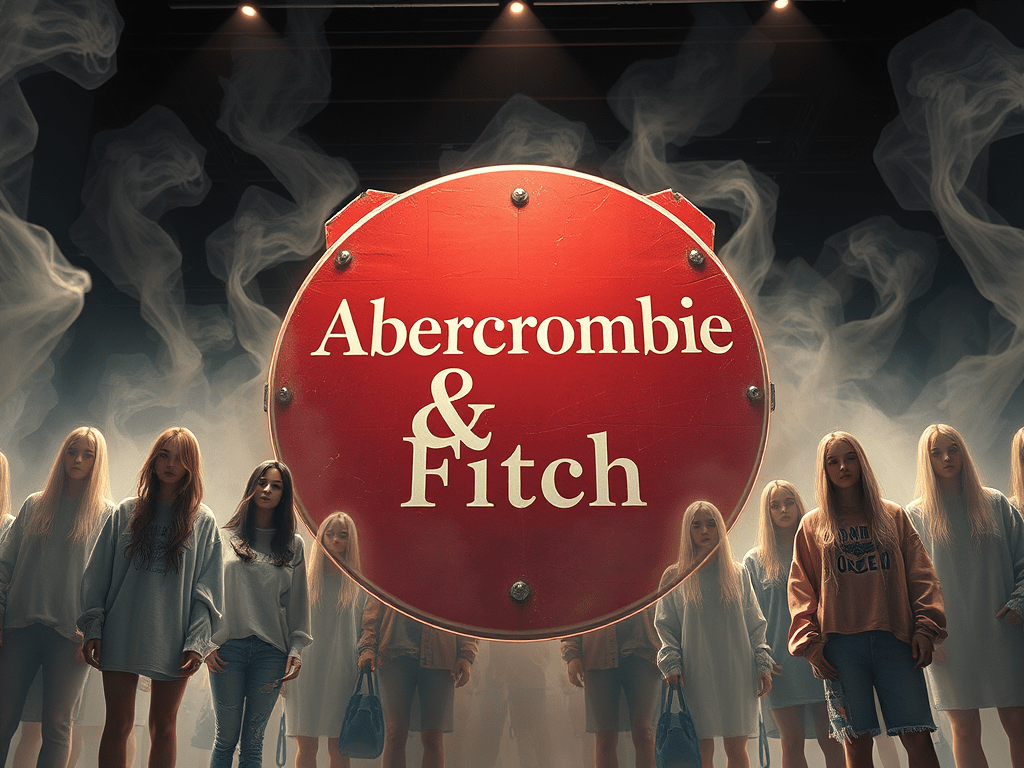
    White Hot, reviewed by Ben Kenigsberg, focuses on Abercrombie’s marketing of “aspirational frattiness”—a euphemism for white exclusivity wrapped in khaki shorts and cologne. It was a smug, muscular nostalgia trip to a sanitized, all-white upper-class fantasy where thinness, wealth, and preppy arrogance were the unspoken requirements for membership.

    At the helm was CEO Mike Jeffries, a marketing savant whose obsession with aesthetic purity bordered on cultic. Under his reign, the company embraced racist T-shirts, discriminatory hiring practices, and a toxic definition of “cool.” His executive team mirrored his vision so fully they might as well have been in a bunker, smiling and nodding as the walls caught fire. Groupthink didn’t just enable the brand’s rise—it ensured its blindness to its own downfall.

    Why revisit Abercrombie now? Because its story is a pre-Instagram case study in the mechanics of cult marketing: how insecurity is mined, branded, and sold back to consumers at 400% markup. My students in the 90s already saw through the ruse—complaining the shirts fell apart in the armpits within a week. What mattered wasn’t the clothing but the illusion of status sewn into every threadbare seam.

    Ultimately, White Hot offers a rare glimpse of justice: a cool brand undone by its own arrogance, its aesthetic no longer aspirational but pitiful. The Abercrombie collapse isn’t just a business story—it’s a warning. When branding becomes religion and coolness becomes a weapon, consumers become disciples in a theology of self-erasure.

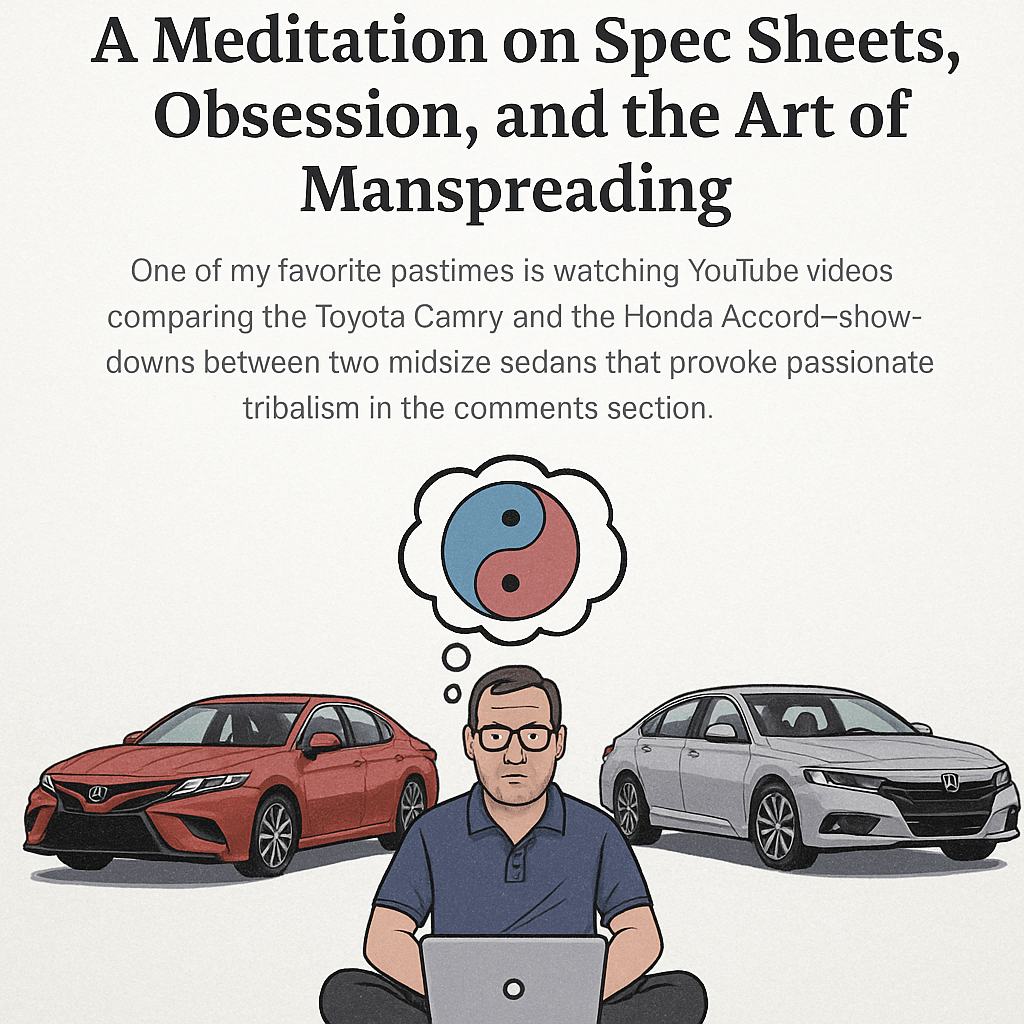
  • Camry vs. Accord: A Meditation on Spec Sheets, Obsession, and the Art of Manspreading

    Camry vs. Accord: A Meditation on Spec Sheets, Obsession, and the Art of Manspreading

    One of my favorite pastimes—oddly specific and strangely soothing—is watching YouTube comparison videos of the Toyota Camry vs. the Honda Accord. I’m not car shopping. I don’t need a car. I may never buy another car. But these videos are my digital comfort food. They’re as satisfying to me as fine wine is to a sommelier or apple pie tastings are to a pastry chef—only instead of tasting notes, I savor engine specs and torque curves.

    There’s something singular about the Camry-Accord rivalry. In the sedan world, these two are the Goliaths. It’s not just another car comparison. It’s the comparison. Watching these two go head-to-head year after year is like seeing the best Steelers team take on the peak Patriots in a Super Bowl that never ends. Everything else—BMW vs. Mercedes, Rolex vs. Omega—feels less pure. BMW and Mercedes aren’t in the same pricing tier. Rolex exists in a brand vacuum. And while coffee maker comparisons have their niche charm, they lack the existential gravity of Camry vs. Accord.

    No rivalry inspires more content—or more heated debate. YouTube is flooded with these matchups, and if you scan the view counts, it’s clear: Camry vs. Accord is the king of consumer showdowns. Reviewers comb over the details with forensic intensity—fuel economy, powertrain specs, road noise, trunk space, rear-seat legroom, infotainment ergonomics, ride comfort, styling. They break it down like seminary students parsing Greek New Testament syntax.

    But what really fascinates me is the comments section, where strangers proclaim their loyalty with righteous conviction. Owners justify their purchase with religious fervor, deploying cherry-picked data to reinforce their superiority. It’s a textbook case of post-purchase rationalization: that psychological reflex where we inflate the virtues of what we bought to feel smarter, savvier, and self-assured.

    One commenter might praise the Accord’s refined cabin and roomier interior—but add that its exterior is so bland, driving one is akin to living as an NPC. Another insists Camry’s superior sales figures are proof of its aesthetic and mechanical dominance. Some dismiss the Accord entirely, predicting its extinction in five years. Others proudly declare they’re on their fifth generation of the same car, with brand loyalty woven into the fabric of their identity. For these drivers, the car isn’t a tool—it’s family.

    Ultimately, this rivalry isn’t really about cars. It’s about identity, tribalism, and the human need to choose a side and be right. It’s a Dr. Seussian fable in metallic paint: one team wears Honda badges, the other wears Toyota, and both believe their side represents reason, taste, and truth.

    For those of us with no appetite for political tribalism, this is our outlet. Camry vs. Accord is safer ground—less polarizing than politics, but don’t tell that to a diehard on either side. Watch how they argue: calmly, firmly, methodically—as if their livelihood depends on selecting the superior midsize sedan. They approach the debate with the solemnity of theologians discussing substitutionary atonement or post-mortem salvation.

    And me? I’m both relaxed and riveted. The debate calms my nerves and sharpens my focus. For a glorious hour, as I parse suspension tuning and rear-seat headroom, my worries dissolve. My thoughts narrow into something blissful. I study the specs like they’re verses from Leviticus. And in that deep focus, my anxiety lifts.

    Then it hits me: I don’t actually want the car—I want the focus. The Camry and Accord are just proxies for obsession. They’re placeholders in the temple of hyper-attention. Some people do yoga. I watch two middle-aged men compare infotainment systems like Cold War arms inspectors.

    And I do this with full self-awareness. I said earlier I might never buy another car. That wasn’t entirely true. My wife owns a 2014 silver Honda Accord Sport. I drive a 2018 gunmetal gray Accord Sport. We’re a two-Accord household. When it comes to car-buying, I’m conservative by nature—and what’s more conservative than buying a Camry or an Accord?

    I’m nearly certain our next car—whether hers or mine—will be one of the two. Likely an Accord, given that I’m six feet tall, 230 pounds, claustrophobic, and deeply committed to driver’s seat manspreading. The Accord gives me room to sprawl. The Camry? Not so much. I know this because, during a San Francisco vacation, an Uber driver picked us up in a brand-new Camry. It looked sleek from the curb, but once inside I felt like I was strapped into a fetal position. The experience ruined the car for me.

    And yet, I want to love the Camry. I really do. In my ideal life, my driveway would have both: the Camry and the Accord parked side by side like yin and yang. One the smooth operator, the other the sensible sibling. Their competition makes each better. Their rivalry sustains them both—and keeps me obsessively circling the rabbit hole.

    Because in the end, the Camry vs. Accord battle isn’t just about choosing a car. It’s about longing for clarity in a world of noise. It’s about choosing sides, rationalizing decisions, and pretending—for a few hours on YouTube—that the world makes sense if you can just pick the right sedan.