Author: Jeffrey McMahon

  • Dancing with Predators: The Myth and Madness of Ocean Ramsey

    Dancing with Predators: The Myth and Madness of Ocean Ramsey

    The Shark Whisperer, a Netflix documentary about the striking and fearless Ocean Ramsey, follows her as she glides through open water with tiger sharks and even Great Whites. Ramsey doesn’t just swim with these apex predators—she bonds with them, believing her connection will help rebrand sharks as sentient, misunderstood beings worthy of conservation, not fear.

    Her mission is both mesmerizing and deeply unsettling.

    There’s no denying her courage. Her grace underwater and near-superhuman lung capacity—she can hold her breath for over six minutes—allow her to move in the sea like one of its native creatures. She believes this makes the sharks see her not as prey, but as a fellow traveler. And maybe they do. For now.

    But I can’t shake the unease. Her physical gifts may grant her a temporary immunity, but it feels like borrowed time. There’s a streak of fatalism in her interviews—a recurring idea that a life fully lived is more valuable than a long one. She speaks openly of her depression. It’s hard not to wonder whether her deep emotional affinity for sharks is also a kind of escape, a seductive alternative to human connection or terrestrial stability. Her quest for intimacy with creatures that could kill her seems less like education and more like myth-making.

    Still, her life is extraordinary. A viral sensation and oceanic daredevil, Ramsey rides the backs of sea monsters with a kind of pagan grace. The documentary captures her power and beauty, her magnetism, and her commitment—but it also sidesteps the emotional terrain that might explain why she keeps going back into the water, again and again, as if trying to disappear into something wilder and more dangerous than life on land.

  • College Essay Prompt: The Grift of Belonging—How Fashion Brands Exploit FOMO and Groupthink to Sell Identity

    College Essay Prompt: The Grift of Belonging—How Fashion Brands Exploit FOMO and Groupthink to Sell Identity

    In the documentaries Brandy Hellville and the Cult of Fast Fashion (Max), Trainwreck: The Cult of American Apparel (Max), and White Hot: The Rise and Fall of Abercrombie & Fitch (Netflix), we are offered more than a look behind the clothing racks. These films expose how youth fashion brands operate less like retailers and more like grifters, running elaborate psychological cons built on seduction, social pressure, and identity manipulation.

    These brands don’t just sell clothes—they sell belonging, and they weaponize insecurity to do it. Their marketing creates an aspirational world that is carefully curated, hyper-exclusionary, and emotionally intoxicating. Entry into that world requires conformity to a narrow ideal—of beauty, behavior, and belief. At the heart of this system are two powerful social forces: FOMO (Fear of Missing Out) and Groupthink.

    While FOMO drives individual consumers to chase relevance and inclusion, Groupthink fuels collective complicity, where employees, customers, and even bystanders suppress doubt, overlook harm, and internalize toxic norms in order to remain inside the circle. Together, these forces create an ecosystem of manipulation where criticism is taboo, difference is erased, and buying in—literally and figuratively—feels like survival.


    Your Task:

    Write a 1,700-word argumentative essay analyzing how Brandy Melville, American Apparel, and Abercrombie & Fitch function as grifters—leveraging FOMO and Groupthink to manufacture desire, manipulate behavior, and enforce social conformity through branding.


    In Your Essay, Consider the Following Questions:

    • How do these brands construct seductive, high-stakes visions of coolness, youth, and exclusivity?
    • In what ways does FOMO—the fear of exclusion—serve as a psychological lever to draw people in and keep them engaged?
    • How does Groupthink operate in these brand environments? How are dissent, difference, or skepticism suppressed in favor of uniformity and loyalty?
    • How do these companies manipulate the illusion of “insider” status—through curated aesthetics, handpicked employees, or social media echo chambers?
    • What grift-like techniques (seduction, manufactured scarcity, social engineering, moral fog) are used to keep both employees and consumers compliant?
    • How do the documentaries use tone, visuals, interviews, and editing to critique—or subtly romanticize—these systems of control?

    Essay Requirements:

    1. Central Argument
    Craft a strong, focused thesis that shows how these fashion brands use FOMO and Groupthink to control image, behavior, and consumption under the guise of self-expression and community.

    2. Comparative Analysis
    Engage with all three documentaries. Look for recurring themes, techniques, and cultural patterns across the case studies.

    3. Use of Specific Evidence
    Draw on key moments from the documentaries—interviews, visual motifs, narrative arcs, and branding materials. Don’t summarize. Analyze.

    4. Secondary Sources
    Incorporate at least two secondary sources (academic articles, media theory, psychology, or cultural criticism) that deepen your understanding of FOMO, Groupthink, manipulation, or consumer identity.

    5. Citations
    Use MLA format consistently for in-text citations and your Works Cited page.


    Bonus Thought-Starters (Optional for Conclusion):

    • Are these brands unusual outliers—or simply more transparent about how capitalism shapes identity?
    • How does Groupthink evolve in online spaces where fashion trends are algorithmically enforced?

    Is it possible to create a fashion culture built on inclusion, authenticity, and critical thinking—or is grift the cost of staying “relevant”?

  • Watch Ownership Is a Letdown; Research Is the High

    Watch Ownership Is a Letdown; Research Is the High

    One of my favorite pastimes is watching YouTube comparison videos of the Toyota Camry vs. the Honda Accord. I’m not shopping for a car. I don’t need a car. I may never buy another car. 

    But these videos? They soothe the savage beast inside of me. They go down like a smooth bourbon, with notes of ABS braking and a smoky finish of fuel economy.

    While others go to YouTube to meditate or do yoga, I fall into the hypnotic cadence of two grown men comparing rear-seat legroom and infotainment systems with the solemnity of Cold War negotiators. 

    I’m riveted. Parsing the pros and cons of these two sedans gives me a focus so intense it borders on religious ecstasy. I study engine specs like they’re verses from Leviticus. My concentration sharpens, my anxiety fades. I am, for a brief and blissful moment, free.

    And then it hits me: I don’t want the car. I want the focus. The Camry and Accord are just placeholders in the temple of obsession.

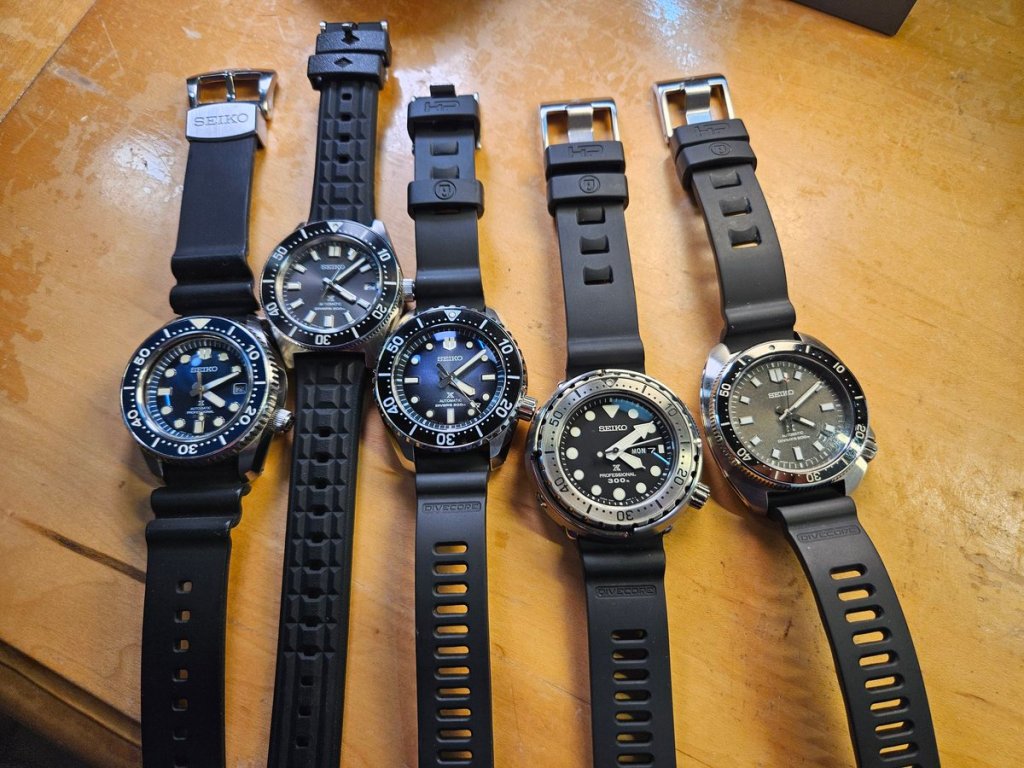
    This revelation sheds light on my watch obsession. It helps me realize that acquiring a watch in most cases is a bitter letdown. A $3,000 watch on the wrist is like a Tinder date at Denny’s: out of place and super embarrassing. 

    I’ve worn $5,000 watches while taking my daughters to YogurtLand and I’ve said to myself, “Dude, you’ve lost the plot.”

    How did I get here with expensive watches that I wear when I’m buying pretzels and diet soda at Target?

    And then I realize. The same drive to focus on Camry-Accord comparisons is the same drive that makes me do “timepiece research.”  Watching my fellow timepiece obsessives drool over bezels and lume shots is the real high. That’s what lights me up. That’s what gets the adrenaline surging through my veins. 

    I’ve spent years confusing consumer acquisition with personal transformation. Getting this thing or that thing will change me inside. I want to be courageous, dignified, courteous, disciplined, fit, and healthy. A watch can’t redeem me. It can’t make me whole. It can’t make me the person I wish I were. Not once have I ever put a new watch on my wrist, gave my wife a wrist shot, and said, “Look, honey, I’ve achieved a metamorphosis.”

    She’ll just look at me and say, “Dude, clean the leaves out of the rain gutters.”

    The material thing in my hands is a letdown because what I really want is the chase and the intense focus. The glorious plunge down a rabbit hole lined with brushed stainless steel and leather-wrapped dashboards. My consumerism isn’t about consumption—it’s about cultivating a state of intense obsession that drowns out the shrieking absurdity of modern life.

    So no more mistaking adrenaline for fulfillment. No more clicking “Buy Now” hoping for transcendence in a shipping box. 

    I’ll keep researching. That’s my Prozac. That’s my monastery. 

    But buying something has proven to be a fool’s errand. And if doing so-called research inflames my consumer appetites, then I should probably put my foot on the brakes when it comes to the research because it can be a prelude to making a purchase I don’t want to make.

    Let me give you an analogy. Let’s say you’re back in high school and you’re at the high school dance, but your girlfriend isn’t there because she’s on a ski trip. While bored at the dance, your ex shows up. She looks more beautiful than you remember her. She approaches you and asks you to dance. “Nothing will happen,” she says. “It will be completely innocent.” You dance with her and something happens. 

    That’s what watch research is like. You tell yourself the research is innocent. You’re just reading forums. Watching a video or two. Maybe checking inventory. 

    But then you wake up and you’re shopping at Target with a $5,000 watch on your wrist and you feel both embarrassed and ashamed.

    Doing research on watches is like having that dance with your ex-girlfriend: Something is going to happen. And it’s not going to be pretty. 

    Have a wonderful day, everyone. Don’t forget to smash that Like button of your soul.

  • If Cormac McCarthy Wrote a Movie Treatment for The Beatles’ “The Long and Winding Road.” 

    If Cormac McCarthy Wrote a Movie Treatment for The Beatles’ “The Long and Winding Road.” 

    FADE IN:

    A road. It winds through the wastes like a serpent that forgot its own name. Cracked earth on either side. Fence posts like grave markers. Vultures in the sky, circling nothing in particular, just keeping warm. A man walks it. His boots are flayed open. His eyes are sunburned. His soul is a blister dragging itself behind him.

    His name is Lyle. Or maybe Thomas. The script never says. Doesn’t matter. He’s every man who ever wrote a love letter in blood and mailed it into the void.

    He is looking for her. She has no name, just a shape in the distance, a memory braided from perfume and last words. She left him. Maybe twice. Maybe more. He kept the door open. She never knocked.

    The road has been long. Winding. Bleak. It led him through dead towns and ghost motels. Once he stayed in a place where the concierge was a buzzard and the minibar held only regret.

    He speaks not. The road speaks for him. It says:

    Every fool must follow something. You picked hope. Bad draw.

    Flashbacks flicker: A woman, face soft as moonlight, eyes like unpaid debt. She tells him she’s leaving. He says he’ll wait. She laughs. That’s the last thing she gives him. Her laughter. Acid-bright and final.

    Along the road he meets others—pilgrims of delusion.

    One man rides a shopping cart filled with old love songs on cassette.

    One woman sews wedding dresses for brides that never were.

    One child sells maps to places that no longer exist.

    They all walk. They all believe the road leads somewhere. It don’t.

    Eventually, Lyle comes upon a house at the end of the road. It is the house. Her house. Or what’s left of it. The windows are boarded. The door is gone. Inside, just dust, a broken phonograph, and a bird trapped in the chimney, fluttering against the soot.

    He kneels.

    Not to pray. To listen.

    There’s no music. No answer. Only wind. And the bird’s soft thump, thump, thump.

    He lies down. The road curls around him like a noose.

    FADE TO BLACK.

    The final line scrolls in silence:

    Love didn’t leave. It just stopped answering the door.

  • If Cormac McCarthy Wrote a Movie Treatment for the Bee Gees’ “Fanny (Be Tender With My Love)”

    If Cormac McCarthy Wrote a Movie Treatment for the Bee Gees’ “Fanny (Be Tender With My Love)”

    MOVIE TREATMENT: Fanny (Be Tender With My Love)

    FADE IN:

    Dust plains. Endless. Cattle skeletons sun-bleached and smiling in the dirt. A wind hisses through creosote like it knows a secret. A man rides into this ruin on a horse too tired to live and too dumb to die. His name is Merle. Once a singer. Once a lover. Now a shadow in spurs.

    He carries a guitar with one string and a heart torn open like a blister.

    He is looking for Fanny.

    Fanny of the laugh that could undo a priest. Fanny of the hips that made men renounce geography. Fanny who told him to be strong and then walked out with a mule-skinner named Dutch who wore cologne and shot rattlesnakes for fun.

    She left Merle in the middle of a love song.

    Now Merle drags that song across the desert like a broken leg.

    The locals say Fanny dances at The Rusted Mirage, a bar built on an old mine shaft. It sits at the edge of a dead lake where the water’s gone but the longing remains. Inside, broken men drink varnish and pray to forgotten gods. There’s a jukebox that plays nothing but Bee Gees covers sung by a toothless man in a gold suit. Fanny’s silhouette haunts the stage, flanked by two coyotes who think they’re her backup dancers.

    Merle stumbles in like a man arriving at his own funeral. He sees her. She sees him. Silence falls like a noose.

    He says

    Fanny. Be tender.

    She says

    Boy you shoulda thought of that when you threw my birthday pie in the fire.

    He says

    That was an accident.

    She says

    So was my affection.

    They duel. Not with pistols. With ballads. His sorrowful wail versus her falsetto fury. The bartender cries. A dog howls. Someone overdoses on sassafras in the corner.

    By dawn, Merle lies collapsed. Empty. She kisses him once—on the temple, like a burial rite. Then disappears into the jukebox, leaving behind only a boa made of scorpion tails and crushed velvet.

    FADE OUT.

    A narrator, gravel-voiced and full of scorn, speaks:

    Love’s a fever dream. Some wake up cured. Some never wake at all.

  • If Cormac McCarthy Wrote a Movie Treatment for Maria Muldaur’s “Midnight at the Oasis”

    If Cormac McCarthy Wrote a Movie Treatment for Maria Muldaur’s “Midnight at the Oasis”

    FADE IN:

    A bone-white desert stretches out beneath a black vault of stars. The dunes are still as sacrificial altars. Somewhere out there, beneath the coyote moon and the ruined tower of Orion, rides a woman of indeterminate age and infinite mischief. She wears a sun hat like a halo. Her sandals leave no prints.

    The camel she rides is named Jeremiah. He does not speak but regards the world with the mournful gaze of a beast who has seen empires fall and lovers lie. His saddle is adorned with silver conches, turquoise fringe, and a little brass bell that tolls only for the damned.

    She comes upon a man.

    He is shirtless, jawline like a blade. Smokes roll-your-owns and speaks in aphorisms. Former bluesman turned snake-oil preacher turned fugitive for a crime he may or may not have committed in Santa Fe, where the sheriff’s daughter still dreams of him and leaves milk out for the scorpions.

    She says

    Midnight at the oasis

    He says

    There’s no such thing as time in this country. Only heat and forgetting.

    They drink wine from a dented canteen and roast cactus blossoms on a fire made of mesquite and ancient regret. The camel chews cud. The stars wheel. A frog laughs somewhere.

    The woman suggests they slip off to a sand dune real soon. Her voice, soft as velvet, carries across the salt-swept wind like prophecy or seduction or both. The man, being a fool or a poet (but never both at once), accepts.

    The desert is watching. It has watched worse.

    They make love like two fugitives hiding from God, beneath constellations older than grammar. Their bodies steam in the moonlight. A lizard judges them and scuttles away.

    At dawn, they are pursued. By whom? Perhaps the woman’s husband. Perhaps bounty hunters. Perhaps just Time, wearing spurs and humming a Carter Family tune. The chase is unspoken but certain.

    The camel refuses to run.

    The woman kisses the man once more and vanishes into a dust devil. Gone. Or maybe never there to begin with.

    The man will ride Jeremiah to the nearest roadhouse and order three fingers of mezcal. He will never again look at the moon without suspicion.

    FADE TO BLACK.

  • Love in the Time of ChatGPT: On Teaching Writing in the Age of Algorithm

    Love in the Time of ChatGPT: On Teaching Writing in the Age of Algorithm

    In his New Yorker piece, “What Happens After A.I. Destroys College Writing?”, Hua Hsu mourns the slow-motion collapse of the take-home essay while grudgingly admitting there may be a chance—however slim—for higher education to reinvent itself before it becomes a museum.

    Hsu interviews two NYU undergrads, Alex and Eugene, who speak with the breezy candor of men who know they’ve already gotten away with it. Alex admits he uses A.I. to edit all his writing, from academic papers to flirty texts. Research? Reasoning? Explanation? No problem. Image generation? Naturally. He uses ChatGPT, Claude, DeepSeek, Gemini—the full polytheistic pantheon of large language models.

    Eugene is no different, and neither are their classmates. A.I. is now the roommate who never pays rent but always does your homework. The justifications come standard: the assignments are boring, the students are overworked, and—let’s face it—they’re more confident with a chatbot whispering sweet logic into their ears.

    Meanwhile, colleges are flailing. A.I. detection software is unreliable, grading is a time bomb, and most instructors don’t have the time, energy, or institutional backing to play academic detective. The truth is, universities were caught flat-footed. The essay, once a personal rite of passage, has become an A.I.-assisted production—sometimes stitched together with all the charm and coherence of a Frankenstein monster assembled in a dorm room at 2 a.m.

    Hsu—who teaches at a small liberal arts college—confesses that he sees the disconnect firsthand. He listens to students in class and then reads essays that sound like they were ghostwritten by Siri with a mild Xanax addiction. And in a twist both sobering and dystopian, students don’t even see this as cheating. To them, using A.I. is simply modern efficiency. “Keeping up with the times.” Not deception—just delegation.

    But A.I. doesn’t stop at homework. It’s styling outfits, dispensing therapy, recommending gadgets. It has insinuated itself into the bloodstream of daily life, quietly managing identity, desire, and emotion. The students aren’t cheating. They’re outsourcing. They’ve handed over the messy bits of being human to an algorithm that never sleeps.

    And so, the question hangs in the air like cigar smoke: Are writing departments quaint relics? Are we the Latin teachers of the 21st century, noble but unnecessary?

    Some professors are adapting. Blue books are making a comeback. Oral exams are back in vogue. Others lean into A.I., treating it like a co-writer instead of a threat. Still others swap out essays for short-form reflections and response journals. But nearly everyone agrees: the era of the generic prompt is over. If your essay question can be answered by ChatGPT, your students already know it—and so does the chatbot.

    Hsu, for his part, doesn’t offer solutions. He leaves us with a shrug.

    But I can’t shrug. I teach college writing. And for me, this isn’t just a job. It’s a love affair. A slow-burning obsession with language, thought, and the human condition. Either you fall in love with reading and writing—or you don’t. And if I can’t help students fall in love with this messy, incandescent process of making sense of the world through words, then maybe I should hang it up, binge-watch Love Is Blind, and polish my résumé.

    Because this isn’t about grammar. This is about soul. And I’m in the love business.

  • The Phantom in the Mirror: On Becoming an NPC

    The Phantom in the Mirror: On Becoming an NPC

    The Non-Player Character—or NPC—was born in the pixelated void of video games. It is a placeholder. A background hum. A digital ghost whose job is to stand in a market, repeat a scripted line, or walk in endless circles without complaint. The NPC has no hunger for freedom, no dreams of becoming more. It exists in the half-life of interactivity—a cardboard cutout propped up by code. It’s “there,” but not there. You see it. Then you forget it. And that, in essence, is the horror.

    Somewhere along the way, the term slipped out of the screen and into real life. “NPC” became shorthand for a human who seems hollowed out—emotionally neutralized, culturally sedated, and spiritually declawed. Not stupid. Not evil. Just disengaged. The light behind the eyes? Gone dim. What was once an ironic jab at background characters is now a chilling metaphor for people who’ve surrendered to the most generic, algorithm-approved version of themselves.

    What’s grimly poetic is that NPCs in video games are often controlled by artificial intelligence. And so, too, are many modern humans—nudged by dopamine, entranced by endless scrolls, soothed by the hypnotic rhythms of consumption. The Roman formula of bread and circuses has merely been rebranded. Netflix. DoorDash. TikTok. It’s all the same anesthetic. As therapist Phil Stutz would say, we’re stuck in the “lower channel”—an emotional basement filled with numbing comforts and artificial highs.

    And yet, here’s the twist: even the brilliant can become NPCs. The anxious. The depressed. The overworked. The soul-sick. Sometimes the smartest people are the most vulnerable to emotional collapse and digital retreat. They don’t become NPCs because they’re shallow. They become NPCs because they’re hurting.

    There are, perhaps, two species of NPCs. One is blissfully unaware—sleepwalking through life without a second thought. The other is terrifying: self-aware, but immobilized. The mind remains active, but the body slouches in the chair, feeding on stale memories and reruns of past selves. Think of Lot’s Wife, gazing back at a past she couldn’t let go. She wasn’t punished arbitrarily; she was frozen in time—literally—a statue of salt and sorrow. The original NPC.

    Middle age is particularly fertile ground for NPC-ism. Nostalgia becomes narcotic. We mythologize our former selves—thinner, bolder, brighter—and shrink in the shadow of our own legend. Why live in the present, when the past is easier to romanticize and the future is too much work? Just ask Neddy Merrill from John Cheever’s “The Swimmer,” paddling from pool to pool in a daze, believing in a youth long gone, burning every real connection he had on the altar of delusion. An NPC in swim trunks.

    Today, we’re incentivized to become NPCs. Social media trains us like lab rats, handing out dopamine pellets in the form of likes, follows, and artificial intimacy. The real world—messy, unfiltered, full of awkward silences and genuine risk—is rejected for the smoother contours of algorithmic approval. Our souls are curated, our emotions trimmed to fit the timeline.

    The NPC, then, is not a throwaway gag. It’s a portrait of the modern condition. A spirit trapped in a basement, scrolling for meaning, addicted to memory, afraid of action. A being slowly turning into vapor, still breathing but no longer alive.

    And the true terror? Sometimes I feel it in myself. That quiet moment when I trade meaning for ease, purpose for distraction, vitality for sedation. That’s when I hear the whisper: You’re becoming one of them. That’s when I feel the NPC, not on my screen, but inside my skin.

  • The Comedians of Cell Block B

    The Comedians of Cell Block B

    Last night I dreamed I was in a bustling, overlit restaurant packed with the usual suspects—people chewing too loudly, waitstaff dodging elbows, silverware clinking like wind chimes in a windstorm. I was halfway through what I assumed was risotto when I realized two of my teeth had come loose, flapping in my gums like faulty hinges.

    Panicked, I waved down a waiter. He listened gravely, nodded with theatrical sympathy, then pointed toward a man in a white coat weaving through the crowd like a prophet leaving a revival. “That’s Dr. Beltrán,” he said. “Fixes teeth. Fixes lives. If you move now, you might catch him before he ascends to the exit sign.”

    So I followed. Fast forward to the next day: I’m in a waiting room that looked more like a casting call for eccentric sitcom roles. Among the crowd sat a married couple, both comedians. Raffi, a Canadian import with the weary charisma of someone who’s done too many festivals, and Tina, his statuesque, golden-haired wife, radiantly pregnant and visibly amused by the absurdity of her own life.

    Turns out Raffi and I had gone to college together, which gave our small talk the sheen of nostalgia. Tina, meanwhile, was the sort of woman you describe as a “former beauty queen” only because it sounds more manageable than “mythical being with a driver’s license.”

    Then the tone shifted. They told me they were serving life sentences. Yes—life sentences—for misreading pesticide instructions. About five years ago, they’d tried to fumigate their house for fleas and spiders but sprayed an industrial outdoor poison all over their bedroom carpet. Their organs liquefied. They almost died. When they recovered, they were arrested. The terms of their punishment? Eternal residence in a dungeon—an actual pitch-black basement beneath a towering apartment block. They were allowed out only for comedy gigs. Art, apparently, still mattered to the state.

    Dental work complete, Raffi left for Canada to perform at a club. Tina, contractions ticking in her belly like a countdown timer, insisted on showing me the dungeon. The space was a horror. Not just black-as-night oppressive, but physically punishing—an absurdly low ceiling crisscrossed by thick beams of lumbar that made it feel like you were crawling through a collapsed IKEA warehouse.

    So I did what any good houseguest-slash-dream hero would do: I went to the nearest hardware store, returned with a comically oversized saw, and spent the afternoon hacking through beams like a man possessed. Tina cheered me on from a folding chair, one hand on her belly, the other clutching her flip phone, waiting for Raffi’s call.

    When I finished, the dungeon felt ever so slightly less apocalyptic. She looked at me and said, “I think the baby’s coming.” I nodded like I’d just finished installing a light fixture. My work here was done.

  • FOMO and the Mirage of Desire (a college writing prompt)

    FOMO and the Mirage of Desire (a college writing prompt)

    Begin your essay by clearly defining FOMO—the fear of missing out—as both a cultural phenomenon and a psychological force. Then, in roughly 300 words, write a personal narrative that illustrates a time when FOMO led you into a situation filled with traps, illusions, or regrets. If you’d prefer not to write about your own experience, you may interview a friend or family member and recount their story instead.

    Your narrative should focus on how FOMO clouded your judgment. Describe how it made you ignore red flags, suspend critical thinking, or believe in something too good to be true. Whether it was a product, an experience, a relationship, or a trend, reflect on how the desire to be part of something—or to not be left out—overpowered your better instincts. Show how FOMO doesn’t just spark curiosity or envy; it distorts decision-making and often leads to costly or embarrassing consequences.

    Use vivid details, clear storytelling, and reflective insight. The goal is not just to entertain but to unpack how FOMO can seduce intelligent people into chasing mirages—shiny promises that evaporate upon closer inspection.