Author: Jeffrey McMahon

  • My Philosophy of Grading in the Age of ChatGPT and Other Open-AI Writing Platforms (a mini manifesto for my syllabus)

    My Philosophy of Grading in the Age of ChatGPT and Other Open-AI Writing Platforms (a mini manifesto for my syllabus)

    Let’s start with this uncomfortable truth: you’re living through a civilization-level rebrand.

    Your world is being reshaped—not gradually, but violently, by algorithms and digital prosthetics designed to make your life easier, faster, smoother… and emptier. The disruption didn’t knock politely. It kicked the damn door in. And now, whether you realize it or not, you’re standing in the debris, trying to figure out what part of your life still belongs to you.

    Take your education. Once upon a time, college was where minds were forged—through long nights, terrible drafts, humiliating feedback, and the occasional breakthrough that made it all worth it. Today? Let’s be honest. Higher ed is starting to look like an AI-driven Mad Libs exercise.

    Some of you are already doing it: you plug in a prompt, paste the results, and hit submit. What you turn in is technically fine—spelled correctly, structurally intact, coherent enough to pass. And your professors? We’re grading these Franken-essays on caffeine and resignation, knowing full well that originality has been replaced by passable mimicry.

    And it’s not just school. Out in the so-called “real world,” companies are churning out bloated, tone-deaf AI memos—soulless prose that reads like it was written by a robot with performance anxiety. Streaming services are pumping out shows written by predictive text. Whole industries are feeding you content that’s technically correct but spiritually dead.

    You are surrounded by polished mediocrity.

    But wait, we’re not just outsourcing our minds—we’re outsourcing our bodies, too. GLP-1 drugs like Ozempic are reshaping what it means to be “disciplined.” No more calorie counting. No more gym humiliation. You don’t change your habits. You inject your progress.

    So what does that make you? You’re becoming someone new: someone we might call Ozempified. A user, not a builder. A reactor, not a responder. A person who runs on borrowed intelligence and pharmaceutical willpower. And it works. You’ll be thinner. You’ll be productive. You’ll even succeed—on paper.

    But not as a human being.

    If you over rely on AI, you risk becoming what the gaming world calls a Non-Player Character (NPC)—a background figure, a functionary, a placeholder in your own life. You’ll do your job. You’ll attend your Zoom meetings. You’ll fill out your forms and tap your apps and check your likes. But you won’t have agency. You won’t have fingerprints on anything real.

    You’ll be living on autopilot, inside someone else’s system.

    So here’s the choice—and yes, it is a choice: You can be an NPC. Or you can be an Architect.

    The Architect doesn’t react. The Architect designs. They choose discomfort over sedation. They delay gratification. They don’t look for applause—they build systems that outlast feelings, trends, and cheap dopamine tricks.

    Where others scroll, the Architect shapes.
    Where others echo, they invent.
    Where others obey prompts, they write the code.

    Their values aren’t crowdsourced. Their discipline isn’t random. It’s engineered. They are not ruled by algorithm or panic. Their satisfaction comes not from feedback loops, but from the knowledge that they are building something only they could build.

    So yes, this class will ask more of you than typing a prompt and letting the machine do the rest. It will demand thought, effort, revision, frustration, clarity, and eventually—agency.

    If your writing smacks of AI–the kind of polished mediocrity that will lead you down a road of being a functionary or a Non-Player Character, the grade you receive will reflect that sad fact. On the other hand, if your writing is animated by a strong authorial presence, evidence of an Architect, a person who strives for a life of excellence, self-agency, and pride, your grade will reflect that fact as well. 

  • North Star or Snake Oil? The Search for Purpose in the Age of Bro Influencers (college writing assignment)

    North Star or Snake Oil? The Search for Purpose in the Age of Bro Influencers (college writing assignment)

    Many young men today face a crisis of direction. Without clear boundaries, a sense of purpose, or structured models of discipline and development, they are left to navigate a world that often feels chaotic and hollow. Scholars and cultural critics such as Richard Reeves and Scott Galloway have explored this issue, arguing that the absence of a guiding purpose—or “North Star”—leaves many young men drifting in an existential vacuum. In your first paragraph, summarize the key points made by Reeves, Galloway (find essays or videos of your choosing online), or both about this phenomenon and how it reflects a broader social and psychological struggle.

    In your second paragraph, reflect on someone you know—perhaps even yourself—who has experienced the effects of growing up without a clear sense of purpose. Describe how this lack of direction may create a deep hunger for structure, meaning, or identity. Then explain how this hunger can make young men especially susceptible to so-called “Bro Programs” like those promoted by the Liver King or the creators of The Game Changers. Consider how the promise of transformation, strength, and belonging offered by these influencers might seem like solutions, even as they often exploit vulnerability and suspend critical thinking.

  • Toothpaste, Technology, and the Death of the Luddite Dream

    Toothpaste, Technology, and the Death of the Luddite Dream

    A Luddite, in modern dress, is a self-declared purist who swats at technology like it’s a mosquito threatening their sense of self-agency, quality, and craft. They fear contamination—that somehow the glow of a screen dulls the soul, or that a machine’s hand on the process strips the art from the outcome. It’s a noble impulse, maybe even romantic. But let’s be honest: it’s also doomed.

    Technology isn’t an intruder anymore—it’s the furniture. It’s the toothpaste out of the tube, the guest who showed up uninvited and then installed a smart thermostat. You can’t un-invent it. You can’t unplug the century.

    And I, for one, am a fatalist about it. Not the trembling, dystopian kind. Just… resigned. Technology comes in waves—fire, the wheel, the iPhone, and now OpenAI. Each time, we claim it’s the end of humanity, and each time we wake up, still human, just a bit more confused. You can’t fight the tide with a paper umbrella.

    But here’s where things get tricky: we’re not adapting well. Right now, with AI, we’re in the maladaptive toddler stage—poking it, misusing it, letting it do our thinking while we lie to ourselves about “optimization.” We are staring down a communications tool so powerful it could either elevate our cognitive evolution… or turn us all into well-spoken mannequins.

    We are not guaranteed to adapt well. But we have no choice but to try.

    That struggle—to engage with technology without becoming technology, to harness its speed without losing our depth—is now one of the defining human questions. And the truth is: we haven’t even mapped the battlefield yet.

    There will be factions. Teams. Dogmas. Some will preach integration, others withdrawal. Some will demand toolkits and protocols; others will romanticize silence and slowness. We are on the brink of ideological trench warfare—without even knowing what colors the flags are yet.

    What matters now is not just what we use, but how we use it—and who we become in the process.

    Because whether you’re a fatalist, a Luddite, or a dopamine-chasing cyborg, one thing is clear: this isn’t going away.

    So sharpen your tools—or at least your attitude. You’re already in the arena.

  • Why Reading Is the Last Romantic Act

    Why Reading Is the Last Romantic Act


    If you take my Critical Thinking class, let me set expectations up front: I will not stand at the front of the room and lecture you into becoming an intellectual. That’s not how it works. I can’t command you to read. I can’t install curiosity like a software update.

    What I can tell you is this: the default setting is mediocrity. It’s smooth, seductive, and socially acceptable. The world—especially its algorithmic avatars—is built to exploit that setting. Platforms like OpenAI don’t just offer tools; they offer excuses. They whisper: You don’t have to think. Just prompt.

    You’ll get by on it. You’ll write tolerable essays. You might even land a job—something stable and fluorescent-lit with a breakroom fridge. But if you keep outsourcing your critical thinking to machines and your inner life to streaming platforms, you may slowly congeal into a Non-Player Character: a functionally adequate adult with no self-agency, just dopamine hits from cheap tech and cheaper opinions.

    The world needs thinkers, not task-completers.

    And that’s why I push reading—not as an obligation, but as a doorway to a higher mode of existence. Reading changes the texture of your thoughts. It exposes you to complexity you didn’t ask for and patterns of mind you didn’t inherit. But here’s the inconvenient truth: no one can make you read.

    Reading isn’t a commandment. It’s a love affair—and like any love worth having, it’s irrational, wild, and self-chosen. You don’t read because it’s good for you. You read because at some point a book wrecked you—in the best way possible. It made your brain itch, or your chest tighten, or your worldview crack open like an old floorboard.

    And that’s what I want for you. Not because it makes me feel like a good professor, but because if you don’t fall in love with ideas—on the page, in the margins, in someone else’s wild, flawed sentences—you’ll live a life someone else designed for you.

    And you’ll call it freedom.

  • Ozempification and the Death of the Inner Architect

    Ozempification and the Death of the Inner Architect

    Let’s start with this uncomfortable truth: you’re living through a civilization-level rebrand.

    Your world is being reshaped—not gradually, but violently, by algorithms and digital prosthetics designed to make your life easier, faster, smoother… and emptier. The disruption didn’t knock politely. It kicked the damn door in. And now, whether you realize it or not, you’re standing in the debris, trying to figure out what part of your life still belongs to you.

    Take your education. Once upon a time, college was where minds were forged—through long nights, terrible drafts, humiliating feedback, and the occasional breakthrough that made it all worth it. Today? Let’s be honest. Higher ed is starting to look like an AI-driven Mad Libs exercise.

    Some of you are already doing it: you plug in a prompt, paste the results, and hit submit. What you turn in is technically fine—spelled correctly, structurally intact, coherent enough to pass. And your professors? We’re grading these Franken-essays on caffeine and resignation, knowing full well that originality has been replaced by passable mimicry.

    And it’s not just school. Out in the so-called “real world,” companies are churning out bloated, tone-deaf AI memos—soulless prose that reads like it was written by a robot with performance anxiety. Streaming services are pumping out shows written by predictive text. Whole industries are feeding you content that’s technically correct but spiritually dead.

    You are surrounded by polished mediocrity.

    But wait, we’re not just outsourcing our minds—we’re outsourcing our bodies, too. GLP-1 drugs like Ozempic are reshaping what it means to be “disciplined.” No more calorie counting. No more gym humiliation. You don’t change your habits. You inject your progress.

    So what does that make you? You’re becoming someone new: someone we might call Ozempified. A user, not a builder. A reactor, not a responder. A person who runs on borrowed intelligence and pharmaceutical willpower. And it works. You’ll be thinner. You’ll be productive. You’ll even succeed—on paper.

    But not as a human being.

    You risk becoming what the gaming world calls a Non-Player Character (NPC)—a background figure, a functionary, a placeholder in your own life. You’ll do your job. You’ll attend your Zoom meetings. You’ll fill out your forms and tap your apps and check your likes. But you won’t have agency. You won’t have fingerprints on anything real.

    You’ll be living on autopilot, inside someone else’s system.

    So here’s the choice—and yes, it is a choice: You can be an NPC. Or you can be an Architect.

    The Architect doesn’t react. The Architect designs. They choose discomfort over sedation. They delay gratification. They don’t look for applause—they build systems that outlast feelings, trends, and cheap dopamine tricks.

    Where others scroll, the Architect shapes.
    Where others echo, they invent.
    Where others obey prompts, they write the code.

    Their values aren’t crowdsourced. Their discipline isn’t random. It’s engineered. They are not ruled by algorithm or panic. Their satisfaction comes not from feedback loops, but from the knowledge that they are building something only they could build.

    So yes, this class will ask more of you than typing a prompt and letting the machine do the rest. It will demand thought, effort, revision, frustration, clarity, and eventually—agency.

    Because in the age of Ozempification, becoming an Architect isn’t a flex—it’s a survival strategy.

    There is no salvation in a life run on autopilot.

    You’re here. So start building.

  • Boots, Pie, and Nostalgia: Dispatch from Mortimer Farms

    Boots, Pie, and Nostalgia: Dispatch from Mortimer Farms

    Last night we time-traveled to a Norman Rockwell fever dream: a retro barn dance at Mortimer Farms in Dewey-Humboldt, Arizona, where about 500 people—sunburned, denim-clad, and wholly unironically patriotic—gathered to eat, dance, and mainline nostalgia.

    The soundtrack? A whiplash blend of twangy country and 70s rock that made you want to two-step and tailgate at the same time. Dinner was an unapologetic heartland spread: cheeseburgers grilled to smoky perfection, heirloom salad straight from the farm, and homemade blueberry and apple pies so rustic they practically came with a grandmother.

    As I looked around—kids doing cartwheels in the dust, old men tapping their boots in rhythm, teenagers pretending not to enjoy themselves—I realized I hadn’t tasted this much deep-fried Americana since trick-or-treating in San Jose in 1967, pillowcase in hand, chasing sugar highs under suburban streetlights.

    So yes, we took a family portrait. Not just to capture the night, but to memorialize the moment we voluntarily stepped into a live-action postcard, brazen nostalgia and all.

  • When It comes to Swim Briefs the Size of a Hotel Mint, Maybe Opt Out

    When It comes to Swim Briefs the Size of a Hotel Mint, Maybe Opt Out

    Today’s New York Times article, titled “Skimpy Men’s Swimming Briefs Are Making a Splash,” offers a solemn dispatch from the front lines of GLP-1 drugs, but I would guess that men—having exhausted every form of visible self-optimization—are now expressing their Ozempic-enabled slenderness via tiny, Lycra-clad declarations of status. We’re talking male bikinis, or what I like to call the ego sling.

    Apparently, if you’re dropping $18,000 a year to chemically suppress your appetite and shed your humanity one subcutaneous injection at a time, you deserve the privilege of looking like a Bond villain’s pool boy. I suppose this is the endgame: pay to waste away, then wrap what’s left in a luxury logoed banana peel.

    Luxury houses, never ones to miss a chance to monetize body dysmorphia, are now marketing these second-skin briefs not as mere swimwear, but as power statements. To wear them is to say: “I’ve defeated fat, joy, modesty, and comfort in one fell swoop.”

    I’m almost 64. My aspirations remain high—ideally, I’d like to look like a special-ops operator on vacation in Sardinia. But I know my place. I wear boxer-style swim trunks, the cloth of the pragmatic and the semi-dignified. They’re not exciting, but neither is seeing a sun-leathered septuagenarian adjust a spandex slingshot over a suspicious tan line.

    There’s a difference between being aspirational and being delusional. The former means striving for vitality, strength, and energy. The latter means stuffing yourself into a satirical undergarment and pretending you’re 28 with a sponsorship deal.

    To my fellow older men: sculpt your body like it’s your spiritual obligation—but when it comes to swim briefs the size of a hotel mint, maybe opt out. Not every part of youth is worth reliving. Some of it deserves to be left in the chlorine-stained past, right next to Axe body spray and Ed Hardy tank tops.

  • Post-Vacation Penance: A Dietary Manifesto in Four Meals

    Post-Vacation Penance: A Dietary Manifesto in Four Meals

    There’s something bleakly comical about spiraling into despair on vacation—the kind that sets in when you’re no longer tethered to your sacred rituals of productivity, restraint, and the sweet, tight belt of routine. Out here, in this plush exile of self-indulgence, I’ve become a man who stares into a plate of hotel hash browns and thinks, This ends when I get home.

    And so, to soothe the spiritual rot that sets in after too many mornings without my normal suffering, I’ve started building a plan—a post-vacation austerity program disguised as wellness.

    First, the coffee. I will reclaim my morning dignity with the $89 Ninja 12-cup glass carafe coffee maker. No plastic pod disgrace. I will grind dark roast beans with the solemnity of a monk at matins, using my burr grinder like a weapon forged for righteousness.

    Breakfast will not be an act of contrition but one of redemption: buckwheat groats or steel-cut oats, topped with protein powder, berries, walnuts, and chia seeds—like an edible TED Talk on anti-inflammation.

    Lunch will be a spartan affair: arugula so bitter it judges you, and tofu braised until it forgets it was once bland. Dressing? A holy trinity of balsamic vinegar, spicy mustard, and nutritional yeast. This is not food—it’s penance with flavor.

    Afternoon snack? Greek yogurt, protein powder, and berries. The combination is reliable, unexciting, and doctrinally correct.

    Dinner is where things get unhinged in a good way. I will reach for my Le Creuset Dutch oven (color: colonial blue, attitude: smug) and conjure quinoa with zucchini, fire-roasted tomatoes, nutritional yeast, and a whisper of coconut milk. I will mix in braised tofu until the pan hisses in agreement.

    And yes, there will be protein pancakes, crafted from oats, baking powder, protein powder, eggs (or applesauce, if I’m feeling woke), yogurt, cinnamon, honey, chia seeds, and vanilla extract. The batter will feel like spackle. The result will feel like victory.

    Exercise? Four days of kettlebells instead of five—because joints are finite, and ego is not a medical plan. On my “off” days, I’ll alternate between the exercise bike and power-flow yoga, both of which will mock me in their own way.

    Diet soda? Dead to me. I’ve seen what happens when it wins: a family friend guzzles it by the gallon, her health circling the drain like a cautionary fable. I will swap it out for sparkling water and the moral superiority it confers.

    This is not about orthorexia or self-hate disguised as wellness. This is about escaping confusion, that modern affliction where “healthy” means both everything and nothing. I will eat four times a day. I will consume 160 grams of protein. I will not exceed 2,400 calories. I will fight entropy with routine, bloat with balance, and preserve the image of myself I still—somehow—believe is possible.

  • The Manuscript Awakens: A Dugout Vision from the Collective Unconscious

    The Manuscript Awakens: A Dugout Vision from the Collective Unconscious

    Last night I dreamed I was striding across a wind-blown grassy knoll, the kind of landscape that smells faintly of unresolved ambitions and freshly cut ego. Out of nowhere—because where else do these things happen?—a panel of vaguely official-looking figures appeared, cloaked in bureaucratic smugness, and awarded me the managerial reins of a baseball team unlike any other: it was helmed, inexplicably yet inevitably, by Leonardo DiCaprio.

    Yes, that DiCaprio—Oscar-winner, yacht philosopher, professional man-child. He looked fantastic in cleats.

    Suddenly, the gentle slope of the grassy knoll rippled like a stage set being pulled away, and in its place emerged a full-fledged baseball diamond, etched into the earth as if by divine groundskeepers. The green gave way to precisely mowed outfield grass, bordered by crisp white chalk lines that glowed with supernatural brightness. Dugouts pushed up from the soil like subterranean bunkers, complete with splintered benches and battered Gatorade coolers. Bleachers unfolded in rows, metallic and sun-bleached, teeming with phantom spectators whose shadows twitched in anticipation. The air smelled of dust, pine tar, and something mythic.

    As I issued cryptic signals from a dugout made of dark oak and existential dread, DiCaprio tore around the bases with uncanny precision. But this wasn’t just sport. Oh no. With every base he stole, something stirred beneath the soil. From the Earth, like some hallucinatory literary harvest, lost manuscripts erupted like weeds on speed—scrolls, journals, forgotten novels. Some of them were mine, written decades ago in youthful fits of desperation and pretension. But they were no longer mine. They belonged to the collective unconscious, that vast psychic compost heap where dead dreams go to reincarnate as New York Times bestsellers or cult manifestos.

    As DiCaprio sprinted toward third, the text of the manuscripts began rewriting themselves, transforming into the ideological scripture of a new world order dictated by stolen bases and film star footwork.

    Enter Lanai, a high school friend I hadn’t seen since dial-up internet. She appeared on the dugout steps like a ghost of poor choices past and announced that she had reformed her life through the Quincy Jones Art Club, a kind of gospel-jazz cult devoted to self-mastery, syncopation, and the sacred key of B-flat minor.

    “You should join,” she said, her eyes glowing with the fervor of someone who had clearly renounced sugar, sarcasm, and casual sex.

    “I might,” I lied, “but I’m managing DiCaprio right now and the stakes are cosmically high.”

    Before she could argue, Quincy Jones himself descended like an archangel in a powder-blue zoot suit, easily seven feet tall, smelling faintly of vinyl records, Chanel Bleu, and omniscience. He shook my hand. Electricity pulsed through my forearm. His voice—equal parts gravel, genius, and benevolent threat—delivered a sermon about his artistic path: discipline, vision, excellence.

    I tried to listen. Truly. But my attention was being hijacked by the spectacle on the field: DiCaprio sliding into home as epic sentences unfurled from the ground like flaming banners, edited in real-time by forces unseen. The crowd roared, their faces blurred like a dream I was about to forget.

    And through it all, I wondered: Was I the manager, or just another rewriter of forgotten dreams?

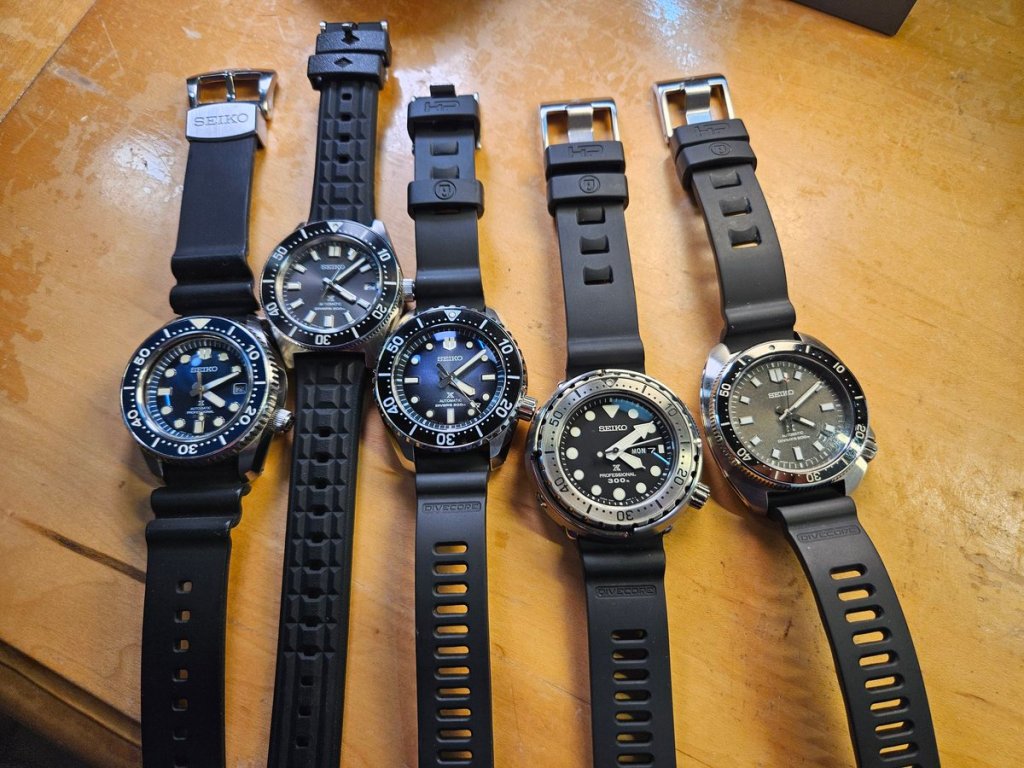
  • The Last Tick: Breaking Up with My Watch Addiction

    The Last Tick: Breaking Up with My Watch Addiction

    Chapter 7 from The Timepiece Whisperer

    It struck me as odd—how unmoved I was by the Watch Master’s death. No sadness, no shock. Just a dry acceptance, like hearing the mail didn’t arrive. The man was in his late seventies, had chain-smoked his way through the golden age of studio recording, and looked like he’d been exhaling Marlboro ghosts for decades. Of course he died. It was inevitable, like quartz battery failure.

    And yet… I felt I should have felt more. But I was too deep in my own wrist-bound psychodrama. I wasn’t mourning a mentor—I was clawing for freedom from the slow, obsessive spiral of watch addiction. The Watch Master had passed the baton, and in his place stood a new sherpa on my horological hell-hike: Josh, the so-called Timepiece Whisperer.

    The next evening, Josh opened the door with a look that said get ready to be offended gently.

    “Bad news,” he said.

    I followed him into the kitchen. Same table. Same tension. He poured me a mug of mint tea, then hit me with it:

    “You want to add the Seiko Astron. I’ve thought about it. The answer is no. Absolutely not. You’re done. No more watches. Not now, not ever.”

    I blinked. “That’s… a bit harsh.”

    Josh didn’t blink. “It’s the truth. One more blue-dial beauty will not complete your collection—it’ll fracture it. You don’t wear formalwear. You don’t attend black-tie galas. That Astron won’t elevate your life—it’ll mock it. You’ll feel guilty for not wearing your other watches, they’ll collect dust and resentment, and you’ll spiral again. The result? Misery.”

    I looked at the floor. I already knew this. I’d said the same things to myself, in a dozen internal arguments that always ended with but maybe just one more…

    “You needed to hear it from someone else,” Josh said.

    “I hate myself for being so weak. I should have handled this alone.”

    He shrugged. “That’s what I’m here for. Left to your own devices, you’d still be googling ‘best summer watches for men over 60.’ I saved you a year of torment in two days. You’re welcome.”

    Then he pulled out a sugar cube shaped like a butterfly—absurdly whimsical for such a hardline intervention—and dropped it into my tea.

    “Close your eyes. Make a wish. Drink it down.”

    I did as instructed. The mint tea was scalding and sweet.

    He asked, “What did you wish for?”

    “That I be free from this watch-collecting hellhole and never go back.”

    He nodded. “Excellent wish.”

    I never saw Josh again.
    And I never bought another watch.