Author: Jeffrey McMahon

  • Mercury Rising, Tuna Retiring: A Fish Addict’s Tofu Detox

    Mercury Rising, Tuna Retiring: A Fish Addict’s Tofu Detox

    Howard Stern recently went public with the kind of health confession that makes nutrition nerds shiver with schadenfreude: years of eating fish like a ravenous sea lion left him with sky-high mercury levels—over 30, when 8 is considered the red alert line. His white blood cell count crashed, and his bloodstream began to resemble a periodic table. So now he’s easing into a mostly plant-based diet, still clinging to salmon and shrimp a few times a week like a man transitioning from whiskey to kombucha.

    Taking a page from Howard’s mercury memoir, I’m retiring my daily canned-fish salad lunch. No more tuna tins. No more mackerel mania. In their place? A half-block of Trader Joe’s High-Protein Tofu, sautéed in olive oil like a grown-up with arteries worth protecting. The whole package is 70 grams of protein. I’ll eat one half at lunch, the other half either for dinner or for the next day.

    Preparation, of course, requires a bit of tofu theater. I wrap the slab in a dish towel and stack a Dutch oven on top like I’m pressing it into a confession. From there, it crisps nicely in the pan—unlike my nerves, which are still adjusting to life without anchovies.

    The salad base: arugula, because I enjoy a green that fights back. The dressing: Greek yogurt whipped with nutritional yeast, herbs, and spices—a tangy, umami-rich blend that says “I’m trying” louder than balsamic ever could.

    If I need a protein boost, I’ll toss in some drained beans or egg whites, though I refuse to let the salad become a protein arms race. The goal isn’t to feel full for eight hours—it’s to avoid mercury poisoning while still pretending I’m eating for pleasure.

    We’ll see how satisfying it all is. At worst, I miss the old tuna days. At best, I keep my nervous system intact and live long enough to be skeptical of my next health phase.

  • Nostalgia, Nihilism, and the Need for a North Star

    Nostalgia, Nihilism, and the Need for a North Star

    We live in a state of perpetual performance. Not just for others, but for ourselves. It’s cosplay with consequences—playful on the surface, deadly serious underneath. We obsess over how our performance lands. We evaluate our worth by the reactions we elicit. At stake is not just our reputation, but our very sense of moral character.

    This obsession isn’t new. The philosopher Blaise Pascal put it bluntly: we’d rather appear virtuous than actually be virtuous. It’s easier to sculpt the image than to develop the core. In this way, we’ve become artisans of curation, not content—architects of persona, not people.

    We live, as Shakespeare warned, on a stage. But our thirst for applause is bottomless. The more we receive, the more we crave. We become validation addicts, forever chasing the next fix of approval. And when applause falters or vanishes, anxiety rushes in. To soothe this anxiety, we self-medicate. Not just with likes and follows—but with food, consumption, workouts, and delusion.

    Some of us drown that dread in comfort food. Others sprint in the opposite direction—discipline, clean eating, high-performance regimens. But often, that stoicism is just cosplay too: hunger in a different mask. When that fails, we drift into nostalgia. We reimagine the past—not as it was, but as it flatters us to believe it was. We cast ourselves as the hero, the lover, the misunderstood genius. The story becomes so good, we forget it isn’t true. We live in the fiction and lose our grip on reality.

    This disconnect—between who we pretend to be and who we are—makes us brittle. Maladapted. And so the cycle deepens: more consumption, more self-distraction, more illusion. Consumerism becomes therapy. Hedonism becomes self-care. Nihilism becomes a badge of honor. All of it is cosplay. And all of it is corrosive.

    Philosophy, religion, and therapy exist to confront this masquerade. They offer a language for our delusions, a history of our dysfunction, and a spiritual direction out of the maze. They remind us that cosplay is not identity, and performance is not presence.

    I don’t pretend to have it figured out. But I’ve found insight in thinkers like Phil Stutz, who warns against the seductive ease of instant gratification, and Steven Pressfield, who speaks of resisting the lure of comfort in favor of a purposeful life. I’ve also been challenged—and strangely comforted—by Paul’s doctrine of kenosis: the radical idea that we’re not here to inflate ourselves but to empty ourselves in service of others. In a world obsessed with power and “respect,” that message lands like a thunderclap.

    What unsettles me most is not our ignorance—it’s our awareness. Many of us know the truth. We even live it for a while. But we drift. We relapse. We trade the hard-earned clarity for the cheap thrill of our old scripts. That’s what demoralizes me: not just the fall, but the speed and ease with which it happens.

    Yet I still believe in the power of a North Star. Call it purpose, vision, a calling—whatever name it takes, it’s the gravitational pull that keeps us from floating off into the void of our appetites. I think of Ann Kim, the Korean immigrant told to stay in her lane. She didn’t. She found her voice, expressed it through food, and became a James Beard Award-winning chef.

    The path to a good life, I suspect, doesn’t begin with fear of failure. It begins with a compelling vision of who we are meant to be. And the discipline to never look away from it.

  • Why I’m Eating Like My Life Depends on It (Because It Might)

    Why I’m Eating Like My Life Depends on It (Because It Might)

    In 2020, my mother passed away from kidney disease. She refused to go on a dialysis machine. I found out a few days ago that her sister, now 80, has stage-4 kidney disease. My aunt doesn’t drink or smoke, but her doctor told her that age can do its job on the kidneys and will give her medication and a diet to slow down the disease’s progression. 

    I assume I may have a genetic predisposition for tired kidneys, so at 63, I’m looking to make some preventative dietary changes. I’m going to watch my potassium, phosphates, and sodium. I’m going to cut down on dairy, nuts, nut butters, sweets, diet sodas, canned fish, meat and such. I’m going to keep my creatine at 3 grams a day. Being overweight, having high sugar levels, high cholesterol, and high blood pressure are all bad for the kidneys, so my diet has to keep those areas under control. I remember Doctor Peter Attia writing in his book Outlive: The Science and Art of Longevity that having advanced kidney disease presents a shorter lifespan diagnosis than stage-4 cancer, so I feel motivated to be diligent. My diet now looks like this:

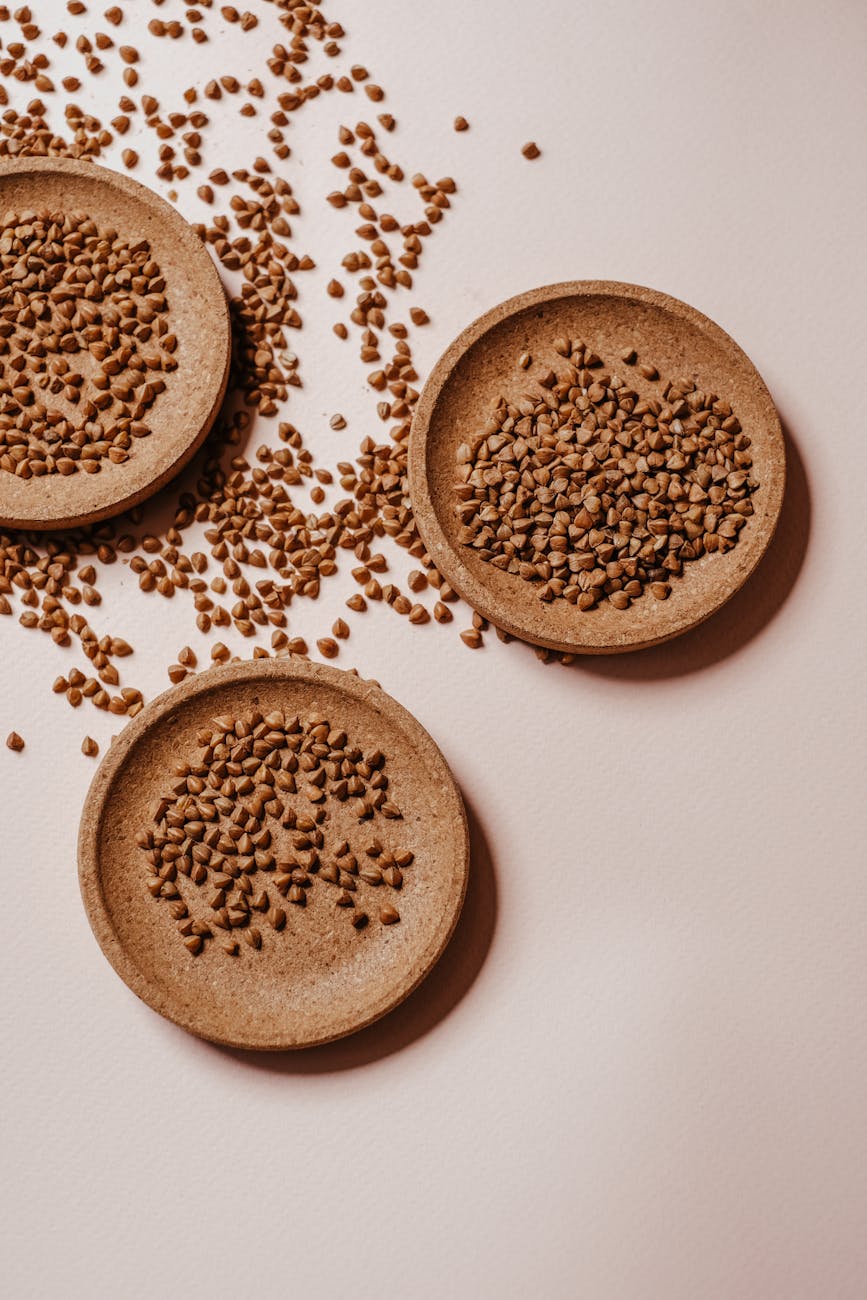
    Breakfast: I’ll rotate 5 breakfast grains in which I will measure exactly one-fourth cup of one of the following: 1. steel-cut oatmeal, 2. quinoa, 3. buckwheat groats, 4. bulgur, and 5. hulled or foxtail millet (11-12 grams of protein) with half a cup of Greek plain yogurt, chia seeds, walnuts, plain soy milk, phosphate-free protein powder, berries, and coffee.

    Lunch: Salad with 20 grams of protein tempeh, rinsed from a can or cooked beans or salmon with balsamic vinegar, herbs and spices, half cup of soy milk, berries or small tangerine. 

    Post-nap Afternoon Snack: One cup of plain Greek yogurt with phosphate-free protein powder, or no powder at all, and berries. 

    Dinner: Vegetables, protein of some kind, including braised tofu, and a small apple. If I want a vegan dinner, I can make a mixture of rice or quinoa with black beans, tofu or tempeh, and a cup of coconut milk. 

    Between meals: No more diet soda of any kind, only water, herbal tea, and soda water.   

  • Why the Watch Enthusiast Is Fated to a Life of Eternal Agony

    Why the Watch Enthusiast Is Fated to a Life of Eternal Agony

    The Watch Potency Principle states that as a watch enthusiast adds watches to his collection, the potency of his pleasure and satisfaction derived from his watches dissipates and is replaced with anxiety, displeasure, disappointment, and resentment, and that the opposite is also true: As his collection winnows down to a few–usually between three and six–the potency of pleasure and satisfaction he derives from his watches increases to the point that the potency affirms the hard-fought choices he had to make to arrive at his small albeit potent collection. 

    But the story of the watch enthusiast looking for watch potency is complicated by the fact that his Inner Watch Minimalist is at war with his Inner Watch Adventurer, the part of him that has an undying curiosity for new watches and new experiences with watches, including the different effects diverse watches have on his wrist, and his curiosity leads to accumulating more watches than he can wear. This results in Watch Devitalization, the weakening of the watch’s power, so to speak. In the case of Watch Devitalization, the enthusiast will sell a perfectly excellent watch, one he has arduously saved up for many years, sell the watch and then realize when the fever of Watch Devitalization has passed, that he has made a grave mistake. 

    As we can see, the eternal battle between the Inner Watch Minimalist and the Inner Watch Adventurer guarantees that the watch enthusiast lives a life of perpetual agony. 

  • Writing Your Origin Story: A College Essay Prompt

    Writing Your Origin Story: A College Essay Prompt

    Writing Your Origin Story

    An origin story is a personal narrative that explains how someone became who they are—it connects formative experiences, struggles, and turning points to a clear sense of identity and purpose. It’s not just a chronology of events, but a curated account that gives meaning to the chaos, shaping pain, failure, or rebellion into insight and direction. Like a myth with teeth, a well-crafted origin story turns vulnerability into vision, showing not just where someone came from, but how that journey forged their voice, values, and ambitions.

    We have powerful examples of origin stories In the Amazon Prime documentary Group Therapy, in which Neil Patrick Harris plays a surprisingly restrained version of himself as moderator while six comedians—Tig Notaro, Nicole Byer, Mike Birbiglia, London Hughes, Atsuko Okatsuka, and Gary Gulman—dissect the raw material of their lives. The big reveal? That material doesn’t go from trauma to stage in one dramatic leap. No, it must be fermented, filtered, and fashioned into something more useful than pain: a persona built on an origin story.

    Mike Birbiglia delivers the central thesis of the show, and I’ll paraphrase with a bit more bite: You can’t stagger onto stage mid-breakdown and expect catharsis to double as comedy. That’s not a gift—it’s a demand. You’re taking from the audience, not offering them anything. The real craft lies in the slow, deliberate process of transforming suffering into something elegant, pointed, and—yes—entertaining. That means the comic must achieve emotional distance from the wreckage, construct a precise point of view, and build a persona strong enough to carry the weight without buckling. In other words, the chaos must be curated. Unlike therapy, where you’re still bleeding onto the couch, stand-up demands a version of you that knows how to make the bloodstains rhyme.

    This process is a perfect metaphor for what college students must do, whether they realize it or not. They’re not just acquiring credentials—they’re building selves by having a clear grasp of their origin story. And that takes more than GPAs and LinkedIn bios. An origin story requires language, history, personal narrative, and a working origin myth that turns their emotional baggage into emotional architecture. And yes, it sounds crass, but the result is a kind of “self-brand”—an identity with coherence, voice, and purpose, forged from pain but presented with polish.

    Because your success, as a human being and someone who is creative and productive in the workforce, requires an origin story, you will write your first essay about the origin story–what it is, how it develops in others, and how it develops inside of you. 

    To explore the origin story in detail, you will write an essay in 3 parts. Part 1 will analyze the importance of an origin story in the Amazon Prime documentary Group Therapy. Your job in Part 1 is to write a two-page extended definition of the origin story based on the hard-fought wisdom of the comedians who pour out their souls and explain how through their suffering, they discovered who they are, what makes them tick, and how their origin story informs their comedy. 

    In Part 2, you will write a two-page analysis of the origin story by choosing one of four media sources: 

    1. The Amazon Prime 3-part series Evolution of the Black Quarterback, a meditation on the courage of black quarterbacks who broke racial barriers and built a legacy of social justice for those quarterbacks who came after them. 
    2. Chef’s Table, Pizza, Season 1, Episode 3, Ann Kim, the origin story of a Korean-American whose origin story led her to become an award-winning chef. 
    3. Chef’s Table, Noodles, Season 1, Episode 1, Evan Funke, an American who goes to Italy where kind Italian women share their cooking so he can preserve traditional Italian noodles and become a true chef.
    4. Chef’s Table, Noodles, Season 1, Episode 2, Guirong Wei, a young woman leaves China to work in London to support her family and emerges as a noodle star. 

    In Part 3, you will write your two-page origin story. Taking the lessons from Group Therapy and the other media sources from the choices above, you will have the context to write about how you conceive yourself, your interests, your unique challenges, your unique doubts, your career goals, and your aspirations as part of your origin story. 

    Your essay should be written in MLA format and have a Works Cited page with a minimum of the 2 assigned media sources.  

    The 10 Characteristics of Your Origin Story

    1. You recognize your challenge to belong and understand why you don’t fit in with conventional notions of success, friendship, family, and belonging.
    2. You recognize your quirks, fears, and traits that make it a challenge for you to belong.
    3. You recognize the barriers between you and what you want. 
    4. You recognize what you want instead of chasing what you think others would have you want.
    5. You recognize being lost in a fog and having a moment or a series of moments in which you achieved clarity regarding what you wanted as a career, for your relationships, and for your passions. 
    6. You find a North Star, a higher goal, that pulls you from a life of lethargy and malaise to one of discipline and purpose. 
    7. You recognize the demons that you have to contend with if you are to rise above your worst tendencies and achieve happiness and success.
    8. You recognize the talents, inclinations, preferences, style, and biases that make you the person that you are, and you learn to embrace these things and allow them to inform and give expression to the kind of work that you do.
    9. You prove to your doubters that the path you have taken is the assertion of your true self and is the most likely path to happiness and success.
    10. You recognize mentors and role models who blaze a path that makes you see yourself more clearly and live in accordance with your aspirational self. 
  • Cereal, Barbara Eden, and the Dreaded Faculty Review

    Cereal, Barbara Eden, and the Dreaded Faculty Review

    Last night, my subconscious staged a bureaucratic opera. I was seated at an absurdly long table in a drab college conference room, the kind with flickering fluorescents and air that smells like paper cuts. My colleagues flanked me on all sides, each with a mountainous stack of paperwork—my tri-annual performance review, apparently—but the documents weren’t about my teaching. No, this was no assessment of curriculum or student engagement. This was a surreal interrogation of my entire psychological file.

    There were questions—thousands of them—spread across hundreds of pages. Why did I once hoard boxes of Cap’n Crunch? What did Barbara Eden mean to me in 1972? How had my crush on Bo Derek evolved into a phase of antisocial lumberjack-shirt brooding during college? These weren’t performance metrics; they were personality archeology. Everyone present wore the tight-lipped smile of professional decorum, but their glances hinted at unease, as if one wrong answer might trigger an existential audit. I kept staring at the wall clock, its massive hands dragging toward freedom. I just wanted to escape this Kafkaesque tribunal and get home to do something real—like kettlebell swings.

    Finally, the dean rose with the smug benevolence of a man who knows you’re trapped either way. “That concludes your review,” he said. No verdict. No score. Just a round of polite handshakes, the hollow kind people give when they’re pretending you’re not on probation. I left the room feeling like Schrödinger’s professor—both validated and damned. Then I woke up. One sip of hot, black coffee sent a dopamine jolt through my system, like jumper cables to the soul. The dream, I told myself, was nothing but psychological runoff—my neurotic inner life expelling its administrative waste.

  • Neddy Merrill Disease: Lifting Weights to Outrun the Abyss

    Neddy Merrill Disease: Lifting Weights to Outrun the Abyss

    I take no glory in training through my 60s. At nearly 64, with a lifting life that began in 1974 amid the clang of Olympic barbells and testosterone-choked gyms, I no longer chase records or applause. These days, I chase mobility. I chase not falling apart. A nagging flare of golfer’s elbow—inner right, thank you very much—has made its uninvited return, forcing me to swap kettlebell rows for gentler “lawnmower” pulls and abandon my beloved open-palm curls in favor of reverse curls, the orthopedic equivalent of safe sex.

    There was a time, of course, when I confused self-worth with showing off. I strutted under heavy weights in the ‘70s through the ‘90s like a tragic extra from Pumping Iron, nursing shredded rotator cuffs and wrecked lumbar discs in my quest to impress… well, no one, really. The mirror? My dad? Arnold? These days I tiptoe a tightrope between intensity and injury, trying to silence the reckless ghost of my twenty-year-old self who still believes he’s indestructible.

    This tug-of-war with time reminds me of Neddy Merrill, the doomed protagonist in John Cheever’s “The Swimmer,” who tries to recapture youth by swimming across his neighbors’ pools like a suburban Odysseus, only to arrive at his own foreclosed house—empty, echoing, and final. I see flashes of my own Neddy Merrill alter ego every time I glimpse my neighbor, a sturdy cop in his early 40s, shepherding his twin teenage sons off to jiu-jitsu. I envy them—their youth, their purpose, their untouched joints. But I remind myself that comparison is the mother of misery. I don’t train for glory anymore. I train because the alternative is to surrender to frailty, to collapse into a slow-motion horror film of decay. I train because being strong is still cheaper than therapy, and it’s the only middle finger I can raise at time’s relentless advance.

  • From Breakdown to Brand: What Comedians Know That College Students Should

    From Breakdown to Brand: What Comedians Know That College Students Should

    In the Amazon Prime documentary Group Therapy, Neil Patrick Harris plays a surprisingly restrained version of himself as moderator while six comedians—Tig Notaro, Nicole Byer, Mike Birbiglia, London Hughes, Atsuko Okatsuka, and Gary Gulman—dissect the raw material of their lives. The big reveal? That material doesn’t go from trauma to stage in one dramatic leap. No, it must be fermented, filtered, and fashioned into something more useful than pain: a persona.

    Mike Birbiglia delivers the central thesis of the show, and I’ll paraphrase with a bit more bite: You can’t stagger onto stage mid-breakdown and expect catharsis to double as comedy. That’s not a gift—it’s a demand. You’re taking from the audience, not offering them anything. The real craft lies in the slow, deliberate process of transforming suffering into something elegant, pointed, and—yes—entertaining. That means the comic must achieve emotional distance from the wreckage, construct a precise point of view, and build a persona strong enough to carry the weight without buckling. In other words, the chaos must be curated. Unlike therapy, where you’re still bleeding onto the couch, stand-up demands a version of you that knows how to make the bloodstains rhyme.

    This process is a perfect metaphor for what college students must do, and what adulthood means for all of us, whether we realize it or not. College students are not just acquiring credentials—they’re building selves. And that takes more than GPAs and LinkedIn bios. It requires language, history, personal narrative, and a working origin myth that turns their emotional baggage into emotional architecture. And yes, it sounds crass, but the result is a kind of “self-brand”—an identity with coherence, voice, and purpose, forged from pain but presented with polish.

  • Blubberation: The Scourge of Humankind

    Blubberation: The Scourge of Humankind

    Few words in the English language wear such a deceptive mask as maudlin. To the untrained ear, it sounds quaint—maybe even charming—like something involving an embroidered hanky and a soft violin cue. Most people, if they’ve heard it at all, treat maudlin like a minor indulgence in sentiment. But this tepid reaction completely misses the word’s fangs. In truth, maudlin is not merely saccharine—it’s a spiritual sickness. It is the emotional equivalent of soggy pie crust: overbaked, overhandled, and incapable of supporting the weight of anything real.

    Jeffrey Rosen, in The Pursuit of Happiness, opens with a quote from Paracelsus that nails the metaphysical rot at the core of maudlin: “Even as man imagines himself to be, such he is, and he is also that which he imagines.” Most of us don’t realize we’ve built our entire personalities around a grandiose hallucination—an operatic self-image drenched in tragic overtones, straining for gravitas. This isn’t just self-delusion. It’s Blubberation—a term I propose as an upgrade to the soft-focus failure of maudlin. Blubberation is not some quaint emotional hiccup. It’s our default operating system. We cling to our sad little myths and bathe in our own narrative syrup, while Rosen, echoing the Stoics, begs us to snap out of it. Real freedom, the kind Cicero and Jefferson admired, comes not from indulging the lower self with its gaudy tantrums, but from mastering our inner world—our thoughts, emotions, actions, and absurd yearnings for applause.

    Consider Cicero’s ideal: the man who is not tormented by longing, not broken by fear, not drunk on ambition or self-congratulating euphoria. This man, Cicero says, is the happy man. And here’s the kicker: this man is the sworn enemy of Blubberation. The Stoic’s strength lies in composure; Blubberation recoils from it like a vampire from sunlight. Rosen knows this. His book is a case against the lachrymose self—the one addicted to its own melodrama, whose emotional overreach demands constant rewards: a cookie, a compliment, a new Omega Speedmaster.

    Let me be clear. I am not above this. I am its most devout practitioner. In fact, my watch addiction is Blubberation in horological form. I’ve shed actual tears during a wrist rotation cull. I have felt the full agony of “falling out of love” with a diver watch I once swore was “The One.” I’ve experienced the euphoric lift of trimming my collection, only to relapse a week later with trembling hands at a DHL box. We call this collecting. We dress it up as passion. But let’s be honest: it’s the theater of the self. It’s manufactured meaning in a velvet-lined case.

    Maudlin doesn’t cut it anymore. It’s too polite, too antique-shop sad. Blubberation, on the other hand, is a full-body emotional spill. It’s sadness with jazz hands. It’s weeping into your soy latte because someone forgot to like your Reels. It’s mistaking catharsis for wisdom. It’s trying to turn your trauma into TikTok content with the right music filter. And it’s not limited to watches. It infects how we narrate our lives, our diets, our so-called “journeys.” It’s the self crying out, not for help—but for attention.

    Blubberation, in the end, is a trap. It offers the illusion of depth but delivers only the shallows. It promises identity but trades in caricature. The Stoics warned us: without restraint and clarity, we become slaves to our worst performances. We become sentimental hustlers, selling tragedy like perfume. And as long as we keep mistaking our emotional indulgence for authenticity, we’ll never touch happiness—only sniff it through the fog of our own overwrought monologues.

  • Becoming Led Zeppelin: A Fan’s Liturgy in Sweat, Hair, and Feedback

    Becoming Led Zeppelin: A Fan’s Liturgy in Sweat, Hair, and Feedback

    In the Bay Area of the 1970s, nothing was more quintessentially American than Led Zeppelin. Not apple pie, not hot dogs, not even fireworks detonating under the banner of freedom on the Fourth of July. No, Led Zeppelin was the national anthem of hormonal turbulence, a sonic passport to lust, rebellion, and ecstatic doom. At the center of this swirling pagan mass stood Robert Plant—shirtless, golden-maned, howling with the tortured elegance of a fallen angel whose job was to make teenagers believe that transcendence came through hips, heartbreak, and hair-whipping.

    Plant wasn’t just the house prophet of sexual revolution-era America; he was its prisoner. His voice didn’t just seduce—it ached. It howled. It bled. It was priapism as opera, libido turned operatic suffering. Meanwhile, Hugh Hefner—the so-called high priest of sexual liberation—was a fraud with a bubble pipe. With his crusty cardigan and smug, soft-core smirk, Hefner sold a sterilized fantasy built for TV sitcoms. Robert Plant, by contrast, sounded like he’d clawed his way out of the underworld in leather pants, carrying every orgasm and every regret with him.

    In Bernard MacMahon’s Becoming Led Zeppelin, we encounter Plant as the elder beast—still leonine, still mythic. He reclines in a richly shadowed room worthy of Masterpiece Theatre, his face now a craggy relief map of rock’s excesses. The documentary doesn’t dwell on the groupies, trashed hotel rooms, or aquatic legends of infamy. Instead, it gives us the roots: Plant’s soulful debt to Little Richard, Page and Jones’ studio stint with Shirley Bassey’s “Goldfinger”—that thunderclap of a song that still sounds like someone hurling a piano at the moon. Watching that scene took me straight back to 1973 Nairobi, where my father and I first heard Bassey belt that monster in a theater so loud it felt like the walls were peeling.

    There’s archival footage of Zeppelin playing to a crowd that looks less like Woodstock and more like a family reunion gone sideways. Grandmothers clutching their pearls. Children plugging their ears. No one knew what had hit them. This wasn’t just music—it was a mass exorcism.

    So no, Becoming Led Zeppelin won’t give you the tabloid filth. It won’t dive into the daisy chain of destruction that came with their rise. But it offers something more interesting: a portrait of a band that didn’t just soundtrack my youth—they were my youth. And Robert Plant, in all his howling, tormented glory, was its golden god of doom.