Author: Jeffrey McMahon

  • Truth or Hustle: Performing the Self in the Age of Spectacle (College Essay Prompt)

    Truth or Hustle: Performing the Self in the Age of Spectacle (College Essay Prompt)

    Essay Prompt:

    In the HBO Max special Mike Tyson: Undisputed Truth, Tyson delivers a raw, emotionally charged monologue in which he recounts the highs and lows of his life—abuse, addiction, fame, disgrace, and grief—with moments of striking self-awareness and brutal candor. The performance walks a fine line between personal catharsis and public spectacle.

    In contrast, the Netflix documentary Untold: The Liver King exposes Brian Johnson—a self-styled primal lifestyle influencer—as a constructed persona built on lies, steroid use, and performative masculinity. Johnson’s brand sells authenticity while hiding calculated deception, ultimately revealing the blurred line between self-expression and grift.

    In a 1,700-word essay, analyze and compare how these two figures—Tyson and Johnson—use storytelling as performance, and to what extent their narratives can be seen as acts of truth-telling versus brand management.

    Consider the following questions to shape your argument:

    • What makes storytelling feel “authentic,” and how is that authenticity earned or staged?
    • How do vulnerability and confession function differently in Tyson’s monologue vs. Johnson’s documentary revelation?
    • To what extent are both men grifters—selling pain, performance, or redemption to maintain relevance or profit?
    • Where does the audience’s complicity come into play? Are we consuming truth, or just another curated persona?

    Support your argument with close analysis of both documentaries, and engage at least two secondary sources on authenticity, performance, media, or masculinity.

    Three Sample Thesis Statements (with Mapping Components):


    1. Performance vs. Persona

    While Mike Tyson: Undisputed Truth offers a raw, emotionally grounded form of storytelling that embraces contradiction and vulnerability, Untold: The Liver King reveals a carefully curated identity rooted in deception and spectacle, showing how authenticity can be performed—and faked—for commercial gain.

    Mapping:

    • Tyson’s emotional transparency and narrative arc
    • Liver King’s constructed masculinity and hidden steroid use
    • The commodification of pain and image in public life

    2. Redemption as Product

    Both Tyson and the Liver King use storytelling to shape redemptive narratives, but where Tyson uses confession to reconcile with past chaos, Johnson’s confession serves primarily to preserve his brand—revealing how vulnerability, when monetized, can become just another form of grift.

    Mapping:

    • Redemption arc as performance
    • Strategic confession vs. genuine self-reckoning
    • The role of audience sympathy in validating narrative authenticity

    3. The Grift We Applaud

    Tyson and Johnson exemplify the thin line between storyteller and hustler in modern media culture, where charisma and spectacle blur truth. Ultimately, both rely on the audience’s desire to believe in transformation—whether real or manufactured—making us complicit in their self-mythologies.

    Mapping:

    • The myth of the fallen hero vs. the primal guru
    • Audience complicity in enabling the performance
    • Spectacle as the currency of truth in influencer culture

    Suggested Reading List


    On Authenticity & Performance:

    1. Erving Goffman – The Presentation of Self in Everyday Life
      Classic text on how individuals perform identity for social audiences.
    2. Lionel Trilling – Sincerity and Authenticity
      A deeper philosophical look at how authenticity has evolved as a moral and aesthetic concept.
    3. Andrew Potter – The Authenticity Hoax
      A critique of how “authenticity” has been commodified and repackaged as lifestyle branding.

    On Grift, Media, and Branding:

    1. Chris Hedges – Empire of Illusion
      Sharp cultural critique on how entertainment has replaced reality, and spectacle has displaced truth.
    2. Naomi Klein – No Logo (selections)
      On the rise of personal branding and the corporatization of identity—relevant to the Liver King’s monetization of lifestyle.
    3. Alissa Quart – Branded: The Buying and Selling of Teenagers
      Helps contextualize how audiences, especially younger ones, are trained to consume personality as product.

    On Masculinity and Image:

    1. Susan Faludi – Stiffed: The Betrayal of the American Man
      Explores how modern men feel disconnected from authentic purpose and turn to performance and power narratives.
    2. Michael Kimmel – Guyland: The Perilous World Where Boys Become Men
      Useful for analyzing the Liver King’s appeal to adolescent masculine ideals rooted in tribalism, strength, and dominance.

  • The Watch Habits of the Truly Deranged

    The Watch Habits of the Truly Deranged

    • You’ve sold and rebought the same Seiko twelve times, as if flipping it repeatedly will unlock a spiritual truth—or at least reduce the buyer’s remorse.
    • You use your Submariner bezel to time pasta, because naturally, a $12,000 tool watch was designed to ensure your rigatoni hits al dente.
    • You wear one watch exclusively for months while the other twelve sulk in a drawer, exiled as part of your emotional detox protocol.
    • You sleep with a watch on—not for timekeeping, but for comfort. It’s not horology anymore; it’s therapy. That watch is your blankie with a dial.
    • You buy back the same discontinued Seiko Monster you sold six years ago for seven times the original price, and feel a deep, almost religious sense of relief—like recovering a lost heirloom from a war-torn attic.
    • You curate a “State of the Collection” video for YouTube, omitting your secret stash of watches like a drunk hiding vodka in shampoo bottles. That drawer in the closet? Classified.
    • You lie about your watch count the way others lie about cholesterol. “Oh, maybe nine or ten,” you say, casually ignoring the drawer, the safe, the storage unit.
    • You experience wrist-rotation anxiety so paralyzing each morning, you consider wearing no watch at all—only to remember that’s what serial killers do.
    • You’ve nearly crashed your car admiring how the AR coating on your sapphire crystal plays with the sunlight. “Distracted driving” doesn’t cover it. This is horological hypnosis.
    • You fabricated a hurricane off the coast of Maui so your family would cancel vacation and you could redirect funds to a Planet Ocean Ultra Deep. You’ll confess the lie on your deathbed, right after asking for one last wrist shot.
  • My Watch Hobby Has Taught Me That Consumerism Can Become a Full-Time Job Resulting in Madness

    My Watch Hobby Has Taught Me That Consumerism Can Become a Full-Time Job Resulting in Madness

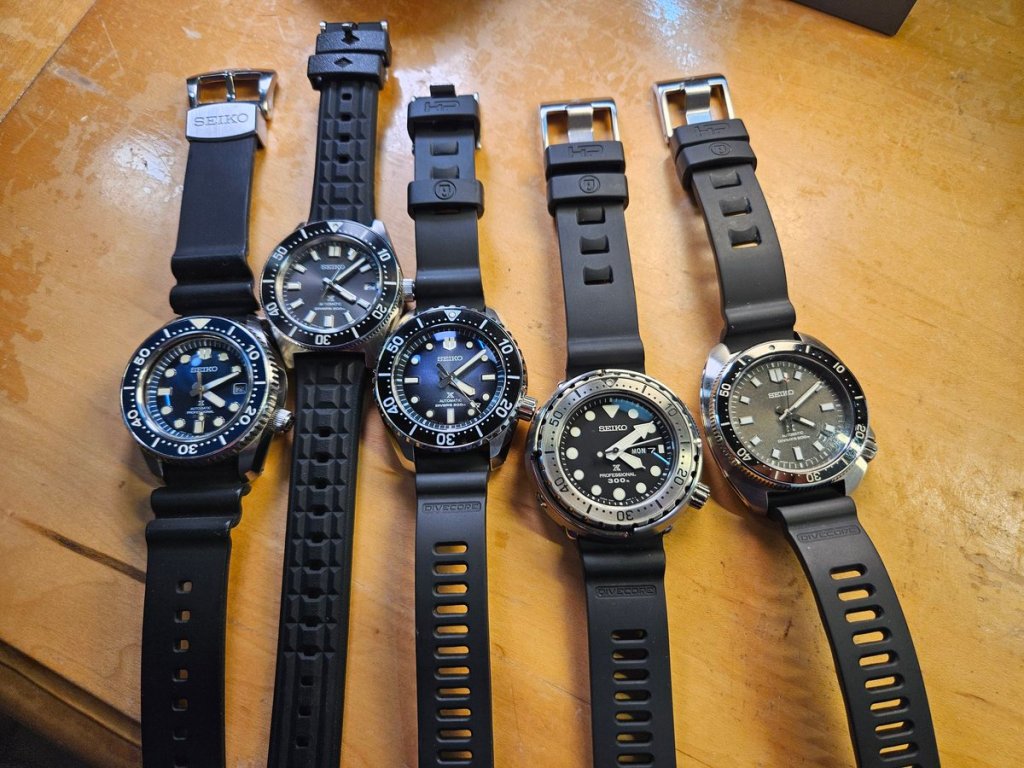
    Experience has taught me that one more watch could push me from “mild enthusiast” to full-blown horological lunatic. I currently own seven watches I like. Each serves a function, fills a niche, scratches an aesthetic itch. And yet, the siren song of three very specific timepieces keeps playing in my head: the Tudor Pelagos, the Seiko Astron SBXD025, and the Citizen Attesa CC4105-69E.

    These aren’t idle cravings. They’re fully staged daydreams with lighting, music, and a voiceover narrated by my inner Watch Demon. But I resist. And I resist for three very good reasons.

    First: Trying to fit more watches into my already-balanced rotation turns my so-called hobby into a logistical nightmare. It’s no longer joyful—it’s wrist-based Uber driving, shuttling watches in and out of rotation like I’m managing a fleet. I find myself resenting time itself for not giving me enough wrist hours to justify the collection. A hobby should not feel like an unpaid internship.

    Second: I fall into the delusion that this next purchase—the Pelagos, the Astron, the Attesa—will be the final watch, the one that ends the madness and ushers in a golden era of contentment and minimalist grace. But let’s be honest: feeding the Watch Demon only sharpens its teeth. Every new arrival rewires the brain for more dopamine hits, not less. It’s not a cure. It’s a catalyst.

    Third: Whenever I buy a new watch, something twisted happens—I begin to resent the ones I already own. Not because they’ve failed me, but because I need to invent reasons to justify their exit. The logic goes: “This new watch is more versatile,” or “I’ve outgrown that one.” Then I sell a beloved watch, feel instant regret, and enter the soul-destroying loop of rebuying what I never should have sold.

    So what’s the solution? Lately, a single thought has been rising above the noise like a lighthouse in the fog:
    “Jeff, put on your Tuna.”
    Specifically, my Seiko Tuna SBBN049—possibly the most salient, most “me” watch I own. When it’s on my wrist, I don’t think about the next acquisition. I don’t scroll listings or pace the floor of my psyche looking for the next horological fix. I’m just… good.

    Maybe that’s the Truth Path: stop chasing. Start wearing. Let the Tuna do its quiet, oversized magic and get back to the point of all this—joy, not inventory management.

  • Crying at the Sink: The Dishwashing Grammy Awards

    Crying at the Sink: The Dishwashing Grammy Awards

    Don’t ask me why, but there’s something about doing dishes after dinner that turns me into a soft-focus emotional wreck. Somewhere between the soap suds and the rinse cycle, I cue up Rickie Lee Jones’s “Living It Up”—one of my all-time favorite songs—and without fail, it punctures the heart like a stiletto dipped in nostalgia. Tonight, it brought on another weepy micro-moment, which means it’s time to officially give it The Most Likely to Make Me Cry from Too Much Beauty Award.

    This of course sent me spiraling into my own kitchen-sink Grammy ceremony, where I began handing out awards like a deranged emotional sommelier.

    • Todd Rundgren’s “Can We Still Be Friends” wins The Song That Makes You Recommit to Being a Half-Decent Human Being Award. It’s the sonic equivalent of an awkward apology after ruining Thanksgiving.
    • The Isley Brothers’ “Living for the Love of You” earns The Track Most Likely to Be Playing in Heaven When You Arrive Award—assuming heaven has good speakers and excellent taste.
    • Yes’s “And You and I” takes home The Sounds-Like-It-Was-Composed-by-Angels-on-a-Mountain-Top Award. I don’t know what dimension that song came from, but it wasn’t this one.
    • John Mayer’s “No Such Thing” is given The Makes You Happy to Be a Living, Breathing Fool Award. It’s that rare pop song that makes you want to fist-pump your own mediocrity.
    • The Sundays’ “You’re Not the Only One I Know” walks away with The Makes Sadness So Gorgeous You Forget to Be Upset Award. It’s a musical sigh pressed between lace and rain.

    I could keep going—my brain has a whole red carpet lined up—but I’ve got another episode of Sirens on Netflix to cry through. Turns out the best part of my day is a cross between dish soap, beautiful songs, and low-level existential unraveling. What a life.

  • Gods of Code: Tech Lords and the End of Free Will (College Essay Prompt)

    Gods of Code: Tech Lords and the End of Free Will (College Essay Prompt)

    In the HBO Max film Mountainhead and the Black Mirror episode “Joan Is Awful,” viewers are plunged into unnerving dystopias shaped not by evil governments or alien invasions, but by tech corporations whose influence surpasses state power and whose tools penetrate the most intimate corners of human consciousness.

    Both works dramatize a chilling premise: that the very notion of an autonomous self is under siege. We are not simply consumers of technology but the raw material it digests, distorts, and reprocesses. In these narratives, the protagonists find their sense of self unraveled, their identities replicated, manipulated, and ultimately owned by forces they cannot control. Whether through digital doppelgängers, surveillance entertainment, or techno-induced psychosis, these stories illustrate the terrifying consequences of surrendering power to those who build technologies faster than they can understand or ethically manage them.

    In this essay, write a 1,700-word argumentative exposition responding to the following claim:

    In the age of runaway innovation, where the ambitions of tech elites override democratic values and psychological safeguards, the very concept of free will, informed consent, and the autonomous self is collapsing under the weight of its digital imitation.

    Use Mountainhead and “Joan Is Awful” as your core texts. Analyze how each story addresses the themes of free will, consent, identity, and power. You are encouraged to engage with outside sources—philosophical, journalistic, or theoretical—that help you interrogate these themes in a broader context.

    Consider addressing:

    • The illusion of choice and algorithmic determinism
    • The commodification of human identity
    • The satire of corporate terms of service and performative consent
    • The psychological toll of being digitally duplicated or manipulated
    • Whether technological “progress” is outpacing moral development

    Your argument should include a strong thesis, counterargument with rebuttal, and close textual analysis that connects narrative detail to broader social and philosophical stakes.


    Five Sample Thesis Statements with Mapping Components


    1. The Death of the Autonomous Self

    In Mountainhead and Joan Is Awful, the protagonists’ loss of agency illustrates how modern tech empires undermine the very concept of selfhood by reducing human experience to data, delegitimizing consent through obfuscation, and accelerating psychological collapse under the guise of innovation.

    Mapping:

    • Reduction of human identity to data
    • Meaningless or manipulated consent
    • Psychological consequences of tech-induced identity collapse

    2. Mock Consent in the Age of Surveillance Entertainment

    Both narratives expose how user agreements and passive digital participation mask deeply coercive systems, revealing that what tech companies call “consent” is actually a legalized form of manipulation, moral abdication, and commercial exploitation.

    Mapping:

    • Consent as coercion disguised in legal language
    • Moral abdication by tech designers and executives
    • Profiteering through exploitation of personal identity

    3. From Users to Subjects: Tech’s New Authoritarianism

    Mountainhead and Joan Is Awful warn that the unchecked ambitions of tech elites have birthed a new form of soft authoritarianism—where control is exerted not through force but through omnipresent surveillance, AI-driven personalization, and identity theft masquerading as entertainment.

    Mapping:

    • Tech ambition and loss of oversight
    • Surveillance and algorithmic control
    • Identity theft as entertainment and profit

    4. The Algorithm as God: Tech’s Unholy Ascendancy

    These works portray the tech elite as digital deities who reprogram reality without ethical limits, revealing a cultural shift where the algorithm—not the soul, society, or state—determines who we are, what we do, and what versions of ourselves are publicly consumed.

    Mapping:

    • Tech elites as godlike figures
    • Algorithmic reality creation
    • Destruction of authentic identity in favor of profitable versions

    5. Selfhood on Lease: How Tech Undermines Freedom and Flourishing

    The protagonists’ descent into confusion and submission in both Mountainhead and Joan Is Awful show that freedom and personal flourishing are now contingent upon platforms and policies controlled by distant tech overlords, whose tools amplify harm faster than they can prevent it.

    Mapping:

    • Psychological dependency on digital platforms
    • Collapse of personal flourishing under tech influence
    • Lack of accountability from the tech elite

    Sample Outline


    I. Introduction

    • Hook: A vivid description of Joan discovering her life has become a streamable show, or the protagonist in Mountainhead questioning his own sanity.
    • Context: Rise of tech empires and their control over identity and consent.
    • Thesis: (Insert selected thesis statement)

    II. The Disintegration of the Self

    • Analyze how Joan and the Mountainhead protagonist experience a crisis of identity.
    • Discuss digital duplication, surveillance, and manipulated perception.
    • Use scenes to show how each story fractures the idea of an integrated, autonomous self.

    III. Consent as a Performance, Not a Principle

    • Explore how both stories critique the illusion of informed consent in the tech age.
    • Examine the use of user agreements, surveillance participation, and passive digital exposure.
    • Link to real-world examples (terms of service, data collection, facial recognition use).

    IV. Tech Elites as Unaccountable Gods

    • Compare the figures or systems in charge—Streamberry in Joan Is Awful, the nebulous forces in Mountainhead.
    • Analyze how the lack of ethical oversight allows systems to spiral toward harm.
    • Use real-world examples like social media algorithms and AI misuse.

    V. Counterargument and Rebuttal

    • Counterargument: Technology isn’t inherently evil—it’s how we use it.
    • Rebuttal: These works argue that the current infrastructure privileges power, speed, and profit over reflection, ethics, or restraint—and humans are no longer the ones in control.

    VI. Conclusion

    • Restate thesis with higher stakes.
    • Reflect on what these narratives ask us to consider about our current digital lives.
    • Pose an open-ended question: Can we build a future where tech enhances human agency instead of annihilating it?

  • Borderline Strauss Disorder: A Dream of Intellectual Despair

    Borderline Strauss Disorder: A Dream of Intellectual Despair

    Last night, around 2 a.m., just as Jonah Goldberg of The Remnant podcast was deep in philosophical flirtation with Yale’s Steven Smith over Leo Strauss, I passed out—headphones still in, brain still humming.

    And then the dream began.

    I found myself in my grandfather’s old house in San Pedro, a stuccoed mid-century bunker that always smelled faintly of pipe smoke and baked ziti. Inside the library—yes, he had a library—Goldberg and Smith were now with me, and the three of us were doing what all good podcasters and aging humanities majors dream of doing: pulling crumbly tomes off dusty shelves, quoting Epictetus, Hobbes, and Plato as if our curated selections might finally bring Western Civilization back from the brink.

    Each book we grabbed opened, magically, to the exact passage we were about to reference—as if we were wielding Philosopher’s Stones bound in cracked leather. This was not casual reading. It was apocalypse-proof intellectual spelunking.

    Then I noticed something troubling.

    Through the window, I saw a teenage blonde girl in a baby-blue station wagon idling at the curb. She looked like a cross between a cheerleader and a Bond villain’s niece—beautiful, yes, but with the dead-eyed calm of someone about to burn down your ideas with surgical precision. Turns out she was an operative, dispatched by some shadowy organization convinced that our late-night Straussian exegesis was a threat to human progress.

    Naturally, I sprinted outside, confronted her, and commandeered the station wagon—which, of course, was loaded with weapons. Jonah, ever the podcast professional, called “his people” to secure the contraband.

    But there was a cost.

    Simply standing too close to the weapons cache scrambled the circuitry of my brain. My synapses went sideways, and a mysterious doctor appeared—seemingly conjured from a BBC miniseries and a Jungian archetype—with a scroll. Not a Kindle, not a clipboard. A scroll.

    He began to read aloud. Stories, essays, fragments—some of it fiction, some of it possibly academic, none of it optional. He read in a solemn, droning cadence, pausing only to gesture that I join in. At times, we performed the text together like an absurd Socratic duet. This was not medicine. It was literary waterboarding.

    The treatment drew attention.

    Soon, Goldberg turned the whole ordeal into a dinner party. Somehow, he located several of my retired faculty colleagues and invited them, with their long-suffering wives, to my grandfather’s house. I wanted to talk to them—reconnect, reminisce—but the doctor stuck to me like a parasite with tenure. Wherever I went, he followed, reading, always reading.

    My colleagues grew irritated and drifted off one by one, muttering about boundaries and bad acoustics. I tried to hide in the bean bag room—yes, this house apparently had a bean bag room—but the doctor found me, unfurled his accursed scroll, and picked up where he left off.

    I realized, in that moment, I was trapped. Pinned inside a philosophical purgatory where the punishment wasn’t fire or ice, but relentless interpretation. Eternal footnotes. Bibliographic water torture. I would never leave. Not until I understood the real meaning of the text. Or until a full bladder awakened me.

    Thankfully, the latter came first.

  • Borderless Flavors: Food, Power, and the Collapse of Culinary Elitism (College Essay Prompt)

    Borderless Flavors: Food, Power, and the Collapse of Culinary Elitism (College Essay Prompt)

    Essay Prompt (1,700 words):

    In the Chef’s Table: Pizza episode featuring Ann Kim, food becomes a site of transformation, healing, and reinvention. Kim channels her failed acting career into culinary artistry, crafting dishes that express the multiplicity of her identity—as a Korean-American daughter, an artist, and an immigrant success story. Her pizzas become canvases for memory, rebellion, and gratitude, especially toward her parents. Her story is a microcosm of the broader immigrant narrative: negotiating identity, navigating cultural shame, and ultimately reversing the script as the very foods once mocked become culinary gold.

    In this essay, compare the themes in Ann Kim’s story with those in Ugly Delicious (Season 1, Episode “Tacos”) and selected episodes of The Taco Chronicles. How do these shows depict food as more than sustenance—as performance, identity, resistance, and love? In what ways do immigrant chefs and food workers subvert the shame once associated with their cultural foods and assert pride, creativity, and belonging through cuisine?

    Your essay must engage with the visual rhetoric of the shows (tone, music, imagery), analyze the role of food as narrative and identity, and include at least two secondary sources—these may include academic articles on food studies, identity, or immigrant narratives.

    Sample Thesis Statements:

    1. The Performance of the Plate
    Through Ann Kim’s story in Chef’s Table: Pizza, the taco discourse in Ugly Delicious, and the street-food heroism of The Taco Chronicles, we see food function as a performance of identity, where immigrant chefs use culinary artistry to reclaim scorned traditions, express hybrid selves, and find belonging in spaces that once excluded them.

    Mapping components:

    • Culinary performance as identity expression
    • Reversal of cultural shame into pride
    • Belonging through the craft of food

    2. From Shame to Reverence
    Ann Kim, David Chang, and the taqueros of The Taco Chronicles show how the foods once mocked in American lunchrooms are now celebrated on global stages, revealing that cuisine is a powerful tool of cultural revenge, emotional healing, and self-definition for immigrant communities.

    Mapping components:

    • Mockery and marginalization of immigrant food
    • Culinary revenge and cultural redemption
    • Healing and self-definition through cooking

    3. Food as Love, Labor, and Legacy
    While Chef’s Table: Pizza casts Ann Kim’s story as one of artistic reinvention and filial love, Ugly Delicious and The Taco Chronicles emphasize how food binds generations, builds communities, and becomes a labor of love that transforms trauma into legacy.

    Mapping components:

    • Culinary reinvention as personal and artistic legacy
    • Food as intergenerational bridge
    • Labor, love, and storytelling through cuisine

    Sample Outline:


    I. Introduction

    • Hook: A vivid scene from Ann Kim’s episode—placing gochujang on pizza as rebellion and homage.
    • Context: Rise of food documentaries as cultural texts.
    • Thesis: (Insert one of the thesis statements above.)

    II. Ann Kim: The Personal is Culinary

    • Acting failure and identity fragmentation
    • Food as theatrical medium: personas, freedom, risk
    • Immigrant shame turned into culinary power (Korean pizza)
    • Cooking for her parents as an act of redemption and gratitude

    III. Ugly Delicious: The Taco Episode and Cultural Inversion

    • David Chang’s exploration of authenticity and invention
    • The taco as a battleground of legitimacy (Mexican roots vs. American remix)
    • Use of celebrity chefs and taqueros to show class and cultural divides
    • Food once marginalized now used as a symbol of culinary innovation

    IV. The Taco Chronicles: Myth, Ritual, and Regional Pride

    • Focus on specific episodes (e.g., Suadero, Cochinita Pibil)
    • Tacos as sacred practice, generational labor, and social equalizer
    • Visual and musical rhetoric: the taco as folk hero
    • Repeated motif: taqueros breaking class and cultural boundaries with corn, fire, and steel

    V. Comparative Analysis

    • Immigrant identity in all three: reclaiming power through food
    • Emotional resonance: food as apology, tribute, rebellion
    • Different tones: Kim’s cinematic elegance vs. Chang’s irreverent inquiry vs. Chronicles’ reverent folklore

    VI. Counterargument Section

    • Some critics argue that food media romanticizes struggle or sanitizes labor conditions
    • Rebuttal: While these shows may aestheticize food, they also restore dignity to cuisines and cooks historically ignored by dominant culture

    VII. Conclusion

    • Reassert the thesis: food is not just fuel—it is metaphor, memoir, and medium
    • End with a return to a powerful image—perhaps Ann Kim in her pizzeria, cooking for her parents, feeding them not just dinner, but decades of unspoken love

  • Taco Nation: How a Humble Street Food Became Mexico’s Superpower (College Essay Prompt)

    Taco Nation: How a Humble Street Food Became Mexico’s Superpower (College Essay Prompt)

    Essay Prompt:

    In the Netflix docuseries The Taco Chronicles, the taco is not portrayed as a mere food item but as a cultural force—an edible emblem of Mexico’s resilience, creativity, and soul. The series argues that the taco is a kind of Mexican superfood—not only for its nutritional versatility, but also for its power to break down cultural and class barriers, foster community, and rejuvenate the communal spirit through the sacred staple of corn. It is both deeply traditional and endlessly innovative, enchanting the people who eat it and the taqueros who make it.

    Write a 1,700-word argumentative essay that responds to the claim that the taco functions as a Mexican superfood with transformative social and cultural power. Consider how the taco transcends boundaries—economic, racial, culinary, and geographic—while also preserving deep-rooted traditions. You may also explore counterarguments: Is the global popularity of the taco watering down its identity? Is the romanticization of street food masking deeper inequalities?

    Support your argument with examples from The Taco Chronicles and incorporate at least two additional sources (journalistic, scholarly, or culinary writing) that offer insights into food culture, globalization, or Mexican identity.

    Sample Thesis Statements:


    1. The Taco as Cultural Bridge
    While often seen as humble street food, the taco stands as a powerful symbol of cultural resilience, breaking barriers of class and race, rejuvenating communities through the ancestral force of corn, and reinventing itself across borders without losing its soul.

    Mapping components:

    • Symbol of cultural resilience
    • Rejuvenation through corn
    • Innovation without cultural loss

    2. A Superfood for the Soul
    Far from just a culinary trend, the taco operates as a Mexican superfood by nourishing the body, connecting diverse communities across social divides, and reviving cultural heritage through its balance of tradition and modern flair.

    Mapping components:

    • Nourishment and accessibility
    • Cross-class and cross-cultural unity
    • Reinvention of tradition

    3. Romantic or Real? Interrogating the Taco’s Power
    Though The Taco Chronicles portrays the taco as a superfood capable of healing social divisions and celebrating tradition, its growing global appeal risks cultural dilution, commodification, and the masking of labor inequities behind its charm.

    Mapping components:

    • Healing and communal unity
    • Risk of global commodification
    • Invisible labor and exploitation

    Here are three counterarguments with rebuttals, each addressing a core claim from the prompt about the taco’s cultural and communal power:


    Counterargument 1: “The Taco Has Been Commercialized Beyond Recognition”

    As the taco gains global popularity, it’s often stripped of its cultural context and repackaged as a trendy, overpriced novelty in upscale restaurants. The soul of the taco gets lost in translation, turning it into an Instagram prop rather than a communal or ancestral food.

    Rebuttal:
    While some global versions of the taco are divorced from tradition, The Taco Chronicles shows that innovation and authenticity can coexist. From suadero in Mexico City to cochinita pibil in Yucatán, the taco is continually reinvented without losing its cultural core. Rather than being erased, the taco’s story is being exported—sometimes imperfectly, but often with respect and curiosity.


    Counterargument 2: “Romanticizing the Taco Ignores Labor Exploitation”

    Celebrating the taco as a symbol of love and unity risks whitewashing the harsh labor realities faced by many taqueros, many of whom work long hours in informal economies with little pay or security.

    Rebuttal:
    Yes, romanticizing food can blur the realities of labor, but The Taco Chronicles doesn’t shy away from this. It honors the taquero not just as a cook but as a craftsman, keeper of tradition, and community anchor. Elevating their work brings visibility and dignity—not erasure. Recognizing tacos as cultural capital can be the first step toward advocating for fair labor practices in the food industry.


    Counterargument 3: “The Taco Doesn’t Break Class Barriers—It Reinforces Them”

    Although tacos are accessible, their new gourmet incarnations often exclude working-class eaters, turning a people’s food into a luxury experience and reinforcing class divides rather than dismantling them.

    Rebuttal:
    The taco’s genius lies in its dual identity. It can be both a 10-peso street meal and a $15 chef’s experiment without collapsing under the weight of either role. Its roots in affordability and improvisation mean that it retains its cultural identity even when elevated. More importantly, the street taco is still thriving—in Mexico and beyond—resisting erasure by holding its own against the forces of culinary elitism.

  • The Vegan That Lives in My Head (and Nowhere Else)

    The Vegan That Lives in My Head (and Nowhere Else)

    At six a.m., mug in hand, I sat down at my desk with the smug satisfaction of a man pretending to be in control of his day—only to be ambushed by a large brown spider launching itself from my desk drawer like it was fleeing the FBI. It vanished into the shadows, and I was left stewing in the indignity of defeat. I didn’t catch it. Worse, for the second morning in a row, I couldn’t remember my dream. Something about a car near the ocean, a faceless authority figure mumbling instructions, and then—blank. Freud would be disappointed. I’m more annoyed.

    My dreams often involve cars. They also often involve the ocean. I suspect this means I’m perpetually trying to get somewhere, while simultaneously wanting to be swallowed by the Great Womb of the Deep. Birth, Death, and the Cycle of Life.

    Midway through my coffee, my teenage daughter wandered into my office, eyebrows raised in alarm as I recounted the spider saga and my failed dream recall. She showed the appropriate amount of concern, then casually announced she was heading to Starbucks for a chai latte. It’s comforting how the rituals of youth persist, even as their fathers spiral existentially over arachnids and unconscious symbolism.

    I banged out a new essay prompt for next semester—something about manufactured authenticity and influencer FOMO—then drove the girls to school, came back, and burned 805 calories in 61 minutes on the Schwinn Airdyne. Or as I’ve come to call it: The Misery Machine. This isn’t exercise. This is penance. Only those seeking redemption or working through unresolved guilt buy these medieval contraptions. The bike doesn’t offer health—it offers absolution.

    Post-shower weigh-in: 231. Still twenty pounds away from my goal, but less disgusting than I was yesterday, so—progress.

    Later, I drifted into my usual morning fantasy: becoming a vegan. No, not a preachy zealot in hemp sandals, but a serene, plant-based domestic monk, stirring lentils and sipping soy lattes like some morally superior Miyagi of meal prep. In this fantasy, I don’t haul home slabs of meat leaking blood onto Trader Joe’s paper bags. No. I have evolved.

    In this alternate timeline, breakfast is steel-cut oatmeal or buckwheat groats with walnuts, berries, soy milk, and a dash of protein powder. Lunch and dinner are identical—because I’m disciplined, not boring—a sacred Le Creuset Dutch oven bubbling with a Caribbean rice-and-beans concoction: quinoa or white rice, black beans, cubes of tempeh, coconut milk, tomato sauce, and enough spice to remind me I’m still alive. The afternoon snack is a tall glass of soy milk with a scoop of vegan protein, because the aspirational me is nothing if not consistent.

    Of course, this will never happen.

    My wife and daughters won’t eat this way. Neither, frankly, will I. I’ve known student-athletes who withered into pale husks trying to go vegan. Others have thrived and glowed like enlightened celery sticks. I, on the other hand, turn into a foggy-headed anemic with the energy of a depressed manatee. But the fantasy persists. This vegan version of me—let’s call him “The Better Me”—exists only in the realm of self-mythology, filed away with other fictional selves: The Novelist Who Writes Before Dawn, The Man Who Loves Yoga, and The Guy Who Only Checks His Phone Twice a Day.

    They’re all gathering dust in the mental trophy case labeled Deferred Dreams. To catalogue them all would require another post—and a second pot of coffee.

  • Bro Science and the Collapse of Critical Thinking: Why Fitness Influencers Thrive in a Post-Truth Culture (College Essay Prompt)

    Bro Science and the Collapse of Critical Thinking: Why Fitness Influencers Thrive in a Post-Truth Culture (College Essay Prompt)

    In the digital era, health is no longer just about wellness—it’s about performance, optics, and identity. Two recent Netflix documentaries, The Game Changers and Untold: The Liver King, serve as cultural artifacts of a rising genre: influencer-fueled fitness propaganda wrapped in moral theater and masculine branding.

    The Game Changers promotes a plant-based diet as not only an ethical choice, but as a gateway to elite athleticism, virility, and moral superiority. It uses cinematic flair, celebrity cameos, and pseudoscientific claims to repackage veganism as a Bro Lifestyle—a body-hacking shortcut to strength, stamina, and environmental salvation. Meanwhile, Untold: The Liver King profiles Brian Johnson, a self-styled “Ancestral Living” guru who gained millions of followers by promoting a raw-organ-meat, shirtless-in-the-woods routine before being exposed for secretly spending over $10,000 a month on performance-enhancing drugs.

    Despite their opposing diets—one vegan, one carnivore—both narratives follow a suspiciously similar script. They offer simplified solutions to complex problems, appeal to masculine insecurity, and promise transcendence through aesthetics, all while playing fast and loose with science. Their real power lies not in evidence, but in storytelling—stories that market identity, exploit fears, and seduce with cinematic emotion.

    This style of rhetoric, often called “Bro Science,” thrives in an age of algorithmic truth, where virality trumps validity. In this environment, influencer-driven wellness culture doesn’t just ignore science—it weaponizes it, bending facts to serve a brand. The result is a cultural climate where image, ideology, and emotional resonance increasingly matter more than data or critical thinking.

    Assignment:

    Write a well-argued, 1,700 word essay that analyzes The Game Changers and Untold: The Liver King as case studies in rhetorical manipulation, identity-based marketing, and the collapse of evidence-based discourse. In your essay, argue that the success of these Bro influencers lies not in their scientific credibility, but in their emotional, aesthetic, and ideological appeal.

    You must compare the rhetorical strategies used in both documentaries and analyze the cultural implications of how masculinity is rebranded, how virtue is commodified, and how fallacious reasoning is normalized in the guise of motivation and self-improvement.


    Your essay should address the following:

    1. Rhetorical Strategy – How do both documentaries use visual storytelling, celebrity testimony, repetition, and emotional appeals to persuade the viewer?
    2. Logical Fallacies – Identify and critique examples of cherry-picked science, false cause arguments, appeals to authority, or false dichotomies in each film.
    3. Branding Masculinity – How do the documentaries construct competing visions of the “ideal male”? What do they promise men, and what fears do they exploit?
    4. Collapse of Evidence-Based Thinking – Situate these documentaries in a larger cultural moment. Why do identity-driven narratives flourish in a time of disinformation, algorithmic echo chambers, and a crisis of expertise?

    Style, Structure, and Submission

    • Your essay must include a thesis with mapping components, clear topic sentences, and evidence-based analysis.
    • You may write in a formal academic tone or use a more critical/cultural studies voice with vivid prose—as long as your argument is coherent, supported, and original.
    • Use MLA style consistently.Final draft due: [Insert Date]

    Sample Thesis Statements (with Mapping Components)


    1.
    While The Game Changers promotes lentils and The Liver King pushes liver, both documentaries peddle the same myth: that aesthetic transformation equals virtue. Through emotionally manipulative storytelling, logical fallacies disguised as science, rebranded masculine identities, and algorithmically engineered messaging, these films reveal the dangerous collapse of evidence-based thinking in modern wellness culture.


    2.
    The success of The Game Changers and Untold: The Liver King lies not in their nutritional claims but in their weaponization of narrative. Both films rely on emotionally loaded visuals, performative masculinity, fallacious scientific rhetoric, and identity-driven marketing to sell a fantasy of bodily perfection that exploits insecurity and bypasses rational analysis.


    3.
    By glamorizing extreme lifestyle choices through visual spectacle, moral branding, and rhetorical sleight-of-hand, The Game Changers and Untold: The Liver King reveal a disturbing cultural trend: the replacement of scientific rigor with personal mythologies, the commodification of authenticity, and the rise of Bro Science as a post-truth performance of health.


    Sample Outline


    I. Introduction

    • Hook: The modern Bro doesn’t just lift—he converts.
    • Brief overview of both documentaries and their appeal
    • Thesis statement with four components:
      • Emotional storytelling
      • Logical fallacies
      • Rebranded masculinity
      • Decline of evidence-based thinking

    II. The Emotional Power of Narrative

    • Use of cinematic techniques, voice-over, editing, and transformation arcs
    • Celebrity endorsements (e.g., Arnold, athletes, Johnson himself)
    • Case study: how emotion trumps empirical data in both documentaries

    III. The Rhetoric of Fallacy

    • The Game Changers: cherry-picking studies, false cause arguments
    • Liver King: appeal to nature, denial of PEDs, appeal to “ancestral purity”
    • How fallacies are disguised through slick production and confidence

    IV. Masculinity as Lifestyle Branding

    • Compare how each documentary rebrands masculinity (lean vegan warrior vs. raw primal alpha)
    • Analyze underlying fears being addressed: weakness, softness, irrelevance
    • How “virtue” (animal ethics vs. authenticity) becomes a selling point for muscle aesthetics

    V. The Cultural Crisis of Truth and Expertise

    • Rise of influencer health culture amid distrust in traditional institutions
    • The algorithm as echo chamber: content tailored to belief, not inquiry
    • Bro Science as the new gospel in the post-truth digital age

    VI. Conclusion

    • Recap major points
    • Reflect on the danger of narratives that bypass critical thought
    • Call to rethink how we engage with health media and influencers in the age of viral propaganda