Author: Jeffrey McMahon

  • I’ve Become Leery of the Ronnie Coleman Effect in AI Writing

    I’ve Become Leery of the Ronnie Coleman Effect in AI Writing

    My college writing students and I have been collaborating with ChatGPT for over a year now. I’ve often been impressed with this writing platform. Provided I give very specific instructions and make it clear what kind of tone and persona I want, ChatGPT can perform in ways I can’t. It can’t make a turn of phrase and make language sing in ways that dwarf my own solid writing skills. 

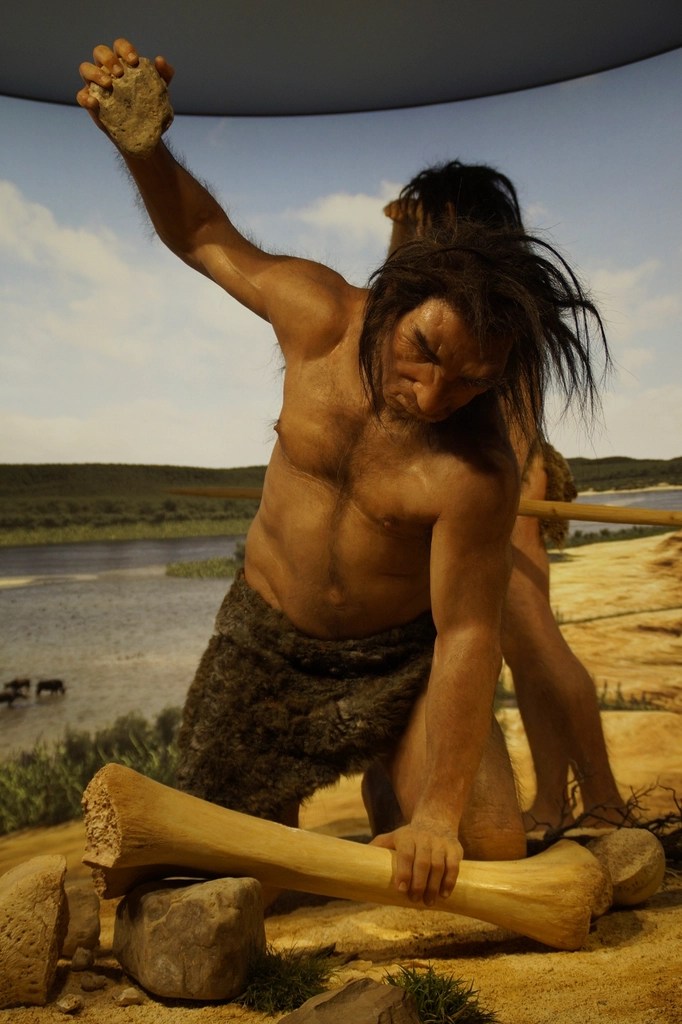
    But recently, I’ve been leery of ChatGPT and have been eager to write without it. What I’ve noticed is that it can flex its prose muscles in impressive ways that I call the Ronnie Coleman Effect. Ronnie Coleman was a champion bodybuilder, arguably the best in his era, late 90s to early 2000s. At 290 pounds, his steroidal muscles exploded in ways that made him look impossibly superhuman. I was a natural bodybuilder in my youth. Coleman would blow me off the stage. Coleman’s 290 pounds to my 190 pounds is what my prose is compared to ChatGPT’s: I’m the natural, lean, almost boring bodybuilder while ChatGPT is the flexing, bulging Ronnie Coleman who steals all the attention. I’m simply overpowered by this AI platform. 

    However, there are downsides: AI overwrites, can obscure clarity, can be florid in nonsensical ways, can be grossly inaccurate, and can steal my confidence because it says, “You’re nothing compared to me,” and it can make me lazy because it whispers, “Just jot a few notes. I’ll take care of the rest.” 

    For this reason, I started writing without ChatGPT. I need to get out from under the oppressive Ronnie Coleman Effect and be human again. 

  • I Have No Illusions About Converting My Students to “The Ways of Literacy”

    I Have No Illusions About Converting My Students to “The Ways of Literacy”

    My college students admit that they barely read. They avoid books. They’ll skim an article. Their “cognitive load” is taken up by texting on their phones and watching TikTok and YouTube videos. They don’t have bandwidth for doing deep reading.

    Many of them were in the eighth grade during the pandemic. They lost close to two years of school, spent time on their phones and Chromebooks, and see ChatGPT as a godsend. They can outsource college instructors’ writing assignments and no longer have to worry about grammar or formatting. 

    Teaching college writing, I have to meet students where they are. I have to teach them rhetorical skills, critical thinking skills, and the transforming power of literacy, so I show them powerful arguments, and what makes them persuasive, and people who have found their higher selves through literacy, such as Frederick Douglass and Malcolm X, and the happiness derived from Cal Newport’s notion of “deep work” as an antidote to the despair and nihilism of popular culture’s default setting for cheap dopamine hits, immediate gratification, and meretricious consumer hype. 

    The good news is that my lessons resonate with the students evidenced by their engagement with class discussions. The less than good news is that these philosophical discussions don’t turn them into readers, don’t make them want to trade their phones and social media platforms for a novel or a biography, and don’t make them want to learn the finer points of rhetoric. 

    My students are smart, decent, reasonable, and pragmatic. They learn what they feel is essential to adapt to life’s challenges. Doing a deep dive into reading and writing doesn’t seem that essential to them even though they’ll acknowledge many of the writers and writing samples I present to them are impressive and worthy of admiration. 

    My students seem to appreciate me for giving them an entertaining presentation and for having made the effort to sell literacy as an essential tool for becoming our aspirational selves, but at the end of the day, they focus on getting their homework done as efficiently as possible, working a part-time job to pay the bills, enjoying their friendships, and nurturing their romantic interest. 

    The unspoken agreement between my students and me is that I will be entertaining and enthusiastic about my subject for 90 minutes, but I will not have any delusions about converting them to The Ways of Literacy. That is a teacher’s fantasy, made even more elusive in the AI Age. 

  • The Handwriting Is on the Wall for Writing Instructors Like Myself

    The Handwriting Is on the Wall for Writing Instructors Like Myself

    There’s a cliché I’ve avoided all my life because I’m supposed to be offended by cliches. I teach college writing. But now, God help me, I must say it: I see the handwriting on the wall. And it’s blinking in algorithmic neon and blinding my eyes.

    I’ve taught college writing for forty years. My wife, a fellow lifer in the trenches, has clocked twenty-five teaching sixth and seventh graders. Like other teachers, we got caught off-guard by AI writing platforms. We’re now staring down the barrel of obsolescence while AI platforms give us an imperious smile and say, “We’ve got this now.”

    Try crafting an “AI-resistant” assignment. Go ahead. Ask students to conduct interviews, keep journals, write about memories. They’ll feed your prompt into ChatGPT and create an AI interview, journal entry, and personal reflection that has all the depth and soul of stale Pop-Tart. You squint your eyes at these AI responses, and you can tell something isn’t right. They look sort of real but have a robotic element about them. Your AI-detecting software isn’t reliable so you refrain from making accusations. 

    When I tell my wife I feel that my job is in danger, she shrugs and says there’s little we can do. The toothpaste is out of the tube. There’s no going back. 

    I suppose my wife will be a glorified camp counselor with grading software. For me, it will be different. I teach college. I’ll have to attend a re-education camp dressed up as “professional development.” I’ll have to learn how to teach students to prompt AI like Vegas magicians—how to trick it into coherence, how to interrogate its biases. Writing classes will be rebranded as Prompt Engineering.”

    At sixty-three, I’m no fool. I know what happens to tired draft horses when the carriage goes electric. I’ve seen the pasture. I can smell the industrial glue. And I’m not alone. My colleagues—bright, literate, and increasingly demoralized—mutter the same bitter mantra: “We are the AI police. And the criminals are always one jailbreak ahead.”

  • Workout & Diet Strategy for Thriving in My 60s

    Workout & Diet Strategy for Thriving in My 60s

    I’m 63 and maintaining strength, stamina, and mobility with a sustainable weekly routine. Here’s my current workout and diet plan—structured, protein-rich, and cardio-intense without trashing the joints.


    Training Plan (6 Days/Week – 1 Rest Day)

    I rotate three different 1-hour sessions. All kettlebell (KB) workouts are circuit-style with minimal rest.

    Workout A – Strength & Squat Emphasis

    • Goblet Squats – 3 sets of 20
    • KB Lat Rows – 3 sets of 15
    • Push-Ups – 2 sets of 20
    • KB Clean, Squat & Press – 15 reps
    • Hand-to-Hand Swings – 30
    • Around-the-Worlds – 30
    • KB Circles – 20
    • Turkish Get-Ups – 3/side
    • Lying KB Pullover + Sit-Up + Press – 15
    • Medicine Ball Slams – 30

    Workout B – Swing & Flow Emphasis

    • Hand-to-Hand Swings – 2 rounds of 40
    • Single-Arm Clean, Squat & Press – 15
    • KB Lat Rows – 2 rounds of 20
    • Figure 8s – 20
    • Push-Ups – 20
    • Side Plank Deltoid Raises – 20
    • KB Deadlifts – 20
    • Around-the-Worlds – 40
    • Turkish Get-Ups – 3/side
    • Lying KB Pullover + Sit-Up + Press – 15
    • Single-Arm Chest Press – 15
    • Single-Leg Romanian Deadlifts – 20

    Workout C – Schwinn Airdyne Session

    • 1 hour at 80–95% HR max
    • ~700 calories burned

    Weekly Cycle

    Rotate A → B → C, repeat. One full rest day weekly.

    Diet & Macros (Maintenance/Cutting)

    High-protein, moderate-calorie, lowish-carb. Simple meals, consistent results.

    Breakfast

    • 1 cup plain Greek yogurt
    • Scoop of whey protein
    • Chia seeds, berries
    • Coffee

    Lunch

    • Arugula salad with balsamic
    • Canned fish
    • ½ block Trader Joe’s tempeh
    • Cottage cheese
    • Jalapeños, herbs, spices

    Post-Nap Snack

    • ¾ cup yogurt with berries

    Dinner

    • Lean protein
    • Vegetables
    • Apple

    Macros:

    • Protein: 160–180g
    • Calories: ~2,300
    • Carbs: 100–120g

    Supplements

    • Fish Oil
    • Creatine (5–7g daily)
    • Magnesium

  • Grifters, Gurus, and the Gospel of FOMO: How Manipulation Masquerades as Aspiration in The Inventor, FYRE, and The Game Changers (a College Essay Prompt)

    Grifters, Gurus, and the Gospel of FOMO: How Manipulation Masquerades as Aspiration in The Inventor, FYRE, and The Game Changers (a College Essay Prompt)

    Prompt:
    In the documentaries The Inventor: Out for Blood in Silicon Valley, FYRE: The Greatest Party That Never Happened, and The Game Changers, we are invited into seductive worlds where cutting-edge technology, elite experiences, and revolutionary nutrition promise to transform our lives. But beneath the glossy exteriors and rousing rhetoric lies something far more insidious: a machinery of manipulation fueled by fear, fantasy, and illusion.

    Each of these films documents a different kind of grift. Elizabeth Holmes built a biotech empire on vaporware and mythic charisma. Billy McFarland orchestrated a luxury festival that never existed. And James Wilks curated a plant-based gospel that selectively omitted dissenting science while cloaking itself in the authority of elite athletes. Yet all three operate using the same emotional lever: FOMO—the Fear of Missing Out. In these narratives, aspiration becomes submission, and the fear of being left behind replaces critical judgment with blind faith.

    This essay invites you to compare and analyze how these three documentaries explore deception, manipulation, and grift. Your goal is to show how FOMO, Bro Culture, influencer mythology, and selective fact presentation become tools to silence skepticism and provoke submission in the name of personal betterment, innovation, or belonging.

    You must write a 1,700-word argumentative essay that:

    • Analyzes the rhetorical and visual strategies used in each documentary
    • Explores the cultural conditions (e.g., social media, startup worship, fitness obsession) that allow grifters to thrive
    • Examines how the fear of exclusion or inadequacy is exploited
    • Includes at least one counterargument—perhaps defending one of the documentaries as sincere or visionary
    • Draws on specific scenes and evidence from all three works

    Your writing should be clear, vivid, and analytical—not a summary, but a sustained critique of how manipulation is disguised as progress, empowerment, or elite access.

    Three Sample Thesis Statements

    1. The Inventor, FYRE, and The Game Changers each reveal that in the age of Instagram envy and startup hagiography, grifters thrive not by lying outright but by weaponizing FOMO, influencer culture, and selective truths to turn human aspiration into unquestioning submission.
    2. Though each documentary presents a different domain—technology, luxury events, and nutrition—all three expose how charismatic leaders exploit our fear of being average, leveraging curated images, vague promises, and social proof to bypass critical thinking and create psychological dependency.
    3. The seductive narratives in The Game Changers, The Inventor, and FYRE depend on a potent emotional cocktail: the fear of irrelevance, the myth of optimization, and the desire to belong to a superior class—all of which are weaponized to suppress doubt and promote conformity under the guise of empowerment.

    Suggested Outline

    I. Introduction (150–200 words)

    • Open with a compelling hook: the rise of the modern grifter in the age of social media and aspiration
    • Briefly introduce the three documentaries and their subjects (Holmes, McFarland, Wilks)
    • Define key concepts: FOMO, influencer mythology, selective omission, and Bro Culture
    • Thesis: Make a clear argument about how each work illustrates that fear and aspiration can be weaponized to create compliance and suppress critical thought

    II. The Emotional Architecture of Grift: FOMO and the Loss of Judgment (250–300 words)

    • Define FOMO not just as anxiety but as a cognitive vulnerability exploited by marketers and grifters
    • Show how each film presents characters who rely on this fear to manipulate others
      • FYRE: Attendees wanted the Instagrammable experience of the decade
      • The Inventor: Investors feared missing the next Steve Jobs or Uber
      • The Game Changers: Viewers fear being left behind in performance, health, or masculinity
    • Argue that in each case, critical thinking is not defeated by logic, but by emotion and branding

    III. Bro Culture and the Theater of Confidence (300–350 words)

    • Explain Bro Culture as a fusion of overconfidence, charisma, and anti-intellectualism masquerading as innovation
    • Analyze how Elizabeth Holmes, Billy McFarland, and James Wilks each use performance to bypass scrutiny
      • Holmes’ black turtleneck and “deep voice” as a Jobs cosplay
      • McFarland’s delusional optimism and frat-boy persuasion
      • Wilks’ rhetorical aggression and the “alpha” appeal of elite athletes
    • Show how Bro Culture rewards dominance over nuance, and why this suppresses dissent

    IV. Influencer Mythology and the Illusion of Belonging (300–350 words)

    • Analyze how each documentary critiques the role of influencers as modern prophets of lifestyle
      • FYRE: The “orange tile” Instagram campaign and models like Bella Hadid
      • Game Changers: Use of elite athletes and celebrities to confer credibility
      • Inventor: Media outlets breathlessly elevating Holmes as a savior
    • Argue that influencers don’t just sell products—they sell status, and the public follows not out of reason but a desire to belong to the “chosen” group

    V. Selective Omission of Facts and the Death of Nuance (300–350 words)

    • Examine how each subject used the omission of inconvenient truths to maintain a compelling narrative
      • The Game Changers: Cherry-picked science, anecdotal evidence, and lack of scientific counterpoints
      • The Inventor: Holmes’ secrecy about test accuracy, repeated lies to regulators and the public
      • FYRE: Marketing luxury while hiding logistical chaos and lack of infrastructure
    • Argue that omission is more dangerous than lying—it builds castles in the air with the appearance of truth

    VI. Counterargument and Rebuttal (200–250 words)

    • Possible counterargument: One or more of the subjects had sincere goals or brought attention to important ideas (e.g., plant-based diets, female CEOs, festival culture)
    • Rebuttal: Intentions don’t negate the damage caused by deception. If anything, the appearance of noble intent is what makes the manipulation more effective
    • Acknowledge complexity, but emphasize the core argument: FOMO and social performance are tools of compliance, not enlightenment

    VII. Conclusion (150–200 words)

    • Reaffirm your thesis: These documentaries expose a common structure of manipulation dressed up as progress
    • Reflect on the cultural cost: When aspiration becomes submission, when we follow grifters out of fear of missing out, we lose not just money or time—but autonomy
    • End with a warning or call to vigilance: In an age of curated truth and high-performance grift, critical thinking is not optional—it’s survival

  • The Warrior’s Code vs. the Sunken Place: How Frederick Douglass, Get Out, and Black Panther Illuminate the Moral Power of Bushido (College Essay Prompt)

    The Warrior’s Code vs. the Sunken Place: How Frederick Douglass, Get Out, and Black Panther Illuminate the Moral Power of Bushido (College Essay Prompt)

    Essay Prompt:
    In Frederick Douglass’ Narrative of the Life of Frederick Douglass, the protagonist fights not only for freedom from physical slavery but for a reclamation of his identity and voice. In Get Out (dir. Jordan Peele), Chris Washington must escape a literal and psychological “Sunken Place”—a symbolic void of powerlessness, silencing, and racial objectification. In Black Panther (dir. Ryan Coogler), T’Challa and the people of Wakanda face a choice: remain isolated in comfortable superiority or courageously intervene in global struggles for justice. Across these three works, we encounter individuals and cultures confronting moral inertia and existential erasure.

    This essay asks you to consider the Bushido Warrior Code—with its emphasis on courage, loyalty, honor, and self-sacrifice—as a framework of moral resistance. How can Bushido function as a psychological, cultural, and ethical antidote to the Sunken Place—that metaphoric (and literal) realm where people are silenced, dehumanized, or seduced into passivity?

    Your task is to write a 1,700-word argumentative essay that explores how Douglass, Chris and Rod from Get Out, and Wakanda in Black Panther demonstrate that adopting a moral code like Bushido is essential to resisting oppression, reclaiming agency, and transforming society.

    Use close textual analysis, specific scenes, and well-supported reasoning. You are encouraged to include at least one counterargument—perhaps challenging whether Bushido fits all three stories—and offer a thoughtful rebuttal.

    Three Sample Thesis Statements

    1. Frederick Douglass, Chris Washington, and T’Challa all embody the Bushido Warrior Code through their courageous defiance of systems that attempt to silence and control them; by embracing loyalty, honor, and self-sacrifice, they resist the moral numbness of the Sunken Place and reclaim agency for themselves and their communities.
    2. Though Bushido originates in a different cultural context, the warrior code’s emphasis on ethical action and personal sacrifice provides a powerful framework to understand how Douglass, the heroes of Get Out, and Black Panther all triumph over forces that seek to render them passive, complicit, or invisible.
    3. The Sunken Place in Get Out is not limited to that film; it is a universal metaphor for psychological captivity. Through their pursuit of truth, dignity, and moral clarity, the protagonists in Douglass’ memoir and Black Panther reflect Bushido’s core principles, showing that only a warrior’s mindset can break the chains of silence and conformity.

    Definition of the Bushido Warrior Code (Relevant to Douglass, Get Out, and Black Panther):

    The Bushido Warrior Code is a moral and spiritual framework rooted in Japanese samurai tradition, demanding loyalty, courage, honor, and self-sacrifice in the face of injustice. In the context of Frederick Douglass, Chris Washington and Rod Williams from Get Out, and the Wakandan principles in Black Panther, Bushido can be redefined as the unflinching resolve to resist dehumanization, speak truth to power, and protect others—even at great personal risk.

    Douglass, once enslaved and denied his humanity, lived by a code of radical moral clarity: to reclaim his identity and liberate others through truth, intellect, and action. Chris’s escape from the Armitage estate—and Rod’s relentless pursuit to save him—embody Bushido’s call to act with bravery and loyalty against a system of manipulation and violence. In Black Panther, the leaders of Wakanda struggle between tradition and global responsibility, but T’Challa’s decision to share Wakanda’s resources to uplift oppressed communities aligns with Bushido’s ethic of using strength not for domination, but for justice.

    Thus, Bushido in this contemporary and intercultural context becomes the warrior’s vow to confront moral cowardice, challenge systems of oppression, and hold fast to integrity—even when the world offers comfort in exchange for silence.

    Suggested Outline

    I. Introduction (150–200 words)

    • Define the Bushido Warrior Code briefly (contextualized for this essay)
    • Introduce the idea of the “Sunken Place” as symbolic of dehumanization, passivity, and moral disengagement
    • Introduce the three works: Douglass’ memoir, Get Out, and Black Panther
    • Thesis statement: Make a clear argument about how Bushido operates as a moral antidote to the Sunken Place across all three works

    II. The Sunken Place: A Shared Metaphor for Oppression (200–250 words)

    • Define and analyze the literal and metaphorical meaning of the Sunken Place in Get Out
    • Briefly link this idea to Douglass’ experience of slavery and enforced ignorance
    • Connect to Wakanda’s early isolationism and Killmonger’s anger as signs of a fractured moral stance
    • Set up the argument that Bushido, or a similar moral code, offers a counter-force to this condition

    III. Frederick Douglass as a Bushido Warrior (300–350 words)

    • Discuss Douglass’ path from passive suffering to empowered resistance
    • Explore moments in the narrative that exemplify Bushido traits:
      • Courage (e.g., fighting Mr. Covey)
      • Honor (his pursuit of literacy as self-respect)
      • Loyalty (to his people and his mission, not the system that enslaved him)
    • Argue that Douglass reclaims his humanity and escapes the “Sunken Place” through an internal code of ethics

    IV. Get Out: Chris and Rod as Modern-Day Bushido Figures (300–350 words)

    • Analyze Chris’s slow awakening to the danger around him and his eventual decision to fight back
    • Highlight Rod’s unwavering loyalty and moral clarity—his refusal to give up on Chris
    • Argue that Chris’s violent escape is not just survival but a Bushido-like reclaiming of self-respect and autonomy
    • Explore how Peele dramatizes the moment Chris “rises” out of the Sunken Place—both literally and ethically

    V. Black Panther: Wakanda’s Ethical Crossroads and the Warrior Ideal (300–350 words)

    • Examine Wakanda’s moral dilemma: comfort through isolation vs. courage through engagement
    • Focus on T’Challa’s development—his shift from traditionalism to global responsibility
    • Consider the Dora Milaje as examples of Bushido: duty, honor, sacrifice
    • Argue that Wakanda’s decision to emerge and help others is a national application of Bushido ethics

    VI. Counterargument and Rebuttal (200–250 words)

    • Erik Killmonger presents a compelling counterargument to the Bushido Warrior Code by rejecting its emphasis on honor, restraint, and loyalty to tradition. For Killmonger, these values have failed the oppressed; they uphold systems that preserve power rather than challenge injustice. Unlike Bushido’s disciplined path of self-sacrifice for a noble cause, Killmonger pursues vengeance through domination and disruption. He sees mercy as weakness, diplomacy as delay, and tradition as complicity. His worldview is shaped by trauma and abandonment, and he believes liberation can only come through violent upheaval—not moral purity.
    • Yet this rage-fueled rejection of Bushido ultimately collapses under its own weight. While Killmonger is right to expose the moral cowardice of Wakanda’s past isolation, his scorched-earth tactics mirror the very oppression he seeks to destroy. The Bushido Code, properly understood, is not about submission to broken systems but about disciplined, courageous resistance grounded in honor. T’Challa’s evolution proves this: he learns from Killmonger’s challenge but rejects his methods, choosing instead to open Wakanda to the world and lead with strength and conscience. In doing so, T’Challa shows that true justice does not abandon moral codes—it transforms them to meet the moment.

    VII. Conclusion (150–200 words)

    • Restate the central claim: These three works show that resisting oppression requires not just escape, but ethical transformation
    • Reaffirm that Bushido, though ancient and foreign in origin, offers a moral blueprint for reclaiming agency in a dehumanizing world
    • End with a powerful thought or question: What happens when more people choose a warrior’s courage over the comfort of silence?
  • FOMO, Fantasy, and the Machinery of Manipulation: A College Essay Prompt

    FOMO, Fantasy, and the Machinery of Manipulation: A College Essay Prompt

    Analyzing FYRE and The Game Changers

    At first glance, FYRE: The Greatest Party That Never Happened and The Game Changers occupy two very different cultural arenas: one sells a fantasy of celebrity-soaked luxury on a tropical island; the other sells a utopia of plant-based athletic dominance. But both rely on the same invisible force: FOMO—Fear of Missing Out—to bypass skepticism, override critical thinking, and sell a seductive vision of who you could be.

    Whether it’s an exclusive influencer party or a miracle diet that promises power and peak performance, both documentaries expose how modern branding doesn’t just target wallets—it targets identity. These films demonstrate that FOMO isn’t a glitch in the persuasion system—it is the system.

    In a 1,700-word argumentative essay, respond to the following claim:

    FYRE and The Game Changers reveal that FOMO is a deliberate tool of manipulation, used to sell not just products or experiences, but entire identities. Through cinematic spectacle, influencer mythology, selective omission of facts, and emotional manipulation, both documentaries demonstrate how fear of being left out or left behind can be used to suppress critical thinking and turn aspiration into submission.

    Your task is to analyze how FOMO functions rhetorically in both films. You are not just describing the messages—they’re clear enough. You are interrogating how those messages are constructed, packaged, and delivered in ways that exploit emotional, cultural, and cognitive vulnerabilities.

    Themes to Consider:

    • FOMO as Psychological Pressure: How do these films manufacture urgency, envy, or insecurity to drive belief and behavior?
    • Influencer Culture and Manufactured Authority: How do the films use celebrities, athletes, and social media figures to create a sense of unassailable credibility?
    • Cinematic Manipulation: How do editing, music, lighting, testimonials, and pacing intensify the emotional appeal?
    • The Cult of Betterment: How is personal transformation framed not just as an option but a moral or social imperative?
    • Fantasy vs. Reality: What illusions are sold, and how are inconvenient truths hidden or glossed over?
    • Logical Fallacies and Propaganda Techniques:
      • Appeals to authority: Who is speaking, and why should we trust them?
      • Omission of facts: What’s conveniently left out to preserve the fantasy?
      • False cause, hasty generalization, slippery slope: Where does the argument jump logical tracks to maintain the illusion?

    Final Advice:

    This is not an essay about whether veganism works or whether luxury festivals are cool. It’s about how media uses FOMO and rhetorical sleight-of-hand to construct identities and sell illusions. Your job is to unpack the tactics, reveal the architecture of persuasion, and ask: what are we really buying when we buy into a dream?

    Here are three sample thesis statements and a detailed essay outline to accompany the revised prompt on FOMO, Fantasy, and the Machinery of Manipulation using FYRE and The Game Changers.


    Sample Thesis Statements:

    1. Thesis 1 – The Emotional Leverage Angle:
      FYRE and The Game Changers both manipulate audiences by leveraging FOMO to sell idealized versions of success and identity, using cinematic spectacle, authority bias, and selective omission to create illusions that prioritize emotional persuasion over logical coherence.
    2. Thesis 2 – The Propaganda Blueprint:
      Though vastly different in subject matter, FYRE and The Game Changers rely on the same propaganda playbook—omitting contradictory evidence, appealing to authority, and exploiting FOMO to craft fantasies of relevance, exclusivity, and self-optimization that suppress critical thinking.
    3. Thesis 3 – The False Promise of Transformation:
      By turning personal transformation into a cultural imperative, FYRE and The Game Changers reveal how modern media weaponizes FOMO and logical fallacies to promote the Cult of Betterment, ultimately offering not empowerment, but illusion.

    Sample Essay Outline:

    I. Introduction (200–250 words)

    • Hook: Describe a moment of FOMO-driven behavior (e.g., skipping sleep to buy into a trend, diet, or experience).
    • Introduce FYRE and The Game Changers as case studies in persuasive media.
    • Define FOMO as a manipulative tool—more than a side effect, it’s the delivery system.
    • Thesis statement: Choose one of the above or customize your own.

    II. FOMO as the Central Persuasive Strategy (300–350 words)

    • Define how FOMO functions in each film.
    • In FYRE: scarcity, exclusivity, influencer endorsements (you’re either in or invisible).
    • In The Game Changers: elite performance, longevity, masculinity, health—eat this way or fall behind.
    • Link back to emotional hijacking—how fear of inadequacy, irrelevance, or missing the next wave becomes the bait.

    III. Cinematic Manipulation and Visual Seduction (300–350 words)

    • Analyze how both films use editing, sound design, and selective storytelling to create atmosphere and urgency.
    • In FYRE: hyper-slick promo materials, tropical aesthetics, seductive influencer videos.
    • In Game Changers: slow-motion workouts, dramatic before/after testimonials, science-y graphics.
    • Emphasize how form serves fantasy—cinema is the sugar coating that makes the manipulation go down smooth.

    IV. Logical Fallacies and Omissions (350–400 words)

    • FYRE: Total omission of logistical and financial chaos from the promo content; “appeal to popularity” and “false cause” (this many influencers can’t be wrong!).
    • Game Changers: Hasty generalizations, cherry-picked science, appeal to authority via athletes and doctors with selective data.
    • Discuss what’s not shown: counter-evidence, contradictory studies, cost-benefit analysis, or nuance.
    • Show how omitting complexity creates the illusion of certainty and inevitability.

    V. The Cult of Betterment and Identity Construction (300–350 words)

    • Discuss how both films promote self-transformation not as a personal choice, but a necessity.
    • FYRE: Be the person who gets invited, who belongs.
    • Game Changers: Be the man who eats plants and squats 400 lbs—or you’re a relic.
    • Connect to broader cultural anxieties about relevance, masculinity, health, and success.
    • Highlight how FOMO becomes not just a fear of missing out, but a fear of not becoming.

    VI. Conclusion (200–250 words)

    • Reiterate the thesis in light of the analysis: persuasion is often disguised as empowerment.
    • Briefly reflect on what it means to consume media critically in a FOMO-driven culture.
    • Final insight: When identity is the product and attention is the currency, the most dangerous illusions are the ones we pay for willingly.
  • Brand Me, Break Me: The Confused User’s Guide to Digital Collapse (A College Essay Prompt)

    Brand Me, Break Me: The Confused User’s Guide to Digital Collapse (A College Essay Prompt)

    In addition to teaching Critical Thinking, I also teach Freshman Composition, and this semester I’m working with student-athletes—specifically, football players navigating the brave new world of NIL (Name, Image, Likeness) deals. These athletes are now eligible to make money from social media, which makes our first writing assignment both practical and perilous.

    Essay Prompt #1: Brand Me, Break Me: The Confused User’s Guide to Digital Collapse

    Social media is a business. Social media is also a drug. Sometimes, it’s both—and that’s when things get weird.

    In the docuseries Money Game, we watch college athletes play the algorithm like it’s just another playbook. They build brands, negotiate deals, and treat their social feeds like a revenue stream. Let’s call them Business Users—people who understand the game and are winning it.

    But then come the Dopamine Users, the rest of us poor souls, scrolling and posting not for profit, but for approval. In Black Mirror’s “Nosedive” and “Joan Is Awful,” we see social media mutate into a psychological carnival of rating systems, fake smiles, and avatars of self-worth. The result? A curated self that has nothing to do with reality and everything to do with anxiety, desperation, and an ongoing identity crisis.

    And then there’s the tragicomic third act: The Confused User. Think Untold: The Liver King. Here’s a guy who tried to be a Business User but collapsed into parody—lying, self-deluding, and publicly unraveling. The Confused User believes they’re optimizing for attention and success but ends up optimizing for ridicule and collapse.

    In this essay, use Money Game, “Nosedive,” “Joan Is Awful,” Untold: The Liver King, Jonathan Haidt’s essay “Why the Past 10 Years of American Life Have Been Uniquely Stupid,” and Sherry Turkle’s TED Talk “Alone, but Connected?” to respond to the following claim:

    Social media can be a profitable business tool—but when it becomes a substitute for self-worth, it guarantees isolation, mental illness, and eventual collapse. Understanding the difference between Business Users, Dopamine Users, and Confused Users may be the only way to survive the algorithm without losing your mind.

    You may agree, partially agree, or disagree with the claim—but either way, take a position with clarity and nuance. Analyze the psychology, the economics, and the wreckage.

    And remember: this is a critical thinking exercise. That means no TikTok therapy takes, no AI-generated summaries, and no mushy conclusions. Think hard, argue well, and—above all—write like someone who’s seen the glitch in the matrix.

    Sample Thesis Statements:

    1. While social media offers entrepreneurial opportunities for Business Users, the vast majority of people are Dopamine Users unknowingly trading mental stability for validation, making the platform a psychological trap disguised as empowerment.
    2. The Confused User, exemplified by the Liver King, represents a cautionary tale in the digital economy: when brand-building and identity collapse into one, social media success becomes indistinguishable from self-destruction.
    3. Social media doesn’t inherently damage us—but without a clear distinction between economic strategy and personal validation, users risk becoming Confused Users whose craving for attention leads not to fame, but to ruin.

    In a world where your Instagram handle might carry more currency than your GPA, this isn’t just an academic exercise—it’s a survival guide. Whether you’re gunning for a sponsorship deal or just trying not to lose your sense of self in the scroll, this essay is your chance to interrogate the game before it plays you. Treat it like film study for the algorithm: read the plays, understand the players, and figure out how to stay human in a system designed to monetize your attention and, if you’re not careful, your identity.

  • The Composition Apocalypse: How AI Ate the Syllabus

    The Composition Apocalypse: How AI Ate the Syllabus

    We’ve arrived at the third and final essay in this course, and the gloves are off.

    Just as GLP-1 drugs are transforming eating—from pleasure to optimization—AI is transforming writing. That’s not speculation; it’s the new syllabus. We’re witnessing the great extinction event of the traditional writing process. Drafting, revising, struggling with a paragraph like it’s a Rubik’s Cube in the dark? That’s quaint now. The machines are here, and they’re fast, fluent, and disarmingly coherent.

    Meanwhile, college writing programs are playing catch-up while the bots are already teaching themselves AP Composition. If we want writing instructors to remain relevant (i.e., not replaced by a glowing terminal that says “Rewrite?”), we’ll need to reimagine our role. The new instructor is less grammar cop, more rhetorical strategist. Part voice coach, part creative director, part ethicist.

    Your task:
    Write a 1,700-word argumentative essay responding to this claim:
    To remain essential in the Age of AI, college writing instruction must evolve from teaching students how to write to teaching students how to think—critically, ethically, and strategically—alongside machines.

    Consider how AI is reprogramming the writing process and what we must do in response:

    • Should writing classes teach AI prompt-crafting instead of thesis statements?
    • Will rhetorical literacy and moral clarity become more important than knowing where to put a semicolon?
    • Should students learn to turn Blender into a rhetorical tool—visualizing arguments as 3D structures or spatial infographics?
    • Will gamification and multimodal projects replace the five-paragraph zombie essay?
    • Are writing studios the future—dynamic, collaborative AI-human spaces where “How well can you prompt?” becomes the new “How well can you argue?”

    In short, what must the writing classroom become when the act of writing itself is no longer uniquely human?

    This prompt doesn’t ask you to mourn the old ways. It demands that you architect the new ones. Push past nostalgia and imagine what a post-ChatGPT curriculum might look like—not just to survive the AI onslaught, but to lead it.

  • Soylent Nation: The Death of Food and the Rise of Optimization

    Soylent Nation: The Death of Food and the Rise of Optimization

    If our first essay examined how GLP-1 drugs alter our humanity by suppressing hunger, our second essay takes us deeper into the culinary uncanny valley—where food, as we’ve known it for millennia, is quietly vanishing. In its place? “Foodstuffs”—a sterile word for whatever futuristic slop keeps our bodies upright and insurance premiums low.

    Here’s the prompt:
    GLP-1 drugs like Ozempic are already dulling the primal scream of hunger, while artificial intelligence promises to spoon-feed us algorithmically tailored, nutrient-optimized meals. Together, these forces threaten to end food as a sensory, emotional, and cultural experience. In its place: hyper-efficient eating designed for health metrics, economic survival, and corporate convenience.

    Write a 1,700-word argumentative essay that responds to the following claim:
    We are shifting from being Pleasure Creatures who gather, share, and celebrate food to Optimized Creatures—pharmaceutically sedated, algorithmically fed, and culturally detached from eating as anything but fuel.

    In your response, examine both the promises and the perils of this transformation. What’s gained in the name of longevity, affordability, and controlled weight? What’s lost when shared meals, sensual pleasure, and culinary identity are reduced to biometric feedback and calorie quotas?

    Also consider this grim possibility: What if the Optimized future isn’t a choice? What if remaining a Pleasure Creature means disqualifying yourself from affordable health care, workplace perks, or state-sponsored insurance? Can anyone really resist this transition when optimization becomes not just encouraged but economically mandated?

    You’re not here to write a dystopian novel or a eulogy for artisanal bread. You’re here to think critically. Engage with nuance. Acknowledge contradictions. If your reader finishes your essay feeling uncomfortable, you’re probably doing something right.