Author: Jeffrey McMahon

  • Viral Nations: How Pandemic Cinema Reflects a World (a College Essay Prompt)

    Viral Nations: How Pandemic Cinema Reflects a World (a College Essay Prompt)

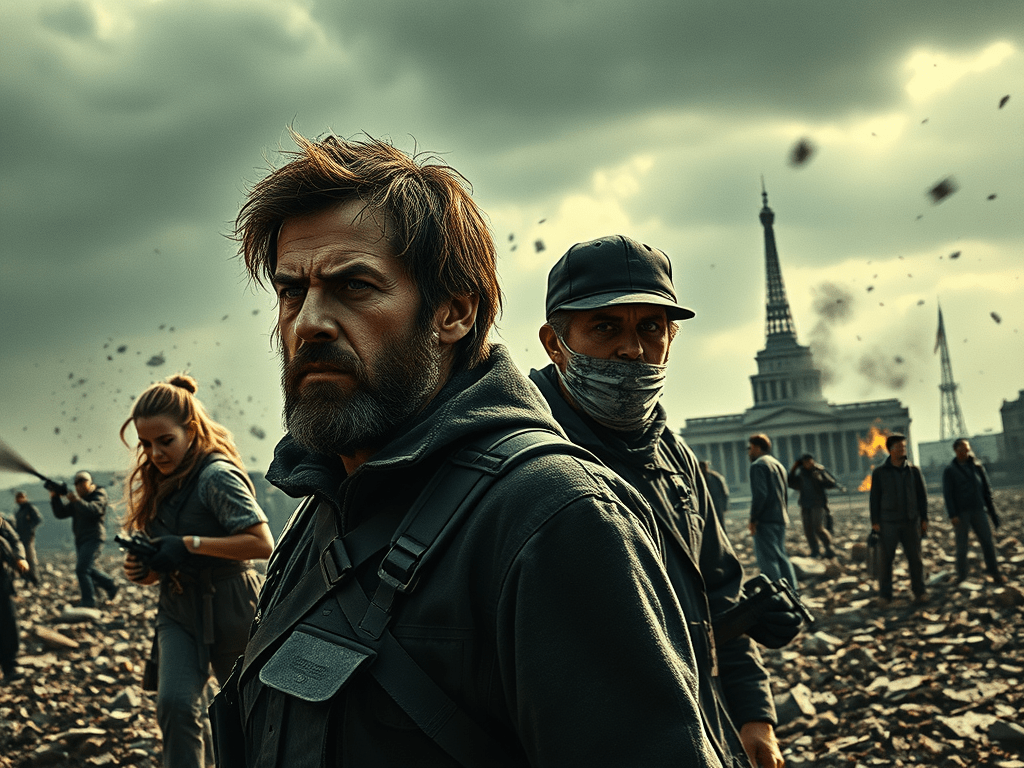
    Both 28 Years Later and World War Z depict the spread of a deadly virus that triggers the collapse of global order. Yet beyond the zombies and infected hordes, these films offer striking metaphors for the chaos, distrust, and political polarization amplified by the COVID-19 pandemic.

    In a well-structured, thesis-driven essay of 1,700 words, compare how each film explores the fragility of major institutions (governments, media, military, science), the spread of misinformation, and the psychological aftermath of global catastrophe. Your analysis should consider how each film allegorizes different aspects of pandemic culture: emotional volatility in 28 Years Later vs. bureaucratic inertia in World War Z.

    You must address the following questions:

    1. How do these films portray public institutions’ response to crisis? What critiques are embedded in those portrayals?
    2. In what ways do these narratives reflect or exaggerate the real-world cultural and political divisions that were intensified by COVID-19?
    3. Do these films offer any hope or solutions, or are they fundamentally cynical about humanity’s ability to cooperate?

    Use specific scenes, dialogue, and cinematic techniques from both films to support your claims. Outside sources are encouraged but not required.

    Here are five sample thesis statements for the prompt comparing 28 Years Later and World War Z as post-COVID allegories, each with clear mapping components:


    1. The Bureaucratic Collapse vs. Emotional Fallout Thesis
    While World War Z depicts a slow-motion collapse of global institutions in the face of a virus that outpaces diplomacy and reason, 28 Years Later focuses on the emotional and ethical wreckage left behind, showing that the true horror of a pandemic lies not in the infection itself but in the unraveling of trust, memory, and social cohesion.


    2. The Misinformation and Fear Contagion Thesis
    Both 28 Years Later and World War Z serve as cultural autopsies of the COVID era, portraying not only viral outbreaks but the parallel contagion of misinformation, fear, and ideological extremism, revealing how modern pandemics are fought as much in echo chambers and comment threads as in laboratories.


    3. The Institutional Failure and Survivalist Morality Thesis
    In their depiction of pandemic response, World War Z shows the impotence of top-down globalism, while 28 Years Later offers a bottom-up view of localized anarchy and survivalist ethics, together illustrating a post-COVID cinematic shift from faith in institutions to tribal resilience and moral ambiguity.


    4. The Pandemic as Psychological Reckoning Thesis
    More than disaster films, 28 Years Later and World War Z use the aesthetics of horror and action to stage a psychological reckoning with the trauma of COVID—28 Years Later captures the rage and exhaustion of a public pushed to its emotional brink, while World War Z visualizes the logistical panic and fractured chain of authority that left millions globally disoriented and unmoored.


    5. The Allegory of Polarization Thesis
    28 Years Later and World War Z reflect the political polarization accelerated by COVID by framing survival as dependent not on unity but on division—on isolation, suspicion, and competing narratives of truth—suggesting that in a fractured society, pandemics don’t create monsters so much as they expose them.

  • Meet the Timepiece Whisperer

    Meet the Timepiece Whisperer

    Chapter 6 of The Timepiece Whisperer

    At 6 a.m., I rose like a guilty priest on purge day and loaded my Honda Accord with a museum of failure. Each item whispered its own shame: busted radios that once sang, fans that blew nothing but despair, fossilized laptops gasping through Windows XP, iPads ghosted by iOS updates, a humidifier that wheezed its final death rattle in 2018, and a landmine of corroded batteries that could’ve earned me a write-up from the EPA.

    By 8:00, I was cruising down the 110 South, my car bloated with the technological detritus of a man who once believed that stuff—stuff!—might soothe an inner void. I exited Pacific Avenue and found myself crawling through a wasteland of rebar, chain-link fences, and brush thick enough to hide a body or two. It was less Los Angeles and more post-apocalyptic novella. A landscape haunted by discarded dreams and the occasional tented soul whose only offense was being born poor.

    After a slow-motion bounce over some railroad tracks, I veered down a bleak gravel path until I arrived at 8:50 to find a tarp flapping over what I assume someone dared to call a facility. It looked like a wedding tent designed by Satan’s party planner, squatting in front of a cinder-block warehouse that smelled like ozone and bureaucratic indifference.

    Ahead of me, a small line of sedans idled like supplicants outside a radiation baptism. Signs warned against bringing poisons, rotting food, firearms, explosives, and—oddly—crop waste. Another sign warned me not to exit my vehicle, eat, or drink, presumably because the combination of trail mix and lithium-ion residue could create a chemical lovechild that incinerated San Pedro.

    A silver SUV from Washington State attempted to cut the line, realized it had wandered into the wrong apocalypse, and peeled out in a plume of toxic dust that settled on our windshields like the aftermath of a low-budget nuke.

    By 9:00, the caravan had doubled. My rearview mirror showed a parade of shame stretching down the gravel like a funeral procession for the Age of Gadgets. Then she arrived—a smiling woman in an orange vest and clip-on radio. Clipboard in hand, she went car-to-car like a cheerful customs agent at the border of human depravity. When she got to me, I rattled off my cargo. Her nod was practiced. I suspect her real job was twofold: assess whether I was harboring illegal pesticides, and determine if I looked like the kind of man who’d stuff a body under an old humidifier.

    Eventually, I popped my trunk. Men in uniforms descended with the solemnity of pallbearers. They removed the items with clinical grace, not a single eyebrow raised at my hoarder shame. I thanked them. They nodded like undertakers who’d buried a thousand dreams before mine.

    Lighter by fifty pounds and several psychic burdens, I pulled away, my soul humming with moral superiority and the faint possibility of radiation poisoning. For a brief moment, I felt whole.

    Then came the craving.

    The Seiko Astron.

    The Watch Master had warned me. Had pleaded for restraint. But there it was again, the whisper in my mind, the itch in my wrist. By the time I got home, I was already spiraling. So I returned to the Watch Master’s house for counsel, but his front door was answered by a red-bearded mountain of a man who looked like he’d just wandered out of a Nordic crime novel.

    “Josh,” he said, extending a paw. “I’m the Timepiece Whisperer.”

    “What happened to the Watch Master?”

    “Dead. Stomachache. Went to bed and never woke up.”

    “And you’re… what, the sequel?”

    “That’s for you to decide.”

    Josh made me an iced coffee, honey and cinnamon. It tasted like guilt sweetened with denial.

    We sat at the kitchen table, a graveyard of coffee rings and philosophical despair.

    “So what’s troubling you, my friend?”

    “I’m almost sixty-four. I own seven watches. I want an eighth. Am I doomed?”

    He slurped his drink, crunched an ice cube, and nodded solemnly.

    “That depends. Are we talking about eight timepieces? Or eight identities, eight moods, eight regrets?”

    I blinked.

    He leaned forward. “If you’re still hunting, still haunted, then yes—eight is too many. You don’t have a collection. You have a symptom. But if you’ve made peace—if each watch has its rightful place in your little opera of masculinity—then eight is a symphony. A curated exhibit. A spiritual wardrobe.”

    Then he tilted his head. “The real question is: Are you wearing the watches, or are they wearing you?

    I wilted. I wanted to shrink into the upholstery.

    “I want the Astron to be the closer. I want to stop at eight. But history tells me I won’t. I go through the honeymoon, get bored, scratch the itch with another watch, and end up miserable. My collection isn’t a triumph. It’s a cry for help.”

    Josh chuckled, then howled, then nearly fell off his chair.

    “Now we’re getting somewhere. You think this is about timepieces? No, my friend. This is about you.”

    Then he called for backup.

    First came John, a zombie in slippers with bags under his eyes deep enough to hold grief. “Sell everything,” he said, “and get a Tudor Pelagos. End of story.” Then he stared at his slipper hole like it owed him money and shuffled off.

    Then came Gary, a cheerful human protein shake in a Lycra tracksuit.

    “Let the man buy the Astron,” he chirped. “Make it eight. Just get him a sponsor, a support group, maybe a hotline. The poor bastard needs this.”

    Then John stormed back, furious. “I said one watch!”

    Words escalated. Soon they were locked in a full-blown wrestling match, crashing into the walls like toddlers in a padded room. Josh laughed like a man watching Fight Club on loop and eventually threw both of them into the basement.

    He stood at the door, listening to the thumps and groans like it was jazz.

    “That,” he said, his eyes shining, “is the debate. One watch or many. Order or chaos. Simplicity or delirium.”

    I got up to leave.

    “What’s the rush?” he asked.

    “I’ve seen enough.”

    “You’ll be back.”

    “What makes you so sure?”

    Josh smiled. “Because you’re desperate.”

  • Prescott Is a Foodie’s Paradise

    Prescott Is a Foodie’s Paradise

    This is my second pilgrimage to Prescott, Arizona—land of red rocks, retirees, and, as I’ve now discovered, absurdly good food. Downtown, improbably, is a foodie fever dream. Burned-out Phoenix chefs, weary of cutthroat rents and influencer-palates, have decamped to this high desert haven, setting up shop to serve artisanal fare to the town’s well-heeled retirees—many of whom fled Southern California with their pensions and discerning palates intact.

    The result? A culinary street fight. You’ll find cutthroat competition in categories you didn’t know had leagues: barbecue with bark that rivals Austin’s best, Mexican joints that don’t pull punches, ambitious Indian menus, and enough “elevated Americana” to make you rethink the humble meatloaf. There are small-batch pies. Donuts that look like sculpture. Cold brews made with more precision than most marriages.

    It’s like someone air-dropped a Brooklyn food court into an Old West postcard and didn’t tell anyone. Prescott may look like a sleepy Southwestern outpost from the outside, but inside it’s a Bohemian buffet of culinary overachievement. Bring an appetite. And a second stomach.

  • The Watch Hoarder’s Purge

    The Watch Hoarder’s Purge

    Chapter Five from The Watch Whisperer of Redondo Beach

    “You look miserable,” the Watch Master said, peering into the void of his backyard as we sat beneath a star-punched sky.

    “You can see me? It’s pitch black out here.”

    “I don’t need to see you. I can feel the gravitational pull of your despair. You’re radiating existential dread.”

    “That’s because you’ve assigned me an impossible task. Sell all my watches… and keep only one.

    “Baby steps, Cassandra.”

    At that moment, a neighbor’s cat slinked in like a ghost, coiled around the Master’s ankle, and began purring like a smug little engine. He ignored it entirely.

    “You need to begin The Purge.

    “The Purge? You mean like that movie where people commit murder once a year?”

    “No, not that kind of purge. Though honestly, your collection could use a bloodletting. I’m talking about the soul-cleansing purge. A lifestyle exfoliation. You can’t amputate your horological addiction in one go. You’ve got to build momentum. Start with the dead weight in your life.”

    He took a slow sip from a chipped mug of lukewarm coffee and gently nudged the cat away with the practiced detachment of a man who has done this a hundred times.

    “Begin,” he said, “with your eWaste.

    “My what?”

    “You heard me. Don’t pretend you’re not hoarding defunct electronics like some midlife tech raccoon. Old flat-screens, fossilized laptops, bargain-bin Bluetooth speakers, cracked tablets, prehistoric printers, derelict keyboards—stuff that died during the Bush administration.”

    “I have… some things,” I admitted, blood draining from my face.

    “Take it all to an eWaste center. Feel the rush. The purity. Like dominoes tipping, you’ll get hooked on getting rid of things. And before long, those watches will start looking like ankle weights chained to your past.”

    A wave of dizziness came over me.

    The Master raised an eyebrow. “What now?”

    “Everything you’re saying is true. And I think I’m going to faint.”

    He shrugged with the lazy grace of a man who’d long since graduated from giving a damn. “Change or don’t. Nobody’s twisting your arm. But if you’re still clutching that broken Casio from 2009 like it’s a family heirloom, maybe it’s time to rethink your priorities.”

    He stretched his limbs and let out an operatic yawn. Just then, a massive crow descended on the fence post, tilted its head like a Greek oracle, and let out a guttural, gravelly call: “Puuurge. Puuurge. Puuurge.”

    The Master didn’t flinch. He simply glanced at the bird and muttered, “Everyone wants a line in this story.”

    And with that, he dismissed me into the night—to wrestle with my demons and the unbearable burden of excess.

  • One Watch to Rule the Rest

    One Watch to Rule the Rest

    The next evening, under the same milky moonlight and sipping from a chipped mug that looked like it had survived a bar fight, the Watch Master laid it out:

    “If you want salvation,” he said, voice gravelly and smug, “you must walk through fire. And that fire, my friend, is called owning one watch. Not three. Not two. One.”

    He sipped, smirked, and let the pronouncement hang in the air like incense—or maybe judgment.

    My stomach dropped.

    “That would mean no Seiko Astron. Not only that, I’d have to sell six watches and keep just one.”

    He nodded slowly. “Your math is astounding.”

    “But… which one?”

    He tilted his head, as if I were asking him what color the sky was.

    “You already know.”

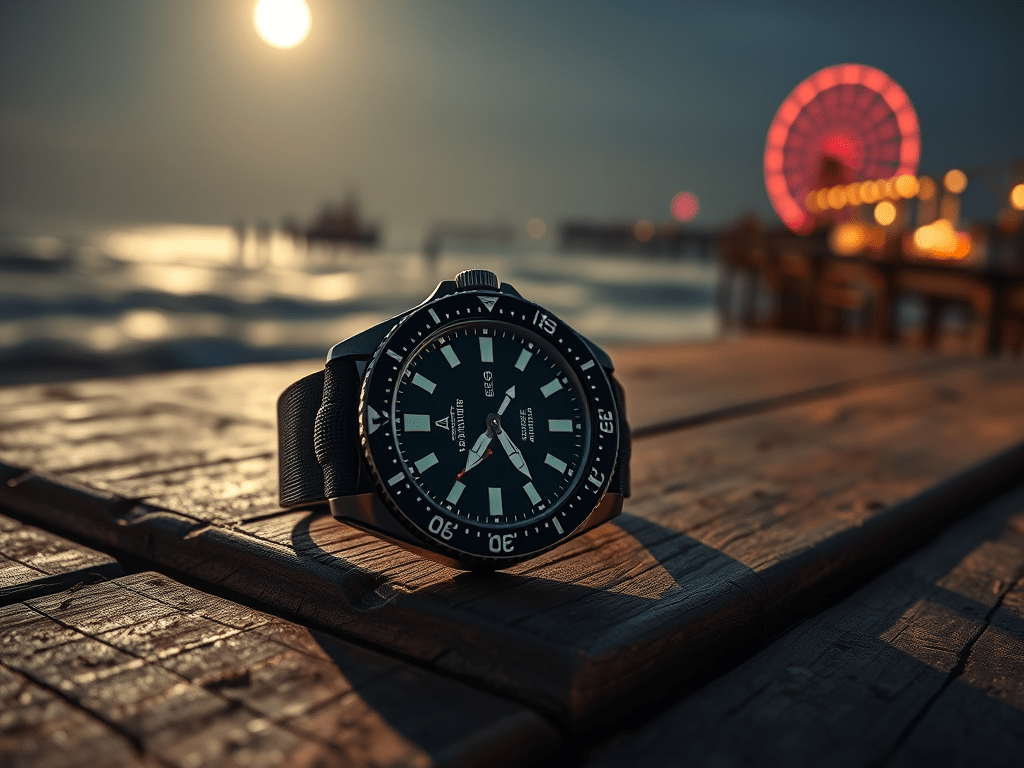
    Of course I did. There’s a photo of me on the Santa Monica Pier, the sun melting into the Pacific behind me, gulls circling overhead, breeze in my face, and on my wrist: the Seiko Uemura, black Divecore strap, rugged and unpretentious. That wasn’t just a picture. It was a mirror. That version of me looked content—anchored. Whole.

    I told the Watch Master about the photo. He nodded like a man who’d just heard someone read their own obituary correctly.

    “Every true addict has a signature watch,” he said. “But most of them are too busy playing collector cosplay to recognize it. Instead, they sabotage their joy, clutter their soul, and call it a ‘hobby.’ Worse, they bond with other broken men, enabling each other with dopamine high-fives. That’s where you are. The fray.”

    “So I’d have to cut ties… abandon my watch circle.”

    “Not a circle. A kennel. A cacophony of barked opinions and Instagram wrist shots. Remember: lie down with dogs, wake up with fleas.”

    “They’re not dogs. They’re human beings.”

    “Sure. Dogs with Venmo.”

    I sighed. “I don’t have many options, do I?”

    “You do,” he said. “You can become the bloated lounge demon from your dream, if that’s the life you want. Slathered in regret, bejeweled in denial.”

    “How do I get out?”

    He leaned in, eyes suddenly sharp.

    “You already know.”

    “Sell the six,” I said. “Feels like amputating my foot.”

    “Better to sell watches than sever limbs. Less blood.”

    “So I walk away. Keep the Uemura. Wear it like old jeans and just… let it be.”

    “You must die to be reborn,” he said, yawning like a lion after a kill. “But only if you want to. Telling people to choose life is exhausting. Go home. Sleep on it. Come back tomorrow.”

    And just like that, he vanished into the darkness of his sagging Victorian like a prophet with bedtime boundaries.

  • Hugh Hefner’s Watchbox from Hell

    Hugh Hefner’s Watchbox from Hell

    Chapter Three from The Watch Whisperer of Redondo Beach


    When I got home, I collapsed into a dream-heavy sleep—the kind you don’t choose but fall into like a trapdoor.

    I dreamed I was back with the Watch Master, only this time we were in a cave—his new lair, apparently—where flickering monitors lined the stone walls like cursed flat-screens. Each displayed a parallel universe, a version of me shaped entirely by my watch collection.

    One screen showed me with a massive, vulgar collection: gold bezels, diamond indices, stainless steel bracelets so chunky they could anchor a yacht. In that reality, I was obese. Bloated. A Las Vegas lounge lizard with a double chin, a sprayed-on tan, and a wig styled into a pompadour so high it had its own zip code. A gold-plated microphone dangled from my sweaty fingers as I crooned like Elvis, Tom Jones, and Michael Bolton—simultaneously. Around my neck: ropes of gold. On my wrist: a diamond-studded Rolex that practically screamed for an exorcism.

    When I opened my mouth to speak, no words came out—just a guttural, distorted sound, like a demon gargling battery acid. I had abandoned my family. I lived in a velvet-curtained grotto that looked like Hefner’s afterlife man-cave. I wasn’t just a parody of myself. I was a possession.

    That’s when I woke up—slick with sweat, lungs full of dread. But the nightmare wasn’t over. I could still feel him—it—the beast version of me, 300 pounds of ego and regret, pressing down on my mattress. The sag was real. I swear it. My bed bowed like I was hosting a sumo wrestler from the spirit world.

    Later that night, I sat at the Watch Master’s kitchen table and told him the whole thing while he sipped from a chipped mug under the soft glow of moonlight. His gaunt face lit up with delight. He laughed—not cruelly, but knowingly.

    “Textbook,” he said. “You’re a classic case. A fractured soul, split by overexposure to bezel lust. Watch addiction creates avatars. You’ve conjured a grotesque mirror of your worst impulses. The doppelgänger is real, and he’s hungry.”

    “What do I do?” I asked, sounding more like a haunted child than a man who once justified paying four figures for a dive watch he never actually dove with.

    The Master leaned back and cracked his neck like a man preparing to file a warranty claim on your soul. “You ever hear the saying, ‘You’ve got to go to hell before you get to heaven?’”

    I nodded.

    “Well,” he said, rising slowly, “That’s where you are. Right on schedule.”

    “Can you be more specific?”

    “Later. Right now, just hearing your dream has worn me out. It’s not just the nightmare—it’s you. Your whole aura is exhausting. You radiate crisis. Come back tomorrow, same time. We’ll discuss logistics.”

    And just like that, he disappeared down a hallway, leaving me with my own haunted watch box, and the question of whether I was still awake—or just in a deeper layer of the dream.

  • I Came for Health and Left with a Halo

    I Came for Health and Left with a Halo

    I’m stubborn—pathologically so. I know full well that going full carnivore would melt the fat right off me. A steady stream of fatty meats, maybe a token vegetable or two for show, and boom—I’d be a suburban Wolverine. Ripped, lean, possibly feral. But my suspicion kicks in around the long-term effects. Sure, eating like a seal-clubbing Inuit makes sense when you live on a glacier and need 6,000 calories just to blink. But when you’re a guy driving a hybrid through Trader Joe’s parking lots, gorging on brisket with your Apple Watch monitoring your heart rate, the “ancestral diet” starts to look less like primal wisdom and more like performative caveman cosplay.

    No, my reluctant truth is this: a mostly plant-based diet is probably my best bet. I imagine a future of buckwheat groats, steel-cut oats, rainbow chard, tofu, tempeh, and beans. My meals will be slathered with artisanal dressings composed of balsamic vinegar, spicy mustard, and nutritional yeast—because apparently sainthood is now spreadable.

    Sure, I’ll fold in some salmon twice a week. Maybe Greek yogurt. And yes, I’ll backslide into Mongolian beef barbecue once a month when life feels meaningless and I want my food to fight back. But the plan is mostly monkish. And here lies the rub: the diet starts making me feel too pure. Too righteous. The kind of person who silently judges you for using ranch dressing. The glow of self-congratulation hangs around my head like a flickering LED halo.

    And then comes the cookware. You can’t cook holy grains in a peasant pot. No, this lifestyle demands French-made enameled cast iron Dutch ovens—heirloom cookware with the price tag of a minor surgical procedure. I tell myself this is an investment in my health. What it really is: a $300 declaration that I’ve joined the priesthood of quinoa.

    Worse, the whole thing becomes a personality. Plant-based meals. Exercise tracking. Morning rituals. Deep-breathing routines. It becomes its own narcissistic opera. I’m centered. I’m optimized. I’m intolerable. My life starts to feel like an Instagram reel narrated by a smug inner voice that’s always meditating.

    The real irony? I embarked on this whole food pilgrimage to escape the traps of modern life—its clutter, chaos, and chronic disease. And yet, somewhere between my third batch of millet and Googling the mineral content of nutritional yeast, I crossed into a new disorder: a lifestyle so curated it starts to feel like a museum exhibit titled Me, Trying Too Hard.

    Sometimes the cure becomes its own kind of sickness. We chase health, only to wind up imprisoned by our own kale-scented, cast iron-coated obsessions.

  • Safe at Home with Tofu: We Need George Carlin Now More Than Ever

    Safe at Home with Tofu: We Need George Carlin Now More Than Ever

    George Carlin once built a whole comedy bit around the contrast between football and baseball. Football, he said, is war—full of blitzes, bombs, and sudden death. Baseball, by contrast, is a pastoral game, a gentle journey home. Safe at home. He could’ve done an equally scathing bit on carnivores versus vegans.

    A carnivore is a Viking. He doesn’t eat dinner; he conquers it. He roasts slabs of meat over open flame, wears elk pelts in July, and believes the phrase “nose to tail” is less a philosophy than a moral imperative. He eats liver because it’s what his ancestors did, despite the fact that his ancestors also died at 38 from dysentery and wolf bites.

    The vegan? A minimalist monk who speaks in the tone one reserves for therapy dogs and endangered turtles. His kitchen smells like soaked lentils and moral superiority. He eats “greens,” plural, as though a vague handful of chlorophyll could power a biped. His hero is the neighborhood spider, which he refuses to squash. Instead, he names it Rumi, places it gently on a compostable bamboo plate, and ushers it into the wild with a whispered prayer and a single tear.

    The carnivore doesn’t own plates. He eats standing up. The vegan has three sets of reusable dishware, made from renewable bamboo and guilt. The carnivore fills his “power bowl” with yolks, red meat, and testosterone. The vegan fills his with quinoa, miso, and the sense that one day we’ll all live on floating gardens of kale, fueled by gratitude and biotin.

    The carnivore laughs when lightning strikes. The vegan winces when the microwave beeps.

    And yet—here’s the kicker—both think they’re saving the world. One by returning to primal wisdom, the other by transcending it. One believes in survival of the fittest; the other believes in surviving without harming a single sentient thing. They are, in essence, two sides of the same self-mythologizing coin: the ancient warrior and the futuristic monk, each clinging to their menu like it’s a worldview. And perhaps that’s what diet is now—a belief system, a theology served with a side of macro tracking. Eat, pray, posture.

  • The Watch Potency Principle and the Man Who Couldn’t Count to Eight

    The Watch Potency Principle and the Man Who Couldn’t Count to Eight

    Chapter 2 from The Timepiece Whisperer of Redondo Beach

    The Watch Master accepted my Venmo transfer—five grand, no questions asked. He nodded like a monk receiving an offering, commending me for “putting my money where my mouth is,” as if throwing cash at the problem proved I was spiritually ready to shed my horological demons. Then he sent me home with a single directive: return the next night with all seven of my watches arranged in one box for evaluation.

    At precisely 10 p.m., under a bloated moon that cast an eerie glow across the red roof tiles of his dilapidated Redondo Beach bungalow, I stood in his living room. The Master’s pale, angular face looked freshly excavated from a tomb. He gestured for the box.

    He opened it. Seven divers—six Seikos and a lonely Citizen—gleamed under the yellowed light of a hanging stained-glass lamp.

    “Good,” he said, scanning the collection with the intensity of a mortician identifying a corpse. “All divers. That shows thematic restraint. You’re not a complete degenerate.”

    He picked up each Seiko, held it to his eye like a jeweler, then scoffed. “You baby these. When’s the last time you actually swam? Clinton administration?”

    He chuckled at his own joke, which I pretended not to hear.

    His bony fingers closed around the Citizen. “Hmm. Titanium case and bracelet. The others are all on straps. This inconsistency must be clawing at your OCD like a raccoon under drywall.”

    I nodded.

    “Sell it,” he said flatly. “It’s feeding your misery.”

    “But what about the Seiko Astron I’ve been eyeing? That one has a titanium bracelet too.”

    “Yes. And that’s not the least of your problems.” He sipped his black coffee—no cream, no joy. “You’re teetering on the edge of a collecting abyss. The Citizen’s already rotting your center. Add one more watch, and your soul will be lost to cluttered mediocrity.”

    “But the Astron—it’s beautiful,” I protested.

    “Of course it is,” he said, shrugging. “So is opium. Doesn’t mean you should buy a kilo.”

    I tried to recover. “It’s the Watch Potency Principle, right? The more watches you own, the more you dilute the power of each one.”

    He looked up sharply. “So you have read my work. Then why can’t you live by it? You recite the commandments, but break them before sunrise. Your brain and behavior are locked in bitter divorce.”

    “I just need a plan,” I said. “What do I do?”

    “Purge,” he said, as if uttering a sacred mantra.

    “Purge?”

    “Start with the titanium Citizen. Shed that one, then we’ll talk next steps.”

    “Our next move?”

    He sighed, pinched the bridge of his nose. “You’re exhausting. Come back tomorrow at ten sharp. And for God’s sake, don’t buy anything in the meantime.”

  • Training to Failure: A Love Letter to My Broken Sixty-Year-Old Body

    Training to Failure: A Love Letter to My Broken Sixty-Year-Old Body

    I just inhaled 80 grams of braised tofu on a bed of arugula—an herbivore’s banquet—because I didn’t want any leftovers skulking in the fridge while my family disappears for a weeklong trip. The trip also means six missed workouts, which my inner gym rat is already mourning with the solemnity of a funeral dirge.

    In my infinite wisdom—or perhaps masochistic delusion—I stacked seven consecutive kettlebell workouts into my week like some demented CrossFit monk chasing transcendence through joint pain. Predictably, I torched myself. Yesterday, I hit the wall. Even after a nap, I was cooked—bone tired, foggy, the kind of fatigue that whispers pre-flu doom into your ears while your muscles quietly plan a mutiny.

    Today was my supposed “last hurrah” before vacation. I skipped the kettlebells and mounted the Schwinn Airdyne, knowing full well I was running on fumes. Usually, I scorch 700–800 calories in an hour. Today I limped to 600. Eighty percent effort. That’s what the data says. My pride says otherwise.

    This might be my new reality: controlled, measured workouts instead of cinematic Rocky montages. The problem? I came of age in the 1970s golden era of bodybuilding, when Arnold preached the Gospel of Training to Failure and warned us about becoming “paper tigers.” I took that to heart. Too much heart. The kind that skips beats when your prefrontal cortex is begging you to lie down and your inner bro yells, “One more set!”

    But now, every time I push too hard—whether it’s with kettlebells or a fevered sprint on the Airdyne—I spiral into what I’ve dubbed RAA: Rundown Anxiety Affliction. It’s not a diagnosis. It’s a curse. You feel like you’re on the verge of the flu, haunted by a twitchy dread that your immune system has thrown in the towel. And for what? To impress the ghost of Mike Mentzer?

    I’m not exercising and eating tofu like a reformed monk to become a sickly, anxious husk of a man. That’s not fitness. That’s martyrdom.

    Today I danced at the edge of RAA. I throttled back. Took my 600 calories, thanked the fitness gods for the mercy, and called it. I’ll nap. I’ll pack. I’ll go on this trip, eat as decently as possible, and try not to treat my return like a penitential Ironman.

    Because no one needs to come back from vacation needing a vacation from their vacation—especially if it starts with RAA and ends with a doctor saying, “You need to calm the hell down.”