Category: Confessions

  • My Friend Leo and the Mystery of the Good Life

    My Friend Leo and the Mystery of the Good Life

    One of my deepest regrets is that I spent too much of my youth believing my life belonged entirely to me. My guiding assumption was simple: no one would tell me how to live. My purpose was to maximize my own pleasure, satisfy my own desires, and remain largely indifferent to everyone else’s concerns. It was the moral logic of consumer culture: pursue your happiness, avoid breaking the law, pay your bills, and you’ve fulfilled your obligations.

    I eventually discovered that this philosophy is far less harmless than it appears.

    A life organized around self-indulgence inevitably spills over onto other people. It makes us impatient with inconvenience, dismissive of others’ needs, and blind to the quiet opportunities for generosity that present themselves every day. We become the center of our own private universe, with everyone else relegated to supporting characters. The damage is often subtle rather than spectacular, but it is damage nonetheless. A narcissistic life does not merely impoverish the self; it leaves everyone around it slightly diminished as well.

    Selfishness is easy because it is our default setting. Left to our own devices, we naturally drift toward comfort, appetite, vanity, and self-justification. That is one reason I find myself drawn to the moral traditions of Judaism and Christianity. Both insist upon a profoundly counterintuitive claim: your life is not your possession. It is a gift entrusted to you for the benefit of others. Meaning is discovered not by gratifying every impulse but by cultivating goodness, practicing service, and accepting the humbling truth that fulfillment arrives only after the ego relinquishes its throne. Paradoxically, by surrendering yourself, you find yourself. By enthroning yourself, you begin the slow process I have elsewhere called Gollumification—the gradual shrinking of the soul under the weight of its own appetites.

    Yet I cannot persuade myself that religion is the only path to such a life.

    Over the years I have known people whose moral seriousness seems almost entirely independent of religious belief. One of my students, originally from Hungary, was raised by atheist parents. Nevertheless, they instilled in their daughter a remarkable sense of integrity, discipline, humility, and social responsibility. She carries herself with a maturity that cannot be reduced either to religious doctrine or to secular ideology. Her character suggests that moral formation can emerge from devoted parents who treat virtue not as theology but as a way of life.

    Then there is my friend Leo, whom I have known for twenty-five years. To my knowledge, he is not religious, yet he embodies many of the virtues that religious traditions hold up as ideals. He loves his wife deeply. He delights in his three children. He never misses one of their games or school events, not out of obligation but because he genuinely wants to be there. He works tirelessly, not to accumulate status or luxury, but to give his family security and opportunity. He does not complain. He does not seem enslaved by addiction or restless consumption. He possesses an enthusiasm for ordinary life that feels almost inexhaustible.

    What impresses me most is that Leo never performs his goodness. He does not advertise his virtues, lecture others about morality, or congratulate himself for living well. His life is his argument. Watching him, I often have the impression that decency is simply woven into the fabric of his character. He seems to have found the narrow road almost instinctively, without theology serving as his guide. That reality leaves me genuinely puzzled. If the narrow road can be discovered apart from religion, then the relationship between faith and virtue is more mysterious than I once believed. Leo remains one of the strongest arguments against any simplistic claim that morality depends entirely upon religious belief.

    I am not built the way Leo appears to be. My own temperament is far more susceptible to vanity, distraction, and what I call Gollumification. Left unexamined, I drift toward self-absorption with alarming ease. That is why spiritual questions continue to exert such power over me. They are not abstract philosophical puzzles but practical necessities. I need habits, disciplines, and ideas that continually pull me away from myself. Perhaps if my instincts naturally inclined toward generosity, as Leo’s seem to, religion would occupy far less space in my imagination. But because I know the creature I am capable of becoming, I cannot stop asking whether there exists a truer way to live than the one my default setting so eagerly proposes.

  • Forty Years Later, I Finally Learned How to Teach Writing

    Forty Years Later, I Finally Learned How to Teach Writing

    This morning was bittersweet. Assuming I don’t substantially revise my curriculum for one final spring semester, I may have written my last syllabus after forty years of teaching college composition.

    My freshmen will spend the semester wrestling with subjects that would have been unimaginable when I began teaching in the 1980s. They will analyze the epidemic of sports betting in a culture of loneliness, examine how algorithmic platforms reshape identity and ambition, and challenge the mythology of the self-made man through the life and writings of Frederick Douglass.

    As I finished organizing my notes, an uncomfortable realization settled over me: I am retiring just as I feel I have finally learned how to do this job well.

    I have always been a slow learner. It took me four decades to discover how to design a writing course that feels intellectually coherent rather than merely competent. Only now do I feel that the readings, assignments, and classroom conversations reinforce one another with genuine purpose. Just as the picture has come into focus, I find myself stepping off the stage.

    I also have mixed feelings about OpenAI platforms. On one hand, they have created an endless stream of grading headaches. Every semester brings hundreds of essays that bear the unmistakable fingerprints of AI splatter—competent-looking prose that collapses under scrutiny because no real mind seems to inhabit it. I return many of these papers with one instruction: start over.

    Yet these same tools have also made teaching writing more intellectually exciting than it has been in years. I have used them to sharpen essay prompts, generate competing arguments, refine classroom activities, and demonstrate to students how AI can become an editorial collaborator rather than an intellectual substitute. I realize that sounds almost sacrilegious coming from a writing professor, but adapting to these technologies has rekindled my curiosity about cognition, literacy, learning, and composition. We do not yet know where this technological revolution is taking us, and I doubt anyone can fully control its direction. But the questions it raises are among the most fascinating of my career.

    My greatest concern is not artificial intelligence itself. It is the widening gap between students who possess deep literacy and those who do not. Students who have spent years reading demanding books can interrogate AI, challenge its assumptions, recognize its mistakes, and use it to strengthen their own thinking. Students raised primarily on TikTok and algorithmically curated snippets often lack that foundation. For them, AI becomes less a tool than a surrogate mind—a magical genie that produces respectable-looking mediocrity while quietly encouraging them to outsource their judgment, curiosity, and intellectual will. The danger is not that AI will make students less intelligent. The danger is that it will make them comfortable never developing the habits of mind that intelligence requires.

    Teaching students to acquire the literacy necessary to use these tools wisely may become the defining challenge of higher education over the next generation. That is one reason retirement feels bittersweet. Just as this frontier is opening, I am leaving the profession.

    Looking back over forty years, however, gratitude overwhelms regret. I was fortunate to spend my working life in a profession that demanded perpetual intellectual growth. Every semester required me to become a slightly better reader, writer, and thinker. I never tired of teaching argumentation, counterarguments, rebuttals, rhetorical strategy, or the mysterious alchemy that transforms an elephantine sentence into something lean, graceful, and memorable.

    Writing has always fascinated me because most of it disappears the moment it is read. Nearly everything we encounter is competent enough, clear enough, forgettable enough. Then, every so often, a sentence possesses that rare quality I call salience. It arrests your attention. It feels inevitable, as though no other arrangement of words could possibly exist. Discovering how writers achieve that effect—how they impose order, precision, and beauty upon the chaos of language—has remained one of the enduring pleasures of my life.

    Perhaps my final lecture should not be about grammar, thesis statements, or MLA format. Perhaps I should gather these reflections into a Google Slides presentation and offer my students a panoramic view of why writing classes matter more today than at any other moment in my career. Artificial intelligence has not diminished the value of literacy. It has elevated it. In an age when machines can imitate competent prose, the truly educated writer will not be the one who produces the most words. It will be the one who possesses enough judgment, imagination, and intellectual character to know which words are worth writing in the first place.

  • The Torn Rotator Cuff That Taught Me Gratitude

    The Torn Rotator Cuff That Taught Me Gratitude

    In late August of 2025, I tore my left rotator cuff.

    It wasn’t my first encounter with the injury. I had damaged the same shoulder in the 1990s and again in the early 2000s while chasing bigger bench presses. Those injuries announced themselves with unmistakable violence. I felt the shoulder give way beneath the weight, and in that instant I knew exactly what I had done.

    This time was different.

    During my kettlebell workout, nothing seemed wrong. No sharp pain. No alarming pop. No dramatic warning that I had crossed a line.

    The verdict arrived the following morning.

    I woke to a shoulder that had quietly mutinied overnight.

    The culprit wasn’t one reckless repetition but accumulated stupidity. At sixty-three, I had somehow convinced myself that five heavy kettlebell workouts every week was a sensible training program. My rotator cuff politely disagreed.

    I saw an orthopedic specialist, received the diagnosis, and was offered surgery.

    I declined.

    Instead, I committed myself to physical therapy. Resistance bands replaced heavy iron. Tiny, almost laughably simple exercises became my daily ritual. Progress came not in dramatic breakthroughs but in stubborn millimeters. Slowly, almost imperceptibly, I climbed out of rotator cuff purgatory.

    Ten months later, the pain is gone.

    My range of motion has returned.

    I wake without the familiar ache that once greeted me every morning.

    Most importantly, I never needed surgery.

    At sixty-four, I consider that outcome a gift.

    Even so, I no longer pretend the injury never happened.

    It changed me.

    First, I accept that my shoulder probably isn’t what it once was. I no longer possess the same explosive confidence during overhead presses and kettlebell thrusters. Rather than arguing with reality, I simply reach for lighter weights.

    Second, I train less often and recover more. Three kettlebell workouts each week are enough. I insist on at least twenty-four hours between resistance sessions, particularly those involving my upper body. On the days in between, I happily climb aboard my exercise bike for an hour of steady cardio.

    Third, I have abandoned my fascination with heavier numbers. Rows, swings, goblet squats—everything has become lighter. Instead of chasing personal records, I chase rhythm, consistency, and smooth movement. My joints have become more valuable to me than my ego.

    Finally, I’ve learned to exercise with gratitude.

    For decades I treated workouts as obligations or competitions. Now they feel more like privileges. Every pain-free session reminds me that movement is something to appreciate rather than assume. Respect has replaced bravado. Caution has replaced impatience.

    Looking back, I feel as though I dodged a bullet.

    The outcome wasn’t perfect. My shoulder carries its history with it, and so do I.

    But I also can’t ignore the alternative futures that never arrived. Surgery never came. Chronic pain never settled in. Permanent disability never took hold.

    Instead, I recovered about as well as a man could reasonably hope after fifty-two years of asking his body to lift heavy things and three months before his sixty-fifth birthday.

    That realization has changed my definition of strength.

    Strength is no longer measured by the amount of weight hanging from a kettlebell.

    It is measured by the wisdom to keep showing up tomorrow.

  • When Dinner Becomes a Competitive Sport

    When Dinner Becomes a Competitive Sport

    Last night I took my family to the wildly popular Din Tai Fung at Del Amo Fashion Center. The restaurant is so sought after that reservations are practically mandatory. We arrived at 5:15, where the hostess handed me one of those vibrating plastic squares whose sole purpose is to inform you that civilization has deemed you worthy of a table.

    The place hummed with confidence.

    While countless restaurants sit half-empty, echoing like abandoned aircraft hangars, Din Tai Fung radiates the quiet swagger of a business that knows people will happily wait an hour for dumplings. Crowds are persuasive. We instinctively trust a line.

    Let me say at the outset that I have nothing but respect for the restaurant. The food was fresh, the service polished, and the operation impressively efficient.

    I probably won’t return.

    The restaurant isn’t the problem.

    We are.

    More specifically, our method of eating.

    The pilgrimage began a month ago when my teenage daughter announced that we had to go. I immediately suspected the true maître d’ behind this reservation.

    TikTok.

    She already had the menu mapped out on her phone like General Patton preparing the invasion of Sicily. We surrendered command without resistance.

    Soon the table filled with cucumber salad, soy noodle salad, chicken dumplings, spicy chicken wontons, garlic string beans, sesame noodles, and spicy noodles.

    Then came dessert.

    Naturally, dessert wasn’t merely consumed.

    It was documented.

    My daughter carefully filmed her chocolate-and-mochi xiao long bao with sea salt cream, followed by a mountain of mango shaved ice, ensuring that posterity—and TikTok—would know she had participated in this important cultural event.

    The food was certainly good.

    But I never experienced the culinary epiphany I had been promised.

    Instead, I found myself eating an astonishing quantity of carbohydrates swimming through enough sauce to lubricate heavy machinery. Every dish seemed to plead for a dinner roll that never arrived. By the end of the meal I was pleasantly full but oddly unsatisfied, as though my body kept asking,

    “Where exactly was the protein?”

    The service, though gracious, occasionally drifted into theater.

    Our server—a delightful young woman—carefully demonstrated how to combine vinegar, soy sauce, and chili oil with the solemnity of a physicist unveiling the double helix. Her instructions were earnest and impeccably delivered.

    I couldn’t help wondering whether I was preparing dumplings or splitting the atom.

    Then came the part I liked least.

    Family-style dining.

    In theory, it is wonderful.

    Everyone samples everything.

    Conversation flows.

    The table becomes a communal celebration.

    In practice, our table resembled an Olympic qualifying event.

    Chopsticks lunged in every direction.

    Bowls crossed paths.

    Sauce migrated across plates, fingers, sleeves, and probably several neighboring ZIP codes. I found myself wishing I’d packed a HAZMAT suit.

    Adding to the chaos, my TikTok-inspired daughter attacked the shared dishes with the urgency of someone preparing for hibernation, leaving her twin sister, my wife, and me politely negotiating whatever remained.

    The meal became less about eating than about strategic timing.

    Should I grab another dumpling now?

    Will there still be string beans in thirty seconds?

    Has anyone actually tasted the sesame noodles, or have they already disappeared?

    After paying the bill, a staggering $200, and we finally arrived home, my wife quietly toasted herself a protein pancake, spread peanut butter on top, drizzled it with honey, and ate what amounted to her real dinner.

    Then she made an observation that explained the entire evening.

    “I never relax during shared meals,” she said. “It always feels like an eating competition, and I end up with the short end of the stick.”

    The moment she said it, I realized I felt exactly the same way.

    The problem wasn’t Din Tai Fung.

    The problem was our assumption that communal eating automatically creates communal joy.

    Sometimes it creates scarcity.

    Scarcity creates competition.

    Competition is not particularly relaxing.

    I’ve reached a simple conclusion.

    Next time, everyone orders their own entrée.

    Everyone eats at their own pace.

    Everyone leaves satisfied.

    Family-style dining remains a lovely idea. It promises abundance, togetherness, and the pleasure of sampling half the menu.

    Sometimes it delivers exactly that.

    Other times it turns dinner into a low-grade food draft where you’re calculating dumpling trajectories instead of enjoying your family’s company.

    When that happens, I can’t help asking myself a simple question.

    Why didn’t I just walk next door to Frida, order a platter of rib-eye tacos, sip a mango margarita, and let everyone else fight over the last dumpling?

  • Every Watch Collector Dreams of Losing His Collection

    Every Watch Collector Dreams of Losing His Collection

    I’ve been obsessing over watches for more than twenty years. During that time I’ve come to know hundreds of fellow obsessives, and I’ve learned that we all suffer from the same peculiar affliction.

    Many of us eventually assemble collections that should, by any reasonable standard, satisfy us. Mine certainly should. I own watches I genuinely love and wear regularly. The hunt is largely over.

    Or so it would seem.

    Because every serious collector eventually asks the same deliciously irrational question.

    What if I had to start over?

    Suppose I came home from work and discovered that an earthquake, a burglary, or perhaps the Rapture had removed every watch from my collection. My watch box sat open like an abandoned nest.

    Tabula rasa.

    Nothing remained.

    What would I buy first?

    Among watch enthusiasts, this thought experiment produces an excitement that borders on religious ecstasy. It is Dorothy taking her first step onto the Yellow Brick Road. The adventure begins anew.

    The appeal isn’t difficult to explain.

    You would have the opportunity to lose your mind all over again.

    You could experience, for a second time, the exquisite madness of becoming a watch collector.

    When you were young in the hobby, you complained endlessly about the obsession. The endless research. The sleepless nights. The compulsive buying and selling. The dopamine dripping from every incoming package and every outgoing shipment.

    You called it addiction.

    You called it insanity.

    You swore that one day you would finally reach contentment.

    Then contentment arrived.

    And quietly, almost shamefully, you began missing the insanity.

    The seasoned collector sometimes resembles Neddy Merrill in John Cheever’s “The Swimmer.” Like Neddy, he imagines himself younger than he really is, setting out once more on an impossible journey, convinced that somewhere ahead waits the exhilaration of youth. Not because youth was wiser—it certainly wasn’t—but because everything still shimmered with possibility.

    That is what the empty watch box promises.

    Possibility.

    So what would I do if fate forced me to begin again?

    I’d like to think experience has made me wiser.

    I’d probably abandon mechanical watches altogether. I’d pursue precision instead of romance.

    Every watch would be solar-powered.

    Every watch would synchronize itself through atomic radio signals or GPS satellites.

    No winding.

    No battery changes.

    No time drift.

    Just effortless perfection beneath the endless Southern California sun.

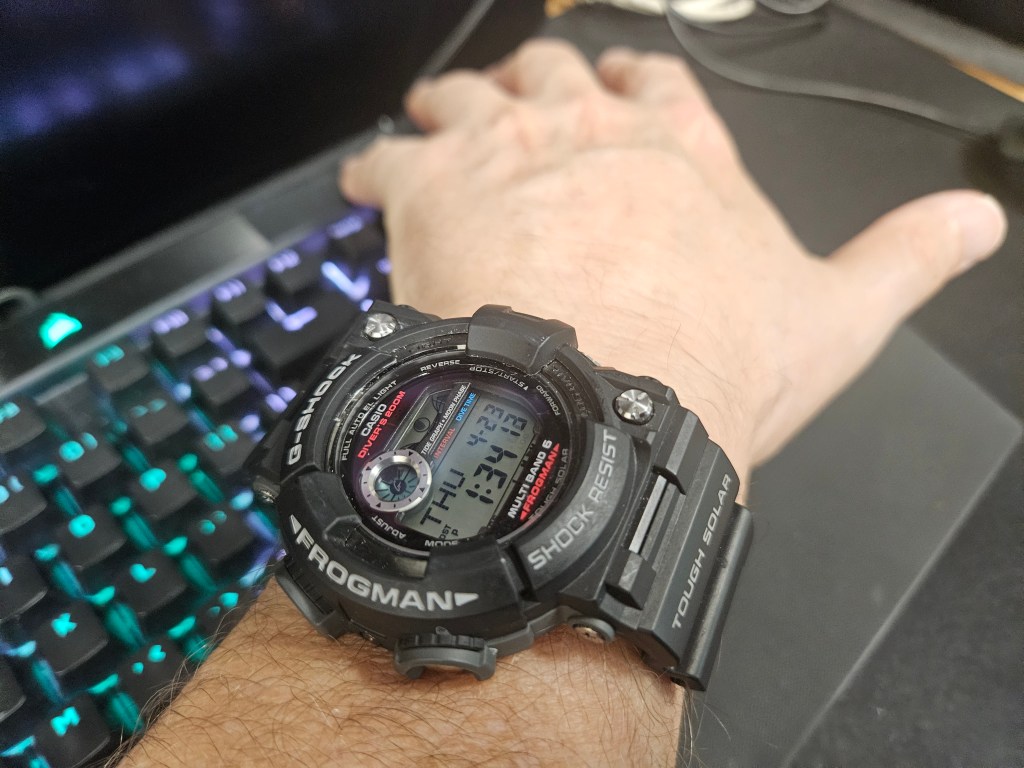
    The collection might include several digital G-Shocks, unquestionably a Frogman, a couple of Citizen Promasters, one or two Citizen Attesas, and perhaps a pair of Seiko Astrons.

    On paper, it sounds almost ideal.

    Until I imagine living with it.

    Then the doubts begin.

    I’d miss my Seiko mechanical divers.

    I’d miss my quartz Tuna.

    I’d miss the gentle sweep of a mechanical seconds hand doing absolutely nothing more accurately than a quartz movement while somehow feeling infinitely more alive.

    Before long, I’d find myself rebuilding almost exactly the collection I own today.

    That’s when the embarrassing truth becomes impossible to ignore.

    The exercise was never about watches.

    It was about the rabbit hole.

    Collectors often imagine they’re addicted to acquiring things.

    I don’t think that’s quite right.

    We’re addicted to anticipation.

    To research.

    To comparison charts.

    To late-night YouTube reviews.

    To convincing ourselves that the next purchase will finally resolve the argument raging inside our heads.

    The object merely gives the obsession somewhere to land.

    Take away the watches, and we’d simply begin manufacturing another fantasy.

    The empty watch box isn’t appealing because it contains nothing.

    It’s appealing because it gives us permission to become beautifully irrational one more time.

    That is the secret longing of the seasoned collector.

    Not another watch.

    Another chance to go gloriously, ecstatically, and completely mad.

  • A Hundred Calories, Elaine Pagels, and Dvořák

    A Hundred Calories, Elaine Pagels, and Dvořák

    Yesterday I came within one hundred calories of eating only three meals.

    Around 7:30 in the evening, I made my daughter a bowl of oatmeal with protein powder, sliced peaches, banana, and vanilla unsweetened soy milk. She lost interest before she finished. Three lonely tablespoons remained in the bowl.

    As I carried it to the sink, a familiar voice appeared.

    “Don’t let perfectly good food go to waste.”

    Naturally, I obeyed.

    I polished off the leftovers before rinsing the bowl, thereby adding roughly one hundred unnecessary calories to my day under the noble banner of environmental stewardship.

    It’s remarkable how virtue always volunteers to represent appetite in court.

    Oddly enough, I didn’t feel especially guilty. One hundred calories is hardly the nutritional equivalent of robbing a bank.

    Later that evening, while my wife visited with friends, I watched Perfect Days. It is one of those rare films that quietly restores your faith in ordinary goodness. Its protagonist cleans public toilets with such humility and grace that he makes most ambitious people seem spiritually impoverished.

    The film’s generous silences reminded me of La Strada. Both movies revolve around souls so guileless they expose the vulgarity of everyone around them. As I watched Perfect Days, I kept thinking, This has the same moral weather as La Strada.

    Yesterday also taught me three lessons.

    The first concerns hunger.

    Going five or six hours between lunch and dinner is uncomfortable.

    That’s all.

    It isn’t torture.

    It isn’t a crisis.

    It isn’t an emergency requiring immediate intervention by almonds, protein bars, or peanut butter.

    It’s simply a mild inconvenience.

    Seeing it stripped of melodrama made me realize something about myself. If I insist on pampering every small discomfort, I’ll never accomplish anything worthwhile. I have no trouble punishing myself on the Airdyne or during a hard kettlebell workout. Physical exertion doesn’t intimidate me.

    Resisting the urge to snack?

    That turns out to be the harder discipline.

    And that’s precisely why I need to practice it.

    The goal is straightforward: 230 pounds down to 210.

    No heroics.

    Just consistency.

    The second lesson concerned reading.

    Or rather, the uncomfortable realization that I haven’t really been reading.

    Twice I “read” Elaine Pagels’ Why Religion? on my Kindle.

    Now I’m listening to the audiobook.

    The difference is almost embarrassing.

    The audiobook has revealed a memoir that is moving, intellectually rich, and deeply humane. I feel as though I’m absorbing ten times more than I ever did with the Kindle. My earlier readings now strike me less as acts of reading than as acts of turning pages while my mind wandered off to inspect some unrelated shiny object.

    Apparently my eyes were reading.

    My brain had clocked out.

    The only way I genuinely read on a Kindle is as a form of critical study. I sit at my desktop with the Kindle open on one monitor and Google Docs on the other. I take notes, write commentary, formulate questions, and argue with the author. That’s reading.

    Collapsing into bed with a Kindle at night turns out to be something else entirely.

    I’m beginning to suspect that bedtime belongs to printed books or audiobooks, while the Kindle belongs at my desk, where it can be interrogated rather than merely glanced at.

    Ironically, as I write this, another possibility occurs to me. Perhaps a split-screen setup on my laptop—with the Kindle on one side and Google Docs on the other—would recreate that same active engagement away from my desktop.

    That idea sounds far better now than it did five minutes ago.

    The third lesson came courtesy of Dvořák.

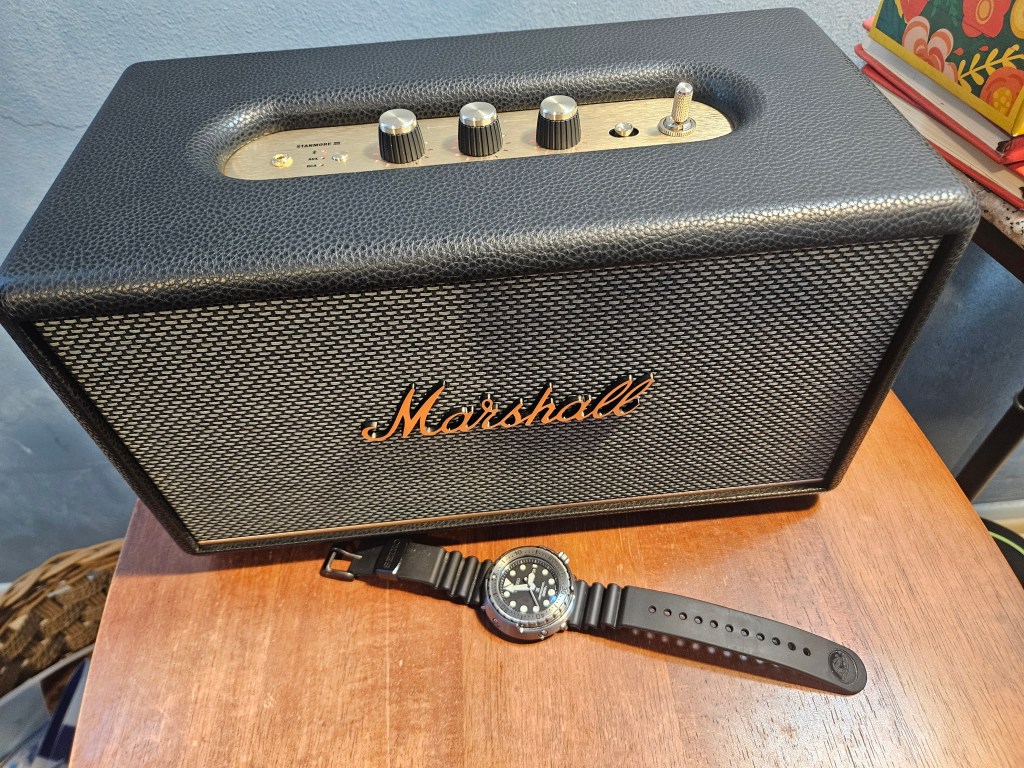
    Ever since buying a Marshall Stanmore III for the bedroom, I’ve fallen even more deeply in love with classical music. Last night I typed Dvořák’s name into the SiriusXM search bar, and the app rewarded me with an endless procession of Eastern European composers.

    The sound pouring out of that speaker is breathtaking.

    Rich.

    Warm.

    Expansive.

    The music doesn’t merely occupy the room.

    It ennobles it.

    In fact, it may be sabotaging my Kindle reading. Faced with music that beautiful, why would I pay attention to the printed page? The orchestra wins every time.

    Then bedtime arrives.

    I reach for the power button.

    And a strange thought enters my mind.

    Turning off music this beautiful feels almost morally questionable.

    Surely another symphony wouldn’t hurt.

    Perhaps just one more movement.

    This is, I admit, the most luxurious problem I’ve ever had.

    I won’t lose sleep over it.

    If my greatest dilemma is choosing between Dvořák and Elaine Pagels before bed, I have wandered into the safest corner of the First World.

  • My Diet Revolution Will Not be Livestreamed

    My Diet Revolution Will Not be Livestreamed

    Today marks my first day of abandoning snacks and eating only three meals.

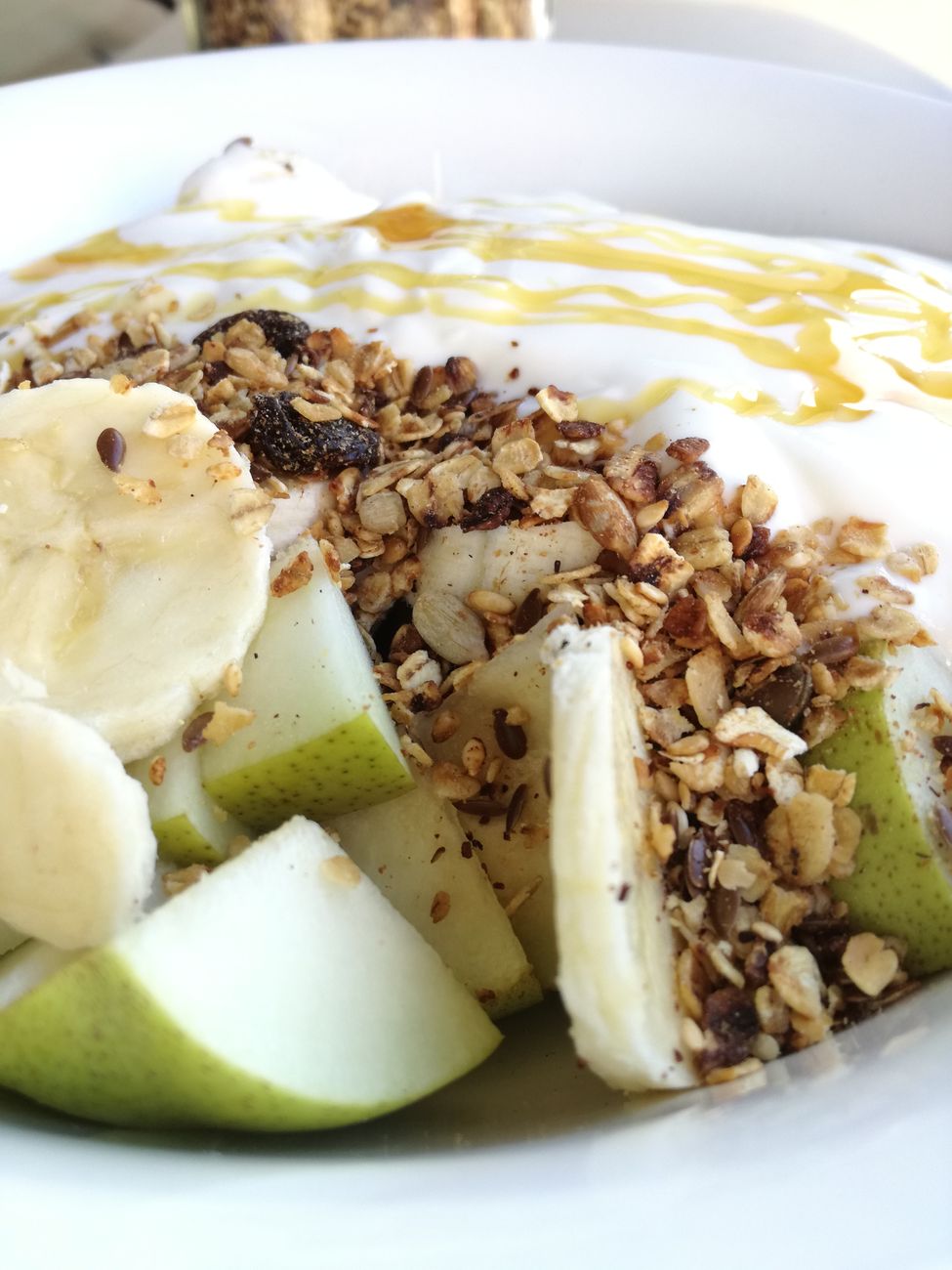
    I’m already making minor adjustments. I think I’ll add a couple of eggs to lunch to help carry me through the long stretch between 11:30 and 5:00. After dinner, I’ll finish with a small crystal bowl of Greek yogurt, berries, and a drizzle of honey—not as a fourth meal, but as a civilized period at the end of the sentence. It softens the psychological blow of eliminating my beloved post-nap yogurt-and-protein-powder ritual without turning dessert into another calorie ambush.

    As I write this, about four and a half hours after lunch, I won’t pretend it’s effortless.

    I notice the absence of the snack.

    My stomach notices it.

    My brain notices it even more.

    It keeps floating little suggestions.

    “You know, one handful of almonds wouldn’t count.”

    “A spoonful of peanut butter is practically medicine.”

    “Surely Greek yogurt exists outside the jurisdiction of snacks.”

    My appetite has hired an exceptionally creative attorney.

    But the discomfort is remarkably ordinary.

    I’m not suffering.

    I’m not wandering the Sahara with cracked lips and hallucinations.

    I’m simply a little hungry.

    If tolerating that mild inconvenience helps me lose twenty pounds, it strikes me as an excellent bargain.

    The larger lesson has nothing to do with nutrition.

    It’s about refusing to become a baby.

    Modern life encourages us to interpret every minor discomfort as an emergency requiring immediate relief. Hungry? Eat. Bored? Snack. Tired? Caffeinate. Restless? Scroll. We have become connoisseurs of eliminating even the slightest irritation before it has a chance to teach us anything.

    Perhaps that’s why ordinary self-discipline now gets marketed as though it were a heroic expedition.

    Someone skips dessert for three days and suddenly there’s a podcast, a YouTube channel, and a line of merchandise celebrating their “journey.”

    I have no interest in becoming that guy.

    You will not see me posting a dramatic video titled How I Defeated Hunger and Reclaimed My Life.

    There will be no livestream documenting my courageous decision to survive the dangerous interval between lunch and dinner.

    No inspirational soundtrack.

    No slow-motion footage.

    No sermon about embracing pain.

    Because there is no pain.

    There is only structure.

    There is only routine.

    There is only a modest reduction in calories.

    Sometimes common sense is refreshingly unglamorous. It doesn’t require a manifesto, a support group, or a motivational speech. It merely asks us to tolerate a small amount of discomfort in exchange for a much larger reward.

    That hardly qualifies as heroism.

    It’s just growing up.

  • The Watches Were Never the Addiction–It Was the Rabbit Holes

    The Watches Were Never the Addiction–It Was the Rabbit Holes

    Over the past twenty years, I’ve learned that I love watches a little too much.

    Not because I own too many.

    Because I expected too much from them.

    I made two mistakes. First, I convinced myself that the next watch would somehow complete me, that a particular dial, bezel, or movement would usher me into a higher state of existence. Second, I became addicted to flipping watches—not because I disliked them, but because every purchase, every sale, every unboxing delivered another hit of dopamine and another round of approval from fellow enthusiasts online.

    The watches became secondary.

    The chase became the hobby.

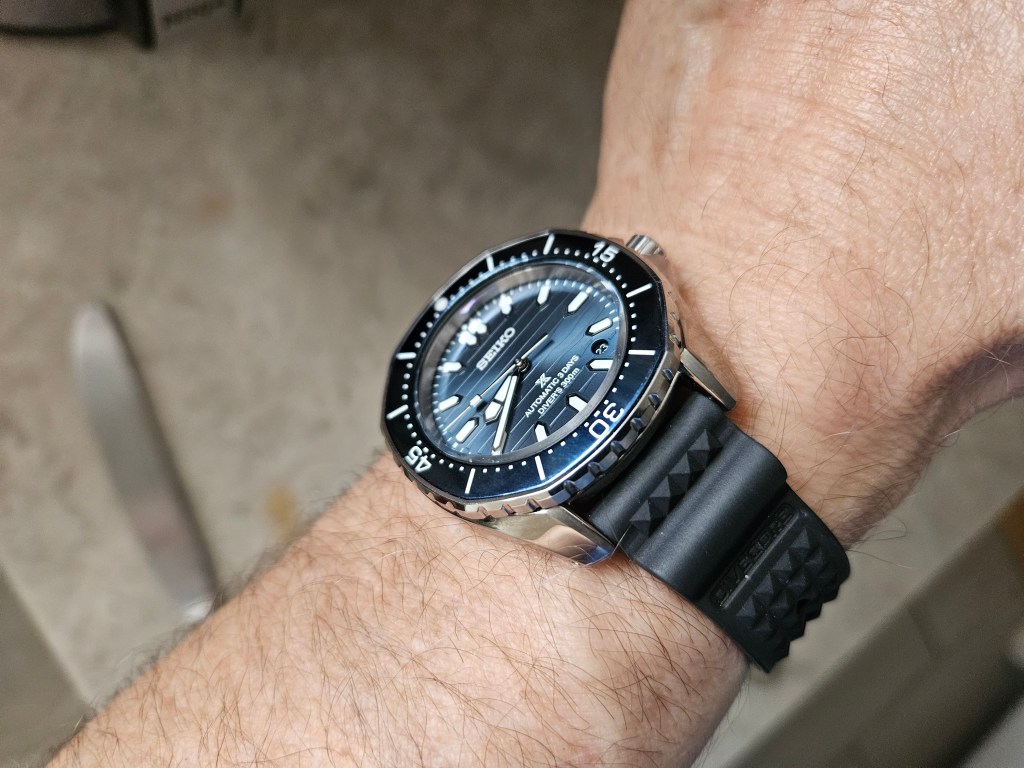
    Fortunately, my collection has settled into something resembling adulthood. I own five Seiko divers and five G-Shocks. After falling under the spell of G-Shock’s atomic precision—watches so obsessively punctual they correct themselves while I sleep—I have found myself drifting back toward my mechanical Seikos with fresh appreciation. As I write this, I’m wearing my Seiko SBDC203 Coastline Diver on a Divecore Waffle strap, watching its blue wave dial catch the light with quiet confidence.

    Oddly enough, I have nothing on my wish list.

    That statement would have sounded impossible a few years ago.

    I still admire watches. I linger over Citizen Attesas, Seiko Astrons, and Grand Seikos. My favorite watch ever made remains the Seiko SLA017, but I suspect our relationship will remain safely one-sided. I’ll admire it from afar on YouTube, where it can continue living its best life without emptying my wallet.

    That realization has spilled into other corners of my life.

    Once you discover that a watch cannot make you whole, you begin looking suspiciously at everything else trying to make the same promise.

    A forty-thousand-dollar Honda.

    A forty-thousand-dollar Toyota.

    A four-thousand-dollar luxury mattress.

    Consumer culture speaks with remarkable consistency.

    “Buy me,” it whispers. “Your new life begins here.”

    No, it doesn’t.

    At best, your new life begins with a slightly nicer object.

    The harder truth is that the improvements I actually want cannot be purchased.

    I want to become healthier.

    I want to lose twenty pounds.

    I want more discipline.

    I want to be fully present for my wife and daughters.

    I want to become the kind of man whose character quietly exceeds his possessions.

    No watch accomplishes that.

    No car does.

    No mattress does.

    The real danger isn’t believing that buying something will make me happy.

    That illusion is almost too obvious.

    The greater danger is subtler.

    It’s the research.

    I can disappear for hours into consumer rabbit holes with the enthusiasm of an archaeologist uncovering a lost civilization. I compare specifications, memorize model numbers, watch endless YouTube reviews, read forum debates, and convince myself that this painstaking investigation is somehow productive.

    It isn’t.

    It’s beautifully disguised procrastination.

    The internet has become a casino where information replaces slot machines. Every click offers the possibility that the next review, the next comparison, the next expert opinion will reveal the perfect purchase. Hours disappear without resistance.

    The acquisition isn’t the addiction.

    The pursuit is.

    That’s the part that frightens me.

    I have an obsessive personality. Obsession can be useful when it is harnessed toward writing, teaching, or improving my health. Left unattended, however, it happily attaches itself to titanium watch cases, mattress coil counts, automobile trim packages, fountain pens, headphones, or whatever shiny object wanders into view.

    Obsession doesn’t particularly care about the subject.

    It simply wants something to consume.

    Going forward, I want to become more suspicious of that impulse.

    Not because curiosity is bad.

    Curiosity is wonderful.

    But there is a profound difference between curiosity that enlarges your life and curiosity that distracts you from it.

    I want to spend fewer afternoons researching products and more afternoons becoming the kind of man who no longer needs them to feel complete.

    The irony is almost embarrassing.

    For years I believed I was searching for the perfect watch.

    What I was really searching for was the discipline to stop searching.

    ***

    For my fellow watch addicts, here is the link to my book The Man Who Lost His Mind to Watches:

  • How I Saved Four Thousand Dollars by Skipping a Bowl of Yogurt

    How I Saved Four Thousand Dollars by Skipping a Bowl of Yogurt

    The first title best captures the essay’s central revelation: the story begins as consumer advice but ends as a confession about misplaced hope.

    My Aireloom mattress is thirteen years old. It still looks as though it came off the showroom floor yesterday. I paid about $2,200 for it back in 2013. It’s a medium hybrid, a compromise I made because side sleepers are forever warned against firm mattresses. The compromise never quite worked. The bed always struck me as too soft, too marshmallow-like, lacking the taut resilience I prefer. Still, I gave myself a lecture every time the thought of replacing it surfaced.

    Don’t be the princess forever searching for the pea. Sleep on the bed you have and get on with your life.

    For more than a decade, that pep talk held.

    Then, last week, the fever returned.

    Thirteen years sounded ancient. Surely I had earned a new mattress. After all, I had just paid off my mortgage. If there were ever a time to reward myself, this was it. Before long I had disappeared into the rabbit hole known as mattress technology, where every manufacturer promises salvation through proprietary coils, artisanal horsehair, glacier-infused foam, or some other miracle unavailable to ordinary mortals.

    I quickly dismissed the overstuffed pillow-top monstrosities. They looked less like mattresses than wedding cakes. I wanted something firm, springy, disciplined—a mattress with posture. After hours of research, I proudly narrowed the field to three finalists: Aireloom, Stearns & Foster Estate, and Beautyrest Black.

    Like an explorer hacking through the jungle with a machete, I congratulated myself on having separated civilization from chaos.

    The excitement wasn’t really about the mattress.

    It was about rebirth.

    A new bed would usher in a new chapter. Better sleep. Better mornings. Better health. Better life.

    Then I mentioned all this to my wife.

    “What do you think?” I asked. “Should we replace it?”

    She shrugged.

    “Our bed still looks brand new.”

    She was right.

    Neither of us had noticed any sagging. No body impressions. No mysterious valleys swallowing us during the night. The mattress had aged with remarkable dignity. Throwing it away would feel less like an upgrade than an act of perfectly good consumer vandalism.

    That conversation forced an uncomfortable realization.

    If I was looking for rebirth, I wasn’t going to find it in a mattress showroom.

    I was going to have to earn it.

    The problem wasn’t beneath me.

    The problem was on top of the mattress.

    Me.

    At 231 pounds, my sleep apnea becomes noticeably worse. My hips absorb the punishment every night as I sleep on my side. At 210 pounds, everything changes. My apnea drops to tolerable levels. My hips complain less. I wake with more energy, more discipline, more confidence. I feel like the man I keep trying to become.

    The mattress hasn’t changed.

    My body has.

    This isn’t a bed problem.

    It’s a food problem.

    If I launched into the psychology of my relationship with food, you’d be condemned to yet another memoir about emotional eating. We already own an entire library of those books. They all tell roughly the same story: we soothe ourselves with food, reward ourselves with food, celebrate with food, grieve with food, and occasionally mistake food for unconditional love.

    I have no groundbreaking theory to contribute.

    Here’s my autobiography in three words:

    I overeat.

    That’s it.

    I snack too much.

    I’m carrying twenty unnecessary pounds.

    So my latest campaign is almost embarrassingly modest. I’m eliminating my afternoon yogurt bowl—the one loaded with Greek yogurt, protein powder, and berries. Instead of eating four times a day, I’ll eat three.

    To soften the psychological blow, I’ll add a couple spoonfuls of Greek yogurt to my morning oatmeal. Lunch and dinner remain unchanged: protein, vegetables, and a sensible serving of rice or sweet potatoes.

    By my estimate, that should lower my daily intake from something approaching 2,900 calories to roughly 2,400.

    Whether my body cooperates is another matter.

    My metabolism possesses the cunning of an experienced labor negotiator. It has an extraordinary talent for reclaiming every calorie I attempt to eliminate. My unconscious mind may simply enlarge my lunch and dinner portions until I find myself back at 2,900 calories while congratulating myself on my “three-meal plan.”

    If that happens, I won’t invent excuses.

    I already know many of my vulnerabilities.

    Family vacations to Miami, Maui, or Coronado have an uncanny way of becoming weeklong festivals of excess. Every meal transforms into a celebration. Every dessert becomes mandatory because we’re making memories. Before long, memory has acquired another five pounds.

    If moderating carbohydrates proves impossible, I have another option.

    I’ve watched friends thrive on a meat-heavy diet.

    Breakfast is black coffee and electrolyte water.

    Lunch is ground beef or turkey bacon with eggs.

    Dinner is salmon or sirloin with salad.

    The simplicity has undeniable appeal. Protein suppresses my appetite better than oatmeal ever could.

    The problem is that I don’t particularly enjoy living that way.

    After several days, handling raw meat and smelling rendered fat throughout the house begins to repel me. I admire the diet more than I want to live inside it.

    Then comes the pharmaceutical path.

    For now, I have no interest in GLP-1 drugs.

    Perhaps history will prove them miraculous. Perhaps five years from now I’ll wonder why I resisted them. But at this stage I remain wary. Reports of pancreatitis, muscle loss, gastrointestinal complications, and other side effects make me feel as though we’re still watching the largest medical field trial in history unfold in real time.

    So I choose caution.

    I’ll begin with the oldest technology available.

    Eat a little less.

    See what happens.

    If nothing changes, I’ll reassess.

    And in the meantime, I have postponed spending three or four thousand dollars on a new mattress.

    Perhaps for another three years.

    The irony is difficult to miss. I nearly convinced myself that salvation lay hidden beneath layers of handcrafted latex, luxury coils, and cashmere ticking, when all along it was waiting in the space between lunch and dinner.

    The mattress was never asking to be replaced.

    Only its owner was.

  • Chasing Nirvana on the Misery Machine

    Chasing Nirvana on the Misery Machine

    For the past three years, I have climbed aboard the Schwinn Airdyne AD7—better known in my household as the Misery Machine—two or three times a week for fifty to sixty minutes. It complements my three weekly kettlebell workouts by providing just enough suffering to convince me that my life choices deserve constant reevaluation. On a typical ride I burn between 600 and 750 calories. About once a month I have a monster workout that sails past 800 calories. About once a month I have the opposite experience, when my body feels as though it has been poured full of wet concrete and refuses every command I issue. On those days I wave the white flag around the 500-calorie mark.

    The workouts embody the old saying, “It hurts so good,” though that cliché hardly captures what actually happens. On my best days, the ride unfolds in two distinct psychological stages that I have come to call Nirvana I and Nirvana II.

    Nirvana I usually arrives around the 400-calorie mark, roughly thirty to thirty-three minutes into the workout. By then my shirt has surrendered completely to perspiration. Sweat drips from my elbows, pools beneath the bike, and convinces any reasonable observer that the plumbing has failed. My breathing settles into a steady rhythm, the static disappears from my mind, and I feel as though I have been lowered into a warm bath of endorphins. The outside world recedes. My obligations disappear. There is only the machine and me. About eighty percent of my workouts reach this stage.

    Nirvana II is another matter entirely.

    It cannot be scheduled, negotiated, or bullied into existence. It appears only on those rare mornings when physiology, mood, sleep, and providence decide to cooperate. I continue sweating rivers, but fatigue never quite catches me. My cadence remains smooth. My breathing stays controlled. Instead of counting down the remaining minutes, I begin believing absurd things.

    “I’m unstoppable.”

    The Misery Machine no longer owns me.

    I own it.

    The fan roars. My legs keep driving. Every revolution of the pedals reinforces the illusion that I have temporarily escaped the ordinary laws of aging and entropy. For twenty glorious minutes I become convinced I could ride forever. Nirvana II is the Holy Grail of my fitness life. It is the workout equivalent of pitching a perfect game.

    Unfortunately, every heaven has its corresponding hell.

    I call it Shut Down.

    Unlike Nirvana, Shut Down announces itself almost immediately. Within the first fifteen minutes I can tell something is wrong. My breathing becomes shallow. My legs feel leaden. The usual RPMs suddenly resemble Olympic qualifying standards. Every minute feels borrowed.

    Years of yoga have taught me not to argue with these days.

    When Shut Down arrives, resistance is futile. I simply acknowledge reality.

    “Today is not my day.”

    I lower the intensity, keep pedaling, and allow my body to dictate the terms of surrender. Most Shut Down workouts end around forty minutes and 450 calories. They leave me discouraged, though experience has taught me not to overreact. Ninety-nine percent of the time the next workout restores me to normal, as though my body merely needed to remind me who actually runs the operation.

    Oddly enough, the existence of Nirvana II is what keeps drawing me back.

    Every workout carries the possibility of discovering that elusive state again. It is exercise’s version of Christmas morning. Will today be the day? Will I feel invincible? Will I conquer the Misery Machine instead of merely surviving it?

    I never know.

    That uncertainty is precisely what makes me keep climbing back aboard.