Category: Confessions

  • When a Strap Solved Everything—and Instagram Ruined It

    When a Strap Solved Everything—and Instagram Ruined It

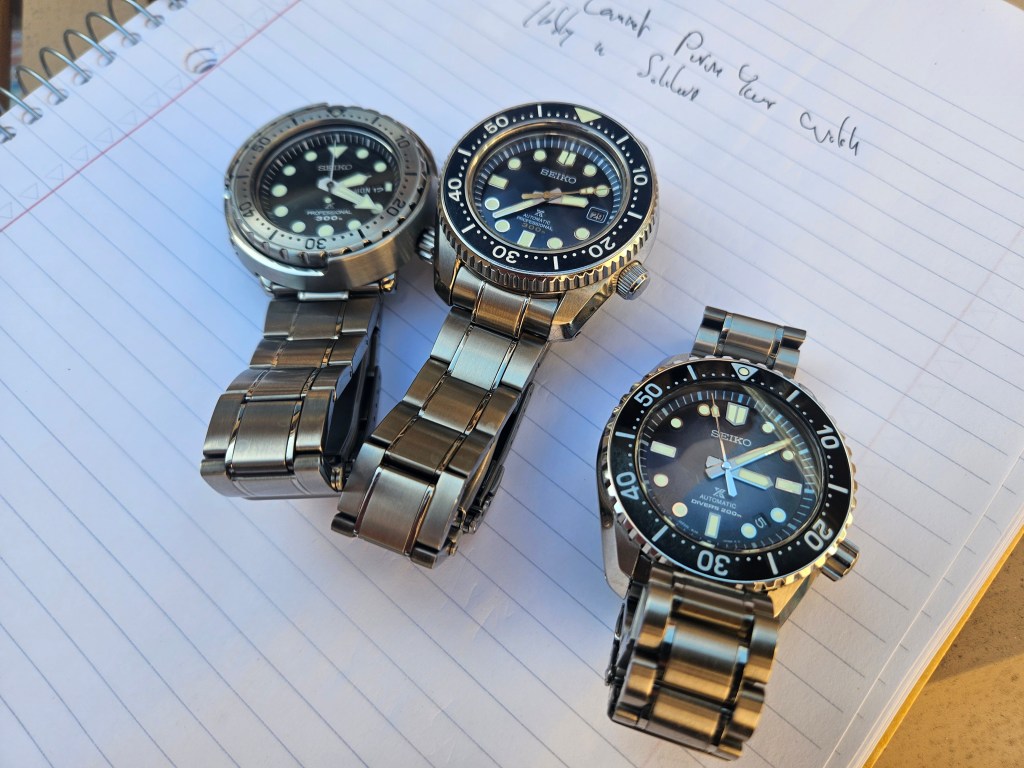
    I don’t work for Divecore straps. I don’t have an affiliate link. I don’t even remember how I found them. They just appeared one day, like a cult recruiter with good posture. All I know is this: once I tried them, something clicked. The fit was right. The comfort was immediate. The look was honest. So I did what any rational watch obsessive does when he thinks he’s reached enlightenment—I stripped every watch off its bracelet, slapped on black or orange FKM Divecore straps, and declared myself finished.

    Done.
    Happy.
    At ease.

    That phrase—at ease—matters. A seven-watch collection, unified by one strap philosophy, felt merciful. There was no mental juggling, no wrist gouging from metal end links, no micro-adjustment rituals to accommodate the daily swelling and shrinking of my aging, temperamental wrist. The system was clean. Elegant. Humane. For once, the hobby felt like a hobby instead of a low-grade engineering problem.

    Then, in August of 2025, Instagram did what Instagram does best: it ruined my peace. Someone informed me—solemnly, heroically—that a study had been released about FKM straps and PFAS “forever chemicals.” The straps in the study were abused like props in a MythBusters episode—conditions so extreme they bore little resemblance to actual wrist life—but still. With plastic contamination already saturating the planet, did I really need to marinate my arteries in additional synthetic mystery?

    So off came the FKM. On went the “safe” alternatives: urethane, silicone, vulcanized rubber. They were… fine. Adequate. Technically acceptable. Emotionally inert. I wore them the way you eat airline chicken—without complaint, but without love. And yes, I feel compelled to say it again: I still don’t work for Divecore.

    Feeling vaguely bereaved, I did what many men do when they sense disorder: I tried to impose balance. I put stainless steel bracelets back on some heavy hitters. I even bought a gunmetal, monochromatic dive watch on a bracelet, as if symmetry itself could rescue me. I now had four watches on straps and four on bracelets. The collection looked fantastic. Museum-worthy. Spreadsheet-perfect.

    And yet—I was less happy.

    That’s when I recognized the familiar enemy: Cognitive Load Creep. The slow, insidious return of mental fatigue as the collection grows more complex. Straps versus bracelets. Balance logic. Adjustment rituals. The hobby quietly mutates into unpaid systems management. Every glance at the watch box now came with a background hum of decision-making. And whenever that hum gets loud enough, a voice appears.

    You lost the plot.

    And it’s right.

    The plot was never variety.
    The plot was never balance.
    The plot was happiness.

    Happiness, in the watch hobby, is hard to define—but it’s easy to identify its opposites: stress, obsession, second-guessing, wheel-spinning, FOMO anxiety, mental overload, and the constant sense that you’ve taken on more than you can metabolize. If your watches feel like a to-do list, something has gone wrong.

    I’m trying to learn from this chapter. I know, intellectually, that less really is more. I know stress is poison. I also know I have a flair for melodrama. I can turn a strap swap into a Greek tragedy. I pine. I brood. I catastrophize like an adolescent waiting for a love note reply that never comes. It’s embarrassing. It’s funny. And I’m certain I’m not alone. Watch people are wired this way—OCD-prone, sentimentally overloaded, forever narrating their own inner turmoil.

    So what’s next?

    I don’t know. There’s no blueprint. No masterplan. No illuminated exit sign pointing toward Horological Sanity. The best I can do is remain watch-agnostic, laugh at my own compulsions, and tell the truth about whatever move I make next—if I make one at all.

    The world, I assure you, is not holding its breath.

    But a fellow watch obsessive might be.

  • I Forgot the Song, But the Song Didn’t Forget Me

    I Forgot the Song, But the Song Didn’t Forget Me

    Last night I dreamed I was attending an English Department meeting held, for reasons no dream ever explains, in a recreation room with an adjoining outdoor patio. The setting suggested morale had once been a priority, sometime around 1987.

    Inside the rec room, my friend S pressed a pair of earbuds into my hand. They were attached—not metaphorically, but literally—to a CD, which already felt like an archaeological artifact.
    “Do you know this song?” she asked.

    The music was exquisite. Airy. Radiant. It carried that dangerous quality of being both unfamiliar and deeply known, as if it had once lived inside me and quietly moved out without leaving a forwarding address. I admitted I didn’t recognize it.

    She looked at me with the gentlest possible contempt.
    “You burned this for me ten years ago.”

    I felt properly humiliated. Not embarrassed—abased. As if I’d forgotten the name of a childhood friend or my own middle initial. Then she summoned the band’s leader the way dreams do—no door, no introduction, just a man appearing fully formed.

    He was in his late forties, courteous, faintly exhausted, with the posture of someone who has spent years loading gear into vans at 2 a.m. I apologized to him for not recognizing his work. I blamed streaming—how it turns music into sonic wallpaper, a perpetual ambient fog where nothing has to be remembered because everything is always available. In a fit of dream-piety, I vowed to delete every streaming account I owned and return to vinyl, to sacred listening, to LPs spinning on absurdly expensive turntables like a penitent monk.

    He nodded shyly, as if he’d heard this promise before, and vanished.

    The departmental meeting began outside on the patio, but I lingered inside the rec room instead. I changed into a swimsuit for reasons that felt urgent at the time. I ate snacks—salty, comforting, vaguely institutional—and watched my colleagues through the glass as they discussed the usual bullet points: outcomes, alignment, initiatives. I meant to join them. Truly. But the snacks induced a narcotic drowsiness, and I collapsed onto a yellow beanbag chair like a defeated child at a daycare center. I fell asleep.

    When I woke, the meeting was still going on.

    Wrapped in a towel over my bathing suit, I finally wandered outside. My younger colleagues informed me I needed to sign the attendance sheet to get my FLEX hours. Unfortunately, the sign-up sheet had already been placed in a wooden box and sent to Human Resources, which in dream logic felt ominous and final, like evidence sealed in a cold case.

    The secretary waved it off. She would “put me in the system.”

    I thanked her. The meeting droned on. Words floated by without meaning. And all I could think about was that music—its beauty, its ache, its brief visitation. And then, with a second, sharper jolt of recognition, I realized I had forgotten it again.

    The song.
    The band.

    Gone.

  • Maudlin Grail Syndrome

    Maudlin Grail Syndrome

    As I consider Cicero’s call for self-restraint in Tusculan Disputations, my thoughts return to a story that’s haunted me for over twenty years—Anton Chekhov’s “Gooseberries.” It is, in essence, the tragic fable of a Maudlin Man, told with surgical clarity and Chekhovian cruelty.

    His name is Nicholai Ivanich, and he’s not merely pathetic—he’s morally revolting. He marries an aging, unattractive woman for her wealth and waits with predator patience for her to die. Once she obliges, he buys himself a country farmhouse ringed with gooseberry bushes, retreats from the world, and crowns himself a minor deity among the local peasants by handing out cheap liquor like some portly, provincial Dionysus.

    Chekhov doesn’t give us Nicholai’s voice. He gives us Ivan, the disgusted brother, who sees this man for what he is: a swollen, self-satisfied corpse in waiting. Ivan calls Nicholai’s farmhouse dream a “definite disorder”—not a goal, but a fixation, a fever dream dressed up as a life plan. For Ivan, his brother’s pastoral retreat is less Arcadia and more open-casket viewing. “He looked old, stout, flabby,” Ivan observes. “His cheeks, nose, and lips were pendulous. I half expected him to grunt like a pig.”

    That image sticks: Nicholai, the human piglet, grinning over his plate of gooseberries, believing he’s achieved bliss when in truth he’s just decaying in comfort.

    And then comes the moment that seals it—Nicholai’s nightly ritual: he’s brought a plate of gooseberries from his estate, and upon seeing them, he literally weeps with joy. “He looked at them in silence, laughed with joy, and could not speak for excitement.” He is consumed by the performance of happiness. It’s not the berries he loves—it’s what they symbolize. In his mind, they are proof that his life is complete.

    But it’s all delusion. Nicholai isn’t fulfilled—he’s embalmed in maudlin sentimentality, drunk on nostalgia for something that never really existed. His joy is cosmetic. He’s not flourishing. He’s fermenting.

    And this, I confess, reminds me of myself—and my fellow watch addicts.

    We, too, have our gooseberries. Ours just happen to tick.

    We post videos of our “grail watches” and glow with reverence as we hold them up to the camera like relics from a sacred shrine. We give breathless soliloquies about our “perfect” collections, our “ultimate” configurations. We praise bezels and dial textures the way Nicholai praises his berries—with trembling hands and watery eyes. And like Nicholai, we’re not convincing anyone but ourselves.

    Because deep down, we know: the drama is maudlin. We have arrived at Maudlin Grail Syndrome–a condition in which the collector performs reverence rather than experiencing peace. Tears may form, voices may soften, thumbnails may glow—but the joy is theatrical, not restorative. The grail embalms rather than liberates. The joy is hollow. The entire pageantry is just a way to distract from the torment our hobby brings us. We spend hours obsessing, comparing, flipping, tweaking, always convinced that this next watch will bring balance and peace, only to find ourselves more anxious than before.

    We are men who weep over gooseberries. And worse—we make YouTube thumbnails about them.

    If we were honest, we’d admit that one decent, mid-priced watch would offer more peace than any “holy grail” ever could. But that would mean giving up the theater. The drama. The illusion that our fixations have meaning. And that, for the Maudlin Man, is the hardest loss of all.

  • Watch Abundance Anhedonia

    Watch Abundance Anhedonia

    Sometimes I wonder how technology might assassinate my love for timepieces. Picture this: a $200 spool of 3-D printer feedstock spits out your $10,000 grail watch. Eight years later, when the mechanical movement needs servicing, you don’t take it to a watchmaker—you print another.

    If watch-printing is as easy as making pancakes, I’d have thousands. Would I be happy? No. I’d be the spoiled rich kid sulking in his palatial bedroom because Mom and Dad bought him every toy but a bazooka.

    “Son, I bought you everything.”
    “But I want a bazooka.”
    “They’re illegal.”
    “I don’t care!”

    When everything is instant, the “holy grail” becomes an inside joke. The magic dies in the flood of abundance. Just ask the diamond industry. Lab-grown stones are flawless, cheap, and undetectable to the human eye—obliterating the romance of bankrupting yourself for an engagement ring. Watches could be next. As thousands of luxury timepieces materialize out of your 3-D printer, you will be overcome by Watch Abundance Anhedonia: a psychological dead zone caused by frictionless acquisition. When effort, waiting, and sacrifice are removed from ownership, pleasure flatlines. The watch collector becomes the sulking child of excess, bored by plenitude and secretly longing for denial.

    And that’s just one front. On another, tech billionaires are funding biohackers to keep us ticking for 900 years. If I’m going to live to 85, time feels urgent. If I’m going to live to 900, time is a leisurely brunch. Chronological time starts to matter less than biological time—the wear and tear written in my cells.

    In that world, your Rolex Submariner won’t tell you what matters. Your doctor-prescribed smartwatch will, tracking cardiovascular vitality, antioxidant levels, and the sorry truth of your lifestyle choices. Refuse to wear it, and your insurance premiums explode tenfold or you’re cut off entirely. Privacy? Gone. Your vitals are known to your insurer, employer, spouse, dating app matches, and the guy at your gym checking your actuarial risk.

    When the mechanical watch dies, so does your privacy. And somewhere, Dale Gribble from King of the Hill is finding the conspiracy angle.

    Give it five years. Our “watch collector meet-up” will look more like group therapy for mechanical-watch dinosaurs funding their therapists instead of their ADs. But fear not—obsession never dies, it just changes costume. Post-watch, your new drug will be optimization.

    You’ll strap on your OnePlus Watch 3, buy a $2,600 CAROL resistance bike, and simulate being chased by a saber-toothed tiger because “hormesis”—that holy word—demands mild ordeals to make you live forever. Resistance intervals, intermittent fasting, cold plunges. Goodbye winding bezels; hello gamified cell stress.

    Our poster boy? Bryan Johnson—the billionaire fasting himself pale, zapping his groin nightly to maintain the virility of a high school quarterback. Critics say he looks like a vampire who’s just failed a blood test. I say he’s the future. Picture him at 200, marrying a 20-year-old and siring a brood. Male Potency and Reproductive Success: the distilled recipe for happiness.

    Except I’m kidding. The truth: peer-reviewed science says we might beat the big killers before 90—heart disease, cancer, stroke, Alzheimer’s—but the biological ceiling is still ~100. Eventually your organs quit. All the optimization in the world won’t rewrite that.

    As a watch obsessive, I know the tyranny of time. The biohackers are fixated on biological time as if it’s the only kind that matters. But the Greeks knew a third: kairos—the moment saturated with meaning, purpose, connection. All the Bryan Johnsons in the world can’t 3-D print that.

    Live 200 years without kairos and you’re not a winner; you’re a remake of Citizen Kane with a garage full of exotic cars and no friends.

    A long time ago, a friend told me about the night cocaine hollowed him out so completely that he didn’t care his best friend was kissing his girlfriend. Then a voice in his head said, “Dude, you should care.” He went to rehab the next day. That’s soul work.

    And that’s what’s missing from the longevity cult: soul work. Without it, all the tech, watches, and optimized mitochondria in the world are just a shiny grift.

  • Why You Can’t Pursue the Watch Hobby in Solitude

    Why You Can’t Pursue the Watch Hobby in Solitude

    I should have known at thirteen that seventeen would be brutal. At thirteen, Janis Ian’s “At Seventeen” was already circulating through the house like a prophecy. I liked the song well enough, but my mother loved it. It was her time machine back to high school—loneliness, rejection, the ache of not measuring up. More than once I watched her eyes fill as the song drifted out of our Panasonic portable radio. That was her loneliness anthem. I needed my own. Mine was “Watching and Waiting” by the Moody Blues—a song for someone alone in the dark who senses there is something greater beyond himself and aches to make contact with it. Less teenage rejection, more metaphysical hunger.

    By seventeen, starting college, I was profoundly lonely. According to Erik Erikson, this is the stage defined by intimacy versus isolation, and I was losing badly. I felt it in my bones as a socially maladroit bodybuilder shuffling through classes by day and working nights as a bouncer at a teen disco called Maverick’s in San Ramon. Picture it: me at the door, arms crossed, watching a parade of thrill-seekers gyrate, flirt, and dissolve into noise. The job didn’t cure my loneliness; it distilled it. I was close enough to touch the crowd and miles away from belonging to it.

    One morning after a late shift, I dreamed I was living in the Stone Age. I was alone in a cave, wrapped in animal skins, stepping out into a gray, indifferent sky. I raised my arms toward the clouds, reaching for something—anything—that might answer me. In the background, “Watching and Waiting” played like a prayer I hadn’t yet learned how to pray. The dream was sad and beautiful, which felt like progress. As Kierkegaard noted, despair’s worst form is not knowing you’re in it. At least I knew. And as the Psalmist understood long before therapy existed, grace tends to follow sorrow once the sorrow has been fully felt.

    People hate being alone. They’ll sit through ads on YouTube rather than listen ad-free on Spotify because YouTube lets them comment, scroll, argue, agree—experience the song with others. Solitude may be cleaner, but communion is warmer. Which brings me to watches. What is the watch hobby in isolation? Nothing. A watch on a deserted island is just a lump of steel keeping time for no one. The hobby exists only because a community animates it—supports it, debates it, sometimes overfeeds it. A watch on your wrist is a semiotic flare. It says something. Others read it. You read them back. That exchange is the point.

    This is what I mean by Horological Communion: the quiet fellowship formed when watches are not hoarded as private trophies but offered as shared symbols. Meaning emerges only when the object is seen, recognized, and answered—at meetups, in forums, in comment sections, across a knowing glance from one wrist to another. Without that communion, the watch is mute. It ticks, faithfully, but it says nothing at all.

  • The Watch Miserabilist

    The Watch Miserabilist

    The Watch Miserabilist is a man determined—by temperament, guilt, vanity, and a punishing inner prosecutor—to turn a pleasurable hobby into a moral catastrophe. He stares at his collection as if it were evidence in a trial against him and sighs, “These watches mock me. I am unworthy. I have nowhere to wear them.” He glances down at his Omega Planet Ocean while seated in a windowless man cave and concludes, with theatrical despair, that the watch has exposed him as a fraud. Luxury, in his hands, becomes an accusation.

    He shuffles around his lair like a contemporary Gollum: threadbare robe, bloodshot eyes, four-day beard, posture of defeat. He looks vaguely unhoused. The contrast is brutal—this exhausted homunculus lugging around a six-thousand-dollar slab of Swiss engineering on his wrist. The watch gleams with purpose; the man does not. You can practically hear the object wondering how it ended up here. Whatever redemption the Miserabilist hoped the purchase would bring has failed spectacularly. The watch did not save him. It only sharpened the irony.

    Despite owning a dozen coveted Swiss watches, his YouTube channel limps along with fewer than fifty subscribers. His voice is saturated with despair—thick, damp, unventilated. Viewers last about five seconds before clicking away, not because the watch isn’t beautiful, but because the misery is suffocating. The sadness radiates through the screen. You can almost smell the robe. No lume shot can redeem a tone that sounds like it’s been steeped overnight in self-loathing.

    The uncomfortable truth is that every watch obsessive carries a trace of the Watch Miserabilist within. It’s the voice of guilt and nihilism that wants to poison enjoyment, to insist that pleasure is illegitimate, that beauty must be justified, that desire is suspect. This voice must be acknowledged—but never indulged. You laugh at it. You recognize it. You keep it at arm’s length. Because once coddled, it metastasizes. The Watch Miserabilist is not wisdom. It is a disease, and left unchecked, it will devour every ounce of joy in its path.

  • The Greatest Flex Is Self-Denial

    The Greatest Flex Is Self-Denial

    In case anyone has missed it, Bruce Springsteen is seventy-five years old and still looks like he could outrun most men half his age while singing at full volume. He has the same chiseled body that powered “Born to Run” during my junior year—the song that injected an entire generation with adolescent adrenaline and the belief that escape was always one chorus away. The mystery is not that Springsteen is still performing. The mystery is how he’s performing while appearing carved out of disciplined granite.

    The answer, it turns out, is brutal in its simplicity. Springsteen eats one meal a day. That’s it. No grazing. No late-night negotiations with the pantry. His self-control has apparently spread, too. Chris Martin of Coldplay—another famous man who could afford to eat like a Roman emperor—has sworn off dinner entirely. I find all of this deeply unsettling, not because it’s unhealthy or extreme, but because it’s practiced by people who could easily afford indulgence as a full-time lifestyle.

    That’s the real flex. Not yachts. Not villas. Not decadent excess. The most impressive display of power available to the wealthy is self-denial. These men don’t lack access. They lack excuses. Their discipline quietly points an accusatory finger at the rest of us, and unfortunately, that finger lands squarely on my plate.

    If I’m being honest—and honesty is the whole problem here—I’m indulgent when it comes to food. Portions creep. Snacks multiply. I carry about twenty pounds that no amount of kettlebells or Schwinn Airdyne heroics can fully offset. Springsteen himself has said that fitness is ninety percent diet, and I resent him for being right. You can’t out-train a refrigerator you keep reopening out of habit.

    So tonight, instead of reaching for another snack, I may watch the latest Bruce Springsteen documentary for moral reinforcement. The man who once soundtracked youthful restlessness may now be offering something rarer: a model of restraint with dignity intact. Cheers to Bruce Springsteen—patron saint of senior citizens who refuse to let dinner win.

  • The Watch Relapse Spectacle

    The Watch Relapse Spectacle

    Watch addicts eventually reach a terminal stage of torment: the moment when the hobby that once delivered pleasure produces only agitation. The rotation feels oppressive. The collection feels accusatory. At this point, the addict does what desperate cultures have always done—he invents a ritual.

    Surveying the landscape for deliverance, one inevitably recalls the 2014 viral fever dream known as the Ice Bucket Challenge. The watch world demands its own purgative spectacle. Enter the One-Watch Challenge.

    The ritual is simple and public. A ten-minute YouTube video is required. The setting must be tasteful—backyard at golden hour or living room with flattering light. Friends gather. Straws are drawn. Every watch in the collection is claimed except the one the addict secretly hopes will remain. The winners strap on their spoils, grinning like looters at the fall of a city. The subject is then lifted into the air, victorious yet emptied, holding aloft his single remaining watch.

    He is reborn. He is no longer a collector. He is a Oner—a new creature who has renounced rotation days for the austere monogamy of one watch, worn for the rest of his natural life. He speaks of clarity. He speaks of peace. He uploads the video and waits for absolution.

    Naturally, the movement does not end there.

    A counter-genre soon emerges: the Relapser. These videos document former Oners discovered months later, sprawled on their carpets amid a shameful abundance of watches. Boxes are open. Straps are tangled. The men appear undone—glassy-eyed, infantile, muttering references to limited editions and “just one more.” The videos are initially consumed as comedy, shared with a wink and a laugh.

    Over time, the laughter fades.

    The genre acquires a formal name: the Watch Relapse Spectacle—the inevitable counter-ritual in which renunciation collapses into excess. What began as entertainment hardens into parable. For the first time, the wider public glimpses the pathology beneath the polish. The madness is no longer charming. It is instructive.

  • Why Giving a Watch Away Hurts Less Than Selling It

    Why Giving a Watch Away Hurts Less Than Selling It

    The true watch obsessive learns, sooner or later, that giving a watch away hurts far less than selling one—especially when the sale takes place on eBay, under fluorescent lighting, at the mercy of low-ball bidders with no evident shame. Money changes hands, but dignity does not.

    When a watch is given to a friend, there is grief, yes, but it is clean grief. The obsessive knows where the watch has gone. It has not disappeared into the void. It has been adopted. The new owner will wind it, strap it on, and—most importantly—understand it. The watch now lives in a reliable home. The separation has narrative continuity.

    Selling a watch to a stranger is something else entirely. The watch vanishes into anonymity, shipped off like a misfit toy condemned to an unloving Christmas morning. One imagines it being worn carelessly, scratched against countertops, left overnight in damp gym lockers, its history erased by someone who never asked to hear it. Worse still is the insult of the low bid, as if the watch’s years of loyal service have been publicly appraised and found wanting.

    This is why giving a watch away produces a strange, paradoxical pleasure. It feels like an act of stewardship rather than loss. Selling, by contrast, curdles the stomach. It tastes like bile. The obsessive may need the money, but the transaction leaves a moral residue that no PayPal balance can cleanse.

    This condition is known as Custodial Consolation: the relief that comes not from letting go, but from knowing exactly where the thing has gone. The obsessive is comforted by certainty. The watch is not lost—it is merely relocated, where it will be understood, protected, and occasionally admired, which is all it ever really wanted.

  • The Exit Watch That Blew the Exit

    The Exit Watch That Blew the Exit

    There comes a moment in every watch influencer’s career when he announces, with ceremonial gravity, that he has found his Exit Watch. This watch, he assures his audience, is different. It stands apart from the rest of the collection not merely in design, but in destiny. It promises completion. Closure. A sense that the long pilgrimage through steel and lume has reached its ordained end.

    The watch is so magnificent that it demands narrative consequences. The influencer hints at “big changes.” New content. A reimagined channel. Perhaps fewer uploads, perhaps deeper reflections. The implication is clear: the Exit Watch has not merely ended a collecting phase—it has matured the man.

    Then the watch arrives.

    It is flawless. Better than expected. The case sings. The dial radiates authority. The bracelet feels engineered by monks. The unboxing video trembles with reverence. For approximately forty-eight hours, the influencer experiences peace.

    Then something goes wrong.

    The watch does not quiet desire. It amplifies it. Instead of satiation, there is hunger—acute, feral, unprecedented. The Exit Watch behaves less like a sedative and more like a stimulant. New watches begin to haunt his thoughts. He starts browsing late at night. He rationalizes. He reopens tabs he swore were closed forever. The collection multiplies wildly, untethered from logic or restraint.

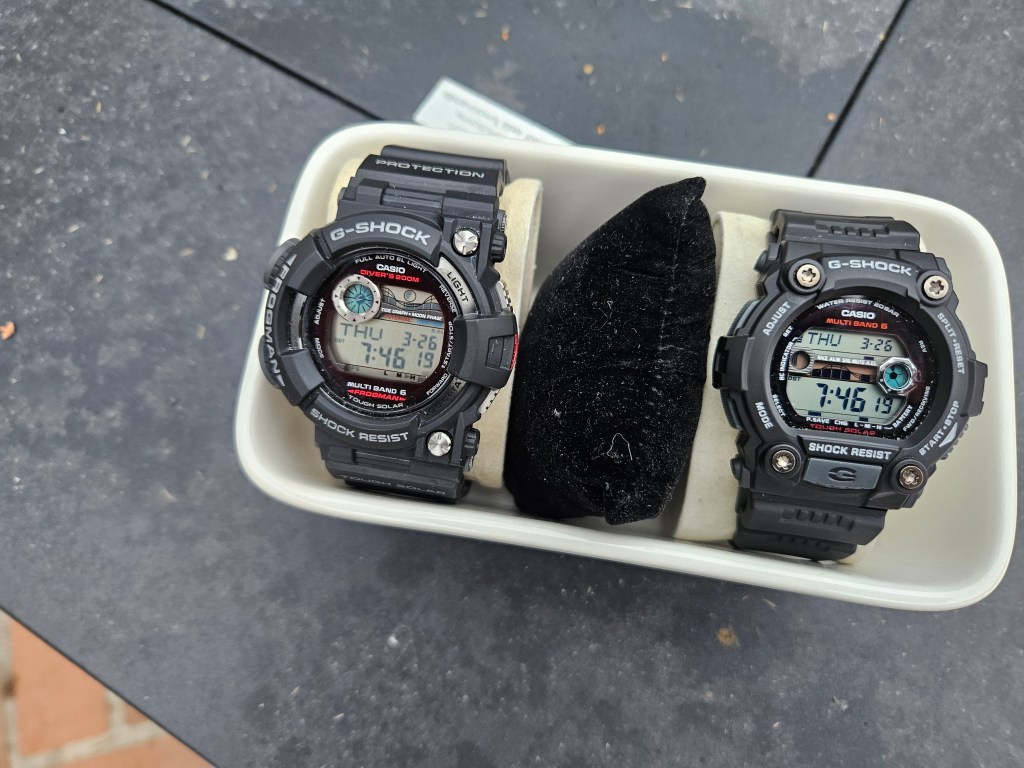
    Within months, the spiral is complete. The influencer is on the brink of losing his sanity, his marriage, and his house—saved only by a merciful uncle who wires sixty thousand dollars to send him to a rehab facility in the Utah desert. There, stripped of his collection, he learns to play the flute, hunt his own food, and live without Wi-Fi. He emerges thinner, quieter, and reconciled to a solitary G-Shock Frogman, worn not for pleasure but for survival.

    This is Exit Watch Reversal: the affliction in which a watch intended to conclude a collecting arc instead detonates it. The subject does not experience closure, but acceleration—as though the watch has unlocked a previously dormant appetite and handed it the keys.