Category: Confessions

  • The Ghost in Aisle Nine: Remembering Chris Grossman

    The Ghost in Aisle Nine: Remembering Chris Grossman

    Back in the Reagan era, when I was a college kid working part-time at Jackson’s Wine & Spirits in Berkeley, I shared long, dusty shifts with a man named Chris Grossman—a wine salesman whose last name, ironically, matched neither his physical presence nor his temperament. Chris was lanky, six foot four, and moved with the grace of a man perpetually on the verge of tripping over his own limbs. He had a face only a Freudian could love: aquiline nose, dark beard, black-framed glasses smudged with fingerprints, and a mop of dark curly hair that looked like it had lost a long battle with a pillow. A pencil was always tucked behind his ear, as if at any moment he might be called upon to draft blueprints for a submarine.

    To customers, Chris was a savant in work shirts with the sleeves rolled just so—half wine whisperer, half philosopher of Zinfandel. He had an uncanny ability to match a Pinot Noir to a personality type, like some sort of boozy Myers-Briggs. The regulars adored him. They trusted his palate, his calm authority, his encyclopedic knowledge of terroir. What they didn’t know—and what I only discovered gradually—was that once he stepped off the floor, he disappeared.

    Chris Grossman had no friends. Not one. He was social the way a vending machine is social—polite, efficient, devoid of emotional commitment. Once, during a lull in business, he confided that he’d had a girlfriend, briefly, years ago. He spoke of it as though he’d survived a hostage crisis. The constant negotiation, the emotional bookkeeping—it exhausted him. “I’m too selfish to pretend otherwise,” he said with an eerie clarity. “I’d only make her miserable.” There was something almost noble in his blunt self-awareness, as if he’d spared both himself and others the slow drip of mutual disappointment.

    His father, he once told me, had been a brilliant but frostbitten physician, a man incapable of affection. Chris, I think, carried his father’s circuitry—a brain tuned for analysis, not empathy. Still, he wasn’t bitter. He wasn’t even rude. If he hated humanity, he kept it on a low simmer, tucked behind a mild smile and a firm handshake.

    We both left Jackson’s in the late ’80s. I moved to the California desert to lecture on writing and lose my illusions in the faculty lounge. Chris stayed local, selling stereos on Shattuck Avenue for places like The Good Guys and Circuit City. He made good money and spent exactly none of it on companionship. No wife, no kids, no pets, not even a ficus. Once a year he drove his Triumph convertible down to Carmel for a vintage car rally, then disappeared back into his cocoon.

    I think about him more than I should. Forty years have passed, and still, his silhouette lingers. Why? Maybe because I recognize myself in him. The difference is, I got married—and in doing so, outsourced my social life to someone with actual initiative. My wife arranges our dinners, our vacations, our tenuous grasp on community. She reminds me to be human. And yet, even she knows I’m a recluse at heart. She gently suggests I see more of my friends—or at least have more friends—so she doesn’t have to absorb every neurotic spiral I produce. Fair enough.

    I’m 63 now. Chris, if he’s still around, must be pushing seventy. I sometimes wonder how he’s weathered the years, whether the silence that once comforted him has curdled into something more sinister. But I also suspect he made peace with his solitude. He looked at the world, with all its needy, buzzing, soul-sucking demands, and chose the quieter suffering. Not because he was brave or broken, but because he knew himself too well to fake it.

    I hope he’s okay. I really do. Solitude, like alcohol, is dose-dependent. For some, it’s a meditative stillness. For others, it’s a slow erosion. I don’t know which side of the line Chris landed on. But wherever he is, I raise a glass to him—alone, perhaps, but not forgotten.

  • Tuned In, Checked Out: Confessions of a Radio Enthusiast

    Tuned In, Checked Out: Confessions of a Radio Enthusiast

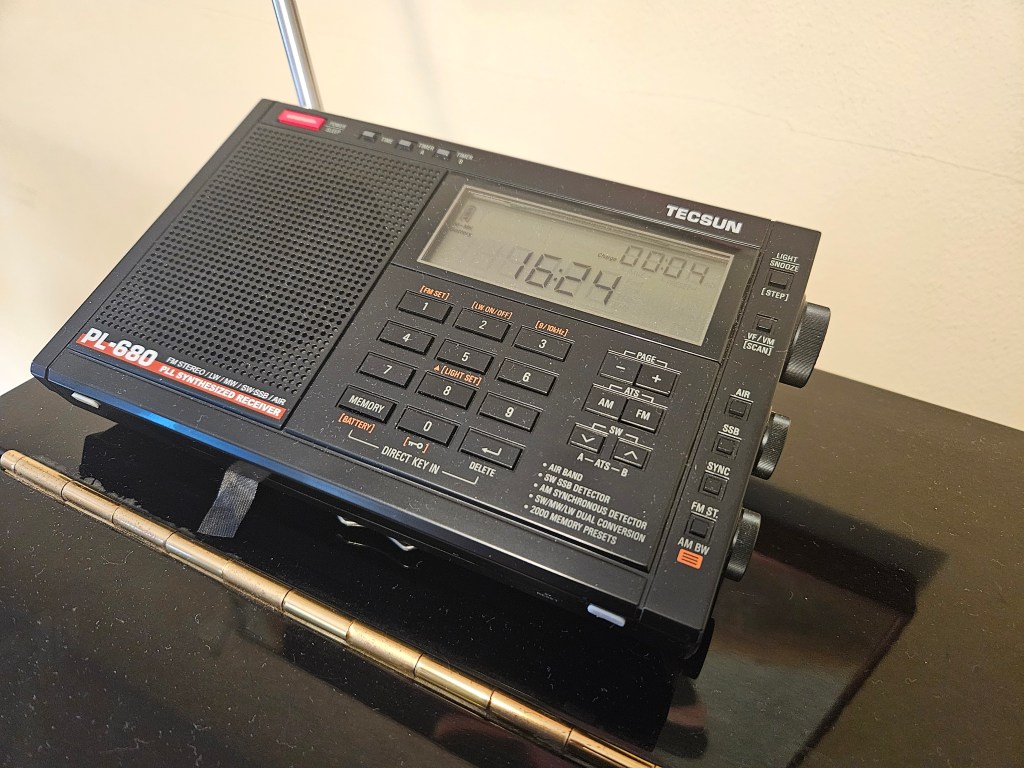
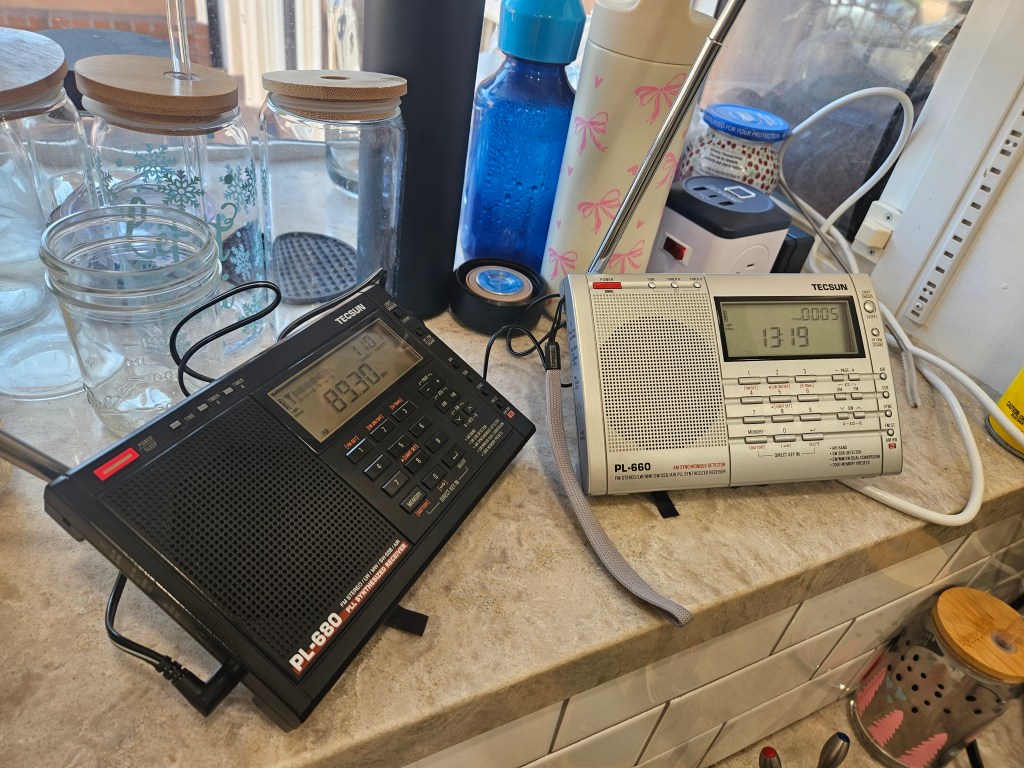
    When I catch sight of my black Tecsun PL-680—hulking, angular, unapologetically retro—I freeze like a Victorian child glimpsing a forbidden mechanical marvel through a shop window. My eyes widen, my breath catches. It’s the same reverence I once felt, age six, face pressed against the glass of a toy store, transfixed by the GI Joe helicopter with working rotors and the implied promise of war-zone adventure. Only now the battleground is a cluttered kitchen table, and the artillery is AM talk radio, jazz on shortwave, the solemn murmur of world news drifting in from another hemisphere.

    The desire to switch it on and be swallowed by its frequencies is so intense, it borders on insanity. I feel embarrassed by the depth of this longing, but not enough to stop. My smaller Tecsun PL-330 elicits the same pulse of joy—compact, stealthy, and with an antenna that telescopes like it’s reaching for God. These machines are not just radios; they’re sanctuaries. Each one is a cozy cockpit where I can retreat from reality and tune in to something more orderly, more measured, more mine.

    “On the spectrum,” my wife jokes, watching me cradle a shortwave receiver like it’s a newborn or a detonator. I laugh, but I know she’s not wrong. The way I look at these devices—mouth slightly open, posture slack, eyes glazed with devotion—is not what you’d call neurotypical. It’s the gaze of a man who has found something he understands in a world that too often makes no sense.

    I have no interest in being cured. Therapy doesn’t come with a frequency dial. Meditation never once pulled in Radio Romania International. And no mindfulness app can match the primal, analog thrill of catching a faint station through the hiss of the void.

    These radios are my proof—of eccentricity, yes, but also of what keeps me sane. They hum. They glow. They speak in languages I don’t understand but need to hear. And if that’s madness, I’m fine with it. I’ll be here with my Tecsun, smiling at static, laughing at myself, and tuning in to everything that doesn’t ask me to explain why.

  • Radio Reclaimed: The Proxy Friendship That Saves Your Sanity

    Radio Reclaimed: The Proxy Friendship That Saves Your Sanity

    A couple of months ago, as the Los Angeles wildfires raged, I found myself glued to a radio for live reports. A thought struck me like a lightning bolt: I had missed the radio. This ancient relic had been eclipsed by streaming devices, which, over the past decade, had somehow become my personal cocoon—a space where I meticulously curated my music and podcasts like a hyper-intelligent hermit with a PhD in self-isolation. I was alone, yes, but at least I had the comforting hum of algorithmically chosen tunes to keep me company. Then I realized: this wasn’t comfort. This was madness in a cocoon. My little silo, built to keep out the noise of the world, was also keeping out everything else that made me feel connected. I was losing my grip on reality, like the woman in “The Yellow Wallpaper” who could only see the world through the eyes of her claustrophobic madness.

    So, I did what any self-respecting, slightly paranoid adult would do: I bought a batch of high-performance radios, like the Tecsun PL-990, and I tuned back into the real world. I started listening to Larry Mantle’s voice again on LAist, to KJAZZ and KUSC—the classical music station that claims to be the most popular in the country. And after a few months of basking in their sonic embrace, I understood why KUSC is so beloved. It’s not just music; it’s a friend. The DJs don’t just announce the next piece; they drop in casual nuggets of composer trivia like old pals who just happen to know a lot about Bach’s temper. They are personal, conversational, and soothing, like a club of soundwave whisperers gently easing you into a state of calm with “your nightly lullaby” or music to “start your day.”

    KUSC doesn’t just play classical music. It plays the role of a companion—your anti-anxiety, anti-depression, virtual hug in the form of a radio signal. These aren’t just voices on the air; they’re voices that make you feel like you’re not alone, that someone is there to guide you through the chaos of your day. It’s the kind of subtle emotional manipulation you don’t mind because it’s just so comforting. If radio is going to survive the onslaught of streaming, it could do worse than to study KUSC’s Proxy Friendship model. There’s a lesson in that calm, gentle routine that could help even the most chaotic station become a lifeline in a world that feels like it’s constantly spinning off its axis.

  • Confessions of a Washed-Up Watchfluencer: Dreaming of Leaving YouTube and Instagram

    Confessions of a Washed-Up Watchfluencer: Dreaming of Leaving YouTube and Instagram

    For the better part of a decade, I’ve been a talking head on YouTube—waxing unpoetic about dive watches, flipping Seikos like pancakes, and freefalling into endless spirals of horological self-loathing. My channel was never slick. No fancy cuts, no drone shots over crashing waves, no ominous music swelling over macro shots of ceramic bezels. Just me: a man, a camera, and the slow erosion of his dignity.

    I didn’t edit. I didn’t storyboard. I didn’t build a brand. I just rambled into the void, a kind of wristwatch confessional booth where I shared my joy, my shame, and my madness with an audience of fellow obsessives. For a while, it was exhilarating. Like catching your own reflection in a funhouse mirror and mistaking it for truth.

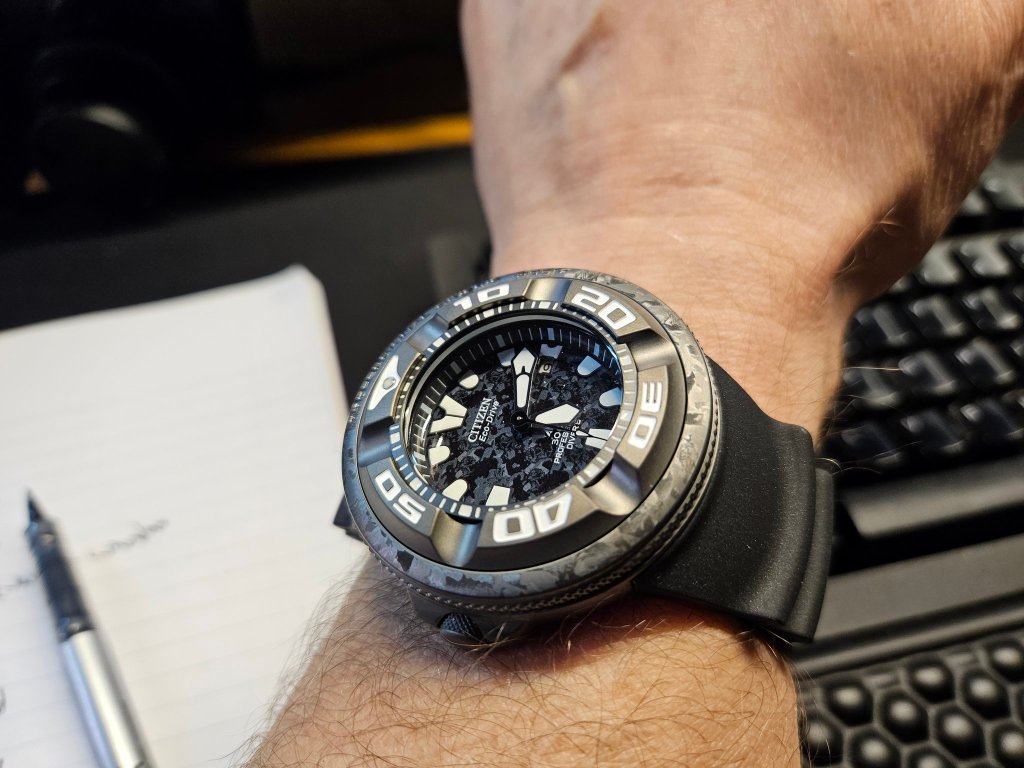
    At my pathological peak, I owned sixty-three “TV-brand” watches—any brand that looked good on camera and bad for your soul. I knew I had a problem when I started hiding watches in drawers and pretending I hadn’t bought another diver. Getting the collection down to five felt like detox. Like crawling out of a swamp in ripped jeans, clutching a G-Shock and whispering, never again.

    And now? I haven’t filmed in a month. The idea of making another video fills me with dread. My subscriber count has flatlined around 10,000. I’m not growing. I’m not evolving. I’m the guy in the garage band who still thinks the right lighting will disguise the fact that he’s 63, wearing a wig, and flexing in a tank top with a fake tan and a borrowed swagger.

    More than stagnation, it’s the cost of content creation that’s choking me. Every video drags me deeper into the watch swamp. I obsess. I fantasize. I compare. I scroll forums at 2 a.m. and start building mental spreadsheets of specs I’ll forget by morning. The longer I film, the more I think about watches, and the more I think about watches, the less I think about anything else.

    Then there’s Instagram—my other digital vice. The cigarette break I take between grading student essays and questioning my life choices. One minute I’m watching a documentary; the next I’m styling a wrist shot, spreading digital envy like cologne. Watch porn. FOMO fuel. I’m not sharing insight. I’m spreading existential rot disguised as lifestyle content.

    The breaking point came last week when two Instagram friends—good guys, honest guys—messaged me with admiration-tinged despair. They loved my collection but felt ashamed of their own modest $300 watches. That’s when I saw it: I wasn’t inspiring anyone. I was curating a highlight reel of hollow indulgence, turning craftsmanship into competition. I don’t want to be that guy. The one whose joy costs others their peace.

    So yes—I’ve been dreaming of leaving. Leaving YouTube. Leaving Instagram. Leaving the digital masquerade where likes masquerade as affection and comments stand in for connection. But here’s the kicker: I don’t want to announce my departure. I don’t want to post some faux-epic “farewell” video where I stare off into the middle distance like a monk who’s just discovered minimalism. That’s not liberation—that’s branding.

    And yet, here I am. Writing this.

    The irony is suffocating.

    What’s my future on YouTube and Instagram? I honestly don’t know. But I’ve caught the scent of something better—something that smells like freedom, like sanity, like the first breath of fresh air after crawling out of a sealed vault.

    In the meantime, there’s the blog. Nine subscribers. Twenty hits a day. Basically the sound of a tree falling in the woods while everyone’s at brunch. But unlike video, writing helps me think. It gives shape to the noise in my head. Like kettlebell workouts or noodling on a keyboard, it’s therapy with fewer side effects and no recurring subscription fee.

    So no, I don’t care about metrics. Not anymore. I just want to be true to myself, however unmarketable that truth might be.

    And if you’re still reading this—thanks. I’m guessing you get it.

  • Stories That Eat Novels (and Leave No Bones Behind)

    Stories That Eat Novels (and Leave No Bones Behind)

    As part of my rehabilitation from writing novels I have no business writing, I remind myself of an uncomfortable truth: 95% of books—both fiction and nonfiction—are just bloated short stories and essays with unnecessary padding. How many times have I read a novel and thought, This would have been a killer short story, but as a novel, it’s a slog? How often have I powered through a nonfiction screed only to realize that everything I needed was in the first chapter, and the rest was just an echo chamber of diminishing returns?

    Perhaps someday, I’ll learn to write an exceptional short story—the kind that punches above its weight, the kind that leaves you feeling like you’ve just read a 400-page novel even though it barely clears 30. It takes a rare kind of genius to pull off this magic trick. I think of Alice Munro’s layered portraits of regret, Lorrie Moore’s razor-sharp wit, and John Cheever’s meticulous dissections of suburban despair. I flip through my extra-large edition of The Stories of John Cheever, and three stand out like glittering relics: “The Swimmer,” “The Country Husband,” and “The Jewels of the Cabots.” Each is a self-contained universe, a potent literary multivitamin that somehow delivers all the nourishment of a novel in a single, concentrated dose. Let’s call these rare works Stories That Ate a Novel—compact, ferocious, and packed with enough emotional and intellectual weight to render lesser novels redundant.

    As part of my rehabilitation, I must seek out such stories, study them, and attempt to write them. Not just as an artistic exercise, but as a safeguard against relapse—the last thing I need is another 300-page corpse of a novel stinking up my hard drive.

    But maybe this is more than just a recovery plan. Maybe this is a new mission—championing Stories That Eat Novels. The cultural winds are shifting in my favor. Attention spans, gnawed to the bone by social media, no longer tolerate literary excess. Even the New York Times has noted the rise of the short novel, reporting in “To the Point: Short Novels Dominate International Booker Prize Nominees” that books under 200 pages are taking center stage. We may be witnessing a tectonic shift, an age where brevity is not just a virtue but a necessity.

    For a failed novelist and an unapologetic literary wind-sprinter, this could be my moment. I can already see it—my sleek, ruthless 160-page collection, Stories That Eat Novels, four lapidary masterpieces gleaming like finely cut diamonds. Rehabilitation has never felt so good. Who says a man in his sixties can’t find his literary niche and stage an artistic rebirth? Maybe I wasn’t a failed novelist after all—maybe I was just a short-form assassin waiting for the right age to arrive.

  • The Beatle, the Basement, and the Broken Dream: The Tragedy of a Paul McCartney Look-Alike

    The Beatle, the Basement, and the Broken Dream: The Tragedy of a Paul McCartney Look-Alike

    Reading Why We Write and seeing the world’s elite authors dissect the process that made them flourish forced me to confront a brutal truth: I am not a real writer.

    All those decades of grinding out abysmal, unreadable novels weren’t acts of literary craftsmanship—they were performance art, a cosplay so convincing that even I fell for it. I played the role of “the unappreciated novelist” with such dazzling commitment that I actually believed it. And what was my proof of authenticity? Misery and failure.

    Surely, I thought, only a true genius could endure decades of rejection, obscurity, and artistic suffering. Surely, my inability to produce a good novel was simply a sign that I was ahead of my time, too profound for this crass and unworthy world.

    Turns out, I wasn’t an undiscovered genius—I was just really, really bad at writing novels.

    Misery is a tricky con artist. It convinces you that suffering is the price of authenticity, that the deeper your despair, the more profound your genius. This is especially true for the unpublished writer, that tragic figure who has transformed rejection into a sacred ritual. He doesn’t just endure misery—he cultivates it, polishes it, wears it like a bespoke suit of existential agony. In his mind, every unopened response from a literary agent is further proof of his artistic martyrdom. He mistakes his failure for proof that he is part of some elite, misunderstood brotherhood, the kind of tortured souls who scowl in coffee shops and rage against the mediocrity of the world.

    And therein lies the grand delusion: the belief that suffering is a substitute for talent, that rejection letters are secret messages from the universe confirming his genius. This is not art—it’s literary cosplay, complete with the requisite brooding and self-pity. The unpublished writer isn’t just chasing publication; he’s chasing the idea of being the tortured artist, as if melancholy alone could craft a masterpiece. 

    Which brings us to the next guiding principle for Manuscriptus Rex’s rehabilitation: 

    The belief that the more miserable you are, the more authentic you become. This dangerous belief has its origins in a popular song–none other than Steely Dan’s brooding anthem, “Deacon Blues.”

    Like any good disciple, I’ve worshiped at this altar without even realizing it. I, too, have believed I’m the “expanding man”—growing wiser, deeper, more profound—while simultaneously wallowing in self-pity as a misunderstood loser. It’s a special kind of delusion, the spiritual equivalent of polishing a rusty trophy.

    To fully grasp this faith, I point you to The Wall Street Journal article, “How Steely Dan Created ‘Deacon Blues’” by Marc Myers. There, Donald Fagen and Walter Becker peel back the curtain on the song’s narrator—a man who could’ve just as easily been named Sad Sack Jones. He’s a suburban daydreamer, stuck in a dull, mediocre life, fantasizing that he’s a hard-drinking, sax-blowing rebel with women at his feet.

    Fagen admits the character was designed as a counterpoint to the unstoppable juggernaut of college football’s Crimson Tide—a gleaming machine of winners. In contrast, Deacon Blues is the anthem of the losers, crafted from a Malibu piano room with a sliver of Pacific Ocean peeking through the houses. Becker summed it up best: “Crimson Tide” dripped with grandiosity, so they invented “Deacon Blues” to glorify failure.

    And did it work. “Deacon Blues” became the unofficial patron saint for every self-proclaimed misfit who saw their own authenticity in his despair. He was our tragic hero—uncompromising, self-actualized, and romantic in his suffering.

    But then I read the article, and the spell broke. We were all suckered by a myth. Like the song’s narrator, we swallowed the fantasy of the “expanding man,” not realizing he was a con artist in his own mind. This isn’t a noble figure battling the world’s indifference—it’s a man marinating in his own mediocrity, dressed up in fantasies of scotch, saxophones, and self-destructive glamour.

    Walter Becker wasn’t subtle: the protagonist in “Deacon Blues” is a triple-L loser—an L-L-L Loser. Not a man on the cusp of greatness, but a man clutching a broken dream, pacing through a broken life. Fagen sharpened the knife: this is the guy who wakes up at 31 in his parents’ house and decides he’s suddenly going to “strut his stuff.”

    That sad, self-deluded basement dweller? That was the false prophet I’d built my personal religion around. A faith propped up by fantasies and self-sabotage.

    The man who inspired me wasn’t a misunderstood genius. He was a cautionary tale. A false path paved with jazz, liquor, and the comforting hum of failure.

    The slacker man-child isn’t just a tragic figure crooning in Steely Dan’s “Deacon Blues.” No, he walks among us—lounges among us, really—and I knew one personally. His name was Michael Barley.

    We met in the late 1980s at my apartment swimming pool while I was teaching college writing in Bakersfield, a place that practically invents new ways to suffocate ambition. A failed musician who had dabbled in a couple of garage bands, Michael was in his early thirties and bore such a stunning resemblance to Paul McCartney that he could’ve landed a cushy gig as a Vegas impersonator if only ambition hadn’t been a foreign concept to him. He had it all: the same nose, the same mouth, the same melancholy eyes, even the same feathered, shoulder-grazing hair McCartney rocked in the ’70s and ’80s. Sure, he was shorter, stockier, and his cheeks were pockmarked with acne scars, but from a distance—and, really, only from a distance—he was Paul’s sad-sack doppelgänger.

    Michael leaned into this resemblance like a man squeezing the last drops from a dry sponge. At clubs, he’d loiter near the bar in a black blazer—his self-anointed “Beatles jacket”—wearing a slack-jawed half-smile, waiting for some starry-eyed woman to break the ice with, “Has anyone ever told you…?” His pickup strategy was less a plan and more a form of passive income. The women did all the work; he just had to stand there and exist. The hardest part of the night, I suspect, was pretending to be surprised when they made the McCartney connection for the hundredth time.

    And then he disappeared. For six months, nothing.

    When Michael resurfaced, he wasn’t Michael anymore. He was Julian French—an “English musician” with a secondhand accent and thirdhand dreams. He had fled to London, apparently thinking the UK was clamoring for chubby McCartney clones, and when that didn’t pan out (shocking, I know), he slunk back to Bakersfield to live in his parents’ trailer, which, in a tragicomic twist, was attached to an elementary school where his father worked as the janitor and moonlit as a locksmith.

    But Michael—excuse me, Julian—was undeterred. He insisted I call him by his new British name, swore up and down that his accent was authentic, and we returned to our old haunts. Now, at the gym and in nightclubs, I watched him work the crowd with his faux-charm and faux-accent, slinging cars and cell phones like a man with no Plan B. His Beatles face was his business card, his only sales pitch. He lived off the oxygen of strangers’ admiration, basking in the glow of almost being someone important.

    But here’s the truth: Michael—Julian—wasn’t hustling. He was coasting. His whole life was one long, lazy drift powered by the barest effort. He never married, never had a long-term relationship, never even pretended to have ambition. His greatest challenge was feigning humility when people gushed over his discount McCartney face.

    Time, of course, is undefeated. By middle age, Julian’s face began to betray him. His ears and nose ballooned, his jowls sagged, and the resemblance to Paul McCartney evaporated. Without his one-note gimmick, the magic died. The women, the friends, the sales—they all disappeared. So, back to the trailer he went, tail tucked, learning the locksmith trade from his father, as if turning keys could unlock the door to whatever life he’d wasted.

    And me? I didn’t judge him. I couldn’t.

    Because deep down, I knew I was just as susceptible to the same delusion—the myth of the “Expanding Man.” That romantic fantasy of being a misunderstood artist, swaddled in self-pity, wandering through life with the illusion of authenticity. Like the anti-hero in “Deacon Blues,” Julian wasn’t building a life; he was building a narrative to justify his stagnation.

    And wasn’t I doing the same? By the late ’90s, I was approaching 40, professionally afloat but personally shipwrecked—emotionally underdeveloped, the cracks in my personality widening into canyons. I, too, was toeing that fine line between winner and loser, haunted by the possibility that I’d wasted years buying into the same seductive lie that trapped Julian.

    That’s the genius of the “Deacon Blue’s” Doctrine—a religion as potent as opium. It sanctifies self-pity, addiction, and delusions of grandeur, repackaging them into a noble code of suffering. It convinces you that stewing in your own misery is a virtue, that being a failure makes you authentic, and that the world just isn’t sophisticated enough to appreciate your “depth.”

    But here’s the truth no one tells you: eventually, life hands you your ass on a stick. That’s when you find out which side of the line you’re really on.

  • The Tie-Dye Bikini Apocalypse: A Story of Regret

    The Tie-Dye Bikini Apocalypse: A Story of Regret

    Regret is the cruelest kind of haunting. It doesn’t just linger in the shadows; it moves in, redecorates, and turns your soul into its permanent residence. Regret doesn’t just trap people in the past—it embalms them in it, like a fly in amber, forever twitching with regret. I remain haunted by the fate of three men I know who, decades later, are still gnashing their teeth over a squandered romantic encounter so catastrophic in their minds, it may as well be their personal Waterloo.

    It was the summer of their senior year, a time when testosterone and bad decisions flowed freely. Driving from Bakersfield to Los Angeles for a Dodgers game, they were winding through the Grapevine when fate, wearing a tie-dye bikini, waved them down. On the side of the road, an overheated vintage Volkswagen van—a sunbaked shade of decayed orange—coughed its last breath. Standing next to it? Four radiant, sun-kissed Grateful Dead followers, fresh from a concert and still floating on a psychedelic afterglow.

    These weren’t just women. These were ethereal, free-spirited nymphs, perfumed in the intoxicating mix of patchouli, wild musk, and possibility. Their laughter tinkled like wind chimes in an ocean breeze, their sun-bronzed shoulders glistening as they waved their bikinis and spaghetti-strap tops in the air like celestial signals guiding sailors to shore.

    My friends, handy with an engine but fatally clueless in the ways of the universe, leaped to action. With grease-stained heroism, they nursed the van back to health, coaxing it into a purring submission. Their reward? An invitation to abandon their pedestrian baseball game and join the Deadhead goddesses at the Santa Barbara Summer Solstice Festival—an offer so dripping with hedonistic promise that even a monk would’ve paused to consider.

    But my friends? Naïve. Stupid. Shackled to their Dodgers tickets as if they were golden keys to Valhalla. With profuse thanks (and, one imagines, the self-awareness of a plank of wood), they declined. They drove off, leaving behind the road-worn sirens who, even now, are probably still dancing barefoot somewhere, oblivious to the tragedy they unwittingly inflicted.

    Decades later, my friends can’t recall a single play from that Dodgers game, but they can describe—down to the last bead of sweat—the precise moment they drove away from paradise. Bring it up, and they revert into snarling, feral beasts, snapping at each other over whose fault it was that they abandoned the best opportunity of their pathetic young lives. Their girlfriends, beautiful and present, might as well be holograms. After all, these men are still spiritually chained to that sun-scorched highway, watching the tie-dye bikini tops flutter in the wind like banners of a lost kingdom.

    Insomnia haunts them. Their nights are riddled with fever dreams of sun-drenched bacchanals that never happened. They wake in cold sweats, whispering the names of women they never actually kissed. Their relationships suffer, their souls remain malnourished, and all because, on that fateful day, they chose baseball over Dionysian bliss.

    Regret couldn’t have orchestrated a better long-term psychological prison if it tried. It’s been forty years, but they still can’t forgive themselves. They never will. And in their minds, somewhere on that dusty stretch of highway, a rusted-out orange van still sits, idling in the sun, filled with the ghosts of what could have been.

    Humans have always craved stories of folly, and for good reason. First, there’s the guilty pleasure of witnessing someone else’s spectacular downfall—our inner schadenfreude finds comfort in knowing it wasn’t us who tumbled into the abyss of human madness. Second, these stories hold up a mirror to our own vulnerability, reminding us that we’re all just one bad decision away from disaster.

    Finally, this tale of missed hedonism, of men forever ensnared in the amber of their own foolishness, is biblical writing in its purest form. Not because it involves scripture or saints, but because it operates on a grand, mythic scale. Here, regret isn’t just an emotion—it’s a cosmic punishment, an exile from paradise so severe it echoes through decades. Like Lot’s wife turning to salt, these men made the fatal error of looking back too late, realizing only in hindsight that they had forsaken a divine gift. Their sorrow is eternal, their torment unrelenting. Even now, they wander through the wasteland of their own remorse, spiritually marooned on that sun-scorched highway, the spectral van idling in their subconscious like a rusted-out relic of their squandered youth. 

  • The Book That Ruined My Life (and Made It Worth Living)

    The Book That Ruined My Life (and Made It Worth Living)

    Alice Flaherty opens The Midnight Disease: The Drive to Write, Writer’s Block, and the Creative Brain with a quote from Roland Barthes: “A creative writer is one for whom writing is a problem.”

    Problem? That word hardly does justice to the affliction. A problem is misplacing your car keys or forgetting to pay the water bill. What I have is more like a life swallowed whole, a case study in obsession so severe it borders on the pathological. Writing isn’t just a habit; it’s an all-consuming parasite, a compulsion that, in a just world, would require a 12-step program and a sponsor who confiscates my pens at night.

    But since no one is shipping me off to a remote cabin with nothing but an axe and a survival manual, I’ll have to settle for less extreme interventions—like seeking solace in Flaherty’s musings on the so-called writing “problem.”

    As it turns out, my affliction has a clinical name. Flaherty informs me that neurologists call this compulsion hypergraphia—the unrelenting urge to write. In their view, I suffer from an overactive communication drive, a neurochemical malfunction that ensures my brain is forever churning out words, whether the world wants them or not.

    Yet Flaherty, a physician and a neuroscientist, doesn’t merely dissect the neurology; she also acknowledges the rapture, the ecstasy, the fever dream of writing. She describes the transformative power of literature, how great writers fall under its spell, ascending from the mundane to the sacred, riding some metaphorical magic carpet into the great beyond.

    For me, that moment of possession came courtesy of A Confederacy of Dunces. It wasn’t enough to read the book. I had to write one like it. The indignation, the hilarity, the grotesque majesty of Ignatius J. Reilly burrowed into my psyche like a virus, convincing me I had both a moral duty and the necessary delusions of grandeur to bestow a similarly deranged masterpiece upon humanity.

    And I wasn’t alone. Working at Jackson’s Wine & Spirits in Berkeley, my coworkers and I read Dunces aloud between customers, our laughter turning the store into a kind of literary revival tent. Curious shoppers asked what was so funny, we evangelized, they bought copies, and they’d return, eyes gleaming with gratitude. Ignatius, with his unhinged pontifications, made the world seem momentarily less grim. He proved that literature wasn’t just entertainment—it was an antidote to the slow suffocation of daily life.

    Before Dunces, I thought books were just stories. I didn’t realize they could act as battering rams against Plato’s cave, blasting apart the shadows and flooding the place with light.

    During my time at the wine store, we read voraciously: The Ginger Man, One Hundred Years of Solitude, Moravia’s Contempt, Camus’ Notebooks, Borges’ labyrinthine tales. We never said it out loud, but we all understood—life was a dense fog of absurdity and despair, and books were our MREs, the intellectual rations that kept us alive for another day in the trenches.

    Books were our lifeline. They lifted our spirits, fortified our identities, and sharpened our minds like whetstones against the dull blade of existence. They turned us into a ragtag band of literary zealots, clutching our dog-eared pages like relics, singing the praises of Great Literature with the fervor of the Whos in Whoville—except instead of roasting beast, we feasted on Borges and Camus.

    Which brings us to Flaherty’s lament: the Internet is muscling books out of existence, and when books go, so does a vital piece of our humanity.

    What would my memories of Jackson’s be without the shared reverence for literature? It wasn’t just a passion; it was the glue that bound us to each other and to our customers. The conversations, the discoveries, the camaraderie—none of it could be replicated by an algorithm or a meme.

    How can I not think of this in the context of a country still staggering through its post-pandemic hangover of rage, paranoia, and despair? Where the love of books has been trampled beneath an endless scroll of digital sludge, and where human connection has been reduced to strangers launching spiteful grenades at each other across social media—those lawless arenas ruled by soulless tech lords, their pockets fat with the profits of our collective decline?

    Flaherty confesses that her need to dissect the spark of writing—the thing that makes it so irrepressibly human—was an uncontrollable urge, one that made her question whether she suffered from hypergraphia, postpartum mania, or some deeper compulsion to explore what she calls the “Kingdom of Sorrow” after the devastating loss of her prematurely born twin boys. Her search for the root of her writing obsession reminded me of Rainer Maria Rilke’s advice in Letters to a Young Poet: the only writing worth doing is that which one cannot not do.

    Beyond hypergraphia—an affliction rare enough to keep it from becoming a trendy self-diagnosis—Flaherty also tackles the more mundane but far more common malady of writer’s block. She attributes it to mood disorders, procrastination, repressed anxieties, and perhaps a sprinkle of nihilism. I used to wrestle with writer’s block myself, particularly between short stories, back when I entertained the delusion that I might carve out a name for myself in literary fiction. But whenever I think of writer’s block, I think of the one person I’d most like to share a meal with: Fran Lebowitz.

    Lebowitz’s writer’s block has lasted for decades, so long, in fact, that she’s upgraded it to a “writer’s blockade.” If Blaise Pascal was an acid-tongued intellectual defending faith, Lebowitz is the sharp-tongued patron saint of the New York literati, delivering high-caliber cultural commentary with the precision of a diamond-tipped drill. That she doesn’t write is a cosmic joke. That people care she doesn’t write is part of her legend. That her off-the-cuff witticisms are more electrifying than most books in print makes her, without question, my literary idol.

    And yet, my devotion to Lebowitz only reveals the terminal nature of my writing affliction. If a genie granted me the chance to swap lives with her—to tour the world, bask in standing ovations, and deliver effortless, unfiltered cultural critique to sold-out crowds—but on the condition that I could never write another book, I would turn it down without hesitation. This refusal confirms the depths of my sickness. In this hypothetical scenario, books themselves are mere shadows compared to the brilliance of Lebowitz’s conversation. And yet, here I am, clinging to the shadows, convinced that somewhere in those pages, I will find the thing that makes existence bearable.

    Surely, no specialist can diagnose a disease like this, much less cure it.

    Reading Flaherty’s sharp and introspective book, I found myself circling a familiar question: is the urge to write both a pathology and a gift? This led me straight to The Savage God, A. Alvarez’s bleak yet compelling account of depression, suicide, and literature. Across history, writers afflicted by melancholy, madness, or sheer existential despair have been cast as tragic geniuses, indulgent sinners, or misunderstood romantics, depending on the prevailing religious and literary winds.

    Take Sylvia Plath, the confessional poet who sealed her fate at thirty, or John Kennedy Toole, the tortured author of A Confederacy of Dunces, who asphyxiated himself at thirty-one. Conventional wisdom holds that Toole’s despair stemmed from his inability to publish his novel, but Tom Bissell, in “The Uneasy Afterlife of A Confederacy of Dunces,” suggests a more tangled story—one of creeping paranoia and the pressures of academia, where Toole, at twenty-two, was the youngest professor in Hunter College’s history.

    Like his doomed creator, Ignatius J. Reilly is possessed by the need to write. His screeds, stitched together from the wisdom of Boethius, function less as arguments and more as the existential flailings of a man convinced that writing will bring him salvation. He writes because he must, the way a fish swims—to stay alive.

    Bissell’s most cutting insight isn’t about Toole’s life, but about his novel’s fundamental flaw: Dunces is riddled with indulgences—flabby with adverbs, allergic to narrative structure, and populated with characters so exaggerated they teeter on the edge of cartoonhood. He argues that Dunces is “a novel that might have been considerably more fun to write than it is to read.” This line stopped me cold.

    Why? Because Dunces was my Rosetta Stone, my gateway drug to the idea of becoming a comic novelist. And yet here was the brutal truth: the very book that set me on this path was a wreck of undisciplined excess. If Dunces ruined my life, it did so not because it failed, but because I absorbed its flaws as gospel. I inhaled its bloated exuberance, its unshackled absurdity, and made it my literary template.

    To undergo a religious experience from a flawed book is to risk a kind of artistic contamination—you don’t just inherit its brilliance, you inherit its sins. My writing compulsion is perhaps nothing more than Dunces’ worst tendencies metastasized in my brain.

    And so, as a recovering writing addict, I am forced to sit with this painful revelation and digest it like a bad meal—one that demands an industrial-strength antacid.

    At the beginning of this book, I claimed that A Confederacy of Dunces ruined my life. It was a ridiculous, melodramatic statement—fatuous, even. But after considering its messy influence over my work, I can’t help but think: there’s more truth in it than I’d like to admit.

  • Greatness Adjacent: My Life as a Literary Delusionist

    Greatness Adjacent: My Life as a Literary Delusionist

    After churning out one literary failure after another across five decades, I’m forced to ask myself: Is my perseverance a virtue, the kind of tenacity that gets celebrated in self-help books and motivational speeches? Or is it a pathological compulsion, a lifelong affliction keeping me from my real calling—whatever that may be? And if the notion of a “true calling” is just a fairy tale we tell ourselves to make existence more bearable, then perhaps I should at least free up some time to do the dishes.

    To grapple with these existential questions, I turned to Stephen Marche’s slim but merciless On Writing and Failure: Or, On the Peculiar Perseverance Required to Endure the Life of a Writer. His thesis? Failure isn’t an anomaly in the writing life—it’s the default setting. The occasional success, when it happens, is a fluke, an accident, a glitch in the system. Failure, on the other hand, is the well-worn coat writers wrap themselves in, the skin they inhabit. And mind you, he’s not even talking about unpublished failures like myself—he’s extending this bleak diagnosis to the published ones, the so-called “real writers.”

    Marche backs up his grim pronouncement with numbers: Three hundred thousand books are published every year in the United States, and only a microscopic fraction make a dent in public consciousness. It doesn’t matter how famous you are—your book is still more likely to sink into obscurity than to make any meaningful impact. If you’re not sufficiently depressed yet, Marche then drags in examples from literary history: beloved writers who, despite their modern-day veneration, spent their lives begging for money, wallowing in debtors’ prisons, or drinking themselves into oblivion.

    Marche’s goal with this book—barely longer than a grocery receipt—is to strip writing of its romantic pretensions. Forget divine inspiration, artistic calling, or the fantasy of making it; writing is just stubbornness on repeat. But here’s where he really twists the knife: That whole narrative about failure eventually leading to success? Utter nonsense. “The internet loves this arc,” he writes, “low then high; first perseverance, then making it all; all struggle redeemed; the more struggle the more redemption. It’s pure bullshit.” The truth? Most writers fail, period. And even the rare successes are plagued by existential misery—forever misunderstood, chronically isolated, and shackled to a relentless hunger for recognition that can never truly be satisfied.

    Worse still, even the successful ones live in constant anxiety over whether they’ll ever be successful again. Literary triumphs don’t lead to security; they lead to paranoia. Marche describes the “psychology of failure” as an inescapable affliction that forces writers to cling to the smallest scraps of validation, inflating minor achievements to salve their chronic inadequacy. His case study? A professor who once had a letter published in The Times Literary Supplement and framed it on his wall like a Nobel Prize, using it as a talisman against irrelevance.

    Reading On Writing and Failure is like stepping into a room full of my own ghosts—writers far more accomplished than I am, yet still plagued by the same desperate need for affirmation, the same self-inflicted torment, the same inability to simply be content. It’s almost comforting, in a bleak sort of way. All those books about “maximizing happiness,” “daily habits of highly effective people,” and “radical gratitude” are useless against the unyielding hunger of the literary ego. If failure is the writer’s natural habitat, then perhaps the real victory isn’t in succeeding but in learning to fail with style.

    What struck me most about Marche’s book is just how desperate writers are for validation—so desperate, in fact, that we cling to the tiniest scraps of approval like a Jedi clutching a lightsaber in a dark alley. As proof that I was destined for literary greatness, I have spent the last three decades obsessively revisiting a single one-hour phone conversation I had in 1992 with the retired literary agent Reid Boates. At the time, I was hawking The Man Who Stopped Dating, a novel the publishing industry (correctly) determined should never see the light of day. But Boates, to my eternal delight, told me my synopsis knocked his socks off. That one phrase sent me soaring. If a mere synopsis could strip a seasoned agent of his footwear, surely I was on the brink of glory.

    Perhaps the memento I cherish even more is a letter I received from Samuel Wilson Fussell, author of Muscle: Confessions of an Unlikely Bodybuilder. After devouring his memoir, I wrote him a fan letter detailing my own bodybuilding misadventures and name-dropping a few of the lunatics I recognized from his book. Fussell responded enthusiastically, telling me that he and his friends had read my letter out loud and collapsed to the floor, clutching their bellies in laughter. Over the years, I’ve sometimes wondered: Were they laughing with me… or at me? But in the moment, it didn’t matter. In my mind, Fussell’s response confirmed what I already knew—I was a man of literary consequence, a peer among published authors and esteemed literary agents, a rising star on the precipice of greatness.

    And here’s the kicker: I can still remember the pure, uncut euphoria I felt after talking to Reid Boates and receiving Fussell’s letter, and I am convinced—convinced—that the high would have been no greater had I seen my best-selling novel displayed in the window of a Manhattan bookstore.

    Marche is right. My neediness was so profound that I mistook these small flashes of recognition as irrefutable proof of my imminent rise to literary celebrity. But unlike Marche, I find no solace in knowing that I am not alone in this affliction. I can only speak for myself: I am a writing addict. My compulsion produces nothing of value, it embarrasses me, and I am in desperate need of rehabilitation. And so, in a cruel twist of irony, I write about my recovery from writing—even though my so-called recovery demands that I stop writing altogether. My misery, therefore, is guaranteed.

  • Writing in the Time of Deepfakes: One Professor’s Attempt to Stay Human

    Writing in the Time of Deepfakes: One Professor’s Attempt to Stay Human

    My colleagues in the English Department were just as rattled as I was by the AI invasion creeping into student assignments. So, a meeting was called—one of those “brown bag” sessions, which, despite being optional, had the gravitational pull of a freeway pile-up. The crisis of the hour? AI.

    Would these generative writing tools, adopted by the masses at breakneck speed, render us as obsolete as VHS repairmen? The room was packed with jittery, over-caffeinated professors, myself included, all bracing for the educational apocalypse. One by one, they hurled doomsday scenarios into the mix, each more dire than the last, until the collective existential dread became thick enough to spread on toast.

    First up: What do you do when a foreign language student submits an essay written in their native tongue, then let’s play translator? Is it cheating? Does the term “English Department” even make sense anymore when our Los Angeles campus sounds like a United Nations general assembly? Are we teaching “English,” or are we, more accurately, teaching “the writing process” to people of many languages with AI now tagging along as a co-author?

    Next came the AI Tsunami, a term we all seemed to embrace with a mix of dread and resignation. What do we do when we’ve reached the point that 90% of the essays we receive are peppered with AI speak so robotic it sounds like Siri decided to write a term paper? We were all skeptical about AI detectors—about as reliable as a fortune teller reading tea leaves. I shared my go-to strategy: Instead of accusing a student of cheating (because who has time for that drama?), I simply leave a comment, dripping with professional distaste: “Your essay reeks of AI-generated nonsense. I’m giving it a D because I cannot, in good conscience, grade this higher. If you’d like to rewrite it with actual human effort, be my guest.” The room nodded in approval.

    But here’s the thing: The real existential crisis hit when we realized that the hardworking, honest students are busting their butts for B’s, while the tech-savvy slackers are gaming the system, walking away with A’s by running their bland prose through the AI carwash. The room buzzed with a strange mixture of outrage and surrender—because let’s be honest, at least the grammar and spelling errors are nearly extinct.

    As I walked out of that meeting, I had a new writing prompt simmering in my head for my students: “Write an argumentative essay exploring how AI platforms like ChatGPT will reshape education. Project how these technologies might be used in the future and consider the ethical lines that AI use blurs. Should we embrace AI as a tool, or do we need hard rules to curb its misuse? Address academic integrity, critical thinking, and whether AI widens or narrows the education gap.”

    When I got home that day, gripped by a rare and fleeting bout of efficiency, I crammed my car with a mountain of e-waste—prehistoric laptops, arthritic tablets, and cell phones so ancient they might as well have been carved from stone. Off to the City of Torrance E-Waste Drive I went, joining a procession of guilty consumers exorcising their technological demons, all of us making way for the next wave of AI-powered miracles. The line stretched endlessly, a funeral procession for our obsolescent gadgets, each of us unwitting foot soldiers in the ever-accelerating war of planned obsolescence.

    As I inched forward, I tuned into a podcast—Mark Cuban sparring with Bill Maher. Cuban, ever the capitalist prophet, was adamant: AI would never be regulated. It was America’s golden goose, the secret weapon for maintaining global dominance. And here I was, stuck in a serpentine line of believers, each of us dumping yesterday’s tech sins into a giant industrial dumpster, fueling the next cycle of the great AI arms race.

    I entertained the thought of tearing open my shirt to reveal a Captain America emblem, fully embracing the absurdity of it all. This wasn’t just teaching anymore—it was an uprising. If I was going to lead it, I’d need to be Moses descending from Mount Sinai, armed not with stone tablets but with AI Laws. Without them, I’d be no better than a fish flopping helplessly on the banks of a drying river. To enter this new era unprepared wasn’t just foolish—it was professional malpractice. My survival depended on understanding this beast before it devoured my profession.

    That’s when the writing demon slithered in, ever the opportunist.

    “These AI laws could be a book. Put you on the map, bro.”

    I rolled my eyes. “A book? Please. Ten thousand words isn’t a book. It’s a pamphlet.”

    “Loser,” the demon sneered.

    But I was older now, wiser. I had followed this demon down enough literary dead ends to know better. The premise was too flimsy. I wasn’t here to write another book—I was here to write a warning against writing books, especially in the AI age, where the pitfalls were deeper, crueler, and exponentially dumber.

    “I still won,” the demon cackled. “Because you’re writing a book about not writing a book. Which means… you’re writing a book.”

    I smirked. “It’s not a book. It’s The Confessions of a Recovering Writing Addict. So pack your bags and get the hell out.”

    ***

    My colleague on the technology and education committee asked me to give a presentation for FLEX day at the start of the Spring 2025 semester. Not because I was some revered elder statesman whose wisdom was indispensable in these chaotic times. No, the real reason was far less flattering: As an incurable Manuscriptus Rex, I had been flooding her inbox with my mini manifestos on teaching writing in the Age of AI, and saddling me with this Herculean task was her way of keeping me too busy to send any more. A strategic masterstroke, really.

    Knowing my audience would be my colleagues—seasoned professors, not wide-eyed students—cranked the pressure to unbearable levels. Teaching students is one thing. Professors? A whole different beast. They know every rhetorical trick in the book, can sniff out schtick from across campus, and have a near-religious disdain for self-evident pontification. If I was going to stand in front of them and talk about teaching writing in the AI Age, I had better bring something substantial—something useful—because the one thing worse than a bad presentation is a room full of academics who know it’s bad and won’t bother hiding their contempt.

    To make matters worse, this was FLEX day—the first day back from a long, blissful break. Professors don’t roll into FLEX day with enthusiasm. They arrive in one of two states: begrudging grumpiness or outright denial, as if by refusing to acknowledge the semester’s start, they could stave it off a little longer. The odds of winning over this audience were not just low; they were downright hostile.

    I felt wildly out of my depth. Who was I to deliver some grand pronouncement on “essential laws” for teaching in the AI Age when I was barely keeping my own head above water? I wasn’t some oracle of pedagogical wisdom—I was a mole burrowing blindly through the shifting academic terrain, hoping to sniff my way out of catastrophe.

    What saved me was my pride. I dove in, consumed every article, study, and think piece I could find, experimented with my own writing assignments, gathered feedback from students and colleagues, and rewrote my presentation so many times that it seeped into my subconscious. I’d wake up in the middle of the night, drool on my face, furious that I couldn’t remember the flawless elocution of my dream-state lecture.

    Google Slides became my operating table, and I was the desperate surgeon, deleting and rearranging slides with the urgency of someone trying to perform a last-minute heart transplant. To make things worse, unlike a stand-up comedian, I had no smaller venue to test my material before stepping onto what, in my fevered mind, felt like my Netflix Special: Teaching Writing in the AI Age—The Essential Guide.

    The stress was relentless. I woke up drenched in sweat, tormented by visions of failure—public humiliation so excruciating it belonged in a bad movie. But I kept going, revising, rewriting, refining.

    ***

    During the winter break as I prepared my AI presentation, I recall one surreal nightmare—a bureaucratic limbo masquerading as a college elective. The course had no purpose other than to grant students enough credits to graduate. No curriculum, no topics, no teaching—just endless hours of supervised inertia. My role? Clock in, clock out, and do absolutely nothing.

    The students were oddly cheerful, like campers at some low-budget retreat. They brought packed lunches, sprawled across desks, and killed time with card games and checkers. They socialized, laughed, and blissfully ignored the fact that this whole charade was a colossal waste of time. Meanwhile, I sat there, twitching with existential dread. The urge to teach something—anything—gnawed at my gut. But that was forbidden. I was there to babysit, not educate.

    The shame hung on me like wet clothes. I felt obsolete, like a relic from the days when education had meaning. The minutes dragged by like a DMV line, each one stretching into a slow, agonizing eternity. I wondered if this Kafkaesque hell was a punishment for still believing that teaching is more than glorified daycare.

    This dream echoes a fear many writing instructors share: irrelevance. Daniel Herman explores this anxiety in his essay, “The End of High-School English.” He laments how students have always found shortcuts to learning—CliffsNotes, YouTube summaries—but still had to confront the terror of a blank page. Now, with AI tools like ChatGPT, that gatekeeping moment is gone. Writing is no longer a “metric for intelligence” or a teachable skill, Herman claims.

    I agree to an extent. Yes, AI can generate competent writing faster than a student pulling an all-nighter. But let’s not pretend this is new. Even in pre-ChatGPT days, students outsourced essays to parents, tutors, and paid services. We were always grappling with academic honesty. What’s different now is the scale of disruption.

    Herman’s deeper question—just how necessary are writing instructors in the age of AI—is far more troubling. Can ChatGPT really replace us? Maybe it can teach grammar and structure well enough for mundane tasks. But writing instructors have a higher purpose: teaching students to recognize the difference between surface-level mediocrity and powerful, persuasive writing.

    Herman himself admits that ChatGPT produces essays that are “adequate” but superficial. Sure, it can churn out syntactically flawless drivel, but syntax isn’t everything. Writing that leaves a lasting impression—“Higher Writing”—is built on sharp thought, strong argumentation, and a dynamic authorial voice. Think Baldwin, Didion, or Nabokov. That’s the standard. I’d argue it’s our job to steer students away from lifeless, task-oriented prose and toward writing that resonates.

    Herman’s pessimism about students’ indifference to rhetorical nuance and literary flair is half-baked at best. Sure, dive too deep into the murky waters of Shakespearean arcana or Melville’s endless tangents, and you’ll bore them stiff—faster than an unpaid intern at a three-hour faculty meeting. But let’s get real. You didn’t go into teaching to serve as a human snooze button. You went into sales, whether you like it or not. And this brings us to the first principle of teaching in the AI Age: The Sales Principle. And what are you selling? Persona, ideas, and the antidote to chaos.

    First up: persona. It’s not just about writing—it’s about becoming. How do you craft an identity, project it with swagger, and use it to navigate life’s messiness? When students read Oscar Wilde, Frederick Douglass, or Octavia Butler, they don’t just see words on a page—they see mastery. A fully-realized persona commands attention with wit, irony, and rhetorical flair. Wilde nailed it when he said, “The first task in life is to assume a pose.” He wasn’t joking. That pose—your persona—grows stronger through mastery of language and argumentation. Once students catch a glimpse of that, they want it. They crave the power to command a room, not just survive it. And let’s be clear—ChatGPT isn’t in the persona business. That’s your turf.

    Next: ideas. You became a teacher because you believe in the transformative power of ideas. Great ideas don’t just fill word counts; they ignite brains and reshape worldviews. Over the years, students have thanked me for introducing them to concepts that stuck with them like intellectual tattoos. Take Bread and Circus—the idea that a tiny elite has always controlled the masses through cheap food and mindless entertainment. Students eat that up (pun intended). Or nihilism—the grim doctrine that nothing matters and we’re all here just killing time before we die. They’ll argue over that for hours. And Rousseau’s “noble savage” versus the myth of human hubris? They’ll debate whether we’re pure souls corrupted by society or doomed from birth by faulty wiring like it’s the Super Bowl of philosophy.

    ChatGPT doesn’t sell ideas. It regurgitates language like a well-trained parrot, but without the fire of intellectual curiosity. You, on the other hand, are in the idea business. If you’re not selling your students on the thrill of big ideas, you’re failing at your job.

    Finally: chaos. Most people live in a swirling mess of dysfunction and anxiety. You sell your students the tools to push back: discipline, routine, and what Cal Newport calls “deep work.” Writers like Newport, Oliver Burkeman, Phil Stutz, and Angela Duckworth offer blueprints for repelling chaos and replacing it with order. ChatGPT can’t teach students to prioritize, strategize, or persevere. That’s your domain.

    So keep honing your pitch. You’re selling something AI can’t: a powerful persona, the transformative power of ideas, and the tools to carve order from the chaos. ChatGPT can crunch words all it wants, but when it comes to shaping human beings, it’s just another cog. You? You’re the architect.

    Thinking about my sales pitch, I realize I  should be grateful—forty years of teaching college writing is no small privilege. After all, the very pillars that make the job meaningful—cultivating a strong persona, wrestling with enduring ideas, and imposing structure on chaos—are the same things I revere in great novels. The irony, of course, is that while I can teach these elements with ease, I’ve proven, time and again, to be utterly incapable of executing them in a novel of my own.

    Take persona: Nabokov’s Lolita is a master class in voice, its narrator so hypnotically deranged that we can’t look away. Enduring ideas? The Brothers Karamazov crams more existential dilemmas into its pages than both the Encyclopedia Britannica and Wikipedia combined. And the highest function of the novel—to wrestle chaos into coherence? All great fiction does this. A well-shaped novel tames the disarray of human experience, elevating it into something that feels sacred, untouchable.

    I should be grateful that I’ve spent four decades dissecting these elements in the classroom. But the writing demon lurking inside me has other plans. It insists that no real fulfillment is possible unless I bottle these features into a novel of my own. I push back. I tell the demon that some of history’s greatest minds didn’t waste their time with novels—Pascal confined his genius to aphorisms, Dante to poetry, Sophocles to tragic plays. Why, then, am I so obsessed with writing a novel? Perhaps because it is such a human offering, something that defies the deepfakes that inundate us.