Category: Literary Dispatches

  • Speedos at Sunset

    Speedos at Sunset

    The New York Times article, titled “Skimpy Men’s Swimming Briefs Are Making a Splash,” offers a solemn dispatch from the front lines of GLP-1 drugs, but I would guess that men—having exhausted every form of visible self-optimization—are now expressing their Ozempic-enabled slenderness via tiny, Lycra-clad declarations of status. We’re talking male bikinis, or what I like to call the ego sling.

    Apparently, if you’re dropping $18,000 a year to chemically suppress your appetite and shed your humanity one subcutaneous injection at a time, you deserve the privilege of looking like a Bond villain’s pool boy. I suppose this is the endgame: pay to waste away, then wrap what’s left in a luxury logoed banana peel.

    Luxury underwear companies, never ones to miss a chance to monetize body dysmorphia, are now marketing these second-skin briefs not as mere swimwear, but as power statements. To wear them is to say: “I’ve defeated fat, joy, modesty, and comfort in one fell swoop.”

    I’m almost 64. My aspirations remain high—ideally, I’d like to look like a special-ops operator on vacation in Sardinia. But I know my place. I wear boxer-style swim trunks, the cloth of the pragmatic and the semi-dignified. They’re not exciting, but neither is seeing a sun-leathered septuagenarian adjust a spandex slingshot over a suspicious tan line.

    There’s a difference between being aspirational and being delusional. The former means striving for vitality, strength, and energy. The latter means stuffing yourself into a satirical undergarment and pretending you’re a twenty-two-year-old wide receiver with a sponsorship deal.

    To my fellow older men: sculpt your body like it’s your spiritual obligation—but when it comes to swim briefs the size of a hotel mint, maybe opt out. Not every part of youth is worth reliving. 

    When I think of old guys clinging to their youth by wearing undersized swim trunks, I often think back to the summer of 2019 when my wife and twin daughters were in Maui and I was treated to one of life’s great grotesques: a compact man in his mid-seventies parading the beach in dark-blue Speedos with a woman young enough to be his granddaughter. She was Mediterranean gorgeous, twenty-something, and clearly imported as the ultimate accessory. He was trim, shaved, strutting across the sand like a hedge-fund satyr who believed that constant motion kept the Grim Reaper wheezing in his wake. He dove into the surf not like a man swimming, but like a man negotiating—bargaining with Time.

    You could smell his wealth before you could smell the salt air. A CEO, no doubt—half his life in boardrooms, the other half clawing at immortality. His creed was Hefner’s: work hard, play harder, and Botox anything that betrays the passage of time. I’m not here to moralize about his May-December arrangement. What fascinated me was the fantasy: money, discipline, and a bit of manscaping as talismans against entropy, as if youth could be distilled into a cologne.

    But the tableau reeked of mismatch—two puzzle pieces jammed together with superglue. Forced smiles, awkward touches: every moment chipped another sliver from the illusion until they looked less like lovers and more like hostages. This was not youth preserved; this was youth taxidermied. His confidence read as terror. His curated life, meant to inspire envy, collapsed into a sad performance—a tuxedo on a traffic cone.

    He reminded me of Joe Ferraro from Netflix’s Mafia: Most Wanted: born in Ecuador in ’62, raised in Toronto, obsessed with bodybuilding, crime, and women. He had it all—the Rolex Daytona, gold chains, sunglasses so huge they had their own weather system. Then came prison and deportation. Now in his sixties, Ferraro is a sculpted parody: sport coat draped like a cape, tight black jeans, hipster boots, eyes full of melancholy. He wants his life back, but he knows the casino is closed. Like the Speedo satyr, Ferraro can’t stop looking back, calcifying into a monument of salt.

    And salt is the right metaphor: Lot’s wife glancing back until she froze mid-regret. Neither Ferraro nor Speedo Man could let go of their “youth identities.” Without them, death feels too close. With them, they look embalmed while still breathing.

    I understand how hard it is to let go of the life you think you deserve. Spend a week in Hawaii, and you step into a parallel universe—Sacred Time. You board a $400-million jet, dehydrate for five hours, and land convinced you’re immortal. Within 24 hours you’re marinating in mai tais, demolishing lilikoi pies, and basking under sunsets scripted by God to flatter your ego. Clocks stop. Deadlines vanish. Sacred Time whispers: Death can’t find you here.

    Which is why leaving Hawaii feels like a cosmic eviction notice. You board the plane and return not just to California but to Profane Time, where bills, emails, and mortality resume their tyranny. For weeks after, you’re sun-drunk and disoriented, still hearing waves in your ears while the neighbor’s leaf blower revs like a dentist drill. Sacred Time is an opiate; reentry is cold turkey.

    Nostalgia is the next fix. For me, it’s the summer of 1977 at Don Castro Swim Lagoon. I was fifteen—half-boy, half-bicep—sunbathing like a pagan sacrifice to the gods of narcissism, The Happy Hooker hidden in my gym bag, my skin baptized in banana-scented cocoa butter. That lagoon was my Eden: the girls in bikinis, the musk of suntan oil, the hormone haze of adolescence. That era hardwired me to believe pleasure was a birthright.

    But nostalgia curdles. Today I’m older, paler, a few Adonis fragments left in the rearview. What once felt like a creed now feels like a rerun of Fantasy Island with bad lighting. The boy in me still demands his sunlit altar, but now he feels like a squatter. Am I still bronzing in Eden—or am I frozen in salt, looking back too long at a self that no longer exists?

    Enter the “Return to the Womb.” Aging produces this primal regression: a desire not just for beaches, but for obliteration of responsibility. For me, it smells like Florida—the state of my birth, equal parts Eden and punchline. Mango air, coconut breezes, sultry rain: a fetal simulation with Wi-Fi. But even I know it’s not vitality; it’s paralysis. It’s not Life Force—it’s brain rot in Tommy Bahama.

    During lockdown, I tasted this desire to return to the womb. Pajamas at noon, Zillow scrolling barrier islands, buckwheat groats as immortality. My body synced with the rhythm of a hot tub. I didn’t want to emerge. I still don’t. Which terrifies me—because Father Time is no cuddly mascot. He’s a cosmic accountant, and he wants receipts. What did you do with your time?

    Meanwhile, I’m bicep-curling nostalgia like it’s protein powder. For five years, I hounded my wife about Florida. She countered with Some Kind of Heaven, the documentary about The Villages. Watching geriatric Parrotheads do water ballet to Neil Sedaka was enough to kill the fantasy. It wasn’t Eden—it was a gulag of shuffleboard and scheduled fun. Leisure not as freedom, but as occupation.

    The film’s standout was Dennis Dean, an octogenarian grifter prowling bingo halls for rich widows. Watching him lie catatonic under a ceiling fan after another failed con, I realized my wife had played me like a Stradivarius. My Florida obsession died in that moment.

    So now I’ve scaled back. No more eternal-Adonis-in-the-tropics delusions. No Speedos. Just a week vacation in Maui or Miami, then back to Profane Time with my Costco protein powder and kettlebells. Still chasing immortality—but with at least a fig leaf of self-awareness.

  • False Neutrality: Reading Armand Nicholi’s Debate

    False Neutrality: Reading Armand Nicholi’s Debate

    I’m about a third of the way through the Audible of Armand Nicholi’s The Question of God: C. S. Lewis and Sigmund Freud Debate, in which Nicholi argues that the single largest life decision — whether to accept or reject belief in God — carries the heaviest consequences. He paints Lewis as modest, serene, and living in a state of grace (the fruits of the spirit, if you like), while he casts Freud as intoxicated with his own genius, dismissing God as a childish projection.

    I have several objections. First, Nicholi leans on a rhetorical pose I find disingenuous: “I’m not trying to persuade anyone — just look at the facts.” He presents himself as a neutral referee while quietly aligning with Lewis. The result is a parade of straw-man treatments that caricature Freud and flatten the debate into tidy contrasts the evidence doesn’t support.

    Second, Nicholi’s central frame is an either/or fallacy: you either believe in God or you don’t. That binary elides the vast internal variety within religious traditions. One person’s God can be another person’s devil — and not across religions but within the same text. Christianity alone supplies wildly different conceptions: the Calvinist God versus a Universalist God; a God who offers post-mortem purgatorial salvation versus one who does not. Even accounts of the Crucifixion diverge: some Christians see it as substitutionary atonement, others categorically reject that reading. As Jerry Walls notes, the God who plans substitutionary atonement is not the God who doesn’t.

    Nicholi also ignores how different beliefs about God imply different beliefs about human nature. Are we, as Paul suggests in Romans, depraved and helpless? Or, as Hyam Maccoby argues from a Jewish perspective, did God create us with the capacity to meet Him halfway? The kind of God you endorse carries with it a theory of human wiring — and Nicholi refuses to engage that complexity.

    Those omissions aren’t accidental; they’re convenient. Reducing belief to a binary choice lets Nicholi render one side salutary and the other contemptible without wrestling with the theological and anthropological thickets that make the question genuinely hard.

    The tone of the book compounds the problem. A Harvard psychiatrist writing in a creamy, intellectual register, posing as an impartial guide through this existential choice, slides easily into what feels like a polished little tract. The surface civility—measured analysis, calm diction—camouflages rhetorical sleights of hand that, to my mind, undermine the work’s seriousness.

    I want to be fair. I’m trying. But once you notice the frauds and fallacies — the imposture of neutrality, the forced binary, the flattened portrayals — they don’t unsee themselves. So I’m forcing my way through the remaining two-thirds of the book, partly out of duty and partly to see whether Nicholi can salvage his argument when he has to meet the harder questions he’s been avoiding.

  • Zosia Mamet and My Personal Reading Revival

    Zosia Mamet and My Personal Reading Revival

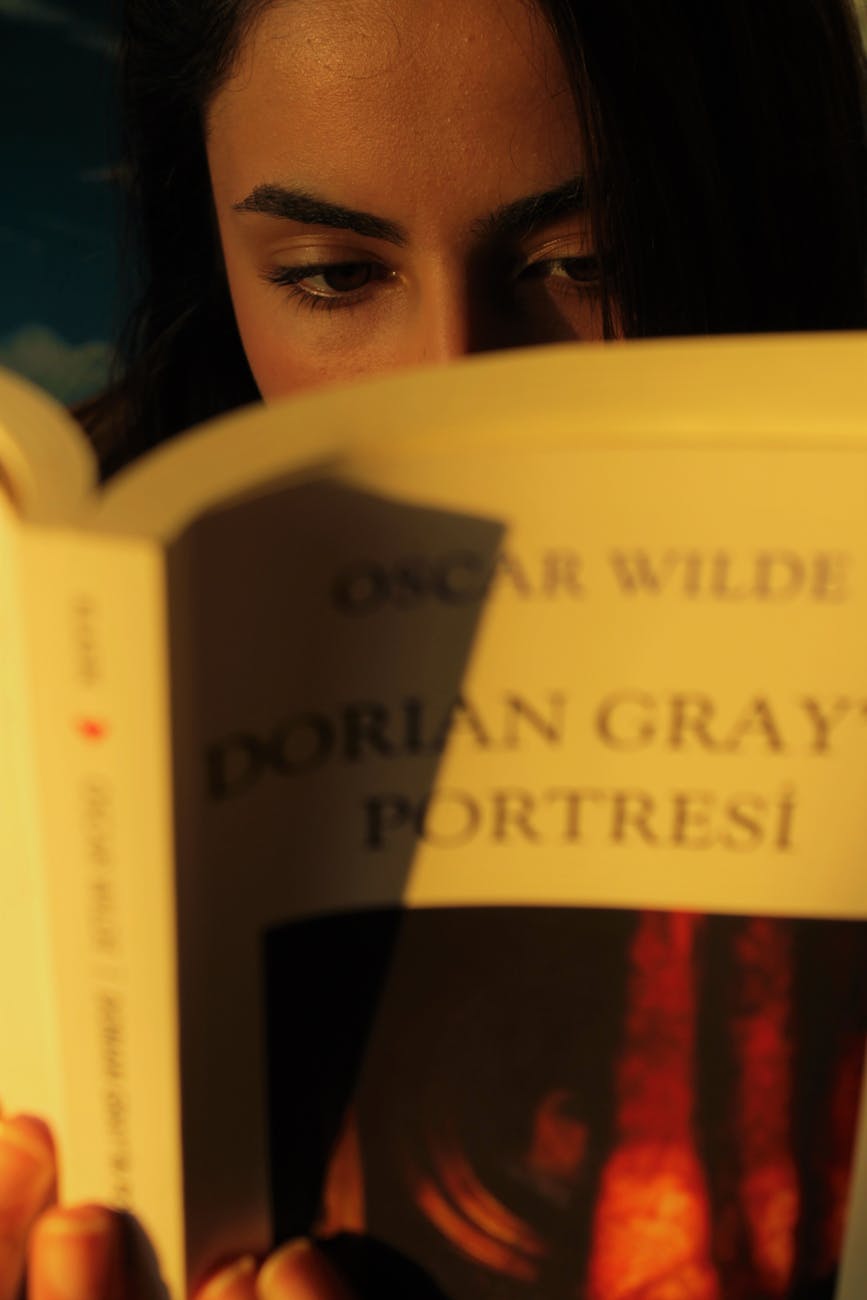
    It’s rare that I fall in love with books these days, but when it happens, I’m grateful because reading reminds me of my glory days, the early 80s when I consumed books with ferocity, imaginative pleasure, and obligation like a bodybuilder taking protein powder and creatine. Three major factors have curtailed my reading of books: One, I’ve grown so cynical over the years that I’ve come to the belief that 99% of books are in actuality just a short story or essay with padding. An author has an intriguing idea, and they sit down with their agent and cook up a book that is mostly chicanery with a dash of substance. 

    Then three days ago, I heard actor Zosia Mamet talking about her memoir Does This Make Me Funny?, a collection of essays, with KCRW host Sam Sanders, and I was so struck by her depth of wit, intelligence, and moral perspective that I immediately bought her book, or I should say the Kindle eBook version of it. Even more rare than buying books as intellectual property, it is even rarer that I buy a hard copy of something, unless it is a kettlebell training book or a cookbook like Miyoko Schimmer’s The Vegan Creamery

    Getting most of my books on Kindle speaks to the second reason my reading has diminished. The physical act of reading is unpleasant. Holding the book, turning the pages, getting into a comfortable position, attenuating my eyes to the various font sizes. I find the whole thing disconcerting and unpleasant, like trying to figure out the seat positions, buttons, and levers of an unfamiliar car. The most comfortable forms of reading are either sitting at my desktop and reading the Kindle on a 27-inch screen or reading while sitting in bed with a 16-inch laptop.

    The third reason I don’t read as much is that the Internet and its attention economy have fried my brain over the decades. The attention muscles inside my cortex have atrophied to a woeful state. 

    But occasionally a rose grows out of the cracks in the cement sidewalk, and such is the case with Zosia Mamet’s memoir, as witty, deep, self-deprecating, and salient as the author speaking to Sam Sanders three days ago. Reading the memoir is to connect with someone for whom her writing voice and the core of her being are the same. The result is something distinctive and salient, something that recoils and then snaps forward to leave its literary fangs inside you. Isn’t that what writing is supposed to be about? Nabokov was like that. So was Kafka. And so is Zosia Mamet.

    I detest some confectionary celebrity memoir reeking of privilege, superfluousness, and mediocrity. None of that is in Zosia’s collection of essays. 

    As we read in Jancee Dunn’s New York Times article “At Least Zosia Mamet Can Laugh About It,” the core of her book is about her mental, physical, and spiritual health. Coming from a family that is deeply entrenched in literature and the arts is a double-edged sword with excruciating pressure to live up to superhuman expectations causing Zosia’s thorn in her side to be the constant sense that she is falling abysmally short. 

    Like the best comedia, she opts out of self-pity for humor as she does a deep dive into her anxiety, depression, body dysmorphia, anorexia, and anhedonia, and all the self-destructive behaviors she succumbed to in order to overcome these afflictions. Because she knows that body dysmorphia is a delusion that hijacks her brain, she says about herself: “I am often an unreliable narrator of my own reality.” 

    Which in a nutshell is the human condition: Can we trust ourselves or are we getting duped by our own fake narrative? 

    What tools from our emotional toolbox can we use to be more reliable? Perhaps comedy is one of them. Think of our irrational states: overcome by maudlin self-pity, vanity, and grandiosity, we spin grotesque narratives about ourselves that compel us to behave in ways that are ridiculous and often result in self-sabotage. Perhaps comedy is the antidote. Perhaps comedy distances us from our preposterous self-mythology and helps us in the arduous process of self-reinvention. That’s the sense I’m getting from Zosia Mamet’s very necessary book, a book that has no padding at all but has been made from a brilliant mind with blood, sweat, and tears. 

  • Muscle Man: A Novel of Rants in Disguise

    Muscle Man: A Novel of Rants in Disguise

    Jordan Castro’s Muscle Man is a strange beast: less a conventional novel than a stack of scathing essays stitched together with the thread of a character named Harold, an English professor obsessed with bodybuilding. Harold isn’t so much flesh and blood as a delivery system for polemics. He rants against bureaucratic absurdities, the avalanche of pointless emails, academia’s desperate clawing for relevance, and the smug Groupthink masquerading as intellectual superiority. He rails at the hypocrisy of universities that wave the flag of social justice while exploiting adjuncts, athletes, and students, and he sneers at the notion of campus as sanctuary when his inbox is clogged with alerts about robberies and assaults.

    Where the novel shines is precisely in these acidic rants. Castro’s Harold is less character than conduit, channeling fury and despair at a culture unraveling into nihilism. The ironies abound: Harold, who clings to bodybuilding as a refuge, is ironically less muscle than mouthpiece—an abstraction desperate for mass. And that is both the strength and weakness of Muscle Man. The pleasure lies in the essays-in-disguise, the delicious insights, the spectacle of academia and American culture descending into entropy. What you won’t find is narrative immersion, the joy of getting lost in a world that feels lived-in.

    That doesn’t make Castro’s experiment invalid. Novels aren’t bound by rules; if a writer wants to build a stage for ideas instead of characters, so be it. But a novel that thrives on abstractions will only light up some of the reader’s neurons, not all. If you want a narrative that delivers both scabrous cultural critique and the visceral, personal journey of a bodybuilder spiraling into madness, reach for Samuel Wilson Fussell’s Muscle: Confessions of an Unlikely Bodybuilder. That book flexes.

  • The University as Hospice, the Gym as Cathedral

    The University as Hospice, the Gym as Cathedral

    In Jordan Castro’s scabrous novel Muscle Man, the protagonist, English professor Harold, concludes that the American university is dead. It’s only alive in a creepy, sad sort of way–zombification–manifest in online posts for events that no one goes to. These events are announced in emails as “exciting,” “excited,” and “please join.” No one joins. Other emails announce “calls to action,” and no one acts. They just remain lizard-eyed and stolid. These events are exercises in soul-crushing banality. Rather than a place to nurture young minds, the American university is so encumbered by bureaucratic speak and irrelevant, esoteric academic theories, it is an impotent institution and a graveyard where people go to die. 

    Perhaps Harold just needs a hug. Or perhaps he has cracked the code. He sees in the constant flood of college email announcements a desperate plea to be heard and to be irrelevant while being buried by its own fecklessness.

    The state of the college, especially the humanities, seems especially imperiled and moribund in the A.I. Age where students outsource writing, creativity, and “critical thinking” to machines and instructors are too feeble to stop the tsunami of these disrupting, revolutionary information and language tools.  

    As higher education looks more and more like a forlorn dinosaur and clings to stale identitarian platitudes and “progressive pedagogies” to cling to relevance, Harold surely must fret his own irrelevance and seek sanctuary in his bodybuilding dreams–curling iron as the cathedral of meaning and protein shakes as sacrament. In a world where the humanities have become the walking dead, at least the pump feels alive.

  • Bench Pressing the Bureaucracy

    Bench Pressing the Bureaucracy

    By the time we get to Chapter 3 in Jordan Castro’s Muscle Man, we get the sense that its protagonist English professor and aspiring bodybuilder Harold is having a sort of mental breakdown. His disconnection from colleagues and students alike has caused him to retreat into his self-created bodybuilding ecosystem where he soothes himself with fitness apps, macros, and hypertrophic training phases. In this regard, Harold is following the footsteps of Samuel Wilson Fussell’s descent into madness, acute anxiety, and misanthropic paranoia, which was chronicled in Fussell’s 1991 memoir Muscle: Confessions of an Unlikely Bodybuilder.  

    In Harold’s case, department meetings are particularly odious and affect him like kryptonite. After a meeting, his gym workouts are like purgations of the silly meeting indoctrination and in his best workouts he exorcises the academia demons from his system and enjoys temporary relief before returning to the academic hellscape. 

    Part of the hellscape is the constant flow of campus emails informing him of “investigations” and “alerts” for a myriad of on-campus crimes. Violence, theft, random deaths, and perversion is chronicled in these emails so that the campus is less of an academic institution and more of an abandoned bus stop in the Land of Nowhere.

    To add to the absurdity, Harold receives follow-up emails about violent crimes on campus that use the violence as an opportunity to explore systemic causes of violence and “to consider new ways of thinking about how we might better relate to and understand one another.” 

    The students’ illiterate emails add to the hellscape. The students never ask for ways to improve their work. Rather, they demand higher grades in typo-laden emails that contain no punctuation or coherent sentence structure.

    Harold is inundated with a flood of thousands of emails that overwhelm him and expose the fact there is no such thing as free time, but a life imprisoned to bureaucratic thought manifest in a deluge of meaningless and absurd emails that demand attention and guarantee that your life will be squandered and rendered into nihilism. 

    The campus is less an educational sanctuary and more of a manifestation of comedian George Carlin’s famous observation that when you’re born, you get a free front-row ticket to the freak show. 

    For Harold, that freak show has all the bruising force of a compound fracture. His only painkiller is the gym: the curling bar as Percocet, the glute bridge as Prozac. Without the dumbbell’s cold salvation, Harold would drown in the bureaucratic sewage of his academic nightmare.

  • The Bodybuilding Gollum of Shepherd College

    The Bodybuilding Gollum of Shepherd College

    In Jordan Castro’s Muscle Man, paranoia has a name: Harold, a disgruntled English professor who stalks the halls of Shepherd College convinced his masculinity is shriveling under fluorescent lights and academic jargon. The place is no sanctuary of learning but a mausoleum of joyless theory—an institution where semiotics and power structures reign supreme, while Harold dreams of biceps, protein macros, and shredded abs. To him, the Priests of the Intellect are laughable scarecrows, their bodies soft as tomatoes skewered on toothpicks, their credibility dissolving with every Oreo they dunk between papers on Derrida.

    Banished to a basement classroom without sunlight, Harold becomes a musclebound Gollum snarling at his colleagues above, who bask in daylight and collegial belonging. Faculty meetings are his personal hell: an ordeal as odious as wisdom-teeth extractions performed by a dentist with no anesthetic and no soul. While his peers pontificate about “backward design” and “cohorts,” Harold visualizes his metabolism torching fat, each fiber of muscle flexing like a Renaissance sculpture coming alive.

    What makes Harold truly unhinged is Shepherd College itself—a cult in mortar and brick, built on the deranged philosophy of the late R.K. Mort, who declared that architecture should “infect” and “haunt” its inhabitants. Mort’s disciples fawn over his absurdities as if he were an academic messiah, turning the college into a dehumanizing theme park of theory. It’s Severance with faculty ID cards.

    As a lifelong bodybuilder trapped in academia myself, I relate to Harold’s plight more than I’d like to admit. Yet I nearly hurled the book across the room when Harold showed up to his interminable meeting without food. A man obsessed with protein who forgets to pack a meal? Unforgivable. In my forty years of teaching, I never once forgot to bring my Tupperware of chicken breast or Greek yogurt to the institutional trenches. I wanted to shout at the page: “Get in the game, Harold! Respect the gains!” Still, his misfit rage and comic pathos hook me. Harold may be a wreck, but he’s my kind of wreck.

    I’m only two chapters in but eager to consume the entirety of this delicious satire.

  • When the Radio Becomes God: Eavesdropping on Despair

    When the Radio Becomes God: Eavesdropping on Despair

    The word “satisfactory” can be a bit of an oxymoron. There’s not much that is satisfying about being satisfactory when the word is a proxy for mediocrity and ennui. To be in life’s sweet spot of income, career, and social status may feel like a prison. To keep your “satisfactory” status, you may be playing house, as they say. You go through the motions of what is considered respectable but feel empty inside. You may find yourself to be the unflattering subject of the famous Talking Heads song “Once in a Lifetime.” The song’s theme is the shock of waking up inside your own life and not recognizing how you got there. David Byrne delivers his lines like a dazed preacher, cataloging the trappings of middle-class success—“a beautiful house,” “a beautiful wife”—yet always undercutting them with the anxious refrain, “Well, how did I get here?” The song captures the disorientation of modern existence, where routines and consumer comforts can feel alien, as if someone else scripted your life while you were sleepwalking through it. Beneath its hypnotic bassline and tribal rhythm, the song is less celebration than existential panic: a reminder that time moves in one direction, that choices pile up invisibly, and that one day you might look around and realize the current has carried you somewhere you never meant to go. The song came out as a video in 1981 and remains one of the most famous videos ever made.

    Cut to 2014 and you’ll find a companion song–Father Misty’s “Bored in the USA.” The song skewers the hollowness of the American Dream by presenting a narrator who has all the trappings of comfort yet feels utterly vacant inside. Over a piano ballad that mimics Springsteen’s Born in the U.S.A. anthem but inverts its spirit, he lists his modern dissatisfactions—student debt, prescription meds, existential malaise—with a deadpan delivery that borders on satire. The song’s title itself is a punchline: in a land of abundance, the greatest affliction is ennui. Misty sharpens the critique by layering laugh-track chuckles over his lament, exposing the absurdity of personal despair as entertainment. The theme is clear: American prosperity doesn’t guarantee purpose, and in a culture that commodifies everything, even boredom becomes a spectacle.

    Perhaps the precursor to the above songs is Malvina Reynolds’ “Little Boxes” (1962).  All three songs wrestle with the discontent lurking beneath middle-class comfort. Reynolds’ folk satire ridicules postwar conformity: rows of identical houses, “ticky-tacky” lives, and the way education, careers, and family structures stamp people into cookie-cutter molds. Byrne picks up this theme two decades later, asking in “Once in a Lifetime” how one can inhabit that prefab life without ever choosing it, caught in the current of routine until bewilderment sets in. Misty, in turn, gives the 21st-century update: not only are the houses still there, but so is the crushing boredom, debt, and medicated detachment that follow from chasing that same ideal. Together, the songs form a lineage of American self-critique—“Little Boxes” mocking the architecture of conformity, “Once in a Lifetime” exposing the existential vertigo inside it, and “Bored in the USA” diagnosing its emptiness in an age of irony and overmedication.

    All three songs—“Little Boxes,” “Once in a Lifetime,” and “Bored in the USA”—resonate with Paula Fox’s masterpiece novella Desperate Characters in their shared critique of middle-class paralysis. Fox’s novel follows Sophie and Otto Bentwood, a couple trapped in a Brooklyn brownstone, surrounded by the comforts of professional success yet gnawed by alienation, decay, and a sense that life has slipped beyond their control. Reynolds’ “Little Boxes” mocks the social machinery that produces people like the Bentwoods—educated, well-off, but indistinguishable. Byrne’s “Once in a Lifetime” channels Sophie’s disorientation, the feeling of waking up one day to a “beautiful house” and a “beautiful wife” yet asking, “How did I get here?” Misty’s “Bored in the USA” pushes the critique further, mirroring the Bentwoods’ emptiness with a 21st-century inventory of malaise: debt, pharmaceuticals, and soul-crushing ennui. Taken together, the songs and Fox’s novella expose the fragility beneath affluence, suggesting that comfort without meaning curdles into desperation.

    John Cheever’s “The Enormous Radio” joins the chorus. Jim and Irene Westcott are respectable enough to be alumni-brochure fodder, yet their lives hum with nothingness. Then comes the radio, their supposed luxury upgrade—a hulking gumwood cabinet that looks less like a household appliance and more like a coffin standing on end. At first it malfunctions with grotesque noises, coughing and wheezing like a consumptive beast. But when it “works,” its real gift is supernatural: it picks up not Brahms or Mozart but the raw, unedited conversations of the neighbors. Suddenly Irene is granted an unwanted superpower, the ability to eavesdrop on lives stripped of pretense. Through the radio’s crackle, she overhears quarrels, confessions, betrayals, the bitter sediment of other people’s marriages. Respectable couples she once envied are exposed as small, petty, furious, and miserable. Irene becomes both priest and voyeur, holding court over the private sins of her building. The radio doesn’t merely broadcast sound; it rips open walls, tears down curtains, and forces Irene into an intimacy she never asked for but quickly can’t live without. Jim recoils in disgust, but Irene is entranced, feeding on the poison like it’s oxygen. The radio becomes their third eye, their unwelcome oracle, a device that transforms a bourgeois apartment into a haunted theater of human despair.

    The question Cheever poses—and which Reynolds, Byrne, and Misty circle—is whether too much knowledge of others, or of ourselves, is corrosive. The radio doesn’t merely reveal secrets; it corrupts. Irene begins with curiosity, but soon she’s chained to the cabinet, hypnotized by its stream of confessions and recriminations. What she hears doesn’t just stain her view of others; it infects her own marriage, her finances, even her sense of self. She grows convinced that her life is flimsy, precarious, and wasted, as though the radio is no longer a machine but a judgmental deity, casting its pitiless light on everything she’s tried to keep tidy and respectable. For Irene, the radio becomes both oracle and executioner, transforming her from passive listener into a woman undone by revelation. And that’s the horror Cheever leaves us with: the possibility that self-examination, when magnified by an unblinking device, doesn’t lead to wisdom at all, but to paralysis and despair. Respectability is not protection. The walls are paper-thin. The “satisfactory” life is a coffin with good upholstery.

  • Naked, Unshy, Beautiful: What Happens When the Killjoy Leaves

    Naked, Unshy, Beautiful: What Happens When the Killjoy Leaves

    I screened The Game Changers for my student-athletes, pausing every few minutes like a referee blowing the whistle on another bogus call. The film is a carnival of half-baked studies and overcooked claims about the superiority of a plant-based diet, and I wasn’t about to let it slide. Still, I tried to be generous: a well-planned plant-based diet can be a heart’s best friend. But then we hit my favorite scene, the one I couldn’t resist rewinding. Derrick Morgan, the former Tennessee Titans linebacker, is feasting with teammates on a vegan spread prepared by his wife, Charity. The science was questionable, but the spectacle of love, respect, and camaraderie at that table was undeniable. I told my students, “This—right here—is what eating is about. Not macros, not calculators, not the cold math of nutrition. It’s love.” A volleyball player nodded so hard in agreement, I swear I almost heard her whisper “Amen.”

    Because what is food without community? Nothing but calorie slop shoveled into our mouths like feral beasts at the trough. Food made with love is alchemy: it transforms ingredients into joy, health, and communion. Yet here we are, obsessed with mimicking the hollow thinness of the GLP-1 crowd, mistaking the absence of appetite for virtue. We’ve lost the plot. Food isn’t just fuel; it’s the oldest social technology we have, a medium for bonding, story-telling, and remembering why we bother to sit at a table together in the first place. Strip away the love, and you might as well be gnawing protein paste in solitary confinement.

    Someone with a strong sense of love and bonding is the unnamed Pommeroy brother who narrates the John Cheever short story “Goodbye, My Brother.” He explains that their father was drowned in a sailing accident, which accounts for the family being “very close in spirit.” Their widowed mother taught them that “familial relationships have a kind of permanence” that must be treasured. And so, when the clan gathers at a stately beach house in Laud’s Head, they long for a reunion soaked in sea air and camaraderie. Instead, they get Lawrence—the Puritan gargoyle in their garden party.

    Lawrence is the sort of malcontent who makes wallpaper peel just by standing in a room. He sneers, scolds, and sours the air with his joyless rectitude. A family feast must be stripped of flavor for fear of offending his ascetic palate; a laugh must be stifled, lest he glare with Calvinist disgust. He walks through the beach house like an undertaker taking notes. Even his children, described as thin and timid, seem malnourished by his anti-life, as if he has siphoned out their childhood and replaced it with dour lectures. He is not merely unpleasant—he is a contagion, a slow cancer metastasizing through the family’s shared spirit.

    Cheever’s brilliance is to render Lawrence as the Apollonian impulse run rancid: all order, no play; all restraint, no abandon. The rest of the Pommeroys, by contrast, embody the Dionysian: eager for pleasure, indulgence, the salty joy of swimming naked in the Atlantic. Lawrence cannot let go, cannot laugh, cannot live—and so the family cannot breathe in his presence. Only when the narrator, finally fed up, smacks his brother with a seawater-heavy root, drawing blood, does relief arrive. Lawrence slinks away with his joyless brood, leaving the others to rediscover pleasure, freedom, and even grace. The final image is unforgettable: the narrator’s wife and sister, unencumbered and unclothed, walking out of the ocean like radiant sea-goddesses. It’s as if Lawrence’s exile returned them to the very pulse of life.

    Cheever reminds us that one malcontent can poison the banquet, but also that expelling the killjoy—by violence if necessary—can restore the fragile ecstasy of family. The message is clear: the Dionysian will not be denied, not even by a Puritan scold with a permanent scowl.

  • Words of Wisdom in a World of Publishing Hallucinations

    Words of Wisdom in a World of Publishing Hallucinations

    Last night I dreamed I was at the Aspen Institute, where I took the stage as a guest speaker while snowflakes pirouetted past the classroom windows like bored ballerinas. Dozens of young writers—already published, already duped—sat before me, waiting to be enlightened. I told them the truth their publishers had concealed with a smile and a contract: the marketing promises were fairy dust, the royalty checks were jokes, and their “book deals” were little more than elaborate scams. They would earn a pittance, and the betrayal would sting worse than any bad review.

    Some of them glared at me like I’d just blasphemed against their gods, but others—emboldened by rage—shouted the names of their novels and memoirs into the snowy air. A nineteen-year-old tech billionaire from India cried out the title of his memoir: The Gunther Effect. I made him repeat it three times, as if conjuring a spell, so the words wouldn’t slip away. Against my better judgment, I was intrigued.

    By popular demand, I returned for a second sermon. This time, I was flanked by professors and “established” writers who knew the game as well as I did. Their lectures weren’t brilliant, but they didn’t have to be. For me, just focusing on one speaker, narrowing the scattered kaleidoscope of my mind into a single lens, felt like mental hygiene—a purging of the Internet’s endless distractions. I thought, This is what I miss: the monastic joy of being a student, concentrating on one voice instead of chasing dopamine scraps.

    And slowly, the room shifted. The students began to understand that my colleagues and I weren’t cynics but keepers of the ugly gospel. We had the keys to the vault, the passwords to real power. We were the Priests and Priestesses of Light and Success, consecrated by disillusion. Hands shot up like candles in a vigil, their questions burning against the snowfall outside, and we were exalted, gratified, almost holy in the glow of their hunger.