Blog

  • Dealing with ChatGPT Essays That Are “Good Enough”

    Dealing with ChatGPT Essays That Are “Good Enough”

    Standing in front of thirty bleary-eyed college students, I was deep into a lesson on how to distinguish a ChatGPT-generated essay from one written by an actual human—primarily by the AI’s habit of spitting out the same bland, overused phrases like a malfunctioning inspirational calendar. That’s when a business major casually raised his hand and said, “I can guarantee you everyone on this campus is using ChatGPT. We don’t use it straight-up. We just tweak a few sentences, paraphrase a bit, and boom—no one can tell the difference.”

    Cue the follow-up from a computer science student: “ChatGPT isn’t just for essays. It’s my life coach. I ask it about everything—career moves, investments, even dating advice.” Dating advice. From ChatGPT. Let that sink in. Somewhere out there is a romance blossoming because of AI-generated pillow talk.

    At that moment, I realized I was facing the biggest educational disruption of my thirty-year teaching career. AI platforms like ChatGPT have three superpowers: insane convenience, instant accessibility, and lightning-fast speed. In a world where time is money and business documents don’t need to channel the spirit of James Baldwin, ChatGPT is already “good enough” for 95% of professional writing. And therein lies the rub—good enough.

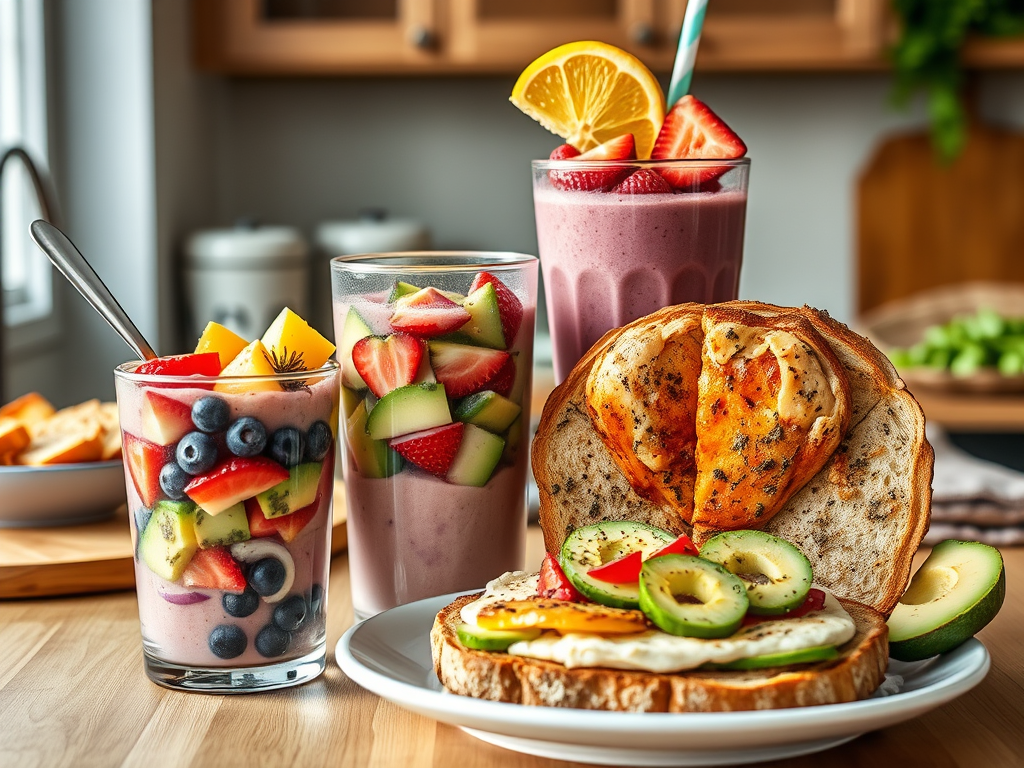
    “Good enough” is the siren call of convenience. Picture this: You’ve just rolled out of bed, and you’re faced with two breakfast options. Breakfast #1 is a premade smoothie. It’s mediocre at best—mystery berries, more foam than a frat boy’s beer, and nutritional value that’s probably overstated. But hey, it’s there. No work required.

    Breakfast #2? Oh, it’s gourmet bliss—organic fruits and berries, rich Greek yogurt, chia seeds, almond milk, the works. But to get there, you’ll need to fend off orb spiders in your backyard, pick peaches and blackberries, endure the incessant barking of your neighbor’s demonic Rottweiler, and then spend precious time blending and cleaning a Vitamix. Which option do most people choose?

    Exactly. Breakfast #1. The pre-packaged sludge wins, because who has the time for spider-wrangling and kitchen chemistry before braving rush-hour traffic? This is how convenience lures us into complacency. Sure, you sacrificed quality, but look how much time you saved! Eventually, you stop even missing the better option. This process—adjusting to mediocrity until you no longer care—is called attenuation.

    Now apply that to writing. Writing takes effort—a lot more than making a smoothie—and millions of people have begun lowering their standards thanks to AI. Why spend hours refining your prose when the world is perfectly happy to settle for algorithmically generated mediocrity? Polished writing is becoming the artisanal smoothie of communication—too much work for most, when AI can churn out passable content at the click of a button.

    But this is a nightmare for anyone in education. You didn’t sign up for teaching to coach your students into becoming connoisseurs of mediocrity. You had lofty ambitions—cultivating critical thinkers, wordsmiths, and rhetoricians with prose so sharp it could cut glass. But now? You’re stuck in a dystopia where “good enough” is the new gospel, and you’re about as on-brand as a poet peddling protein shakes at a multilevel marketing seminar.

    And there you are, staring into the abyss of AI-generated essays, each more lifeless than the last, wondering if anyone still remembers the taste of good writing—let alone craves it.

    This is your challenge, the struggle life has so graciously dumped in your lap. So, what’s it going to be? You could curl into the fetal position and sob, sure. Or you could square your shoulders, channel your inner battle cry, and start fighting like hell for the craft you once believed in. Either way, the abyss is watching.

  • Why you should let your students turn in rewrites for a higher grade

    Why you should let your students turn in rewrites for a higher grade

    When it comes to grading, if you want to encourage your students to be authentic and not hide behind AI, it’s essential to give them a chance to rewrite. I’ve found that allowing one or two rewrites with the possibility of a higher grade keeps them from spiraling into despair when their first submission bombs. In today’s world of online Learning Management Systems (LMS), students are already navigating a digital labyrinth that could produce a migraine. They open their course page and are hit with a chaotic onslaught of modules, notifications, and resources—like the educational equivalent of being trapped in a Vegas casino with no exit signs. It’s no wonder anxiety sets in before they even find the damn syllabus.

    By giving students room to fail and rewrite, I’m essentially throwing them a lifeline. I tell them, “Relax. You can screw this up and try again.” The result? They engage more. They take risks. They’re more likely to produce writing that actually has a pulse—something authentic, which is exactly what I’m fighting for in an age where AI-written drivel is a tempting shortcut. In short, I’m not just teaching composition; I’m running a support group for people overwhelmed by both technology and their own perfectionism.

  • Why ChatGPT Will Never Replace Human Teachers

    Why ChatGPT Will Never Replace Human Teachers

    Over the past two years, I’ve been bombarded by articles predicting that ChatGPT will drive college writing instructors to extinction. These doomsayers clearly wouldn’t know the first thing about teaching if it hit them with a red-inked rubric. Sure, ChatGPT is a memo-writing marvel—perfect for cranking out soul-dead reports about quarterly earnings or new office policies. Let it have that dreary throne.

    But if you became a college instructor to teach students the art of writing memos, you’ve got bigger problems than AI. You didn’t sign up to bore students into a coma. Whether you like it or not, you went into sales. And your pitch? It’s not about bullet points and TPS reports—it’s about persona, ideas, and the eternal fight against chaos.

    First up: persona. It’s not just about writing—it’s about becoming. How do you craft an identity, project it with swagger, and use it to navigate life’s messiness? When students read Oscar Wilde, Frederick Douglass, or Octavia Butler, they don’t just see words on a page—they see mastery. A fully-realized persona commands attention with wit, irony, and rhetorical flair. Wilde nailed it when he said, “The first task in life is to assume a pose.” He wasn’t joking. That pose—your persona—grows stronger through mastery of language and argumentation. Once students catch a glimpse of that, they want it. They crave the power to command a room, not just survive it. And let’s be clear—ChatGPT isn’t in the persona business. That’s your turf.

    Next: ideas. You became a teacher because you believe in the transformative power of ideas. Great ideas don’t just fill word counts; they ignite brains and reshape worldviews. Over the years, students have thanked me for introducing them to concepts that stuck with them like intellectual tattoos. Take Bread and Circus—the idea that a tiny elite has always controlled the masses through cheap food and mindless entertainment. Students eat that up (pun intended). Or nihilism—the grim doctrine that nothing matters and we’re all here just killing time before we die. They’ll argue over that for hours. And Rousseau’s “noble savage” versus the myth of human hubris? They’ll debate whether we’re pure souls corrupted by society or doomed from birth by faulty wiring like it’s the Super Bowl of philosophy.

    ChatGPT doesn’t sell ideas. It regurgitates language like a well-trained parrot, but without the fire of intellectual curiosity. You, on the other hand, are in the idea business. If you’re not selling your students on the thrill of big ideas, you’re failing at your job.

    Finally: chaos. Most people live in a swirling mess of dysfunction and anxiety. You sell your students the tools to push back: discipline, routine, and what Cal Newport calls “deep work.” Writers like Newport, Oliver Burkeman, Phil Stutz, and Angela Duckworth offer blueprints for repelling chaos and replacing it with order. ChatGPT can’t teach students to prioritize, strategize, or persevere. That’s your domain.

    So keep honing your pitch. You’re selling something AI can’t: a powerful persona, the transformative power of ideas, and the tools to carve order from the chaos. ChatGPT can crunch words all it wants, but when it comes to shaping human beings, it’s just another cog. You? You’re the architect.

  • 95% of books are just bloated short stories and essays with unnecessary padding

    95% of books are just bloated short stories and essays with unnecessary padding

    As part of my rehabilitation from writing novels I have no business writing, I remind myself of an uncomfortable truth: 95% of books—both fiction and nonfiction—are just bloated short stories and essays with unnecessary padding. How many times have I read a novel and thought, This would have been a killer short story, but as a novel, it’s a slog? How often have I powered through a nonfiction screed only to realize that everything I needed was in the first chapter, and the rest was just an echo chamber of diminishing returns?

    Perhaps someday, I’ll learn to write an exceptional short story—the kind that punches above its weight, the kind that leaves you feeling like you’ve just read a 400-page novel even though it barely clears 30. It takes a rare kind of genius to pull off this magic trick. I think of Alice Munro’s layered portraits of regret, Lorrie Moore’s razor-sharp wit, and John Cheever’s meticulous dissections of suburban despair. I flip through my extra-large edition of The Stories of John Cheever, and three stand out like glittering relics: “The Swimmer,” “The Country Husband,” and “The Jewels of the Cabots.” Each is a self-contained universe, a potent literary multivitamin that somehow delivers all the nourishment of a novel in a single, concentrated dose. Let’s call these rare works Stories That Ate a Novel—compact, ferocious, and packed with enough emotional and intellectual weight to render lesser novels redundant.

    As part of my rehabilitation, I must seek out such stories, study them, and attempt to write them. Not just as an artistic exercise, but as a safeguard against relapse—the last thing I need is another 300-page corpse of a novel stinking up my hard drive.

    But maybe this is more than just a recovery plan. Maybe this is a new mission—championing Stories That Eat Novels. The cultural winds are shifting in my favor. Attention spans, gnawed to the bone by social media, no longer tolerate literary excess. Even the New York Times has noted the rise of the short novel, reporting in “To the Point: Short Novels Dominate International Booker Prize Nominees” that books under 200 pages are taking center stage. We may be witnessing a tectonic shift, an age where brevity is not just a virtue but a necessity.

    For a failed novelist and an unapologetic literary wind-sprinter, this could be my moment. I can already see it—my sleek, ruthless 160-page collection, Stories That Eat Novels, four lapidary masterpieces gleaming like finely cut diamonds. Rehabilitation has never felt so good. Who says a man in his sixties can’t find his literary niche and stage an artistic rebirth? Maybe I wasn’t a failed novelist after all—maybe I was just a short-form assassin waiting for the right age to arrive.

  • The gastronomic equivalent of putting a monocle on a raccoon

    The gastronomic equivalent of putting a monocle on a raccoon

    As a kid, my taste buds were on a non-stop joyride with Pigs In a Blanket—those glorious cocktail sausages swaddled in Pillsbury Crescent Rolls, dunked with the carefree abandon of a sugar-high toddler in cheddar cheese, spicy mustard, and barbecue sauce. They were the epitome of childhood bliss.

    Fast forward to adulthood, and we must now suffer Luxury Reinterpretation. This is the gastronomic equivalent of putting a monocle on a raccoon. The process involves taking our beloved comfort foods like Pigs in a Blanket, grilled-cheese sandwiches, and Sloppy Joes, and draping them in so much opulence that you’d think they were being prepared for a royal banquet. We’re talking artisan breads that cost more than a week’s groceries, freshly baked brioche buns, and French cheeses so refined they practically come with a family crest.

    In this upscale twist, culinary wizards employ techniques that sound like they belong in a sci-fi film—slow cooking, smoking, and sous-vide. Flavors are layered with truffle oil, caramelized onions, and sautéed mushrooms, all artfully plated with microgreens, edible flowers, and a drizzle of balsamic reduction that could double as abstract art. There’s even a heart-wrenching narrative woven into the dish, involving deep-rooted culinary traditions or some distant great-grandmother who once served peas on an antique platter.

    The lengths to which we’ll go to gild the lily of our childhood comfort foods is a testament to our fear of being judged for enjoying simple pleasures. Sometimes, all I want is to revel in the uncomplicated joy of Pigs in a Blanket without all the pomp and circumstance. But no, in the world of haute cuisine, even the humble piggy-in-a-blanket must be paraded around in a tuxedo and given a backstory worthy of Shakespearean drama. And so, we drape our comfort foods in an extravagant cloak of sophistication, proving once and for all that our insecurities are as elaborate as the dishes we create.

    This scenario exposes the fact that the move to “Luxury Reinterpretation” isn’t just a culinary choice—it’s a full-blown identity crisis, a performance art piece meant to scream, Look how refined I’ve become! Remember: No matter how much balsamic reduction you drizzle, a piggy-in-a-blanket in a tuxedo is still just a piggy in a blanket—albeit one sweating under the weight of insecurity and overpriced truffle oil.

  • The Slurpee, the Sirens, and the Rabbit That Never Was

    The Slurpee, the Sirens, and the Rabbit That Never Was

    It was a warm California afternoon in 1973, the kind where time stretched lazily and everything smelled like fresh-cut grass, asphalt, and melted sugar. After sixth-grade let out, we piled off the school bus at Crow Canyon Road and made the mandatory pilgrimage to 7-Eleven, where a cherry Slurpee was both a status symbol and a life force.

    Inside, I was mid-slurp, soaking in the neon buzz of the store, when “Brandy, You’re a Fine Girl” crooned from the radio—a song about a sailor who refuses love for the sea, a detail I should have paid more attention to. Because, right then, the Horsefault sisters walked in.

    They were freckled, long-legged, and dangerously charismatic, their mischievous blue eyes glinting with some hidden scheme. One was in eighth grade, the other a high school sophomore, but their combined power far exceeded their individual ages. They lived in a farmhouse behind the 7-Eleven and approached me with an offer that, in retrospect, should have triggered immediate alarm:

    “Do you wanna see a rabbit in a cage?”

    I did not want to see a rabbit in a cage. But they had high cheekbones and figures that activated my deeply ingrained Barbara Eden fixation, so naturally, I announced that I was deeply invested in seeing this rabbit.

    I followed them out of the store, Slurpee in hand, as we walked about a hundred yards down a trail littered with dry horse dung, the sun casting long shadows over the tall grass. This was, in hindsight, my first mistake.

    At the end of the trail stood a large, ominous cage. The door hung slightly ajar, a thick chain lock dangling menacingly from the latch. I peered inside, expecting my promised rabbit. Instead, I saw nothing but the dark void of impending doom.

    Before I could process the cold realization that no rabbit existed, the sisters cackled like witches, grabbed me, and began dragging me toward the cage. The plan was clear: shove me in, slam the door, lock me up, and leave me to contemplate my poor life choices.

    But I was too strong, too desperate, too unwilling to be some kind of farm-boy prisoner. I fought back, and in the ensuing struggle, we tumbled into the dirt, rolling in a cloud of dust and hay, limbs flailing like a low-budget Western bar fight. Nearby, chickens screeched and flapped in terror, as if foreseeing my imminent imprisonment.

    Sweaty and defeated, the sisters finally let go. I scrambled to my feet and bolted, leaving behind my half-finished Slurpee—a tragic casualty of war.

    The Horsefault sisters had nearly claimed me as their caged trophy, but I had escaped. Barely. I never saw the rabbit. I doubt it ever existed. But I did learn an important lesson that day: if two gorgeous, devious girls invite you to see something in a cage, you are probably the attraction.

  • The Accountant, the Hotpants, and My First Taste of Rejection

    The Accountant, the Hotpants, and My First Taste of Rejection

    The summer of 1972, I was ten years old, flying solo from LAX to Miami, parked in the coveted window seat. Next to me, in the middle, sat a blonde woman in her mid-twenties, bronzed to an unnatural, almost radioactive orange, legs crossed confidently beneath pink hotpants with purple and white racing stripes that suggested speed, danger, and an implied warning to stay in my lane.

    In the aisle seat: her conversational hostage, a lean, dark-haired man of about the same age—an accountant, he would later reveal, which felt like foreshadowing.

    For five hours, I listened as they engaged in a dialogue so lively, so animated, I assumed I was witnessing the early chapters of a great love story. She was in dental hygiene school. He had a degree and a steady job. She exuded the kind of effortless confidence that made her gum seem like a gift from the gods when she passed us each a stick of Dentyne, explaining that it would help pop our ears. A public service announcement, delivered with charm.

    The accountant was decent-looking, well-spoken, clearly trying his absolute best—and for five relentless hours, he kept her engaged. They laughed, they shared stories, they existed in a pocket of perfect airborne intimacy. To my ten-year-old brain, this was an ironclad courtship ritual. The chemistry was undeniable.

    Then, the landing. The taxi to the gate. The moment of truth.

    He asked her out.

    She declined. Politely. Firmly. Efficiently.

    My ten-year-old self was staggered. How was this possible? Hadn’t they just shared an entire cinematic romance arc? The witty banter? The shared laughter? The synchronized gum chewing? And yet—nothing.

    I tried to crack the mystery. Maybe he was too bland. Maybe she had a boyfriend. Maybe she just needed to kill five hours before she got back to real life. Whatever the reason, I, a mere child, absorbed his rejection as if it were my own.

    To this day, I remain personally wounded that she turned him down. She turned us down. And for what? Some other guy in tighter pants?

    That flight should have been a lesson in the arbitrary brutality of romance, but all I really learned was that rejection hurts, even when it’s not technically yours.

  • How Poorly-Written Textbooks Turned Me into an English Major

    How Poorly-Written Textbooks Turned Me into an English Major

    For my first two years of college, I leapfrogged from major to major like a deranged amphibian with commitment issues.

    First stop: Criminal Justice. Sounded cool. Maybe I’d end up solving high-stakes crimes or unraveling some Kafkaesque legal conundrum. Instead, I found myself buried under a mountain of legalese so bloated with provisos, caveats, and contingencies that the independent clause was held hostage somewhere deep in the sentence, gasping for air. Every paragraph felt like a hostage negotiation with words like “notwithstanding” and “heretofore.” It drove me to the brink of syntactical madness.

    Next up: Sociology and Psychology—where common sense observations were drenched in enough self-important jargon to make a cult leader blush. Every sentence oozed the smug satisfaction of someone who thought they had just cracked the meaning of life. Instead of learning anything useful, I was forced to machete my way through a linguistic swamp of words like codependency, interconnectivity, dichotomy, marginalization, and facilitate. I clenched my body so tightly while reading these textbooks that I was convinced I would give myself a self-induced inguinal hernia.

    Desperate for clarity, I gave history a shot. But history textbooks—perhaps fearing the sheer tonnage of facts, dates, and places—responded by stripping the prose of all personality. No rhythm, no opinion, no soul—just a flatline of remedial drudgery. If legal writing was a labyrinth and psychology was a swamp, history was a beige waiting room with no exit.

    Then, an epiphany: I wasn’t rejecting these subjects—I was rejecting their horrendous writing.

    I craved something—something crisp, something electric, something that didn’t feel like linguistic waterboarding. That hunger led me, almost involuntarily, to the English major. There, for the first time, I met grammar—not as a dry set of rules, but as a cosmic force.

    Grammar wasn’t just necessary—it was alive. It was the invisible scaffolding that made human expression possible. It was breathing, movement, structure, music. I marveled at the fact that even small children, with no formal training, could construct intricate, nuanced sentences. This wasn’t just mechanics—this was the architecture of thought itself.

    When I thought of grammar, I didn’t think of dull worksheets. I saw rivulets flowing into streams, streams merging into great rivers, rivers pouring into the ocean. I saw harmony, inevitability, the relentless beauty of structure.

    So, in the end, it wasn’t a love of books or storytelling that made me an English major. It was the sheer, visceral disgust at bad writing that left me no other choice.

  • The Great 70s Oyster Feasts at Pt. Reyes

    The Great 70s Oyster Feasts at Pt. Reyes

    Every summer from 1975 to 1979, my family and a small oyster-guzzling army—ten other families and a battalion of friends—made the pilgrimage to Pt. Reyes Beach. Our sacred mission? To consume shellfish on a biblical scale.

    Johnson’s Oyster Farm supplied us with what felt like truckloads of oysters—so many that if the ocean had suddenly run dry, we wouldn’t have batted an eye. From noon to sunset, we devoured an obscene amount of barbecued oysters, each one bathed in garlic butter and an irresponsible amount of Tabasco. Thousands of loaves of garlic bread disappeared as though vaporized by our gluttony. The meal concluded with slices of chocolate cake so enormous they could have doubled as structural support beams.

    We punctuated this orgy of excess with reckless ocean dives, dismissing dire warnings of great white shark sightings because, in our teenage arrogance, we assumed the sharks would respect our dominance. Emerging from the waves, our pecs glistening with rivulets of saltwater like bronzed demigods, we returned to the picnic tables to resume our assault on the oyster supply.

    By the summer of ‘78, I had evolved into full teenage hedonist mode. That year, rather than going home with my parents, I hitchhiked in the back of a truck with a bunch of people I’d just met—because, clearly, nothing bad ever happened to sweaty, sunburned teenagers full of shellfish riding in the open bed of a moving vehicle. We were feral, fearless, and slightly delirious from a day of unchecked indulgence.

    Stuffed to the gills and feeling like King Neptune in a food coma, we stared at the stars with the vacant, glazed expressions of reptiles digesting a large meal. We swapped wild stories, unconcerned with documenting a single moment. No selfies. No calorie counting. No checking the time. Just a glorious, unrecorded blur of feasting, friendship, and youthful delusion.

    Those were happy days indeed—a time before food guilt, before social media, before adulthood ruined everything. And like all golden eras, it is gone forever.

  • Something Strange Happened to Me When I Saw My Childhood Home on Zillow

    Something Strange Happened to Me When I Saw My Childhood Home on Zillow

    When I was a kid, my dad worked at IBM in San Jose, and we lived at the very end of Venado Court—a cul-de-sac so serene it felt like a cosmic loophole in suburban chaos. I loved everything about it, especially the absence of cross-traffic.

    Cross-traffic was anarchy—it was second base in Little League, where the game unraveled into sheer bedlam: runners stealing, coaches screaming, fielders panicking. But Venado Court? It was home plate. Safe. Untouchable. The kind of place where nothing bad could happen—unless you count the existential horror of eventually having to leave it.

    The analogy reminds me of George Carlin’s classic bit contrasting baseball and football: Baseball is a pastoral dream, all about going home. Football is military conquest, where you march into enemy territory and get your spine realigned by a 300-pound lineman. Venado Court was baseball. It was safety. It was home.

    Recently, I stumbled onto a real estate site featuring my childhood house—5700 Venado Court, San Jose, California, where I lived from 1968 to 1971. The photos were unsettlingly familiar. My old bedroom. The bathroom where Mr. Bubble and Avon’s Sesame Street shampoo bottles once stood like sentinels of childhood innocence. The backyard, still lush with fruit trees—apricot, peach, plum, and walnut—a miniature Garden of Eden where my mother and the neighbor ladies, in some kind of euphoric domestic alchemy, canned preserves like their lives depended on it.

    The kicker? That house, my sacred childhood sanctuary, is now worth $1.3 million—the same price as my current home in Southern California. A deranged part of me toyed with the idea: sell my house, buy my childhood back, step through the front door like some time-traveling prodigal son.

    But then sanity prevailed.

    I know exactly how that story would end. Not in horror, but in ennui. I’d be trapped in a slow-moving nightmare of banality, watching my enchanted memories dissolve under the fluorescent hum of reality. The house wouldn’t feel like home. It would feel like a set piece in a dismantled dream.

    Thomas Wolfe was right—you can’t go home again. Not because it’s scary. But because it’s boring.