Blog

  • The Great 70s Oyster Feasts at Pt. Reyes

    The Great 70s Oyster Feasts at Pt. Reyes

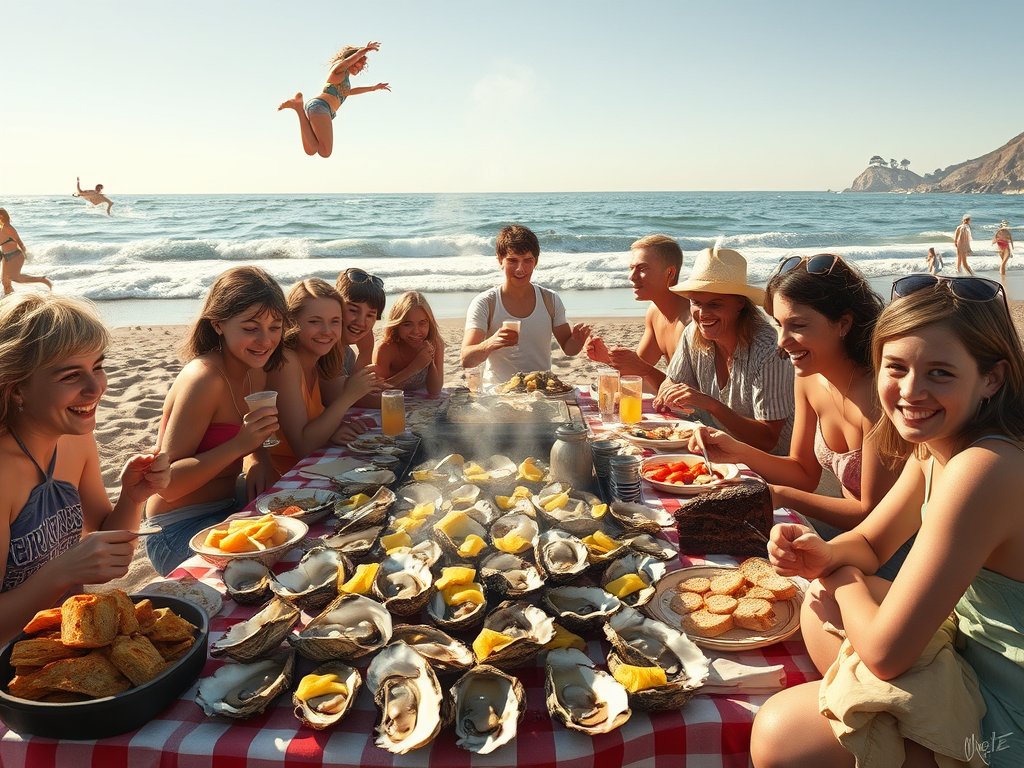
    Every summer from 1975 to 1979, my family and a small oyster-guzzling army—ten other families and a battalion of friends—made the pilgrimage to Pt. Reyes Beach. Our sacred mission? To consume shellfish on a biblical scale.

    Johnson’s Oyster Farm supplied us with what felt like truckloads of oysters—so many that if the ocean had suddenly run dry, we wouldn’t have batted an eye. From noon to sunset, we devoured an obscene amount of barbecued oysters, each one bathed in garlic butter and an irresponsible amount of Tabasco. Thousands of loaves of garlic bread disappeared as though vaporized by our gluttony. The meal concluded with slices of chocolate cake so enormous they could have doubled as structural support beams.

    We punctuated this orgy of excess with reckless ocean dives, dismissing dire warnings of great white shark sightings because, in our teenage arrogance, we assumed the sharks would respect our dominance. Emerging from the waves, our pecs glistening with rivulets of saltwater like bronzed demigods, we returned to the picnic tables to resume our assault on the oyster supply.

    By the summer of ‘78, I had evolved into full teenage hedonist mode. That year, rather than going home with my parents, I hitchhiked in the back of a truck with a bunch of people I’d just met—because, clearly, nothing bad ever happened to sweaty, sunburned teenagers full of shellfish riding in the open bed of a moving vehicle. We were feral, fearless, and slightly delirious from a day of unchecked indulgence.

    Stuffed to the gills and feeling like King Neptune in a food coma, we stared at the stars with the vacant, glazed expressions of reptiles digesting a large meal. We swapped wild stories, unconcerned with documenting a single moment. No selfies. No calorie counting. No checking the time. Just a glorious, unrecorded blur of feasting, friendship, and youthful delusion.

    Those were happy days indeed—a time before food guilt, before social media, before adulthood ruined everything. And like all golden eras, it is gone forever.

  • Something Strange Happened to Me When I Saw My Childhood Home on Zillow

    Something Strange Happened to Me When I Saw My Childhood Home on Zillow

    When I was a kid, my dad worked at IBM in San Jose, and we lived at the very end of Venado Court—a cul-de-sac so serene it felt like a cosmic loophole in suburban chaos. I loved everything about it, especially the absence of cross-traffic.

    Cross-traffic was anarchy—it was second base in Little League, where the game unraveled into sheer bedlam: runners stealing, coaches screaming, fielders panicking. But Venado Court? It was home plate. Safe. Untouchable. The kind of place where nothing bad could happen—unless you count the existential horror of eventually having to leave it.

    The analogy reminds me of George Carlin’s classic bit contrasting baseball and football: Baseball is a pastoral dream, all about going home. Football is military conquest, where you march into enemy territory and get your spine realigned by a 300-pound lineman. Venado Court was baseball. It was safety. It was home.

    Recently, I stumbled onto a real estate site featuring my childhood house—5700 Venado Court, San Jose, California, where I lived from 1968 to 1971. The photos were unsettlingly familiar. My old bedroom. The bathroom where Mr. Bubble and Avon’s Sesame Street shampoo bottles once stood like sentinels of childhood innocence. The backyard, still lush with fruit trees—apricot, peach, plum, and walnut—a miniature Garden of Eden where my mother and the neighbor ladies, in some kind of euphoric domestic alchemy, canned preserves like their lives depended on it.

    The kicker? That house, my sacred childhood sanctuary, is now worth $1.3 million—the same price as my current home in Southern California. A deranged part of me toyed with the idea: sell my house, buy my childhood back, step through the front door like some time-traveling prodigal son.

    But then sanity prevailed.

    I know exactly how that story would end. Not in horror, but in ennui. I’d be trapped in a slow-moving nightmare of banality, watching my enchanted memories dissolve under the fluorescent hum of reality. The house wouldn’t feel like home. It would feel like a set piece in a dismantled dream.

    Thomas Wolfe was right—you can’t go home again. Not because it’s scary. But because it’s boring.

  • The Day I Failed the Ishihara Color Blindness Test

    The Day I Failed the Ishihara Color Blindness Test

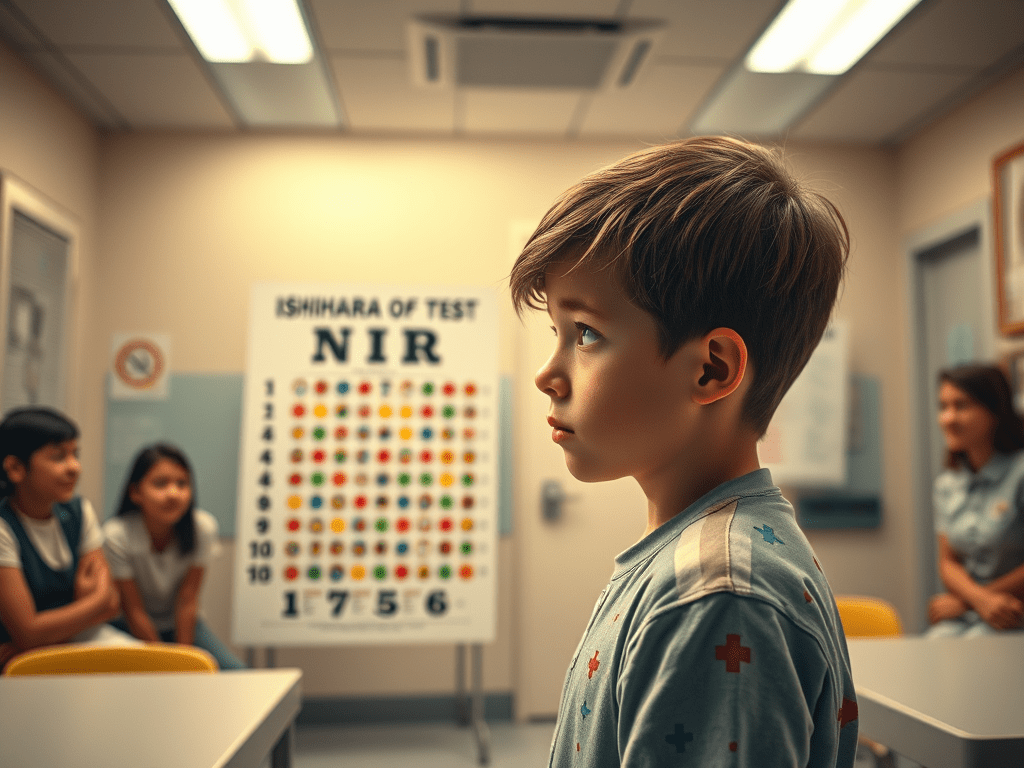
    For years, I harbored a vague but nagging suspicion that peanut butter was green. Why? No clue—until 1971, when the grim truth revealed itself under the fluorescent doom of Independent Elementary’s nurse’s office.

    It was the day of the Ishihara Color Blindness Test, a supposedly routine exercise in humiliation where each fifth grader took turns peering into an illuminated contraption to identify numbers and shapes hidden in a field of colored dots. My classmates breezed through it like game show contestants, rattling off answers with the breezy confidence of children who’d never questioned their own eyesight.

    Then it was my turn.

    I stared into the glowing abyss. Saw nothing. Blinked. Still nothing.

    The nurse grew impatient. “Well? Can’t you see anything?”

    I could not.

    The room erupted in laughter. Congratulations—I was officially hopelessly color-blind, a medical outcast, a social leper. For the remainder of the morning, my classmates regarded me like a rare museum specimen. This boy thinks peanut butter is green. Proceed with caution.

    But fate, as it turns out, is not without a sense of humor.

    During lunch recess, the hierarchy of fifth-grade cruelty shifted. Kickball—a sport where raw physical dominance could overwrite even the most damning personal defect—offered me an unexpected shot at redemption. As the ball rolled toward me, I summoned the might of my tree-trunk leg, swung with the force of a caffeinated mule, and launched that red rubber sphere over everyone’s heads. It sailed past the outfield, past the schoolyard, and over the fence—finally splashing down into the backyard swimming pool of a bewildered suburbanite several blocks away.

    For a brief, glorious moment, I was no longer the kid who saw peanut butter in the wrong spectrum. I was a legend. The freakishly strong fifth grader with the foot of an Olympian and the trajectory of a human cannon.

    Lesson learned: You may be ridiculed for believing peanut butter is green, but if you channel your inner Herman Munster and kick a ball into another ZIP code, nobody gives a damn about your defective eyeballs. Heroism comes in many shades—even if you can’t see them.

  • FOMO Detox: The Irony of Missing Out on Missing Out

    FOMO Detox: The Irony of Missing Out on Missing Out

    Johann Hari’s Stolen Focus: Why You Can’t Pay Attention delivers a delicious paradox: in recounting his three-month escape from the digital mosh pit, he finds that others are envious—not of his former screen-addled misery, but of his newfound clarity. That’s right—people experience FOMO over his liberation from FOMO. The irony is so rich it could fund a startup.

    Hari makes it plain: our collective addiction to the glowing rectangle is absurd. The average person fondles their phone 2,617 times a day—a number so obscene it belongs in a criminal indictment. The sheer time-suck is beyond comprehension. Whole lives are quietly siphoned into the abyss of notifications, DMs, and doomscrolling, and the tragedy is that most of us don’t even realize it’s happening. The smartphone, he argues, is the ultimate avoidance device—a pocket-sized panic portal that keeps you hooked on the fantasy of being somewhere else, all while real life drifts past like a neglected houseplant.

    And yet, there is no moral outcry. No grand rebellion. We are, at best, laboratory rats pressing the dopamine lever. The tech overlords—those data-mining, attention-harvesting Svengalis—have transformed our collective neurosis into a business model. They don’t just own our data. They own us.

    But something strange happens when Hari logs off. The panic dissipates. The constant itch for digital validation fades. His nervous system, previously fried to a crisp, begins to heal. News consumption becomes a choice, not a compulsion. He starts feeling something he hadn’t in years: depth. The world around him regains texture. Conversations feel richer. His brain, previously hijacked by the siren call of infinite scrolling, starts functioning again.

    His grand revelation? Multitasking is a lie. A cruel joke. The human brain is wired for focus, not for toggling between Instagram reels and email pings like a malfunctioning slot machine. And yet, people have become so conditioned to constant distraction that they can’t even sit on a toilet without clutching a phone like a life raft.

    As the world speeds up, Hari finds himself craving slowness. A quiet rebellion against the frantic pace dictated by social media’s profit-driven algorithms. It’s almost as if—perish the thought—the tech lords don’t want you to know this. Because if enough people realized that the great FOMO-induced panic is just an engineered illusion, they might finally look up from their screens and ask the unthinkable: What have I been missing?

  • Adolescence: Joins The Pitt as a Triumph of Hyper-Realism

    Adolescence: Joins The Pitt as a Triumph of Hyper-Realism

    If you listen to The Watch with Chris Ryan and Andy Greenwald, you’ve probably heard the buzz: Netflix’s four-part series Adolescence isn’t just good—it’s the best thing on TV right now.

    So, naturally, my wife and I sat down to see if it lived up to the hype. Spoiler alert: It does.

    Without giving away essential plot points, let me put it this way: this isn’t just a crime procedural—it’s a ruthless autopsy of institutional failure. Each episode dissects a different system that was designed to impose order but instead collapses under the weight of human chaos.

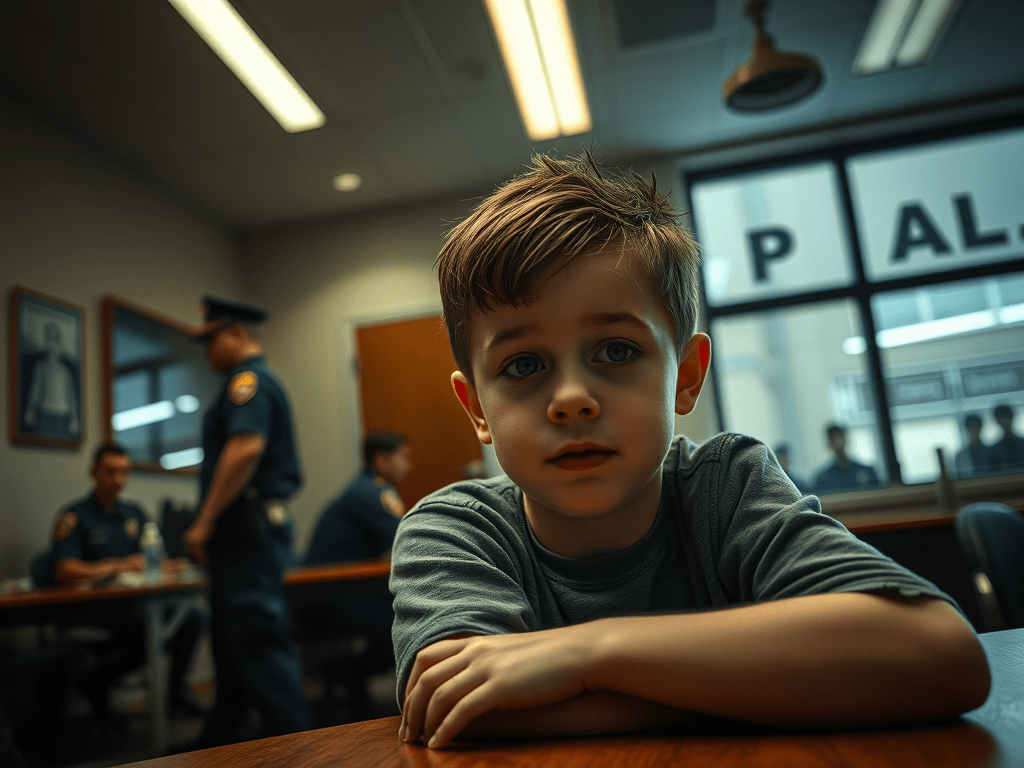
    • Episode 1: The Police Station – The series kicks off inside a sterile, fluorescent-lit hellscape, where well-meaning officers attempt to process and interrogate thirteen-year-old Jamie Miller, the boy accused of murdering a classmate. The problem? The system is dehumanizing. Jamie’s family is kept in the dark, procedural red tape trumps human empathy, and every interaction feels like a slow, grinding march toward inevitability. Jamie himself—angelic-faced, soft-spoken, seemingly incapable of violence—makes us question everything.
    • Episode 2: The School – If you thought the police station was bad, welcome to Lord of the Flies with a morning bell. Detectives attempt to interview students, only to be met with a circus of chaos. The kids are feral, emotionally volatile, and wired for destruction. The teachers? Comically powerless. Every attempt at authority is met with blank stares, open defiance, or performative outrage.
    • Episode 3: The Juvenile Facility – A bureaucratic nightmare masquerading as rehabilitation. Here, troubled teens are sorted into neat categories based on data and psych evaluations, as if behavior can be reduced to a spreadsheet. Therapists cycle through sterile, one-size-fits-all interventions, while administrators act like zookeepers who have given up. It’s depressing, absurd, and terrifyingly real.
    • Episode 4: The Suburbs – The final episode shifts from institutions to family itself, portraying domestic life as its own kind of prison. Jamie’s father, a man drowning in wounded male ego, rules his home with simmering rage and a rigid belief in his own moral authority. His suburban world, meant to be safe and orderly, feels just as oppressive as the police station, the school, or the juvenile facility.

    Hyper-Realism That Sticks With You

    The series’ hyper-realistic approach reminds me of The Pitt—the brutally compelling Max series that drags you into the chaos of an ER with unflinching detail. Adolescence does the same thing for the crime procedural, pulling you so deep into its world that you almost feel suffocated by its bleak authenticity.

    If you’re a fan of TV that rattles your nerves and forces you to stare into the abyss of systemic collapse, Adolescence is not to be missed.

  • The FOMO Frequency: How I Tried to Tune Back into Real Life

    The FOMO Frequency: How I Tried to Tune Back into Real Life

    As I clawed my way out of my addiction to writing doomed novels (which were really short stories in disguise), a strange thing happened: buried emotions clawed back. It wasn’t pleasant. It was like peeling off a bandage only to discover that underneath was raw, exposed nerve endings. Turns out, the grandiose fever dream of writing had insulated me from reality. Now, stripped of that delusion, I was left unprotected, vulnerable, and completely awake to the world.

    And the world, in 2025, was on fire.

    Literally. The Los Angeles wildfires turned the sky into an apocalyptic hellscape—a choking haze of smoke and fury. The inferno forced me into an act I hadn’t performed in years: I dusted off a radio and tuned into live news.

    That’s when I had two epiphanies.

    First, I realized I despise my streaming devices. Their algorithm-fed content is an endless conveyor belt of lukewarm leftovers, a numbing backdrop of curated noise that feels canned, impersonal, and utterly devoid of gezelligheid, a sense of shared enjoyment. Worst of all, streaming had turned me into a passive listener, a zombie locked inside a walled garden of predictability. I spent my days warning my college students about AI flattening human expression, yet here I was, letting an algorithm flatten my own relationship with music.

    But the moment I switched on the radio, its warmth hit me like an old friend I hadn’t seen in decades. A visceral ache spread through my chest as memories of radio’s golden spell came rushing back—memories of being nine years old, crawling into bed after watching Julia and The Flying Nun, slipping an earbud into my transistor radio, and being transported to another world.

    Tuned to KFRC 610 AM, I was no longer just a kid in the suburbs—I was part of something bigger. The shimmering sounds of Sly and the Family Stone’s “Hot Fun in the Summertime” or Tommy James and the Shondells’ “Crystal Blue Persuasion” weren’t just songs; they were shared experiences. Thousands of others were listening at that same moment, swaying to the same rhythms, caught in the same invisible current of sound.

    And then I realized—that connection was gone.

    The wildfires didn’t just incinerate acres of land; they exposed the gaping fault lines in my craving for something real. Nostalgia hit like a sucker punch, and before I knew it, I was tumbling down an online rabbit hole, obsessively researching high-performance radios, convinced that the right one could resurrect the magic of my youth.

    But was this really about better reception?

    Or was it just another pathetic attempt to outrun mortality?

    Streaming didn’t just change my relationship with music; it hollowed it out.

    I had been living in a frictionless digital utopia, where effort was obsolete and everything was available on demand—and I was miserable. Streaming devices optimized convenience at the cost of discovery, flattening music into algorithmic predictability, stripping it of its spontaneity, and reducing me to a passive consumer scrolling through pre-packaged soundscapes.

    It was ironic. I had let technology lull me into the very state of mediocrity I warned my students about.

    Kyle Chayka’s Flatworld spells out the horror in precise terms: when you optimize everything, you kill everything that makes life rich and rewarding. Just as Ozempic flattens hunger, technology flattens culture into a pre-digested slurry of lifeless efficiency.

    I didn’t need Flatworld to tell me this. I had lived it.

    The day I flipped on a real radio again, I didn’t just hear a broadcast—I heard my brain rebooting. The warmth, the spontaneity, the realness of people talking in real time—it was the sonic equivalent of quitting Soylent and biting into a perfectly seared ribeye.

    If Flatworld taught me anything, it’s that aliveness is exactly what convenience culture is designed to eradicate.

    Once I abandoned streaming, I filled every room in my house with a high-performance multiband radio. My love of music returned. A strange peace settled over me.

    The problem? My addictive personality latched onto radios with a zeal that bordered on the irrational.

    I began gazing at them with the kind of reverence normally reserved for religious icons. When I spotted a Tecsun PL-990, PL-880, PL-680, or PL-660, something in my brain short-circuited. I was instantly enchanted, as if I had just glimpsed an old friend across a crowded room. At the same time, I was comforted, as if that friend had handed me a warm cup of coffee and told me everything was going to be alright.

    But a radio isn’t just a device. It’s a symbol, though I’m still working out of what exactly.

    Maybe it represents the lost art of slowing down—of sitting in a quiet room, wrapped in a cocoon of music or familiar voices. Or maybe it’s something deeper, a sanctuary against the relentless noise of modern life, a frequency through which I can tune out the profane and tune into something sacred.

    The word that comes to mind when I hold a radio is cozy—but not in the scented-candle, novelty-mug kind of way. This is something deeper, something akin to the Dutch word gezelligheid—a feeling of warmth, belonging, and ineffable connection to the present moment.

    Radios don’t just play sound; they create atmosphere. They transport me back to Hollywood, Florida, sitting on the porch with my grandfather, the air thick with the scent of an impending tropical storm, the crackle of a ball game playing in the background like the heartbeat of another era.

    That’s the thing about gezelligheid—it isn’t something you can program into an algorithm. It isn’t something you can optimize. It’s a byproduct of presence, community, and shared experience—the very things convenience culture erodes.

    Many have abandoned radio for the cold efficiency of streaming and smartphones.

    I tried to do the same for over a decade.

    I failed.

    Because some things, no matter how old-fashioned, still hum with life.

    And maybe that’s what replacing streaming devices with radios is about—not just recovering from my addiction to writing abysmal novels, but recovering life itself from the grip of Flatworld.

  • FOMO and the Parable of the Wedding Feast

    FOMO and the Parable of the Wedding Feast

    Jesus’ Parable of the Wedding Feast is basically FOMO cranked up to full volume—the kind that doesn’t just leave you with mild regret but thrusts you into existential despair and gnashing of teeth.

    The story goes like this: A king throws the wedding of the century, an all-expenses-paid extravaganza, and sends out invites. But the original VIP guests ghost him, offering lame excuses like tending to their farm or handling business deals—modern equivalent: “Sorry, can’t make it, I have a dentist appointment.”

    Furious, the king opens the party to literally everyone, filling the banquet hall with randos off the street. So far, so good—except one poor guy shows up without wedding attire and gets unceremoniously bound hand and foot and tossed into the outer darkness, where there is weeping and gnashing of teeth.

    The lesson? Rejecting a golden opportunity is bad, but showing up unprepared is even worse. This is FOMO at its most terrifying—the doors close, the feast begins, and you’re either locked out forever or dragged into the abyss for showing up without a tux. Moral of the story: Don’t blow off divine invitations, and for heaven’s sake, dress appropriately.

  • FOMO and Lot’s Wife

    FOMO and Lot’s Wife

    Lot’s wife was the Patron Saint of People Who Can’t Move On. Fixated on the past, she suffered one of the most poetically savage fates in the Bible—all because she couldn’t resist one last look.

    Here’s the setup:

    God, having had enough of Sodom and Gomorrah’s apocalyptic-level depravity, decided to do a little urban renewal via fire and brimstone. Before flattening the twin cities of sin, He sent two angels to warn Lot—one of the few decent guys left—to grab his family and run for the hills.

    The angels gave one very clear, non-negotiable instruction:

    “Run for your lives. Don’t stop. Don’t look back.”

    Lot, his wife, and their daughters bolted. But somewhere along the escape route, Lot’s wife just had to turn around—whether out of nostalgia, defiance, or sheer, irresistible FOMO.

    And in that instant, she was turned into a human salt lick.

    No warning. No second chances. Just instantaneous, irreversible transformation into a monument of bad decision-making.

    The Bible doesn’t spell out exactly why she got the sodium chloride special, but theories abound:

    1. FOMO: The Most Fatal Flavor – Maybe she wasn’t just looking back—maybe she was longing for what she was leaving behind. If she couldn’t let go of the past, she was doomed to be frozen in it.
    2. Disobedience Gets You Petrified – The angels didn’t offer wiggle room in their warning. No fine print. No loopholes. She broke the one rule, and divine judgment hit like a lightning bolt wrapped in a salt shaker.
    3. The Ultimate Symbol of Being Stuck – Salt, in biblical times, was a symbol of barrenness and desolation. Her punishment could represent what happens when you refuse to move forward—you end up a relic, a cautionary tale, a roadside curiosity for future travelers.

    Whether she was mourning her house, her friends, or the top-tier Sodom brunch scene, Lot’s wife represents everyone who has ever been emotionally imprisoned by the past.

    I get it.

    As a former bodybuilder and Boomer who cut his teeth in the 70s, I have spent more time than I care to admit wallowing in the golden glow of a decade I will never return to. I see the world through a haze of disco ball reflections, Angel Flight bell-bottoms, puka shells, coconut-scented tanning oil, and Love Boat reruns.

    Nostalgia is a drug. It arrests us emotionally, tricks us into believing that the best version of ourselves already happened, and feeds us visions of glory we probably never even had.

    Lot’s wife? She’s the ultimate warning against romanticizing the past. She didn’t just look back—she got stuck there.

    And if we’re not careful, we’ll be right there with her, frozen in time, while the world moves on without us.

  • FOMO in the Garden of Eden

    FOMO in the Garden of Eden

    Surely, God understands human psychology better than we do. So when He decreed to Adam and Eve that they could indulge in every luscious, dripping fruit in the Garden except for one—the forbidden, gleaming red apple—He must have known exactly what He was doing.

    Let’s be honest: this was textbook reverse psychology.

    If you tell a human—especially a child—that they can have anything they want except for one thing, their entire brain will now orbit around that one thing. They won’t just want it; they will ache for it. The denial itself transforms it from an ordinary apple into an object of unbearable, cosmic significance.

    And yet, we’re supposed to believe that it was the serpent who tempted Adam and Eve? Please.

    The real agent of temptation wasn’t some fork-tongued reptile whispering sweet nothings about omniscience—it was the restriction itself. God set the stage for FOMO, lit the match, and then acted surprised when the fire caught.

    By banning the apple, He turned it into the first status symbol in human history. Before that, it was just another piece of produce. Now, it was the One Fruit to Rule Them All. The ultimate off-limits delicacy, the Birkin bag of Eden, a thing so exclusive, so unattainable, that they couldn’t stop obsessing over it.

    So what does that say about God?

    It suggests that the God of Genesis is the original architect of FOMO—implanting the desire, priming the temptation, and then punishing humanity for falling into the very trap He designed.

    Divine irony at its finest.

  • The First Cut is the Deepest: A Childhood Steeped in FOMO

    The First Cut is the Deepest: A Childhood Steeped in FOMO

    FOMO is never stronger than in childhood, when imagination stretches farther than reality can reach and the world feels just beyond our grasp. To a child, magic is real, enchantment is tangible, and some hidden paradise always seems just out of reach—close enough to see, impossible to touch. And nothing stings quite like realizing that somewhere, right now, a better world exists, and you are not in it.

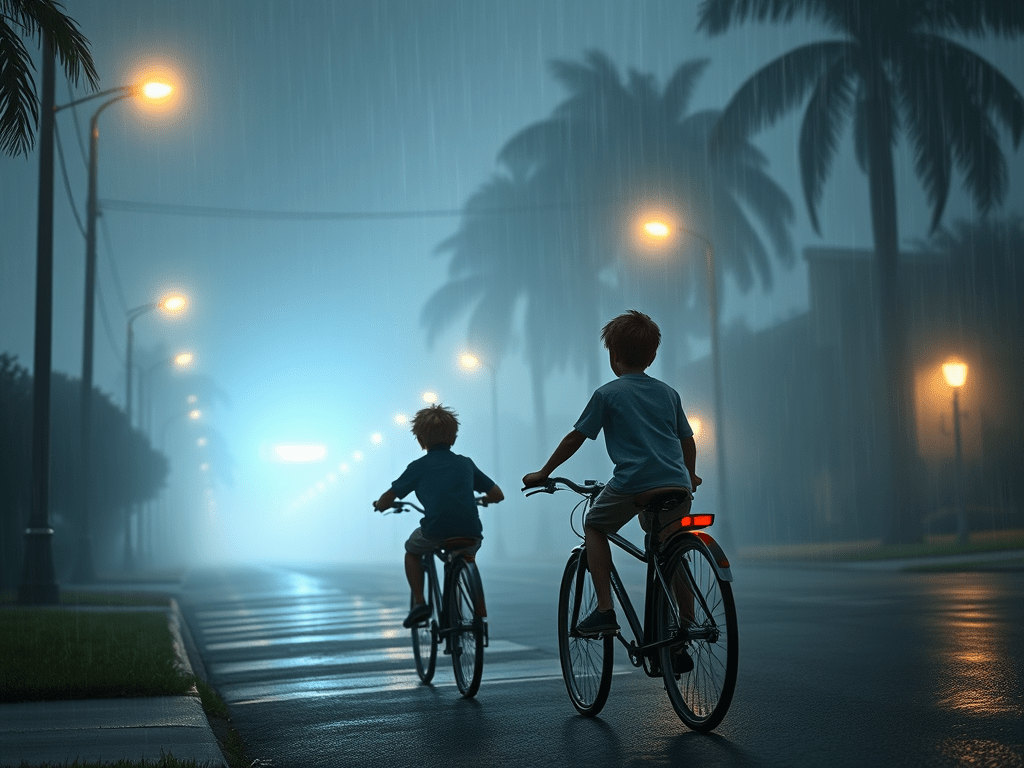
    I learned this lesson in the summer of 1968 in San Jose, California, while riding bikes with my neighbor, Billy Cantambay. We were two six-year-olds, circling Venado Court as a fine mist of summer rain fell around us, making the streetlights glow and the air smell like wet pavement and possibility.

    Then we saw it:

    A single blue light flickering in the distance, hovering above the unfinished housing developments at the edge of the neighborhood. It twinkled through the fog like a Christmas bulb detached from time, a spectral glow that neither of us could explain.

    “Christmas lights!” one of us shouted.

    “Christmas lights!” the other echoed.

    But why was Christmas happening over there and not here? Whose house was that? What kind of people lived beneath that glow? In my mind, I pictured a lone man inside—not lonely, just content—waking up to Christmas every day.

    For a week, Billy and I worshipped the light, riding our bikes in endless circles, pointing, speculating, longing. Then one evening, it was gone. No explanation. No goodbye. Just a vanishing act, leaving behind nothing but an ache—an inexplicable sadness, as if we had been denied entry into something greater than ourselves.

    Four years later, another dream slipped through my fingers, and this time, I cried about it.

    My fifth-grade friend Marc Warren had invited me to Piper’s Smorgasbord in San Leandro, California—a kingdom of pizza, fried chicken, and blueberry pie, where gluttony was not just encouraged but a sacred ritual. By the time we left, we were bloated with triumph.

    Driving home, still drunk on sugar and grease, we talked about our flying dreams.

    Not figurative flying—not ambition, not success—actual flying. The kind where you jump off a cliff and just go, gliding over the ocean, effortless, weightless, free.

    The dreams were so vivid—we could remember the wind in our faces, the rush of air under our arms, the certainty that we would never fall.

    And then, reality crashed down.

    We weren’t flying. We would never fly.

    The grief was immediate, existential, crushing.

    Two fifth-graders, staring out the car window, weeping over the cosmic injustice of gravity.

    That’s the cruelty of FOMO—it isn’t just about missing an event. It’s about missing a world, a place so real inside your imagination that its absence hurts like a phantom limb.

    Every culture has its own version of this unreachable paradise—a place forever close but forever out of reach.

    For me, it was Bali Ha’i.

    The song, sung so hauntingly by Juanita Hall in South Pacific, tells of an island just across the water—visible, tantalizing, but never quite attainable.

    I first heard it as a toddler in the Flavet Villages—a cluster of old military barracks repurposed as student housing in Gainesville, Florida, where my family lived near an alligator swamp and a stretch of forest.

    Most people would have found the place bleak. I found it enchanted.

    At dusk, my father and I would walk to the edge of the forest to visit a Mynah bird, which perched on the same branch every evening, watching us with an intelligence I couldn’t explain.

    The swamp smelled of alligator dung, a rank, pungent stench that somehow filled me with a sense of cosmic belonging.

    One night, as we stood beneath the Mynah bird, a distant radio played “Bali Ha’i.”

    The melody wove itself into the moment, perfectly harmonizing with the humid night air, the bird’s quiet watchfulness, and the unseen creatures shifting in the darkness.

    For the first time, I understood the ache of paradise lost.

    In 1965, another world out of reach found me.

    Her name was Barbara Eden.

    She lived inside a genie bottle—a glowing jewel of a home, lined with pink and purple satin, circular sofas, and mother-of-pearl inlays.

    To five-year-old me, this was the peak of human civilization.

    I didn’t just want to watch I Dream of Jeannie. I wanted to live inside that bottle.

    I imagined myself curled up on the velvet cushions, bathed in the warm glow of genie magic, whispering secrets with Jeannie as the outside world became irrelevant.

    When it hit me—really hit me—that I would never live in that bottle, that the closest I’d ever get was a TV screen and my own relentless imagination, I felt crushed in a way I had no words for.

    Even crueler?

    That gorgeous genie home was just a painted Jim Beam whiskey decanter.

    That’s what FOMO really is: intoxication by illusion.

    And long before Instagram, long before airbrushed vacations and curated feeds, I was already intimately familiar with its sting.