Blog

  • Hope in the Form of a Lab Coat

    Hope in the Form of a Lab Coat

    For three months I slogged through shoulder pain armed with nothing but a self-diagnosis and stubborn pride. I refused to see a doctor. Why submit myself to some exhausted clinician who’d never lifted a kettlebell in his life and would prescribe the usual pablum—ice, rest, and advice I could have gotten from the comments section of Wikipedia?

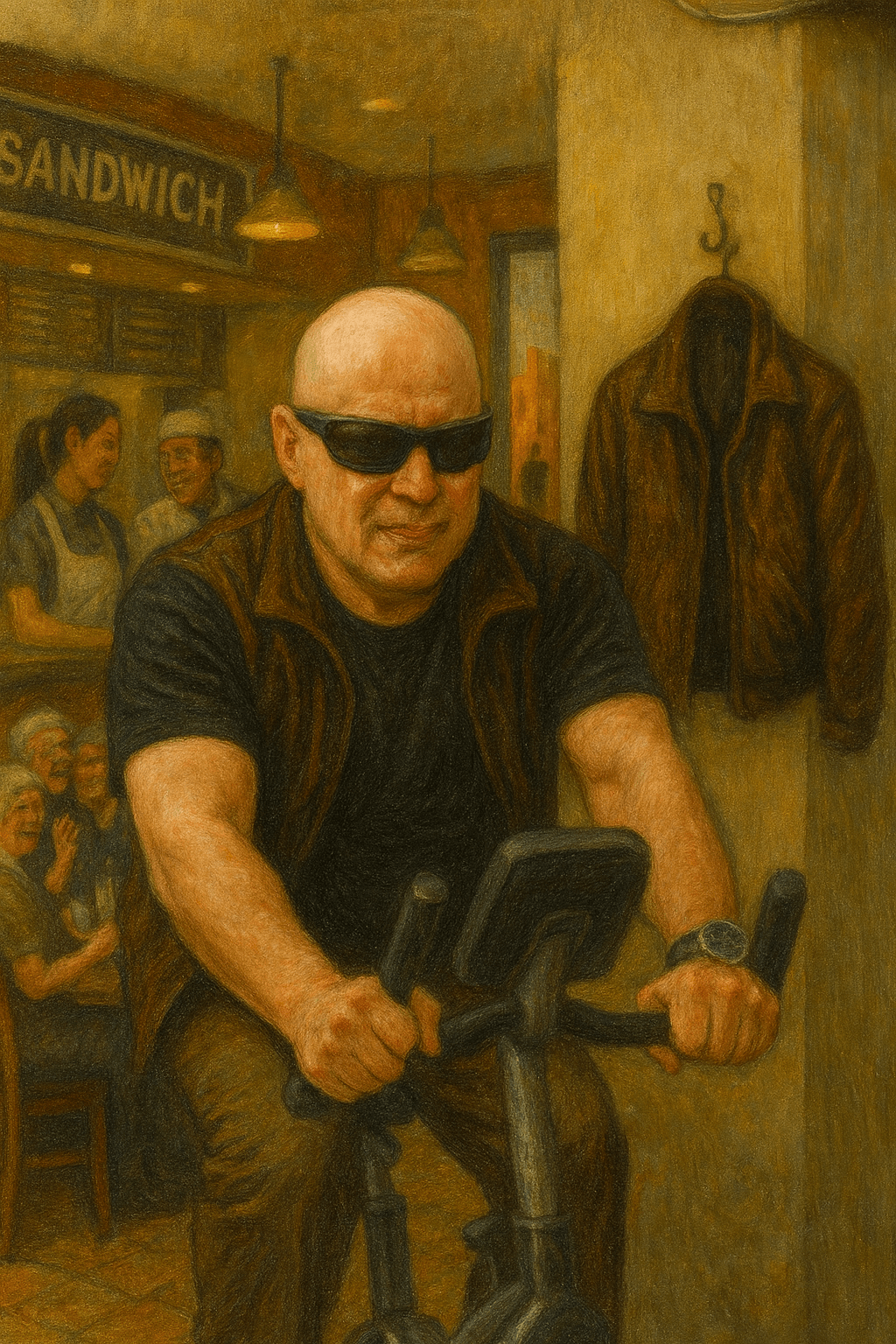
    Then something happened that forced a reckoning. To compensate for the kettlebell exile, I doubled down on the Schwinn Airdyne—hour-long sessions of fan-bike misery that combine pedaling with lever rowing. I felt no pain… until a week before Thanksgiving. After a brutally satisfying session, a nerve fired down my arm like a live wire. The message was unmistakable: I had graduated from “irritation” to “we’re-squeezing-your-spinal-cord-for-fun.” Something was pinched, something was furious, and it was no longer optional.

    I made a YouTube video to announce the cosmic irony: my watch addiction was cured, but the cure was a torn rotator cuff. The floodgates opened. Dozens of comments poured in from people who had endured surgeries, magnets, injections, cortisone cocktails, or endless physical therapy. One old friend emailed: ten years of chronic pain, zero recovery, restricted motion for life. The road, it turns out, is paved with hope and ends in a ditch.

    It was clear: I didn’t need more voices, I needed data. I called Kaiser and booked an appointment. Someone would see me the day before Thanksgiving.

    That afternoon I met Dr. Cherukuri, a woman in her late thirties with the energy of someone who actually likes her profession. She examined my shoulder, commented that the bulge was visible even through my T-shirt, pressed around the joint, put me through a series of movements, and diagnosed left rotator cuff syndrome with left biceps tendinopathy. She ordered X-rays and an ultrasound and, pending results, believed three months of rehab could put me back together.

    She put me on Motrin three times a day for two weeks to bring the inflammation down—enough to make rehab possible. She also agreed I should continue kettlebell work for muscle maintenance. A doctor who understands the importance of preserving muscle mass? I nearly wept. The catch was predictable: no chest or shoulder presses, no biceps curls. My hypertrophy would be confined to legs, glutes, traps—maybe some trickle-down gains from rehab exercises if the gods were kind.

    She handed me a list of movements, which I combined with ones I learned from YouTube: cow-cat yoga pose, broomstick flexion, wall push-ups, wall flexion, forearm planks, plank shoulder taps, narrow-position knee push-ups, light dumbbell rotations, and more. Anything that required me to lift my arms overhead or behind me felt like sticking my shoulder into a hornet nest.

    The mandate was fifteen minutes of rehab every day. On kettlebell days, I’d slip the movements between lifts three days a week. The other four days were rehabilitation only—an entire week built around mending the wounded joint.

    Psychologically, the appointment was a relief. First, the diagnosis proved I wasn’t a lunatic or some melodramatic malingerer. Second, I needed structure. I needed a plan, a weapon—something to push against instead of drifting through pain, anxiety, and the unknowable. When I’m saddled with a problem, I don’t need platitudes; I need targets and artillery. Seeing the doctor was the moment I picked up a rifle instead of a white flag.

    But I was still blind. I had no idea how severe the tear was, whether rehab would work, whether I could heal without surgery, or how to navigate the distress of shoulder pain so sharp that turning my steering wheel wrong or sliding a backpack strap across my arm sent shockwaves that lingered for minutes.

    Going to a doctor was a necessary first step. But I still knew nothing. All I understood was how much I still needed to know if I hoped to climb out of this hole. The thirst for clarity, for diagnostic certainty, became my new obsession—one that bulldozed my watch addiction.

    My YouTube followers were devastated.
    “We need you back, bro. We need you to commiserate with us about the watch madness.”

    God bless them. They needed me to get better—not only for me, but for them, so we could suffer together in peace.

  • A Cure Worse Than the Disease

    A Cure Worse Than the Disease

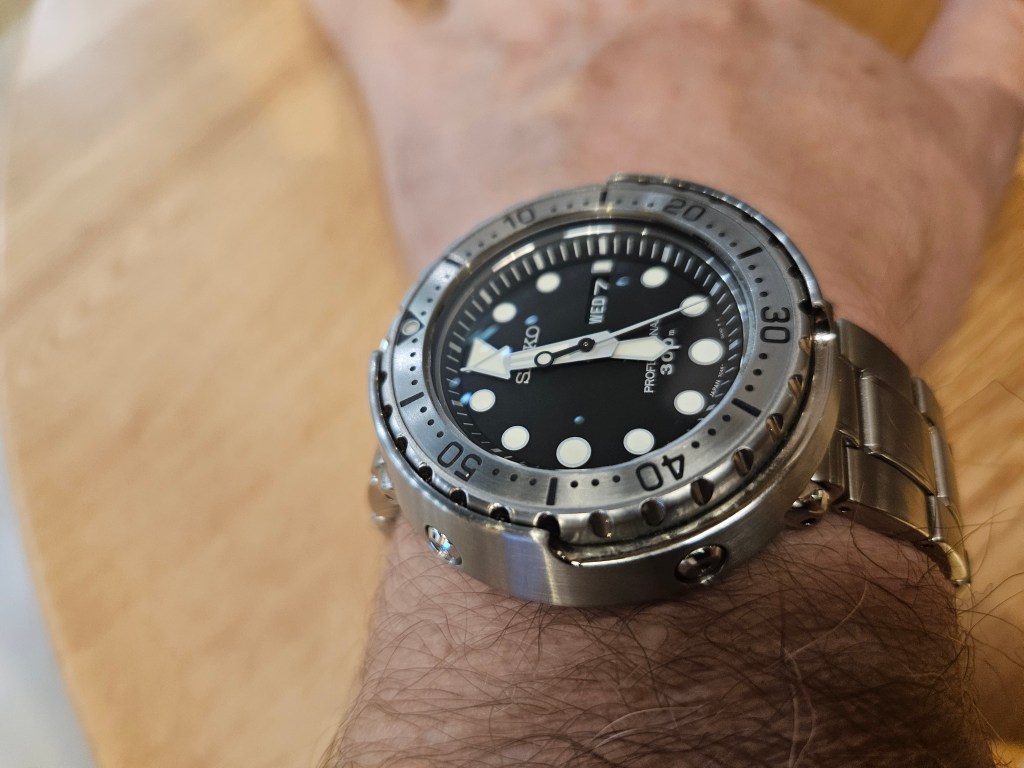
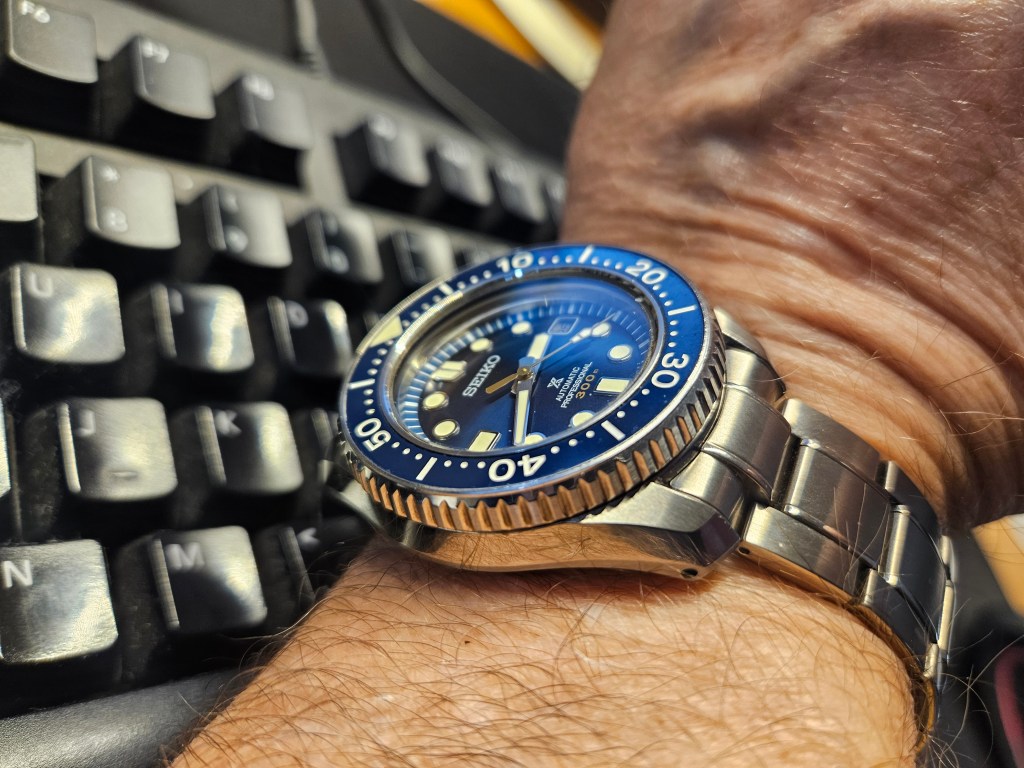
    Be careful what you wish for. I spent twenty years begging the universe to cure my watch obsession, one that caused me to blow several thousand dollars a year on diver watches I’d unbox for my YouTube followers, flip, rebuy, and then sell again—a watch-obsessive’s fever dream. For twenty years, I tried to get off the hamster wheel of crazy, but the powers of social media and diver-watch eye candy kept pulling me back in.

    I finally got my cure: a torn rotator cuff. In late August of 2025, I remember lying on my back and doing single-arm, 50-pound kettlebell presses. I didn’t feel anything severe, just a tightness in my left shoulder.

    The next day, my left shoulder felt like a disgruntled rental car—everything squeaked, nothing moved smoothly, and I dreaded putting my arm through a sleeve.

    I knew what a torn rotator cuff felt like. I’d had them in both shoulders three times in my life. The first was when I was a thirteen-year-old Olympic weightlifter. On a rainy day in PE, the teacher, Mr. Bishop, had us play “volleyball” with a giant 72-inch Earth Ball, and when I tried to hit it with my right arm, the arm went backward and I was out of weightlifting for nine months.

    In the mid-nineties and early two-thousands, it happened twice more during heavy bench presses. Both occurrences took about nine months to heal.

    So I knew what I was dealing with. Usually, I’d need nine months.

    Of course, I had to modify my workouts into physical therapy sessions where I stare at resistance bands as if they’re punishment devices from a Stalin-era prison camp.

    The pain seemed to be more intense after workouts. I thought of ditching them altogether, but I read that no activity could lead to muscular atrophy and render the shoulder frozen and immobile. I wasn’t sure, though. How big and deep was the tear? Was my age—now 64—a factor working against me? Why did the rehab exercises performed by medical doctors on YouTube make my shoulder feel worse?

    These questions took up all my mental bandwidth, rendering my watch obsession nil. Wanting a healthy shoulder, I would gladly trade every diver, every limited edition, every bracelet and waffle strap for a shoulder that didn’t scream like a violin in a garbage disposal. So yes—my addiction was cured. Unfortunately, the cure was worse than the disease.

  • Anatomy of a Rotator Cuff Meltdown

    Anatomy of a Rotator Cuff Meltdown

    A torn rotator cuff doesn’t just hurt—it becomes the project manager of your mood swings and mental health. Every everyday gesture gets interrogated like a crime scene: How high can I raise this arm? Which angle is the assassin? When will the orthopedic surgeon enter stage left and demand a sacrificial tendon? You find yourself mentally policing every muscle fiber in the chest, shoulders, and biceps—formerly your prized territories, now embargoed like Cold War no-man’s lands. And then comes the flashback reel: Was it the single-arm kettlebell press? The swing? The curl? Maybe it wasn’t a heroic injury at all, just the slow, bureaucratic decay of connective tissue over time—aging’s signature insult.

    The constant vigilance is corrosive. Shoulder injuries have support groups because sufferers eventually learn the catastrophic secret: it’s not the rotator cuff that breaks first—it’s the psyche. The shoulder, like the back and knees, is a psychological choke point. When it fails, it takes your mood, your sleep, and your sense of invincibility hostage. Physical rehab becomes inseparable from emotional rehab. The body limps, and the mind limps with it, muttering under its breath.

    It’s been three months and I’m starting to resent the job of being my own orthopedic babysitter. I’m grateful I can still sleep without feeling like someone is driving a railroad spike through my scapula. I have enough forward and lateral mobility to get dressed without a prayer circle. I can still train legs, glutes, and abs like a functioning primate. But the lesson is brutal: a torn rotator cuff grants no mercy, no sanctuary from overthinking, and no reprieve from the quieter forms of psychological sabotage.

    A torn rotator cuff is no country for sniveling, navel-gazing men. The challenge now is to un-snivel, un-navel-gaze, and rebuild myself without the luxury of denial.

  • Did AI Break Education—Or Did Education Build the Perfect Tool for Its Own Collapse?

    Did AI Break Education—Or Did Education Build the Perfect Tool for Its Own Collapse?

    Argumentative Essay — 1,700 words

    Artificial intelligence has become the student’s quiet collaborator: it drafts essays, outlines arguments, rewrites weak prose, and produces thesis statements on command. Some critics insist this shift is catastrophic. They claim AI doesn’t just save time—it dissolves motivation, short-circuits difficulty, and converts students into passive operators of synthetic thought.

    Others argue AI merely reveals a truth we’ve avoided: education was already transactional, disengaged, and allergic to authentic inquiry. If a five-paragraph essay can be mass-produced by a bot in seconds, perhaps the problem was never the bot.

    Write an argumentative essay in which you take a position on the real source of the crisis.
    Your essay must answer the following question:

    Is AI dismantling human learning, or is AI a symptom of a system already committed to shallow thinking and assessment-by-template?

    To build your case:

    1. Analyze one critic who sees AI as corrosive.
      Choose one of the writers who frames AI as eroding motivation, mastery, identity, or intellectual development.
      Identify the mechanism of harm:
      How does AI damage learning? Where does the breakdown actually occur?
    2. Contrast them with one writer who shifts the blame elsewhere.
      Choose a writer who argues the deeper crisis is structural, cultural, or pedagogical.
      Show how they reframe the problem:
      Is the issue curriculum design? Academic culture? Literacy itself?
    3. Define the threshold.
      Explain when AI becomes a tool that enhances learning versus a crutch that annihilates it.
      Avoid yes/no binaries—demonstrate how context, assignment design, or student agency changes outcomes.
    4. Include a counterargument–rebuttal section.
      Address the strongest argument against your own position, then respond with evidence and reasoning.
      This should not be a token gesture—it should be the opponent you would actually fear.

    Requirements

    • Minimum 4 credible sources (MLA)
    • At least 2 of the writers listed below must appear as central interlocutors
    • Works Cited in MLA format
    • Your essay must argue, not summarize

    Your mission is not to repeat what the authors said but to confront the deeper question:
    What kind of intellectual culture emerges when AI becomes normal—and who is responsible for shaping it?

    List of Suggested Sources

    Critics who argue AI is damaging education

    1. Ashanty Rosario — “I’m a High Schooler. AI Is Demolishing My Education.”
    2. Lila Shroff — “The AI Takeover of Education Is Just Getting Started.”
    3. Damon Beres — “AI Has Broken High School and College.”
    4. Michael Clune — “Colleges Are Preparing to Self-Lobotomize.”

    Writers who reinterpret the crisis

    1. Ian Bogost — “College Students Have Already Changed Forever.”
    2. Tyler Austin Harper — “The Question All Colleges Should Ask Themselves About AI.”
    3. Tyler Austin Harper — “ChatGPT Doesn’t Have to Ruin College.”
    4. John McWhorter — “My Students Use AI. So What?”
  • That One Last Reservation Before the World Ends

    That One Last Reservation Before the World Ends

    Last night I dreamed I lived in a buried Eden—an immense underground forest strung with posh restaurants and spa resorts like jewels on a necklace. Rumors crept through the crowd that thunder was coming, that the floodgates of heaven were warming up their rotator cuffs. No one cared. They feasted, drank, and posed for selfies beneath glowing lanterns as if the apocalypse were a pretentious wine critic whose opinion they could safely ignore.

    Their denial infected me. I booked a table at a celebrated outdoor tiki restaurant where fire torches hissed and thatched huts leaned like gossiping debutantes. The maître d’ was Ari Melber, no longer the news anchor who dissected politics but a hospitality messiah who now curated flaming cocktails. He remembered me with a kind, almost pastoral smile. We bantered as if I hadn’t abandoned his television show months ago, when the news began to feel like surgery performed by angry interns armed with steak knives.

    On my way back into the mob, I spotted Werner Herzog: prophet of bleakness, birder of human despair, now loitering like an omniscient owl. His gaze locked on the bright orange watch strapped to my wrist. He coveted it with a seriousness usually reserved for glacier panoramas. I handed it over without hesitation—it was cheap costume jewelry, a gift I had held onto only out of politeness. Now I’d at least have a noble story: “Herzog wanted it.” Who could argue with that?

    Then the heavens decided to audition for God’s wrath. Thunder cracked, lightning flared, and rain attacked with the ferocity of a SWAT raid. The revelers lost their composure and scattered. Higher ground. We needed higher ground. We sprinted into an all-girls parochial school. The hallways smelled like chalk, fear, and cafeteria cheese. Teenage girls sobbed as some faceless authority commanded them to abandon their duffel bags and place them in a nursery filled with empty cribs. They laid their bags into those cribs like mothers relinquishing newborns. The sound of their crying was medieval.

    Water kept hammering the roof. The underground city was a sinking ship without a captain. My pulse was quiet—too quiet. Some part of me had already accepted the ending. That’s when Herzog returned. I glanced at my wrist and discovered a new watch there—brown, joyless, like a UPS truck. I offered it to him the way a man gives tribute to an impatient god. He accepted, now wearing orange and brown on a single limb, comforted by trinkets in the face of annihilation.

    If doom was coming for us all, then let it. I’d shaken hands with Ari Melber. He’d greeted me with the authenticity of a priest who still believes the liturgy. If anyone deserved restaurant success in a drowned world, it was him. A flood could wash away our bodies, but the memory of an affable maître d’ was buoyant enough to float.

  • How a Tetanus Shot Turned Me Into Hamlet

    How a Tetanus Shot Turned Me Into Hamlet

    Chronic injuries make cowards of us all. The moment something snaps, pinches, or throbs, we become amateur radiologists, WebMD addicts, and midnight correspondents to our favorite AI oracle. Two days ago, I was diagnosed with left rotator cuff syndrome and left biceps tendinopathy. The ultrasound is five weeks away, a kind of orthopedic oracle reading, to determine whether the gods demand surgery. I followed the physical therapist’s rehab routine like a monk honoring scripture, only to feel soreness not just in the injured shoulder, but the good one as well. Suddenly, I was a man with two defective meat hooks, staring down the possibility of losing the ability to open a jar or button a shirt. Too little rehab, my shoulder would ossify into frozen stone; too much rehab, the tendons would “retract,” that satanic verb whispered in dark orthopedic circles—also leading to surgery. The tightrope was killing me. I imagined myself as a doomed invalid, a useless patriarch who had to ask his teenage daughters to help him put on socks.

    This morning I drove to the Honda dealership, handed over the keys, and walked home for my “workout,” earbuds piping KCRW’s Left, Right & Center into my ears. As I trudged past the familiar storefronts on Hawthorne Boulevard and spotted that the Chinese restaurant had been replaced by an IHOP, a revelation struck: the soreness in my right shoulder wasn’t from rehab. It was from the tetanus shot I’d gotten the same day as my diagnosis. The universe wasn’t collapsing—just my sense of proportion. In an instant I went from doomed cripple to idiot hypochondriac, humbled by the absurdity of my own catastrophizing.

    To add insult to ego, I’d been treating this like a heroic ordeal. At Thanksgiving, my brother-in-law mentioned his own rotator cuff—65% torn, surgery, sling, brutal rehab—and he endured it without turning it into a Greek tragedy. Meanwhile, I recorded a video describing my plight and dozens of fellow sufferers flooded the comments with horror stories of two-year recoveries, cortisone injections, and pain that made sleep a myth. So now I’m trying to regain perspective, to tighten my armor and “gird up thy loins like a man,” as the biblical thunderbolt commands.

    Easier said than done.

  • The Rotator Cuff, the Honda Dealership, and the Human Soul

    The Rotator Cuff, the Honda Dealership, and the Human Soul

    Life has a way of mocking our plans. You stride in with a neat blueprint, and the universe responds by flinging marbles under your feet. My shoulder rehab, for instance, was supposed to be a disciplined, daily ritual: the holy grail of recovering from a torn rotator cuff. Instead, after one enthusiastic session, both shoulders flared with the kind of throbbing soreness reserved for muscles resurrected from the dead (though after walking home from Honda, it occurred to me that my right shoulder soreness is probably the result of a tetanus shot). So much for the doctor’s handouts of broomstick rotations and wall flexions. Today, the new fitness plan is modest: drop off the Honda for service, walk two miles home, and declare that my workout. Tomorrow: to be determined by the whims of my tendons and sore muscles.

    Teaching is no different. I’ve written my entire Spring 2026 curriculum, but then I read about humanities professor Alan Jacobs—our pedagogical monk—who has ditched computers entirely. Students handwrite every assignment in composition books; they read photocopied essays with wide margins, scribbling annotations in ink. According to Jacobs, with screens removed and the “LLM demons” exorcised, students rediscover themselves as human beings. They think again. They care again. I can see the appeal. They’re no longer NPCs feeding essays into the AI maw.

    But then I remembered who I am. I’m not a parchment-and-fountain-pen professor any more than I’m a pure vegan. I am a creature of convenience, pragmatism, and modern constraints. My students live in a world of laptops, apps, and algorithms; teaching them only quills and notebooks would be like handing a medieval knight a lightsaber and insisting he fight with a broomstick. I will honor authenticity another way—through the power of my prompts, the relevance of my themes, and the personal narratives that force students to confront their own thoughts rather than outsource them. My job is to balance the human soul with the tools of the age, not to bury myself—and my students—in nostalgia cosplay.

  • Thanksgiving Heart Attack

    Thanksgiving Heart Attack

    Thanksgiving Day, 2025. My wife and twin daughters were applying their final cosmetic and sartorial flourishes before we drove to Los Alamitos for the obligatory family pageant, and I had a half-hour window of solitude. I sat at my Yamaha piano, eager to play a song I’d written years ago—“The Heartbreak of Micky Dolenz”—a melancholic tribute to a Monkees episode that shattered my five-year-old psyche. In it, Micky pumps iron to steal a blonde beach goddess from a sun-bleached bodybuilder, only to discover she has evolved into a Proust-reading aesthete and now prefers intellectuals who collect first editions. It was my first lesson in the absurdity of desire: you can train, sweat, and transform yourself into a bronze Adonis only to watch beauty run away with a man who hides behind Remembrance of Things Past. That moment was my first crack in the façade of childhood—when I faintly understood life might be crueler and more ambiguous than birthday cake and Saturday morning cartoons.

    Halfway through the song, I felt a stabbing pressure in my left chest—an alarm bell that whispered, “heart attack.” It was the kind of pain you ignore for twenty seconds until the fear gets loud. Maybe it was simple anxiety: I am sixty-four, three semesters from retirement, and just endured Sam Harris complimenting Christian fundamentalist Doug Wilson for possessing the courage of his biblical barbarities. As an agnostic torn between admiration and nausea, I crave certainty the way addicts crave relapse—but God gives me ambiguity, Paul gives me guilt, and the afterlife gives me indigestion.

    Ethics don’t spare me, either. I eat yogurt and whey protein while pretending I don’t hear the screams behind factory-farmed supply chains. My “plant-leaning” diet is a moral performance piece—vegan cosplay with a dairy chaser. Every spoonful tastes like cognitive dissonance.

    The day before, a sports doctor diagnosed my left shoulder with rotator cuff syndrome and biceps tendinopathy. She promised I might avoid surgery if I did her rehab exercises. She printed out eleven medieval torture movements, most of which lit my shoulder up like a Roman candle. Should I push through the pain, I wondered, or was I already guilty of kettlebell blasphemy—retracting the tendon until I doomed myself to the orthopedic gulag?

    So I sat there, convinced the pain in my chest was an omen. But when my wife stepped into the living room and asked me—without ceremony—whether her boots matched her dress, the pain evaporated. The piano, the Monkees, Sam Harris, Paul, vegan sins, and torn tendons all vanished. Her question grounded me. It was the kind of mundane interruption that reminds you the world is still here, indifferent to your melodramas. My imaginary heart attack surrendered to domestic reality.

  • Buckwheat, Tofu, and Ethical Whey: My Daily Protein Math

    Buckwheat, Tofu, and Ethical Whey: My Daily Protein Math

    To soften the financial blow of switching from Optimum Nutrition whey (about 65 cents an ounce) to the “humane” NorCal Organic whey (a daunting $2.03 an ounce), I’m considering a strategic compromise: one scoop instead of two. Instead of treating protein powder like a dietary life raft, I would reserve it solely for breakfast—mixed into my buckwheat groats with hemp hearts and walnuts. Lunch would shift toward an ancient-grain base like millet paired with tofu, nutritional yeast, almonds, pumpkin seeds, and a rotating cast of sauces—tomato, bruschetta, Thai curry, smoked ancho seasoning—plus a vegetable anchor of broccoli, zucchini, or arugula. Dinner could mirror lunch or simply be whatever my wife makes. 

    Between those meals, I’d supplement with a cup of Greek yogurt topped with berries and walnuts. The protein math looks surprisingly robust: about 50 grams at breakfast, 50 grams at lunch, 20 grams in the afternoon snack, and another 50 grams at dinner—170 grams total. Calories sit comfortably around 2,400. 

    If the plan holds, I would hit my macros while keeping animal products to a minimum and reserving them for the two sources I actually respect: ethically sourced whey and cultured dairy. Maybe this arrangement will allow me to maintain muscle without feeling like I’m subsidizing factory-farm horrors—an uneasy détente between performance goals and conscience.

  • A “Simple Neighborhood Walk” is a Hellscape

    A “Simple Neighborhood Walk” is a Hellscape

    This morning in a desperate attempt to avoid aggravating my left torn rotator cuff, I tried to replace my Schwinn Airdyne (rowing levers are forbidden) with a morning walk. The math was simple: one hour on foot would supposedly burn 350 calories, which is laughable next to the 600 I incinerate in 55 minutes on the Airdyne. 

    But the moment I stepped outside, I realized something grim: walking is not exercise—it’s a social gauntlet. First, the bucket hat. Nothing makes a grown man feel like a middle-school tourist quite like a floppy nylon dome that broadcasts fear of UV rays and impending melanoma. Then there were the stranger-encounter dilemmas: do I wave? Pretend I didn’t see them? Stare intensely at the sidewalk like a serial killer? Cars drifted past, exhaling pollution like dragons, stray dogs threatened to lunge out of nowhere, and my lower back nagged like an unhappy union organizer. Worst of all was the boredom. I can’t sink into an Audible book because every twenty seconds I’m distracted by another irritant: barking, brake squeals, wind, a rogue sprinkler system. I need cardio for my kettlebell off-days, but outdoor walking feels like punishment—exercise mixed with psychological warfare. So I’m looking inward: step-ups on my 18-inch exercise stool, medicine ball squats, Romanian deadlifts, farmer’s carries, yoga poses that don’t summon the devil into my rotator cuff, and the rehab routine prescribed by my sports doctor. After 50 years of working out, I’ve learned one law more sacred than the Ten Commandments: if I don’t enjoy it, I won’t do it. So the walking era is dead. A new battle plan has begun.