Blog

  • How Pre-Digital Cinema Imagined the Stupidification Social Media Perfected

    How Pre-Digital Cinema Imagined the Stupidification Social Media Perfected

    Write a 1,700-word argumentative essay analyzing how The King of Comedy (1982) and/or The Truman Show (1998) anticipate the forms of “stupidification” depicted Jonathan Haidt’s “Why the Past 10 Years of American Life Have Been Uniquely Stupid.” Make an argumentative claim about how one or both of these earlier films relate to today’s digitally amplified forms of stupidification. Do they function as prophetic warnings? As examinations of longstanding human weaknesses that social media later exploited? Or as both? Develop a thesis that takes a clear position on the relationship between pre-digital and digital stupidification.

    Introduction Requirement (about 200–250 words):

    Define “stupidification” using Haidt’s key concepts—such as the Babel metaphor, outrage incentives, the collapse of shared reality, identity performance, and tribal signaling. Then briefly connect Haidt’s ideas to one concrete example from your own life or personal observations (e.g., online behavior, comment sections, family disputes shaped by social media). End your introduction with a clear thesis that takes a position on how effectively the earlier films anticipate the pathologies depicted in Haidt’s essay. 

    Be sure to have a counterargument-rebuttal section and a Works Cited page with a minimum of 4 sources. 

  • The Age of Academic Anhedonia

    The Age of Academic Anhedonia

    I started teaching college writing in the 80s under the delusion that I was destined to be the David Letterman of higher education—a twenty-five-year-old ham with a chalkboard, half-professor and half–late-night stand-up. For a while, the act actually worked. A well-timed deadpan joke could mesmerize a room of eighteen-year-olds and soften their outrage when I saddled them with catastrophically ill-chosen books (Ron Rosenbaum’s Explaining Hitler—a misfire so spectacular it deserves its own apology tour). My stories carried the class, and for decades I thought the laughter was evidence of learning. If I could entertain them, I told myself, I could teach them.

    Then 2012 hit like a change in atmospheric pressure. Engagement thinned. Phones glowed. Students behaved as though they were starring in their own prestige drama, and my classroom was merely a poorly lit set. I was no longer battling boredom—I was competing with the algorithm. This was the era of screen-mediated youth, the 2010–2021 cohort raised on the oxygen of performance. Their identities were curated in Instagram grids, maintained through Snapstreaks, and measured in TikTok microfame points. The students were not apathetic; they were overstimulated. Their emotional bandwidth was spent on self-presentation, comparison loops, and the endless scoreboard of online life. They were exhausted but wired, longing for authenticity yet addicted to applause. I felt my own attention-capture lose potency, but I still recognized those students. They were distracted, yes, but still alive.

    But in 2025, we face a darker beast: the academically anhedonic student. The screen-mediated generation ran hot; this one runs cold. Around 2022, a new condition surfaced—a collapse of the internal reward system that makes learning feel good, or at least worthwhile. Years of over-curation, pandemic detachment, frictionless AI answers, and dopamine-dense apps hollowed out the very circuits that spark curiosity. This isn’t laziness; it’s a neurological shrug. These students can perform the motions—fill in a template, complete a scaffold, assemble an essay like a flat-pack bookshelf—but they move through the work like sleepwalkers. Their curiosity is muted. Their persistence is brittle. Their critical thinking arrives pre-flattened. 

    My colleagues tell me their classrooms are filled with compliant but joyless learners checking boxes on their march toward a credential. The Before-Times students wrestled with ideas. The After-Times students drift through them without contact. It breaks our hearts because the contrast is stark: what was once noisy and performative has gone silent. Academic anhedonia names that silence—a crisis not of ability, but of feeling.

  • Anhedonia: The Teacher We Deserve

    Anhedonia: The Teacher We Deserve

    People are using GLP-1 drugs not just to manage their weight but to sculpt themselves into something that looks less like a person and more like a medical emergency waiting to happen. They’re chasing an aesthetic so gaunt it should come with an IV drip and a gurney. It’s the old human trick: take a good thing, drive it straight past moderation, and plunge it into the abyss.

    We’ve done it forever. In the 70s, we didn’t aim for a tasteful tan; we baked ourselves into mahogany idols so glossy and dark we made strangers gasp with envy—never mind that we were essentially slow-roasting our epidermis. We didn’t want cars; we wanted gas-guzzling behemoths that could outgrowl every engine on the boulevard, even if they drank fuel at 8 miles per gallon. Our bodybuilders juiced themselves into tragicomic animations—bulging, veiny caricatures who collapsed under the very mass they worshipped.

    We do it with art, too. A classical Spotify playlist that began as a polite nod to Haydn mutates into a 300-hour monster stuffed with every composer who ever touched a quill. Coffee? We don’t sip it; we mainline it until it tastes less like roasted beans and more like chemical punishment. And watches? We buy so many that the simple act of choosing one in the morning becomes a hostage negotiation with our own shame.

    Somewhere in this carnival of excess, a king once turned everything to gold and discovered he’d built himself a private hell. We’ve just updated the myth with better tech and worse impulse control.

    Thankfully, we also have a counter-teacher: anhedonia. That deadening of pleasure, that bleak emotional flatline, arrives like a stern therapist with a clipboard and informs us that the thrill is over and the chase was a lie. It tells us the secret we never want to hear: extremes always collapse. And only then—dragged back from the edge—we crawl toward equilibrium, toward something like balance, toward a life that feels human again.

  • Eating in the Real World, Not the Ideal One

    Eating in the Real World, Not the Ideal One

    Using Olga Khazan’s “Avoiding Ultra-Processed Foods Is Completely Unrealistic” as a central text and at least three additional credible sources, write a 1,700-word essay that supports, refutes, or complicates the claim that the only path to health is a diet built exclusively on whole foods—and that ultra-processed foods should be treated as the villain of modern nutrition.

    In your essay, define what counts as “whole,” “processed,” and “ultra-processed,” and analyze whether these categories are as clear—or as moral—as public discourse suggests. Examine the extent to which a modern eater can realistically avoid ultra-processed foods, and whether some of these foods can coexist with a healthy, sustainable lifestyle.

    Your argument should also address the larger forces shaping our dietary choices: economic constraints, systemic inequities, marketing, food deserts, the influence of GLP-1 medications, and the cultural narratives that determine which foods are celebrated and which are condemned. Include a counterargument-rebuttal section that engages opposing viewpoints in good faith, and conclude with an MLA-formatted Works Cited containing a minimum of four sources.

  • The Myth of the Self-Made Man

    The Myth of the Self-Made Man

    Essay Prompt

    Many commentators, institutions, and public narratives present Frederick Douglass as the quintessential “self-made man,” using his rise from slavery to argue that personal discipline and individual grit are enough to overcome oppression. Write an essay analyzing why Douglass is framed this way: What political, cultural, or ideological purposes does this simplified narrative serve, and what parts of Douglass’s life and writing does it erase?

    Then, drawing on one or more of the following—Get Out, Black Panther, The Evolution of the Black Quarterback, and ALLENIV3SON—argue how these works challenge the myth that individual effort alone is sufficient to escape a modern form of the “Sunken Place.” Use evidence from Douglass and your chosen texts, address at least one counterargument, and provide a reasoned rebuttal.


    8-Paragraph Outline

    Paragraph 1: Introduction

    Open with the cultural popularity of the “self-made man” myth and how Douglass is often drafted into that narrative. Introduce the contemporary film(s)/docuseries you will analyze. End with a thesis that presents your argument and mapping components.

    Paragraph 2: How Douglass Is Framed as the Self-Made Man

    Explain the most common public uses of Douglass—textbooks, political speeches, social media, corporate training, etc. Describe the appealing simplicity of the “rise by grit alone” narrative.

    Paragraph 3: Why This Framing Is Useful (to Whom and for What)

    Analyze the motives behind this selective portrayal. Discuss how the myth supports certain political or ideological agendas: minimizing systemic racism, shifting responsibility to individuals, or celebrating a sanitized American Dream.

    Paragraph 4: What This Narrative Omits

    Show what disappears when Douglass is turned into a solo hero: abolitionist networks, Anna Murray’s role, collective struggle, federal intervention, racial terror, psychological trauma, and Douglass’s critique of American power.

    Paragraph 5: Modern Text #1—How It Challenges the Self-Made Myth

    Explain how your first chosen film or docuseries exposes structural forces no individual can escape alone. For Get Out, this may be psychological colonization; for Evolution of the Black Quarterback, structural biases; for Black Panther, political histories; etc.

    Paragraph 6: Modern Text #2 (Optional if using more than one)

    If choosing a second text, show how it reinforces or expands the critique. If using only one film, broaden the analysis: zoom in on multiple scenes, characters, or arcs that dismantle the self-made myth.

    Paragraph 7: Counterargument and Rebuttal

    Present the strongest version of the opposing view: Douglass “proved” that grit is enough; modern examples of individual triumph exist; the Sunken Place metaphor is too pessimistic. Then rebut each point with evidence showing that exceptional individuals do not invalidate structural realities.

    Paragraph 8: Conclusion

    Show why reducing Douglass to a self-made hero is not only historically inaccurate but also misleading for understanding modern struggles. End by synthesizing your insights across Douglass and the contemporary works.


    Four Thesis Statements with Mapping Components

    Thesis 1

    Although many public narratives portray Frederick Douglass as the perfect “self-made man,” this framing ignores the collective networks that shaped his freedom, misrepresents his political message, and distorts the historical reality of slavery; by contrast, films like Get Out and The Evolution of the Black Quarterback reveal how structural forces—psychological control, institutional racism, and inherited power—make the self-made myth dangerously incomplete.

    Mapping Components:

    (1) collective networks,
    (2) misrepresented political message,
    (3) distorted historical reality,
    (4) structural forces in modern texts.


    Thesis 2

    The myth of Douglass as a solo architect of his destiny persists because it offers a convenient story about American meritocracy, but Black Panther and ALLENIV3SON expose the limits of individual effort in the face of systemic pressures, inherited trauma, and institutional barriers. Together, these works demonstrate that liberation requires community, history, and structural change—not just personal grit.

    Mapping Components:

    (1) meritocracy narrative,
    (2) systemic pressures,
    (3) inherited trauma,
    (4) institutional barriers.


    Thesis 3

    Frederick Douglass is often drafted into the self-made-man myth to support political arguments that blame individuals rather than systems, yet both Get Out and Black Panther challenge this myth by showing how racial surveillance, technological domination, and geopolitical history create Sunken Places no individual can escape alone.

    Mapping Components:

    (1) political uses of the myth,
    (2) racial surveillance,
    (3) technological domination,
    (4) geopolitical history.


    Thesis 4

    The popular image of Douglass as the ultimate self-starter survives because it offers a comforting fantasy about upward mobility, but documentaries like The Evolution of the Black Quarterback reveal that success stories are never purely individual—they emerge from networks, opportunities, and battles with deeply entrenched structures. Both the historical record and modern media refute the idea that grit alone can defeat the Sunken Place.

    Mapping Components:

    (1) fantasy of mobility,
    (2) networks and opportunity,
    (3) entrenched structures,
    (4) historical and modern refutation.

  • The Man of Rotation

    The Man of Rotation

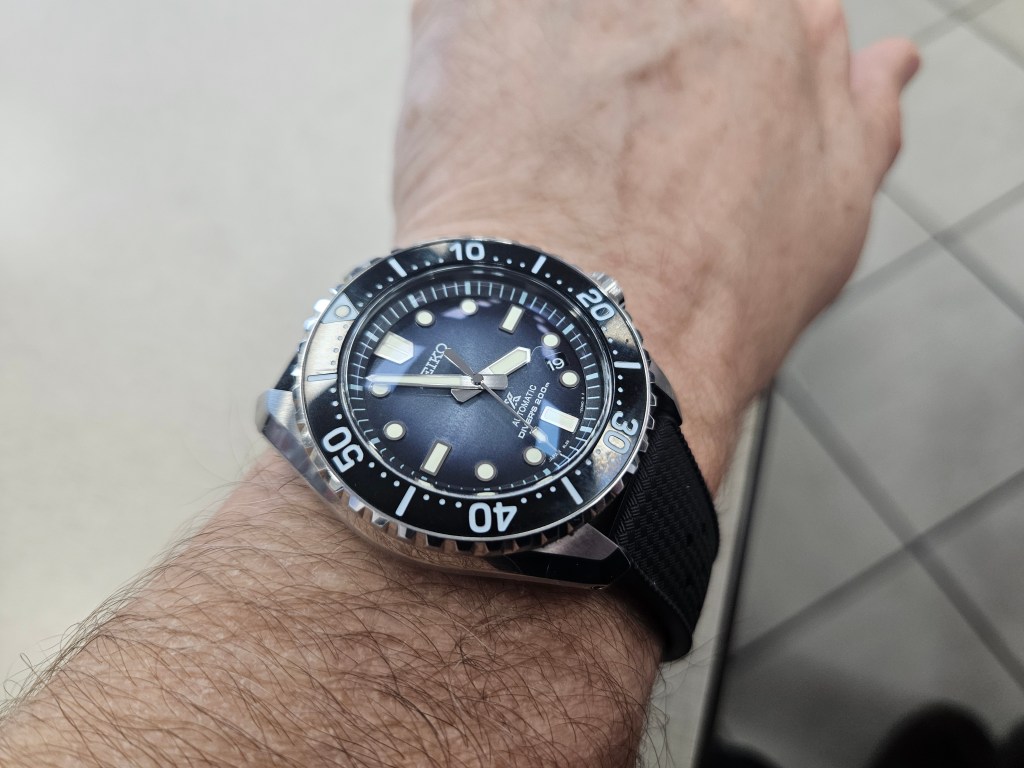
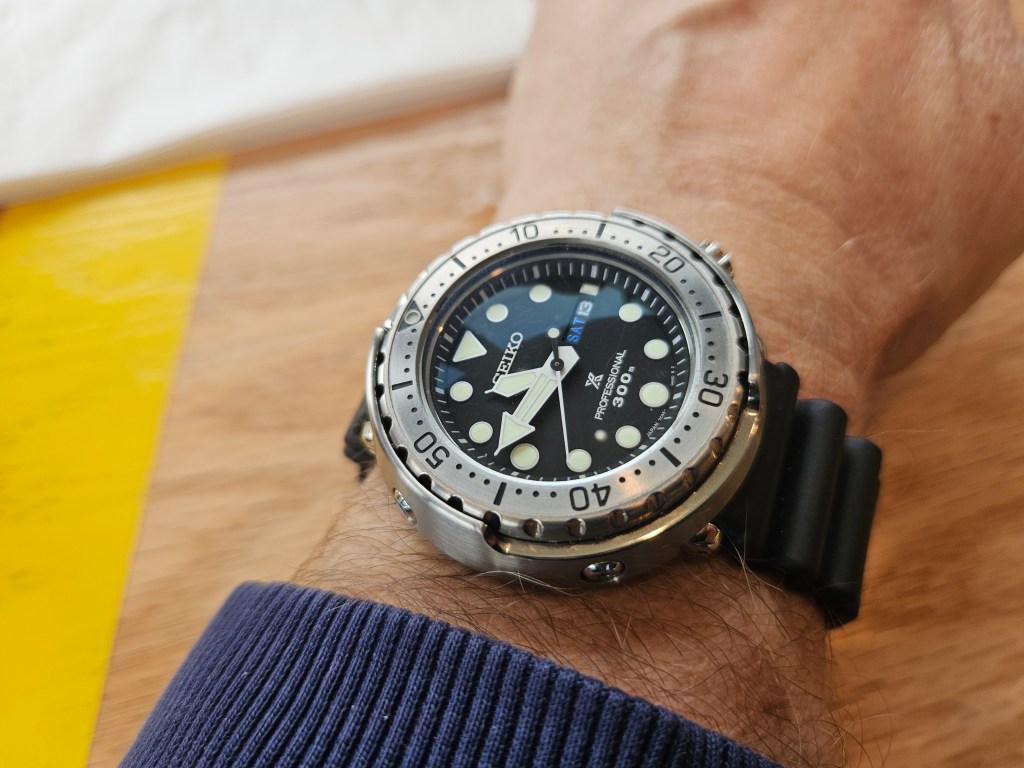
    My family gave me a custom T-shirt last Christmas emblazoned with “Man of Rotation.” It wasn’t a compliment; it was a diagnosis. They were mocking the fact that I rotate everything like a monk tending sacred relics.

    I wear a different watch every day from my seven-piece Seiko harem. I rotate three kinds of medium-to-dark roasts as if the coffee beans need equal custody time. I alternate between my Gillette Fatboy and Slim razors with the solemnity of a Cold War arms treaty. Astra blades on Monday, Feather blades when I feel reckless. Even my soaps—triple-milled rose, triple-milled almond—take scheduled turns, like aristocrats queuing for a royal audience.

    It gets worse. Quilted and fleece sweatshirts take their laps. Knit caps cycle through the week as if they were a jury pool. My radios each get a “shift” in the garage during my kettlebell workouts, which is the closest they’ll ever get to military service. Even my podcasts rotate, governed by a sliding scale of how much political despair I can tolerate without bursting into flames. Hoka tennis shoes? They march in formation. My pairs of dark-washed boot-cut jeans—virtually indistinguishable to the human eye—are treated like unique Renaissance tapestries. Golf shirts and T-shirts are matched to the day of the week because my synesthesia demands order, not chaos. And breakfast? A solemn liturgy of alternation: buckwheat groats one day, steel-cut oats the next—my personal Eucharist of complex carbs.

    What is rotation, exactly? A philosophy? A pathology? Maybe it’s my attempt to mimic the cosmic cycles of life: moons, tides, seasons, me choosing a different razor. Maybe it’s a counterfeit sense of forward motion for a man who often feels marooned in his own stagnation. Maybe it’s ritual as a pressure valve, keeping the anxieties from boiling over.

    Or perhaps these rotations are my charm against the rising madness of the world—a tiny pocket of structure in a universe that increasingly behaves like it’s had too much caffeine and too little therapy. A way of keeping my Jungian Shadow from dragging me into the basement and locking the door behind me.

    Forgive me: I’m no oracle. I don’t have definitive answers. I have suspicions, hunches, and a working familiarity with amateur psychoanalysis.

    What I do know is this: it’s time to get up, get ready for work, and select today’s Hoka. The wheel must turn.

  • The Goldilocks Hybrid and Its Two Dysfunctional Siblings

    The Goldilocks Hybrid and Its Two Dysfunctional Siblings

    We offer three flavors of writing instruction at my college, each with its own personality disorder. First, there’s face-to-face: two hours, twice a week, the old-fashioned “sit in a room and pretend we’re a community” model. Then there’s hybrid: one in-person meeting supplemented by a sleek online spine. And finally, we have asynchronous online, which is technically a class but spiritually a self-guided pilgrimage through Canvas punctuated by optional Zoom sightings of your professor, like glimpsing a rare bird.

    Last place is easy: asynchronous. It’s not a class so much as a bureaucratic scavenger hunt akin to DMV traffic school. You spend your days inside Canvas like a minor character in a Russian novel, distributing grades, tracking submissions, and playing AI Police as if you’re guarding the border between Education and the Land of the Auto-Generated Essay. It’s less “learning” and more “completing modules to avoid moral decay.”

    Second place goes to face-to-face, which works fine—but let’s be honest, students do not need to see you twice a week. Once is enough to build rapport, offer real-time feedback, and remind them you’re a living mammal. Twice? Now you’re edging into overexposure. The ones who enjoy you on Tuesday will find you insufferable by Thursday.

    And then we reach the hybrid: the Goldilocks of pedagogy. One meeting a week—just enough humanity to feel legitimate, not enough to trigger claustrophobia. The college saves money on electricity and preserves precious classroom space. Students get to cosplay “the full college experience” once a week. And you, the professor, are consumed in manageable doses—like vitamin A. Beneficial in moderation. Toxic in bulk.

  • My Fifth-Decade Crisis in the Writing Classroom

    My Fifth-Decade Crisis in the Writing Classroom

    My students lean on AI the way past generations leaned on CliffsNotes and caffeine. They’re open about it, too. They send me their drafts: the human version and the AI-polished version, side by side, like before-and-after photos from a grammatical spa treatment. The upside? Their sentences are cleaner, the typos are nearly extinct, and dangling modifiers have been hunted to the brink. The downside? Engagement has flatlined. When students outsource their thinking to a bot, they sever the emotional thread to the material.

    It’s not that they’re getting dumber—they’re just developing a different flavor of intelligence, one optimized for our algorithmic future. And I know they’ll need that skill. But in the process, they grow numb to the very themes I’m trying to teach: how fashion brands and fitness influencers weaponize FOMO; how adolescent passion differs from mature purpose; how Frederick Douglass built a heroic code to claw his way out of the Sunken Place of slavery.

    This numbness shows up in the classroom. They’re present but elsewhere, half-submerged in the glow of their phones and laptops. Yesterday I screened The Evolution of the Black Quarterback—a powerful account of Black athletes who faced death threats and racist abuse to claim their place in the NFL. While these stories unfolded onscreen, my student-athletes were scrolling through sports highlights, barely glancing at the actual documentary in front of them.

    I’m not the kind of instructor who polices technology like a hall monitor. Still, I’m no longer convinced I have the power to pull students out of their world and into mine. I once believed I did. Perhaps this is my own educational Sunken Place: the realization that attention capture has shifted the center of gravity, and I’m now orbiting the edges.

    I’ve been teaching writing full-time since the 1980s. For decades, I believed I could craft lessons—and a persona—that made an impact. Now, in my fifth decade, I’m not sure I can say that with the same certainty. The ground has moved, and I’m still learning how to stand on it.

  • Essay Prompt: Innovation, Identity, and the Meaning of “Authentic” Food

    Essay Prompt: Innovation, Identity, and the Meaning of “Authentic” Food

    In Chef’s Table: Pizza, Ann Kim rebuilds her life after a failed acting career by reinventing pizza through the lens of her Korean-American identity. Her dishes fold together memory, rebellion, shame, pride, and the complicated love between immigrant parents and their children. Yet the moment she alters traditional recipes or refuses rigid cultural expectations, she steps into a debate that surrounds many immigrant chefs:
    Does innovation honor one’s heritage—or distort it?

    In this 1,700-word argumentative essay, you will explore that tension by comparing Ann Kim’s story with the themes found in Ugly Delicious (Season 1, “Tacos”), selected episodes of The Taco Chronicles, Gustavo Arellano’s “Let White People Appropriate Mexican Food,” and Kelley Kwok’s “‘Not Real Chinese’: Why American Chinese Food Deserves Our Respect.” Your goal is to craft an argument that responds to the following question:

    When immigrant chefs remix, adapt, or modernize traditional dishes, are they betraying cultural authenticity—or creating a new form of belonging that honors their past in a more personal way?

    To answer this question, analyze how each show or essay portrays the cultural meaning of food—its connection to heritage, shame, pride, memory, and the immigrant experience. Pay close attention to visual rhetoric (music, tone, pacing, imagery), and consider how these choices shape our sense of what counts as “authentic.”

    Include at least two scholarly secondary sources on food studies, cultural identity, or immigrant narratives to deepen your analysis. These sources should help you place the shows and essays within broader academic conversations about authenticity, assimilation, and innovation.

    Your essay must include a counterargument-rebuttal section. Address the view that innovation leads to “tourist food” or watered-down Americanization, and explain whether these cases justify a purist stance toward food traditions—or whether purity itself is an illusion shaped by nostalgia, nationalism, or fear of cultural loss.

    Ultimately, your task is to show how food becomes a form of storytelling—and to argue whether storytelling requires faithful preservation, bold revision, or something in between.

  • Dream Exam for a Retiring Professor in the Bedroom of Time

    Dream Exam for a Retiring Professor in the Bedroom of Time

    Last night I found myself back in the primary bedroom of my parents’ 1970s house—a room fossilized in memory but somehow updated to the present day. I was perched on their king-sized bed, the same monolithic slab of furniture that once seemed big enough to host the United Nations, scribbling notes about my long, bruised, oddly tender career as a college instructor. It was the kind of dream where the past and present shake hands awkwardly, unsure who invited whom.

    Outside, I heard the rumble of a moving truck. A couple had arrived next door, and before I could finish a sentence in my notebook, they had already unpacked their lives, established themselves as the new neighborhood aristocracy, and decided—God help me—to visit. Instead of knocking at the front door like terrestrial beings, they wandered from their backyard onto a dirt trail, crossed into my parents’ yard like friendly invaders, and slipped through the sliding glass doors behind the beige curtains as if they were stepping into a beachfront Airbnb.

    Their names were Dan and Deidre, early forties, both in education—the D & D Couple. I wrote their names down immediately because even in dreams I have the short-term memory of a concussed squirrel, and I didn’t want to fail the basic decency test of remembering the names of unexpected houseguests. They asked my age. I told them sixty-four. I told them I was still lifting weights, still teaching after thirty-eight years, still clinging to the last threads of my profession with a mix of pride, resignation, and the kind of melancholy that whispers, It’s almost time to go.

    They listened politely, heads tilted just enough to convey admiration without actually committing to it. Then Dan—the more mischievous half of the D & D Duo—decided to spring a quiz on me. “Do you remember our names?” he asked, as if I were auditioning for senior citizenship.

    For one horrifying second, my mind decided their names were Karl and Kathy—the K & K Couple. But before I committed social suicide, I dropped my gaze to my notebook, where my handwriting—half cryptic scrawl, half cry for help—reminded me: Dan and Deidre. D & D. Not K & K.

    I delivered the correct answer, and the couple beamed at me as if I had passed a cosmic entrance exam for the next stage of my life. Their smiles weren’t just approval; they were a benediction, assuring me that even as one chapter closed, another waited—stranger, softer, intruded upon, but somehow welcoming.