Blog

  • Return to the Womb

    Return to the Womb

    I’m three months shy of turning sixty-four, which means I’m old enough to know better and still young enough to entertain delusions. This is a warning to the under-sixties: prepare yourselves. At some point in your late fifties, strange desires start slithering into your psyche like vines through the cracks of a neglected greenhouse. With every new creak of the knees and fresh batch of funeral notices, a part of you will yearn for what I call the Return to the Womb.

    No, not literally—though if you could slide back into a warm amniotic bath and unplug the Wi-Fi, you just might. I’m talking about a psychological regression: the desperate, half-sane longing to be swaddled in tropical heat, to dissolve into mango-scented breezes, and to vanish into a seaside stupor under a drizzle that feels vaguely divine. The dream? To marinate in comfort, far from the cacophony of deadlines and dental appointments, in a climate designed by God for the perpetually tired.

    I was born in Gainesville, Florida in 1961, and to this day I remember the fetid perfume of alligator swamps—a heady, sulfuric funk that now strikes me as oddly comforting. Like Vicks VapoRub for the soul. Is it any surprise that I scroll Zillow listings for barrier islands in South Carolina, Georgian marshlands, and steamy Floridian enclaves? I’m not looking for a home. I’m looking for a feeling—a fetal, lizard-brained feeling that I’ve convinced myself might still be hiding in the heat.

    But here’s the rub: I don’t trust this impulse. This Return to the Womb isn’t a noble call to simplicity. It’s a siren song, crooned by the dark twin of the Life Force—the same demon that tells you to skip your workout, order DoorDash, and stream ten hours of King of the Hill in a comfort-food trance. It whispers of paradise, but it’s peddling paralysis. It’s not vitality. It’s a prelude to decay, dressed in Tommy Bahama and sipping a piña colada.

    Writers like Steven Pressfield and Phil Stutz have been wise to this force for years. Pressfield calls it the Resistance. Stutz names it Part X. Adam Smith, bless his powdered wig, simply called it the need for “self-command”—the daily decision to wrest meaning from entropy, to choose virtue over sloth, action over inertia.

    During the pandemic lockdown, I got a taste of this regression. Sitting masked in my accountant’s office in February 2021, she asked if I was thinking of retirement. Was I thinking of it? Lady, I was living it—in pajamas, in slow motion, surfing real estate listings for stilt houses on Key Biscayne while sipping overpriced Nespresso and pretending buckwheat groats were the secret to immortality. My body had synchronized with the rhythm of a hot tub. I wanted nothing more than to stay submerged.

    Four years later, I still want it. I still want the warm drizzle, the midnight ocean swims, the faint smell of coconuts mingled with chlorine and sea rot. And yet—I know. I know. I know that the moment I submit to this dream of endless hammock-lounging is the moment the soul begins to curdle.

    Phil Stutz, in Lessons for Living, writes about Father Time as a pitiless, judgmental figure—not the kindly old man of greeting cards, but a stern cosmic accountant. He doesn’t care how many steps you walked or how clean your macros were. He wants to know: Did you spend your time on Earth doing something that mattered?

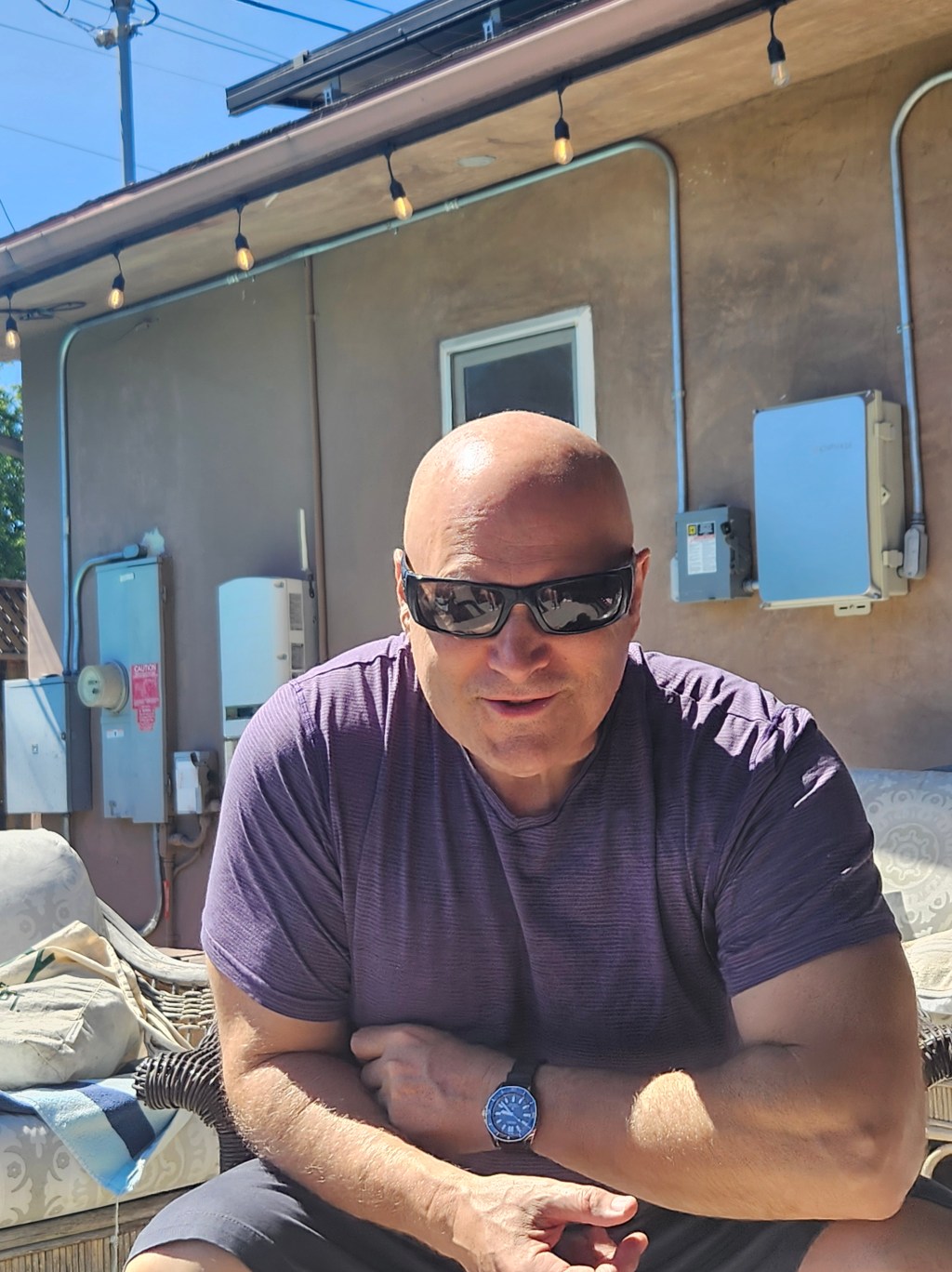
    As someone who’s worshipped at the altar of diver watches for two decades, who has pondered the geometry of bezels and the metaphysics of lume, I took this personally. Time is not just money. Time is judgment. Time is an indictment.

    And the Return to the Womb? It’s a slow lobotomy in paradise. It’s “brain rot” dressed as a beach vacation. It’s the comforting lie that you’ve earned an escape from purpose. But the truth is, the older I get, the stronger this impulse grows. And that, frankly, terrifies me.

    Still—and here’s the kicker—as I type this, I want it. I want the coconuts. I want the warm rain. I want the mangoes. I want the beach walks at twilight where nothing hurts and no one needs anything from me.

    We are mad creatures, aren’t we? Our intellect sees the trap. Our soul feels the pull. And some part of us, no matter how wise or weathered, still wants to disappear into the dream.

  • The Starfish Repetition Protocol

    The Starfish Repetition Protocol

    Last night I dreamed I was at a party—one of those sprawling, slightly off-kilter gatherings where everyone seems to know each other except you. Somewhere between the dip table and a hallway strung with dying fairy lights, a stranger cornered me with an unusual request: would I mind lifting a giant, heavy purple starfish—about the weight of a vintage ceramic ashtray—and pressing it onto their face?

    Why? Exfoliation, apparently.

    And so I did. I lifted the starfish, stuck it to their face, peeled it off, and reapplied. Again and again. Each repetition turned my arms into iron cables. My grip hardened. My forearms bulged like coiled ropes. I could feel the transformation happening—quietly, steadily—beneath my sleeves. I was becoming a beast through the sacred art of facial starfish resistance training.

    At first, the task filled me with low-level panic. Was I doing it right? Was this hygienic? Why me? But repetition, as always, breeds ease. Soon, I could apply and pry the purple creature with smooth, balletic rhythm, chatting breezily with other party guests while keeping time with my new invertebrate dance partner. What began as absurdity settled into ritual.

    No one questioned what I was doing. It was simply understood that this person needed the starfish, and I was the designated applier. No ceremony, no applause. Just quiet fulfillment in knowing my function. I performed my duty with the solemnity of a monk folding laundry—strong, sure, and ready to do it forever.

  • The Unspeakable Miracle of the Clean Break

    The Unspeakable Miracle of the Clean Break

    I stopped buying toilet paper three months ago. Not as an act of rebellion or eco-virtue—just as a natural consequence of no longer needing it. At first, I thought it was a fluke. But week after week, the same strange reality: quick, frictionless exits from the bathroom with nothing left to wipe. Naturally, I retraced my steps. What had changed?

    Breakfast, for starters. I began eating buckwheat groats—just under half a cup—bathed in soy milk, whey protein, and a handful of berries. Think monk breakfast with gym-bro toppings. At lunch, I ditched meat and tinned fish in favor of twelve ounces of super-firm tofu atop a cucumber salad, dressed with Greek yogurt, nutritional yeast, and whatever herbs made me feel like I was living in Tuscany.

    Dinner? Whatever my wife cooks. I’m not a monster.

    Of course, the hero here is the buckwheat. It isn’t wheat, not really—it’s a seed masquerading as a grain, gloriously gluten-free and loaded with insoluble fiber and resistant starch. In less science-y terms: it bulks, it sweeps, it feeds your gut’s good guys, and it delivers the elusive clean break. The kind of bathroom visit where nothing lingers—physically or emotionally.

    Then there’s the tofu. It doesn’t showboat. It doesn’t need to. Its gift is its non-disruption. High in protein, low in drama, tofu is the digestive equivalent of a self-driving electric car. It quietly replaces the gut’s old sputtering engine, the one bogged down by greasy meats and dairy sabotage, and makes everything hum.

    Put the two together, and suddenly, bathroom time became… efficient. Minimal. Almost elegant. No TP required. Just a moment of stunned gratitude, a small prayer to the intestinal gods, and a confused gaze into the middle distance: Did I just hack the human body?

    And then came the real question: Do I tell people?

    Because while we’ll chat endlessly about protein macros, creatine, cholesterol, and God help us, cold plunges—we go silent on the topic of TP use and the miracle of no longer needing it. And yet, so many are secretly miserable. The bloating, the straining, the endless wiping. And here I am with the holy grail—and I’m supposed to stay quiet?

    No, I won’t promise this will work for everyone. But if you’re even slightly intrigued by the promise of digestive liberation, consider the humble buckwheat. Consider the tofu. And maybe, just maybe, you’ll find yourself typing from a place of lightness, efficiency, and radiant intestinal peace.

  • What Fifty Years of a High-Protein Diet Taught Me

    What Fifty Years of a High-Protein Diet Taught Me

    These days, there’s no shortage of content promising health, strength, and longevity through high-protein diets. Everyone’s got a take. I can only give you mine—earned through fifty years of trial, sweat, and a steady stream of protein powder.

    I first learned the value of protein in 1974. I was thirteen, a Junior Olympic weightlifter, and determined not to be outlifted by anyone with better genetics or better snacks. I made it my mission to eat no fewer than 160 grams of protein a day. That habit never left. For the past five decades—save for the occasional vacation detour—I’ve kept my intake between 160 and 200 grams daily. Today, approaching 64, I train in my garage like a teenager on a mission, kettlebells swinging, breath steady, muscles intact.

    Protein isn’t a trend. It’s foundational. Just the other day, I was driving my daughter and her friend to Knott’s Berry Farm when her friend said, “I think I’m going to faint.” I asked if she’d eaten breakfast. “Yes,” she said. “A bowl of fruit.” I told her the truth: “That’s zero protein. No wonder you’re crashing. First thing you do when we park—go find yourself a carne asada burrito.” I told her to eat a meal with forty grams of steak-powered resurrection.

    Here’s what people still don’t get: if you don’t eat at least 40 grams of protein in a meal, you’ll be starving and sluggish thirty minutes later. It’s not magic; it’s physiology. Back in the day, I inhaled bodybuilding magazines. Everyone warned me: “Don’t believe those. They’re just selling supplements.” Sure, some of them were. But when it came to protein, they weren’t wrong. The numbers don’t lie. For men, 160 grams a day is a solid target. For women, around 120. I’ve lived it. I’ve trained on it. And I’ve aged with it. The science has finally caught up to what lifters have known all along.

  • Richard Brody vs. the Algorithm: A Critic’s Lament in a Post-Print World

    Richard Brody vs. the Algorithm: A Critic’s Lament in a Post-Print World

    In his essay “In Defense of the Traditional Review,” New Yorker critic Richard Brody goes to battle against The New York Times’ editorial decision to shift arts criticism—from the long-form written review to short-form videos designed for a digital audience. It’s a cultural downgrade, Brody argues, a move from substance to performance, from sustained reflection to algorithm-choked ephemera. The move may be pitched as modernization, but Brody sees it for what it is: intellectual compromise dressed up as digital innovation.

    Brody’s stance isn’t anti-technology. He concedes we can chew gum and walk at the same time—that written essays and short videos can coexist. But his core concern is that the center of criticism is the written word. Shift the balance too far toward video, and you risk gutting that center entirely. Worse, video reviews tend to drift toward celebrity interviews and promotional puffery. The fear isn’t hypothetical. When given the choice between a serious review and a clip featuring a celebrity making faces in a car, algorithms will reward the latter. And so criticism is flattened into entertainment, and standards dissolve beneath a rising tide of digital applause.

    Brody’s alarm resonates with me, because I’ve spent the last four decades teaching college writing and watching the same cultural drift. Long books are gone. In many cases, books are gone altogether. We assign short essays because that’s what students can handle. And yet, paradoxically, I’ve never seen such sharp classroom discussions, never written better prompts, never witnessed better argumentation than I do today. The intellectual work isn’t dead—it’s just found new vessels. Brody is right to warn against cultural decay, but the answer isn’t clinging to vanished ideals. It’s adaptation with integrity. If we don’t evolve, we lose our audience. But if we adapt wisely, we might still reach them—and even challenge them—where they are.

  • Reginald, Kent, and the Shark-Infested Sea of Self-Improvement

    Reginald, Kent, and the Shark-Infested Sea of Self-Improvement

    Last night, I dreamed I was twenty again. I was in attendance at a spectral dinner party filled with strangers and vague regret. I was young again, which is to say, raw and restless, clutching a satchel full of unformed ambitions and unfiltered loneliness. 

    A wealthy young man appeared, oozing charisma and vaguely European cheekbones, a demigod of fashion and cosmetics, the kind of person whose cologne smells like entitlement. He leaned in and offered me a revelation disguised as skincare: two miracle creams. One, to be applied to the crown of my head, was called Reginald. The other, for my back, was Kent. He spoke of them with the hushed reverence usually reserved for ancient scrolls or Swiss watches. These weren’t mere moisturizers—they were spiritual lubricants. Balms that promised not just hydration, but orientation. 

    Then, as if summoned by a higher capitalist calling, he vanished mid-conversation, leaving me with a business card and a lead on where to find a lifetime supply—somewhere by the sea. And so began the quest.

    To be worthy of Reginald and Kent, one had to wear formal attire, because of course one did. I found myself in a tailored black suit, wading through surf with fellow seekers, sharks gliding around our ankles like corporate anxieties. I held my leather dress shoes in hand, lest the saltwater stain them—a fool’s hope, given the bloodthirsty tide. Later, I caravanned with aging rock royalty—Peter Gabriel, Jackson Browne, Boz Scaggs—who casually discussed their rendezvous plans in Capri or St. Barts. For a moment, I basked in the illusion of belonging. But as the conversation turned to private jets and generational wealth, the truth descended: I was no musician. I had no bookings. My only claim to transformation lay in acquiring my precious creams.

    The journey devolved into a surreal slog. It rained as I crossed a deserted college courtyard. My business shoes were doomed. A younger version of S—someone I wouldn’t meet until decades later—appeared like a ghost from my professional future, pointing the way with a sense of urgency. I ran, I hitchhiked, I boarded phantom trains, only to land back at the shark-infested beach, no closer to the mythic Land of Body Cream. 

    Then, through the humid haze of beachside commerce and quaint seaside cafes, I saw Rachel—yes, that Rachel—from a hot tub party in Livermore, 1988. 

    Seated at a weathered café table under a string of flickering patio lights, I unspooled my sorrow before her, pouring it out like a battered thermos with a cracked seal—dripping, lukewarm, and uninvited. I mistook my own rawness for profundity, believing that the sheer weight of my unfiltered confession would conjure tenderness, maybe even love. But Rachel didn’t flinch. She studied me like a dissection project and began her work with clinical precision. Her words carved deep and clean, a verbal autopsy that exposed every rot-soft corner of my character. And just when I thought the vivisection complete, she found new organs of dysfunction to prod and slice. Her fury wasn’t wild—it was righteous, surgical, sustained.

    She stormed off, heels tapping out a verdict on the pavement. I sat stunned in the wreckage of myself, staring at the space she had vacated, still warm with contempt. That’s when the restaurant owner appeared—a woman with the weary kindness of someone who’s witnessed too many romantic collapses and kept score. She told me she’d filmed the entire scene. “You’ll want to study this,” she said, handing me the video with a nod toward the attic stairs. “It might help.” I obeyed without a word.

    I climbed into that attic, its rafters bowed with time, and watched the footage on an aging monitor. Again and again. I rewound every insult, paused on each flinch of mine, cataloged every truth she hurled like a polished blade. It became my gospel of failure. I spent the rest of my life up there—alone with my ghosts and her voice—striving to earn back something I’d never really had: the right to reenter the world and claim Reginald and Kent, the sacred creams of redemption I still believed might set me right.

  • Carrère’s Kingdom: Faith, Madness, and the Will to Survive

    Carrère’s Kingdom: Faith, Madness, and the Will to Survive

    In The Kingdom, Emmanuel Carrère recounts the strange, fevered period of his life when he became a practicing Catholic—a conversion that lasted three years and hovered somewhere between epiphany and breakdown. During that time, he rose each morning to take meticulous notes on the Gospel of John, scribbling like a man possessed. He now looks back at that period in the early 1990s with bewilderment, even embarrassment. What surprises him most isn’t that he converted—it’s that, years later, while immersed in researching the origins of Christianity, he failed at first to connect that research to his own religious episode. When he finally does, the realization is so jarring he feels compelled to dig out the old notebooks. And yet the thought of reading them fills him with dread.

    The last time he looked at them, in 2005, he was deep in depression and under the care of a psychiatrist. At the height of his religious zeal, Carrère had been suicidal. He was prescribed antidepressants—ones whose warning labels included the possibility of “erroneous beliefs,” a caveat that made him laugh darkly at his own conversion. He’s careful not to reduce religious yearning to a single cause, but it’s hard to miss the pattern: a man desperate to avoid self-destruction turning toward a story of rebirth, redemption, and divine rescue. Perhaps, instead of ending his life, he baptized it into another.

    As he flips through the old pages, he’s confronted by a younger self who no longer believed in free will or personal resolve as meaningful paths to goodness. He saw human beings as hopelessly frail and himself as incapable of rescuing his own life. At the time, he clung to God and marriage with equal desperation, hoping both would serve as anchors to prevent him from drifting into the abyss. But the notebooks also reveal a darker truth: his marriage to Helene was deeply unhappy. They loved each other, but they drank too much, blamed each other for their suffering, and fed each other’s neuroses. His writing—once the purpose of his life—had stalled completely. He hadn’t written anything in three years. He was a man sinking.

    Carrère eventually crawled out of that pit, but not through faith. What saved him wasn’t a god, but a set of daily disciplines: yoga, martial arts.

    A spiritual system that promised absolutes had failed him. A life that combined a focus on mind and body resulting in relaxation and clarity of thoughts, helped empty his anxieties and depression. With a strong mind and body, he was able to be productive as a writer. He eventually made lots of money from his craft, and he became the least likely to become religious: He became the rich man for who is about as ripe for salvation as the camel walking through the eye of a needle. 

  • Open House: A Dream of Chaotic Enlightenment

    Open House: A Dream of Chaotic Enlightenment

    Last night, I dreamt that my wife and twin daughters converted our quiet domestic haven into a full-blown educational commune for the neighborhood. The front door was flung open like we were hosting a TED Talk and a bake sale simultaneously. Strangers streamed through the kitchen in orderly lines, signing up for courses with the brisk determination of people enrolling in Pilates or personal enlightenment. No one had asked me. No one had told me what the curriculum was. My role? Apparently, ornamental.

    But oddly enough, I didn’t throw a tantrum or fake a migraine. Instead, I adapted. I bought a new outfit—something suitably intellectual yet vaguely cinematic—and began holding spontaneous salon-style lectures in the bedroom, where I engaged in hushed conversations with film critics about the forgotten brilliance of F. Scott Fitzgerald. I planted my flag on “Winter Dreams,” declaring it the Rosetta Stone of his genius. While chaos bloomed in the kitchen and children shrieked over multiplication tables or modern dance or whatever anarchic pedagogy my family had cooked up, I stood in front of my closet planning my next wardrobe change like a one-man off-Broadway production.

    My lectures—always held in the bedroom, never the common areas—became my sanctum. The rest of the house was a beehive of subjects I neither taught nor understood. Adults hunched over tables. Kids ran mock elections. My family presided over it all with evangelical confidence, while I stayed in my curated corner, delivering monologues in crisp linen. The living room had been repurposed into something between a Montessori lab and a call center. It was, frankly, terrifying.

    What astonished me most was not the unannounced academic uprising, but my unexpected willingness to go along with it—as long as I could dress the part. Normally, I recoil from hosting so much as a dinner party, but here I was, participating in a family-led movement to educate the masses. Maybe I was possessed. Or maybe I’ve reached a stage in life where purpose can be borrowed, like a blazer, so long as it fits well and looks good under good lighting.

  • Groats, Greens, and the Gospel of Self-Control

    Groats, Greens, and the Gospel of Self-Control

    I’m a man prone to obsessions. Not in a cute, quirky, Wes Anderson way, but in the full-blown, white-knuckled grip of irrational fixations that orbit around some grand illusion of self-improvement. These fixations rarely tether themselves to anything as vulgar as reality, which means I have to approach them like a man handling live wires—gingerly, skeptically, with rubber gloves and a fire extinguisher nearby. My latest obsession? A brutally austere, monastic eating plan masquerading as discipline but smelling faintly of madness.

    The rules are simple, almost religious in tone: three meals a day. No snacks. Breakfast is a steaming bowl of steel-cut oats doped with vanilla protein powder and berries. Lunch: buckwheat groats, same protein powder, same berries, different bowl. Dinner: a joyless, crunchy salad of cucumber and bell pepper crowned with sauteed tofu and doused in a dressing so puritanical it could double as penance—balsamic vinegar, Greek yogurt, nutritional yeast, and a blizzard of righteous herbs. To add some zing, I’ll dump a tablespoon of Trader Joe’s Italian Hot Bomba Sauce to give me a lifeline to joy and pleasure. 

    But here’s the rub: the long, harrowing stretch between lunch and dinner. That’s when the madness starts to whisper. Could green tea keep me afloat? Coffee? A heretical diet soda or two? These are the thoughts of a man trying to barter with his own obsession, bargaining with the jailer who’s taken his afternoon hostage. I pretend it’s hunger, but what I’m really feeling is the hollow buzz of addiction to a narrative: that if I follow this sacred routine, I will unlock a better, lighter, more transcendent version of myself.

    Of course, it’s likely just another chimera—one more shimmering lie I chase like a half-crazed mystic in a Whole Foods aisle. I suspect I don’t actually change. I just trade compulsions. Some people devour cheesecake. I devour grand narratives of control, discipline, and spiritual rebirth through groats and greens. My real diet isn’t food—it’s fantasy. And I am a glutton.

  • The Real Reason You Take Yoga Classes

    The Real Reason You Take Yoga Classes

    In The Kingdom, Emmanuel Carrère draws a sly, subversive line between Les Revenants—a moody French zombie drama—and the early days of Christianity, when Paul’s disciples waited breathlessly for the world to end and the dead to rise. They were the original doomsday cult: spiritual outcasts and apocalyptic misfits, not unlike the “true believers” Eric Hoffer famously described in The True Believer. What bound them together wasn’t political ideology or economic despair—it was a single cosmic rupture: the Resurrection. One dead man, allegedly not dead anymore, changed the course of Western civilization. It’s not hard to see the resemblance to Les Revenants—a town full of dead people quietly returning, not as ghouls, but as eerily normal people who nonetheless shatter reality.

    Carrère, never content with simple metaphors, brings this comparison to a dinner conversation with his urbane, rationalist friends. One of them, Patrick, accidentally blurts out something true and uncomfortably sharp: millions of otherwise intelligent, educated, and mentally stable people believe in something as outlandish as Christian theology—and no one bats an eye. If someone today claimed Zeus turned into a swan to seduce their cousin, or said they kissed a frog that turned into a prince, we’d laugh or lock them up. But tell a roomful of professionals that a crucified Jewish preacher, born of a virgin, rose from the dead and will someday return to judge the living and the dead—and you’ll be offered wine and a seat at the gala. As Patrick notes, “It’s kind of strange, isn’t it?”

    Carrère is not the first to dwell on this strangeness. Nietzsche, he reminds us, was equally dumbfounded that people who believed in rationality, science, and history could also believe in what is essentially a fairy tale with incense and stained glass. And yet, the tale persists. Presidents still bow to bishops. Cathedrals still echo with sacred music. Maybe it’s not belief that sustains Christianity, but aesthetic inertia—what Carrère calls “pious sentiment.” It’s not that people believe Jesus walked on water. It’s that the stories—and the cultural power they evoke—feel too grand to abandon. You may not believe in Santa Claus, but you still get misty-eyed when the lights go up and the music swells.

    So Carrère offers us a taxonomy of belief: There are the literalists, who treat doctrine as GPS coordinates for their soul. And then there are the sentimentalists—the lukewarm faithful—who love the rituals, the candles, the elevated language, but leave the miracles in quotation marks. For them, religion has become spiritual décor. They still crave spiritual ritual but instead of going to church, they attend yoga classes. The creative power that once summoned cathedrals and crusades now hums gently in the background, just another playlist in the cultural mix. Belief, in this world, doesn’t have to be true—it just has to be beautiful enough to preserve.