Blog

  • Comma Splices and Other Endangered Species

    Comma Splices and Other Endangered Species

    I’ve been grading college essays for nearly forty years, and for most of that time, spotting a comma splice was like being a tennis umpire catching an out-of-bounds serve: instant whistle, raised flag, righteous indignation. A run-on sentence was not merely a mistake—it was a moral offense. A fragment was a cry for divine intervention. I was the Grammar Constable, badge polished, citation pad ready.

    But something has shifted. I look at a comma splice now and instead of reacting like a hall monitor on Red Bull, I simply ask: What’s the point? In a world where students increasingly treat AI like an in-house copyeditor, how long will “grammar errors” even exist? Am I really supposed to send them to syntax jail when a few prompts and a grammar model will sand off their linguistic rough edges? Policing grammar suddenly feels as antiquated as lecturing people about proper carburetor maintenance. The role I’ve played for decades—keeper of the mechanical rules—feels obsolete.

    This morning I graded a paper with a textbook comma splice. A few years ago, I’d have winced like I’d bitten into a lemon rind. Today? I barely blinked. The author will eventually click a button and let a machine fix it. My outrage, like the comma splice itself, is becoming a relic of the combustible-engine era.

  • How Cupertino Became the Daycare of Computing

    How Cupertino Became the Daycare of Computing

    George Carlin used to riff on the difference between baseball and football. Baseball, he said, was bucolic and innocent, all sunshine and fresh grass, a place where no one ever really got hurt. Football, by contrast, was a mechanized assault: helmets, blitzes, aerial bombardments, and strategic violence. If Carlin were alive and tormenting the tech world on YouTube, he’d have the same bit about Windows and Apple.

    Windows is adult golf in Florida. You’re on a sprawling course with crosswinds, hurricane alerts, gator-infested water hazards, and snakes hiding in the reeds. Everything is dangerous, unpredictable, and just a little thrilling. You’re free out there. You’re a professional. You drive a ball into the storm with the confidence of someone who believes he belongs in the arena.

    Apple OS, on the other hand, is miniature golf. The obstacles are neon dragons, ceramic elves, and snowmen with friendly smiles. The path is fenced so the ball doesn’t roll anywhere interesting. The course is supervised by Cupertino kindergarten teachers who hand you a juice box and a blanket every time you panic. It’s safe. It’s adorable. It’s a padded cell with a “magic ecosystem” label slapped on top.

    Pride might tempt you to leave the kiddie course. You might fantasize about playing Windows golf with the adults—until the day a ten-foot alligator rises out of a swamp and clamps down on your leg, leaving you hobbling back to Apple, clutching your MacBook Air like a teddy bear.

    The lesson is simple: when you’re about to spend two grand on a computer, know who you are. Buy the machine that fits your temperament, not the fantasy persona you conjured on Reddit at 1 a.m.

  • The Cult of the Desktop Shrine

    The Cult of the Desktop Shrine

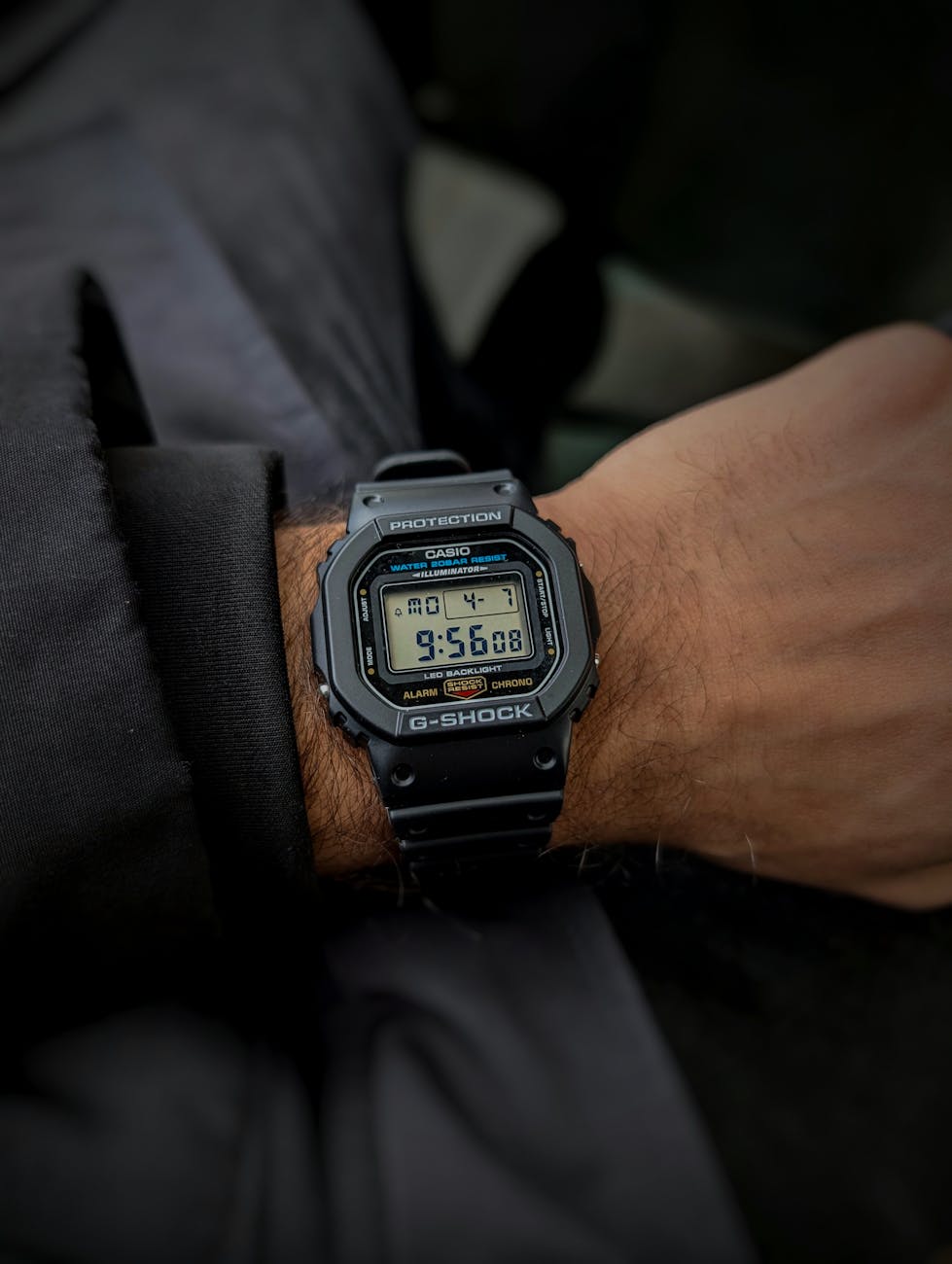
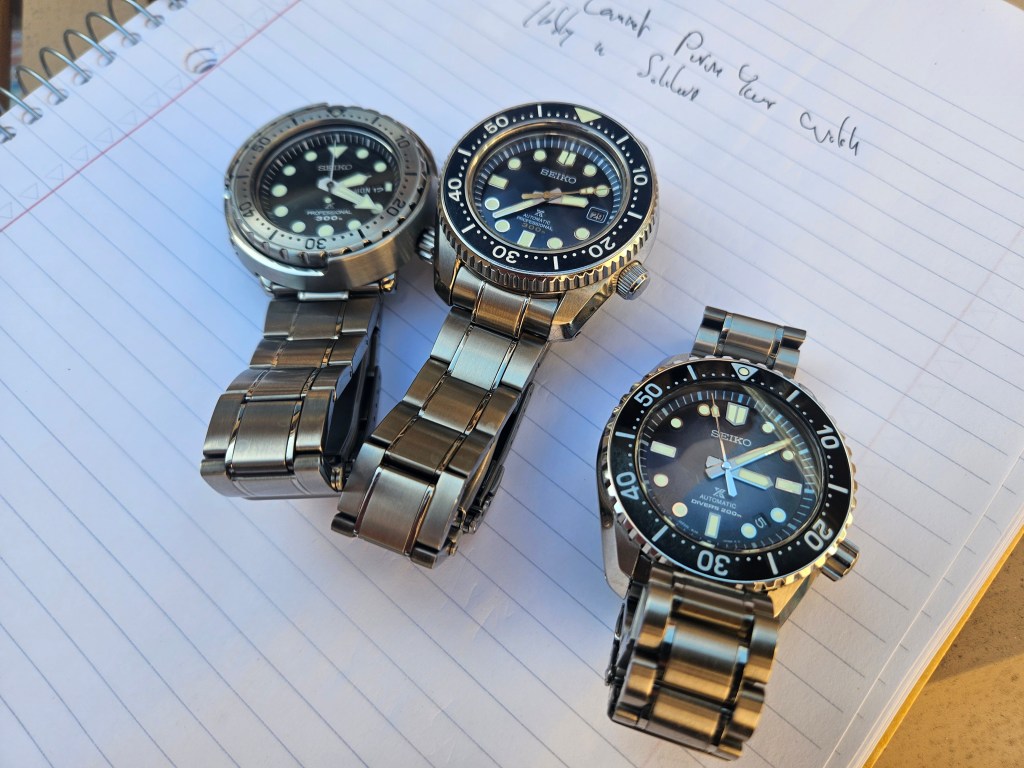
    There is a particular species of human for whom a new computer is not a tool — it’s a religious conversion. The desktop isn’t a workspace; it’s a cockpit for a future self, the glamorous avatar of the writer, artist, or content sorcerer they imagine they will become. People like this do not simply buy machines. They curate private shrines. A desk becomes an escape pod: LED lights humming like temple candles, two monitors glowing like stained-glass windows, and the mechanical keyboard serving as a holy relic. Once seated, the outside world ceases to exist — or so the fantasy goes — until an eBay tab opens and suddenly a $2,500 dive watch begs for attention, or a pair of ergonomic walking shoes on sale becomes a spiritual priority. Sacredness is delicate; it collapses at the first whiff of retail dopamine.

    I speak as one of these zealots. I live in a small home with a wife and two teenage daughters, so I protect the illusion of solitude with the devotion of a medieval monk. My desktop setup has become my monastery. For seven years, I have sat beside the same computer: a 15.6-inch Acer Predator Triton 500 with an RTX 2080, perched like a retired fighter pilot on a wooden pedestal. Beside it stands a 27-inch Asus Designo 4K monitor. My keyboard is an Asus Rog Strix Scope II fitted with “quiet snow” switches — though I still regret not choosing switches that click like a typewriter possessed by Bukowski.

    Here’s the problem: the machine refuses to die. It doesn’t slow down, wheeze, or show symptoms of electronic mortality. It handles everything I throw at it. This stubborn longevity has become an accusation. If I truly mattered — if I were a world-crushing content creator — surely I would need M4 silicon or a Windows Ultra 9. But here I am, a humble i7 and RTX 2080 carrying my entire life on its back like a mule. The message is humiliating: you produce so little that even an elderly predator laptop barely notices your existence. I am not a digital gladiator. I am an NPC.

    One half of me wants to honor the Acer’s absurd durability. I want to see how long it lasts: eight years? Ten? Will it run until I am eighty and my daughters sell it on Facebook Marketplace to a grad student writing her dissertation? The other half of me yearns for a new identity — a fresh cockpit. I fantasize about a Lenovo ThinkPad P16, a machine with the aesthetic of a NATO command center. In my imagination I would sit before it, efficient and unstoppable, a productivity samurai. Then I read about thermals, swollen batteries, and the corporate decay of ThinkPad build quality, and the fantasy curdles.

    Mini PCs tempt me, too — elegant little cubes promising freedom from laptop fan noise. But then I scroll deeper and learn about overheating, BIOS drama, firmware rituals, and mysterious Windows gremlins that exist only for people who try to “optimize.” This is when I confront the truth: Windows PCs are for people fluent in Linux, the jiu-jitsu masters of tech. These individuals have tattoos of penguins on their forearms and spend weekends customizing drivers the way normal people mow their lawns. They don’t “use computers.” They tame them.

    I am not that creature. I am a man who gets nervous updating his router. This leaves me with one path: the Mac Mini. Not because I am enlightened, but because the walls of Apple’s walled garden keep me from accidentally burning the place down. Windows is a vast golf course stretching to the horizon. MacOS is miniature golf: enclosed, guarded, brightly colored obstacles that keep your ball out of the swamp. I must accept who I am — a timid, high-functioning idiot — and pick the putter.

    And yet, when people complain about laptops dying after three years, I can raise a hand and say: “Seven years. RTX 2080. Still alive.” It is not greatness, but it is a kind of glory.

  • The Monster in the Ravine and the Moon Over the Suburbs

    The Monster in the Ravine and the Moon Over the Suburbs

    Last night I dreamed I was wandering through a house I didn’t recognize. The world outside was pitch black. A small family dog pressed its nose to the sliding glass door and barked toward the backyard, desperate to escape. I opened the door and watched the little creature trot behind the bushes to relieve itself. That’s when a monster rose out of the ravine—some hulking mastiff with the skull of a bull, as if a guard dog from the underworld had crawled up to inspect the living. It ignored the pet and fixed its gaze on me. Without hesitation, it entered the house and began to contort into different shapes of malice. At first, I trembled. Then anger boiled in me like a furnace. This thing wasn’t just ugly; it was the source of suffering and rot in the world. I begged God to purify me so I could destroy it, but heaven stayed silent. What I received instead was a strange consolation: a feeling that at least my rage was righteous, and that I still knew where my moral compass pointed.

    Eventually the creature disappeared and daylight arrived. I made a long trek back toward what I understood to be “home.” Across the street, my neighbors were ecstatic, pointing skyward. Hovering above their house was a massive white dome—like a camper shell the size of a Costco, a fallen moon with decorative crenellations. Soon crowds formed. It was a city attraction, a spectacle engineered to “bring excitement.” Snowflakes—artificial, slow-motion confetti—drifted through the air. People gasped, laughed, and posed for photos, thrilled by the distraction.

    The beast was gone, but the problem of evil remained unsolved. In its place, my city embraced pageantry, gimmicks, and civic cheerleading. I touched my aching left shoulder, the one crippled by a three-month rotator cuff tear, and wondered what I would become—a broken man, a burden, a questionable member of society. Fake snow drifted onto the jubilant crowd, and their rosy smiles suggested that change, or at least the illusion of it, was already underway.

  • Heroes and Living Dead: What Douglass and Chekhov’s Nikolai Teach Us About the Meaning of a Good Life

    Heroes and Living Dead: What Douglass and Chekhov’s Nikolai Teach Us About the Meaning of a Good Life

    College Essay Prompt

    We often assume that the pursuit of freedom and happiness is a universal human impulse, shared across eras, cultures, and personal histories. Yet the paths individuals take toward those goals can be radically different, and those differences reveal whether one’s concept of happiness liberates or destroys. Few figures illustrate this divide more clearly than Frederick Douglass and Nikolai Ivanovitch from Anton Chekhov’s short story “Gooseberries.” Douglass’s character and trajectory embody a moral code that turns hardship into purpose: through literacy, community, courage, and a refusal to internalize oppression, he transforms enslavement into a platform for human dignity—not only for himself, but for others. By contrast, Nikolai pursues a narrow, adolescent fantasy of happiness, one built not on self-growth or empathy but on domination, comfort, and the myth of personal entitlement. His life becomes a grotesque parody of fulfillment—an existence of empty pleasures, self-deception, parasitic dependence, and spiritual decay beneath the veneer of material abundance.

    In a 1,700-word essay, analyze how Douglass’s journey to freedom stands as a model of healthy, ethical happiness while Nikolai’s descent exposes a warped, toxic version of happiness rooted in narcissism and self-indulgence. Your essay should do the following:

    1. Compare the moral foundations of Douglass and Nikolai’s pursuits.
      Explain how Douglass’s “Bushido-like” moral code—discipline, responsibility, representation, courage, and community—shapes his identity and empowers those around him. Contrast this with Nikolai’s rejection of accountability, his obsession with land ownership, and his willingness to deplete others—emotionally, financially, and spiritually—to maintain his fantasy of contentment. Discuss how each man’s vision of freedom manifests in their treatment of other people.
    2. Analyze the role of community vs. isolation in each character’s development.
      Douglass’s path is paradoxically individual and communal: he cultivates internal strength, but he locates freedom in solidarity—those who teach him to read, abolitionists who elevate his voice, and the enslaved people whose suffering he speaks for. Meanwhile, Nikolai constructs a private empire that excludes others, even the brother who once supported him. Consider how their relationships either amplify or erode their humanity.
    3. Examine the symbolic images of transformation and degradation.
      Use key passages from Douglass’s Narrative to show how literacy, speech, political action, and public representation transform him from an enslaved boy into a moral and political leader. Then show how Nikolai’s physical and spiritual decay—his swollen body, the petty rituals of comfort, the stagnant gooseberries—reflect the collapse of his inner self. Avoid plot summary; instead interrogate how each author uses these symbols to define what “freedom” looks like in practice.
    4. Discuss how each figure embodies or violates a healthy definition of happiness.
      What does Douglass’s version of happiness require? Effort, growth, sacrifice, connection, and the willingness to uplift others even when it hurts. What does Nikolai’s version require? Exploitation, avoidance of reality, refusal to change, and the delusion that comfort equals fulfillment. Describe how a life built on purpose creates meaning, while a life built on selfish gratification becomes spiritually unlivable.
    5. Address at least one counterargument.
      Consider why Nikolai might be appealing to some readers. Isn’t his dream of having a small estate, comfort, and peace understandable? Why might some view Douglass’s path as impossibly heroic—too demanding, too painful, or too noble for the average person? Engage with these viewpoints seriously, and rebut them using evidence from the texts.
    6. End with a conclusion that points to broader implications.
      Connect your contrast to the world we live in now. What do Douglass and Nikolai teach us about modern definitions of success, happiness, and the “good life”? Can happiness exist without social responsibility? Does personal freedom become toxic when it is purchased at the expense of others? Ask yourself what moral code has the power to sustain a person—and why some forms of comfort inevitably rot the soul.

    Your essay should not merely compare two characters; it should interrogate the meaning behind their choices. You are ultimately making an argument about what counts as real freedom and real happiness. Your goal is to show that the paths we choose do not simply determine the lives we build—they determine the kind of people we become.

  • Beyond the Self-Made Myth: Frederick Douglass, Community, and the Fight Against the Sunken Place

    Beyond the Self-Made Myth: Frederick Douglass, Community, and the Fight Against the Sunken Place

    College Essay Prompt:

    Public narratives frequently present Frederick Douglass as a “self-made man,” emphasizing his escape from slavery, his disciplined pursuit of literacy, and his celebrity as an abolitionist. In a 1,700–2,000 word essay, evaluate how this popular framing obscures the communal, political, and structural forces that shaped Douglass’s rise and activism. Which relationships, institutions, and collective efforts made his achievements possible, and why do certain commentators downplay them?

    Then, drawing on one or more of the following—Get Out, Black Panther, The Evolution of the Black Quarterback, or ALLENIV3SON—analyze how these works depict barriers that cannot be overcome through individual effort alone. In what ways do they present the “Sunken Place” as a system sustained by stereotypes, gatekeeping, or power hierarchies? Explain how collective action, representation, or community support becomes necessary for breaking those barriers. Your essay must include a counterargument that fairly represents the appeal of the “self-made” narrative and a rebuttal grounded in evidence from Douglass and your chosen texts.

  • The Day My Wife Met the Quietest Refugees

    The Day My Wife Met the Quietest Refugees

    Before our twins were even born—more than fifteen years ago—my wife told me a story that still sits in the back of my mind like a ghost that refuses to leave. She and her best friend, A, drove to Long Beach to visit what would soon be A’s new home. She and her partner had bought it a month earlier, but escrow delays, termite fumigation, and bureaucratic nonsense kept the place stuck in a strange limbo: theirs legally, but uninhabitable in practice. The house was technically empty—no furniture, no boxes—just an address waiting for its owners to arrive.

    Inside, my wife and A heard voices drifting from somewhere near the kitchen. They followed the sound and found a couple, perhaps in their early fifties, sitting at the counter with steaming cups of bouillon broth. They were calm, unthreatening, even dignified. Two shopping carts stood beside them like faithful dogs, packed with precision: folded clothes, cans of food, hygiene supplies, diabetic needles, prescription bottles—everything arranged with military neatness. My wife used the word squatters, but they looked more like survivors who had finally found a safe harbor.

    They spoke kindly. They’d been living there for nearly a month, they said. The house sheltered them from the cold; they cooked simple meals, washed, slept. They didn’t pretend it was theirs—only that it was a rare oasis in a city allergic to mercy. My wife described them as being sweet, especially toward one another. More than anything, my wife was moved by their sweetness and tenderness.

    Then A told them in a gentle tone that she was the homeowner. The couple apologized, almost embarrassed. The man rolled his cart out first, down the hallway and out through the front door. His companion followed—until she stopped mid-stride, panic rippling across her face. He had forgotten one of his medications. She sprinted back to the kitchen, grabbed the bottle, and hurried after him.

    That moment—her urgency, her loyalty, the fragile bond of two people clinging to each other against the world—burned itself into my heart. Even now, whenever I remember it, my eyes well with tears.

  • Camp Flog Gnaw: The Weekend That Broke My Driving Career

    Camp Flog Gnaw: The Weekend That Broke My Driving Career

    Camp Flog Gnaw was a weekend-long bacchanal of sound and sweat for my wife and our twin daughters, two days of music and mayhem baked under the unforgiving Los Angeles sun. My wife braved the trip on Friday and came home looking like a survivor of a maritime disaster, muttering that leaving Dodger Stadium traffic was like trying to escape a collapsing pyramid. She begged me to handle Sunday drop-off and assured me they would Uber home like civilized people. Armed with a “Fast Pass” for the 110 North, I engaged Google Maps, which promptly betrayed me and sent me barreling into downtown—an urban obstacle course specifically engineered to destroy men my age. Pedestrians sprang into the street like feral pigeons, daring me to earn a manslaughter charge. Driverless Waymo cars drifted past me with pastel-lit antennae, cheerful like clown hearses guiding me into the underworld. The lanes themselves seemed painted by committee: solid, dashed, turning, not turning, red, green, “maybe stop,” “maybe don’t”—a psychedelic optical exam administered at 20 mph.

    When I finally dropped off my wife and daughters, I whispered a confession to my wife: “I think I’m giving my Accord to you, and the other car to the girls. I’m retiring from the driving game.” They didn’t laugh; they’ve seen cracks in the armor. I’m a high-strung man, and at sixty-four, the neurons don’t fire like they used to. I can still handle a five-mile radius around my house—my personal demilitarized zone—but pull me into the wilds of Los Angeles traffic and I’m ready to hang up my driver’s jersey. Downtown LA isn’t a city. It’s a gladiatorial arena where the young come to dominate, and I say to myself, “This is no country for old men.” 

  • How Ultra-Processed Foods Turn Us Into Weight-Gain Machines

    How Ultra-Processed Foods Turn Us Into Weight-Gain Machines

    Julia Belluz and Kevin Hall’s essay “It’s Not You. It’s the Food.” explores the way the food industry changes our biology so that we are not at fault, in terms of a failure of moral strength or self-discipline, for our weight gain. Rather, ultraprocessed food is. Even if we try to shun the “toxic food environment,” we will find such a move difficult for several reasons. For one, what is “toxic food”? The government, at best, has given us a vague definition. Do we look to influencers? They’re trying to sell supplements more than health. 

    To make their point, the authors use this analogy: “If large swatches of the population were being sickened by a poison released from an industrial plant, no one would suggest that the solution is to just offer home filters, wearables, and supplements. The only real path to restoring health would have to include mandating the removal of the poison from the environment.” 

    The truth is simple, and it’s brutal: You’re on your own: You have to fight like hell to remove ultraprocessed foods from your diet. Kevin Hall’s study shows the more UPFs you eat, the more weight you gain. And the converse is true: The less UPFs you eat, the more weight you lose, especially fat and without effort. 

    The authors observe that when people move to America, they get fat. The common denominator is leaving a low UPFs country to a highly concentrated one. These immigrants get fat and suffer obesity-related diseases. So much for the American Dream.

    Why are UPFs the villain? Because they mess with us–our biology, our hormones, our satiety signals, our gut biome. They turn us into Fat Machines. 

    In America’s rich UPF environment, 70% of available food calories “are deemed hyperpalatable and are in foods designed for the overconsumption that chronically sickens us. They’re also heavily marketed and cheap. Chronic disease hot spots are the most socioeconomically deprived, with food environments akin to toxic waste sites.”

    Knowing the enemy before us, we have to ask ourselves: What do we do? The authors argue that self-discipline doesn’t cut it. We need government regulation. The problem is that we could be dead before anything gets done. Another problem is that the FDA and other institutions don’t seem to have a handle on sound health these days, and even if they did, they’ve lost the trust of the public, many of whom like to cherry-pick their information inside their social media silos. 

    Nevertheless, the authors are adamant about this point: UPFs that “can drive overconsumption should be treated as recreational substances to which we must apply aggressive tax policies, front-of-pack warning labels, marketing restrictions and more, especially for foods marketed to children.”

    Notice the authors didn’t say all UPFs, only the ones designed for overconsumption. Some processed foods such as canned beans, high-protein, flax-seed whole-grain bread, liquid egg whites, and whey protein powder should be spared such government labels. 

    Should we wait for the government to help us in this regard? Probably not. Researcher Kevin Hill quit the N.I.H. after his UPFs studies were censored by the current administration. Not surprisingly, money is a big factor. The authors point out that the global food industry is worth $8 trillion, more than the oil and gas industry. There’s a lot of skin in the game for lobbyists who fund a plethora of politicians. 

    But the science is out: We’re not at fault for our fatness. Food Inc., which makes 70% of their food hyperpalatable for overconsumption to line their pockets, bears much of the blame. Also, failure of government leadership. 

    Brace yourself: Regardless of your economic status, you’re on your own. No one is going to save you. Eating in America is the Wild Wild West. 

  • Not All Ultra-Processed Foods Are Alike

    Not All Ultra-Processed Foods Are Alike

    New Yorker writer Dhruv Khullar opens “Why Is the American Diet So Deadly?” with a truth so obvious it ought to be printed on cereal boxes: Americans are eating themselves into an early grave. No other nation can match our national pride in oversized portions, recreational snacking, and ultra-processed food engineered to hit the brain the way a slot machine hits a Vegas tourist. When the rest of the world wants a modest meal, Americans want something that triggers the dopamine cannon.

    Enter Guillaume Raineri, a French transplant who arrived in Maryland when his wife took a job at the National Institutes of Health. In an earnest attempt to understand American nutrition, he enrolled in a paid diet study—essentially voluntarily entering a culinary escape room. For four weeks, he lived in a controlled environment, eating three meals a day totaling about two thousand calories per meal. 

    Weekdays were gentle on the palate: minimal processing, plenty of whole foods. Fridays, however, were an ambush—UPF theme nights featuring chicken nuggets and PB&J sandwiches, the American sacrament. Raineri’s body protested immediately: bloating, sluggishness, the kind of malaise that suggests your bloodstream is pleading for diplomatic immunity.

    When Khullar visited, study designer Kevin Hall explained the challenge: lumping all ultra-processed foods together is like putting canned kidney beans and gummy bears in the same moral category. Food processing yields genuine benefits—less spoilage, wider availability, and the ability to feed millions at scale—but conflating all UPFs blurs important distinctions. Nutrition heavyweight Walter Willett argues that the focus shouldn’t be on UPFs as a monolith but on overall dietary patterns, especially those rooted in plant-forward whole foods and Mediterranean sensibilities. The core question Hall explores is simple but unsettling: why do people, consciously or unconsciously, eat more when given UPFs?

    The findings aren’t comforting. Participants consuming UPFs ate about 500 more calories a day, experienced spikes in glucose and insulin, and gained weight. Whole-food diets did the opposite: reduced intake, increased satiety, healthier hormone profiles. This complicates the simplistic calories-in/calories-out theory that refuses to die, despite evidence showing that food quality shapes metabolism, hunger hormones, and how our bodies store energy. As Tufts nutrition dean Dariush Mozaffarian puts it, “The dirty little secret is that no one really knows what caused the obesity epidemic”—which becomes even more maddening when you realize Americans now consume slightly fewer calories than they did decades ago, yet obesity continues to climb. GLP-1 drugs may soon rewrite this script entirely.

    UPFs introduce another sinister twist: they don’t just fill our stomachs, they remodel our biology. They recalibrate taste receptors, blunt satiety signals, and create a psychological and physiological FOMO for even more snacks, flavors, and novelty. Some studies, like Willett’s more granular approach, show that UPFs behave differently depending on additives—some beneficial, some neutral, some metabolic chaos grenades. 

    And yet, none of this complexity prevents Americans from gorging on the worst offenders. Doritos, the poster child of engineered hedonism, sell more than a billion bags a year. When you calculate how many collective years of life are sacrificed for that neon-orange dust, you realize our species is perfectly capable of choosing pleasure over longevity.

    Meanwhile, Food Inc. behaves exactly like Big Tech: both industries manufacture addictive junk because attention and appetite are profitable. Social media mirrors the food system: endless junk content, engineered outrage, and influencers who peddle easy purity. YouTube is now overrun by self-anointed nutrition gurus who command you to eat only whole foods and flee all processing. With algorithms breathing down their necks, they don’t dare utter anything nuanced—like the fact that UPFs come in subcategories, some nourishing, some harmless, some devastating. Nuance doesn’t get clicks. Absolutism does.