Blog

  • A Missed Opportunity for Nicolas Cage in The Surfer

    A Missed Opportunity for Nicolas Cage in The Surfer

    Yesterday, I subjected myself to The Surfer (2025), a cinematic hallucination starring Nicolas Cage, filmed somewhere in a fictional Luna Bay, Australia—or at least in a version of coastal Australia designed to feel like a fever dream. Cage plays a middle-aged man who seems to believe he lives inside a Lexus commercial and is some kind of real estate baron returning to reclaim the beachfront childhood home that slipped through his fingers decades ago. A house that, in his mind, will grant him redemption, absolution, and perhaps a complimentary cappuccino.

    Here’s the twist: he’s almost certainly homeless and entirely unhinged.

    The local surfing gang—shirtless nihilists who act like they’re in a meth-fueled remake of Lord of the Flies—perform what can only be described as satanic hazing rituals and torment Cage’s character with such sadistic flair that one wonders if they were cast straight from a skate park exorcism.

    The whole production gave me flashbacks to the art house theaters I frequented in Berkeley in the early ’80s. It has the self-important weirdness of Jodorowsky’s El Topo (a film I admired in theory and loathed in practice), but desperately wishes it had the quiet transcendence of Nicolas Roeg’s Walkabout, a true masterpiece. Alas, The Surfer is neither.

    Once it becomes clear—about twenty minutes in—that Cage’s character is a delusional man harassing beachgoers, the rest of the film becomes a masochistic ritual for the viewer: 80 long minutes of escalating humiliations. He’s mocked by surfers, snubbed by a barista, rejected by a dog-walking woman, and disdained by a real estate agent with the warmth of a lizard in escrow. Each scene checks off another indignity in a cinematic punishment parade.

    And yet, somewhere in this wreckage is the seed of a decent story. Imagine this: Cage plays a sane, if eccentric, man with a legitimate past beef with the local surf gang. The setting becomes a character in itself. The plot thickens into a psychological turf war. Give it ten episodes and some competent writers, and you’d have a fascinating limited series. But no—The Surfer opts for a half-baked film that commits the worst artistic sin: not provocation, but tedium.

    This movie didn’t just reaffirm my bias against most modern films—it fortified it. This is why I stick to television. At least TV has the decency to pretend it respects my time.

  • One Day, One House, No Excuses

    One Day, One House, No Excuses

    This morning, I brewed a pot of delicious Stumptown French roast—molten, bitter, potent—and padded over to my computer feeling dangerously wholesome. A good man with good intentions. Which, of course, is always the start of a problem. I was toying with the idea of living more virtuously: dialing back the animal fat, leaning into tempeh and nutritional yeast, pretending a plant-based diet isn’t just a long goodbye to flavor. You know, the usual summer resolutions—less cheese, more clarity.

    Somewhere between the aroma of roasted beans and my first click of the mouse, I felt something resembling courage. Not the real, bare-knuckled kind, but the kind that sneaks in when the house is quiet and you haven’t yet sabotaged yourself with toast. I thought: Gird up thy loins like a man. (Who says that anymore? Besides prophets and people named Chet.) But still, the idea stuck. Maybe I was finally ready to stop flinching and start living with actual conviction—about food, fitness, morality, and cholesterol.

    And yet I know myself. Talk is cheap. I have spent years writing grocery lists for lives I never lived. What matters is performance.

    Which brings us to today. My summer has officially begun. My wife and teenage daughters are off to Disneyland—a place I regard with the same warmth I reserve for colonoscopies and TikTok. They know this, and mercifully leave me out of the Mouseketeer pilgrimage. Which means: the house is mine.

    I have made a pact with myself. Today, I will submit my final grades, mount the Schwinn Airdyne for a 60-minute sufferfest (estimated burn: 650-750 calories, depending on whether I channel Rocky Balboa or Mister Rogers), and I will rehearse my piano composition—tentatively titled Gene Wilder’s Prelude to Mischief and Madness. If all goes well, I’ll record it and upload it to my YouTube channel, where it will be watched by six people and a bot from Belarus.

    Alone time is rare in a house shared with twin teenage girls, a wife, and the occasional haunting presence of someone asking what’s for dinner. I daydream of a private studio—soundproofed, monk-like, adorned with a grand ebony Yamaha piano and maybe a faint aura of genius. Instead, I have today: a suburban cosplay fantasy in which I pretend to be a cloistered artist, instead of a middle-aged man in gym shorts wondering if tempeh is as bioavailable as the vegan influencers claim it is.

    And yet… it’s enough. Let the performance begin.

  • Be a Poor Speaker at Your Own Peril

    Be a Poor Speaker at Your Own Peril

    On the latest Dishcast, Andrew Sullivan interviewed the ever-cantankerous Chris Matthews—nearly 80 and still sharp enough to cut glass. Matthews, with his gravelly baritone steeped in decades of political brawls, made a blunt but brilliant point: the failed American presidents—Gerald Ford, Jimmy Carter, Joe Biden—shared one glaring flaw. They couldn’t talk. They mumbled, stumbled, or sounded like nervous librarians scolding kids in the back row.

    Now contrast that with the great performers of the Oval Office—Kennedy, Reagan, Clinton, Obama. Each could command a room, a camera, or a nation, not because they had better policies, but because they could speak. Kennedy practiced endlessly, even in the bathtub, channeling Churchill’s thunderous cadence while scrubbing his armpits. Reagan rehearsed like an actor because—well, he was one. Matthews’ thesis? If you’re a politician and can’t speak, you’re in the wrong line of work. There’s no excuse. Oratory is not some divine gift—it’s a muscle, and you’d damn well better train it.

    I couldn’t agree more. In my forty years teaching college students, my most potent teaching tool wasn’t my syllabus or my grading rubric—it was my voice. My persona. My ability to perform indignation, irony, sarcasm, and revelation—all in the same breath. I played a character: part prophet, part stand-up comic, part disappointed parent watching the nation stick a fork in the toaster. And that outraged character got through to students. It entertained while it educated. It gave ideas a delivery system my students could remember.

    So when I watch politicians stumble through speeches like deer on roller skates, I want to scream. You are leading a country. You should not sound like a sedated hostage reading a ransom note. At their worst, some of these men sound like toddlers in a supermarket, lost and wailing, unable to pronounce the word “mommy.” And yet they expect to run a superpower.

    Chris Matthews is right: if you can’t speak, you can’t lead.

  • I Don’t Want the Safest Seat—I Want Off the Plane

    I Don’t Want the Safest Seat—I Want Off the Plane

    This morning, The New York Times ran an article titled: “Is There a Safest Seat in a Plane Crash? We Asked Experts.” I didn’t read it. Why? Because if I’m contemplating crash logistics before boarding, I’m not flying—I’m staying home and Googling Amtrak timetables like a rational coward.

    I have a strict policy: I don’t waste cognitive energy calculating the least horrific outcome in a scenario that is, by definition, a screaming plunge into chaos. I don’t want the “least bad” seat on a falling aircraft. I want not to be on the damn aircraft.

    Apply this logic elsewhere: If there’s a tropical fruit called the Toxo-Berry, whose flavor profile is “forbidden Skittles laced with liver failure,” I’m not reading “Which Toxo-Berry Is Least Likely to Kill You? We Asked Experts.” I’m steering clear of the entire genus.

    Same goes for towns with names like Podunk, which sound like the setting of a Stephen King novella and have crime rates that make war zones look stable. No, I will not be reading “Is There a Relatively Safe Neighborhood in Podunk?” The answer is always no. The safest place in Podunk is the exit.

    These articles aren’t journalism—they’re anxiety bait. Click-candy wrapped in pseudoscientific wrappings, meant to stoke your adrenal glands until you’re too twitchy to remember that real journalism is supposed to illuminate, not induce heart palpitations. I read newspapers to think better, not to panic dumber.

  • The Pilgrim, the Mansion, and the Flying Death Rig

    The Pilgrim, the Mansion, and the Flying Death Rig

    Last night, I dreamed I worked at a surreal hybrid of a college campus and an amusement park—the kind of place where tenured professors could file paperwork in one building and ride a log flume in another. Picture syllabus deadlines and cotton candy coexisting. Naturally, I was late for both.

    Meanwhile, several miles away in my old neighborhood, Marcus, a childhood friend, decided he’d had enough of modern civilization. His exit wasn’t dramatic—no manifesto, no angry blog post—just a quiet pilgrimage beginning in front of my house. The weather was unreasonably perfect. Sunlight filtered through air that smelled like rose petals and eternal spring. Think Garden of Eden meets Orange County real estate brochure.

    So why would Marcus leave paradise? We didn’t know. But my neighbors and I were offended by the sheer moral audacity of it. His journey felt like a judgment—like he’d stared into the hollow eyes of our HOA and whispered, “You people are dead inside.” Naturally, we chased him. Not to stop him, but to prove we were decent people too. We jogged after him, waving metaphysical CVs and shouting, “We recycle! We make our own salad dressing!”

    But Marcus was too far ahead. By the time I arrived at the college-amusement park, he was gone. I retreated to my professor’s office to catch up on what dreams insist professors do: paperwork. That’s when Mike arrived—a former student, Navy SEAL, and time-traveling spirit guide from the 1990s. He led me to a house in Buena Park, once his father’s, now transfigured by dream logic into a mansion of staggering beauty, where I apparently lived a life of joy and ease in another dimension. It was, quite simply, the life I never knew I had but now mourned like a phantom limb. I was flooded with regret. Why did I leave that parallel mansion where I was whole, radiant, and probably never had to grade a single freshman essay?

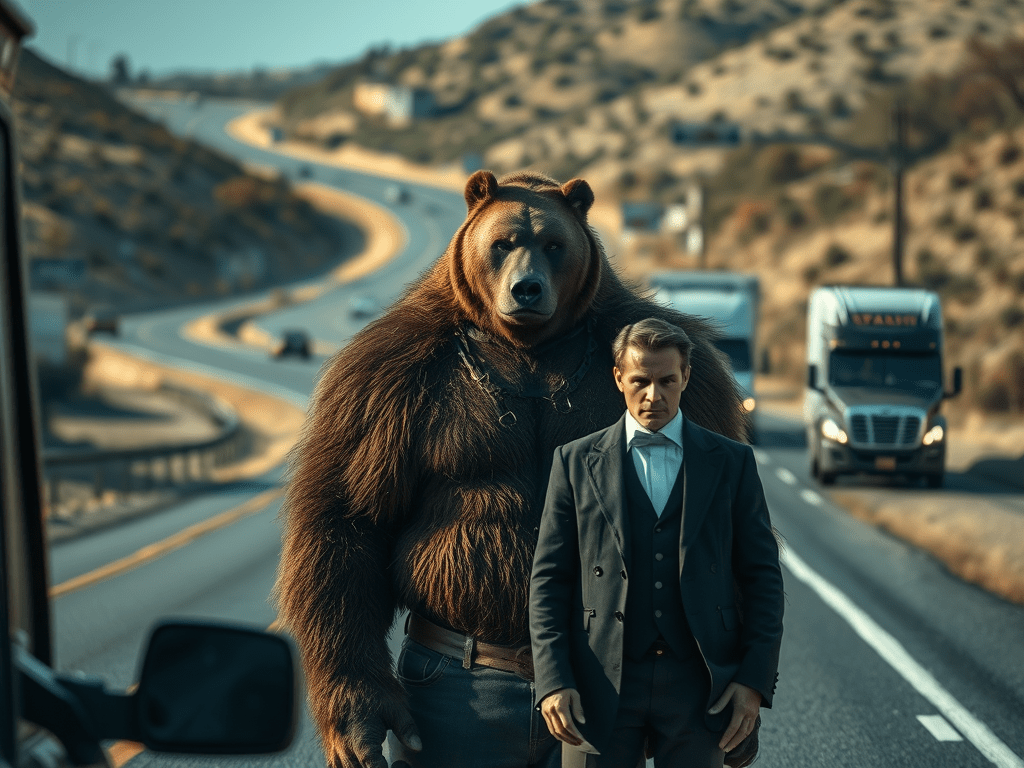
    Then the sun set, and—as dreams do—I stopped being a professor and morphed into some kind of blue-collar rig worker, one of four men hauling cargo across the freeways of this theme park universe. At breakneck speed, we clung to the roof of a truck, flying over the 5 freeway like a band of deluded daredevils. I alone had the courage (or sanity) to question this arrangement. “You know,” I said, wind slapping my face, “we don’t have to die tonight. There’s an interior cabin. With seats.”

    At first, they mocked me—because apparently, dreamland logic still includes workplace hazing—but eventually, they gave in. We climbed down into the safety of the rig, like cowards, or people who enjoy not being flung across asphalt.

    As I relaxed, I thought once more about that mansion in Buena Park, that shadow life where I wasn’t trying to prove my worth or cling to cargo. A life of belonging, not striving. Then I woke up, ate a bowl of buckwheat groats, drank my Sumatra coffee, and wondered what it all meant.

  • Muhammad Ali and the Rent We Pay for Heaven

    Muhammad Ali and the Rent We Pay for Heaven

    During the chaos of finals week—when my inbox floods with apologetic, last-ditch emails from students begging for an extended deadline—I found solace in something far removed from academia: Antoine Fuqua’s What’s My Name: Muhammad Ali. It’s a two-part documentary, but it feels more like a sermon and a love letter rolled into one. Like Fuqua, I’ve always had a boundless reverence for Ali—the most charismatic athlete to ever live—and watching him slowly succumb to Parkinson’s at just forty-two broke something in me.

    There’s a word for the dark thrill we sometimes feel when others suffer: schadenfreude. But what’s the opposite of that word–the anguish we feel when our heroes fall? When they suffer with such dignity and pride that they won’t accept our sympathy, even though they deserve every ounce of it? We don’t just mourn them—we mourn the version of ourselves that believed they were untouchable. Seeing Ali’s mind remain sharp, his wit flickering through that neurological prison, was unbearable and beautiful all at once.

    In his prime, Ali wasn’t just a boxer—he was a superhero, a shapeshifter, a one-man Broadway show in a heavyweight’s body. He was a sharp observer of American racism, yet never a scold. He wielded humor like a blade—cutting through injustice with charm and rhythm. His facial expressions alone could dismantle a room. And above all, he had soul. He was a poet, an actor, a preacher, and a provocateur.

    His conversion to Islam was not cosmetic. It reshaped him. He carried a sense of divine accountability, speaking of God not as abstraction but as a constant, watchful presence. He lived with the weight of eternity in mind, casually discussing the soul as if he’d already made peace with his fate. One of the final moments in the documentary captures this perfectly: Ali scribbles a note to a fan asking for an autograph—“Service to others is the rent we pay for our room in HEAVEN.” The line made me stop in my tracks and pray that I could live such a life rather than momentarily be inspired by it or tell others about it, because I know from experience that “talk is cheap.”

    The film doesn’t critique Ali—and truthfully, I didn’t want it to. I didn’t want the version of him that stayed too long in the ring. I didn’t want to watch his brilliance dimmed by punches that should’ve stopped years earlier. I found myself irrationally angry with him. I wanted him to become an actor, a comedian, a talk show philosopher—anything but a late-career boxer whose brilliance was traded for one more round. But of course, I’m lying to myself.

    We place athletes like Ali in the realm of myth. They are our Achilles, our Hercules. His greatness was inseparable from the ring. The same inner fire that made him a champion refused to let him leave the stage quietly. That fire gave us the epic—and, inevitably, the tragedy. I only wish that the spiritual clarity that shaped his faith could have overruled the gladiator in him. But maybe that’s the final paradox of Ali: he lived as both prophet and warrior, and the cost of greatness was always going to be high.

  • Mercury Rising, Tuna Retiring: A Fish Addict’s Tofu Detox

    Mercury Rising, Tuna Retiring: A Fish Addict’s Tofu Detox

    Howard Stern recently went public with the kind of health confession that makes nutrition nerds shiver with schadenfreude: years of eating fish like a ravenous sea lion left him with sky-high mercury levels—over 30, when 8 is considered the red alert line. His white blood cell count crashed, and his bloodstream began to resemble a periodic table. So now he’s easing into a mostly plant-based diet, still clinging to salmon and shrimp a few times a week like a man transitioning from whiskey to kombucha.

    Taking a page from Howard’s mercury memoir, I’m retiring my daily canned-fish salad lunch. No more tuna tins. No more mackerel mania. In their place? A half-block of Trader Joe’s High-Protein Tofu, sautéed in olive oil like a grown-up with arteries worth protecting. The whole package is 70 grams of protein. I’ll eat one half at lunch, the other half either for dinner or for the next day.

    Preparation, of course, requires a bit of tofu theater. I wrap the slab in a dish towel and stack a Dutch oven on top like I’m pressing it into a confession. From there, it crisps nicely in the pan—unlike my nerves, which are still adjusting to life without anchovies.

    The salad base: arugula, because I enjoy a green that fights back. The dressing: Greek yogurt whipped with nutritional yeast, herbs, and spices—a tangy, umami-rich blend that says “I’m trying” louder than balsamic ever could.

    If I need a protein boost, I’ll toss in some drained beans or egg whites, though I refuse to let the salad become a protein arms race. The goal isn’t to feel full for eight hours—it’s to avoid mercury poisoning while still pretending I’m eating for pleasure.

    We’ll see how satisfying it all is. At worst, I miss the old tuna days. At best, I keep my nervous system intact and live long enough to be skeptical of my next health phase.

  • Nostalgia, Nihilism, and the Need for a North Star

    Nostalgia, Nihilism, and the Need for a North Star

    We live in a state of perpetual performance. Not just for others, but for ourselves. It’s cosplay with consequences—playful on the surface, deadly serious underneath. We obsess over how our performance lands. We evaluate our worth by the reactions we elicit. At stake is not just our reputation, but our very sense of moral character.

    This obsession isn’t new. The philosopher Blaise Pascal put it bluntly: we’d rather appear virtuous than actually be virtuous. It’s easier to sculpt the image than to develop the core. In this way, we’ve become artisans of curation, not content—architects of persona, not people.

    We live, as Shakespeare warned, on a stage. But our thirst for applause is bottomless. The more we receive, the more we crave. We become validation addicts, forever chasing the next fix of approval. And when applause falters or vanishes, anxiety rushes in. To soothe this anxiety, we self-medicate. Not just with likes and follows—but with food, consumption, workouts, and delusion.

    Some of us drown that dread in comfort food. Others sprint in the opposite direction—discipline, clean eating, high-performance regimens. But often, that stoicism is just cosplay too: hunger in a different mask. When that fails, we drift into nostalgia. We reimagine the past—not as it was, but as it flatters us to believe it was. We cast ourselves as the hero, the lover, the misunderstood genius. The story becomes so good, we forget it isn’t true. We live in the fiction and lose our grip on reality.

    This disconnect—between who we pretend to be and who we are—makes us brittle. Maladapted. And so the cycle deepens: more consumption, more self-distraction, more illusion. Consumerism becomes therapy. Hedonism becomes self-care. Nihilism becomes a badge of honor. All of it is cosplay. And all of it is corrosive.

    Philosophy, religion, and therapy exist to confront this masquerade. They offer a language for our delusions, a history of our dysfunction, and a spiritual direction out of the maze. They remind us that cosplay is not identity, and performance is not presence.

    I don’t pretend to have it figured out. But I’ve found insight in thinkers like Phil Stutz, who warns against the seductive ease of instant gratification, and Steven Pressfield, who speaks of resisting the lure of comfort in favor of a purposeful life. I’ve also been challenged—and strangely comforted—by Paul’s doctrine of kenosis: the radical idea that we’re not here to inflate ourselves but to empty ourselves in service of others. In a world obsessed with power and “respect,” that message lands like a thunderclap.

    What unsettles me most is not our ignorance—it’s our awareness. Many of us know the truth. We even live it for a while. But we drift. We relapse. We trade the hard-earned clarity for the cheap thrill of our old scripts. That’s what demoralizes me: not just the fall, but the speed and ease with which it happens.

    Yet I still believe in the power of a North Star. Call it purpose, vision, a calling—whatever name it takes, it’s the gravitational pull that keeps us from floating off into the void of our appetites. I think of Ann Kim, the Korean immigrant told to stay in her lane. She didn’t. She found her voice, expressed it through food, and became a James Beard Award-winning chef.

    The path to a good life, I suspect, doesn’t begin with fear of failure. It begins with a compelling vision of who we are meant to be. And the discipline to never look away from it.

  • Why I’m Eating Like My Life Depends on It (Because It Might)

    Why I’m Eating Like My Life Depends on It (Because It Might)

    In 2020, my mother passed away from kidney disease. She refused to go on a dialysis machine. I found out a few days ago that her sister, now 80, has stage-4 kidney disease. My aunt doesn’t drink or smoke, but her doctor told her that age can do its job on the kidneys and will give her medication and a diet to slow down the disease’s progression. 

    I assume I may have a genetic predisposition for tired kidneys, so at 63, I’m looking to make some preventative dietary changes. I’m going to watch my potassium, phosphates, and sodium. I’m going to cut down on dairy, nuts, nut butters, sweets, diet sodas, canned fish, meat and such. I’m going to keep my creatine at 3 grams a day. Being overweight, having high sugar levels, high cholesterol, and high blood pressure are all bad for the kidneys, so my diet has to keep those areas under control. I remember Doctor Peter Attia writing in his book Outlive: The Science and Art of Longevity that having advanced kidney disease presents a shorter lifespan diagnosis than stage-4 cancer, so I feel motivated to be diligent. My diet now looks like this:

    Breakfast: I’ll rotate 5 breakfast grains in which I will measure exactly one-fourth cup of one of the following: 1. steel-cut oatmeal, 2. quinoa, 3. buckwheat groats, 4. bulgur, and 5. hulled or foxtail millet (11-12 grams of protein) with half a cup of Greek plain yogurt, chia seeds, walnuts, plain soy milk, phosphate-free protein powder, berries, and coffee.

    Lunch: Salad with 20 grams of protein tempeh, rinsed from a can or cooked beans or salmon with balsamic vinegar, herbs and spices, half cup of soy milk, berries or small tangerine. 

    Post-nap Afternoon Snack: One cup of plain Greek yogurt with phosphate-free protein powder, or no powder at all, and berries. 

    Dinner: Vegetables, protein of some kind, including braised tofu, and a small apple. If I want a vegan dinner, I can make a mixture of rice or quinoa with black beans, tofu or tempeh, and a cup of coconut milk. 

    Between meals: No more diet soda of any kind, only water, herbal tea, and soda water.   

  • Why the Watch Enthusiast Is Fated to a Life of Eternal Agony

    Why the Watch Enthusiast Is Fated to a Life of Eternal Agony

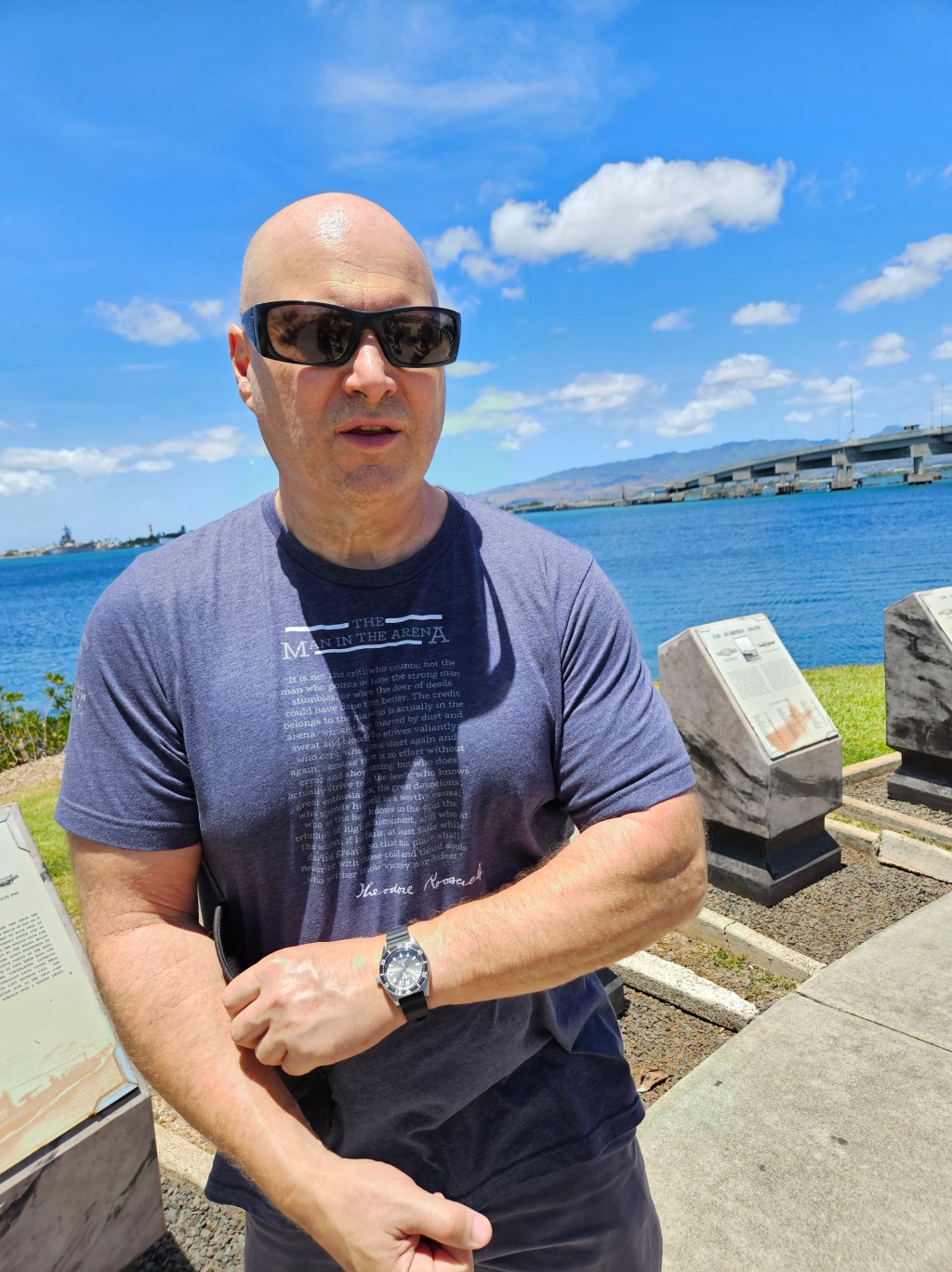
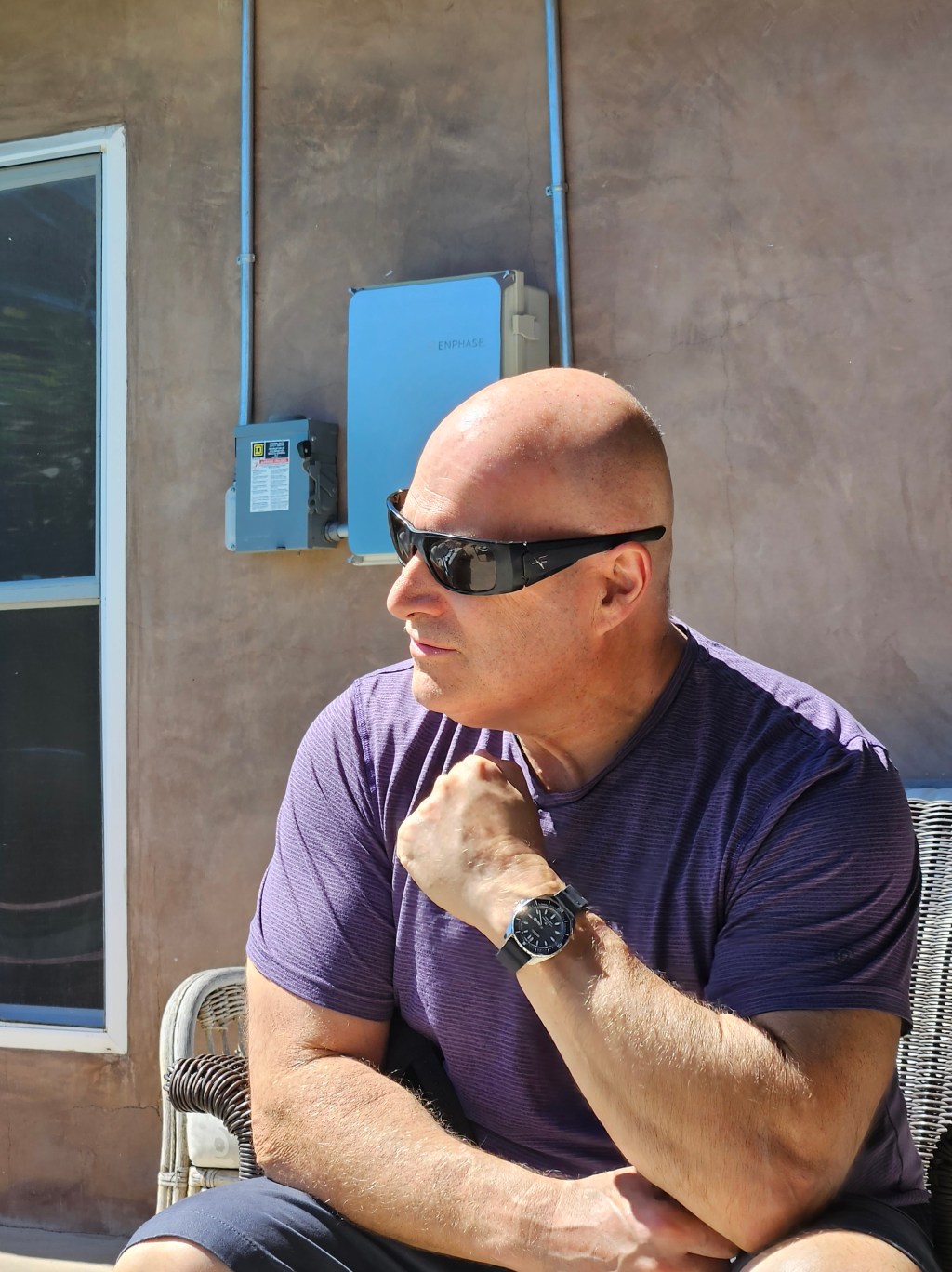
    The Watch Potency Principle states that as a watch enthusiast adds watches to his collection, the potency of his pleasure and satisfaction derived from his watches dissipates and is replaced with anxiety, displeasure, disappointment, and resentment, and that the opposite is also true: As his collection winnows down to a few–usually between three and six–the potency of pleasure and satisfaction he derives from his watches increases to the point that the potency affirms the hard-fought choices he had to make to arrive at his small albeit potent collection. 

    But the story of the watch enthusiast looking for watch potency is complicated by the fact that his Inner Watch Minimalist is at war with his Inner Watch Adventurer, the part of him that has an undying curiosity for new watches and new experiences with watches, including the different effects diverse watches have on his wrist, and his curiosity leads to accumulating more watches than he can wear. This results in Watch Devitalization, the weakening of the watch’s power, so to speak. In the case of Watch Devitalization, the enthusiast will sell a perfectly excellent watch, one he has arduously saved up for many years, sell the watch and then realize when the fever of Watch Devitalization has passed, that he has made a grave mistake. 

    As we can see, the eternal battle between the Inner Watch Minimalist and the Inner Watch Adventurer guarantees that the watch enthusiast lives a life of perpetual agony.