Blog

  • My Midyear Top 5 Music Obsessions of 2025 (So Far)

    My Midyear Top 5 Music Obsessions of 2025 (So Far)

    Let’s call this what it is: a midyear soundtrack to my emotional needs, taste refinement, and irrational belief that a great song can still restore one’s faith in the universe. Below are five songs from 2025 that didn’t just catch my ear—they staged a full occupation of my psyche.

    1. Billie Eilish – “Wildflower”

    Boomers love to chant, “They don’t make music like this anymore,” usually while polishing their vinyl copies of Rumours and sipping overpriced Malbec. To which I say: Have you heard “Wildflower”? Billie Eilish wrote a melody so hauntingly beautiful and emotionally precise it might just slap Stevie Nicks across the astral plane. “Wildflower” isn’t nostalgic—it’s timeless, and it makes the whole “they don’t make ‘em like they used to” argument sound like a radio station that’s lost its signal.

    2. Miley Cyrus – “Flowers” (Demo Version)

    Forget the radio-polished, empowerment-anthem version designed for spin class playlists and morning talk shows. The demo is the real deal. Stripped down and raw, it sounds like Miley walked into the studio, ripped her ribcage open, and hit record. It’s not just about self-love—it’s a reckoning. A breakup song without the mascara, just bone-deep clarity and vocal grit. If the original was a brand campaign, the demo is the heartbreak behind it.

    3. Lana Del Rey & Father John Misty – “Let the Light In”

    This track is so beautiful it feels like eavesdropping on two fallen angels trying to talk each other back into heaven. I’m humbled, elated, and borderline offended by how good it is. If I’d played this song for Anthony Bourdain who once told KCRW’s Evan Kleinman that during his Applebee’s-induced existential spiral he lost faith in the human soul. I wish I could have played him “Let the Light In.” Perhaps he would have reconsidered the cosmic bleakness of mediocre mozzarella sticks. Lana and Misty have composed a shimmering argument for the existence of the human soul. It should be piped into the waiting room between this world and the next.

    4. Strawberry Guy – “As We Bloom”

    Strawberry Guy continues his gentle tyranny over my playlists. “As We Bloom” is another heart-melting, dew-soaked track that could have been transmitted from the dream-state of a lonely Victorian poet. He has the rare talent of making everything feel sacred and a little tragic, like a faded birthday card found in a drawer during a move. In vibe and texture, he’s a spiritual cousin to The Innocence Mission, and I say that with reverence.

    5. Olivia Dean – “Touching Toes”

    This song made me forget my age, my responsibilities, and that I’m not, in fact, swaying in slow motion through a desert cantina in the 1970s. “Touching Toes” is sultry, jazzy, and unselfconsciously whimsical—pure auditory flirtation. It gives me the same odd, disorienting confidence that Maria Muldaur’s “Midnight at the Oasis” once offered: a delusion of magnetism and a sudden desire to wear silk and speak in metaphors. Olivia Dean makes me feel like maybe I am the moment.

  • Masks and Mirrors: The Battle for Identity in Mike Tyson and Tupac Shakur(College Essay Prompt)

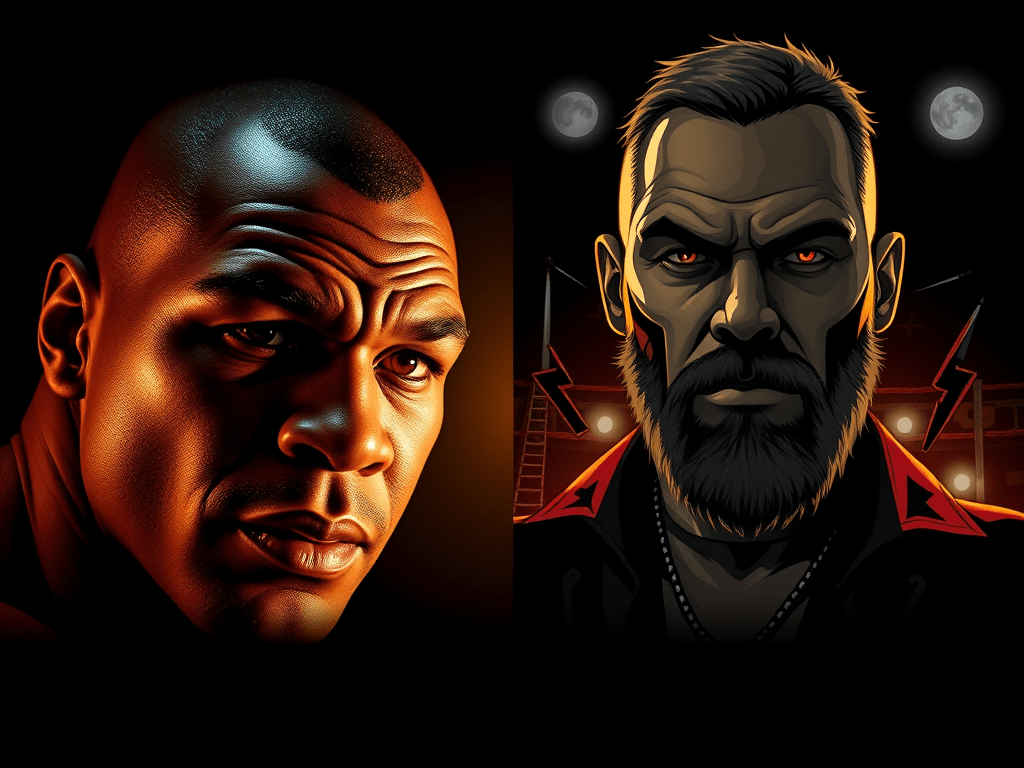
    Masks and Mirrors: The Battle for Identity in Mike Tyson and Tupac Shakur(College Essay Prompt)

    Essay Background

    Mike Tyson succeeded in rebranding himself as a vulnerable confessor largely because he outlived the chaos that once defined him. By the time he took the stage in Undisputed Truth, Tyson was no longer the monster in the ring or the tabloid punchline—he was a scarred man looking back with dark humor and raw honesty. His monologue, performed live in front of an audience, gave him full narrative control. It was part therapy, part confession, and part theater. By publicly embracing his shame, rage, and absurdity, Tyson defused the myths that had dehumanized him. He didn’t try to erase his past—he showcased it, metabolized it, and sold it back to the audience as a cautionary tale and an unlikely redemption story.

    Tupac, by contrast, never reached the post-chaos stage. He died at 25, in the eye of the storm, still balancing his dual roles as radical poet and media provocateur. Dear Mama reveals a young man trying to honor his revolutionary upbringing while navigating the ruthless demands of fame and masculinity. He didn’t have the luxury of time to reflect, or the distance to reframe his story. His vulnerability was real—coded in his lyrics, visible in interviews—but it was buried beneath the image of the thug icon he felt compelled to perform. The contradiction consumed him. Where Tyson eventually stepped outside the persona the world created for him, Tupac remained trapped inside his, weaponizing it and being weaponized by it in equal measure.

    The difference comes down to control and closure. Tyson lived long enough to reclaim authorship over his life story, choosing confession as both catharsis and strategy. Tupac, meanwhile, was caught in an unresolved performance of identity—too layered, too conflicted, and too prematurely ended to be distilled into a manageable narrative. Tyson’s success lies in the fact that he owned his demons before they killed him. Tupac’s tragedy is that his demons—systemic, psychological, and cultural—were still in full command when his story abruptly ended.

    Essay Prompt

    In Undisputed Truth, Mike Tyson takes control of his life story through a theatrical, brutally honest monologue that functions as both confession and performance. He turns shame into narrative, trauma into dark humor, and his public image into a self-managed brand of vulnerability. In contrast, Dear Mama presents Tupac Shakur as a young artist still trapped in the chaos of competing roles—activist, celebrity, poet, and “thug.” While both men were shaped by violence, poverty, and public mythmaking, Tyson survived long enough to reframe his story, while Tupac did not.

    This essay invites you to analyze why Mike Tyson succeeded in transforming himself into a self-aware confessor and public survivor, while Tupac failed to do the same. What made Tyson’s rebranding effective, both emotionally and strategically? Why couldn’t Tupac break free of the image that ultimately consumed him? Consider how confession, performance, vulnerability, and time played different roles in shaping the way these men managed their public and private selves.

    Use your analysis to explore how identity can become both a weapon and a trap, and how American culture responds to Black masculinity when it is packaged as redemption versus when it remains raw and unresolved.

    The Purpose of This Essay

    The purpose of this assignment is to help you analyze how two public figures—Mike Tyson and Tupac Shakur—struggled to manage their identities under the intense pressure of fame, trauma, and public scrutiny. By comparing Undisputed Truth and Dear Mama through the lens of performance, confession, and narrative control, you will examine why Tyson was able to reshape his legacy while Tupac remained trapped in conflicting roles he could not reconcile. This essay challenges you to think critically about how race, masculinity, vulnerability, and survival shape public narratives—and how American culture consumes stories of pain, redemption, or collapse. Ultimately, you’ll explore the power and cost of telling your own story before someone else tells it for you.

    The Relevance of This Essay

    This assignment is relevant to your life because, whether you realize it or not, you’re already curating your own public identity every day—on social media, in the classroom, in job interviews, and even in conversations with friends and family. Like Tyson and Tupac, you’re navigating who you are versus how others see you. You might not be famous, but you’re still managing versions of yourself—trying to be real, but also trying to be accepted, liked, or understood. This essay helps you look at the emotional and psychological cost of that constant performance. By studying how Tyson and Tupac handled—or struggled to handle—the spotlight, you’ll gain insight into the pressures of living in a culture that rewards spectacle, punishes vulnerability, and often demands that you be two people at once. And if you’ve ever felt pulled in different directions, this essay is about you too.

    Below is a pre-writing activity followed by a quote bank with short, vivid excerpts from Undisputed Truth and Dear Mama to help students build momentum and support their claims.


    Pre-Writing Activity: Framing Confession, Performance, and Identity

    Objective:

    To help students sharpen their understanding of confession, narrative control, and performance before writing.

    Instructions:

    Have students complete the following three short prompts in writing (approx. 200–300 words total), either in class or as homework. These can serve as warm-up material for their essays.


    Prompt A: What Is a Confession?

    In your own words, define what it means to “confess” in public. Is confession always honest? Is it always vulnerable? Can it be used strategically or even manipulatively? What does it mean for someone to “own” their story?


    Prompt B: Who Controls the Narrative?

    When a celebrity tells their life story, what makes it feel authentic versus staged? Who has the final say over their public image—the media, the audience, or the person themselves? Use Mike Tyson or Tupac as an example.


    Prompt C: Surviving Long Enough to Reflect

    How does time and survival affect one’s ability to reflect on trauma? What happens when someone dies before they can explain or reframe their story? How does this relate to the difference between Mike Tyson and Tupac Shakur?

    Students can select, paraphrase, or analyze these quotes as textual evidence in their essays.


    From Mike Tyson: Undisputed Truth (HBO)

    1.

    “I’m the most brutal and ruthless champion there’s ever been. But deep down, I was just scared. I was always scared.”

    2.

    “I didn’t know how to love anybody. I didn’t even know how to love myself.”

    3.

    “I was a monster they made, and then they punished me for being it.”

    4.

    “You don’t know how dangerous a man is until you take everything away from him. And I lost everything—fame, fortune, respect. That’s when I met myself.”


    From Dear Mama (FX)

    1.

    “He couldn’t separate the poet from the persona. The art was him. The anger was him. The contradictions—that was him too.”

    2.

    “Tupac was trying to live up to something and escape it at the same time.”

    3.

    “He inherited a revolution but was expected to sell records. That’s the kind of split that tears people apart.”

    4.

    “He gave you his soul in verses, but nobody wanted the quiet version of Tupac. They wanted the outlaw.”

    Three Thesis Statements with Mapping Components

    1.
    Thesis:
    Mike Tyson was able to rebrand himself as a vulnerable confessor because he survived long enough to turn pain into performance, whereas Tupac remained caught in an unresolved identity war—too radical, too raw, and too young to curate his own legacy.
    Mapping:
    This essay will explore how performance, time, and media control shaped Tyson’s narrative, how Tupac’s dual personas conflicted and combusted, and how the public’s appetite for redemption or rebellion influenced their reception.

    2.
    Thesis:
    Tyson’s success in managing his public image came from using confession as both spectacle and catharsis, while Tupac’s failure stemmed from the fact that his vulnerability never had the protection of hindsight, only the pressure of performance.
    Mapping:
    The essay will analyze their differing uses of confession, the impact of age and timing, and how each man’s portrayal of Black masculinity was received and misunderstood by the public.

    3.
    Thesis:
    While Tyson crafted a theatrical narrative of survival by embracing his demons with theatrical flair, Tupac’s image collapsed under the weight of contradictions he never had time to reconcile—revealing how fame can liberate or destroy depending on who controls the final story.
    Mapping:
    This essay will compare their access to narrative control, examine the media’s role in mythmaking, and consider how timing and trauma affect cultural memory.


    Suggested Essay Outline

    I. Introduction

    • Hook: The modern public demands not just icons, but narratives of collapse and recovery.
    • Introduce Tyson and Tupac as public figures shaped by trauma and spectacle.
    • Introduce key idea: confession vs. performance, survival vs. myth.
    • Thesis statement.

    II. Mike Tyson’s Reclaimed Narrative

    • Analyze Undisputed Truth as both confession and theatrical control.
    • Discuss Tyson’s use of humor, shame, and performance to manage his past.
    • Consider how survival and age gave him the clarity to reshape his image.

    III. Tupac’s Unresolved Identity War

    • Examine Dear Mama’s portrayal of Tupac’s conflicting personas.
    • Analyze how he was caught between activist ideals and commercial pressures.
    • Discuss how he expressed vulnerability but lacked narrative closure.

    IV. Confession, Control, and Cultural Reception

    • Explore how American culture consumes Black male pain differently depending on whether it’s “managed” or raw.
    • Compare public reactions to Tyson’s redemption vs. Tupac’s unresolved tragedy.
    • Analyze the role of time, legacy, and authorship in shaping public memory.

    V. Conclusion

    • Reaffirm the importance of narrative control and emotional timing.
    • Reflect on what Tyson’s success and Tupac’s failure reveal about performance, masculinity, and survival.
    • Final thought: Sometimes survival is the only ingredient that allows the myth to be rewritten.

    Three Prompt Titles


    1. “Punchlines and Poetry: Performing Pain in the Public Eye”
    2. “Who Owns the Story? Confession, Collapse, and the Burden of Being Seen”
  • Poets, Fighters, and Masks: The Double Consciousness of Black Icons in Dear Mama and Undisputed Truth (College Essay Prompt)

    Poets, Fighters, and Masks: The Double Consciousness of Black Icons in Dear Mama and Undisputed Truth (College Essay Prompt)

    In an era where public identity is both weapon and performance, Dear Mama: The Saga of Afeni and Tupac Shakur and Mike Tyson: Undisputed Truth offer two emotionally complex portraits of famous Black men grappling with fame, pain, and representation. Both Tupac Shakur and Mike Tyson came from worlds shaped by violence, systemic injustice, and abandonment—yet both rose to immense prominence as cultural icons in vastly different arenas: Tupac through music and poetry, Tyson through boxing. Each embodied a kind of mythic power in the public eye while privately battling internal chaos and trauma that fame only magnified.

    This essay invites you to use W.E.B. Du Bois’s concept of double consciousness—the internal conflict experienced by marginalized people who must constantly see themselves through both their own eyes and the eyes of a dominant culture—as a critical lens to compare the lives of Tupac and Tyson. How did Tupac reconcile being both a revolutionary poet and a commodified celebrity? How did Tyson navigate the tension between being a feared athlete and a deeply wounded man searching for peace? How do these documentaries frame the burden of living two lives—one personal, the other performative—for public consumption?

    Your essay should address the internal and external conflicts that arise from these dual roles. You must analyze how each figure attempted to control or narrate his own story and how the public either misunderstood, consumed, or manipulated those narratives. Finally, reflect on what their stories reveal about American culture’s contradictory relationship to Black masculinity, fame, pain, and authenticity.


    Three Sample Thesis Statements with Mapping Components

    1.
    Thesis:
    Tupac Shakur and Mike Tyson both struggled with double consciousness as they became symbols of strength and survival for Black America while being distorted by mainstream media; through Dear Mama and Undisputed Truth, we see how art and performance became survival mechanisms that masked, revealed, and complicated their personal pain.
    Mapping:
    This essay will examine how both men used performance to control their narrative, how external media distorted their identities, and how their internal contradictions reflect Du Bois’s theory of double consciousness.

    2.
    Thesis:
    While Tupac balanced poetry and political rebellion with his celebrity image, and Tyson staged a raw confession to reclaim his story, both men illustrate the psychological toll of being consumed by a public that wants trauma packaged as entertainment.
    Mapping:
    The essay will compare their narrative strategies, explore the impact of fame on personal identity, and analyze the cultural expectations placed on Black male icons.

    3.
    Thesis:
    Through the lens of double consciousness, Dear Mama and Undisputed Truth reveal Tupac and Tyson as men fractured by the impossible demand to be both real and marketable—radical voices for the oppressed who also had to perform palatable versions of Black masculinity to survive.
    Mapping:
    This essay will analyze the tension between authenticity and image, the role of confession in reclaiming identity, and the societal pressures that shaped both men’s downfall and public myth.

    Suggested Essay Outline

    I. Introduction

    • Introduce Du Bois’s concept of double consciousness.
    • Briefly introduce Tupac and Tyson as cultural icons.
    • State your thesis.

    II. Defining Double Consciousness

    • Explain Du Bois’s theory in plain terms.
    • Apply it broadly to the lives of marginalized public figures.

    III. Tupac Shakur in Dear Mama

    • Discuss Tupac’s upbringing, activism, and artistic ambition.
    • Examine his dual identity: revolutionary poet vs. entertainment product.
    • Explore internal conflicts (mother’s legacy, criminal persona, artistry).
    • Analyze media portrayal and public misunderstanding.

    IV. Mike Tyson in Undisputed Truth

    • Analyze Tyson’s performance as confessional theater.
    • Explore his dual role: unstoppable fighter vs. traumatized child.
    • Look at the tension between public image and private suffering.
    • Examine how Tyson uses storytelling to rewrite his legacy.

    V. Performance as Survival

    • Compare how both men used performance—spoken word, music, monologue—as a way to wrest back control of their image.
    • Analyze the emotional and psychological toll of constantly performing multiple selves.

    VI. The Public’s Role

    • Discuss how American culture both exalts and devours these men.
    • Reflect on the voyeurism, consumption, and moral hypocrisy of audiences.

    VII. Conclusion

    • Reaffirm the relevance of Du Bois’s theory.
    • Reflect on what these stories reveal about identity, fame, and survival in America.

    Great—here’s a short, powerful excerpt from W.E.B. Du Bois’s The Souls of Black Folk (1903) that pairs well with the essay prompt. This passage introduces the concept of double consciousness, which students can use as a theoretical lens in their analysis of Dear Mama and Undisputed Truth:


    Reading Excerpt from W.E.B. Du Bois, The Souls of Black Folk

    (Chapter 1: “Of Our Spiritual Strivings”)

    “It is a peculiar sensation, this double-consciousness, this sense of always looking at one’s self through the eyes of others, of measuring one’s soul by the tape of a world that looks on in amused contempt and pity. One ever feels his two-ness,—an American, a Negro; two souls, two thoughts, two unreconciled strivings; two warring ideals in one dark body, whose dogged strength alone keeps it from being torn asunder.”


    Suggested Use for the Classroom:

    Have students read and annotate this passage before watching or analyzing Dear Mama and Undisputed Truth. Encourage them to highlight keywords: “two-ness,” “looking at one’s self through the eyes of others,” and “warring ideals.” Ask:

    • How do Tupac and Tyson live out this “two-ness” in different ways?
    • Where do you see them attempting to reconcile (or exploit) their competing identities?
    • How does the public respond to these attempts—and what does that say about the audience’s role?

    Here’s a short writing activity and guided questions designed to help students engage with the Du Bois excerpt before drafting their full essay. This activity works well as a warm-up discussion, in-class writing task, or homework assignment.


    Pre-Essay Writing Activity: Understanding Du Bois’s Double Consciousness

    Objective:

    To help students internalize Du Bois’s theory of double consciousness and apply it to their understanding of Tupac Shakur and Mike Tyson before writing their comparative essay.


    Part 1: Close Reading (5–7 minutes)

    Have students read this excerpt from W.E.B. Du Bois aloud (either in pairs or as a class):

    “It is a peculiar sensation, this double-consciousness, this sense of always looking at one’s self through the eyes of others, of measuring one’s soul by the tape of a world that looks on in amused contempt and pity. One ever feels his two-ness,—an American, a Negro; two souls, two thoughts, two unreconciled strivings; two warring ideals in one dark body, whose dogged strength alone keeps it from being torn asunder.”

    Ask students to underline or highlight 2–3 phrases that resonate or confuse them. Discuss them briefly.


    Part 2: Short Reflective Writing (10 minutes)

    Prompt:
    In 200–300 words, respond to the following:

    What does Du Bois mean by “double-consciousness”? Have you ever experienced a version of this “two-ness”—where you felt split between how you see yourself and how others see you? If not, can you imagine what that would feel like in the public eye, as a famous artist or athlete? Based on what you know of Tupac Shakur or Mike Tyson, which of them seems to struggle more with this “double-consciousness,” and why?

    Encourage students to write freely, using specific language from the Du Bois passage if possible.


    Part 3: Guided Discussion Questions

    Use these to deepen discussion or as a pre-writing brainstorm:

    1. How does Du Bois describe the psychological effects of double-consciousness?
    2. In what ways is double-consciousness visible in Tupac’s lyrics, interviews, or actions in Dear Mama?
    3. How does Mike Tyson express this “two-ness” in Undisputed Truth?
    4. What roles do race, class, trauma, and fame play in shaping their dual identities?
    5. Does either man ever fully reconcile his two selves—or are they always at war?
    6. What does it cost them—psychologically or socially—to live with this internal conflict?

  • The Forgotten Fleet: Memoirs of a Honda Hoarder

    The Forgotten Fleet: Memoirs of a Honda Hoarder

    Last night, my subconscious staged an intervention.

    In the dream, my family and I had relocated to a sprawling house perched at the edge of a forest—idyllic at first glance, but the driveway told another story. It had become a graveyard of Honda Accords. Not just one or two, but an entire archaeological dig of them: gleaming new models barely broken in, others half-eaten by moss and mulch, some peeking out from decaying leaf piles like forgotten Easter eggs, and one—yes, really—buried in the earth like a pharaoh’s chariot. Another Accord had somehow washed up near the beach, sun-faded and abandoned like a bloated sea lion.

    A kindly messenger—part real estate agent, part archangel—told my daughter and me about the beach-stranded Accord. So we climbed into an older model, the color of a liver spot, and headed to the coast. Upon arrival, we ditched that old heap to rescue another Accord of the exact same jaundiced hue. Predictably, the beach Accord was dead on arrival. My daughter and I, summoning the brute strength of Greek demigods, pushed it across the sand, up a mountain, and across California at warp speed—from Orange County to Simi Valley—as if towing the sins of my consumer past behind us.

    We paused at a cousin’s house, where iced tea and human needs awaited. My cousin, ever the concerned parent, confided that his son was wilting from loneliness. Without missing a beat, my daughter rang up a stunning actress—someone so luminous she made Instagram filters seem redundant. She showed up. So did half the neighborhood, offering baked goods in exchange for a glimpse at the sun goddess. One woman brought a cherry pie, trembling with reverence.

    As we continued northward, my joy curdled into anxiety. How many Accords had I bought over the years? Were there more hidden somewhere—collector’s editions with leather interiors and forgotten potential—lost to my Swiss cheese memory? Had I turned into the automotive equivalent of a hoarder monk, stacking sacred relics of midlife crises in the forest of my own forgetfulness? I awoke not with peace, but with regret, soothed only slightly by a tall, steaming mug of Sumatra roast, which I drank like a sacrament to sanity.

  • Rewriting the Fallen: Redemption, Myth, and the Public’s Appetite for Collapse (College Essay Prompt)

    Rewriting the Fallen: Redemption, Myth, and the Public’s Appetite for Collapse (College Essay Prompt)

    In today’s world, image is a product that can be crafted, polished, and sold—and confession isn’t always about truth; sometimes it’s just another performance. Mike Tyson and Sly Stone were both towering cultural figures who captivated the public, crashed under the weight of fame, and became cautionary tales. Both were once celebrated, then discarded. But their attempts—or inability—to reclaim their stories couldn’t be more different.

    In Mike Tyson: Undisputed Truth (HBO Max), Tyson delivers a brutally honest, often darkly funny one-man show that serves as confession, therapy, and public rebranding all at once. He stares down his demons on stage. By contrast, Sly Lives! (also known as The Burden of Black Genius), directed by Ahmir “Questlove” Thompson, tells the story of a man who no longer can. Sly Stone, ravaged by addiction and isolation, is presented as a tragic genius whose brilliance was also his undoing. In Questlove’s hands, Sly becomes a myth, a memory, and a mirror for how American culture fails its most gifted.

    In this essay, compare and contrast how Mike Tyson and Sly Stone responded to the pressures of fame and public scrutiny. How did each man confront—or avoid—the chaos of their public personas? What tools did they use (or not use) to fight back against the “celebrity intoxication” that so often swallows stars whole? What does it mean to control your own story in a media-driven world? And what role do we, as an audience, play in either enabling or rejecting the mythologies we’re fed?

    Your essay should explore:

    • How each figure navigates—or fails to navigate—fame, image, and collapse
    • The narrative strategies used in each documentary (first-person vs. mediated biography)
    • The idea of “celebrity intoxication” and how public figures attempt to resist or give in to it
    • The role of confession, silence, performance, and myth in shaping legacies

    The Purpose of This Essay

    The purpose of this essay is to challenge you to think critically about how personal identity is shaped, performed, and consumed in public life. By analyzing Mike Tyson: Undisputed Truth and Sly Lives!, you’ll explore how two famous men—one speaking for himself, the other spoken for—grapple with the chaos of fame, addiction, and public scrutiny. This essay asks you to go beyond biography or fandom; it’s an exercise in rhetorical analysis, cultural critique, and moral inquiry. You’ll evaluate how each story is told, who controls it, and how the audience responds—questions that are just as important in understanding your favorite influencers as they are in examining cultural icons. Ultimately, this assignment is about sharpening your ability to interpret complex narratives and recognize how power, truth, and performance collide in the stories we tell about ourselves—and the stories told about us.

    How This Essay Prompt Is Relevant to You

    This essay topic is directly relevant to your lives because you’re already living in a culture where everyone is expected to be a brand. Whether you’re curating your Instagram posts, managing your TikTok presence, or just deciding how much of your personal life to share online, you’re engaging in the same high-stakes performance of identity that Tyson and Sly Stone confronted on a massive scale. Fame is no longer reserved for celebrities; social media has made us all public figures in miniature, vulnerable to judgment, cancellation, or applause based on how we package our truth—or hide it. By studying how these two icons navigated fame, collapse, and self-reinvention, you’ll be better equipped to understand the pressures of our performance-driven culture—and how storytelling, confession, and silence are all strategic tools in shaping how others see us. This essay isn’t just about Tyson or Sly—it’s about you, and the world you’re already performing in.

    Three Sample Thesis Statements with Mapping Components:

    1.
    Thesis:
    In Undisputed Truth, Mike Tyson transforms confession into performance to reclaim control over his legacy, while Sly Lives! frames Sly Stone’s silence as the result of cultural neglect and personal collapse—together, these narratives reveal how fame seduces, destroys, and rewrites its victims.
    Mapping:
    This essay will examine how Tyson weaponizes self-disclosure, how Questlove curates Sly’s absence into meaning, and how both films critique the public’s hunger for spectacle and redemption.

    2.
    Thesis:
    Tyson’s live performance is a raw attempt to rebrand his chaos as survival, whereas Sly Lives! mourns a genius who never escaped the intoxication of fame—suggesting that confession can be a form of resistance, but silence can become its own kind of truth.
    Mapping:
    This essay will analyze the aesthetics of confession, the consequences of fame without boundaries, and how each subject’s story reflects society’s craving for fallen heroes.

    3.
    Thesis:
    Though Tyson and Stone both fell victim to the psychological toll of celebrity, Tyson fights to reclaim authorship through theatrical catharsis, while Sly becomes a myth shaped by others—revealing the importance of narrative agency in preserving dignity amid public collapse.
    Mapping:
    The essay will explore narrative control, the role of addiction and performance, and the moral implications of how we as viewers consume trauma as entertainment.


    Sample Essay Outline:

    Introduction

    • Hook: A quick meditation on the modern cult of celebrity—engineered images, public breakdowns, redemption arcs.
    • Context: Brief introduction to Tyson and Sly Stone as cultural icons who lost control of their narratives.
    • Thesis Statement: (Choose one from above.)

    Body Paragraph 1: The Machinery of Fame and Intoxication

    • Define “celebrity intoxication” and its symptoms: ego inflation, isolation, addiction, media distortion.
    • Brief discussion of how both men were consumed by this machinery at their peak.

    Body Paragraph 2: Tyson’s Weaponized Confession

    • Analyze Undisputed Truth as a hybrid: therapy session, performance, branding exercise.
    • Show how Tyson uses humor, trauma, and brutal honesty to retake control.
    • Discuss whether it’s sincere, manipulative, or both.

    Body Paragraph 3: Sly’s Silence and Questlove’s Tribute

    • Analyze Sly Lives! as a third-person narrative constructed from reverence and loss.
    • Show how silence becomes part of the story: Sly’s absence is haunting.
    • Explore how addiction, genius, and systemic neglect are framed.

    Body Paragraph 4: The Role of the Audience

    • Examine our complicity: what do we want from our fallen heroes—blood, truth, or absolution?
    • Contrast how each film invites empathy or judgment.
    • Discuss how modern viewers consume these narratives: are we critics, fans, or voyeurs?

    Conclusion

    • Restate key insights: the contrast between self-controlled versus curated storytelling.
    • Reflect on the larger stakes: What does it mean to survive fame? To own your story?
    • Final thought: In the age of curated vulnerability, maybe silence isn’t weakness—it’s resistance.

  • Truth or Trick Play? Storytelling, Sanity, and Self-Mythology in Mike Tyson: Undisputed Truth and Charlie Hustle (College Essay Prompt)

    Truth or Trick Play? Storytelling, Sanity, and Self-Mythology in Mike Tyson: Undisputed Truth and Charlie Hustle (College Essay Prompt)

    In an era where image can be engineered and confession can be weaponized, two notorious sports figures—Mike Tyson and Pete Rose—offer radically different approaches to self-narration. Both were cultural titans who became cautionary tales. Both became pariahs in the eyes of the institutions that once celebrated them. And both—decades later—attempted to reclaim their stories in front of the camera. But what emerges in Mike Tyson: Undisputed Truth and Charlie Hustle: & the Matter of Pete Rose is not just a comparison of reputations; it’s a clash of narrative strategies, a psychological autopsy of fame, and a meditation on how the public consumes redemption, performance, and illusion.

    Tyson’s Undisputed Truth is a one-man show where he delivers a raw, often disturbing monologue infused with comedy, trauma, confession, and defiance. It is part therapy session, part theater, and part media rebrand. In contrast, Rose’s portrayal in Charlie Hustle is built on decades of resistance to public apology—anchored in charm, denial, and a lingering fantasy that he alone controls the narrative of his life. Where Tyson leans into pain and absurdity, Rose leans into myth and markets nostalgia.

    This essay asks you to compare and contrast how these two men use storytelling to carve out a space of sanity and coherence in a world of media distortion, scandal, and moral judgment. The assignment also challenges you to explore not just how these men present themselves—but how we, the audience, respond. What does the public hunger for? Clean redemption arcs or messy truth? Fallen heroes who confess, or ones who remain defiant?


    Your essay should address the following key tensions:

    1. Storytelling as a tool for reclaiming identity

    How does each documentary attempt to make sense of a chaotic life? In what ways does storytelling create clarity, coherence, or at least a coping mechanism?

    2. Confession vs. Self-Mythology

    Mike Tyson uses confession—vulgar, honest, sometimes performative—to humanize himself. Pete Rose, by contrast, clings to a self-mythologizing script, resisting vulnerability. What are the psychological and rhetorical consequences of each approach?

    3. Managing public and personal perception

    To what extent are these documentaries efforts to manage not just what the public thinks—but how the subject thinks about himself? Is the audience being let into a sacred, unfiltered truth—or another polished, marketable persona?

    4. Audience complicity

    Why do we crave redemption stories? Are we looking for truth—or the performance of truth? How does our cultural addiction to authenticity (or its simulation) shape how these figures present themselves? Are we, as an audience, demanding an impossible paradox: icons who are real?

    5. Cultural expectations and iconography

    Both Tyson and Rose were lionized and then demonized. But is our relationship with their downfall really about justice—or spectacle? How does American culture cycle through its icons? And what does it mean that these men are now trying to write their own endings?


    Requirements:

    • 1,700 words
    • Comparative structure: you must analyze both documentaries with balanced insight
    • Engage in close reading of scenes, quotes, tone, and structure from both films
    • Present a clear thesis and develop it through specific evidence and thoughtful reasoning
    • Address at least one counterargument: for instance, what if Tyson’s confessions are also just theater? What if Rose’s refusal to confess is, in its own way, honest?

    Five Sample Thesis Statements (with Mapping Components)

    1. While both Mike Tyson and Pete Rose attempt to reclaim their stories from the wreckage of fame, Tyson succeeds through painful confession and theatrical vulnerability, while Rose fails by clinging to self-mythology and denial—revealing how authenticity, when filtered through media, is less about truth than about the performance of control.
    2. Undisputed Truth and Charlie Hustle reveal a striking contrast in narrative self-management: Tyson embraces chaos through emotional honesty and humor, while Rose constructs a sanitized legacy rooted in nostalgia and evasion, exposing how audiences both demand and sabotage authenticity in their fallen icons.
    3. Tyson’s raw confessional style and Rose’s curated nostalgia campaign expose two opposing strategies of narrative control, but both are shaped—and warped—by an audience that demands vulnerability while punishing imperfection, consuming not truth but the illusion of redemption.
    4. Though both documentaries attempt to create a space of inner clarity against a backdrop of public spectacle, Tyson’s open confrontation with his demons reveals the healing potential of narrative, while Rose’s mythmaking underscores the psychological toll of refusing vulnerability in a culture that fetishizes both punishment and repentance.
    5. In exploring Tyson’s emotionally chaotic confessional and Rose’s carefully guarded image-building, these documentaries show that the battle between public perception and private truth is not fought on the field or in the ring, but in the slippery terrain of storytelling—where authenticity is always suspect and the audience is never innocent.
  • Truth or Hustle: Performing the Self in the Age of Spectacle (College Essay Prompt)

    Truth or Hustle: Performing the Self in the Age of Spectacle (College Essay Prompt)

    Essay Prompt:

    In the HBO Max special Mike Tyson: Undisputed Truth, Tyson delivers a raw, emotionally charged monologue in which he recounts the highs and lows of his life—abuse, addiction, fame, disgrace, and grief—with moments of striking self-awareness and brutal candor. The performance walks a fine line between personal catharsis and public spectacle.

    In contrast, the Netflix documentary Untold: The Liver King exposes Brian Johnson—a self-styled primal lifestyle influencer—as a constructed persona built on lies, steroid use, and performative masculinity. Johnson’s brand sells authenticity while hiding calculated deception, ultimately revealing the blurred line between self-expression and grift.

    In a 1,700-word essay, analyze and compare how these two figures—Tyson and Johnson—use storytelling as performance, and to what extent their narratives can be seen as acts of truth-telling versus brand management.

    Consider the following questions to shape your argument:

    • What makes storytelling feel “authentic,” and how is that authenticity earned or staged?
    • How do vulnerability and confession function differently in Tyson’s monologue vs. Johnson’s documentary revelation?
    • To what extent are both men grifters—selling pain, performance, or redemption to maintain relevance or profit?
    • Where does the audience’s complicity come into play? Are we consuming truth, or just another curated persona?

    Support your argument with close analysis of both documentaries, and engage at least two secondary sources on authenticity, performance, media, or masculinity.

    Three Sample Thesis Statements (with Mapping Components):


    1. Performance vs. Persona

    While Mike Tyson: Undisputed Truth offers a raw, emotionally grounded form of storytelling that embraces contradiction and vulnerability, Untold: The Liver King reveals a carefully curated identity rooted in deception and spectacle, showing how authenticity can be performed—and faked—for commercial gain.

    Mapping:

    • Tyson’s emotional transparency and narrative arc
    • Liver King’s constructed masculinity and hidden steroid use
    • The commodification of pain and image in public life

    2. Redemption as Product

    Both Tyson and the Liver King use storytelling to shape redemptive narratives, but where Tyson uses confession to reconcile with past chaos, Johnson’s confession serves primarily to preserve his brand—revealing how vulnerability, when monetized, can become just another form of grift.

    Mapping:

    • Redemption arc as performance
    • Strategic confession vs. genuine self-reckoning
    • The role of audience sympathy in validating narrative authenticity

    3. The Grift We Applaud

    Tyson and Johnson exemplify the thin line between storyteller and hustler in modern media culture, where charisma and spectacle blur truth. Ultimately, both rely on the audience’s desire to believe in transformation—whether real or manufactured—making us complicit in their self-mythologies.

    Mapping:

    • The myth of the fallen hero vs. the primal guru
    • Audience complicity in enabling the performance
    • Spectacle as the currency of truth in influencer culture

    Suggested Reading List


    On Authenticity & Performance:

    1. Erving Goffman – The Presentation of Self in Everyday Life
      Classic text on how individuals perform identity for social audiences.
    2. Lionel Trilling – Sincerity and Authenticity
      A deeper philosophical look at how authenticity has evolved as a moral and aesthetic concept.
    3. Andrew Potter – The Authenticity Hoax
      A critique of how “authenticity” has been commodified and repackaged as lifestyle branding.

    On Grift, Media, and Branding:

    1. Chris Hedges – Empire of Illusion
      Sharp cultural critique on how entertainment has replaced reality, and spectacle has displaced truth.
    2. Naomi Klein – No Logo (selections)
      On the rise of personal branding and the corporatization of identity—relevant to the Liver King’s monetization of lifestyle.
    3. Alissa Quart – Branded: The Buying and Selling of Teenagers
      Helps contextualize how audiences, especially younger ones, are trained to consume personality as product.

    On Masculinity and Image:

    1. Susan Faludi – Stiffed: The Betrayal of the American Man
      Explores how modern men feel disconnected from authentic purpose and turn to performance and power narratives.
    2. Michael Kimmel – Guyland: The Perilous World Where Boys Become Men
      Useful for analyzing the Liver King’s appeal to adolescent masculine ideals rooted in tribalism, strength, and dominance.

  • The Watch Habits of the Truly Deranged

    The Watch Habits of the Truly Deranged

    • You’ve sold and rebought the same Seiko twelve times, as if flipping it repeatedly will unlock a spiritual truth—or at least reduce the buyer’s remorse.
    • You use your Submariner bezel to time pasta, because naturally, a $12,000 tool watch was designed to ensure your rigatoni hits al dente.
    • You wear one watch exclusively for months while the other twelve sulk in a drawer, exiled as part of your emotional detox protocol.
    • You sleep with a watch on—not for timekeeping, but for comfort. It’s not horology anymore; it’s therapy. That watch is your blankie with a dial.
    • You buy back the same discontinued Seiko Monster you sold six years ago for seven times the original price, and feel a deep, almost religious sense of relief—like recovering a lost heirloom from a war-torn attic.
    • You curate a “State of the Collection” video for YouTube, omitting your secret stash of watches like a drunk hiding vodka in shampoo bottles. That drawer in the closet? Classified.
    • You lie about your watch count the way others lie about cholesterol. “Oh, maybe nine or ten,” you say, casually ignoring the drawer, the safe, the storage unit.
    • You experience wrist-rotation anxiety so paralyzing each morning, you consider wearing no watch at all—only to remember that’s what serial killers do.
    • You’ve nearly crashed your car admiring how the AR coating on your sapphire crystal plays with the sunlight. “Distracted driving” doesn’t cover it. This is horological hypnosis.
    • You fabricated a hurricane off the coast of Maui so your family would cancel vacation and you could redirect funds to a Planet Ocean Ultra Deep. You’ll confess the lie on your deathbed, right after asking for one last wrist shot.
  • My Watch Hobby Has Taught Me That Consumerism Can Become a Full-Time Job Resulting in Madness

    My Watch Hobby Has Taught Me That Consumerism Can Become a Full-Time Job Resulting in Madness

    Experience has taught me that one more watch could push me from “mild enthusiast” to full-blown horological lunatic. I currently own seven watches I like. Each serves a function, fills a niche, scratches an aesthetic itch. And yet, the siren song of three very specific timepieces keeps playing in my head: the Tudor Pelagos, the Seiko Astron SBXD025, and the Citizen Attesa CC4105-69E.

    These aren’t idle cravings. They’re fully staged daydreams with lighting, music, and a voiceover narrated by my inner Watch Demon. But I resist. And I resist for three very good reasons.

    First: Trying to fit more watches into my already-balanced rotation turns my so-called hobby into a logistical nightmare. It’s no longer joyful—it’s wrist-based Uber driving, shuttling watches in and out of rotation like I’m managing a fleet. I find myself resenting time itself for not giving me enough wrist hours to justify the collection. A hobby should not feel like an unpaid internship.

    Second: I fall into the delusion that this next purchase—the Pelagos, the Astron, the Attesa—will be the final watch, the one that ends the madness and ushers in a golden era of contentment and minimalist grace. But let’s be honest: feeding the Watch Demon only sharpens its teeth. Every new arrival rewires the brain for more dopamine hits, not less. It’s not a cure. It’s a catalyst.

    Third: Whenever I buy a new watch, something twisted happens—I begin to resent the ones I already own. Not because they’ve failed me, but because I need to invent reasons to justify their exit. The logic goes: “This new watch is more versatile,” or “I’ve outgrown that one.” Then I sell a beloved watch, feel instant regret, and enter the soul-destroying loop of rebuying what I never should have sold.

    So what’s the solution? Lately, a single thought has been rising above the noise like a lighthouse in the fog:
    “Jeff, put on your Tuna.”
    Specifically, my Seiko Tuna SBBN049—possibly the most salient, most “me” watch I own. When it’s on my wrist, I don’t think about the next acquisition. I don’t scroll listings or pace the floor of my psyche looking for the next horological fix. I’m just… good.

    Maybe that’s the Truth Path: stop chasing. Start wearing. Let the Tuna do its quiet, oversized magic and get back to the point of all this—joy, not inventory management.

  • Crying at the Sink: The Dishwashing Grammy Awards

    Crying at the Sink: The Dishwashing Grammy Awards

    Don’t ask me why, but there’s something about doing dishes after dinner that turns me into a soft-focus emotional wreck. Somewhere between the soap suds and the rinse cycle, I cue up Rickie Lee Jones’s “Living It Up”—one of my all-time favorite songs—and without fail, it punctures the heart like a stiletto dipped in nostalgia. Tonight, it brought on another weepy micro-moment, which means it’s time to officially give it The Most Likely to Make Me Cry from Too Much Beauty Award.

    This of course sent me spiraling into my own kitchen-sink Grammy ceremony, where I began handing out awards like a deranged emotional sommelier.

    • Todd Rundgren’s “Can We Still Be Friends” wins The Song That Makes You Recommit to Being a Half-Decent Human Being Award. It’s the sonic equivalent of an awkward apology after ruining Thanksgiving.
    • The Isley Brothers’ “Living for the Love of You” earns The Track Most Likely to Be Playing in Heaven When You Arrive Award—assuming heaven has good speakers and excellent taste.
    • Yes’s “And You and I” takes home The Sounds-Like-It-Was-Composed-by-Angels-on-a-Mountain-Top Award. I don’t know what dimension that song came from, but it wasn’t this one.
    • John Mayer’s “No Such Thing” is given The Makes You Happy to Be a Living, Breathing Fool Award. It’s that rare pop song that makes you want to fist-pump your own mediocrity.
    • The Sundays’ “You’re Not the Only One I Know” walks away with The Makes Sadness So Gorgeous You Forget to Be Upset Award. It’s a musical sigh pressed between lace and rain.

    I could keep going—my brain has a whole red carpet lined up—but I’ve got another episode of Sirens on Netflix to cry through. Turns out the best part of my day is a cross between dish soap, beautiful songs, and low-level existential unraveling. What a life.