Blog

  • Gods of Code: Tech Lords and the End of Free Will (College Essay Prompt)

    Gods of Code: Tech Lords and the End of Free Will (College Essay Prompt)

    In the HBO Max film Mountainhead and the Black Mirror episode “Joan Is Awful,” viewers are plunged into unnerving dystopias shaped not by evil governments or alien invasions, but by tech corporations whose influence surpasses state power and whose tools penetrate the most intimate corners of human consciousness.

    Both works dramatize a chilling premise: that the very notion of an autonomous self is under siege. We are not simply consumers of technology but the raw material it digests, distorts, and reprocesses. In these narratives, the protagonists find their sense of self unraveled, their identities replicated, manipulated, and ultimately owned by forces they cannot control. Whether through digital doppelgängers, surveillance entertainment, or techno-induced psychosis, these stories illustrate the terrifying consequences of surrendering power to those who build technologies faster than they can understand or ethically manage them.

    In this essay, write a 1,700-word argumentative exposition responding to the following claim:

    In the age of runaway innovation, where the ambitions of tech elites override democratic values and psychological safeguards, the very concept of free will, informed consent, and the autonomous self is collapsing under the weight of its digital imitation.

    Use Mountainhead and “Joan Is Awful” as your core texts. Analyze how each story addresses the themes of free will, consent, identity, and power. You are encouraged to engage with outside sources—philosophical, journalistic, or theoretical—that help you interrogate these themes in a broader context.

    Consider addressing:

    • The illusion of choice and algorithmic determinism
    • The commodification of human identity
    • The satire of corporate terms of service and performative consent
    • The psychological toll of being digitally duplicated or manipulated
    • Whether technological “progress” is outpacing moral development

    Your argument should include a strong thesis, counterargument with rebuttal, and close textual analysis that connects narrative detail to broader social and philosophical stakes.


    Five Sample Thesis Statements with Mapping Components


    1. The Death of the Autonomous Self

    In Mountainhead and Joan Is Awful, the protagonists’ loss of agency illustrates how modern tech empires undermine the very concept of selfhood by reducing human experience to data, delegitimizing consent through obfuscation, and accelerating psychological collapse under the guise of innovation.

    Mapping:

    • Reduction of human identity to data
    • Meaningless or manipulated consent
    • Psychological consequences of tech-induced identity collapse

    2. Mock Consent in the Age of Surveillance Entertainment

    Both narratives expose how user agreements and passive digital participation mask deeply coercive systems, revealing that what tech companies call “consent” is actually a legalized form of manipulation, moral abdication, and commercial exploitation.

    Mapping:

    • Consent as coercion disguised in legal language
    • Moral abdication by tech designers and executives
    • Profiteering through exploitation of personal identity

    3. From Users to Subjects: Tech’s New Authoritarianism

    Mountainhead and Joan Is Awful warn that the unchecked ambitions of tech elites have birthed a new form of soft authoritarianism—where control is exerted not through force but through omnipresent surveillance, AI-driven personalization, and identity theft masquerading as entertainment.

    Mapping:

    • Tech ambition and loss of oversight
    • Surveillance and algorithmic control
    • Identity theft as entertainment and profit

    4. The Algorithm as God: Tech’s Unholy Ascendancy

    These works portray the tech elite as digital deities who reprogram reality without ethical limits, revealing a cultural shift where the algorithm—not the soul, society, or state—determines who we are, what we do, and what versions of ourselves are publicly consumed.

    Mapping:

    • Tech elites as godlike figures
    • Algorithmic reality creation
    • Destruction of authentic identity in favor of profitable versions

    5. Selfhood on Lease: How Tech Undermines Freedom and Flourishing

    The protagonists’ descent into confusion and submission in both Mountainhead and Joan Is Awful show that freedom and personal flourishing are now contingent upon platforms and policies controlled by distant tech overlords, whose tools amplify harm faster than they can prevent it.

    Mapping:

    • Psychological dependency on digital platforms
    • Collapse of personal flourishing under tech influence
    • Lack of accountability from the tech elite

    Sample Outline


    I. Introduction

    • Hook: A vivid description of Joan discovering her life has become a streamable show, or the protagonist in Mountainhead questioning his own sanity.
    • Context: Rise of tech empires and their control over identity and consent.
    • Thesis: (Insert selected thesis statement)

    II. The Disintegration of the Self

    • Analyze how Joan and the Mountainhead protagonist experience a crisis of identity.
    • Discuss digital duplication, surveillance, and manipulated perception.
    • Use scenes to show how each story fractures the idea of an integrated, autonomous self.

    III. Consent as a Performance, Not a Principle

    • Explore how both stories critique the illusion of informed consent in the tech age.
    • Examine the use of user agreements, surveillance participation, and passive digital exposure.
    • Link to real-world examples (terms of service, data collection, facial recognition use).

    IV. Tech Elites as Unaccountable Gods

    • Compare the figures or systems in charge—Streamberry in Joan Is Awful, the nebulous forces in Mountainhead.
    • Analyze how the lack of ethical oversight allows systems to spiral toward harm.
    • Use real-world examples like social media algorithms and AI misuse.

    V. Counterargument and Rebuttal

    • Counterargument: Technology isn’t inherently evil—it’s how we use it.
    • Rebuttal: These works argue that the current infrastructure privileges power, speed, and profit over reflection, ethics, or restraint—and humans are no longer the ones in control.

    VI. Conclusion

    • Restate thesis with higher stakes.
    • Reflect on what these narratives ask us to consider about our current digital lives.
    • Pose an open-ended question: Can we build a future where tech enhances human agency instead of annihilating it?

  • Borderline Strauss Disorder: A Dream of Intellectual Despair

    Borderline Strauss Disorder: A Dream of Intellectual Despair

    Last night, around 2 a.m., just as Jonah Goldberg of The Remnant podcast was deep in philosophical flirtation with Yale’s Steven Smith over Leo Strauss, I passed out—headphones still in, brain still humming.

    And then the dream began.

    I found myself in my grandfather’s old house in San Pedro, a stuccoed mid-century bunker that always smelled faintly of pipe smoke and baked ziti. Inside the library—yes, he had a library—Goldberg and Smith were now with me, and the three of us were doing what all good podcasters and aging humanities majors dream of doing: pulling crumbly tomes off dusty shelves, quoting Epictetus, Hobbes, and Plato as if our curated selections might finally bring Western Civilization back from the brink.

    Each book we grabbed opened, magically, to the exact passage we were about to reference—as if we were wielding Philosopher’s Stones bound in cracked leather. This was not casual reading. It was apocalypse-proof intellectual spelunking.

    Then I noticed something troubling.

    Through the window, I saw a teenage blonde girl in a baby-blue station wagon idling at the curb. She looked like a cross between a cheerleader and a Bond villain’s niece—beautiful, yes, but with the dead-eyed calm of someone about to burn down your ideas with surgical precision. Turns out she was an operative, dispatched by some shadowy organization convinced that our late-night Straussian exegesis was a threat to human progress.

    Naturally, I sprinted outside, confronted her, and commandeered the station wagon—which, of course, was loaded with weapons. Jonah, ever the podcast professional, called “his people” to secure the contraband.

    But there was a cost.

    Simply standing too close to the weapons cache scrambled the circuitry of my brain. My synapses went sideways, and a mysterious doctor appeared—seemingly conjured from a BBC miniseries and a Jungian archetype—with a scroll. Not a Kindle, not a clipboard. A scroll.

    He began to read aloud. Stories, essays, fragments—some of it fiction, some of it possibly academic, none of it optional. He read in a solemn, droning cadence, pausing only to gesture that I join in. At times, we performed the text together like an absurd Socratic duet. This was not medicine. It was literary waterboarding.

    The treatment drew attention.

    Soon, Goldberg turned the whole ordeal into a dinner party. Somehow, he located several of my retired faculty colleagues and invited them, with their long-suffering wives, to my grandfather’s house. I wanted to talk to them—reconnect, reminisce—but the doctor stuck to me like a parasite with tenure. Wherever I went, he followed, reading, always reading.

    My colleagues grew irritated and drifted off one by one, muttering about boundaries and bad acoustics. I tried to hide in the bean bag room—yes, this house apparently had a bean bag room—but the doctor found me, unfurled his accursed scroll, and picked up where he left off.

    I realized, in that moment, I was trapped. Pinned inside a philosophical purgatory where the punishment wasn’t fire or ice, but relentless interpretation. Eternal footnotes. Bibliographic water torture. I would never leave. Not until I understood the real meaning of the text. Or until a full bladder awakened me.

    Thankfully, the latter came first.

  • Borderless Flavors: Food, Power, and the Collapse of Culinary Elitism (College Essay Prompt)

    Borderless Flavors: Food, Power, and the Collapse of Culinary Elitism (College Essay Prompt)

    Essay Prompt (1,700 words):

    In the Chef’s Table: Pizza episode featuring Ann Kim, food becomes a site of transformation, healing, and reinvention. Kim channels her failed acting career into culinary artistry, crafting dishes that express the multiplicity of her identity—as a Korean-American daughter, an artist, and an immigrant success story. Her pizzas become canvases for memory, rebellion, and gratitude, especially toward her parents. Her story is a microcosm of the broader immigrant narrative: negotiating identity, navigating cultural shame, and ultimately reversing the script as the very foods once mocked become culinary gold.

    In this essay, compare the themes in Ann Kim’s story with those in Ugly Delicious (Season 1, Episode “Tacos”) and selected episodes of The Taco Chronicles. How do these shows depict food as more than sustenance—as performance, identity, resistance, and love? In what ways do immigrant chefs and food workers subvert the shame once associated with their cultural foods and assert pride, creativity, and belonging through cuisine?

    Your essay must engage with the visual rhetoric of the shows (tone, music, imagery), analyze the role of food as narrative and identity, and include at least two secondary sources—these may include academic articles on food studies, identity, or immigrant narratives.

    Sample Thesis Statements:

    1. The Performance of the Plate
    Through Ann Kim’s story in Chef’s Table: Pizza, the taco discourse in Ugly Delicious, and the street-food heroism of The Taco Chronicles, we see food function as a performance of identity, where immigrant chefs use culinary artistry to reclaim scorned traditions, express hybrid selves, and find belonging in spaces that once excluded them.

    Mapping components:

    • Culinary performance as identity expression
    • Reversal of cultural shame into pride
    • Belonging through the craft of food

    2. From Shame to Reverence
    Ann Kim, David Chang, and the taqueros of The Taco Chronicles show how the foods once mocked in American lunchrooms are now celebrated on global stages, revealing that cuisine is a powerful tool of cultural revenge, emotional healing, and self-definition for immigrant communities.

    Mapping components:

    • Mockery and marginalization of immigrant food
    • Culinary revenge and cultural redemption
    • Healing and self-definition through cooking

    3. Food as Love, Labor, and Legacy
    While Chef’s Table: Pizza casts Ann Kim’s story as one of artistic reinvention and filial love, Ugly Delicious and The Taco Chronicles emphasize how food binds generations, builds communities, and becomes a labor of love that transforms trauma into legacy.

    Mapping components:

    • Culinary reinvention as personal and artistic legacy
    • Food as intergenerational bridge
    • Labor, love, and storytelling through cuisine

    Sample Outline:


    I. Introduction

    • Hook: A vivid scene from Ann Kim’s episode—placing gochujang on pizza as rebellion and homage.
    • Context: Rise of food documentaries as cultural texts.
    • Thesis: (Insert one of the thesis statements above.)

    II. Ann Kim: The Personal is Culinary

    • Acting failure and identity fragmentation
    • Food as theatrical medium: personas, freedom, risk
    • Immigrant shame turned into culinary power (Korean pizza)
    • Cooking for her parents as an act of redemption and gratitude

    III. Ugly Delicious: The Taco Episode and Cultural Inversion

    • David Chang’s exploration of authenticity and invention
    • The taco as a battleground of legitimacy (Mexican roots vs. American remix)
    • Use of celebrity chefs and taqueros to show class and cultural divides
    • Food once marginalized now used as a symbol of culinary innovation

    IV. The Taco Chronicles: Myth, Ritual, and Regional Pride

    • Focus on specific episodes (e.g., Suadero, Cochinita Pibil)
    • Tacos as sacred practice, generational labor, and social equalizer
    • Visual and musical rhetoric: the taco as folk hero
    • Repeated motif: taqueros breaking class and cultural boundaries with corn, fire, and steel

    V. Comparative Analysis

    • Immigrant identity in all three: reclaiming power through food
    • Emotional resonance: food as apology, tribute, rebellion
    • Different tones: Kim’s cinematic elegance vs. Chang’s irreverent inquiry vs. Chronicles’ reverent folklore

    VI. Counterargument Section

    • Some critics argue that food media romanticizes struggle or sanitizes labor conditions
    • Rebuttal: While these shows may aestheticize food, they also restore dignity to cuisines and cooks historically ignored by dominant culture

    VII. Conclusion

    • Reassert the thesis: food is not just fuel—it is metaphor, memoir, and medium
    • End with a return to a powerful image—perhaps Ann Kim in her pizzeria, cooking for her parents, feeding them not just dinner, but decades of unspoken love

  • Taco Nation: How a Humble Street Food Became Mexico’s Superpower (College Essay Prompt)

    Taco Nation: How a Humble Street Food Became Mexico’s Superpower (College Essay Prompt)

    Essay Prompt:

    In the Netflix docuseries The Taco Chronicles, the taco is not portrayed as a mere food item but as a cultural force—an edible emblem of Mexico’s resilience, creativity, and soul. The series argues that the taco is a kind of Mexican superfood—not only for its nutritional versatility, but also for its power to break down cultural and class barriers, foster community, and rejuvenate the communal spirit through the sacred staple of corn. It is both deeply traditional and endlessly innovative, enchanting the people who eat it and the taqueros who make it.

    Write a 1,700-word argumentative essay that responds to the claim that the taco functions as a Mexican superfood with transformative social and cultural power. Consider how the taco transcends boundaries—economic, racial, culinary, and geographic—while also preserving deep-rooted traditions. You may also explore counterarguments: Is the global popularity of the taco watering down its identity? Is the romanticization of street food masking deeper inequalities?

    Support your argument with examples from The Taco Chronicles and incorporate at least two additional sources (journalistic, scholarly, or culinary writing) that offer insights into food culture, globalization, or Mexican identity.

    Sample Thesis Statements:


    1. The Taco as Cultural Bridge
    While often seen as humble street food, the taco stands as a powerful symbol of cultural resilience, breaking barriers of class and race, rejuvenating communities through the ancestral force of corn, and reinventing itself across borders without losing its soul.

    Mapping components:

    • Symbol of cultural resilience
    • Rejuvenation through corn
    • Innovation without cultural loss

    2. A Superfood for the Soul
    Far from just a culinary trend, the taco operates as a Mexican superfood by nourishing the body, connecting diverse communities across social divides, and reviving cultural heritage through its balance of tradition and modern flair.

    Mapping components:

    • Nourishment and accessibility
    • Cross-class and cross-cultural unity
    • Reinvention of tradition

    3. Romantic or Real? Interrogating the Taco’s Power
    Though The Taco Chronicles portrays the taco as a superfood capable of healing social divisions and celebrating tradition, its growing global appeal risks cultural dilution, commodification, and the masking of labor inequities behind its charm.

    Mapping components:

    • Healing and communal unity
    • Risk of global commodification
    • Invisible labor and exploitation

    Here are three counterarguments with rebuttals, each addressing a core claim from the prompt about the taco’s cultural and communal power:


    Counterargument 1: “The Taco Has Been Commercialized Beyond Recognition”

    As the taco gains global popularity, it’s often stripped of its cultural context and repackaged as a trendy, overpriced novelty in upscale restaurants. The soul of the taco gets lost in translation, turning it into an Instagram prop rather than a communal or ancestral food.

    Rebuttal:
    While some global versions of the taco are divorced from tradition, The Taco Chronicles shows that innovation and authenticity can coexist. From suadero in Mexico City to cochinita pibil in Yucatán, the taco is continually reinvented without losing its cultural core. Rather than being erased, the taco’s story is being exported—sometimes imperfectly, but often with respect and curiosity.


    Counterargument 2: “Romanticizing the Taco Ignores Labor Exploitation”

    Celebrating the taco as a symbol of love and unity risks whitewashing the harsh labor realities faced by many taqueros, many of whom work long hours in informal economies with little pay or security.

    Rebuttal:
    Yes, romanticizing food can blur the realities of labor, but The Taco Chronicles doesn’t shy away from this. It honors the taquero not just as a cook but as a craftsman, keeper of tradition, and community anchor. Elevating their work brings visibility and dignity—not erasure. Recognizing tacos as cultural capital can be the first step toward advocating for fair labor practices in the food industry.


    Counterargument 3: “The Taco Doesn’t Break Class Barriers—It Reinforces Them”

    Although tacos are accessible, their new gourmet incarnations often exclude working-class eaters, turning a people’s food into a luxury experience and reinforcing class divides rather than dismantling them.

    Rebuttal:
    The taco’s genius lies in its dual identity. It can be both a 10-peso street meal and a $15 chef’s experiment without collapsing under the weight of either role. Its roots in affordability and improvisation mean that it retains its cultural identity even when elevated. More importantly, the street taco is still thriving—in Mexico and beyond—resisting erasure by holding its own against the forces of culinary elitism.

  • The Vegan That Lives in My Head (and Nowhere Else)

    The Vegan That Lives in My Head (and Nowhere Else)

    At six a.m., mug in hand, I sat down at my desk with the smug satisfaction of a man pretending to be in control of his day—only to be ambushed by a large brown spider launching itself from my desk drawer like it was fleeing the FBI. It vanished into the shadows, and I was left stewing in the indignity of defeat. I didn’t catch it. Worse, for the second morning in a row, I couldn’t remember my dream. Something about a car near the ocean, a faceless authority figure mumbling instructions, and then—blank. Freud would be disappointed. I’m more annoyed.

    My dreams often involve cars. They also often involve the ocean. I suspect this means I’m perpetually trying to get somewhere, while simultaneously wanting to be swallowed by the Great Womb of the Deep. Birth, Death, and the Cycle of Life.

    Midway through my coffee, my teenage daughter wandered into my office, eyebrows raised in alarm as I recounted the spider saga and my failed dream recall. She showed the appropriate amount of concern, then casually announced she was heading to Starbucks for a chai latte. It’s comforting how the rituals of youth persist, even as their fathers spiral existentially over arachnids and unconscious symbolism.

    I banged out a new essay prompt for next semester—something about manufactured authenticity and influencer FOMO—then drove the girls to school, came back, and burned 805 calories in 61 minutes on the Schwinn Airdyne. Or as I’ve come to call it: The Misery Machine. This isn’t exercise. This is penance. Only those seeking redemption or working through unresolved guilt buy these medieval contraptions. The bike doesn’t offer health—it offers absolution.

    Post-shower weigh-in: 231. Still twenty pounds away from my goal, but less disgusting than I was yesterday, so—progress.

    Later, I drifted into my usual morning fantasy: becoming a vegan. No, not a preachy zealot in hemp sandals, but a serene, plant-based domestic monk, stirring lentils and sipping soy lattes like some morally superior Miyagi of meal prep. In this fantasy, I don’t haul home slabs of meat leaking blood onto Trader Joe’s paper bags. No. I have evolved.

    In this alternate timeline, breakfast is steel-cut oatmeal or buckwheat groats with walnuts, berries, soy milk, and a dash of protein powder. Lunch and dinner are identical—because I’m disciplined, not boring—a sacred Le Creuset Dutch oven bubbling with a Caribbean rice-and-beans concoction: quinoa or white rice, black beans, cubes of tempeh, coconut milk, tomato sauce, and enough spice to remind me I’m still alive. The afternoon snack is a tall glass of soy milk with a scoop of vegan protein, because the aspirational me is nothing if not consistent.

    Of course, this will never happen.

    My wife and daughters won’t eat this way. Neither, frankly, will I. I’ve known student-athletes who withered into pale husks trying to go vegan. Others have thrived and glowed like enlightened celery sticks. I, on the other hand, turn into a foggy-headed anemic with the energy of a depressed manatee. But the fantasy persists. This vegan version of me—let’s call him “The Better Me”—exists only in the realm of self-mythology, filed away with other fictional selves: The Novelist Who Writes Before Dawn, The Man Who Loves Yoga, and The Guy Who Only Checks His Phone Twice a Day.

    They’re all gathering dust in the mental trophy case labeled Deferred Dreams. To catalogue them all would require another post—and a second pot of coffee.

  • Bro Science and the Collapse of Critical Thinking: Why Fitness Influencers Thrive in a Post-Truth Culture (College Essay Prompt)

    Bro Science and the Collapse of Critical Thinking: Why Fitness Influencers Thrive in a Post-Truth Culture (College Essay Prompt)

    In the digital era, health is no longer just about wellness—it’s about performance, optics, and identity. Two recent Netflix documentaries, The Game Changers and Untold: The Liver King, serve as cultural artifacts of a rising genre: influencer-fueled fitness propaganda wrapped in moral theater and masculine branding.

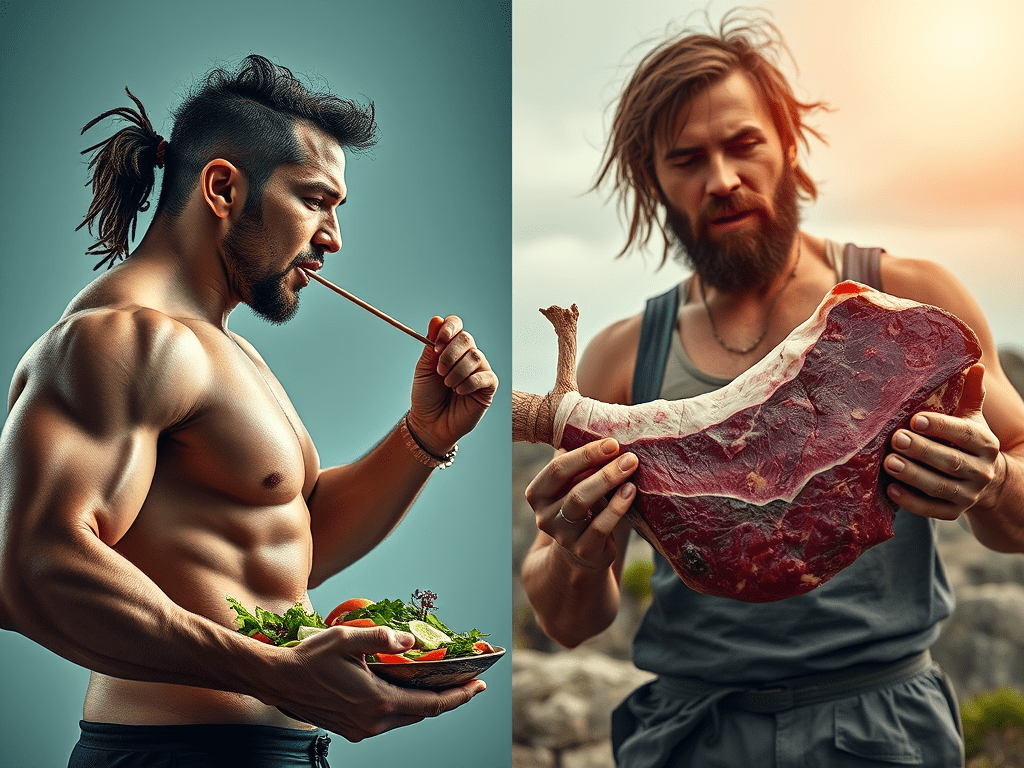
    The Game Changers promotes a plant-based diet as not only an ethical choice, but as a gateway to elite athleticism, virility, and moral superiority. It uses cinematic flair, celebrity cameos, and pseudoscientific claims to repackage veganism as a Bro Lifestyle—a body-hacking shortcut to strength, stamina, and environmental salvation. Meanwhile, Untold: The Liver King profiles Brian Johnson, a self-styled “Ancestral Living” guru who gained millions of followers by promoting a raw-organ-meat, shirtless-in-the-woods routine before being exposed for secretly spending over $10,000 a month on performance-enhancing drugs.

    Despite their opposing diets—one vegan, one carnivore—both narratives follow a suspiciously similar script. They offer simplified solutions to complex problems, appeal to masculine insecurity, and promise transcendence through aesthetics, all while playing fast and loose with science. Their real power lies not in evidence, but in storytelling—stories that market identity, exploit fears, and seduce with cinematic emotion.

    This style of rhetoric, often called “Bro Science,” thrives in an age of algorithmic truth, where virality trumps validity. In this environment, influencer-driven wellness culture doesn’t just ignore science—it weaponizes it, bending facts to serve a brand. The result is a cultural climate where image, ideology, and emotional resonance increasingly matter more than data or critical thinking.

    Assignment:

    Write a well-argued, 1,700 word essay that analyzes The Game Changers and Untold: The Liver King as case studies in rhetorical manipulation, identity-based marketing, and the collapse of evidence-based discourse. In your essay, argue that the success of these Bro influencers lies not in their scientific credibility, but in their emotional, aesthetic, and ideological appeal.

    You must compare the rhetorical strategies used in both documentaries and analyze the cultural implications of how masculinity is rebranded, how virtue is commodified, and how fallacious reasoning is normalized in the guise of motivation and self-improvement.


    Your essay should address the following:

    1. Rhetorical Strategy – How do both documentaries use visual storytelling, celebrity testimony, repetition, and emotional appeals to persuade the viewer?
    2. Logical Fallacies – Identify and critique examples of cherry-picked science, false cause arguments, appeals to authority, or false dichotomies in each film.
    3. Branding Masculinity – How do the documentaries construct competing visions of the “ideal male”? What do they promise men, and what fears do they exploit?
    4. Collapse of Evidence-Based Thinking – Situate these documentaries in a larger cultural moment. Why do identity-driven narratives flourish in a time of disinformation, algorithmic echo chambers, and a crisis of expertise?

    Style, Structure, and Submission

    • Your essay must include a thesis with mapping components, clear topic sentences, and evidence-based analysis.
    • You may write in a formal academic tone or use a more critical/cultural studies voice with vivid prose—as long as your argument is coherent, supported, and original.
    • Use MLA style consistently.Final draft due: [Insert Date]

    Sample Thesis Statements (with Mapping Components)


    1.
    While The Game Changers promotes lentils and The Liver King pushes liver, both documentaries peddle the same myth: that aesthetic transformation equals virtue. Through emotionally manipulative storytelling, logical fallacies disguised as science, rebranded masculine identities, and algorithmically engineered messaging, these films reveal the dangerous collapse of evidence-based thinking in modern wellness culture.


    2.
    The success of The Game Changers and Untold: The Liver King lies not in their nutritional claims but in their weaponization of narrative. Both films rely on emotionally loaded visuals, performative masculinity, fallacious scientific rhetoric, and identity-driven marketing to sell a fantasy of bodily perfection that exploits insecurity and bypasses rational analysis.


    3.
    By glamorizing extreme lifestyle choices through visual spectacle, moral branding, and rhetorical sleight-of-hand, The Game Changers and Untold: The Liver King reveal a disturbing cultural trend: the replacement of scientific rigor with personal mythologies, the commodification of authenticity, and the rise of Bro Science as a post-truth performance of health.


    Sample Outline


    I. Introduction

    • Hook: The modern Bro doesn’t just lift—he converts.
    • Brief overview of both documentaries and their appeal
    • Thesis statement with four components:
      • Emotional storytelling
      • Logical fallacies
      • Rebranded masculinity
      • Decline of evidence-based thinking

    II. The Emotional Power of Narrative

    • Use of cinematic techniques, voice-over, editing, and transformation arcs
    • Celebrity endorsements (e.g., Arnold, athletes, Johnson himself)
    • Case study: how emotion trumps empirical data in both documentaries

    III. The Rhetoric of Fallacy

    • The Game Changers: cherry-picking studies, false cause arguments
    • Liver King: appeal to nature, denial of PEDs, appeal to “ancestral purity”
    • How fallacies are disguised through slick production and confidence

    IV. Masculinity as Lifestyle Branding

    • Compare how each documentary rebrands masculinity (lean vegan warrior vs. raw primal alpha)
    • Analyze underlying fears being addressed: weakness, softness, irrelevance
    • How “virtue” (animal ethics vs. authenticity) becomes a selling point for muscle aesthetics

    V. The Cultural Crisis of Truth and Expertise

    • Rise of influencer health culture amid distrust in traditional institutions
    • The algorithm as echo chamber: content tailored to belief, not inquiry
    • Bro Science as the new gospel in the post-truth digital age

    VI. Conclusion

    • Recap major points
    • Reflect on the danger of narratives that bypass critical thought
    • Call to rethink how we engage with health media and influencers in the age of viral propaganda
  • I’ve Become Leery of the Ronnie Coleman Effect in AI Writing

    I’ve Become Leery of the Ronnie Coleman Effect in AI Writing

    My college writing students and I have been collaborating with ChatGPT for over a year now. I’ve often been impressed with this writing platform. Provided I give very specific instructions and make it clear what kind of tone and persona I want, ChatGPT can perform in ways I can’t. It can’t make a turn of phrase and make language sing in ways that dwarf my own solid writing skills. 

    But recently, I’ve been leery of ChatGPT and have been eager to write without it. What I’ve noticed is that it can flex its prose muscles in impressive ways that I call the Ronnie Coleman Effect. Ronnie Coleman was a champion bodybuilder, arguably the best in his era, late 90s to early 2000s. At 290 pounds, his steroidal muscles exploded in ways that made him look impossibly superhuman. I was a natural bodybuilder in my youth. Coleman would blow me off the stage. Coleman’s 290 pounds to my 190 pounds is what my prose is compared to ChatGPT’s: I’m the natural, lean, almost boring bodybuilder while ChatGPT is the flexing, bulging Ronnie Coleman who steals all the attention. I’m simply overpowered by this AI platform. 

    However, there are downsides: AI overwrites, can obscure clarity, can be florid in nonsensical ways, can be grossly inaccurate, and can steal my confidence because it says, “You’re nothing compared to me,” and it can make me lazy because it whispers, “Just jot a few notes. I’ll take care of the rest.” 

    For this reason, I started writing without ChatGPT. I need to get out from under the oppressive Ronnie Coleman Effect and be human again. 

  • I Have No Illusions About Converting My Students to “The Ways of Literacy”

    I Have No Illusions About Converting My Students to “The Ways of Literacy”

    My college students admit that they barely read. They avoid books. They’ll skim an article. Their “cognitive load” is taken up by texting on their phones and watching TikTok and YouTube videos. They don’t have bandwidth for doing deep reading.

    Many of them were in the eighth grade during the pandemic. They lost close to two years of school, spent time on their phones and Chromebooks, and see ChatGPT as a godsend. They can outsource college instructors’ writing assignments and no longer have to worry about grammar or formatting. 

    Teaching college writing, I have to meet students where they are. I have to teach them rhetorical skills, critical thinking skills, and the transforming power of literacy, so I show them powerful arguments, and what makes them persuasive, and people who have found their higher selves through literacy, such as Frederick Douglass and Malcolm X, and the happiness derived from Cal Newport’s notion of “deep work” as an antidote to the despair and nihilism of popular culture’s default setting for cheap dopamine hits, immediate gratification, and meretricious consumer hype. 

    The good news is that my lessons resonate with the students evidenced by their engagement with class discussions. The less than good news is that these philosophical discussions don’t turn them into readers, don’t make them want to trade their phones and social media platforms for a novel or a biography, and don’t make them want to learn the finer points of rhetoric. 

    My students are smart, decent, reasonable, and pragmatic. They learn what they feel is essential to adapt to life’s challenges. Doing a deep dive into reading and writing doesn’t seem that essential to them even though they’ll acknowledge many of the writers and writing samples I present to them are impressive and worthy of admiration. 

    My students seem to appreciate me for giving them an entertaining presentation and for having made the effort to sell literacy as an essential tool for becoming our aspirational selves, but at the end of the day, they focus on getting their homework done as efficiently as possible, working a part-time job to pay the bills, enjoying their friendships, and nurturing their romantic interest. 

    The unspoken agreement between my students and me is that I will be entertaining and enthusiastic about my subject for 90 minutes, but I will not have any delusions about converting them to The Ways of Literacy. That is a teacher’s fantasy, made even more elusive in the AI Age. 

  • The Handwriting Is on the Wall for Writing Instructors Like Myself

    The Handwriting Is on the Wall for Writing Instructors Like Myself

    There’s a cliché I’ve avoided all my life because I’m supposed to be offended by cliches. I teach college writing. But now, God help me, I must say it: I see the handwriting on the wall. And it’s blinking in algorithmic neon and blinding my eyes.

    I’ve taught college writing for forty years. My wife, a fellow lifer in the trenches, has clocked twenty-five teaching sixth and seventh graders. Like other teachers, we got caught off-guard by AI writing platforms. We’re now staring down the barrel of obsolescence while AI platforms give us an imperious smile and say, “We’ve got this now.”

    Try crafting an “AI-resistant” assignment. Go ahead. Ask students to conduct interviews, keep journals, write about memories. They’ll feed your prompt into ChatGPT and create an AI interview, journal entry, and personal reflection that has all the depth and soul of stale Pop-Tart. You squint your eyes at these AI responses, and you can tell something isn’t right. They look sort of real but have a robotic element about them. Your AI-detecting software isn’t reliable so you refrain from making accusations. 

    When I tell my wife I feel that my job is in danger, she shrugs and says there’s little we can do. The toothpaste is out of the tube. There’s no going back. 

    I suppose my wife will be a glorified camp counselor with grading software. For me, it will be different. I teach college. I’ll have to attend a re-education camp dressed up as “professional development.” I’ll have to learn how to teach students to prompt AI like Vegas magicians—how to trick it into coherence, how to interrogate its biases. Writing classes will be rebranded as Prompt Engineering.”

    At sixty-three, I’m no fool. I know what happens to tired draft horses when the carriage goes electric. I’ve seen the pasture. I can smell the industrial glue. And I’m not alone. My colleagues—bright, literate, and increasingly demoralized—mutter the same bitter mantra: “We are the AI police. And the criminals are always one jailbreak ahead.”

  • Workout & Diet Strategy for Thriving in My 60s

    Workout & Diet Strategy for Thriving in My 60s

    I’m 63 and maintaining strength, stamina, and mobility with a sustainable weekly routine. Here’s my current workout and diet plan—structured, protein-rich, and cardio-intense without trashing the joints.


    Training Plan (6 Days/Week – 1 Rest Day)

    I rotate three different 1-hour sessions. All kettlebell (KB) workouts are circuit-style with minimal rest.

    Workout A – Strength & Squat Emphasis

    • Goblet Squats – 3 sets of 20
    • KB Lat Rows – 3 sets of 15
    • Push-Ups – 2 sets of 20
    • KB Clean, Squat & Press – 15 reps
    • Hand-to-Hand Swings – 30
    • Around-the-Worlds – 30
    • KB Circles – 20
    • Turkish Get-Ups – 3/side
    • Lying KB Pullover + Sit-Up + Press – 15
    • Medicine Ball Slams – 30

    Workout B – Swing & Flow Emphasis

    • Hand-to-Hand Swings – 2 rounds of 40
    • Single-Arm Clean, Squat & Press – 15
    • KB Lat Rows – 2 rounds of 20
    • Figure 8s – 20
    • Push-Ups – 20
    • Side Plank Deltoid Raises – 20
    • KB Deadlifts – 20
    • Around-the-Worlds – 40
    • Turkish Get-Ups – 3/side
    • Lying KB Pullover + Sit-Up + Press – 15
    • Single-Arm Chest Press – 15
    • Single-Leg Romanian Deadlifts – 20

    Workout C – Schwinn Airdyne Session

    • 1 hour at 80–95% HR max
    • ~700 calories burned

    Weekly Cycle

    Rotate A → B → C, repeat. One full rest day weekly.

    Diet & Macros (Maintenance/Cutting)

    High-protein, moderate-calorie, lowish-carb. Simple meals, consistent results.

    Breakfast

    • 1 cup plain Greek yogurt
    • Scoop of whey protein
    • Chia seeds, berries
    • Coffee

    Lunch

    • Arugula salad with balsamic
    • Canned fish
    • ½ block Trader Joe’s tempeh
    • Cottage cheese
    • Jalapeños, herbs, spices

    Post-Nap Snack

    • ¾ cup yogurt with berries

    Dinner

    • Lean protein
    • Vegetables
    • Apple

    Macros:

    • Protein: 160–180g
    • Calories: ~2,300
    • Carbs: 100–120g

    Supplements

    • Fish Oil
    • Creatine (5–7g daily)
    • Magnesium