Blog

  • The Ascent of Proteinberg: One Man’s Daily Siege Against Carbs and Chaos

    The Ascent of Proteinberg: One Man’s Daily Siege Against Carbs and Chaos

    Each morning begins with a stare-down: me versus Proteinberg, the Everest of self-discipline, rising from my fridge like a smug Nordic god carved from blocks of Greek yogurt and slabs of salmon. It’s a cruel, relentless climb, strewn with the jagged boulders of eggs, tempeh, sardines, cottage cheese, soy milk, and the occasional whey protein landslide. Somewhere near the summit: a dollop of smug self-respect, earned only after choking down what tastes like Poseidon’s bait bucket mixed with barnyard runoff.

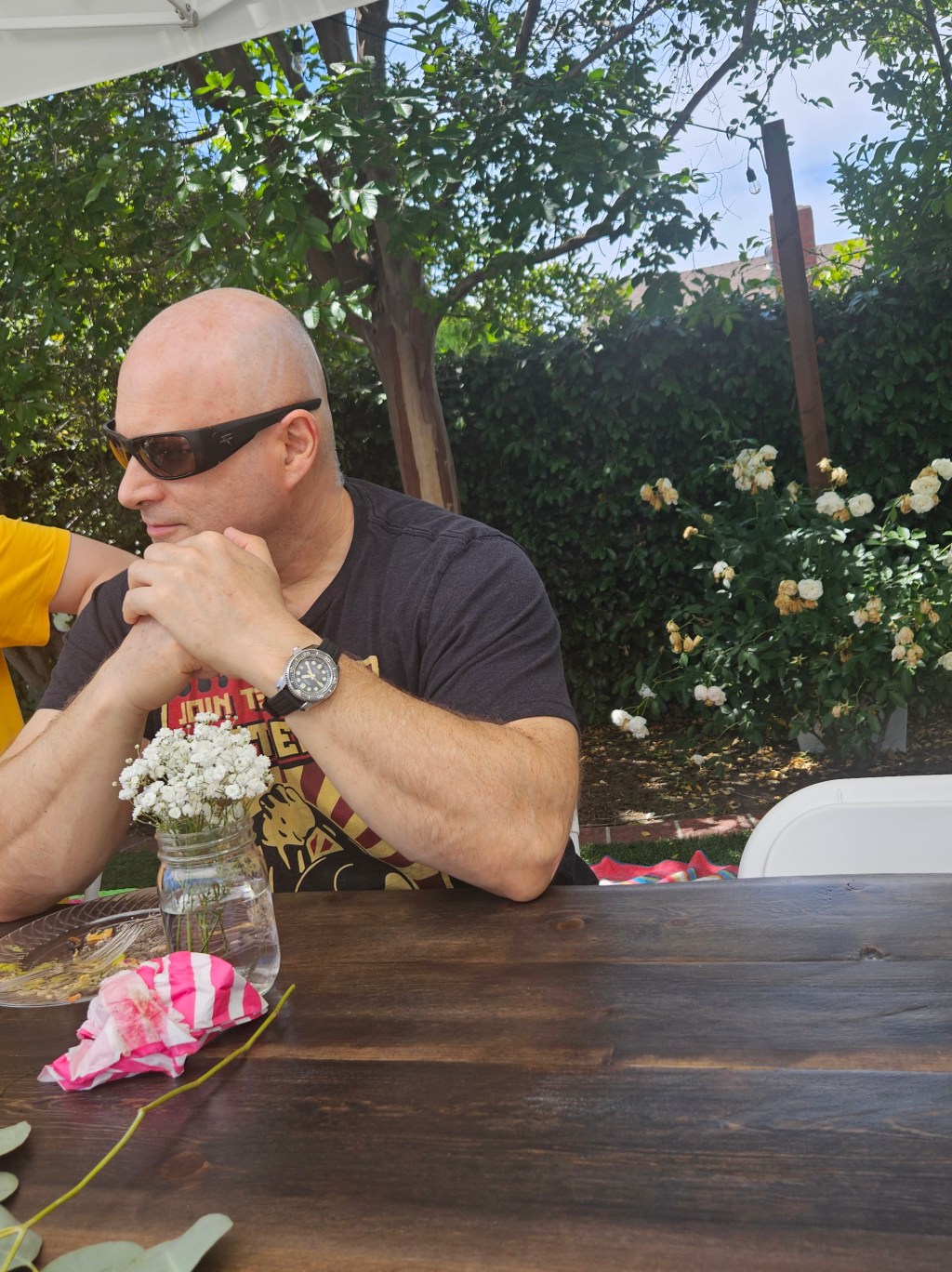
    I’m 63, not that you’d guess it from the size of the kettlebells I swing five days a week like I’m auditioning for a reboot of 300: The 63-Year-Old Man Edition. My battle isn’t just with gravity—it’s with the creeping, gelatinous blob of abdominal fat that lurks like a metabolic Grim Reaper, threatening dementia, stroke, and the kind of death that begins with a raspy wheeze and ends in a hospital bed full of regret.

    Climbing Proteinberg is my daily salvation. Miss a day, and the Carb Demons come knocking—those sugar-slick phantoms with snacky grins and buttery claws. They whisper of bagels and donuts, hijack my brain, and leave me sugar-drunk and shame-stained before lunch. But summit the Proteinberg? I walk tall. Satiated. Slightly disgusted, yes, but victorious.

    It’s not just food. It’s ritual. It’s order in the chaos. A daily anchor in the storm of temptations that masquerade as comfort. As my wife brews her potent dark roast each dawn, the scent hits me like a monk’s bell calling me to vespers. I rise. I eat. I fight. I win. There is meaning in the climb, purpose in the discipline, and if not happiness, then at least its lean, unsalted cousin: peace.

  • Lessons Learned from the Ring Light Apocalypse

    Lessons Learned from the Ring Light Apocalypse

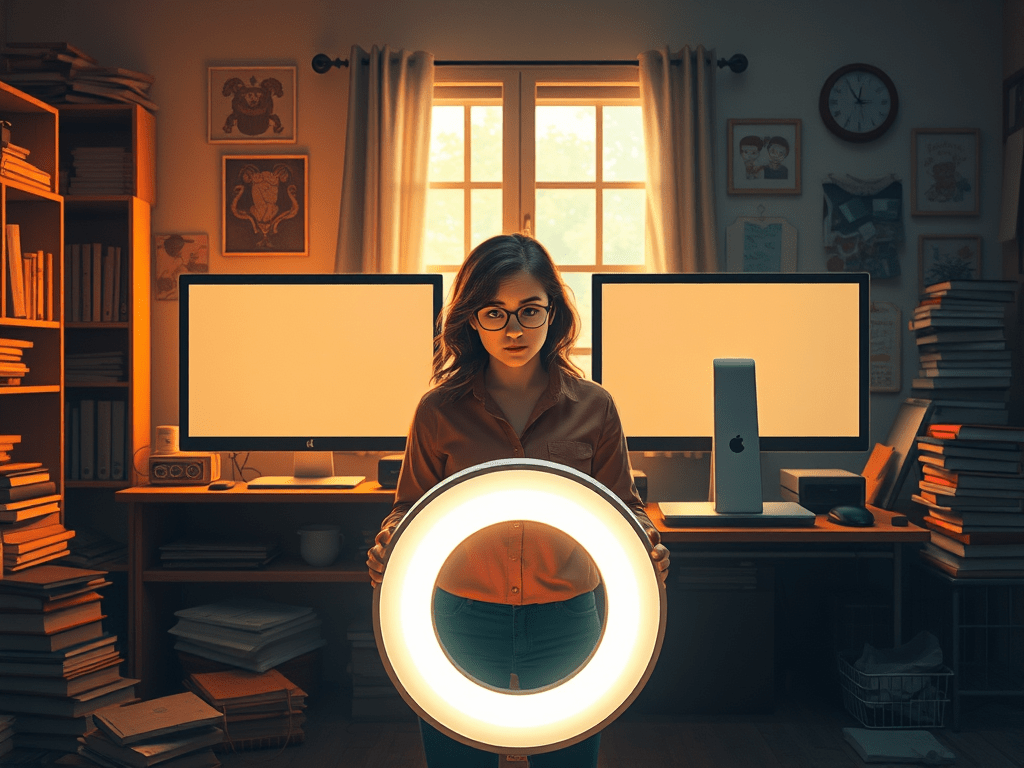
    During lockdown, I never saw my wife more wrung out, more spiritually flattened, than the months her middle school forced her into the digital gladiator pit of live Zoom instruction. Every weekday morning, she stood before a pair of glaring monitors like a soldier manning twin turrets. At her feet, the giant ring light—a luminous, tripod-legged parasite—waited patiently to stub toes and sabotage serenity. It wasn’t just a lighting fixture; it was a metaphor for the pandemic’s unwanted intrusion into every square inch of our domestic life.

    My wife’s battle didn’t end with her students. She also took it upon herself to launch our twin daughters, then fifth-graders, into their own virtual classrooms—equally chaotic, equally doomed. I remember walking past their screens, peering at those sad little Brady Bunch tiles of glitchy faces and frozen smiles and thinking, This isn’t going to work. It didn’t feel like school. It felt like a pathetic simulation of order run by people trying to pilot a burning zeppelin from their kitchen tables.

    I, by contrast, got off scandalously easy. I teach college. My courses were asynchronous, quietly nestled in Canvas like pre-packed emergency rations. No live sessions. No tech panics. Just optional Zoom office hours, which no one attended. I sat in my garage doing kettlebell swings like a suburban monk, then retreated inside to play piano in the filtered afternoon light. The pandemic, for me, was a preview of early retirement: low-contact, low-stakes, and high in self-righteous tranquility.

    My wife envied me. She joked that teaching Zoom classes was like having your teeth drilled by a sadist who lectures you on standardized testing while fumbling with the pliers. And I laughed—too hard, because it wasn’t really a joke.

    The pandemic cracked open a truth I still wince at: the great domestic imbalance. I do chores, yes. I wipe counters, haul laundry, load the dishwasher. But my wife does the emotional heavy lifting—the million invisible tasks of motherhood, schooling, comforting, coordinating. During lockdown, that imbalance stopped being abstract. It stared me in the face.

    For me, quarantine was a hermit’s holiday. For her, it was a battlefield with bad Wi-Fi. And while I’m back to teaching and she’s back to something closer to normal, I haven’t forgotten the ring light, the glazed stare, or the guilt that hums quietly like a broken refrigerator in the back of my mind.

  • Trapped in the Sauna: When Bro Talk Becomes Brain Fog

    Trapped in the Sauna: When Bro Talk Becomes Brain Fog

    I’m 63, I live in the suburbs, and I like to sweat, laugh, and think—ideally all in the same day. I’ve got a soft spot for health and fitness talk, well-produced comedy, and podcasts where the ideas land harder than the punchlines. Back in the day, I gave Joe Rogan some ear time—especially when he had guests like Michael Pollan who could string together a sentence without referencing elk meat or hallucinogens. The show scratched a certain male itch: that longing for a tribal fire pit where you could grunt, swap kettlebell routines, and talk nonsense without getting side-eyed.

    I got it. I really did. There was a certain charm in the early years—the man cave as refuge, not bunker. A place for unapologetic masculinity that wasn’t trying to sell you a four-pack of testosterone supplements and a tactical flashlight.

    But then something changed. The man cave didn’t evolve—it ossified. It turned into a walled-off compound of grievance, smug anti-intellectualism, and half-baked conspiracy theories passed around like a tray of stale edibles. What once felt like a mixed bag of bro-science and genuine curiosity devolved into a middle-aged lunch table where the same unfunny comedians riff about whiskeys, bow hunting, and whether they’d survive a bear attack armed only with sarcasm and nicotine gum.

    So when I stumbled across Ghost Gum’s YouTube essay “The Collapse of the Joe Rogan Verse,” I hit play with morbid curiosity—and found it eerily validating. Turns out, I wasn’t alone in sensing that Rogan’s podcast had turned into a predictable, self-congratulatory echo chamber, where counterarguments go to die and every guest seems contractually obligated to flatter the host.

    The video’s roast of Tom Segura was especially brutal—and fair. Once the chubby, relatable everyman, Segura now floats in orbit around Planet Rogan, sneering at the unwashed masses like a guy who did keto once and now thinks he’s better than you. His comedy used to punch up; now it just punches down and preens.

    Comedy rooted in tribal loyalty becomes fan service, then becomes boring, then becomes embarrassing. What began as a countercultural clubhouse has curdled into a locker room thick with stale air and self-importance.

    Maybe Joe Rogan was once a necessary irritant to polite discourse, a reminder that the man cave had value. But too much time in that space without fresh air—and you forget it was never meant to be a throne room.

    Perhaps Joe Rogan’s unraveling podcast is just another cautionary tale of what happens when someone marinates too long in their own echo chamber and starts mistaking the sound of agreement for the sound of wisdom. Spend enough time surrounded by yes-men and protein powder, and eventually, you’re just getting high on your own supply—delirious with self-importance and blind to the rot setting in.

  • The Jungle, the Bigfoot, and the Fan Man Cometh

    The Jungle, the Bigfoot, and the Fan Man Cometh

    Last night I dreamed I was deep in the jungle—not metaphorically, mind you, but the kind you’d find on a Nature Channel special narrated by a vaguely concerned Brit. I wasn’t alone. Beside me stood a woman zookeeper in full khaki safari cosplay, complete with binoculars and a steel gaze. We weren’t observing wildlife—we were at war. The prize? A sprawling jungle compound. The opponent? A hulking, glowering Bigfoot-like brute who looked like he’d crawled out of my Neanderthal ancestry with unresolved issues and a gym membership.

    It was a reality show, naturally. Cameras everywhere. High stakes. Death possible. Maybe probable.

    What shocked me wasn’t the premise—it was me. I watched myself morph from suburban dad into a primal tactician, a creature with cunning in his marrow and bloodlust behind his bifocals. The zookeeper and I didn’t stand a chance physically, but we were shrewd, dirty-fighting strategists. While the beast snorted and stomped like a sentient linebacker, we set a trap—an elegant, jungle-engineered booby trap. And it worked. Bigfoot fell. Cue commercial break. Cue confetti.

    Victory was ours.

    But I, ever the responsible homeowner, sold my half of the prize to the zookeeper in exchange for a wad of cash and a sense of capitalist purpose. I left the jungle compound behind and made my triumphant return not to glory—but to shopping.

    I hit the beachside bazaar with missionary zeal, eyes blazing, nostrils flaring with sea air and consumer ambition. My quarry: fans. Tower fans. Desk fans. Oscillating fans. Fans with remotes, timers, and multi-speed whisper motors. Each vendor pitched their product like they were auditioning for Shark Tank. I nodded sagely as an assistant loaded box after box into a truck like I was provisioning for the end times—but with superior airflow.

    I had ventured into the heart of darkness, found my inner beast, won the battle, and returned not with enlightenment or moral clarity—but with high-performance climate control.

    In the dream’s strange logic, it made perfect sense. I had confronted the savage within, and now, armed with cutting-edge ventilation, I would cool the tempers of suburban life.

    This, apparently, is my idea of spiritual integration.

  • The Vegan Martyr of Suburbia

    The Vegan Martyr of Suburbia

    This is a story soaked in irony, clucking with heartbreak. It’s the tale of Ned Pearlman, a 63-year-old man whose conscience became his personal executioner.

    Ned was a lifelong weightlifter, a barrel-chested patriarch with calloused hands and a back catalog of deadlift anecdotes. When egg prices began to flirt with the absurd, his family took the Depression-era route and bought chickens. Backyard livestock as economic strategy.

    They started with a humble flock—a few hens, a rooster, and one poorly socialized silkie that pecked at everyone’s ankles. But something shifted in Ned. The hens began following him around the yard like starstruck interns. The rooster started presenting Ned with tributes: gum wrappers, pocket change, ornamental twigs. It was clear—Ned was the alpha.

    At night, the chickens would nestle beside him in bed, each with its own green velvet pillow like feathery courtiers in a royal suite. Ned, a man once fueled by steaks and protein shakes, looked into their beady eyes and saw innocent souls. Souls that changed him. He went vegan overnight.

    Not just vegan—missionary vegan. He researched. He supplemented. He downed algae-based omega-3s and pea protein smoothies that tasted like damp cardboard soaked in guilt. He clocked in 180 grams of protein a day, but his body, unimpressed by numbers, absorbed barely a fraction. The mighty Ned began to shrink.

    He became fatigued, confused. The barbell mocked him. His once-proud biceps began to resemble disillusioned baguettes. Despite his family’s desperate pleas—“just some yogurt, Ned, or a scoop of whey!”—he remained unwavering. This was a moral epiphany, not a diet. Animal products were betrayal. Flexibility was sin.

    Soon, the man who once bench-pressed lawn furniture was bedridden and showing signs of rapid cognitive decline. His doctor called it malnutrition-induced dementia. Ned called it sacrifice.

    His family, feeling abandoned, visited him rarely—guilt-visitations sprinkled in between Facebook posts and emotional exhaustion. But the chickens stayed. Loyal. Soft. Slightly judgmental. And the geriatric facility, either out of mercy or lack of clear policy, let them roost near him.

    One sunny afternoon, Ned was wheeled onto the grass. The chickens gathered around him, forming a feathered perimeter. In a rare moment of clarity, he looked to the sky and muttered, “Why, dear God, did my health not align with my ethics? Why must my clean conscience kill me and alienate those I love?”

    He received no reply. The clouds rolled by in soft indifference. Ned closed his eyes and died, flanked by his beaked apostles, surrounded by the warm, gentle souls that had rewritten his values—and slowly drained his life.

  • Two Student Learning Outcomes to Encourage Responsible Use of AI Tools in College Writing Classes

    Two Student Learning Outcomes to Encourage Responsible Use of AI Tools in College Writing Classes

    As students increasingly rely on AI writing tools—sometimes even using one tool to generate an assignment and another to rewrite or “launder” it—we must adapt our teaching strategies to stay aligned with these evolving practices. To address this shift, I propose the following two updated Student Learning Outcomes that reflect the current landscape of AI-assisted writing:

    Student Learning Outcome #1: Using AI Tools Responsibly

    Students will integrate AI tools into their writing assignments in ways that enhance learning, demonstrate critical thinking, and reflect ethical and responsible use of technology.


    Definition of “Meaningfully, Ethically, and Responsibly”:

    To use AI tools meaningfully, ethically, and responsibly means students treat AI not as a shortcut to bypass thinking, but as a collaborative aid to deepen their writing, research, and revision process. Ethical use includes acknowledging when and how AI was used, avoiding plagiarism or misrepresentation, and understanding the limits and biases of these tools. Responsible use involves aligning AI usage with the assignment’s goals, maintaining academic integrity, and using AI to support—not replace—original thought and student voice.


    Five Assignment Strategies to Fulfill This Learning Outcome:

    1. AI Process Reflection Logs
      Require students to submit a short reflection with each assignment explaining if, how, and why they used AI tools (e.g., brainstorming, outlining, revising), and evaluate the effectiveness and ethics of their choices.
    2. Compare-and-Critique Tasks
      Assign students to generate an AI-written response to a prompt and then critique it—identifying weaknesses in reasoning, tone, or factual accuracy—and revise it with their own voice and insights.
    3. Source Verification Exercises
      Ask students to use AI to gather preliminary research, then verify, fact-check, and cite real sources that support or challenge the AI’s output, teaching them discernment and digital literacy.
    4. AI vs. Human Draft Workshops
      Have students bring both an AI-generated draft and a human-written draft of the same paragraph to class. In peer review, students analyze the differences in tone, structure, and depth of thought to develop judgment about when AI helps or hinders.
    5. Statement of Integrity Clause
      Include a required statement in the assignment where students attest to their use of AI tools, much like a bibliography or code of ethics, fostering transparency and self-awareness.

    Student Learning Outcome #2: Avoiding the Uncanny Valley Effect

    Students will produce writing that sounds natural, human, and authentic—free from the awkwardness, artificiality, or emotional flatness often associated with AI-generated content.


    Definition: The Uncanny Valley Effect in Writing

    The Uncanny Valley Effect in writing occurs when a piece of text almost sounds human—but not quite. It may be grammatically correct and well-structured, yet it feels emotionally hollow, overly generic, oddly formal, or just slightly “off.” Like a robot trying to pass as a person, the writing stirs discomfort or distrust because it mimics human tone without the depth, insight, or nuance of actual lived experience or authorial voice.


    5 Common Characteristics of the Uncanny Valley in Student Writing:

    1. Generic Language – Vague, overused phrases that sound like filler rather than specific, engaged thought (e.g., “Since the dawn of time…”).
    2. Overly Formal Tone – A stiff, robotic voice with little rhythm, personality, or variation in sentence structure.
    3. Surface-Level Thinking – Repetition of obvious or uncritical ideas with no deeper analysis, curiosity, or counterargument.
    4. Emotional Emptiness – Statements that lack genuine feeling, perspective, or a sense of human urgency.
    5. Odd Phrasing or Word Choice – Slightly off metaphors, synonyms, or transitions that feel misused or unnatural to a fluent reader.

    7 Ways Students Can Use AI Tools Without Falling into the Uncanny Valley:

    1. Always Revise the Output – Use AI-generated text as a rough draft or idea starter, but revise it with your own voice, style, and specific insights.
    2. Inject Lived Experience – Add personal examples, concrete details, or specific observations that an AI cannot generate from its data pool.
    3. Break the Pattern – Vary your sentence length, tone, and rhythm to avoid the AI’s predictable, formal cadence.
    4. Cut the Clichés – Watch for stale or filler phrases (“in today’s society,” “this essay will discuss…”) and replace them with clearer, more original statements.
    5. Ask the AI Better Questions – Use prompts that require nuance, comparison, or contradiction rather than shallow definitions or summaries.
    6. Fact-Check and Source – Don’t trust AI-generated facts or references. Verify claims with real sources and cite them properly.
    7. Read Aloud – If it sounds awkward or lifeless when spoken, revise. Authentic writing should sound like something a thoughtful person might actually say.
  • The Apostle, the Fantasist, and the Fallacy of Oversimplification

    The Apostle, the Fantasist, and the Fallacy of Oversimplification

    For decades, I was enthralled by Hyam Maccoby’s The Mythmaker: Paul and the Invention of Christianity—a book that crackled with contrarian flair and gave voice to my suspicions about Paul, the man I once called the theological arsonist of early Christianity. Maccoby offered the ultimate takedown: Paul wasn’t just a problematic apostle; he was a Gentile infiltrator, a second-rate intellect with delusions of rabbinic grandeur, and the architect of a theological Frankenstein stitched together from Jewish scripture and pagan mystery cults. I ate it up.

    But after multiple re-readings and exposure to rigorous critiques—particularly Jaroslav Pelikan’s withering 1986 review in Commentary, “The Real Paul?”—I find myself sobering up from Maccoby’s intoxicating polemic. It’s dawning on me that The Mythmaker didn’t so much reveal Paul as reinforce my own biases. Maccoby flattered the part of me that wanted Paul to be the villain in Christianity’s origin story—the man who hijacked Jesus’ message and replaced it with doctrinal imperialism.

    The prose, which once struck me as prophetic, now reads as grandiose. Maccoby’s tone vacillates between scholarly and shrill, and there’s a whiff of insecurity behind the rhetorical swagger. His portrait of Paul as a self-aggrandizing opportunist is delivered with the juicy intensity of a novelist crafting an antihero, not a historian reconstructing a life. The final chapter, which connects Paul’s theology to the roots of Christian anti-Semitism, still has force—but even there, the execution leans more on indignation than historical rigor.

    Maccoby’s thesis—Paul as a failed would-be rabbi who, thwarted by his mediocrity, built a new religion in his own image—is clever, plausible in parts, and undeniably dramatic. But it’s also marred by speculative psychoanalysis and gaping holes in historical evidence. As Pelikan deftly notes, Maccoby accuses Paul of being a fantasist while committing the same literary sin: manufacturing internal motives and dramatic arcs that aren’t supported by any reliable record. Even the irony is Pauline.

    Pelikan, writing as a Christian scholar, grants that Maccoby’s critique of Paul’s legacy—particularly regarding anti-Semitism—is worthy of serious attention. And he’s right. There’s a case to be made that Pauline theology contributed to the long and bloody shadow Christianity has cast over Jewish identity. But the leap from theological critique to historical assassination is too far, too fast, and too loose with the facts.

    What Maccoby misses—or refuses to see—is Paul’s theological brilliance. In a world obsessed with glory and power, Paul offered something almost unthinkable: a God who descends rather than ascends, who chooses suffering over status, who empties himself in the service of love. Philippians 2 is not the work of a hack. It is a theological Everest. In the image of a humbled God, Paul delivers something transcendent—an inversion of divine power that has echoed through two millennia.

    No, Paul was not a mythmaker in the pejorative sense. He was, for better or worse, a visionary. Flawed, fiery, and yes, sometimes maddening—but never mediocre.

    In the end, Maccoby gives us a Paul who is more caricature than character—more villainous foil than complex man. The truth is harder to pin down, but also more interesting: Paul is neither saint nor saboteur. He is one of the most consequential minds in human history, a man whose theological imagination reshaped the contours of the divine. That kind of mind deserves more than debunking—it demands engagement, even when it provokes discomfort. 

  • Mother’s Day, Brioche, and the Gospel of Joe

    Mother’s Day, Brioche, and the Gospel of Joe

    Before heading out to Los Alamitos for Mother’s Day, I took out the trash—literal and existential—and ran into my neighbor Joe, who was shirtless, glistening, and fully immersed in the sacred rite of garage cleansing. A former state wrestler, well over six feet and built like a retired Marvel stuntman, he stood there in gym shorts holding his yelping Dachshund like a small, furry accordion.

    “Tell your wife happy Mother’s Day,” he barked, like a man who’s yelled instructions through chain-link fences and Little League dugouts.

    He asked what we were doing. Smash burgers, cake, and ice cream at my sister-in-law’s in Los Alamitos, I told him.

    I floated a question that had been gnawing at me like a rat in the attic: “Should I eat the burger without the brioche bun?”

    Joe turned slowly. Scoffed. “Eat the bun, Jeff. You’re going to die soon.”

    This wasn’t nihilism. This was wisdom from the pulpit of heatstroke and middle-aged clarity.

    “In the last four months, I’ve lost three friends your age,” he said. “One of them was a ripped surfer. Sat down on the couch, died of an aneurysm. Didn’t even spill his smoothie.”

    He paused, letting that land like a kettlebell on my soul.

    “You need twenty-five pounds of emergency fat. A cushion. In case you get sick. You can’t cheat Mother Nature. Eat the bun. Eat the cake. Enjoy your life. Don’t micromanage your macros while white-knuckling your way into an extra ten years of prune juice and self-loathing.”

    It was the most persuasive argument for gluttony I’d ever heard.

    So I went to Los Alamitos. And I didn’t just “cheat”—I defected. I committed dietary treason. I licked frosting off my fingers like it was the Eucharist. I let French vanilla ice cream puddle across my plate without apology.

    The penance would come Monday. That’s the deal.

    But I vowed not to wallow in the usual puddle of self-loathing and Calvinist regret. I would take it like a man. Chin up. Macros reset. Guilt-free. Mostly.

  • The Astroturf Gospel and the Temptation of Lilikoi

    The Astroturf Gospel and the Temptation of Lilikoi

    It’s Mother’s Day, which means my wife and twin daughters are headed to my sister-in-law’s house in Los Alamitos—land of perpetual canopies, well-behaved shrubbery, and a backyard lined with astroturf so immaculate it feels like a corporate fantasy of grass. It’ll be a dry 83 degrees, the kind of weather that screams “perfect” but secretly smells like sunscreen, grilled onions,and the cloying ghost of dryer sheets wafting from the laundry room, where the rhythmic hum of tumbling towels offers the unsettling ASMR of suburban captivity.

    Lunch will be irresistible smash burgers, sizzling beneath a pop-up tent while two imprisoned dogs hurl themselves against the sliding glass door like furry protestors demanding civil rights. Their eyes will say, We are family, so that we mercifully let them free to sniff us and beg for food.

    I’ll eat my 2-pound burger without the brioche buns, which will trigger my brother-in-law Daniel to give me that look. You know the one. The “Oh, you’re dieting again” look, equal parts amusement and subtle mockery. I’ll explain that I began my latest odyssey—The Protein’s Progress—on April 10, and as of yesterday, I’m down 14 pounds. I will present this as fact, not brag. He will respond with his eyes, which will sparkle with skepticism, the kind that says we’ve seen this episode before.

    Once macros are discussed and dismissed, we’ll drift—inevitably—into our usual techno-futurist rabbit hole. Daniel will extol the revolutionary power of 3-D printers, which, according to him, can now build electric cars, houses, power generators, and possibly an emotional support animal, all at half the cost of corporate versions. He’ll pivot to ChatGPT, lamenting its encroachment on college classrooms and human employment in general, before predicting a future where we all live in 3-D-printed orchard communes—rudderless, jobless, and governed by self-appointed mayors fluent in blockchain and Blender.

    I’ll tell him this sounds less like an economic forecast and more like a limited series on HBO Max starring Pedro Pascal and an emotionally damaged android. We’ll laugh.

    Then comes dessert.

    I’ll admire the cakes I brought—one Paradise, one Lilikoi, both from King’s Hawaiian Bakery—and initially, nobly, decline. I will be strong. I will not cave.

    Then my sister-in-law will appear with a Costco-sized tub of Kirkland French Vanilla and start ladling it over thick slices of passionfruit-laced cake, and I will feel something in my chest shift. Not a heart attack—worse. It will be a spiritual failure.

    Excusing myself, I’ll go to the bathroom, stare into the mirror, and whisper, “It’s Mother’s Day. You’re allowed.”

    But the mirror will say, Are you, though?