Blog

  • Pillar of Salt: Why I Turned My Back on Bulk

    Pillar of Salt: Why I Turned My Back on Bulk

    As I trudged through the cavernous aisles of Costco, I felt less like a shopper and more like an explorer hacking through a consumerist rainforest with a mental machete. Everywhere I turned, industrial towers of peanut butter jars loomed like ancient ruins, and battalions of quinoa-based snack items assaulted me with their deceptive health halos. I wasn’t shopping—I was spelunking into the subconscious of the American appetite.

    Then came the Free Sample Fairies—syrupy-smiling heralds of indulgence—beckoning me toward thimble-sized offerings of strawberry smoothies, sushi rolls, and the inevitable ostrich jerky. It was a fever dream: a child’s fantasy of Eden where all cravings are granted instantly and without consequence. Except the consequences were vast, and they waited for me at home like angry creditors—an overflowing fridge, a groaning freezer, cupboards stuffed like hoarders’ closets. To make room for the new bounty, I had to speed-eat the old. Thus began the glutton’s loop: buying, bingeing, repenting, repeating. Costco wasn’t a store. It was an engine of expansion—of appetite, of girth, of existential despair.

    And I wept. Not just for myself but for my people. I wept because we worshipped this oversized temple of abundance as if our very worth hinged on how many gallons of mayonnaise we could carry home. We treated the act of bulk-buying like a civic virtue, a weekly pilgrimage that proved we were living the American Dream. But it wasn’t a dream. It was a performance. A flex. A suburban smoke screen designed to conceal the quiet desperation of too much, too often, too fast.

    So I returned home, hollow-eyed and bloated, and declared to my family that I could no longer continue this pilgrimage. Costco, I announced, was my personal Sodom—dangerous, seductive, and destined for dietary doom. I would henceforth shop only at Trader Joe’s: the humble monastery of portion control, the temple of restraint. My salvation, I told them, would be lined with frozen cauliflower gnocchi and 8-ounce jars of almond butter.

    My family wept. Not out of joy or agreement, but out of grief for the Costco bounty they would no longer see. No more colossal trays of croissants or five-pound bags of trail mix. I watched them mourn the death of excess. I saw it in their faces: longing for the Costco of yore. But I warned them—look back, and you become like Lot’s wife: bloated and salty.

    And then a miracle: They adapted. Slowly, painfully, they embraced the modesty of Trader Joe’s, portioned their expectations, and learned to live with less. They traded abundance for love, proving their devotion not with words but with fewer carbs. In their sacrifice, I found my strength.

    As I penned these reflections, a single tear rolled down my cheek. Whether it was sorrow, gratitude, or sodium withdrawal, I couldn’t say.

  • Protein’s Progress: A Pilgrimage through the Valley of Temptation

    Protein’s Progress: A Pilgrimage through the Valley of Temptation

    We’ve all heard the sacred chant of the well-meaning weight-loss evangelists: “It’s not a diet, it’s a lifestyle change.” A phrase so smugly optimistic it should be etched in cursive on a Whole Foods tote bag. These earnest cheerleaders—your friends, your doctor, that co-worker who jogs during lunch—deliver this wisdom as if they’ve just returned from Mount Sinai with the tablets of low-carb enlightenment. What they’re really doing is slapping a bow on a bear trap. Same deprivation, different branding.

    As someone who’s been up and down the scale like a yo-yo on a caffeine bender, let me be clear: no amount of euphemistic jargon will make weight loss feel like a spa day. The tipping point comes when you hate your own fatness more than you love cheddar popcorn and couch inertia. That’s what I call the Snacknnihilation Point—the exact moment your belly button starts to resemble a sinkhole of self-loathing and you realize it’s time to evacuate the disaster zone. There are no affirmations, no kale smoothies, no artisanal detox teas that can sugarcoat this reckoning. It’s a psychological come-to-Jesus via stretch marks and lab results.

    And no, you are not embarking on a seamless “lifestyle change.” You are entering a prolonged tango with productive suffering. There is anguish. There is withdrawal. But there’s also a strange, masochistic joy. Welcome to Pangagement—the evolutionary trick of finding satisfaction in a stomach’s complaint. That slight rumble used to send you diving headfirst into the pantry like a Navy SEAL in search of Oreos. Now? It’s your battle cry. It means you’re winning. It means you’re burning fat like a heretic at the metabolic stake.

    You learn Snaccrifice—the heroic act of denying yourself a sleeve of Chips Ahoy in exchange for a slightly less tragic reflection in the mirror. It’s martyrdom with macros. And soon, you taste Hungerphoria—that monk-like clarity that arrives when your body realizes it’s not dying, it’s detoxing from decades of mindless munching. The hunger stops feeling like an emergency and starts feeling like moral superiority.

    This isn’t some quaint reinvention of your morning routine with lemon water and yoga quotes. This is Protein’s Progress—your odyssey out of the Land of Lazy Indulgence, past the Sirens of Pizza, across the River of Family Potlucks, clutching your meal-prep Tupperware like a sacred relic.

    This isn’t a lifestyle change. It’s a war. And your abs are the battlefield.

  • Cheerios, Sea Monsters, and the Jungian Breakfast of Champions

    Cheerios, Sea Monsters, and the Jungian Breakfast of Champions

    Last night I dreamed I was swimming across what had to be the world’s largest swimming pool—except, instead of water, it was filled with milk and multicolored Cheerios bobbing around like tiny life preservers for the cereal-obsessed. And, of course, because my subconscious loves a good thrill, various sea creatures—none of which belong anywhere near a bowl of breakfast—kept surfacing to snap their jaws at me. I fought them off with my muscular forearms like some kind of gladiator in a lactose-laden arena. Honestly, it was like being trapped in a fever dream where Captain Crunch had declared war on Aquaman.

    As I swam across this absurd pool—which seemed to stretch the entire length of the Atlantic Ocean—I looked up and saw the hospital where my twins were born. The place loomed over me like some ominous beacon, and as I crawled my way to the shore of this milky abyss, a nurse with a face like she’d just seen a ghost greeted me in the lobby. “Your daughters,” she said, voice trembling with dread, “they’ve got insomnia. They’re in desperate need of sleep.”

    Without missing a beat, I sprinted up several flights of stairs like a man possessed. When I finally reached the nurses’ station, I found my teenage daughters lying on what looked like a giant operating table, their faces twisted in grumpy desperation, practically begging me to do something, anything, to help them sleep. And that’s when the superhuman strength kicked in—because, of course, I suddenly had the strength of ten men, which is exactly what every sleep-deprived dad needs in a crisis like this.

    With a heroic grunt, I lifted the entire table—daughters and all—over my head with one arm. Yes, you heard that right, one arm, like I was the world’s most overqualified waiter balancing the world’s most precious (and cranky) cargo. I started rocking the table back and forth, shifting the weight from my thumb to my forefingers and back again, like some kind of human metronome. My daughters, who moments before looked like they were auditioning for a remake of The Exorcist, gradually succumbed to the soothing motion and fell fast asleep, their grumpy expressions finally relaxing into peaceful slumber.

    A team of nurses watched the whole spectacle with admiration, their eyes practically glowing with awe. I could hear them murmuring to each other, “He’s the father, the strongest man I’ve ever seen, the protector of the family!” I stood there, basking in the glory of my newfound superhero status, wondering how I’d ever top this one when I woke up—because let’s be real, after this, changing a lightbulb just wasn’t going to cut it.

    If Carl Gustav Jung could’ve pulled up a leather chair beside my cereal sea of subconscious absurdity, I imagine he’d have looked at me, chin thoughtfully perched on hand, and said something like:

    “So. You swam through milk, eh?”

    I’d nod sheepishly.

    “Cheerios bobbing like archetypes—tiny, edible mandalas. You’re not just swimming, my friend. You’re navigating the numinous chaos of fatherhood, drenched in the nourishment of your own psychic regression. That milk? Pure maternal archetype. You’ve returned to the source, not to wallow, but to confront the primordial forces that made you.”

    “Okay,” I’d say. “But what about the sea creatures trying to eat me?”

    “Ah,” Jung would say, eyes twinkling. “The Shadow. Those snapping beasts are the parts of you you’ve tried to bury—rage, fatigue, perhaps even your occasional longing for a quiet, childless breakfast. They surface not to destroy you, but to be integrated. You fought them off like a gladiator. That is… admirable, if a bit performative.”

    I’d squint at him. “And the hospital?”

    “Ah yes, the birthplace of your twins. But more importantly, the anima’s cathedral. When that nurse appeared to tell you your daughters couldn’t sleep, she wasn’t just talking about them. She was voicing your own inner unrest. Your psyche—tired, stretched, anxious. And yet, what do you do? You charge up the stairs like a mythic hero.”

    “You mean when I lifted the gurney over my head with one arm?”

    “Precisely. That’s not strength—it’s symbolic function. You became the archetypal Father—the Protector, the soothing hand of structure in a chaotic world. You rocked them to sleep not with muscle, but with the rhythmic power of reliability. That motion—the back and forth—is the dance of integration. Thumb to finger, self to role, ego to responsibility.”

    I’d pause. “And the part where the nurses called me the strongest man they’d ever seen?”

    Jung would smile, not unkindly. “That is your ego talking. Let it have its moment. You’ve earned it. But beware: the Hero archetype casts a long shadow. Today you’re Hercules. Tomorrow, you’re just a guy trying to fix a dishwasher while muttering about socket wrenches.”

    I’d sit in silence for a moment. “So what do I do with all this?”

    He’d lean forward, eyes fierce with ancient knowing. “You write it down. You tell the story. You turn the absurd into meaning. Because every milk-drenched monster, every insomniac child, every fever dream is not just chaos—it’s your soul, begging to be decoded.”

    And with that, he’d vanish—leaving me soggy, humbled, but strangely seen.

  • The Guardian of the Butt Crack

    The Guardian of the Butt Crack

    I grew up believing my father was a superhero in a gray IBM suit—equal parts Clark Kent and Anthony Nelson from I Dream of Jeannie. He carried a leather briefcase that smelled like pipe tobacco and was filled with mysterious implements of tech sorcery: slide rules, mechanical pencils, drafting rulers, protractors. To my wide-eyed, baklava-smeared face, he wasn’t just an engineer—he was The Engineer, an astronaut of logic and slide-calculation who probably held dominion over the machines of the future.

    There’s a particular memory that still shimmers with childhood awe: we were at an IBM science exhibit, and there was a robot—yes, a real robot—shaking hands with people like it was running for mayor of Tomorrowland. My father and the robot exchanged pleasantries, and even at seven years old, I could tell who was in charge. The robot was the help. My dad was management.

    On the ride home from a Greek deli, sitting shotgun in my father’s red MGB convertible (a car that felt like a rocket ship with leather seats), I asked him how far the Earth was from the sun. “Ninety million miles,” he replied without hesitation, as if he’d just returned from measuring it himself. “How’d you know that?” I asked. “I’m your father. Fathers know everything.” And I believed him. I believed him.

    So deeply did I believe, in fact, that I told every kid at our apartment playground that my dad could attach rocket boosters to the jungle gym and take us to Mars. We camped out in the carport like cult followers awaiting a prophet. And when that red MGB finally purred into its space—the exhaust trailing behind it like a comet—we erupted into cheers. Mars was within reach.

    But when I presented our request, my father, ever the civic-minded Boy Scout, informed us that launching a rocket ship from the Royal Lanai Apartments without FAA clearance would be a federal offense. “I could go to prison,” he said gravely. Naturally, we accepted this logic. What was Mars compared to civic responsibility?

    Then came the cracks.

    First, the red MGB started overheating. Constantly. It preferred fog to sunshine and finally coughed its last in a Jiffy Lube parking lot. He traded it in for a turquoise Chrysler Newport—the vehicular equivalent of orthopedic shoes. I watched that red convertible vanish into memory like a fallen deity. The myth of my father’s invincibility began to wobble.

    Next came the toast. One morning, I watched him mangle a slice of Wonder Bread with a cold slab of butter and curse under his breath, “There are three things I hate in this life: death, taxes, and hard butter.” The man who could explain orbital mechanics couldn’t conquer spreadability. It was a blow.

    Then he tried to cook. Once. His chicken cacciatore effort triggered the smoke alarm, three fire trucks, and the sincere question of whether we were insured for “chef-related catastrophe.”

    But the real unraveling happened when we moved to Venado Court, a suburban cul-de-sac so idyllic it could have been sketched by Norman Rockwell and pressure-washed by a Stepford wife. While other dads were grilling in polo shirts and dockers, mine was shirtless in the front yard, yanking weeds from the juniper bushes in low-slung Army jeans with his butt crack on full display. He had an Army tattoo on one arm and the defiant posture of a man who didn’t care if you judged his lower lumbar. And I, poor fool, tried to save him.

    “Dad, your butt crack is showing,” I whispered with the urgency of someone reporting a biohazard spill. He just grunted. Again. And again.

    Eventually, I gave up on words and assumed a new role in our family drama: The Guardian of the Butt Crack. I stood behind him like a human modesty panel, my small frame casting a loyal shadow over his defiant anatomy. I lived in fear of pedestrians. If a neighbor approached, I shifted like a Secret Service agent guarding state secrets. I was prepared to dive in front of scandal.

    But deep down, I knew the truth: my father didn’t care. He was a country boy from Michigan who grew up wrestling snakes in Florida swamps. He’d survived Army barracks and IBM corporate life. No HOA newsletter was going to break him. And eventually, I had to let go. The crack would remain, and the world would keep spinning.

    He was still my dad. Maybe not a superhero—but certainly a super character.

  • Satan Wears Patek: The Couture Demons of Network TV

    Satan Wears Patek: The Couture Demons of Network TV

    After dinner, my wife and I collapsed onto the couch like two satiated lions, still riding the sugar high from a slice of chocolate cake so transcendent it could’ve been smuggled out of a Vatican vault. This wasn’t just dessert—it was a spiritual experience. Fudgy, rich, and topped with a ganache that whispered blasphemies in French, it left us in a state of chocolaty euphoria. And what better way to follow up divine confectionery than with a show called Evil—which, in tone and content, felt like dessert’s opposite number.

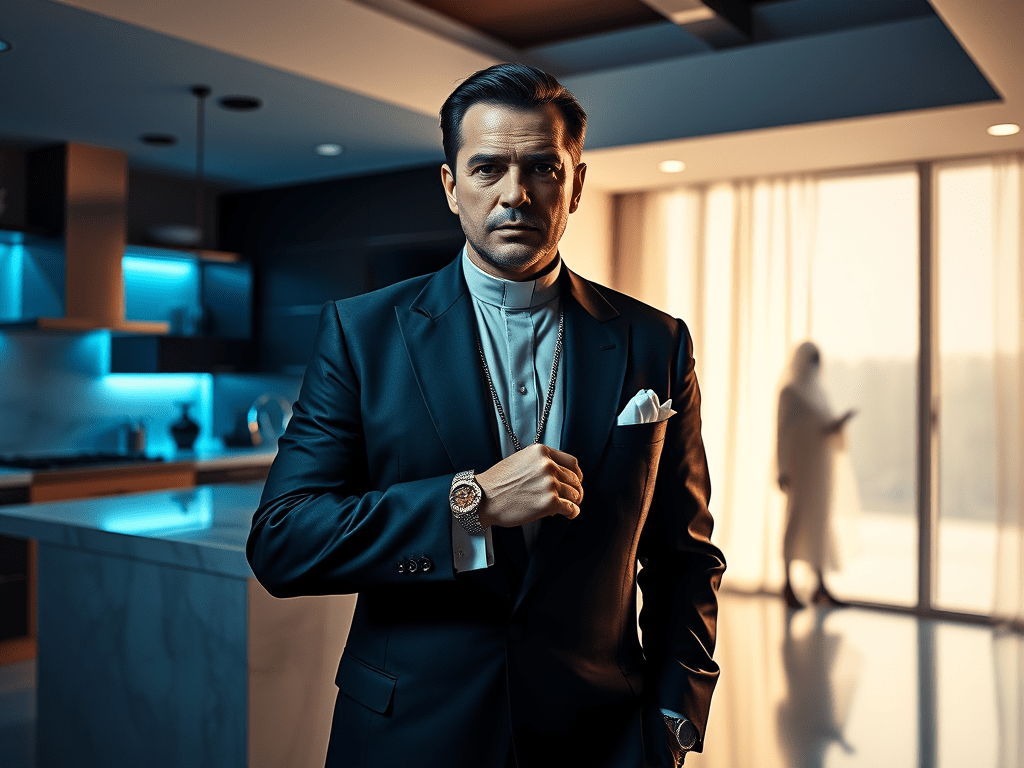
    Evil, for the uninitiated, is what happens when The X-Files and The Exorcist have a baby and then dress it in Prada. Our hero is David Acosta, a priest so genetically gifted he looks like he was sculpted during an abs day in Michelangelo’s studio. He partners with Kristen Bouchard, a forensic psychologist with both supermodel cheekbones and a Rolodex of PhDs, and Ben Shakir, a tech bro turned ghostbuster, who handles the EMF detectors and keeps the Wi-Fi strong enough to livestream from hell. Together, they investigate cases of alleged possession, miracles, and demonic mischief—all lurking, naturally, in two-story suburban homes with open-concept kitchens.

    What really juices the narrative is the will-they-won’t-they tension between Kristen and Father Abs. Their chemistry crackles with forbidden longing, as if every exorcism could end in a kiss—had David not taken a vow of celibacy (and the producers not wanted to nuke the Catholic viewership). It’s less faith versus science and more eye contact versus self-control.

    And then there’s Leland Townsend, the show’s resident demon in Dockers. He’s less Prince of Darkness and more Assistant Manager of Darkness—slick, smug, and oily enough to deep-fry a turkey. He slinks into scenes oozing unearned confidence and pathological glee, like Satan’s regional sales director. You can practically smell the Axe body spray of evil.

    Let’s pause here for fashion. The wardrobe department on Evil deserves an Emmy, a Pulitzer, and possibly a fragrance line. Everyone’s rocking cinematic outerwear that belongs in the Louvre. Kristen’s coats are so tailored they could cut glass. Acosta’s wrist is adorned with a Patek Philippe that suggests his vows may include poverty of the soul, but not of the Swiss variety. Honestly, the outfits are so distracting you half expect Satan to comment on the stitching.

    In one late-night scene, Kristen’s daughters are using ghost-detecting iPad apps at 3 a.m., their faces bathed in eerie blue light. It’s a chilling tableau of children, tech, and probable demonic activity—basically a 2024 parenting blog. Just as the show was about to unravel the mystery, my wife hit pause and delivered a horror story of her own: teachers using AI to grade papers with personalized comments. Comments so perfectly tailored they could bring a tear to a parent’s eye—and yet, no human had written them.

    “What’s the point of teachers anymore?” she asked, already knowing the answer. I nodded solemnly, watching the paused image of Father David, his coat pristine, his watch immaculate. I had neither. And I live in Los Angeles, where “winter” is defined as turning off the ceiling fan.

    But something in that moment shifted. The show wasn’t just mocking the digital devil—it was embodying him. That wristwatch mocked me. The coat judged me. I wasn’t watching Evil; I was being possessed by it. By envy, by consumer lust, by the creeping suspicion that maybe—just maybe—I wasn’t living my best, most stylized demon-fighting life.

    It’s not the show’s demons that haunt me. It’s their wardrobe.

  • Moses Meets the App Store in My Descent to Hell

    Moses Meets the App Store in My Descent to Hell

    Five years ago, I had a dream that still clings to me like the stench of sulfur on an unwashed sinner. In it, I found myself suspended over a chasm so vast and foreboding it made Dante’s Inferno look like a weekend at Lake Tahoe. This wasn’t just your garden-variety pit of despair. No, this one was styled by some deranged horror set designer who clearly had unresolved issues with gravity and geometry. The rocks jutted out like they’d been forged in spite, sharp enough to slice light itself. Below me? Nothing but an infinite abyss—pitch black, indifferent, and curling with smoke as if Hell had sprung a leak.

    My right hand clutched a pulley system that seemed to have been engineered by Torquemada during a particularly creative phase. It squealed and groaned like it hated me personally. Each tug upward felt like hauling an anchor through molasses with a rotator cuff made of stale bread. My muscles howled, my fingers cramped into arthritic claws, and I could practically hear my body whispering, “Let’s just give up and fall dramatically.”

    Above me, a shaft of light flickered—not a beacon of salvation, but more like someone had dropped a flashlight into a well and forgot about it. It promised hope the way a gas station burrito promises nutrition: with cruel intent.

    Now here’s where the dream leaned hard into surrealism. In my left hand, I held a tablet—equal parts Moses and Steve Jobs. One moment it gleamed with digital sleekness, the next it was stone, chiseled with ancient script and glowing like radioactive guilt. It was a device caught in an existential crisis, flipping between iPad and Ten Commandments with the kind of indecision reserved for suburban dads browsing Netflix.

    On one side of this metaphysical gadget was a tableau of indulgence—a pulsating carousel of temptation: flesh, flames, laughter, madness. The orgy of excess, curated in high definition. On the other side? A searing Divine Light—pure, unblinking, and full of that holy judgmental glow that makes you instinctively cover your bits.

    As I strained upward—toward gray light, away from that unholy carnival—I had the sinking realization that I might not make it. My body was mutinying. My mind, riddled with indecision. And I knew, deep in my marrow, that if I let go, I’d drop—not just into the pit, but into a punchline told by angels over drinks: “Remember that guy who thought he could have both salvation and the sex party?”

    I hung there, torn between moral clarity and high-def carnality, between stone tablet and glowing screen, between self-destruction and self-delusion. And all I could do was pray that I’d wake up before gravity made the decision for me.

  • Flex, Regret, Repeat: My Midlife Crisis, Sponsored by Conor McGregor

    Flex, Regret, Repeat: My Midlife Crisis, Sponsored by Conor McGregor

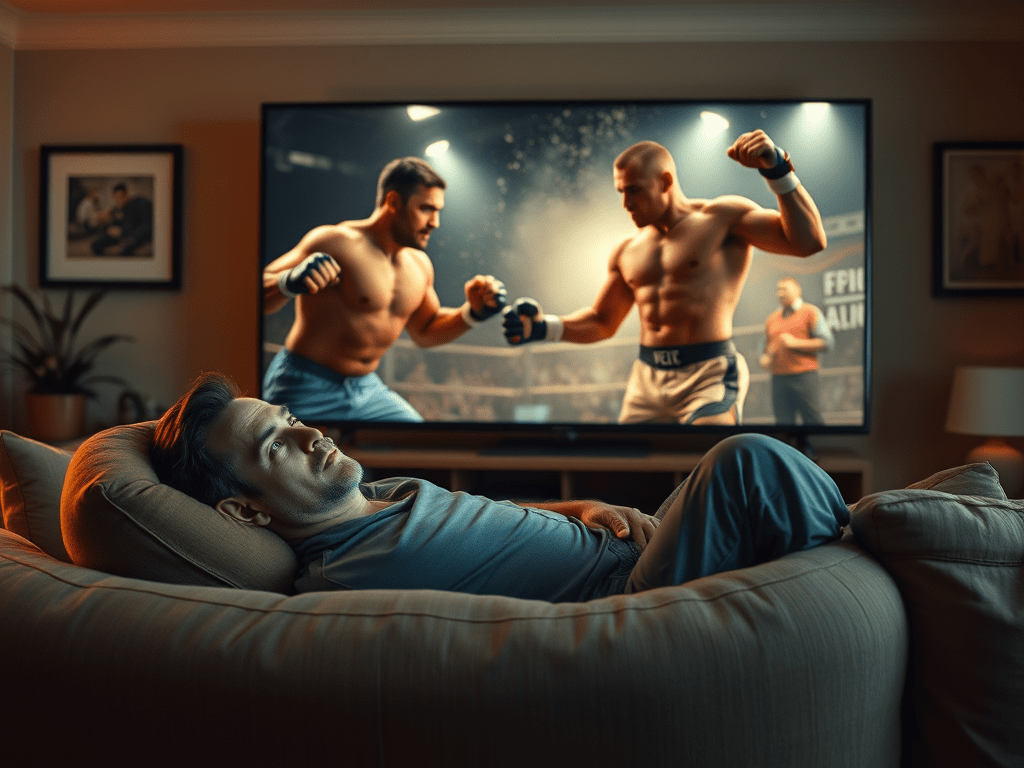
    My life as an aspiring narcissist hit a new low when my wife and I got home, plopped down on the couch, and decided to indulge in the cinematic masterpiece Road House. This film, if you can call it that, stars a Jake Gyllenhaal so chiseled that he looks like Michelangelo got bored and decided to make an action hero. In this gripping tale, Gyllenhaal plays a tough-as-nails fighter scraping a living in a Key West bar, doing what any self-respecting muscle mountain would do—protecting the bar and its lovely owner, played by Jessica Williams, from corrupt mob bosses. Naturally, this leads to the inevitable showdown with their number-one heavy, played by none other than a bulked-up, foaming-at-the-mouth Conor McGregor, who looks like he’s been subsisting on a diet of raw meat and anabolic steroids.

    The plot is thinner than a strand of dental floss—a Western rehash where an outsider rides into town to clean up the mess. But let’s be real: the story is just window dressing for the film’s true agenda, which is to showcase sweaty, glistening muscles and fight montages that could double as a fitness competition highlight reel. The camera lingers on every bulging bicep and rock-hard ab like a love-struck teenager, turning what should be an action movie into a high-budget commercial for protein powder, creatine, and whatever the hell UFC fighters are injecting these days.

    As Gyllenhaal and McGregor flexed and fought their way through scene after scene, I found myself reaching for my phone, not to check the time—oh no—but to Google “What is Conor McGregor’s diet?” Because watching this movie is less about enjoying a plot and more about realizing you’re a gelatinous blob compared to the human marble statues parading around on screen. Road House isn’t so much a movie as it is a two-hour reminder that you’re one donut away from needing a forklift to get off the couch.

    When the credits finally rolled, and I managed to peel my eyes away from the testosterone-soaked spectacle, I turned to my wife, feeling more deflated than a balloon at a porcupine convention. “I wish I could lose forty pounds and look the way I did when I entered Mr. Teenage San Francisco,” I lamented as if my sad sack of a body was just a protein shake away from making a comeback. I had the muscle once, I swear! But now it’s hidden under layers of adiposity that could cushion a fall from a ten-story building. If they ever invented an advanced generation of Ozempic that came in a pill form, had no side effects, and was covered by my insurance, I’d be the first in line, elbowing grannies out of the way to get my hands on it.

    My wife, however, had zero interest in my nostalgic waxing about the “great body” of my youth. This was not her first rodeo. In fact, she could probably recite my entire “glory days” speech from memory, down to the last calorie of the diet I used to follow. Rolling her eyes with the practiced ease of a wife who’s heard it all before, she suggested we watch a rerun of Northern Exposure—her go-to escape from my never-ending lament about the “Greek god” I used to be. But the seafood restaurant ordeal had left me more drained than a used dishrag, and I waved the white flag of surrender. “Nope, I’m hitting the sack,” I muttered, retreating to the bedroom like a defeated warrior, leaving my wife to her beloved reruns while I dreamed of a time when I was ripped, instead of just ripping on myself.

  • The Fisherman’s Stew Massacre: One Man’s Descent into Bibless Madness

    The Fisherman’s Stew Massacre: One Man’s Descent into Bibless Madness

    I still feel the stink of embarrassment from three years ago when we celebrated our twin daughters’ birthday by venturing to an upscale seafood joint—the kind of place where the prices are more bloated than the waitstaff’s sense of self-importance. As usual, I asked the waiter for his recommendation. His eyes lit up with the kind of zeal you usually reserve for cult leaders and pyramid scheme recruiters. He practically waxed poetic about the Fisherman’s Stew, describing it as if it had been lovingly ladled straight from a beautiful peasant’s cauldron of culinary magic in some idyllic coastal Italian village. Like a sucker, I bought into the fantasy, completely unaware that I’d just ordered a one-way ticket to an all-you-can-eat nightmare served with a heaping side of public humiliation.

    When the dish finally arrived, I didn’t get the warm, comforting bowl of seafood nirvana I’d envisioned. Instead, I was presented with what can only be described as a DIY surgery kit. This wasn’t silverware—they handed me actual surgical tools. A scalpel? Check. Serrated forceps? Check. Shell-crusher and lancet knife? Double check. At that moment, I wasn’t sure if I was supposed to eat the meal or perform an emergency appendectomy on a crab.

    Naturally, I asked for a bib because even gladiators need armor before going into battle. But no, they were fresh out of bibs. So there I was, defenseless and metaphorically naked, staring down a bowl that looked like it had been dredged up from the deepest, darkest corner of the ocean—probably after losing a fight with Cthulhu. The stew was a boiling pit of doom, brimming with spiky, hostile shellfish that seemed to have a stronger will to live than I did at that moment.

    What followed wasn’t so much a meal as a desperate struggle for survival. I found myself locked in mortal combat with crabs that clung to their shells like they were auditioning for a role in Jurassic Park: The Seafood Edition. I stabbed at shrimp with the precision of a neurosurgeon on his fifth Red Bull, and I tried to crush lobster claws that mocked my feeble human strength. Sweat poured down my face, mingling with brine, cioppino sauce, and random bits of squid that had escaped their doomed fate. By the end, I looked like I’d just gone twelve rounds with a giant squid—and lost every single one of them.

    The waiter, blissfully oblivious to the war zone he’d created, strolled over and had the audacity to ask how my meal was going. With my face and bald head smeared in a ghastly mix of perspiration, tomato sauce, and assorted shellfish shrapnel, I told him I’d be happy to provide feedback as soon as I finished the American Gladiators obstacle course that apparently came with my entrée. I then kindly asked him to fetch me a spare pair of pants, a T-shirt, a power drill, and some safety goggles, because clearly, I had gravely underestimated the intensity of this dining experience.

    Meanwhile, my daughter—bless her little heart—had commandeered my wife’s phone and was gleefully documenting my descent into madness. She snapped photos like some twisted paparazzo, each one capturing another level of my mental disintegration. Naturally, these shots were uploaded to Snapchat in real-time, complete with captions that probably read, “Watch Dad Lose His Dignity, One Crab Claw at a Time.”

    The whole point of taking your family out to dinner is to relax, to enjoy a pleasant evening, right? Wrong. Instead, I found myself in what felt like a cage match with an octopus that had no intention of going down without a fight. By the end of it all, I wasn’t just exhausted—I was a shell-shocked survivor of the Great Seafood Massacre of 2024, wondering how what was supposed to be a simple dinner had turned into an episode of Survivor: Shellfish Edition.

    But the true coup de grâce of the evening? My daughter proudly showed me the photos she’d posted online. In every shot, my face looked like it had been smeared with an abstract painting made entirely of sauces and cheeses. My chin had tripled, my eyes were glazed over like a stale doughnut, and I resembled nothing less than a bloated corpse that had washed ashore after a particularly rough night. The image I once held of myself as a halfway decent human being? Long gone. In its place, a digital monstrosity for all the world to see.

  • The Stall Wars: A Faculty Restroom Horror Story

    The Stall Wars: A Faculty Restroom Horror Story


    There I was—distinguished professor of literature, credentialed purveyor of syntax and suffering—perched atop the porcelain throne in the sacred stillness of the faculty restroom, savoring the last vestiges of a sugarless lemon-honey lozenge and the sweet, unbroken silence that comes only from locking the world out, one stall door at a time. Beside me: Erich Fromm’s Escape from Freedom. Above me: fluorescent lighting dimmer than the future of American democracy. Around me: peace, solitude, and the faint illusion of control.

    Then came the talcum fog.

    That distinct olfactory offense, paired with the telltale wheeze of a Marlboro-ravaged trachea, shattered the silence. I didn’t have to peek between the stall doors. I knew. It was her. Scary Mary. The tenured temp. The mythological grievance machine. The student who had, for over a decade, haunted our campus like a poltergeist with an administrative appeal form.

    “Mary,” I barked from my vulnerable perch, “this is the men’s room. Leave now, or campus police will be called.”

    “But Professor,” came the whine, pitched somewhere between a toddler’s tantrum and a chainsmoker’s aria, “I need to talk to you about my grade.”

    I tried reason. I tried logic. But Mary had the persistence of a nicotine-stained Terminator. “Not until you explain why I got a C.”

    “I read your essay,” I sighed. “Your catering hustle was impressive. One hundred smoked salmon crostini in thirty minutes? Brava. But yes, it was larded with grammatical errors.”

    “You used the word larded,” she moaned. “Do you know how that hurts my self-esteem?”

    Self-esteem? I was pants-down in a toilet stall having a mid-thesis debate with a woman violating Title IX, and she wanted to discuss feelings?

    But Mary was just revving up. Her stubby fingers suddenly curled over the stall partition like something out of The Ring, and soon, her jaundiced head and magnified, frantic eyes emerged over the top. She looked like an unhinged librarian perched in a crow’s nest.

    “I can’t afford to flunk this class again!” she gasped, dangling from her makeshift luggage tower like a cirque-de-sociopath act.

    I stood up—pants restored, dignity in tatters—and let it rip: “You want honesty? Your essay reads like it was written by a sleep-deprived raccoon using predictive text. It made me reconsider the entire purpose of education. It gave me a migraine and a minor crisis of faith.”

    Mary recoiled. “You’re a monster!” she shrieked. “The worst professor in higher education!”

    Then physics intervened.

    Mary, all 250 pounds of her, teetered from her wobbly platform and hit the floor with the grace of a collapsing filing cabinet. She screamed. Something about her shoulder.

    I emerged, washed my hands, and surveyed the carnage.

    “You’ll be fine,” I said flatly. “Ice it.”

    “Aren’t you going to help me?”

    Something cracked open in me—some cocktail of guilt, absurdism, and overcaffeinated bravado. “I can fix it,” I said. “My brother dislocated his shoulder in high school. I saw the coach pop it back in.”

    Before she could object, I grabbed her wrist and yanked like a man possessed. There was a meaty clunk and then—a miracle—relief.

    “You’re amazing,” she whispered.

    “I know.”

    She stood up, rubbing her newly aligned limb. “Now that I’m not your student… can we be friends?”

    “Absolutely not,” I said, “but I can offer career counseling.”

    “No hard feelings?”

    “None. Now kindly exit the men’s room.”

    I returned home expecting a hero’s welcome, only to find my family gathered around a platter of French Dip, their eyes glued to gravy-soaked baguettes.

    “Sit down and eat,” my wife ordered, shoveling horseradish onto a sandwich with military precision.

    And so I did.

    And let me tell you, that sandwich could have ended wars. The beef was so tender it practically recited poetry on your tongue. The bread straddled that holy line between crisp and pillowy. And the au jus? It was less of a sauce and more of a religious experience. As I dipped, the day’s trauma melted like Swiss cheese under a broiler.

    In that moment, I understood: some stories deserve to be told. Others should be swallowed with gravy.

  • The Monster with a Tail: A Southern Gothic Confession

    The Monster with a Tail: A Southern Gothic Confession

    I’ve never forgotten the story one of my students told me in the fall of 1998. She was a re-entry student, a nurse in her early forties juggling UCLA coursework with night shifts at the hospital, and the kind of woman you remember: short, sturdy, bespectacled, with tired eyes that had seen too much and lips that knew how to tell a good story. Most afternoons after class, she’d linger and share dispatches from her Louisiana backwoods childhood or from the VIP wing of her hospital job—tales that ping-ponged between the hilarious and the horrifying.

    But one story chilled me to the marrow and stuck in my head like a burr under the skin. It wasn’t about celebrity patients or ER gore. It was about a monster.

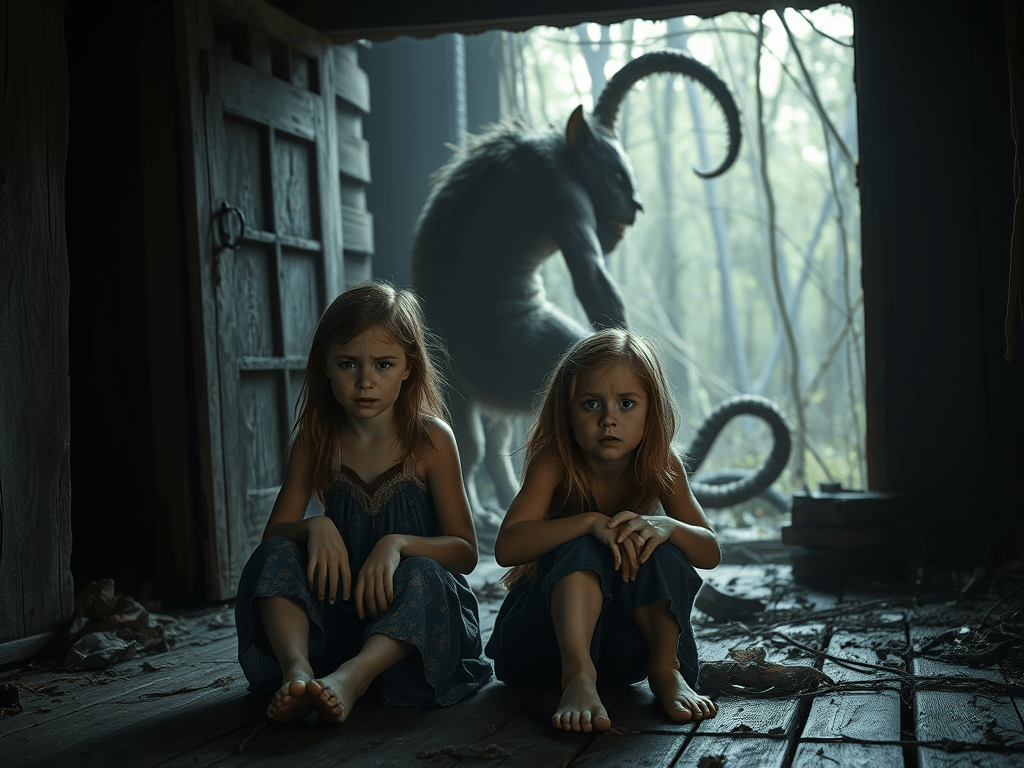
    She and her cousin Carmen were unsupervised children raised in the heat-choked, school-optional outskirts of rural Louisiana. Left to their own devices, the two girls played what she called “mean games”—tormenting frogs and bugs, and doing other things she refused to describe. They were feral, wild, borderline Lord of the Flies with hair ribbons.

    And then came the visitor.

    It was an average swampy afternoon when he arrived. The girls were inside an old ramshackle house, probably scheming new atrocities, when the porch door creaked open and in walked a man. Except he wasn’t a man. He had a tail—thick, heavy, and grotesquely alive. It coiled behind him like a muscular question mark, flicking as he made his way into the living room. His body was matted with bristly fur. His voice was low, scratchy, and deeply wrong. He didn’t yell. He didn’t threaten. He spoke, calmly and with dreadful precision, cataloging every evil thing the girls had done to the frogs and insects. Every cruelty committed under the sweltering sun. He ended with a promise: Keep going, and I’ll recruit you.

    The thing sat in their house for three hours, its tail twitching as it detailed their future in hell’s internship program. The girls were petrified. When it finally left, slinking back into the thick air and cicada scream of Louisiana summer, they sat in silence. Eventually, Carmen whispered, “Did you see that?” My student nodded, mute.

    From that day on, they reformed. Sunday School. Prayer. Fear-based virtue. They never spoke of it again. But the thing had done its job.

    My student wasn’t a flake or a mystic. She was a veteran nurse—sharp, sane, and not prone to flights of fantasy. That’s what made it worse. She wasn’t selling me a ghost story. She was delivering testimony.

    To this day, I can’t shake the image: two children, alone in a creaky house, visited by a thing with a tail and an agenda. Whether it was a literal demon, a shared hallucination, or a supernatural PSA sent by the universe, I’ll never know. But I do know this: after that story, I never looked at childhood mischief—or Louisiana—in quite the same way again.