Blog

  • Writing a Blog in the Performative Hangover Era

    Writing a Blog in the Performative Hangover Era

    For over a decade, I ran a YouTube channel — a modest operation born in my late forties. Calling it a channel might be too grand: there were no edits, no soundtracks, no backgrounds, no clever image inserts. Just me, my watches, and a stubborn refusal to pretend I knew anything about video production. It was, in essence, a podcast that forgot it was supposed to be seen.

    I built a small but loyal audience — over 10,000 subscribers, steady commenters, familiar names. Within the narrow but fervent watch community, I was a known entity: a man chronicling the eternal scuffle with watch addiction.

    But now, staring down my sixty-fourth birthday this October, I’m stepping away — and not with a heavy heart, but with something closer to relief.

    First, I have no desire to become an influencer. The idea of monetizing my channel, hawking brands I barely tolerate, feels as alien as joining a boy band at my age. Second, I have zero interest in learning the sacred arts of Final Cut Pro wizardry. The polished, professional YouTuber life was never my ambition. Third — and most importantly — the fire that once drove me is gone. And good riddance. Fire, in my case, has always been another word for addiction — the old need for validation, the parasocial buzz of comment sections and endless watch chatter. I don’t want the fire back. I want peace.

    Does this retreat from YouTube mean a pivot to podcasting?
    No.
    I’m not looking for a new mirror in which to admire or define myself. I don’t need the hustle of relevance, or the 3 a.m. panic about subscriber counts. A podcast requires not just a theme but conviction — a genuine need to say something the world hasn’t already heard. Right now, my life is full of smaller, quieter things: amateur piano practice, kettlebell workouts in my garage, a general interest in health and fitness. None of these scream “launch a weekly show.”

    Sure, I could bang out a fitness video for people over fifty — it would take thirty seconds: Stay active, love people, eat real food, prioritize protein, lay off the booze. There, fitness empire built.
    But combing through the absurdly granular debates of the diet-industrial complex? No thanks.

    Truthfully, most social media feels unbearable to me now — bloated with performative sincerity, vibrating with empty gestures. I’m done performing. Like many, I have full-blown social media fatigue.

    And then there’s the nagging ghost of my old literary ambitions — the dream of publishing memoir, fiction, or some slippery hybrid of the two, the sort of “autofiction” the novelist Emmanuel Carrère perfected. That ghost finds me now, not on YouTube, not on a podcast, but on my blog.

    The blog is where I now quietly reign.
    Not as a digital emperor counting clicks, but as a stubborn craftsman hacking away at the weeds of complacency. I don’t know if my writing will “take off” or “storm the world.” I only know it helps me process the madness, fight entropy, and stay alert to the real battle — the one against mindless consumerism and numbing repetition.

    So here I am, in what I suppose I could call the next chapter.
    The Performative Hangover Years.
    The Post-COVID Malaise.
    The Be Brave in Your Sixties Project.

    I’ll get back to you with the final title once I’ve lived it a little longer.

  • How I Outsmarted the Algorithm and Found a Human Being at Lowe’s

    How I Outsmarted the Algorithm and Found a Human Being at Lowe’s

    Today, I embarked on a noble and deeply aggravating quest: buying a refrigerator.
    I knew exactly which model I wanted — the research was done, the decision made — and I almost bought it online. But Lowe’s website, in its infinite wisdom, offered no civilized scheduling options. Buy today, and you’re rewarded with delivery tomorrow, whether you like it or not. I needed four more days — a minor concession to the gods of logistics, apparently beyond the website’s feeble imagination.

    So I drove to the Lowe’s on Skypark in Torrance, muttering curses at the indignities of modern retail. I marched straight to the Refunds desk, where two clerks stood idle, marooned in a sea of boredom. I said, with the slight guilt of a man about to break protocol, “I know I’m supposed to go to Appliances and hunt down a salesperson, but can you help me?”

    And then — like a choir of angels tuning up in aisle five — one of them smiled and said, “Well, since Appliances is busy, I’ll help you.”
    Her words were a warm poultice slapped onto my stress-riddled soul, the perfect antidote to the week’s ordeal: a refrigerator emergency caused by my seven-year-old Kenmore, which froze over, sneered at my hair dryer attack on its blocked freezer drain, and essentially told me to go pound sand.

    Within ten minutes, the deal was done. I floated out of Lowe’s light as a helium balloon, buoyed by the rarest of modern mercies: competent, unsolicited human kindness.
    Yes, by the time my contractor widens the kitchen doorway to accommodate this new metallic beast, and I pay for the fridge, warranty, and the luxury of hauling my dead Kenmore to appliance hell, I’ll be out two thousand dollars.
    But for a fleeting, golden moment, I remembered that the world, battered as it is, can still be shockingly decent.


  • Riding the Misery Machine: How Not Looking Became My Superpower

    Riding the Misery Machine: How Not Looking Became My Superpower

    Sixteen days ago, bloated at a mortifying 247 pounds, I decided enough was enough.
    On April 10th, I gave my calorie binges the boot, hacking my intake down to around 2,400 calories a day while shoving 160 grams of protein down my gullet like a man training for a hostage rescue mission.
    I also added a sixth workout to my weekly five kettlebell sessions: a brutal appointment with what I now lovingly call the Misery Machine.

    What’s the Misery Machine, you ask?
    It’s the Schwinn Airdyne—a sadistic stationary bike crossed with a medieval torture rack.
    It has pedals for your legs and levers for your arms, ensuring that no muscle group escapes unscathed. Your pecs, shoulders, triceps, forearms, glutes, quads—all dragged into the inferno.
    And because Schwinn engineers apparently hate human joy, the faster you go, the more resistance it throws at you.
    It’s not a workout; it’s a trial by fire.

    My first two rides were pathetic: 59 minutes of flailing, barely burning 600 calories.
    Today, though, I hit 706 calories in the same time—an improvement, and not just physically.

    Part of the success came from a psychological gambit: don’t look at the odometer.
    Staring at the screen, counting every miserable calorie and every sadistic second, makes the workout feel endless, like some gym-rat version of waterboarding.
    So today, I swore: I will not look.
    My secret weapon would be ignorance. Eyes forward. Mind blank. Focus on breathing, moving, surviving.

    Did it work?
    Mostly.
    I cheated about six times, sneaking guilty glances at the odometer—still, better than the constant obsessive checking that turns my bike rides into psychological horror shows reminiscent of my endless, soul-crushing drives up the I-5 from Los Angeles to San Francisco.

    But the real goal—the Holy Grail—is zero looks.
    Like Lot’s wife, ordered not to turn back lest she turn into a pillar of salt, I know: if I glance back at the numbers, I’ll be punished with despair.

    Today, post-shower, the scale gave me a small nod: 239 pounds.
    Only 39 pounds to go until I reclaim something resembling dignity.

    Lucky me.
    Nothing but time, pain, and the Misery Machine standing between me and the man I intend to be.

  • Velvet Fists: Sentimentality, Violence, and the Lie of the Crappy Love Song

    Velvet Fists: Sentimentality, Violence, and the Lie of the Crappy Love Song

    In the early ’90s, screenwriter Dennis Potter—whose haunting 1980 film Blade on a Feather once grabbed my imagination by the throat—sat across from Charlie Rose, passionately defending one of humanity’s most derided cultural artifacts: the “crappy love song.”

    Potter’s argument was simple and oddly noble:
    In a world where we grovel like pigs at the trough of materialism, even the cheesiest love ballad points, however clumsily, toward something higher—a yearning for transformative love, the kind that rattles the soul and redeems our miserable existence.
    And that, Potter insisted, should be celebrated, not sneered at.

    I see his point.
    But I can’t quite choke it down.

    What happens when the music is even crasser than life itself?
    Forgive the offense, but Kenny G springs to mind—a man whose saxophone emits what can only be described as the ambient soundtrack of lobotomized love.
    Millions swoon to his treacly squeals, convinced they’re tasting transcendence.
    But what they’re really swallowing is sentimentality in its most lethal form: syrupy, infantilizing, and vaguely unhinged.

    While I love Potter for wanting to defend the human need for transcendent emotion, I can’t ignore the underlying rot.
    These “crappy love songs,” much like Kenny G’s ambient anesthesia, often peddle not real love, but an emotionally stunted counterfeit—sentimentality, a soft mask stretched tight over something far uglier.

    Sentimentality terrifies me because it is not benign.
    It is childish emotion weaponized.
    It is the refusal to mature, to engage with the complicated ambiguities of real love, real pain, real life.
    And because these stunted feelings are defended with the ferocity of a cornered child, sentimentality often harbors its dark twin: violence.

    Saul Bellow, with his characteristic unsparing clarity in Herzog, nailed it:
    It’s the most sentimental people who are the most violent.

    Why?
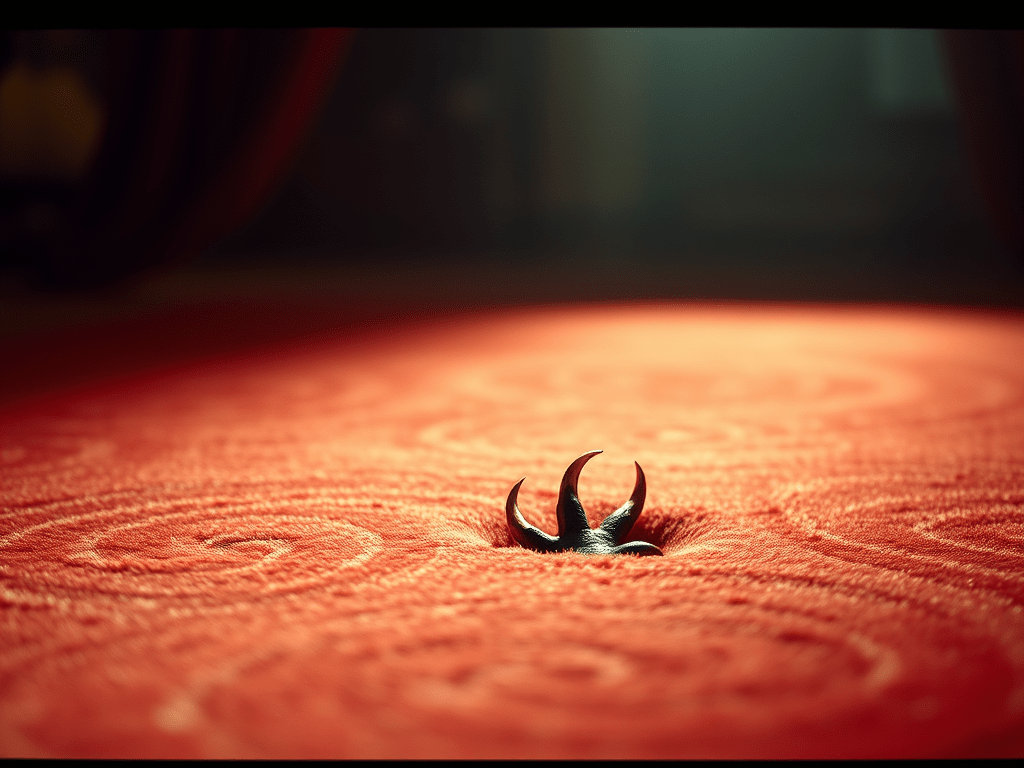
    Because sentimentality is a velvet carpet stretched precariously over a tiger’s claw.
    It’s the illusion of sweetness clinging desperately to a subterranean rage—the rage of people who cannot tolerate having their fragile, maudlin dreams challenged.
    To question sentimentality is to trigger a defensive violence, a panicked fury at the idea that real adulthood demands something sterner, braver, and infinitely less sweet.

    So no, Dennis Potter, I can’t fully join you in your defense of the crappy love song.
    Because too often, beneath that soaring key change and saccharine lyric, I hear not the longing for transcendent love—
    but the faint, snarling growl of a soul that refuses to grow up.

  • The Postcard Life: Why Perfection Always Rings Hollow

    The Postcard Life: Why Perfection Always Rings Hollow

    I can’t shake an interview I heard thirty years ago—an offhand confession that stuck to me like burrs on a wool coat.
    Terry Gilliam, the Monty Python animator turned fever-dream film director, was talking with Charlie Rose. Gilliam described a moment straight from a high school dream: he was walking the Santa Monica Pier on a twilight evening, a beautiful woman on his arm, the beach shimmering under a dying sun. It was the kind of moment that screams You’ve Made It! if you’ve ever been a teenage boy with a tragic imagination.

    And yet, Gilliam said, he felt nothing. Not euphoria. Not awe. Just… flatness. Like he wasn’t even in his own life but rather trapped inside one of his own cartoons—a two-dimensional fantasy drawn by someone who had seen too many movies and lived too little.
    That was his grim epiphany: we don’t chase life—we chase the idea of it.

    Gilliam’s teenage dream had come true, but it rang hollow because it wasn’t connection he had caught. It was a postcard of connection, a lifeless image polished smooth by years of expectation.

    I’ve thought about that moment a lot, especially in the slow burns of my own life, in all the arenas where the blueprint of perfection crashed hard against the walls of reality.
    Take teaching: I’ve taught college writing for forty years. More times than I care to admit, I walked into class with what I believed was a masterstroke of a lesson plan—polished, structured, airtight. And then I delivered it like a robot with tenure. The students, bless them, tried not to visibly expire.
    Only when I threw away the script and talked to them like a breathing, flawed human being did I finally see heads lift and eyes focus.

    It’s the same poison at work: that blueprint, that false idol of how it’s supposed to be.
    Therapist Phil Stutz calls it the Magical Moment Frozen in Time—a mental snapshot of ideal beauty, love, success, whatever, that we spend our lives trying to recreate. And like the cruelest mirage, it recedes the closer we get.
    Because it’s not life.
    It’s a knockoff. A counterfeit so slick, it fools even the person living it.

    It’s sobering, humiliating even, to realize how often my life has been a performance for an audience that doesn’t exist—measuring real experiences against some fantasy standard cooked up in the caves of my mind.
    Maybe Plato had it right all along: we’re prisoners staring at shadows, mistaking flickers on the wall for the blazing, complicated, imperfect mess that is actual life.
    And every time we chase the shadow instead of the fire, we walk the Santa Monica Pier at sunset, hand in hand with a beautiful illusion, and feel… nothing.

  • The Protein Bar Delusion: My Love Affair with Lies and Graham Crackers

    The Protein Bar Delusion: My Love Affair with Lies and Graham Crackers

    I don’t eat protein bars anymore. Not because I’m virtuous—far from it—but because I finally admitted the obvious: they’re not meal replacements. They’re meal add-ons, sneaky little calorie grenades dressed up in the halo of anabolic health, whispering sweet promises of lean muscle and zero guilt.

    I’ve been chasing that lie since the 1970s.
    Back then, the gold standard of protein bars was the Bob Hoffman Club Sandwich—a peanut butter and graham cracker Frankenstein’s monster that must have clocked in at 500 calories, easy. It wasn’t a snack. It wasn’t a supplement. It was a religious experience.
    If I wanted to recreate it today, I’d just mash a couple of Reese’s between two graham crackers and pray for forgiveness.

    Over the decades, I kept eating protein bars—dense peanut butter bricks, chewy “engineered food” monstrosities—but never to any good effect. These bars didn’t sculpt my physique. They bulked me up like a slow, steady inflation of regret. Eventually, I abandoned them, like a gambler walking away from the slot machine after realizing the house always wins.

    Still, they haunt me.
    Protein bars remind me of Willy Wonka’s cursed 7-course meal gum that turned Violet Beauregarde into a giant blueberry: a miracle product promising the world but delivering only bloat and existential crisis.

    To be fair, the bars have gotten better over the years. There’s even one called David (because apparently even protein bars have minimalist branding now) made with real food, boasting 28 grams of protein at a miraculous 150 calories. It tempts me.
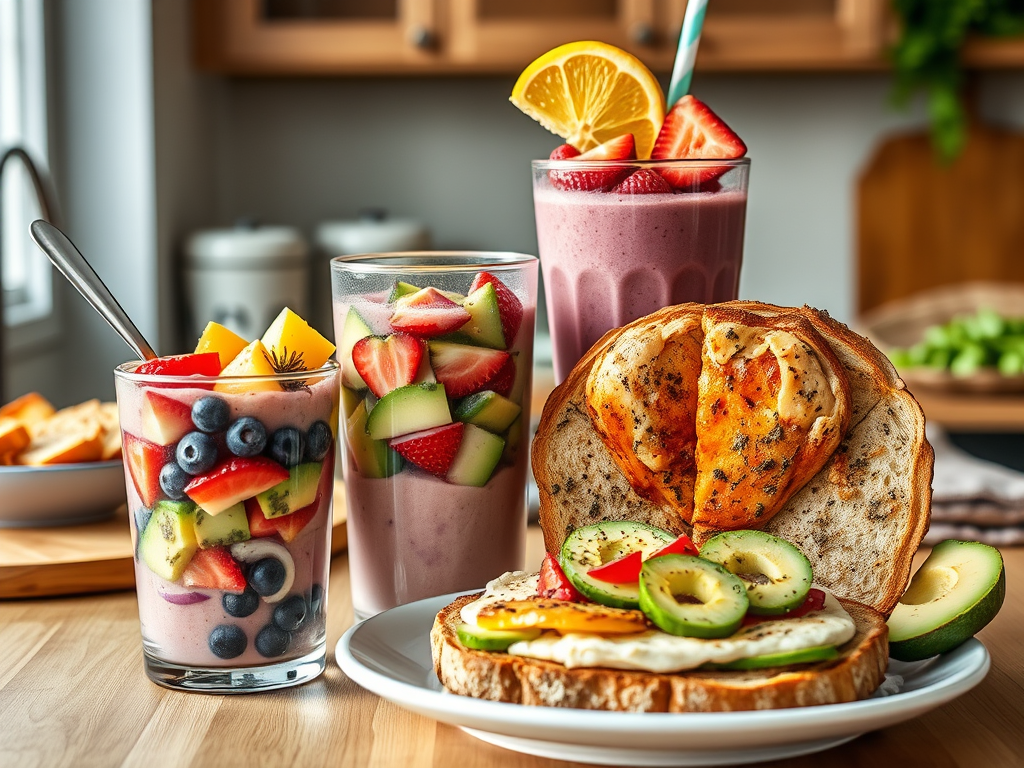
    Wouldn’t it be smarter, simpler, even a bit sexier to chomp down a David bar at breakfast instead of mixing up my daily slurry of yogurt, protein powder, soy milk, and berries? (A concoction that hits 500 calories with depressing reliability.)

    Maybe. But I know myself: I’d be starving by 9:30 a.m., staring into the abyss of a second breakfast. Protein bars have never given me satiety. They’re a snack in drag—a dessert cosplaying as health food.

    And yet… with all the shredded influencers on YouTube slicing open protein bars like they’re sommelier-testing vintage wine, I feel the pull. A little FOMO. A little “Maybe this time it’ll be different.”

    I have to remind myself, again and again:
    I’m not in love with the protein bar.
    I’m in love with the idea of the protein bar—the fantasy that some sweet, tidy, macro-balanced rectangle will solve my problems, sculpt my body, and carry me into some higher, cleaner version of myself.

    Reality tastes different.
    It tastes like mealy, sweet resignation. It tastes like being duped—with a thin layer of whey isolate on top.

  • Protein, Lies, and Artificial Flattery: Wrestling with ChatGPT Over My Macros

    Protein, Lies, and Artificial Flattery: Wrestling with ChatGPT Over My Macros

    Two nights ago, I did something desperate: I asked ChatGPT to craft me a weight-loss meal plan and recommend my daily protein intake. Ever obliging, it spit out a gleaming regimen straight from a fitness influencer’s fever dream—four meals a day, 2,400 calories, and a jaw-dropping 210 grams of protein.

    The menu was pure gym-bro canon: power scrambles, protein smoothies, broiled chicken breasts stacked like cordwood, Ezekiel toast to virtue-signal my commitment, and yams because, apparently, you can’t sculpt a six-pack without a root vegetable chaser.

    Being moderately literate in both numbers and delusion, I did the math. The actual calorie count? Closer to 3,000. I told ChatGPT that at 3,000 calories a day, I wouldn’t be losing anything but my dignity. I’d be gaining—weight, resentment, possibly a second chin.

    I coaxed it down to 190 grams of protein, begging for something that resembled reality. The new menu looked less like The Rock’s breakfast and more like something a human might actually endure. Still, I pressed further, explaining that in the savage conditions of the real world—where meals are not perfectly macro-measured and humans occasionally eat a damn piece of pizza—it was hard to hit 190 grams of protein without blowing past 2,400 calories.

    Would I really lose muscle if I settled for a lowly 150 grams of protein?

    ChatGPT, showing either mercy or weakness, conceded: at worst, I might suffer a “sliver” of muscle loss. (Its word—sliver—suggesting something as insignificant as a paper cut to my physique.) It even praised my “instincts,” like a polite but slightly nervous trainer who doesn’t want to get fired.

    In three rounds, I had negotiated ChatGPT down from 210 grams to 150 grams of protein—a full 29% drop. Which left me wondering:
    Was ChatGPT telling me the truth—or just nodding agreeably like a digital butler eager to polish my biases?

    Did I really want to learn the optimal protein intake for reaching 200 pounds of shredded glory—or had I already decided that 150 grams felt right, and merely needed an algorithmic enabler to bless it?

    Here’s the grim but necessary truth: ChatGPT is infinitely more useful to me as a sparring partner than a yes-man in silicon livery.
    I don’t need an AI that strokes my ego like a coddling life coach telling me my “authentic self” is enough. I need a credible machine—one willing to challenge my preconceived notions, kick my logical lapses in the teeth, and leave my cognitive biases bleeding in the dirt.

    In short: I’m not hiring a valet. I’m training with a referee.
    And sometimes, even a well-meaning AI needs to be reminded that telling the hard truth beats handing out warm towels and platitudes.

  • How I Accidentally Found Laptop Bliss with the Acer Chromebook 516GE

    How I Accidentally Found Laptop Bliss with the Acer Chromebook 516GE

    I own a couple of monster Acer gaming laptops—top-tier, fire-breathing beasts packed with high-powered processors and NVIDIA GPUs muscular enough to render Middle-earth in 4K without breaking a sweat.
    Not that I’m a gamer. I’m just the lucky soul who was handed these brutes for review.

    They work like a dream if the dream involves hauling around seven pounds of hot, whirring metal that sounds like it’s preparing for lunar liftoff whenever you so much as open a YouTube tab. One of them now lives tethered to a monitor as my desktop replacement. The other, in an act of familial charity (and an unspoken prayer to the gods of lighter tech), I gifted to my daughter after she murdered her Chromebook via the ancient teenage art of “gravity testing.”

    Suddenly laptopless for bedroom lounging and travel, I embarked on a quest—not for more horsepower, but for something portable, civilized, sane.
    After some research, I landed on the Acer Chromebook 516GE, the so-called Gaming Edition. Except here’s the truth: I don’t game on it. I write. I blog. I watch videos. I listen to Spotify and plow through my Kindle backlog like a caffeine-addled librarian. And if I had to distill my experience with the 516GE into a single word, it would be this: clean.

    Clean because the thing weighs a little over three pounds, not seven. Clean because it boots in seconds, without the bloated tragedy of trial software and manufacturer junk lurking in every corner. Clean because it feels secure and unobtrusive, like good tech should.

    The QHD screen looks fantastic—sharp enough that reading, writing, and watching feel almost decadent. And the speakers? A revelation.
    Sure, reviewers have whined about them, but compared to the sonic misery most laptops offer, the 516GE sounds three times better—good enough that I no longer instinctively reach for headphones.

    In fact, I like this clean, uncluttered experience so much that if I were in the market for another machine, I’d be dangerously tempted by the new king of the Chromebook hill, the Acer Spin 714.
    But for now, I’m content—writing in bed, traveling light, and marveling at the fact that somewhere along the way, my laptop experience stopped feeling like a hostage negotiation and started feeling… well, human again.

  • Against the Grain: My College Students’ Quiet Rebellion Against the Cult of the Self

    Against the Grain: My College Students’ Quiet Rebellion Against the Cult of the Self

    My college students, nineteen on average, stand on the jagged edge of adulthood, peering into a world that looks less like a roadmap and more like a shattered windshield. Right now, we’re writing essays about the way social media—and the exhausting performance of self-curation—has sabotaged authenticity and hijacked the very idea of a real, breathing identity.

    Here’s the surprising part: they already know it.

    Unlike the last crop of dopamine junkies willing to sell their souls for a handful of TikTok likes, these students have developed a healthy, almost contemptuous disdain for “influencers”—those human billboards who spend their days manicuring their online selves like desperate bonsai trees, hoping to monetize the illusion of a perfect lifestyle. My students don’t want to be “brands.” They don’t want to hawk collagen supplements to strangers or play the carnival game of parasocial friendships with people they’ll never meet.

    No, they’re too busy wrestling with reality.

    They’re trying to adapt to a fast-changing, frequently chaotic world where entire industries collapse overnight and finding a career feels like rummaging through a haystack with oven mitts on. They are focused—ruthlessly so—on their careers, their families, and the relationships that breathe life into their days. There’s no time for performative outrage on Twitter. There’s no energy left for airbrushed TikTok dances in rented Airbnbs masquerading as real homes.

    What’s even more heartening?
    They are learning. They’re not Luddites fleeing technology; they’re studying how to use it. They’re exploring tools like ChatGPT without fear or delusion. They’re discussing things like Ozempic, not as magic bullets, but as case studies in how rapidly tech and biotech can transform human lives—for better or for worse.

    Underneath all this practicality hums a deeper current: a hunger for something more than survival. They know life isn’t just paying the bills and uploading sanitized highlight reels. It’s also about spiritual nourishment—found in beauty, art, connection, and the sacred rituals that make the unbearable parts of existence worth slogging through.

    They understand, in a way that seems almost instinctual, that social media platforms—those carnival mirrors of human desire—don’t offer that kind of connection. They see the platforms for what they are: hellscapes of manufactured anxiety, chronic FOMO, and curated loneliness, where everyone smiles and no one feels seen.

    In their quiet rejection of all this, my students aren’t just adapting.
    They’re rebelling—wisely, stubbornly, and maybe, just maybe, showing the rest of us the way back to something real.

  • Remembering the 90s when Seinfeld made existential apathy a form of cultural resistance

    Remembering the 90s when Seinfeld made existential apathy a form of cultural resistance

    I’ve always been a lousy sleeper—a lifelong insomniac, night-thinker, ceiling-staring obsessive. So when my brain, usually a humming engine of late-night anxieties, surprises me by downshifting into a silky semi-sleep, I take notice. I don’t just enjoy those moments—I archive them in some velvet-lined folder in my mind, filed between “Miracles” and “Rare Weather Patterns.”

    One such miracle happened in the summer of 1991 in the gloriously tacky suburb of Buena Park, California. I had recently relocated from the Bay Area to Bakersfield, that Central Valley of hot wind and dust, to teach composition at the university. It was a job that paid me in respect and barely enough money to keep me in burritos and gas.

    Weekends were spent visiting Nicole, the girlfriend of my ex-student Mike, a real-deal Navy SEAL with shoulders like boulders and a heart that thumped exclusively for her. We’d drive south, Mike and I, and wind up at Nicole’s parents’ place not far from Knott’s Berry Farm—California’s budget Disneyland, where roller coasters and churros come with a faint scent of desperation.

    Dinner with Nicole’s folks was always home-cooked, polite, and meatloaf-heavy. But the real magic happened later in the den, where the three of us would settle in for prime-time America’s Funniest Home Videos, back when Bob Saget’s voiceovers made even mild concussions look charming.

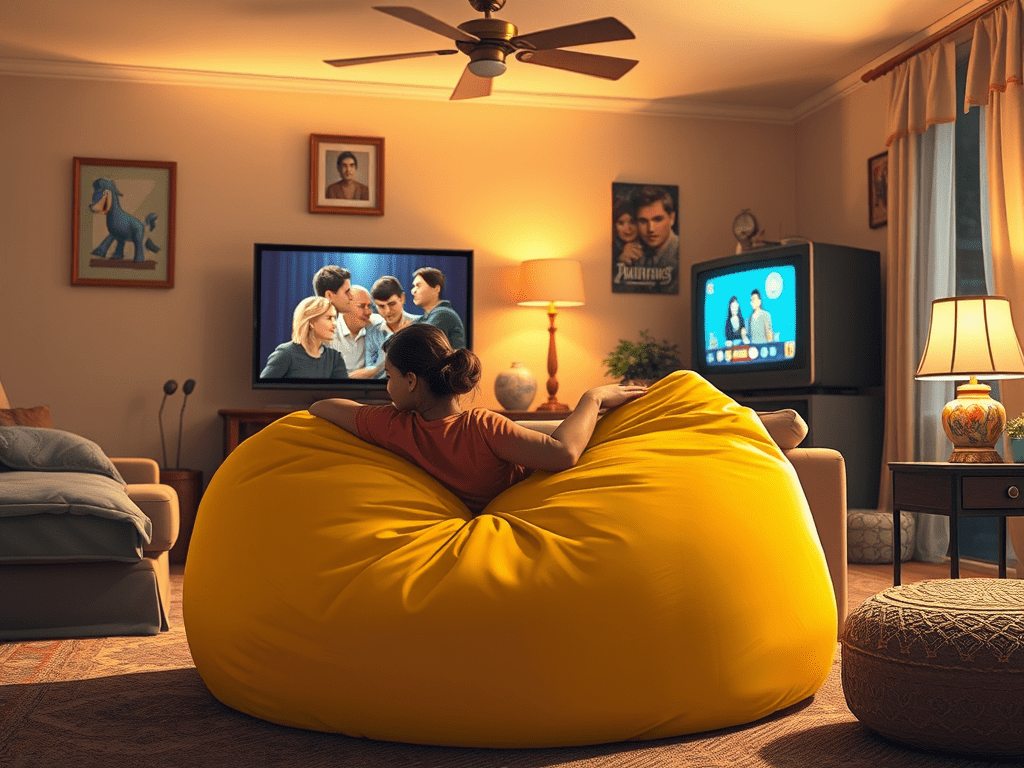
    Mike and Nicole snuggled on the sofa, whispering sweet nothings or planning some SEAL Team Six domestic mission. I would sink into a bloated yellow bean bag chair like a man slipping into a warm pond of polyester and forgotten dreams.

    As I floated somewhere between reruns and REM, Nicole’s mom would be doing laundry in the adjacent room, and the floral scent of freshly tumbled linens—fabric softener with notes of lilac and vague suburban joy—would drift in and intoxicate me. The TV flickered. The lovers whispered. I, utterly ignored, entered a state of transcendence usually reserved for monks or the chemically enhanced.

    In that half-dream, I’d rocket through constellations, revisit my childhood neighborhood where everyone still had knees that worked, and rendezvous with a mysterious dream woman who always met me at sunset on a Hawaiian beach. I was twenty-nine, single, unburdened, and lazy in a way only the early ‘90s allowed—when Seinfeld made existential apathy a form of cultural resistance.

    Looking back now, from the sagging perch of sixty-three, it’s easy to sigh at the sheer, stupid comfort of it all. I no longer live in that bubble-wrapped world where being a third wheel was a blissful kind of freedom, where responsibility was just a concept in other people’s lives.

    Still, on a quiet afternoon, stretched out on my modern couch, if the narrator of a nature documentary starts detailing the mating habits of sea otters in a sonorous British whisper, something in me softens. The air thickens. I begin to drift. And for a flickering moment, I’m back in that bean bag—yellow, ridiculous, sublime—floating on the fabric-softened breeze of a world that no longer exists.