Blog

  • The Reluctant Dieter’s Survival Guide

    The Reluctant Dieter’s Survival Guide

    Cravattenuation Nation: Dispatches from the Snack Trenches

    In 1978, my high school biology teacher Mr. Hennessy—an underqualified martyr with a Napoleon complex and a permanent scent of chalk dust and moral compromise—falsely accused me of cutting class and vindictively tanked my grade from a B to a C. Yet, in a rare moment of non-pettiness, he lobbed a line at the class that clung to my psyche like burnt cheese on a cafeteria tray: “You need two things in life—a job and a philosophy.”

    It took me decades and a thousand acts of minor self-sabotage to grasp what he meant. A true philosophy, I finally decided, wasn’t about quoting Camus in coffee shops or scrawling Latin mottos on vision boards—it was about cultivating a healthy anger at your own slow-motion collapse into chaos. If you weren’t revolted by your own slide into sloth, indulgence, and instant gratification, then congratulations: your dignity had officially left the building.

    Flash-forward to a recent humid night in a Miami hotel kitchenette, where I stood barefoot on sticky linoleum, bathed in microwave light and the snoring of my family through a wall that may as well have been made of Kleenex. I was bloated on Cuban oxtail stew, fried sweet plantains, tres leches cake, and key lime pie, anxious, spiritually sagging like a wet hammock. I missed the illusory reinvention vibes of Southern California—where even failure could be filtered through an ocean breeze and a protein smoothie.

    That’s when my invisible guru showed up, conjured by shame, cortisol, and the psychic residue of every unwritten to-do list. Half Stoic monk, half caffeinated boot camp instructor, he looked me dead in the eyes—the eyes of a man who’d seen too many midnight Pop-Tarts—and said, “Repeat after me: Less coffee, less food, more dignity. More focus, more humility, more gratitude, more work—less regret. Got it?”

    It was the kind of slogan you’d find stenciled on a CrossFit wall next to a kettlebell and a shattered dream. But fine, I nodded. I felt that brief, delusional jolt of resolve—the one that comes right before you delete all your food delivery apps and tell your wife you’re going keto again.

    Then I caved and confessed. “Look,” I told him, “I love your gospel. Really. But the moment a cookie enters the room, I turn into a lab rat in a dopamine lab. There’s this gremlin in me—wired for despair and internet snacks—who takes over the moment my blood sugar dips or a notification pings. What do I do with that guy?”

    The guru didn’t blink. He barely moved a muscle, as if quoting from the sacred scroll of Instagram fitness influencers:

     “As you live in accordance with the plan, you’ll grow stronger. The old ways will become revolting. The deeper you root yourself in the good, the weaker the bad becomes.”

    I nodded, sure—but not with conviction. It was more of a sweat-slicked head bob, the kind one gives when pretending to agree while actually fantasizing about cinnamon rolls. Augustine came to mind, that eloquent saint of foot-dragging repentance: “Grant me chastity and continence—but not yet.”

    In my case, it was more like: “Grant me food discipline, but let me demolish a Costco cheesecake first and start clean next fiscal year.”
    And just like that, I saw myself clearly: not a fitness monk, not a nutritional Spartan—just your everyday Reluctant Dieter, dragging my fork through life’s buffet while whispering, “Soon, Lord. But not now.”

    In spite of initial reluctance, on April 10th at the age of sixty-three, fresh off a family vacation in Miami and still spiritually sticky with airport pastrami sandwich guilt, I stepped on the scale and was greeted with a soul-curdling 247 pounds. Yes, some of it is lifelong muscle from half a century of hoisting kettlebells and playing Hercules in the garage. But make no mistake—this number was a slap in the face, a statistical insult to my dignity. Fueled by a righteous anger I can only describe as metabolic revenge, I went to war.

    First, I cut my meals down to three per day and gamified the system like a psychological Jedi. My lunchtime yogurt-and-berries bowl got reassigned as a post-nap “treat,” and a humble apple—normally the most boring fruit in the bowl—was elevated to nightly “dessert,” strategically scheduled for 8 p.m. to give my inner child something to cling to as the kitchen closed. I also slashed my coffee intake from 36 to 18 ounces (don’t worry, I’m still barely human), and dropped my creatine from 6 grams to a mere 3—enough to retain my swole, but not enough to float like a sodium balloon.

    Meanwhile, I came to grips with the ugly truth that I was overstuffing both my freezer and my face. The freezer had become a metaphor for my appetite: jammed with frozen berries, low-carb snacks, and delusions of future discipline. Constantly raiding it created two problems: overconsumption and literal water puddles from a clogged defrost drain. My wife and I emptied the thing out like detoxing hoarders, and miraculously, the fridge stopped weeping. I then purchased a chest freezer for the garage to create a buffer zone—a cold storage moat to protect the kitchen from my impulsive nibbling.

    By April 19, I had dropped to 240 pounds—a loss of seven pounds in nine days, even with an Easter cheat day that involved chocolate cake and blueberry pie, which I regret nothing about. Losing seven pounds seemed like a move in the right direction, a sign of a man with a healthy anger fueling my desire to achieve some self-control. 

      But here’s the real revelation from those ten days: the hunger I thought I was feeling wasn’t hunger—it was performance anxiety from my stomach, a neurotic need to react to every twitch of emptiness like it was a national emergency. That, my friends, is where Cravattenuation comes in.

    Cravattenuation is the noble and necessary art of muting your inner snack gremlin—the one who panics at the first polite growl of your stomach and demands cheese. It’s the mental and metabolic recalibration that teaches you this: real hunger is not a 3 p.m. yawn with a craving for almonds. It’s a deeper emptiness, one you can actually enjoy. Because when you let your appetite stretch out and breathe, you arrive at meals not with guilt or compulsion, but with appetite and joy. Hunger becomes less of a trigger and more of a drumroll.

    Cravattenuation the deliberate process of retraining your body to interpret minor hunger signals not as existential emergencies but as low-priority system notifications: “You might want to eat in a bit” instead of “RAID THE PANTRY OR DIE.” Just as meditation teaches you to sit with discomfort rather than react impulsively, Cravattenuation teaches you that a little hunger isn’t a crisis—it’s foreplay for a better meal.

    We’ve been conditioned by snack culture and anxiety-driven consumption to treat hunger as something to be feared and fixed immediately, like a smoke alarm or a toddler tantrum. But when you practice Cravattenuation, something remarkable happens: your threshold for hunger strengthens, and the urgency softens. You learn to sit with a mild stomach pang without spiraling into carb-lust. Over time, you develop what can only be described as Hunger Discernment: the ability to separate emotional nibble-itching from true physiological need.

    By making your body earn the meal—not through punishment, but patience—you begin to eat with a clarity and joy that’s been missing since the dawn of office vending machines. Food tastes better when you’re actually hungry for it. Not “kinda bored” hungry, not “scrolling through cheese reels” hungry, but real hungry. Cravattenuation helps you not only manage your weight with more ease and grace, it re-enchants the eating experience itself. You’ll start treating meals like mini homecomings rather than pit stops at a dopamine gas station.

    As I snacked less, I enjoyed my meals more. They had more savor than before, and here I had arrived at the desirable condition of Savorosity–what happens when you’ve tamed the snack-demon with Cravattenuation—the fine art of not panicking at the first rumble of your stomach. It’s hunger with manners. You arrive at meals like a guest at a candlelit dinner, not a contestant in a pie-eating contest. You chew like someone who reads books—slowly, curiously, with presence. You’re not chasing a craving. You’re honoring an earned appetite. And you know you’ve crossed into Savorosity when you feel less like a gremlin in a pantry and more like a monk with a spoon.

    But if Savorosity is dinner at a five-star bistro, we must acknowledge its opposite–Munchdrift, which is loitering in the food court of your own life. It’s the slow-motion landslide of indiscriminate nibbling—a cashew here, a dry crust of cheese there, a spoonful of peanut butter just to “hold you over.” It’s hunger as white noise, muffled beneath boredom, impulse, and the kind of existential drift that ends with you staring at an empty bag of pretzels like you just blacked out at a carb rave. In the Munchdrift state, flavor is irrelevant. Appetite never sharpens. Meals become a blur, and you, a passenger on the Grazing Express with no clear destination and no seatbelt.

    This war between Savorosity and Munchdrift isn’t just about food—it’s a philosophical struggle. I arm myself with these lexicon terms the way a weary soldier straps on armor, battling the inner sloth that says, “You’re going to die anyway, so why not faceplant into a tray of brownies?” But that’s a lie dressed in pastry. Because death may be inevitable, but turning into a winded, sweat-drenched metaphor for chaos along the way is not. Dignity matters. So does self-possession. And so does a philosophy of restraint—not one rooted in punishment, but in purpose.

    My old high school biology teacher, Mr. Hennessy—grumpy, flawed, and accidentally wise—once said everyone needs two things: a job and a philosophy. This is mine. Not some monkish denial cult, but a gritty, practical roadmap to push back against entropy. It’s the reluctant dieter’s creed. A form of mature rebellion. And maybe, just maybe, a recipe for actual happiness.

  • The Shame of Being Crock Blocked

    The Shame of Being Crock Blocked

    I learned the invaluable lesson of staying in my lane in 1989, a year that will forever be etched in my memory as the year I brought industrial sludge to an English Department potluck picnic. I was a freshly minted lecturer at a university in the California desert, and it was my inaugural potluck. Naturally, I was determined to impress my colleagues with a culinary masterpiece. I had a slow cooker, a gift from my mother, which I imagined to be my ticket to gastronomic glory. So, I decided to tackle curried lentils—a dish so ambitious it could have been named “Lentil Apocalypse.” I poured lentils into the slow cooker until it was practically bursting at the seams. Next, I added what could only be described as an entire bottle of curry, along with a mountain of chopped onions and celery. Unsure of how long these lentils needed to avoid the dreaded “raw green beetle” look, I left them cooking all day. By the time I made my way to the picnic, the contents had morphed into what resembled a toxic waste spill, a sludge so thick it could be used to pave roads. With all the bravado of a culinary adventurer, I placed my slow cooker among the other dishes. As hours ticked by, my creation remained untouched. The English Chair, Solomon, seemed to take pity on me. He ladled a small portion onto his plate in a gesture of charity, but his reaction was nothing short of tragic. His face contorted in a way that suggested he’d just tasted a toxic waste dump, and he looked as if he might need a hazmat suit and a team of medics. From that day on, I was never again entrusted with bringing food. Instead, my muscles were put to better use hauling giant bags of ice, crates of wine glasses, and cartons of boxed wine to future events. Eventually, I learned my lesson and found my true calling—one that involved heavy lifting and zero culinary experiments. And so, I stayed in my lane, with a clear understanding that my talents were best suited for anything other than poisoning my colleagues with curried lentils.

    My ordeal points is an example of being Crock Blocked–the uniquely mortifying shame experienced when your potluck contribution—usually involving a Crock-Pot, misplaced ambition, and a suspiciously gelatinous texture—is avoided by everyone, like it’s radioactive. Crock Blocked is when your dish becomes a pariah on the buffet table, gathering flies instead of praise, while nearby casseroles are ravaged like it’s the last supper. You watch helplessly as guests whisper about “that lentil thing,” your dreams of impressing the crowd slowly congealing into a turmeric-scented failure. You leave with your dignity dented, your Crock-Pot still full, and your social standing demoted to Ice Guy.

  • The PreSnackalithic Era

    The PreSnackalithic Era

    In the Before Snack Times of the early 70s, we didn’t have helicopter parents hovering over us, micromanaging our every move with a suffocating schedule of dance classes, gymnastics, karate, swim lessons, math tutors, writing coaches, soccer practices, chess clubs, computer coding, mindfulness meditation, and Ashtanga Yoga. We didn’t have smartphones tracking us like we were secret agents with microchips implanted in our necks. For the entire day, our parents had absolutely no clue where we were or what we were up to. We’d saunter off after breakfast, either on foot or aboard our trusty bicycles, and were expected to return only by dinner. During that endless stretch of freedom, we’d navigate through construction sites strewn with lumber, nails, electrical wires, and bottomless ditches, all of which screamed, “Adventure awaits!” We gravitated toward mud, streams, and rivers like moths to a flame, setting up wooden ramps to perform Evel Knievel-level stunts over bodies of water. The messier and more perilous the terrain, the more irresistible it became. These hazardous playgrounds were usually bordered by rusty barbed-wire fences and “Do Not Enter” signs, which not only failed to deter us but ignited our rebellious spirits to trespass with even more gusto. Inside these danger zones, we’d be chased by furious steers, territorial cows, and muscle-bound guard dogs. Occasionally, a disgruntled landowner would fire warning shots at us with a pellet gun, a token gesture that barely fazed us. In the ravines behind our homes, we crafted forts, swung from vines, ignited firecrackers, and leaped into piles of poison oak. We encountered black widows, rattlesnakes, bobcats, coyotes, and even the occasional mountain lion. After a day of flouting every conceivable health and safety code, we’d trudge home at night, our bodies caked in filth, bruises, and scratches. But our parents, bless their oblivious hearts, never inquired about our whereabouts or escapades. As long as we took a bath and cleaned up, they were content to feed us hearty helpings of turkey pot pies, meatloaf, chili, and tacos. They knew we needed the energy to wake up the next morning and dive headfirst into another day of mayhem. Back then, we had little time for snacking. Our days were filled with wilderness adventures, where our imaginations ran wild. This level of playfulness, chaos, and enchantment is as extinct as the dinosaurs in today’s Snack Age, where parents meticulously micromanage their children’s activities and pacify their appetites with chips, juice boxes, chocolate chip granola bars, fruit rolls, and Happy Meals.

    Before Snack Times is sometimes referred to as the PreSnackalithic Era–the rough-and-tumble epoch of the early 1970s when childhood ran on chaos, sunburns, and a single daily meal of meatloaf or tacos—long before the rise of the Snack Age. In the PreSnackalithic Era, children roamed unsupervised like feral philosophers, fueled not by organic apple slices or protein-packed squeeze pouches, but by sheer mischief and an occasional stolen sip from a warm garden hose. Helmets were for astronauts, schedules were a myth, and sustenance came only when the streetlights flickered on and the meatloaf hit the table. Snack culture had not yet risen from the primordial ooze, and the only “mindfulness” was making sure you didn’t get bitten by a rattlesnake while building a fort in a construction site. Parents parented with the laissez-faire wisdom of, “If he’s not home by dinner, we’ll worry.” And worry they rarely did.

  • Kleptobite

    Kleptobite

    When I was six years old in 1968, I lived for a year with my grandparents in Belmont Shore. One day after school, a distraught neighbor, a 79-year-old widow named Mrs. Davis, said she locked herself out of her house. Could she borrow me to climb through her bedroom window and unlock the front door for her? With my grandmother’s approval, I did just that. I pretended to be a cat burglar, slithered through the ajar window, and walked through her house. With great curiosity, I examined the interior of the living room.  The floor was covered with a plush, floral-patterned rug. The centerpiece of the room was a large, floral-patterned couch. It was flanked by two wingback chairs, upholstered in a velvety red fabric. Each chair had a lace doily draped over the backrest. A coffee table with spindly legs sat in front of the couch, its surface crowded with an assortment of knickknacks: a porcelain figurine of a ballerina, a small crystal bowl filled with wrapped candies, and a couple of framed photos. The walls were adorned with family portraits, framed cross-stitch samplers, and a large, oval mirror with a gold frame. A grandfather clock ticked methodically in the background, its pendulum swinging with a steady rhythm that made me feel lost in time. Something came over me. Being alone, I felt possessed with a transgressive spirit, and I lifted the candy jar’s lid and, even though I disdained hard candy, I stuffed a butterscotch candy in my pocket before opening the front door for Mrs. Davis. I felt guilty for my act of theft because Mrs. Davis proclaimed me to be her newly-minted hero and handed me a crisp one-dollar bill, which I would later spend on Baby Ruth and Almond Joy Bars. I had difficulty sleeping that night. I worried that Mrs. Davis might feel inclined to take inventory of her candies and discover that one was missing, prompting her to demote me from hero to villain. My career as a thief had come to a quick end. On the other hand, I had a glimpse of what it was like to be a superhero entering houses and saving people in distress. I convinced myself that my career as Superman was just beginning. 

    My act of thievery points us to the lexicon term: Kleptobite–the act of stealing a food item not for its flavor or nutritional value, but purely for the electric thrill of transgression. A Kleptobite is less about appetite and more about theater—the petty larceny of a Werther’s Original lifted like a crown jewel, the pilfered peppermint filched under the nose of a trusting septuagenarian, not for the tongue, but for the adrenaline. Often committed in plush-carpeted living rooms with doilies and ticking clocks, this culinary crime wave is fueled by a cocktail of boredom, childhood hubris, and vague superhero delusions. Side effects include guilt-induced insomnia, paranoia about candy audits, and overcompensating acts of heroism.

  • Cerealphilia

    Cerealphilia

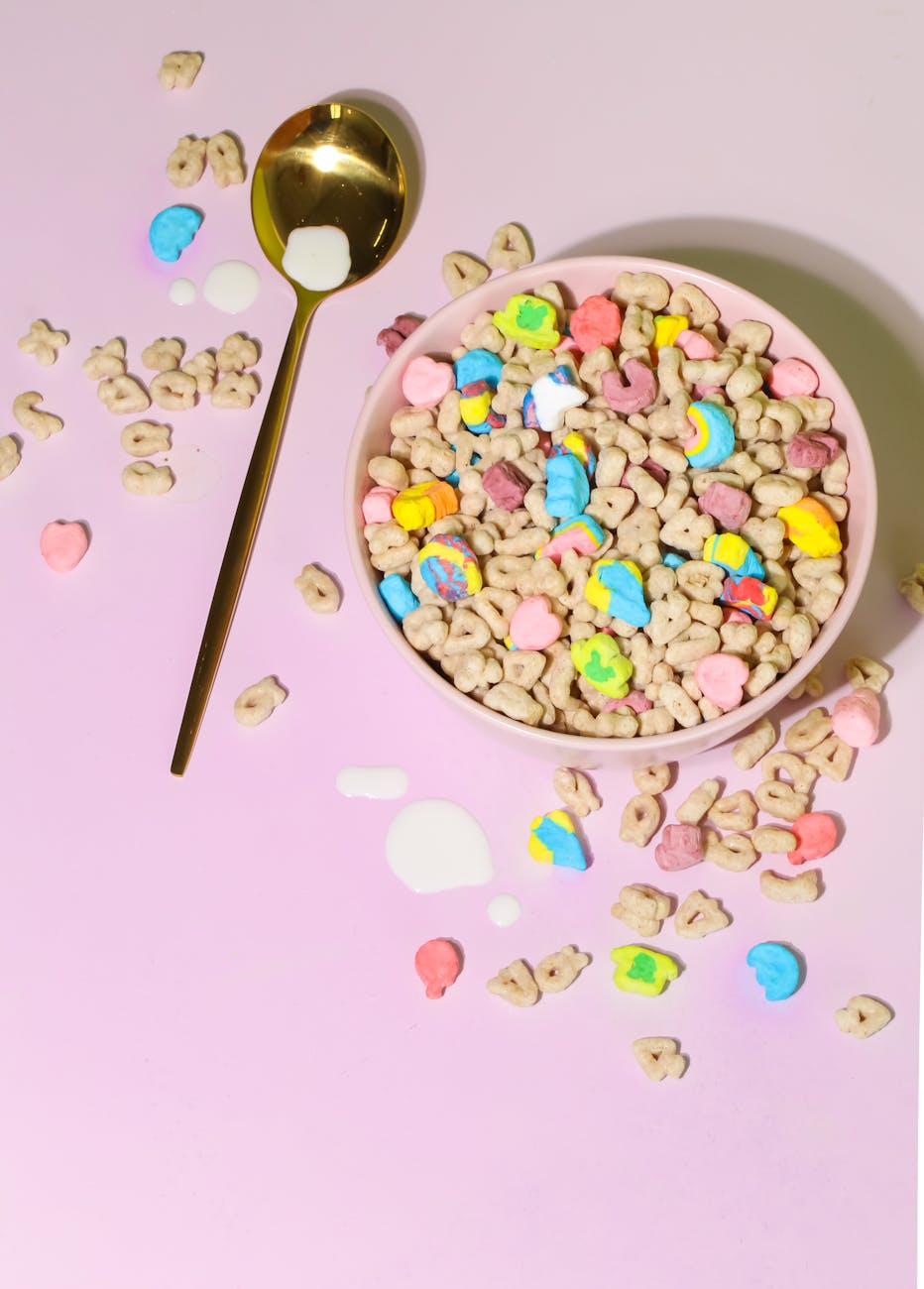
     Cereal is more than a grain; it’s an existential dream of happiness and the maternal embrace. As kids, we didn’t just eat cereal—we engaged in epic love affairs with cartoon mascots, played mind-bending board games on the back of the box, and embarked on treasure hunts for plastic trinkets buried deep within the sugary abyss. We sent box tops to claim submarines, shirts, hats, and other merchandise that, in hindsight, had all the utility of a chocolate teapot.

    My cereal obsession reached such dizzying heights that I fantasized about growing up to be a Major League baseball star who exclusively dined on cereal for breakfast, lunch, and dinner. In my dreams, I was a grocery store legend, cart packed to the brim with Cap’n Crunch, Franken Berry, Count Chocula, Froot Loops, and Lucky Charms. Cereal was my ticket to mindless self-gratification, whisking me away with Pinocchio to Paradise Island, where we’d lose our minds, sprout donkey ears, and bray like beasts in a symphony of sugary delirium.

    In the 1970s, cereal spun tales of the good life and ultimate success. We gorged on granola, wheat germ, Wheaties, and Special K, convinced we were one spoonful away from becoming paragons of health, fitness, and suburban nirvana. One of the era’s cereal prophets was Euell Gibbons, the outdoor enthusiast who, with a straight face, asked us in Grape-Nuts ads, “Ever eat a pine tree? Many parts are edible.” Gibbons spun a yarn about Grape-Nuts that promised to ground us in the Earth, bestow vitality, and arm us with survival skills fit for a post-apocalyptic rainforest escapade equipped with nothing but a buck knife and a loincloth. In reality, eating the gravel-like cereal resulted in thousands of dentist visits for chipped teeth and a crunch so deafening, it drowned out the morning radio.

    Despite all this, Grape-Nuts still haunt my cravings. The crunch and malty flavor have me hooked. I’ve read that Grape-Nuts are the only store-bought cereal that hasn’t been subjected to extrusion, that nefarious heating process that murders nutrients. Instead, Grape-Nuts are baked like a loaf of bread, ensuring that each bite is a dense, jaw-breaking tribute to my childhood.

    There was a time in my adult life when I raged against the societal norms that prevented me from consuming cereal for all three meals. I longed for cold store-bought cereal for breakfast, oatmeal for lunch, and buckwheat for dinner. I envisioned my cereals adorned with peanut butter, walnuts, chia seeds, hemp seeds, and berries to pack in nutrients and calories. But my plan was thwarted by my wife and twin daughters, who, in their maddeningly rational mindset, refused to partake. Clearly, I was on the brink of an eating disorder, or perhaps my subconscious was grasping for the lost comfort and convenience of my cereal-drenched youth.

    Yuval Noah Harari has plenty to say about our destructive quest for comfort and convenience in Sapiens. He argues that as foragers, hunting animals and gathering fruits, we were sharp, alert, fit like Special-Ops fighters, and generally happy. But when we settled down to farm, convinced we were making life easier, we fell for history’s biggest con. Agriculture, which brought us mountains of grains and cereals, was the dawn of obesity, tooth decay, impotence, arthritis, hernias, scoliosis, rampant thievery, economic disparity, starvation, infectious disease, mass animal cruelty, and misogyny. We weren’t duped by people but by wheat, rice, and potatoes—plants that manipulated us into cultivating them, chaining us to the fickle rhythms of the harvest, and inflicting more misery than any human could.

    Maybe I was getting played by cereal. It wormed its way into my psyche, hijacked my thoughts, and turned me into a zombie who couldn’t watch TV without retreating to the kitchen for a bowl of cold cereal by 7 p.m., seeking the soothing crunch as I stared, glassy-eyed, at the screen.

    My excessive thoughts on cereal point to Cerealphilia–a condition in which love for cereal evolves from innocent childhood affection into a full-blown emotional dependency masquerading as nutritional strategy. Cerealphilia sufferers don’t just eat cereal—they commune with it, fantasize about it, and defend it with the fervor of a late-stage cult member. Symptoms include justifying cold cereal for dinner as “wholesome,” craving the cardboard crunch of Grape-Nuts like a Pavlovian hit, and resenting anyone who dares suggest you diversify your diet. At its core, Cerealphilia is comfort-seeking disguised as health enlightenment, a warm milky bath for the soul stirred with nostalgia, rebellion, and a sprinkle of dietary delusion.

    Diagnostic Checklist for Cerealphilia:

    1. Box-top Hoarding: You’ve considered raiding your attic for vintage box tops in case the Cap’n ever reopens the mail-order treasure vault.
    2. Cereal Monogamy: You’ve eaten Cap’n Crunch in more variations than you’ve had actual romantic partners.
    3. Midnight Communion: Your idea of unwinding involves a mixing bowl of cereal and a trance-like TV binge by 7 p.m.—without fail.
    4. Grape-Nuts Evangelism: You’ve told someone, without irony, that “many parts of a pine tree are edible” while crunching through Grape-Nuts like a woodland druid.
    5. Multi-Box Illusionism: You “rotate” between six cereal boxes to simulate dietary variety while consuming 99% corn and sugar in slightly different shapes.
    6. Mascot Emotional Investment: You’ve had an existential crisis over the retirement of Quake the Coal Miner.
    7. Snack Shame Evasion: You justify an evening bowl by claiming it’s your “light dinner” or “a superior protein vehicle.”
  • The Cerealverse Effect

    The Cerealverse Effect

    In middle school, I knew a guy whose mother worked for one of the big cereal companies. She’d haul home enough test brands to fill an entire aisle at the supermarket, and her son would gleefully showcase these cereal treasures to me. These were the sugary, hyperactive cousins of Count Chocula, Franken Berry, and King Vitamin, but with names and characters that felt like they’d been brainstormed in an alternate dimension. Sick to death of his mother’s never-ending cereal avalanche, the boy would generously offload as many boxes on me as I could carry. The cereals tasted just like the ones you could buy at the store, except they sported names like “Dracula Nuggets” and “Zombie Crunch,” with mascots that looked like they’d escaped from a fever dream. Having these cereals in my home was like living in a bizarro parallel universe where everything seemed the same but was deliciously and disturbingly off-kilter. It was like stepping into a cereal Twilight Zone, where my breakfast routine was governed by creatures that might have been conjured by a deranged cartoonist. That period of my life still feels like a surreal dream, one where I was bestowed with the magical ability to traverse a strange universe of off-brand cereals that was denied to mere mortals. I strutted through my kitchen each morning like a cereal demigod, clutching my spoon as if it were a scepter, lording over my kingdom of oddly named, bizarrely shaped breakfast delights.

    I had encountered the Cerealverse Effect – everything feels familiar, but faintly distorted, like a cereal déjà vu.

  • Déjà Chew 

    Déjà Chew 

    When I was a kid, my mother indulged my insatiable appetite for sugary cereal, Cap’n Crunch, in all its glorious variations: Cap’n Crunch plain, Cap’n Crunch with Crunch Berries, Peanut Butter Cap’n Crunch, and the audaciously renamed versions that tasted exactly the same: Quisp, Quake, and King Vitamin. I felt a burning compulsion to taste-test all these varieties with the meticulousness of a sommelier sampling dozens of Zinfandels or a fromager savoring different types of Camembert, or a musicologist analyzing hundreds of versions of Rachmaninoff’s Second Symphony. Eating six versions of Cap’n Crunch was my way of embracing the illusion of variety while devouring the same cereal over and over again. I was a preadolescent boy, steadfast in my desire to believe I had choices, yet paradoxically terrified of making any. It’s like hearing about the man who’s on his sixth marriage, each wife a near-carbon copy of the last in appearance, temperament, and personality. The poor sap keeps circling back to the same woman, convincing himself he’s “found someone new” and pinning his hopes on a fresh start. That was me with Cap’n Crunch. I was stuck in a sugary Groundhog Day, endlessly looping through bowls of the same old cereal under different guises. Not only was I stagnant in my food choices, but I was also regressing into a sugar-coated stupor. My love for cereal, which persists to this day, was my way of vanishing into a chosen comfort zone. In that sugary sanctuary, I found both bliss and oblivion, content to float along in a sea of crunchy sameness, convinced I was exploring new culinary frontiers.

    This type of delusional behavior points us to Déjà Chew–the eerie sensation that every “new” cereal tastes exactly like the last one you swore was different. The uncanny sensation of culinary déjà vu happens when, despite the flashy new box, the novelty-shaped marshmallows, or the misleading “limited edition” label, your spoon hits the same old sugary slurry you’ve been eating since the Nixon administration. Déjà Chew convinces you you’re exploring new taste frontiers, when in fact you’re just riding a merry-go-round of processed nostalgia. It’s the foodie equivalent of dating your ex’s identical twin and calling it personal growth. One bite in, you know exactly where this is going—but you chew on, comforted by the illusion of variety and the soothing crunch of your own arrested development.

  • Crustodianism

    Crustodianism

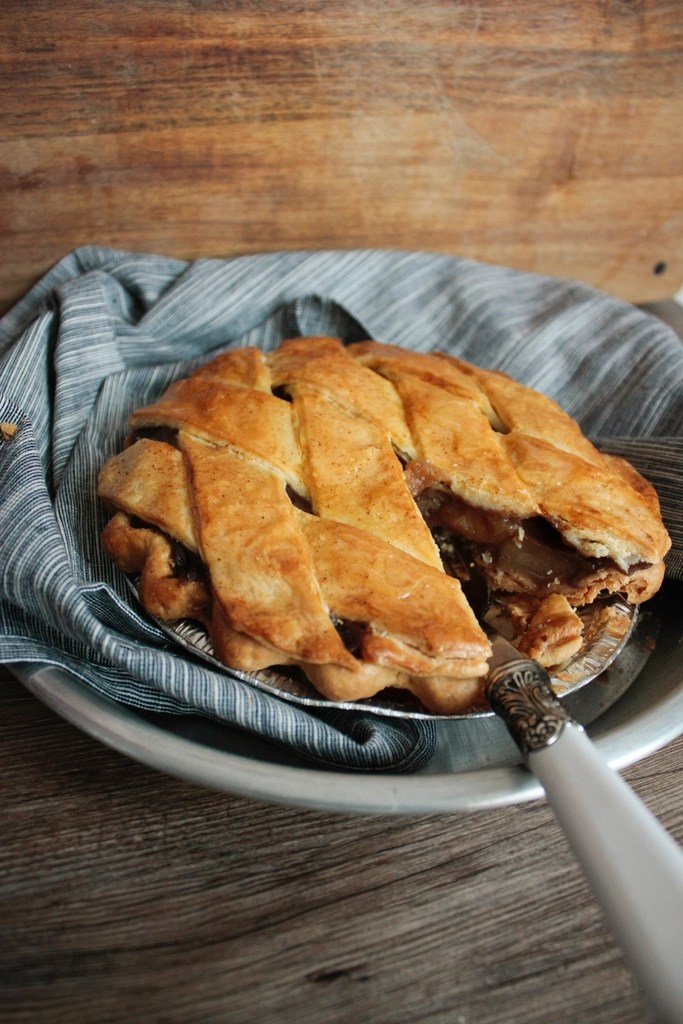
    Many moons ago, my wife and I watched the 2006 HBO documentary Thin, which chronicles the tragic existence of girls in a Florida rehab clinic for eating disorders. These poor souls were ensnared in a vicious cycle of depression, self-loathing, and lies, their recovery rates abysmally low and fatality rates tragically high. After this emotional gut-punch, we desperately needed a palate cleanser, so we turned to a pie-baking contest featuring Midwestern women in Christmas sweaters, lovingly toiling over pie crusts. These wholesome warriors of the kitchen were a stark contrast to the aforementioned sufferers. It dawned on me that pie baking is the antithesis of anorexia—a condition of solipsism where one disappears into the self, whereas pie baking is a testament to community, love, and selfless devotion to butter and flour.

    Imagine, if you will, a world where the kitchen isn’t just a hub of culinary creation but a sacred temple of love, where pie-baking is the highest form of devotion. In this sanctified realm, every Midwestern woman in a Christmas sweater is a culinary high priestess, her rolling pin a scepter of affection, her pie crust a canvas for heartfelt artistry. The Pie Baking Contest is an epic battleground where these valiant women gather, their aprons fluttering like superhero capes, ready to channel pure, unadulterated love into their pies. The stakes are absurdly high, the competition fierce, but the atmosphere? Pure camaraderie and joy.

    Here, pie baking is not just a quaint pastime; it’s an epic saga of love, community, and unyielding devotion. These heroines approach their craft with the precision of neurosurgeons and the passion of Renaissance artists. Flour fills the air like enchanted snow, butter is blended into dough with the deftness of a master illusionist, and apples are peeled and sliced with the ferocity of a seasoned samurai. Each pie is a labor of love, a tangible expression of their deepest affections. As they sweat and toil over their creations, the kitchen morphs into a bustling hub of warmth and connection.

    Baking pies, slinging spaghetti and garlic bread, or whipping up a dish of hot and sour Tom Yum Goong soup demands a healthy soul, one that’s plugged into the matrix of family and community. We therefore don’t journey solo but soar with a merry band of culinary adventurers, armed with spatulas and mixing bowls, ready to conquer the next great feast. So, skip the guilt and embrace the butter—life’s too short for bland food and empty kitchens.

    Baking pies points us to the valuable custom of Crustodianism–the sacred, soul-healing act of cooking not merely for sustenance, but as a devotional rite—an expression of love, fellowship, and culinary redemption. Born at the crossroads of Midwest Christmas sweater sincerity and battle-hardened pie crust tenacity, Crustodianism elevates the domestic act of baking into a communal liturgy. The Crustodian is no mere cook; she (or he, apron optional) is a caretaker of tradition, a therapist armed with a rolling pin, a high priest of carbs performing ritual alchemy with butter, flour, and tears of joy.

    In contrast to the solipsistic void of disordered eating, where nourishment is seen as the enemy, the Crustodian sees food as communion. A warm casserole becomes a life raft. A triple-layer coconut cream pie becomes a bridge to the lonely. A pot of stew bubbles with the echoes of ancestral affection. Cooking, in this frame, is the antidote to isolation—the proof that one has not given up on the world but doubled down on its delicious potential.

    Crustodianism isn’t just about the food. It’s about saying, “I made this for you,” and meaning it with your whole buttery soul. It’s about reclaiming joy, reclaiming appetite, and yes, reclaiming your place at the table—preferably next to someone you love, with a second helping on the way.

  • Longing to Return to the Syrupocene Era

    Longing to Return to the Syrupocene Era

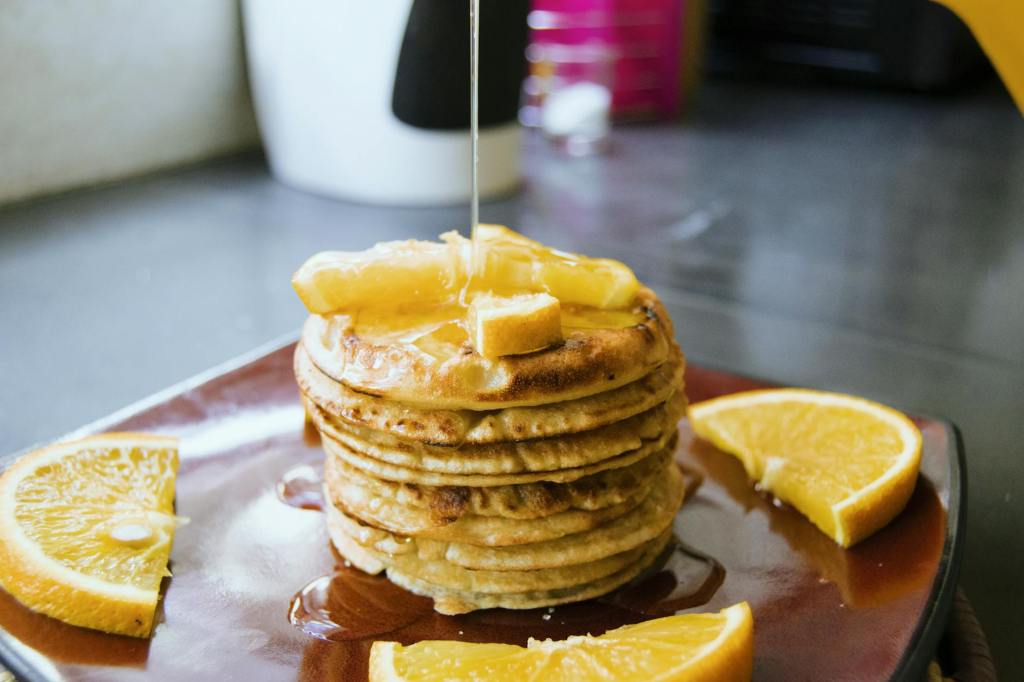
    Back in the 60s and 70s, nutritional concerns were as relevant to us as an old vinyl record in a streaming world. We were blissfully unaware of things like sugar grams and carbohydrate counts. On weekend mornings, my parents would sometimes treat me to a local pancake house, where I indulged in my favorite dish: apple pancakes. Now, picture this: a stack of ten flapjacks, each one a marvel of culinary excess. To say the pile was monumental is like calling Mount Everest a hillock. As I sat next to it, I looked like a hapless Lilliputian standing beside a mountain of golden, buttery goodness. The age-old question had to be asked: Was I going to eat these pancakes, or were they going to consume me in a pancake avalanche? Spoiler alert: I ate them. Every last one. These pancakes were no ordinary breakfast fare. They were brimming with cinnamon-spiced apple compote, slathered in creamy butter, and drenched in what must have been a half-gallon of maple syrup. If I had spilled that syrup, it would have created a sugar tsunami. To wash down this syrupy mountain, I guzzled down several tall glasses of orange juice, which was basically just liquid sugar with a side of citrus. The sheer volume of insulin-spiking sugars and carbohydrates I ingested could have given a modern endocrinologist a cerebral hemorrhage. I was consuming enough sugar to make Willy Wonka look like a health food advocate. After these epic breakfasts, rather than running outside to join my friends in their energetic games, I would slump into bed in a state of what could only be described as a Carbohydrate Coma. I was so catatonic, my friends might as well have been playing a game of “Guess Where’s the Sleeping Kid?” The trauma inflicted on my pancreas was beyond imagination. It was like a small factory working overtime without a break, pumping out insulin at a rate that would have made any modern dietitian faint. In those days, gluttony was a virtue, and self-indulgence was a badge of honor. We reveled in our ignorance, blissfully ignoring the fact that our indulgences would make today’s health-obsessed populace break out in a cold sweat. So there I was, a child of the 60s and 70s, living in an era where pancakes and orange juice were not just meals but monumental feats of indulgence. Our motto was simple: “Why worry about nutritional concerns when you can have another stack of apple pancakes?” Our golden era of gluttony was truly a feast for the ages—literally and metaphorically.

    This memory points us to the Syrupocene Era–a mythic golden age spanning the 1960s and 70s when nutritional ignorance reigned supreme, and breakfast was less a meal and more a caloric Greek tragedy performed in maple-soaked acts. The Syrupocene was a time when food pyramids hadn’t been built, glycemic indexes hadn’t been discovered, and “carb-loading” wasn’t a fitness strategy—it was a lifestyle.

    During the Syrupocene, children guzzled orange juice like it was an IV drip from the gods, consumed pancakes in stacks that could double as insulation, and considered butter a vegetable. It was a utopia of food denialism, where a carbohydrate coma was mistaken for a nap and diabetic shock was just “a sleepy Sunday morning.” The only sugar tracker in town was your mother asking, “Do you want more syrup, honey?”

    The Syrupocene didn’t end with an apocalypse—just a quiet whimper as food labels, cholesterol, and science crept in like puritans at a Mardi Gras parade. But those who lived through it still carry the memory: a wistful ache for the era when gluttony was innocent, ignorance was delicious, and a pancake wasn’t a sin—it was a ten-layered sacrament.

  • Sundae Grailism

    Sundae Grailism

    When I was a kid growing up in the San Francisco Bay Area in the 1970s, there was an ice creamery called Farrell’s. In a child’s imagination, Farrell’s was the equivalent of Willy Wonka’s Chocolate Factory. You didn’t go to Farrell’s often, maybe once every two years or so. Entering Farrell’s, you were greeted by the cacophony of laughter and the clinking of spoons against glass. Servers in candy-striped uniforms dashed around with the energy of marathon runners, bearing trays laden with gargantuan sundaes. You sat down, your eyes wide with awe, and the menu was presented to you like a sacred scroll. You don’t need to read it, though. Your quest was clear: the legendary banana split. When the dessert finally arrived, it was nothing short of a spectacle. The banana split was monumental, an ice cream behemoth. I was as if the dessert gods themselves had conspired to create this masterpiece. Three scoops of ice cream, draped in velvety hot fudge and caramel, crowned with mountains of whipped cream and adorned with maraschino cherries, all nestled between perfectly ripe bananas. Sprinkles and nuts cascaded down the sides like the treasures of a sugar-coated El Dorado. As you took your first bite, you embarked on a journey as grand and transformative as any hero’s quest. The flavors exploded in your mouth, each spoonful a step deeper into the enchanted forest of dessert ecstasy. You were not just eating ice cream; you were battling dragons of indulgence and conquering kingdoms of sweetness. The sheer magnitude of the banana split demanded your full attention and stamina. Your small arms wielded the spoon like a warrior’s sword, and with each bite, you felt a mixture of triumph and fatigue. By the time you reached the bottom of the bowl, you were exhausted. Your muscles ached as if you’ve climbed a mountain, and you were certain that you’d expanded your stomach capacity to Herculean proportions. You briefly considered the possibility of needing an appendectomy. But oh, the glory of it all! Your Farrell’s sojourn was worth every ache and groan. You entered the ice creamery as an ordinary child and emerged as a hero. In this fairy-tale-like journey, you had undergone a metamorphosis. You were no longer just a kid from the Bay Area; you were now a Jedi of the dessert world, having mastered the art of indulgence and delight. As you returned home, the experience of Farrell’s left a lasting imprint on your soul. You regaled your friends with tales of your conquest, the banana split becoming a legendary feast in the annals of your childhood adventures. In your heart, you knew that this epic journey to Farrell’s, this magical pilgrimage, had elevated you to the ranks of dessert royalty, a memory that would forever glitter like a golden crown in the kingdom of your mind.

    These indulgences point to Sundae Grailism–the childhood phenomenon in which a dessert outing—particularly involving elaborate confections like banana splits—takes on the structure, stakes, and emotional intensity of an Arthurian quest. Sundae Grailism transforms a simple trip to an ice cream parlor into a mythic pilgrimage where sprinkles are sacred relics, whipped cream is a divine cloud cover, and the spoon is Excalibur.

    Children afflicted with Sundae Grailism don’t just want dessert—they are summoned to it. They enter Farrell’s or any suitably over-the-top ice creamery with the gravity of knights entering Camelot, guided by visions of the elusive Banana Split of Destiny. The menu is not read—it is interpreted like scripture. Every bite of caramel-drizzled glory is a chapter in the epic. By the end of the journey, they’re bloated but victorious, stained with fudge and swagger, ready to regale the kingdom (a.k.a. the school lunch table) with tales of conquest and near-digestive ruin.

    Sundae Grailism is not just about sugar—it’s about transcendence, myth-making, and the belief that, under the right fluorescent lighting and with enough maraschino cherries, a kid can become legend.