Tag: addiction

  • The Collective Willpower Principle

    The Collective Willpower Principle

    The television comedy Loudermilk centers on Sam Loudermilk, a recovering alcoholic played by Ron Livingston, whose permanently disappointed, basset-hound face seems genetically incapable of approving of humanity. Loudermilk is a music critic, an addiction counselor, and an equal-opportunity offender. He insults friends, strangers, and fellow recovering addicts with such relentless precision that sarcasm becomes his native language. His group meets in a church overseen by a perpetually exasperated priest who seems forever one wisecrack away from throwing Loudermilk onto the sidewalk.

    The characters spend much of the series antagonizing one another. They lie, relapse, brood, sabotage themselves, and exchange insults with the affectionate brutality of siblings who have survived the same dysfunctional childhood. The comedy is shamelessly outrageous, yet beneath the profanity and chaos lies genuine tenderness. Loudermilk understands something profound: broken people often love one another more honestly than polished ones.

    I eventually realized I had become an evangelist for the show. Whenever the opportunity arose, I urged people to watch it.

    That became unmistakably clear during a visit to my favorite watch store.

    I have been patronizing the same shop for nearly twenty-five years. The Owner and the Assistant know me well enough to recognize my recurring condition: chronic horological temptation. Visiting the store has become something like the Saturday beauty salons my mother frequented during the late 1960s. Women would spend hours having their hair done while gossiping, laughing, and catching up on neighborhood life. The appointment wasn’t merely cosmetic. It was communal. Hair happened to be the excuse.

    For me, watches became the excuse.

    Over two decades, the Owner and Assistant have resized bracelets, regulated movements, replaced batteries, and quietly indulged my fascination with mechanical jewelry. They are master technicians, equal parts craftsmen and therapists for anxious watch enthusiasts.

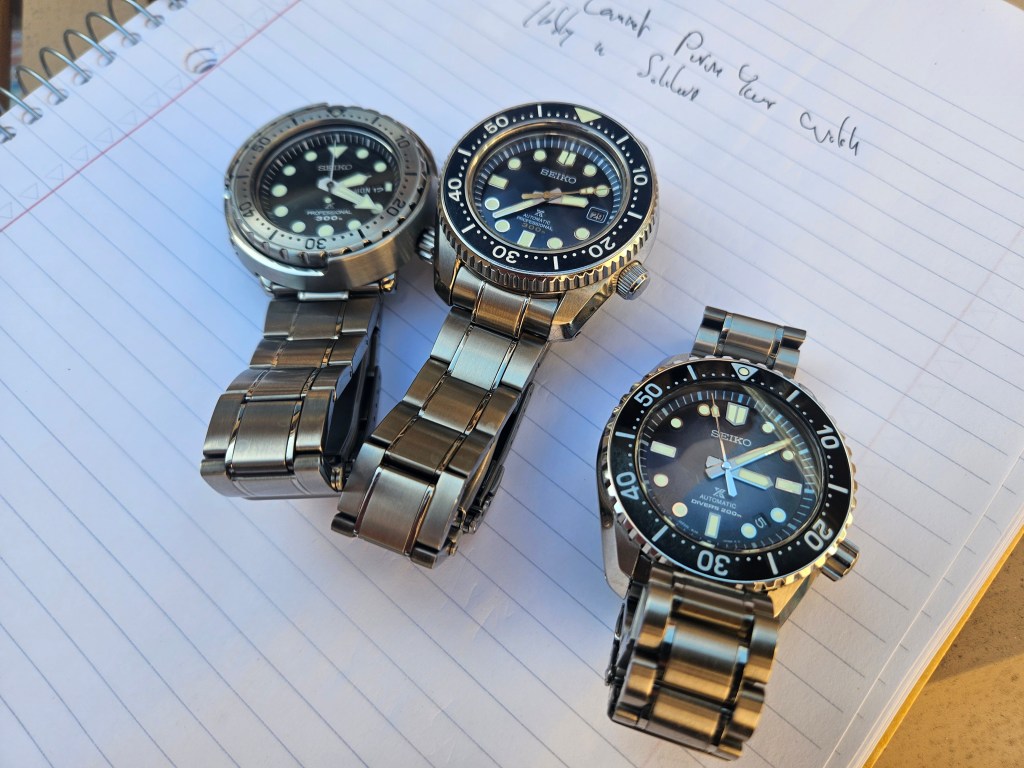
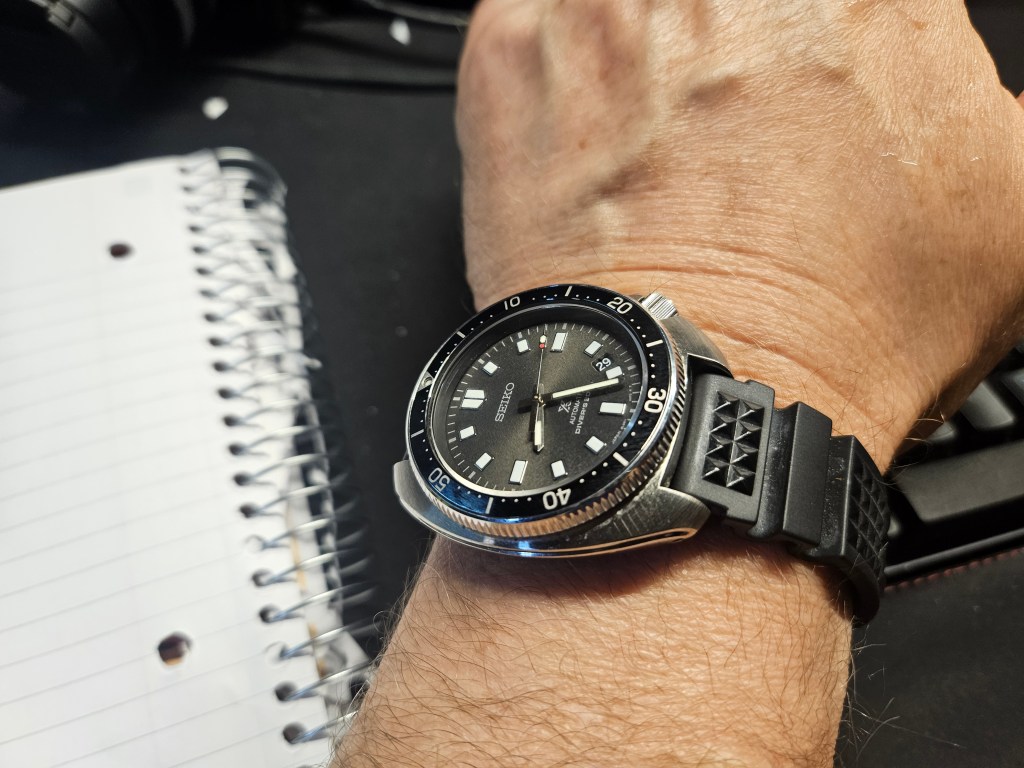
    One afternoon I stopped in to have a bracelet adjusted on one of my Seiko divers. As the Assistant removed a link, I mentioned Loudermilk and described its recovering alcoholics driving one another crazy with their compulsive, self-destructive behavior.

    His expression changed immediately.

    He stepped away from his workbench and leaned against the counter.

    “I watch it,” he said. “I’m an alcoholic.”

    He told me he had been attending five recovery meetings every morning, despite not being “a morning person.” For years he had dismissed his drinking because, in his culture, men routinely drank enormous quantities of alcohol well into old age. It seemed normal—until it wasn’t. Eventually he realized alcohol was dismantling his life one drink at a time.

    He had been sober for thirteen days.

    Thirteen days.

    Long enough to glimpse hope.

    Not nearly long enough to trust it.

    I thanked him for telling me. What surprised me was not his honesty—we had known each other for almost twenty years—but his willingness to speak so openly while another customer browsed nearby carrying a Chihuahua tucked comfortably in her arms.

    Then something unexpected happened.

    The woman looked up.

    “I love Loudermilk,” she announced.

    “What a shame they canceled it after only three seasons.”

    The Assistant immediately objected.

    “It could still come back.”

    For several minutes they debated the show’s fate with the enthusiasm normally reserved for constitutional amendments or playoff baseball.

    I smiled, said goodbye to both of them, and walked toward the parking lot.

    Halfway across the sidewalk, the obvious finally occurred to me.

    I loved Loudermilk because, in my own way, I belong to its congregation.

    I am an addict.

    Not an alcoholic.

    But addiction wears many disguises.

    To be an addict is to discover that you are inhabited by two competing selves. One seeks discipline, moderation, and long-term flourishing. The other wants immediate gratification and endlessly whispers that one more purchase, one more indulgence, one more exception surely won’t matter.

    The battle is exhausting because it never quite ends.

    The encouraging news is that the adult gradually becomes stronger. Every act of restraint weakens the impulsive child within. Every healthy habit transfers a little more authority to the wiser self.

    The sobering news is that the child never entirely disappears.

    One unexpected trigger.

    One careless decision.

    One rationalization.

    Suddenly the old voice is speaking again with astonishing confidence.

    That is why Loudermilk revolves around a support group.

    Recovery is rarely a solitary achievement.

    Human beings are remarkably poor at borrowing strength from their future selves.

    We are much better at borrowing it from one another.

    That is the quiet wisdom beneath all the profanity and comic dysfunction. The addicts keep returning because they understand something the rest of us prefer to ignore. Self-mastery is not simply an individual accomplishment. It is often a communal one.

    The show illustrates what I call The Collective Willpower Principle: certain forms of self-mastery cannot be sustained through determination alone but require the borrowed strength of a community committed to the same struggle.

    Perhaps that explains why I left the watch store feeling unexpectedly hopeful.

    Three strangers—a recovering alcoholic, a watch addict, and a woman carrying a Chihuahua—had briefly formed a fellowship around a television comedy.

    The subject wasn’t really Loudermilk.

    It was the shared recognition that every one of us is trying to keep some unruly part of ourselves from taking over the wheel.

  • The Hidden Gravity of the Watch Tribe

    The Hidden Gravity of the Watch Tribe

    Take a long, honest look at your fellow watch obsessives. They are not fools. They are intelligent, disciplined, frighteningly attentive to detail. These are people who can debate lume longevity like theologians parsing eternity. But like you, they wandered into the forest of horology and followed the glint of polished steel until the trail disappeared. Now they live among the trees, refreshing forums, studying release rumors, and calling it research.

    Like you, they dream of escape.

    Now imagine the impossible: you wake up one morning and the fever is gone. No urge to browse. No itch to upgrade. No late-night calculations about selling three watches to buy the one that will finally bring peace.

    It feels like ending a bad relationship you tolerated for years. One morning you look at the situation and say, quietly and without drama, “I’m done.”

    And just like that, you are.

    Now ask yourself what happens next.

    Your fellow obsessives will not celebrate your recovery. They will react like crabs in a bucket watching one of their own reach the rim. The moment you start climbing, the pincers come out. Links appear. “Just look at this one.” Wrist shots multiply. Someone whispers that a discontinued Seiko has surfaced — a rare opportunity, possibly your last chance at sanity.

    In the language of addiction, this force has a name: Bucket Gravity.

    Bucket Gravity is the invisible pull of the tribe — the group chats, the incoming posts, the shared excitement, the collective anxiety that turns private desire into social momentum. Addiction rarely operates alone. Community gives it mass, direction, and escape velocity in the wrong direction.

    And make no mistake: the community does not want you gone.

    But don’t mistake this resistance for cruelty. Your fellow collectors are not villains. They are loyal. They are affectionate. They are afraid.

    What they fear is the silence you leave behind.

    Your exit creates an emotional vacuum. Without you, there is one less person to validate the cycle — the buying, the selling, the regret, the recovery, the relapse. You were a witness to their struggle. You were a companion in the late-night rationalizations. You helped turn compulsion into culture.

    Without you, the noise drops. And in the quiet, each person is left alone with an uncomfortable question.

    You will miss them too. The camaraderie is real. The humor is real. The shared obsession creates a strange and powerful intimacy — a fellowship built from equal parts enthusiasm and mutual self-deception.

    But keep climbing.

    Because love that depends on shared compulsion is not healthy love. It is a support group disguised as a hobby and a feedback loop disguised as friendship.

    Get out of the bucket.

    Stand on solid ground. Become someone who enjoys objects without needing them, who appreciates beauty without chasing it, who measures time without being owned by it.

    Then — and only then — you can return to the world with a different kind of affection: not the anxious love of mutual enabling, but the steady kind that comes from being whole, quiet, and finally free.

  • The Exit Watch Myth: My Plan to Cure Addiction with a Neon Frog G-Shock

    The Exit Watch Myth: My Plan to Cure Addiction with a Neon Frog G-Shock

    The Exit Watch does not exist. It is a legend, a campfire story told among collectors, a mechanical Messiah rumored to deliver us from the fever swamp. And yet—try not believing in it. The fantasy is too powerful: one watch to end the search, silence the forums, close the browser tabs, and return the mind to civilian life. The fact that no such watch has ever performed this miracle does nothing to weaken the dream.

    I’ve watched men attempt the cure with watches costing as much as a compact car. Twenty thousand dollars later, they’re still refreshing WatchRecon at midnight, still comparing lume shots, still whispering, “Maybe one more.” If luxury won’t save us, then perhaps salvation requires a different strategy. Not refinement. Not restraint. Something stranger.

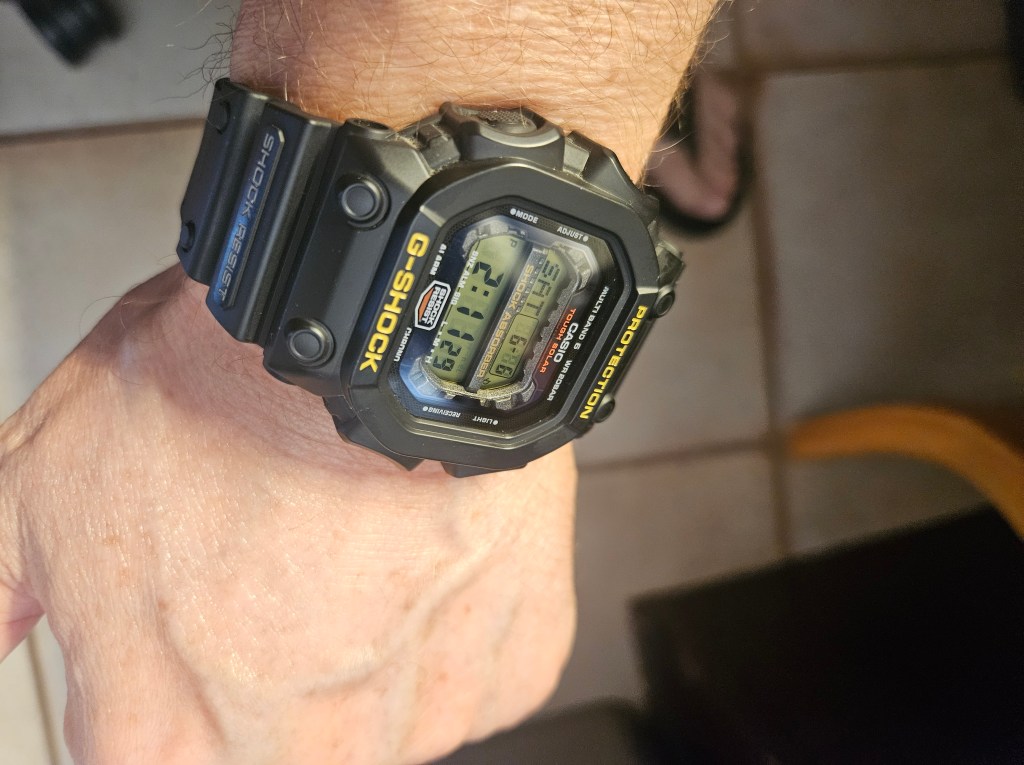
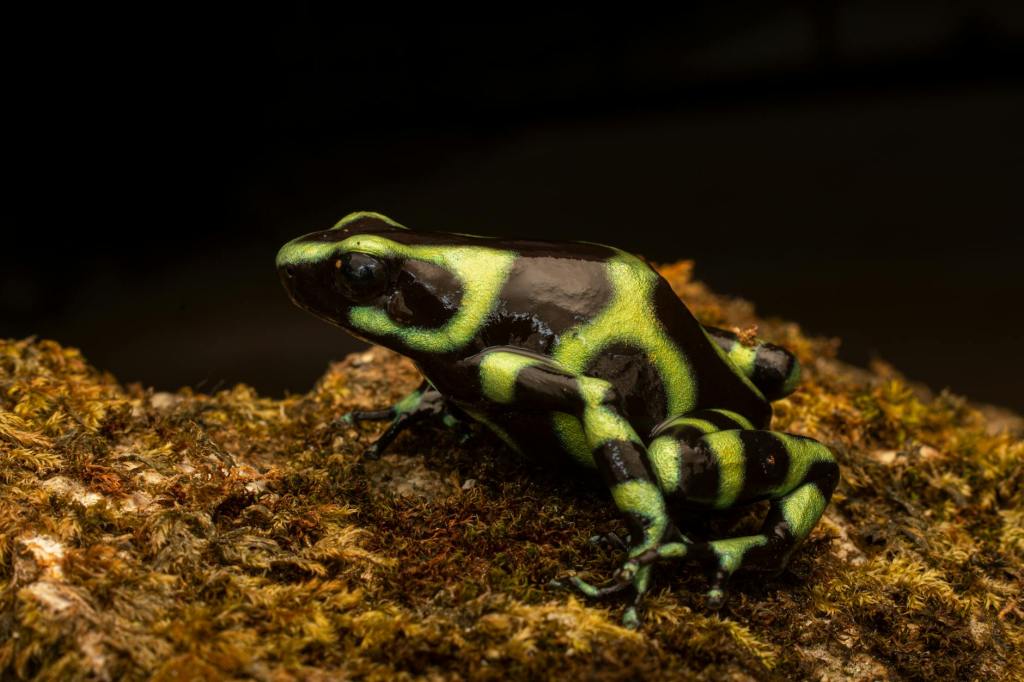
    Enter the Limited Edition G-Shock Poison Dart Frogman—an object that looks less like a watch and more like a radioactive amphibian that escaped a laboratory accident. Oily black. Toxic green neon streaks. Subtlety has been strangled and buried. It is loud, unapologetic, and almost aggressively unserious—which is precisely why I believe it might work. I am invoking the Reverse Acquisition Principle: the theory that the only way to break an aesthetic addiction is to buy something that violently contradicts your taste, your identity, and possibly your dignity.

    Of course, this could backfire. A man in his sixties wearing a neon poison watch risks resembling a retiree who wandered into a disco wearing leather pants, peroxide hair, and a mustache drawn with a stencil. But addiction does not respond to dignity. The heart wants what the heart wants, and nothing fuels desire like resistance. Tell me the watch is ridiculous, inappropriate, or embarrassing—and I will want it twice as much.

    If the Exit Watch is a myth, then so be it. I am prepared to believe in miracles. Preferably ones that glow in the dark.

  • Why Your Watch Doesn’t Make You Happy Anymore

    Why Your Watch Doesn’t Make You Happy Anymore

    To understand the madness of the modern watch addict, you’d do well to consult Dopamine Nation by Stanford psychiatrist Anna Lembke, a book that should be shelved somewhere between philosophy, neuroscience, and quiet screaming. Her central thesis? In an age of relentless indulgence, the line between pleasure and pain is not only blurry—it’s the same neurological pathway. You’re not escaping pain with your latest acquisition. You’re feeding it.

    “The smartphone,” she writes, “is the modern-day hypodermic needle.” And the drug? Dopamine—delivered in neat little parcels: TikToks, tweets, memes, and yes, wrist shots of watches you don’t own (yet). If you haven’t met your poison of choice, don’t worry. It’s just a click away.

    Lembke makes the uncomfortable truth clear: The more dopamine hits we seek, the more our brain adapts by reducing our baseline pleasure response. What once thrilled you—your grail watch, your Rolex Explorer, your Seiko with the Wabi-Sabi patina—now barely registers. You’re not chasing pleasure anymore. You’re just trying to feel something.

    Watch addicts, of course, understand this intimately. The pursuit of horological perfection starts out innocent enough: a G-Shock here, a vintage diver there. But soon you’re tumbling into the abyss of boutique limited editions and message board enablement, haunted by the need to stay relevant. Because here’s the twist: It’s not just about the watches. It’s about being seen. You post, you review, you flex because if you stop, you vanish. No new watches = no new content = digital extinction.

    And extinction, in a social-media world, feels like death.

    Lembke warns us that addiction thrives in secrecy, in the exhausting double life. The watch addict may present as a tasteful minimalist to family and friends, while secretly rotating 19 watches, five straps deep, waiting for the next “drop.” The addiction is fed by access, and we live in an access economy. New releases are no longer annual events—they’re hourly temptations. The vortex is bottomless. The supply creates the demand.

    Even worse, modern society normalizes this behavior. Everyone is scrolling. Everyone is upgrading. Our addiction to novelty is passed off as taste. Our frenzied consumption masquerades as identity. Lembke borrows from Philip Rieff to explain the deeper shift: “Religious man was born to be saved; psychological man is born to be pleased.” The modern watch collector doesn’t believe in salvation. He believes in configuration.

    But here’s the cruel irony: The more you seek to be pleased, the less capable you are of being pleased. In Lembke’s words: “Hedonism, the pursuit of pleasure for its own sake, leads to anhedonia—the inability to enjoy pleasure of any kind.”

    You can understand the watch addict’s feeble quest when you look at the Horological Dopamine Loop–the self-reinforcing cycle in which acquisition, posting, validation, and anticipation replace enjoyment. The watch no longer delivers pleasure; it merely resets the craving for the next hit.

    What’s the solution? A dopamine fast. Lembke prescribes it like a bitter medicine: Remove the source. Reset the brain. Let it reestablish homeostasis. For the watch addict, this means one thing: a watch fast.

    And yes—it’s brutal. I’ve been a watch obsessive for over twenty years. My longest fast? Six months. And I nearly went feral. New releases tempt. Friends enable. Algorithms whisper. Strap swaps and vintage reissues beckon like sirens. Even the FedEx truck starts to look like a personal tormentor.

    So you get creative. You stash watches in the safe and “rediscover” them. You buy new straps instead of new watches. You try to redirect the compulsion toward something productive: fitness, music, sourdough, monkish austerity. Anything but another chronograph.

    But the real cure, oddly enough, may be conversation—actual human connection. At watch meet-ups, we start out discussing bezels and spring bars, but within ten minutes we’re talking about life: real estate, parenting, knee surgeries, emotional burnout, dinner recipes. We talk for hours. But barely about watches.

    The truth slips out in these moments: we want to be free. We crave community more than we crave sapphire crystals. What began as a shared obsession has become a trap, and these conversations, paradoxically, offer relief from the very addiction that brought us together.

    Imagine a bunch of watch enthusiasts at a watch meet-up and we’re talking about everything but watches. Wrap your head around that.

  • How Not To Turn Into a Pillar of Salt in the Internet Age

    How Not To Turn Into a Pillar of Salt in the Internet Age

    Anna Lembke’s Dopamine Nation didn’t teach me anything comforting. It confirmed what I already suspected: addiction isn’t a habit; it’s a ravenous creature with a bottomless stomach. The more you feed it, the louder it howls. It storm-raids your mental vaults, looting the energy you need for your work, your relationships, and your sense of self. And your family feels the theft—spiritually, emotionally, domestically. Addiction doesn’t just eat you; it nibbles at everyone near you.

    Even with self-awareness, even with a clear understanding of triggers and a sincere desire for freedom, you don’t get a clean fight. The casino is rigged. Modern dopamine doesn’t drip from a bottle or a needle—it streams through fiber-optic cable. Our phones and laptops, the same devices we use to create, to earn, and to connect, also serve as the slot machines we keep in our pockets. The house never closes, and the drinks are free.

    Lembke tells us to avoid triggers, but what do you do when your trigger is baked into your professional life, disguised as “productivity” and “connection”? Avoidance becomes theater. You can only tiptoe around the swamp for so long before some lonely hour arrives, and curiosity knocks like an old vice with freshly polished shoes. A hit of self-pity, a twitch of boredom, a flicker of FOMO—and suddenly you’re back in the feed trough, gulping pixels like syrup. The crash comes fast: shame, exhaustion, vows of purity. Then the next impulse, the next relapse, the same ancient ritual. Lot’s wife didn’t want to look back; she simply couldn’t resist. Neither can we, sometimes. Salt is surprisingly modern.

    So the task becomes stark: learn to live in this world without turning yourself into a monument of regret. Train your gaze forward. Build the strength to resist that backward glance. The modern life mission isn’t to slay the demon—he regenerates too easily. It’s to starve him, inch by inch, while protecting the scarce, bright energy that makes you human.

    Becoming a human being is a high-stakes game. Learning to live a life in which you don’t become a pillar of salt is one of life’s chief endeavors.

  • The Keystone Habit: How One Change Rewires the Rest of Us

    The Keystone Habit: How One Change Rewires the Rest of Us

    Charles Duhigg’s The Power of Habit: Why We Do What We Do in Life and Business argues that vice, self-indulgence, and addiction operate on a neurological level. If we can deliberately rewire those pathways, we can free ourselves from much of our self-destructive behavior. Written more than a decade ago, the book anticipates the same themes that now surface in places like Reddit’s “Nofap” movement, where porn addicts admit their compulsions damage relationships and stunt growth, so they commit to abstinence—except with their partner. Anna Lembke’s Dopamine Nation makes a similar case, charting how dopamine overload leads to the inevitable crash of pleasure into misery.

    Duhigg opens with Lisa, an addict whose husband left her, likely exhausted by her behavior. When she finally saw how deranged her habits had become, she had the spark to change. She replaced her old compulsions with exercise and healthy eating. It’s the familiar “rock bottom” story: you face yourself stripped of illusions. Or as Marc Maron puts it, “Life hands you your ass on a stick.” Only when pride dissolves are you ready for answers.

    As someone who has wrestled with addictions and grown up with alcoholic parents, I read this story with recognition. The researchers studying Lisa’s brain found something striking: her old neural patterns were still visible, but they had been overridden by new ones. The impulses hadn’t vanished—they’d simply been crowded out. And while she overhauled many habits, it was quitting smoking that made the real difference. Duhigg calls this a “keystone habit.” In his words: “By focusing on one pattern…Lisa had taught herself how to reprogram the other routines in her life, as well.”

    The same principle applies to organizations: find the keystone habit, nurture it, and the ripple spreads across the whole system.

    I learned another useful term from the book: “behavioral inhibition.” It resonates painfully, because from 7 to 10 p.m. I suffer relentless food cravings. By then I’ve usually reached 2,300 calories, and eating more destroys my calorie deficit. But television sabotages my self-control—everywhere I look, people are drinking rosé, eating pizza, ice cream, carrot cake. Triggers, triggers everywhere. If I hid in an igloo, maybe I’d get ripped abs, though the view would be grim.

    Still, I’ve seen the power of a keystone habit. My mornings begin with coffee and buckwheat groats mixed with protein powder. Then I study a book and take notes, as I’m doing now. If I skip this, I get swallowed by the Internet, a dopamine carnival of watches, consumer temptations, and FOMO. I unfollow Instagram “safari” channels that inevitably mutate into half-naked influencers shaking their butts in gym close-ups. Once seen, such images can’t be unseen. Now I choose carefully.

    Replacing bad habits with good—writing, piano, exercise—changes not only my productivity but my temperament. I become friendlier, more patient with my family. But when I binge on Internet dopamine, I snap at people. I become “that guy.”

    The contrast reminds me of something Dallas Cowboys wide receiver Michael Irvin confessed in America’s Team: “We are all imperfect people. And each of us has at least two people in all of us; the person you show everybody and that person you never show to anybody.”

    We curate public personas and believe our own polished lies, all while a darker self hides in the shadows. But once life hands you your ass on a stick, integrity becomes your only way forward. Rewiring the brain isn’t just a neurological project. It’s a moral one.

  • Dopamine Nation: Self-Help Without the Fairy Dust

    Dopamine Nation: Self-Help Without the Fairy Dust

    I’ve never trusted the mythology of self-help books—the fairy tale that you identify Problem X, buy a book, read a few hundred pages, and Problem X vanishes. What I do believe is that a self-help book, at best, can make you stare harder at your demon, dull its sharper edges, and maybe hand you a strategy or two to keep it from devouring you whole.

    That’s why Anna Lembke’s Dopamine Nation: Finding Balance in the Age of Indulgence punched me in the gut. Her blunt lesson: dopamine addiction—whether through scrolling, swiping, shopping, or vaping—doesn’t lead to pleasure but to misery, pain, and the hollowing-out of your agency. Reading her, I shuddered at the years I wasted feeding my brain with Internet sugar highs.

    Lembke makes no bones about the world we live in: a digital carnival of “overwhelming abundance.” She puts it starkly: “The smartphone is the modern-day hypodermic needle, delivering digital dopamine 24/7 for a wired generation. If you haven’t met your drug of choice yet, it’s coming soon to a website near you.” Pleasure and pain, she reminds us, are processed in the same brain circuitry—and the more dopamine that flows, the stickier the addiction.

    The horror story isn’t abstract. Her case studies peel the skin off addiction’s double life: secret compulsions, corrosive shame, shattered relationships. Some people are more vulnerable—those with addictive parents, those with mental illness in the family—but Lembke insists access is the true accelerant. The Internet puts a casino in our pocket; supply breeds demand. Worse, social media monetizes outrage until we mistake 24/7 hair-on-fire hysteria for “normal.”

    Lembke’s most grotesque example is Jacob, a sex addict who literally builds himself a “Masturbation Machine.” She confesses she feels horror, compassion—and dread that she herself is not immune. Her verdict is bleak: “Not unlike Jacob, we are all at risk of titillating ourselves to death.” Seventy percent of global deaths, she notes, stem from modifiable behaviors like smoking, gluttony, and sloth. Addiction, in short, is a slow suicide dressed up as entertainment.

    Part of the problem is philosophical. As Philip Rieff noted in The Triumph of the Therapeutic, “Religious man was born to be saved; psychological man is born to be pleased.” We’ve traded the pursuit of goodness for the pursuit of good feelings. Jeffrey Rosen put it more bluntly: classical wisdom insists we should aim to be good, not simply to feel good. Instead, we’re anesthetizing ourselves with meds, therapy-lite, dopamine drip-feeds, and hedonism. And as Lembke observes, hedonism curdles into its opposite: anhedonia, the inability to enjoy anything at all.

    Her prescription? The brutal reset of a “dopamine fast.” Four weeks off your drug of choice to force your brain back to balance. She offers a framework—DOPAMINE (data, objectives, problems, abstinence, mindfulness, insight, next steps, experiment). It’s clever, but the hard truth runs underneath: most addicts, myself included, are not “moderators.” We’re all-or-nothing. For me, the Internet isn’t moderation-friendly; it’s a rabbit hole with no bottom.

    Lembke knows willpower is not enough. She prescribes “self-binding”: physical, chronological, and categorical walls between you and your poison. But in the digital economy—where work and addiction ride on the same Internet rails—such barriers are fragile. Moderation may be the fantasy; abstinence the only real survival strategy.

    So yes, I’m glad I read Dopamine Nation. It clarified the trap, exposed the double life, and framed the fight as both biological and spiritual. But let’s not be naïve. Like all self-help, it’s not a magic pill. At best, it’s a mirror, a warning flare, and a rough map out of the dopamine swamp. The walking out is still on you.

  • The Voice of Glum: Watch Addiction, Loudermilk, and the Daily Battle Within

    The Voice of Glum: Watch Addiction, Loudermilk, and the Daily Battle Within

    The TV show Loudermilk is part sitcom, part group therapy, and part existential smackdown. Ron Livingston plays Sam Loudermilk, a grizzled music critic and recovering alcoholic with the face of a hungover basset hound and the social graces of a man allergic to kindness. He barrels through life offending everyone within a five-foot radius, insulting his fellow addicts with toxic flair. But beneath the wreckage lies a strange tenderness—a story not just about addiction, but about people trying to survive themselves.

    Loudermilk lives in a halfway house with a cast of human tire fires, and the comedy burns hot: irreverent, profane, and deeply affectionate. The show loves its damaged characters even as it roasts them alive. Naturally, I love Loudermilk. Love it like a convert. I’ve become a low-key evangelist, promoting it to anyone within earshot—including the assistant at my local watch shop.

    This isn’t just any watch shop. I’ve been going there for 25 years. The Owner and the Assistant know me well—well enough to have witnessed the slow, expensive progression of my watch addiction, including the day I came in twice because the first bracelet adjustment “didn’t feel quite right.” It’s my barbershop. My confessional. My dopamine dispensary.

    So one afternoon, I’m there getting a link removed from my Seiko diver and I bring up Loudermilk. I describe the show’s gallery of screwups—addicts clawing toward redemption by way of insults, setbacks, and semi-functional group hugs. The Assistant looks up from his tools and tells me something personal. He watches Loudermilk too. And he gets it. He’s thirteen days sober and goes to five meetings every morning—not because he’s a morning person. He tells me that in his culture, drinking into one’s eighties is just called “living.” But for him, it was a slow-motion self-immolation. Now, he’s trying to claw his way back.

    Before I can respond, a woman with a chihuahua tucked under her arm chimes in from across the shop. She too is a Loudermilk fan. “What a shame it got canceled after three seasons,” she laments. The Assistant counters—there’s still hope for a revival. They argue lightly, both fully engaged, two strangers momentarily bonded over their shared love of a comedy about pain.

    I say goodbye and step out of the store. That’s when it hits me.

    I love Loudermilk because I see myself in it. I am an addict. Not just of watches, but of distraction, validation, control—whatever lets me delay the moment when I must confront the snarling voice inside me.

    Writers like Steven Pressfield and Phil Stutz describe this inner saboteur with chilling clarity. Pressfield calls it Resistance, the destructive force that undermines your better self. Stutz names it Part X, the anti-you that wants you to abandon meaning and pursue comfort. Both insist the enemy must be fought daily.

    And I know that voice. It’s lived in my head for decades.

    Once, at an English Department Christmas party, a colleague called me “Captain Comedown.” I don’t remember what I said to earn the nickname, but it tracks. I’ve got that bleak edge, the voice that sees futility everywhere and calls it wisdom. But a better name than Captain Comedown comes from my childhood: Glum, the joyless little pessimist from The Adventures of Gulliver, whose go-to phrase was: “It will never work. We’ll never make it. We’re doomed.”

    That’s my inner monologue. That’s my Resistance. That’s my Glum.

    Every day I wrestle him. He tells me not to bother, not to try, not to hope. That joy is a scam and effort is for suckers. And some days, I believe him. Other days, I don’t. But the battle is constant. It doesn’t end. As Pressfield says, the dragon regenerates. My job is to keep swinging the sword.

    And maybe, just maybe, buying a new watch is my way of telling Glum to shut up. It’s a shiny, ticking middle finger to despair. A symbolic declaration: The world still contains wonder. And precision. And brushed stainless steel.

    But there must be cheaper ways to silence Glum. A walk. A song. A friend. A laugh. Even a half-hour with Loudermilk.

    Because, irony of ironies, what addicts like me really want isn’t the next hit. It’s relief from the craving.

  • The Dopamine Dial: Why Your Grail Watch Can’t Make You Happy

    The Dopamine Dial: Why Your Grail Watch Can’t Make You Happy

    To understand the madness of the modern watch addict, you’d do well to consult Dopamine Nation by Stanford psychiatrist Anna Lembke, a book that should be shelved somewhere between philosophy, neuroscience, and quiet screaming. Her central thesis? In an age of relentless indulgence, the line between pleasure and pain is not only blurry—it’s the same neurological pathway. You’re not escaping pain with your latest acquisition. You’re feeding it.

    “The smartphone,” she writes, “is the modern-day hypodermic needle.” And the drug? Dopamine—delivered in neat little parcels: TikToks, tweets, memes, and yes, wrist shots of watches you don’t own (yet). If you haven’t met your poison of choice, don’t worry. It’s just a click away.

    Lembke makes the uncomfortable truth clear: The more dopamine hits we seek, the more our brain adapts by reducing our baseline pleasure response. What once thrilled you—your grail watch, your Rolex Explorer, your Seiko with the Wabi-Sabi patina—now barely registers. You’re not chasing pleasure anymore. You’re just trying to feel something.

    Watch addicts, of course, understand this intimately. The pursuit of horological perfection starts out innocent enough: a G-Shock here, a vintage diver there. But soon you’re tumbling into the abyss of boutique limited editions and message board enablement, haunted by the need to stay relevant. Because here’s the twist: It’s not just about the watches. It’s about being seen. You post, you review, you flex because if you stop, you vanish. No new watches = no new content = digital extinction.

    And extinction, in a social-media world, feels like death.

    Lembke warns us that addiction thrives in secrecy, in the exhausting double life. The watch addict may present as a tasteful minimalist to family and friends, while secretly rotating 19 watches, five straps deep, waiting for the next “drop.” The addiction is fed by access, and we live in an access economy. New releases are no longer annual events—they’re hourly temptations. The vortex is bottomless. The supply creates the demand.

    Even worse, modern society normalizes this behavior. Everyone is scrolling. Everyone is upgrading. Our addiction to novelty is passed off as taste. Our frenzied consumption masquerades as identity. Lembke borrows from Philip Rieff to explain the deeper shift: “Religious man was born to be saved; psychological man is born to be pleased.” The modern watch collector doesn’t believe in salvation. He believes in configuration.

    But here’s the cruel irony: The more you seek to be pleased, the less capable you are of being pleased. In Lembke’s words: “Hedonism, the pursuit of pleasure for its own sake, leads to anhedonia—the inability to enjoy pleasure of any kind.”

    What’s the solution? A dopamine fast. Lembke prescribes it like a bitter medicine: Remove the source. Reset the brain. Let it reestablish homeostasis. For the watch addict, this means one thing: a watch fast.

    And yes—it’s brutal. I’ve been a watch obsessive for over twenty years. My longest fast? Six months. And I nearly went feral. New releases tempt. Friends enable. Algorithms whisper. Strap swaps and vintage reissues beckon like sirens. Even the FedEx truck starts to look like a personal tormentor.

    So you get creative. You stash watches in the safe and “rediscover” them. You buy new straps instead of new watches. You try to redirect the compulsion toward something productive: fitness, music, sourdough, monkish austerity. Anything but another chronograph.

    But the real cure, oddly enough, may be conversation—actual human connection. At watch meet-ups, we start out discussing bezels and spring bars, but within ten minutes we’re talking about life: real estate, parenting, knee surgeries, emotional burnout, dinner recipes. We talk for hours. But barely about watches.

    The truth slips out in these moments: we want to be free. We crave community more than we crave sapphire crystals. What began as a shared obsession has become a trap, and these conversations, paradoxically, offer relief from the very addiction that brought us together.

    Imagine a bunch of watch enthusiasts at a watch meet-up and we’re talking about everything but watches. Wrap your head around that.

  • Uncut Bezels: Watch Addiction and the Cult of Chaos

    Uncut Bezels: Watch Addiction and the Cult of Chaos

    Watch obsessives have more in common with Howard Ratner than we care to admit. Yes, that Howard Ratner—the unhinged gem pusher played with twitchy brilliance by Adam Sandler in the Safdie brothers’ cinematic panic attack, Uncut Gems. Ratner operates in the Diamond District behind bulletproof glass, drowning in sparkle and debt. We operate behind the bulletproof delusions of horological obsession, buried in brushed steel and moonphase complications.

    Like Ratner, we gamble—not at sportsbooks, but with FedEx tracking numbers. We tell ourselves, this is the one as we refresh the delivery status of the next “grail” watch. The package might as well be glowing, Pulp Fiction-style. And like Ratner chasing a cursed Ethiopian black opal mined from the bloodied crust of the Earth, we twist ourselves into financial and emotional pretzels to score that one special piece—the wrist-mounted miracle that will finally quiet the voices.

    Spoiler: it never does.

    Ratner is a man who thinks more is the cure. More bets. More jewels. More chaos. The watch obsessive runs the same play. We soothe our midlife despair not with therapy or silence, but with spring drives, meteorite dials, and limited edition bronze cases. Our collections don’t grow—they metastasize.

    Like Ratner, our problem isn’t the world. Our problem is internal. The call is coming from inside the skull. He can’t stop because he doesn’t want to stop. The thrill is the point. Every acquisition, every wrist shot, every gushing forum post—just another hit of synthetic joy to distract from the gnawing void. We call it a hobby. Let’s not kid ourselves. It’s dopamine addiction disguised as design appreciation.

    Uncut Gems is a cinematic espresso shot laced with panic. My wife and brother couldn’t sit through thirty minutes. Too stressful, they said. Too jittery. I’ve watched it three times.

    But of course I have. I’m a watch addict.

    I live in Ratner’s world. The caffeinated chaos? That’s not discomfort. That’s home.