Tag: anxiety

  • I’m in a YouTube Video Slump and I Don’t Know Why

    I’m in a YouTube Video Slump and I Don’t Know Why

    My WordPress dashboard tells me I’ve posted on Cinemorphosis for 152 days in a row, as if it’s awarding me the Blogging Olympics medal for “Most Neurotic Streak.” I don’t post daily out of discipline so much as survival. Writing is my mental hygiene—my daily scrub against chaos. Free therapy without the billable hours.

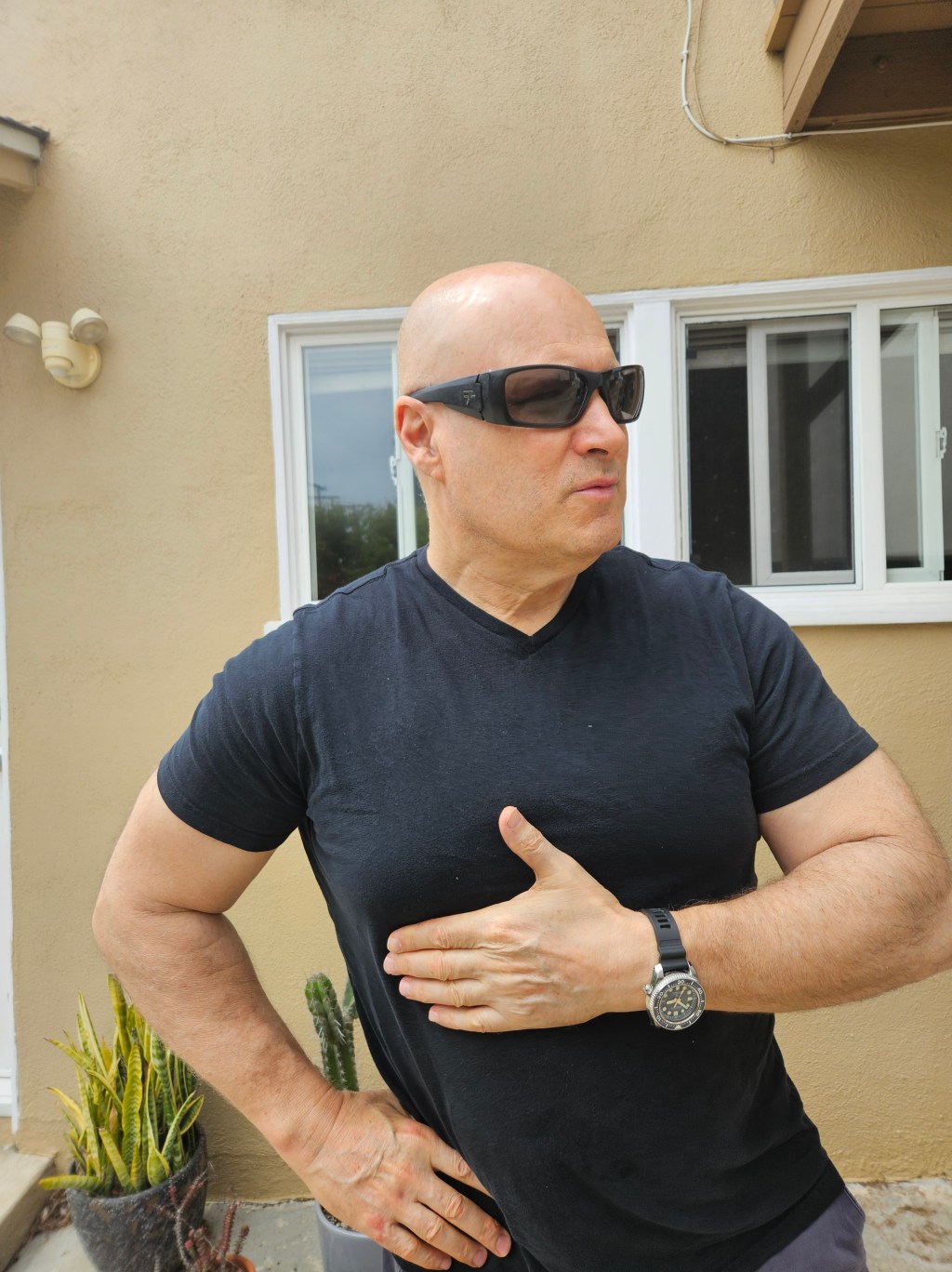
    YouTube, however, is another story. I haven’t made a video essay in over two weeks, and the gap feels like a cyst growing on my confidence. The longer I wait, the heavier the silence becomes, like trying to deadlift after skipping the gym for a month. I want to post, but not just to feed the beast. I don’t want to churn out recycled monologues about my watch obsession or let YouTube’s algorithm turn me into a carnival barker with clickbait headlines and fake urgency.

    It’s not as if I lack material. College just started, and I’m teaching the entire athletic department. A room full of goal-driven athletes who actually follow instructions? For a writing professor, that’s better than tenure. And as a relic from the muscle era of the 70s—Olympic lifts, protein shakes, and the occasional posing oil—I feel a strange kinship with them. We’ve already launched into our first essay assignment: the crisis of masculinity and how Bro influencers like the Liver King peddle snake oil dressed in bison liver. These guys exploit the anxieties of young men the way payday lenders exploit the broke. Can’t buy a house? Don’t worry, kid, buy abs. Tongue-tied around women? No problem, creatine is your Cyrano de Bergerac. The students are eating it up, and for once, their feedback has been better than protein pancakes.

    So why can’t I translate this into a video essay? Maybe because my brain recently short-circuited over something ridiculous: watch straps. I fell down the rabbit hole of FKM rubber straps after reading a study claiming they leach chemicals into your skin. My beloved Divecore straps—once the apex of wrist comfort—suddenly looked like toxic bracelets. I agonized for days, debating whether to bin them, keep them, or wrap my wrists in cheesecloth. The obsession drained me like a bad relationship. In protest, my mind and body staged a walkout, shutting down further watch chatter. For now, I’m taking a mental break. I’m grateful for the watches I have, but I don’t want to rejoin the strap wars or churn out videos about my latest dive into consumer madness.

    So here I am, taking a mental breather, trying to avoid the treadmill of compulsive content. It’s humbling to admit that the blogging streak hides a creative stall. But I know the video essays will return. They always do. Once I shake off the chemical paranoia and algorithm anxiety and process my thoughts, I’ll be back in the groove—hopefully with something worth watching.

  • The Futility of Being Ready

    The Futility of Being Ready

    In December of 2019, my wife and I, both lifelong members of the National Society of Worrywarts, stumbled upon reports of a deadly virus brewing in China. Most people shrugged. We did not. I jumped on eBay and ordered a bulk box of masks the size of a hotel mini-fridge. It felt ridiculous at the time—a paranoid lark, like filling a doomsday bunker because you heard thunder on a Tuesday. But three months later, on March 13, 2020, the world shut down, and that cardboard box of N95s felt less like overreaction and more like prophecy.

    These days, I teach college in what I call the ChatGPT Era—a time when my students and I sit around analyzing how artificial intelligence is rewiring our habits, our thinking, and possibly the scaffolding of our humanity. I don’t dread AI the way I dreaded COVID. It doesn’t make me stock canned beans or disinfect door handles. But it does give me that same uneasy tremor in the gut—the sense that something vast is shifting beneath us, and that whatever emerges will make the present feel quaint and maybe a little foolish.

    It’s like standing on a beach after the earthquake and watching the water disappear from the shore. You can back up your files, rewrite your syllabus, and pretend to adapt, but you know deep down you’re stuck in Prepacolypse Mode—that desperate, irrational phase where you try to outmaneuver the future with your label maker. You prepare for the unpreparable, perform rituals of control that offer all the protection of a paper shield.

    And through it all comes that strange, electric sensation—Dreadrenaline. It’s not just fear. It’s a kind of alertness, a humming, high-voltage awareness that your life is about to be edited at the molecular level. You’re not just anticipating change—you’re bracing for a version of yourself that will be unrecognizable on the other side. You’re watching history draft your name onto the roster and realizing, too late, that you’re not a spectator anymore. You’re in the game.

  • FOMO: A Condition as Old as Childhood Tantrums

    FOMO: A Condition as Old as Childhood Tantrums

    Much has been made of FOMO—Fear of Missing Out—in the social media age, where we subject ourselves to an endless scroll of curated perfection, exotic vacations, and influencer brunches that remind us, yet again, that our lives are decidedly less fabulous. We are told, repeatedly, that comparison is the mother of misery, and we learn this lesson the hard way every time we doomscroll our way into existential despair.

    The connection between FOMO and social media is so well-documented that many assume it’s a modern affliction, a byproduct of algorithms and influencer culture. But this is nonsense. FOMO is primal. FOMO is childhood itself.

    It’s the feverish, anxiety-ridden anticipation that every child feels when something exciting is on the horizon—an internal combustion engine of eagerness, panic, and irrational urgency.

    I got my first brutal taste of FOMO-induced devastation in 1967, when my parents took me to Disneyland on Free Hat Day. In my young mind, this wasn’t just an outing—it was destiny. But instead of racing out the door at dawn, my parents had the audacity to languish over bacon and eggs while I vibrated with dread. By the time we arrived, the Mickey Mouse hats were long gone—claimed by early-rising, better-prepared children whose parents actually understood the stakes of childhood desire.

    And what did I get?

    A Donald Duck cap. A second-place trophy in the hierarchy of Disney headwear. It was my first true heartbreak, a cruel reminder that hesitation and breakfast foods could cost you everything.

    The beach was another FOMO battleground.

    As our car inched closer to the ocean, I could smell the saltwater, hear the cacophony of seagulls, and catch a tantalizing sliver of the horizon—and with each sensory cue, my stomach flipped with impatience.

    To my young mind, we weren’t just going to the beach—we were competing for a piece of it, and if my parents didn’t park immediately, we would lose our rightful claim to the best stretch of sand. I imagined other families staking their umbrellas, digging their trenches, laying territorial claim while we circled endlessly in a parking lot purgatory.

    Of course, there was always plenty of beach, and we always found a spot, but that’s the nature of FOMO—it turns everything into a high-stakes competition in which the difference between bliss and utter catastrophe comes down to how fast you can get there.

    FOMO isn’t new. It’s the original childhood affliction, the gnawing anxiety that life’s best moments are happening somewhere else—and you’re missing them because your parents won’t hurry the hell up.