It is perfectly reasonable to think more about death as you get older. I am approaching sixty-five. Mortality has stopped being an abstraction involving unfortunate people in newspaper obituaries and begun appearing in the neighborhood. Thinking about it is not necessarily morbid. The question is what those thoughts do to you.
Ideally, thinking more about dying should make you think harder about living.
Call this the Mortality-Vitality Paradox: as the remaining quantity of life becomes more conspicuously finite, its individual moments can acquire greater intensity. The clock doesn’t merely frighten you. Sometimes it turns up the voltage.
What gets you out of bed? What do you still long for? What produces that surge of anticipation that makes you think, Yes, I want more of this?
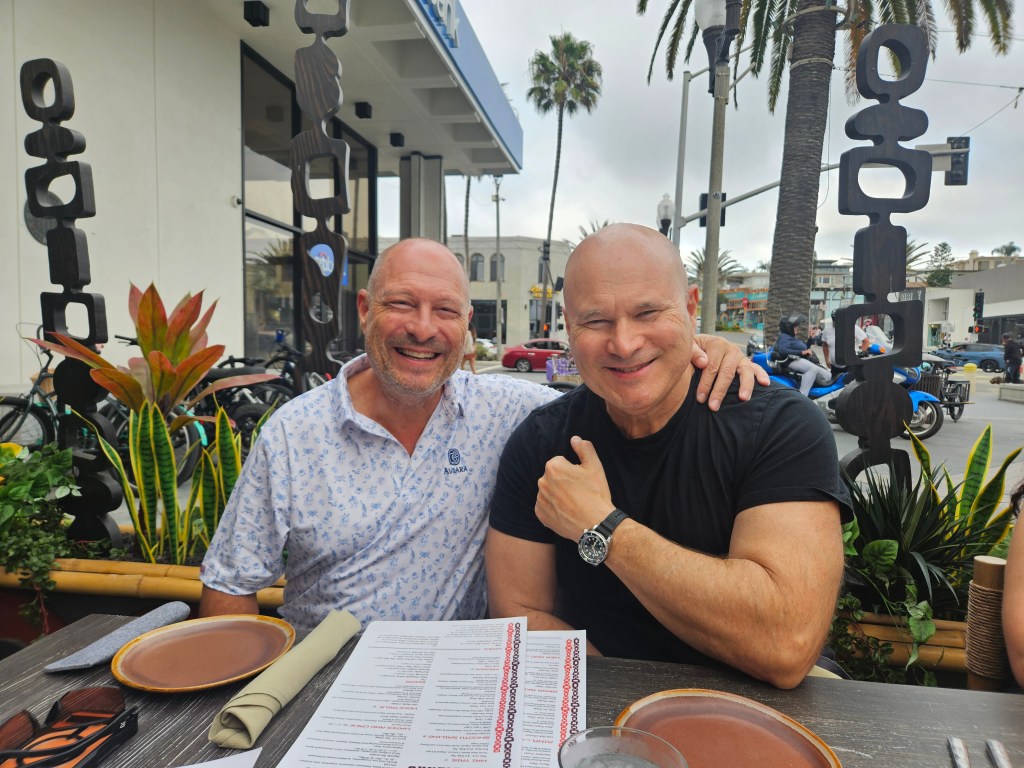
I was thinking about these questions last night while having dinner with my family, my brother, and his girlfriend at Tiki Kai, an “island-inspired” restaurant at the mouth of Pier Plaza in Hermosa Beach.
We barely made it there.
Parking in Hermosa on a warm Saturday evening requires either divine intervention or the predatory instincts of a great white shark. Every parking space within half a mile had been claimed. Cars circled the neighborhood with the grim determination of bombers awaiting clearance to land.
There was a reason.
Everyone wanted to be there.
By six o’clock, the temperature was still around eighty degrees, softened by an ocean breeze. We sat outside drinking mocktails and eating ceviche, mahi mahi, fire shrimp, Hawaiian salad, and other foods that become considerably more expensive when served within smelling distance of the Pacific Ocean.
Across the plaza stood Patrick Molloy’s. Twenty years ago, my wife and I used to meet her coworkers there on Fridays for fish tacos. I looked at the building and experienced one of those increasingly common late-life distortions of time. Twenty years had passed, yet some part of me expected to walk across the plaza and find our younger selves still sitting there.
Nearby, televisions in another bar were showing Ohio State against Texas. The game was close, and every few minutes the crowd erupted. Cheers spilled into the plaza. Pedestrians streamed toward the pier. Restaurants overflowed. People were laughing, drinking, eating, flirting, watching football, pushing strollers, meeting friends.
The entire place seemed electrically charged.
This is what I call the Paradise-Proximity Principle: certain places make us feel that paradise, while obviously unattainable, might at least be geographically nearby.
Southern California has been selling this proposition for more than a century.
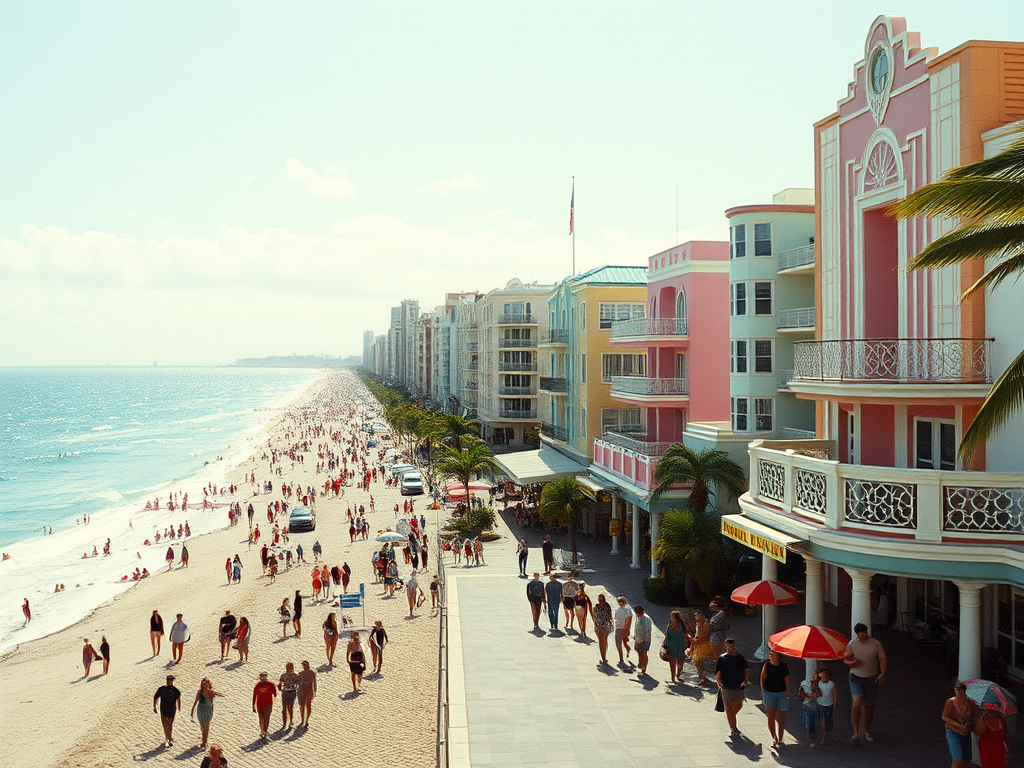
The evidence was all around us. Warm September air. Pacific Ocean. Palm trees. Beautiful people. Outdoor restaurants. Sunset. Young couples walking toward the beach. Middle-aged couples pretending not to notice the young couples. Retirees demonstrating through aggressively casual linen clothing that Tuesday and Saturday have become essentially the same day.
The California Dream was operating at full voltage.
We constantly hear about Californians fleeing for Texas, Arizona, Nevada, and other places where a modest house does not require the financial resources of a minor European principality. The migration is real. So are California’s taxes, traffic, housing costs, bureaucracy, and innumerable other aggravations.
Yet somehow nobody sent the memo to Hermosa Beach.
The place was packed.
People from around the world still cram themselves into Southern California’s coastal cities because the California Dream remains one of America’s most durable fantasies. The dream promises good weather, beauty, abundance, health, youth, reinvention, and proximity to the ocean.
In this respect, the California Dream resembles the Hawaiian Dream. Both are modern expressions of something much older: the Paradise Instinct.
Human beings have always imagined a place where suffering recedes and abundance takes its place. Eden. Arcadia. Shangri-La. The Land of Milk and Honey. Hawaii. Southern California.
The scenery changes. The fantasy doesn’t.
We want to believe there is some place where the weather is warm, the fruit is ripe, the body remains healthy, the family gathers around the table, and death has temporarily misplaced our address.
Cynics will point out that much of this paradise is manufactured.
Of course it is.
Tiki Kai isn’t an untouched Polynesian village mysteriously deposited at the western end of Pier Avenue. Somebody held meetings. Somebody hired designers. Somebody selected the lighting. Somebody developed the cocktail menu. Somebody decided exactly how much tropical vegetation was required before a customer would willingly pay twenty dollars for something containing ube.
This is the Vibe Economy.
Restaurants such as Tiki Kai aren’t merely selling food. They’re selling admission to an emotional atmosphere. The mahi mahi is real, but so is the fantasy surrounding it. For two hours you purchase temporary citizenship in an imaginary country where everyone is relaxed, the ocean breeze is permanent, and nobody has an appointment with a urologist Monday morning.
There is a temptation to dismiss all this as superficial consumerism.
I resist that conclusion.
Human beings have always constructed places designed to produce particular states of mind. We built cathedrals, gardens, theaters, plazas, resorts, stadiums, restaurants. We manipulate architecture, music, light, food, landscape, and ritual because consciousness responds to surroundings.
The fact that an experience has been designed doesn’t necessarily make the experience fraudulent.
The Beach Boys understood this long before anybody invented the term “vibes.” They didn’t call the song “Good Rational Assessment of Objective Conditions.”
They called it “Good Vibrations.”
Then the bill arrived.
With tip, dinner cost more than five hundred dollars. I paid roughly two-thirds; my brother picked up the rest.
For a moment, the Puritan accountant who apparently lives somewhere behind my frontal lobe emerged carrying a clipboard.
Five hundred dollars?
For dinner?
I asked myself how often I did something like this. Once a year? Once every two years?
The accountant returned to his cave.
This was not Tuesday night takeout. My family was together. My brother was there. We were sitting outside on an eighty-degree September evening near the Pacific Ocean. Twenty years of memory were standing across the plaza. Football crowds were cheering. Everyone around us seemed delighted to have secured a small piece of this particular evening.
I looked at the other diners. Some were clearly regulars. They greeted servers by name. They laughed across tables. They leaned back into the tropical breeze with the ease of people who had performed this ritual many times before.
They weren’t merely buying dinner.
They were buying access to the dream.
And perhaps retirement intensifies the Paradise Instinct rather than extinguishing it. The career begins receding. The children grow older. Time becomes more visible. You become increasingly aware that the body has terms and conditions you apparently accepted without reading.
Yet the desire for life remains.
Perhaps it becomes stronger.
You want to stay healthy. You want to remain vigorous. You want dinners with your family. You want warm evenings near the ocean. You want places that generate energy rather than drain it. You want experiences that make the remaining years feel expansive rather than diminished.
That is the Mortality-Vitality Paradox again.
Death enters the picture, and instead of making life smaller, its presence can make life glow.
This doesn’t mean pretending that Southern California is paradise. Drive east on the 91 at five o’clock and the theological case collapses rapidly. Nor does it mean spending retirement in an endless procession of restaurants, resorts, cruises, and premium experiences in a desperate attempt to purchase immortality.
It means recognizing the Paradise Instinct for what it is: an ancient human longing for abundance, health, fellowship, beauty, and peace.
At sixty-five, I don’t feel embarrassed by that longing.
I trust it more.
Man does not live by bread alone. Apparently he also requires ocean breezes, family, football cheers, tropical lighting, memories of fish tacos from twenty years ago, and an occasional Ube Nada Colada costing considerably more than good judgment would recommend.
The bill comes eventually.
It always does.
Until then, the dream lives.


 Cinemorphosis