Tag: beatles

  • Cultural Laundering: How Icons Lose Their Soul

    Cultural Laundering: How Icons Lose Their Soul

    Something strange happened to Dark Side of the Moon. It didn’t fade. It didn’t age. It got laundered.

    The damage began when a Circuit City commercial decided the album’s atmosphere was perfect for selling surround sound. The ad ran constantly—radio, television, everywhere—until the music stopped belonging to Pink Floyd and started belonging to electronics. The songs no longer opened a private space; they demonstrated speaker range. Listening became confusing, like running into an old friend who now works exclusively as a showroom model.

    The music itself hadn’t changed, but the experience had. Its emotional chemistry felt altered. The closest comparison is a fine wool sweater tossed into a hot wash and a brutal dry cycle. You pull it out and the fibers are technically still there, but the shape is warped, the color dulled, the elegance gone. Popular culture does not use the gentle setting. It scours, shrinks, and standardizes. What comes back looks familiar and feels counterfeit.

    This isn’t an indictment of Dark Side of the Moon. The loss isn’t in the album. The loss is in the relationship. I simply can’t hear it the way I once did.

    The Beatles present the same problem on a larger scale. Their music arrives with a convoy—decades of mythology, endless airplay, cultural worship. Some songs have been polished into museum glass. I don’t dislike “Blackbird.” I’m exhausted by it. I could go the rest of my life without hearing it again. Yet “Hey Jude” and “Something” still breathe for me. Not everything survives the laundering equally.

    The same phenomenon explains my resistance to Rolex. The watches may be superb, but the brand has been scrubbed and pressed into a universal symbol of success. People who know nothing about watches know Rolex. That level of cultural saturation creates distance. I’m not looking at a tool or a piece of craft. I’m looking at a billboard strapped to a wrist.

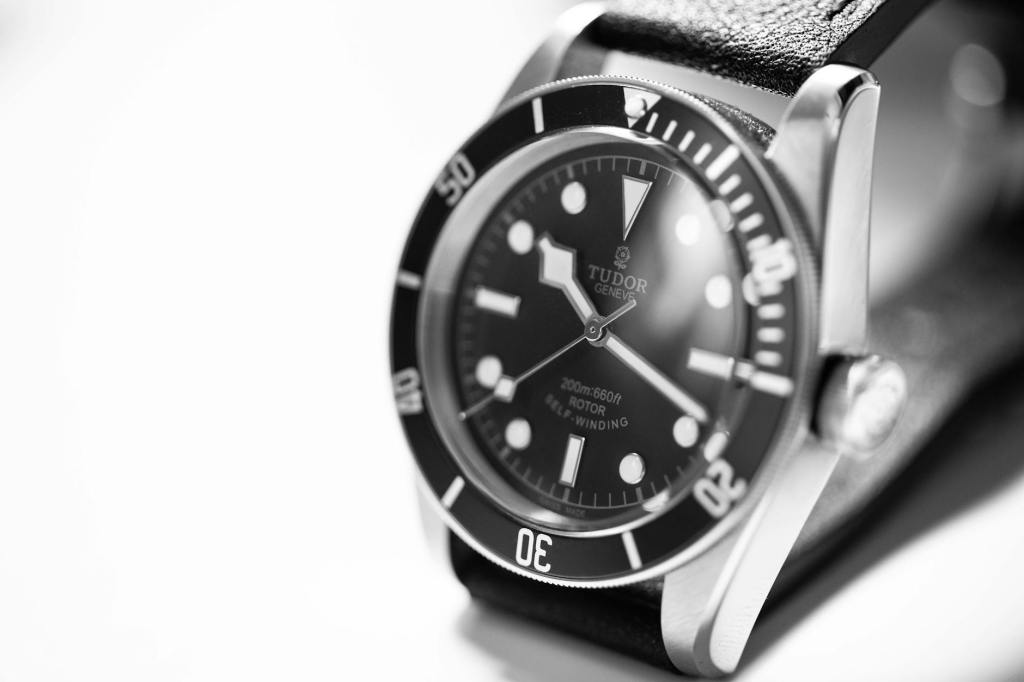
    In this sense, “Blackbird” is a Rolex—iconic, immaculate, and emotionally unreachable. But Paul McCartney after the Beatles feels different. Those solo records land with less mythology and more humanity. They feel like Tudor: born from the shadow of a giant, technically serious, culturally quieter, and easier to meet on personal terms. My preference for Tudor over Rolex isn’t about specifications. It’s about psychological noise.

    The pattern behind all this is Cultural Laundering. This is what happens when art goes through the cultural washing machine and comes out bright, recognizable, and strangely dead. Repetition, advertising, branding, and mass exposure scrub away texture, risk, and private meaning until the work stops feeling like an encounter and starts functioning like a symbol. The song hasn’t changed. The watch hasn’t changed. The audience has been crowded out. You’re no longer meeting the work itself—you’re meeting its reputation, its marketing history, and the millions of people who got there before you. Nothing has been altered chemically. Everything has been altered psychologically. The artifact survives. The intimacy doesn’t.

  • The Beatle Who Wasn’t

    The Beatle Who Wasn’t

    You once had an apartment poolside acquaintance named Julian French. He was a man whose entire existence felt like a tribute act to Paul McCartney. He wasn’t the kind of character you could invent—he was too perfectly strange. In his late thirties, Julian looked so uncannily like the legendary Beatle that you would’ve sworn he moonlighted as a McCartney impersonator in some dingy Las Vegas lounge, crooning “Hey Jude” to an audience of comatose tourists. He had the nose, the mouth, the chin, and those same droopy, heartbreak-hardened eyes that suggested he’d been personally betrayed by Yoko Ono.

    And of course, he rocked the signature McCartney hair: a feathered mullet straight out of 1978, perfectly sculpted despite the furnace-blast of the desert heat.

    But let’s be honest—Julian was no rock god. He was a bit shorter, a bit pudgier, and his face bore the battle scars of a thousand acne skirmishes. Still, he clung to his resemblance with the desperation of a man dangling from a cliff, convinced that if he just held on long enough, someone might mistake him for greatness.

    You watched his act unfold with tragic precision. He’d slip into a club in his shiny black “Beatles jacket,” lean on the bar with a half-cocked grin that shouted, Yes, I know I look like Paul McCartney—let’s get this over with. And right on cue, some buzzed woman would meander over, eyes twinkling, and say, “Has anyone ever told you…?”

    Julian pretended to be flattered. He feigned surprise. He summoned just enough fake humility to get her number, or at least a kiss. But you could see it in his eyes: his soul had left the building long ago. The routine bored him senseless, but it was all he had. The face did the lifting. The brand did the talking. The man behind it all? Checked out.

    Eventually, Julian let you in on a secret that was more absurd than scandalous: his real name was Michael Barley. That’s right. The name “Julian French” was a purchase—a paid rebranding, like he was a knockoff cologne trying to pass for Chanel. And he wasn’t done. Armed with his new persona and a fake British accent he’d been workshopping in the mirror, he flew off to London, convinced the UK would welcome their long-lost Beatle doppelgänger with open arms.

    It did not.

    London was unmoved. Employers declined. Clubs ignored him. Reality bit hard, and Julian—or rather, Michael—slunk back to Bakersfield with a bruised ego and zero prospects.

    But it got worse. He didn’t just return to a humdrum apartment—he returned to a trailer home attached to an elementary school, where his dad worked as the janitor by day and a locksmith by night. Julian was mortified. The trailer wasn’t the problem, not really. The terror was deeper: time had begun to wear down his greatest asset. The puffiness in his face, the softening jawline, the slow betrayal of age—each was a crack in the illusion. His McCartney mystique was melting under the desert sun.

    So he moved out. Got a job at a local car dealership. Tried to hang on to the myth a little longer.

    By the time you met him, “Julian French” was a weathered parody of himself, still speaking in that phony accent, still scanning faces for a flicker of recognition. You could see him straining to believe it might all work again—that the right woman, the right lighting, the right moment would resurrect the Beatle magic. But he knew. You both knew. He was becoming the man who used to look like someone famous.

    Time, like a harsh stage light, didn’t just expose the lie. It mocked it.