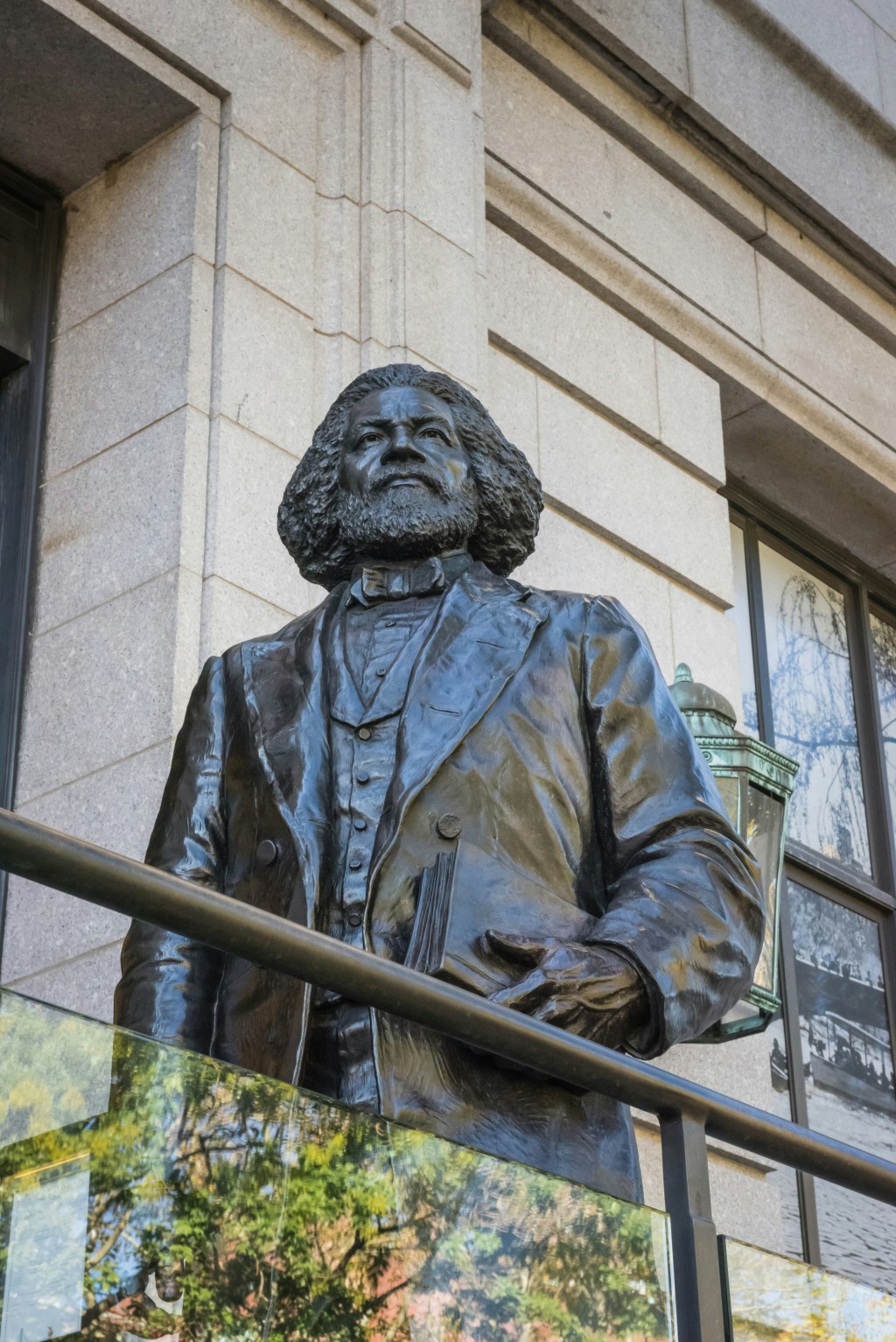
Below is a full setup with a focused essay prompt, a potent sample thesis, and a detailed 9-paragraph outline. The argument draws a hard line between the hollow self-curation of the digital age and the hard-won, soul-deep transformation through literacy and education, as seen in Narrative of the Life of Frederick Douglass and The Autobiography of Malcolm X.
Essay Prompt:
In an age when social media promises effortless self-reinvention through curated personas and algorithmic visibility, the genuine, hard-earned transformations of Frederick Douglass and Malcolm X—rooted in literacy and the pursuit of knowledge—stand as powerful counterpoints. Write an essay that analyzes how their autobiographies depict education as a vehicle for authentic self-reinvention, moral clarity, and long-term empowerment. In your essay, compare their transformations to the superficial “branding” culture of today, and argue why the college classroom remains one of the last credible spaces for real personal evolution.
Sample Thesis Statement:
While today’s digital culture rewards the illusion of instant self-reinvention through filtered images and empty performances, the autobiographies of Frederick Douglass and Malcolm X remind us that true transformation comes through literacy, discipline, and critical thinking. Their stories demonstrate that college—when pursued earnestly—can be a rare and radical site of self-reinvention that is empowering, morally clarifying, and enduring in a way that social media reinvention can never be.
9-Paragraph Outline:
I. Introduction
- Hook: In an era obsessed with reinventing oneself through TikTok bios and LinkedIn résumés, real transformation has become a rare currency.
- Context: The difference between performative self-reinvention (branding) and authentic self-reinvention (education).
- Introduce Douglass and Malcolm X as icons of transformative literacy.
- Thesis: Douglass and Malcolm X exemplify how education, not performance, produces lasting moral and personal change—making college one of the most powerful tools for true self-reinvention today.
II. The Nature of Fake Reinvention in the Digital Age
- Explore the Instagram/TikTok economy of identity: branding, personas, micro-celebrity culture.
- Emphasize speed, shallowness, and lack of introspection.
- Reinvention as escape rather than excavation: it masks who we are, rather than revealing a deeper self.
III. Frederick Douglass: Literacy as Revolution
- Douglass’s hunger for books after learning the alphabet.
- Reading The Columbian Orator shapes his moral framework and awakens political consciousness.
- His reinvention isn’t cosmetic—it is intellectual and moral, a refusal to remain enslaved in mind or body.
IV. Malcolm X: Prison and the Page
- Describe Malcolm’s transformation in prison: copying the dictionary, devouring books, reshaping his worldview.
- Literacy as a form of liberation: he begins to see systemic oppression and his place within it.
- This is not rebranding—it is rebirth.
V. The Moral Weight of Their Reinventions
- Both men become truth-tellers and justice-seekers, not influencers or entrepreneurs.
- Their new selves come with responsibility and sacrifice, not followers or monetization.
- Their transformations lead to social change, not clicks.
VI. The College Classroom as a Modern Parallel
- When it works, the college classroom can replicate this kind of rebirth: reading, writing, critical dialogue, moral challenge.
- Students unlearn propaganda, challenge assumptions, and write their way into adulthood.
- Education becomes a confrontation with self, not a presentation of self.
VII. Counterargument: Isn’t College Itself a Branding Game Now?
- Acknowledge the growing trend of college as a résumé-builder, a branding ritual.
- Rebuttal: These pressures exist, but they don’t nullify the potential. Professors, books, and real intellectual work still offer space for transformation—if students are willing to engage.
VIII. Why Authentic Reinvention Matters Now
- The stakes are higher than ever: misinformation, polarization, and performative wokeness are rampant.
- We don’t need more self-marketers; we need people who’ve undergone intellectual and moral development.
- Douglass and Malcolm X remind us that the self is not something you launch—it’s something you build.
IX. Conclusion
- Reiterate the contrast: shallow, cosmetic reinvention vs. meaningful transformation through literacy and education.
- Douglass and Malcolm X stand as enduring proof that education changes lives in ways that last.
- Final thought: In an age of digital fakery, the classroom remains one of the last sacred spaces for becoming someone real.

 Cinemorphosis