Tag: blogging

  • The Fit Yoga Guy vs. the Hungry Bouncer

    The Fit Yoga Guy vs. the Hungry Bouncer

    Appetite–Identity Schism is the comic yet demoralizing rift between the person you believe you should be—lean, serene, lightly nourished by kombucha, nutritional yeast, and moral superiority—and the person your body stubbornly insists you are: ravenous, calorically ambitious, and constitutionally unsuited for dainty portions or lifestyle minimalism. In this schism, the mind dreams in yoga poses while the stomach dreams in baked goods; the aspirational self floats through the day fasting effortlessly, while the embodied self plans its next meal with the focus of a military campaign. The result is not merely frustration but a persistent identity crisis, in which self-improvement fantasies are repeatedly mugged by biology, and the gap between ideal and appetite becomes a source of chronic scowling, gallows humor, and reluctant acceptance that some bodies are built less for cucumber water and more for surviving winters.

    ***

    I love the idea of myself as a vegan: trim, luminous, gently smiling through yoga poses, fueled by virtue and trace minerals. I eat two, maybe three small meals a day—meals so tasteful and restrained they barely count as eating. I sip green tea. I flirt with cucumber water. I practice intermittent fasting with the smug serenity of someone who hasn’t felt hunger since 2009. I don’t need a cleanse because I always feel cleansed. A cleanse, for me, would be redundant—like washing a raindrop.

    Then reality clears its throat.

    Enter the gorilla in the room: my appetite. It is not mindful. It is not intermittent. It is an industrial operation. I dream in towers of molasses cookies. I wake up hungry. I snack the way fish breathe—constantly, instinctively, and without shame. Remove my appetite and I am the Fit Yoga Guy, floating through life in breathable linen. Restore it and I become a burly, bow-legged bouncer who looks like a retired football player with a herniated disc working the late shift at Honky Tonk Central. The kind of man who doesn’t sip beverages—he orders them.

    This misalignment between aspiration and anatomy makes me irritable. I wear a permanent scowl, as if I’ve just been personally betrayed by a salad. I stare wistfully at the possibility of a GLP-1 prescription, praying my insurance will deliver salvation, only to accept the grim truth: I will not die looking like Jake Gyllenhaal. I will die looking like Larry Csonka—solid, hungry, and built for a colder, harsher era.

  • Blogging in the Belly of the Whale Has Its Perils

    Blogging in the Belly of the Whale Has Its Perils

    For those of us who can’t shell out $150 a week for therapy—and who would rather confess our shadow selves to strangers on the Internet than to a licensed professional—blogging becomes a kind of bargain-bin psychoanalysis. We know it’s not perfect, but it’s cheap, available, and gives us the illusion that we’re sorting out the world’s madness and our own with nothing more than sentences on a glowing screen.

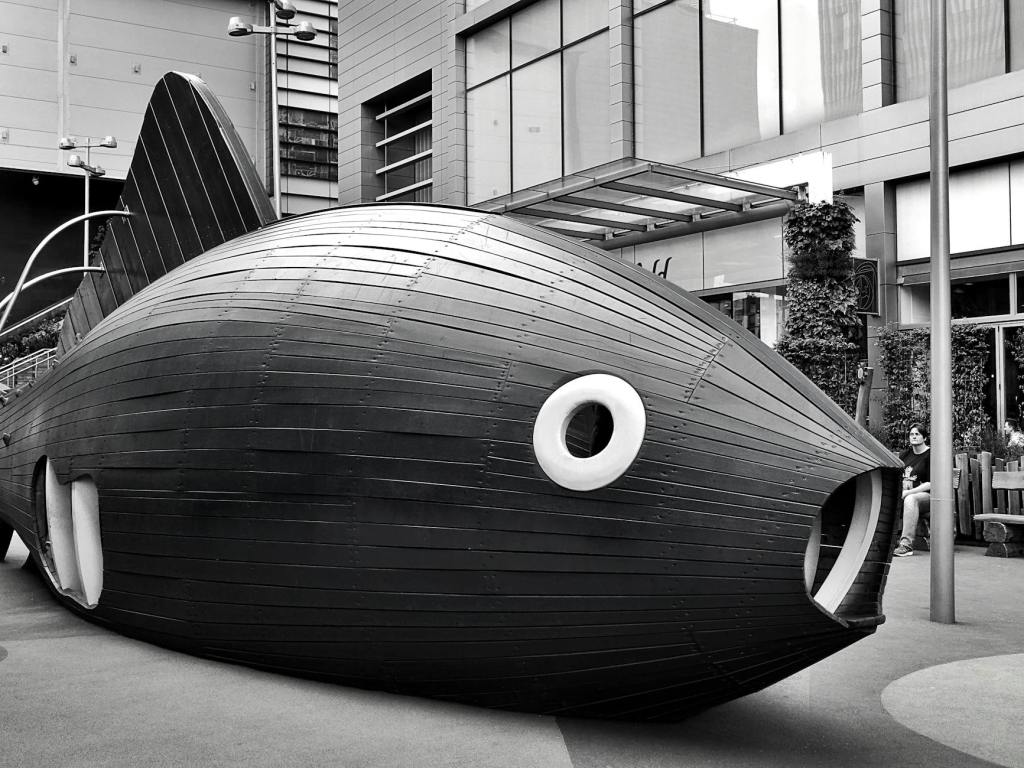
    But there’s a catch. When we talk only to ourselves long enough, the echo becomes comforting. Too comforting. We stop listening to other voices and drift into a form of digital solipsism, a state where we’re the sole inhabitant of our private universe. It’s Jonah in the whale—except the whale has Wi-Fi and ergonomic seating. We settle into the warm bath of a frictionless existence, the kind of life where nothing challenges us, nothing interrupts us, and nothing demands that we grow.

    My students write about this same seduction when discussing AI and the Black Mirror episode “Joan Is Awful,” where the promise of absolute control mutates into the loss of identity. The frictionless life—everything tailored, curated, predictable—slowly erodes our individuality until we’re no longer people but users. And blogging can slip into that same trap: so cozy, so insulated, that we begin sipping our own Kool-Aid and calling it intellectual hydration.

    So what’s the antidote? Certainly not brawling on social media. Those aren’t arguments; they’re moral-outrage bacchanals dressed up as discourse. Trading the frictionless void of a blog for the poisoned well of tribal rage is not an upgrade—it’s simply chaos with a comment section.

    There is a kind of healthy friction, though—the ordinary back-and-forth you get between two friends arguing about life over coffee. The Internet can mimic that if we’re deliberate. My YouTube channel has taught me as much. For over a decade, I’ve posted videos about watch obsession, addiction, identity, and everything connected to them. Making those videos demands more from me than a blog ever could. I have to generate compelling content, communicate clearly, keep people engaged, and then face their responses—praise, critique, confusion, all of it. It forces rigor. It forces presence. It won’t let me get lazy.

    That’s why I’m reluctant to quit. Yes, I’m 64. Yes, mental health matters. Yes, I worry that staying in the YouTube world might stir up my watch addiction and pressure me to flip watches just to feed the algorithm. But abandoning the channel completely in favor of the blog feels like retreating into the frictionless void I’m trying to escape.

    So I’ll keep experimenting with “video essays,” starting with a brief nod to my watch collection before pivoting into whatever topic is actually on my mind. Fortunately, viewers seem willing to follow me into this new territory. And for now, that’s enough. Because I’m tired of the soft trap of writing into silence. I need the friction. I need the challenge. I need the reminder that I’m not alone in the whale.

  • State of the Misalignment Situation

    State of the Misalignment Situation

    I had hoped my blog, Cinemorphosis, would feed my video essays—serve as a compost heap of half-baked thoughts that could later bloom into something cinematic and worthy of making video essays. Instead, the blog has swallowed the energy that once went into my videos. What was meant to be a support system has become a rival ecosystem. The crossover I imagined—the blog fueling the videos and the videos enriching the blog—never happened. It turns out writing and filming come from different parts of the brain, and those parts refuse to share the same neural conference room.

    Friends say, “Don’t sweat it, McMahon. Just lean into the blog and let the videos go.” Easy advice for people who aren’t haunted by the specter of irrelevance. I can’t shake the feeling that the video essays keep me sharper—more visible, more alive. The blog satisfies my mind; the camera keeps me from turning into dust.

    Sam Harris once said he can spend five years writing a book, agonizing over edits and the publishing gauntlet, only to reach a few thousand readers—if he’s lucky. Meanwhile, a one-hour podcast can reach millions overnight, and snippets of it go viral before the author’s espresso cools. That line haunts me. The medium matters. The way we reach people has become part of the message.

    I see the same logic in my own small way. A blog post I’m proud of might earn a few dozen engagements. A decent video essay? Thousands of views, maybe more. But numbers only tell part of the story. The real draw is the vitality the videos demand—something performative, almost athletic. When I’m on camera, I feel like I’m “getting my reps in,” keeping mentally limber. The blog is therapy; the videos are training.

    Still, there’s a fine line between vitality and vanity. Part of me believes the videos keep me youthful, engaged, even relevant. Another part suspects it’s all just a resistance workout against mortality. Staying fit is one thing; refusing to age gracefully is another. Desperation doesn’t wear well on men over sixty, even under good lighting.

    So maybe writing suits me better now. Maybe the written word is the right pace for a man learning to accept that his eyesight, patience, and tech literacy are all in slow retreat. Maybe I should only return to video when I have something worth saying—something that isn’t just a performance of endurance.

    Which brings me to the real question: what do I still have to contribute?

    For over a decade, my YouTube channel orbited around my watch obsession. That obsession gradually narrowed until it became monastic—just diver watches, all on straps. I convinced myself that a collection larger than seven would doom me to spiritual ruin. I also stopped flipping watches like a Wall Street day trader, deciding it was bad for my mental health. That slowdown siphoned the manic energy that used to fuel my videos. The creative rush didn’t vanish—it simply rerouted into blog posts about my newest fixation: alignment. Or more precisely, misalignment.

    Because if I’m honest, I feel increasingly out of sync with the modern world. I adapt to new technology at the pace of continental drift. TikTok bewilders me. Smartphones offend my thumbs. Driving at night now feels like a scene from Apocalypse Now. My relevance, visibility, and patience are fading in a culture that worships youth and touchscreens.

    My anxieties about self-worth and mortality are now on the front burner, while watch collecting—the “Watch Potency Principle,” the “wrist-rotation anxiety”—has been moved to the back burner where it is simmering to a lukewarm stew.

    To illustrate my current state: two weeks ago, I bought a new LG OLED TV, which was fine—until I broke two Samsungs in one day trying to move them. I manhandled the first 55-inch like it was a kettlebell, frying half its pixels in a single jerk. Then I jammed my thumb straight through the second screen while relocating it from my daughter’s room. My wife, the household adult, had to carry the new Roku replacement into our bedroom as I stood there looking like a Neanderthal who’d just discovered electricity—and promptly electrocuted himself.

    My war with technology didn’t end there. The new garage door opener came with instructions written in a dialect of cruel mockery. The installer vanished without explaining how to sync it with my phone, so my wife once again had to step in and figure it out. Now I open the garage door through an app, and every time I hear the alert that the door is moving, I step back in awe—half-terrified, half-mesmerized—like a caveman who’s just invented fire.

    I feel both too old for this world and too infantile to function in it. A man-baby marveling at his gadgets, bewildered by his own house. Think about that. My house has become a museum for technology of the future while I wander through it like a mesmerized tourist. My mouth is agape and my daughters say to me, “Relax, Dad, this is our house.” I respond by saying, “No it’s not. It’s a museum of strange and wonderful things that I don’t know how to use.” 

    These are the moments that give me content for my blog Cinemorphosis. I post almost daily, while it takes me weeks to metabolize these experiences into something coherent enough for a video essay. Writing helps me think; filming helps me pretend I’m still current.

    So that’s my current state of affairs. This channel used to be State of the Watch Collection. Now it’s more like State of the Man Who Can’t Sync His Garage Door Opener.

  • Typepad, R.I.P.: Obituary for a Dinosaur

    Typepad, R.I.P.: Obituary for a Dinosaur

    In 2006, I wandered into the Wild West of self-publishing and signed up with Typepad. Back then, blogs felt like a revolution: you could pour your obsessions straight into the digital void without begging gatekeepers for approval. I created three: Herculodge, where I indulged my radio fixation; The Breakthrough Writer, course content for my freshman comp class; and The Critical Thinker, the companion for my critical thinking students. Typepad cost me about $150 a year—a fair price for a soapbox in the dawn of the Blog Era.

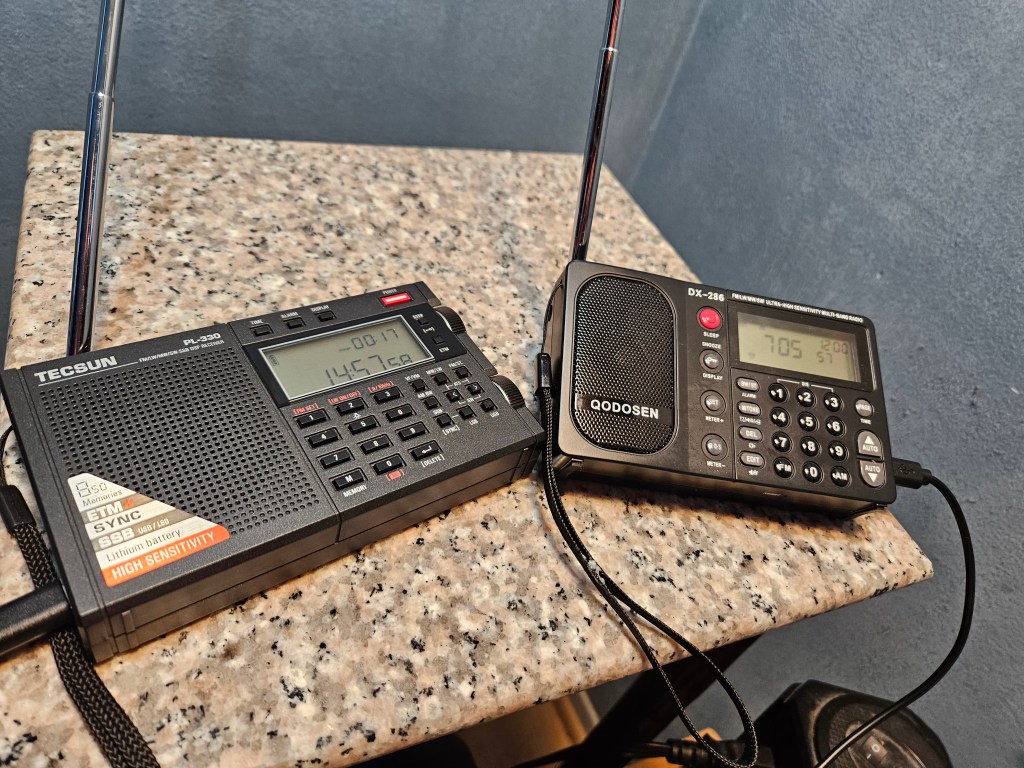
    But by April 2025, my soapbox had turned into a rickety stool. Typepad was wheezing like a geriatric dinosaur stumbling into an unfamiliar world: constant downtime, glacial load times, the unmistakable stink of neglect. Research confirmed my suspicion—it had been sold, stripped for parts, and left to rot. I canceled my subscription. Out of nostalgia, I kept Herculodge in basic mode, mainly because its archive of radio reviews was still linked to Thomas Witherspoon’s venerable SWLing Post, a site that embodies everything good about radio: community, continuity, and voices across the airwaves.

    But in truth, Herculodge had gone dormant long ago. After the 2025 wildfires in Los Angeles, I went on a spree, bought a dozen radios, reviewed them all, and then, slowly, stopped. The flame flickered, and I moved on.

    Yesterday the official death notice arrived: “We have made the difficult decision to discontinue Typepad, effective September 30, 2025.” Translation: pull the plug, bury the dinosaur.

    This little obituary for Typepad drags me back to the Blog Era, when voices as sharp as Andrew Sullivan’s rose to the level of public intellectuals, while hobbyists like me tinkered in the shadows of niche obsessions, broadcasting to niche audiences. Blogs felt cozy, almost literary: you in a robe, cat on your lap, coffee steaming, ruminating about Virginia Woolf before hitting “publish.” Compare that to today’s Hot Take Era: dopamine-charged combatants spewing rage, preening for likes, and mistaking tribal points for thought.

    The end of Typepad is the end of that quieter world.

    I’ve since migrated to WordPress, which works better, loads faster, and hasn’t collapsed into irrelevance. I have mixed feelings about AI image generators: sometimes they hit the mark, but mostly they’re garish clip art pretending to be art. Still, I pay two hundred bucks a year to carve out a little order from the chaos, and it’s worth every cent. Cheaper than therapy, and with fewer platitudes.

    Typepad’s death isn’t tragic—it’s just the final shovel of dirt on an era already gone.

  • WordPress: My Kettlebell Gym of the Mind

    WordPress: My Kettlebell Gym of the Mind

    I launched my WordPress blog on March 12, evicting myself from Typepad after it was sold to a company that treats blogs the way landlords treat rent-controlled tenants: with bored disdain. Typepad became a ghost town in a bad neighborhood, so I packed up and moved to the gated community of WordPress—cleaner streets, better lighting, and fewer trolls.

    For the past ten weeks, I’ve treated WordPress like a public journal—a digital sweat lodge where I sweat out my thoughts, confessions, and pedagogical war stories from the frontlines of college teaching. I like the routine, the scaffolding, and the habits of self-control. Blogging gives me something I never got from social media or committee meetings: a sense of order in a culture that’s spun off its axis.

    But let’s not kid ourselves. WordPress isn’t some utopian agora where meaningful discourse flourishes in the shade of civility. It’s still wired into the dopamine economy. The minute I start checking likes, follows, and view counts, I’m no longer a writer—I’m a lab rat pressing the pellet button. Metrics are the new morality. And brother, I’m not immune.

    Case in point: I can craft a thoughtful post, click “Publish,” and watch it sink into the abyss like a message in a bottle tossed into a septic tank. One view. Maybe. Post the same thing on Reddit, and suddenly I’m performing for an arena full of dopamine-addled gladiators. They’ll upvote, sure—but only after the professional insulters have had their turn at bat. Reddit is where clever sociopaths go to sharpen their knives and call it discourse.

    WordPress, by contrast, is a chill café with decent lighting and no one live-tweeting your every existential sigh. It’s a refuge from the snarling hordes of hot-take hustlers and ideological bloodsport. A place where I can escape not only digital toxicity, but the wider derangement of our post-shame, post-truth society—where influencers and elected officials are often the same con artist in two different blazers.

    Instead of doomscrolling or screaming into the algorithmic void, I’ve taken to reading biographies—public intellectuals, athletes who aged with dignity, tech pioneers who are obsessed with taking over the world. Or I’ll go spelunking into gadget rabbit holes to distract myself from the spiritual hangover that comes from living in a country where charisma triumphs over character and truth is whatever sells ad space.

    In therapy-speak, my job on WordPress is to “use the tools,” as Phil Stutz says: to strengthen my relationship with myself, with others, and with the crumbling world around me. It’s a discipline, not a dopamine drip. Writing here won’t make me famous, won’t make me rich, and sure as hell won’t turn me into some cardigan-clad oracle for the digital age.

    What it will do is give me structure. WordPress is where I wrestle with my thoughts the way I wrestle kettlebells in my garage: imperfectly, regularly, and with just enough sweat to keep the madness at bay.

  • The Twittering Machine Never Sleeps

    The Twittering Machine Never Sleeps

    Richard Seymour, in his searing dissection of our digital descent, The Twittering Machine, argues that our compulsive scribbling across social media isn’t a charming side effect of modern communication—it’s a horror story. He calls our affliction “scripturient,” which sounds like a medieval disease and feels like one too: the raging, unquenchable urge to write, tweet, post, blog, caption, and meme ourselves into validation. According to Seymour, we’re not sharing—we’re hemorrhaging content, possessed by the hope that someone, somewhere, will finally pay attention. The platforms lap it up, feeding on our existential howl like pigs at a trough.

    But here’s the twist: these platforms don’t just amplify our words—they mutate us. We contort into parodies of ourselves, honed for likes, sharpened for outrage. Seymour’s reference to Paul Klee’s painting the Twittering Machine isn’t just arty window dressing—it’s prophecy. In it, skeletal birds crank a machine with the desperate chirps of bait, luring the next batch of fools into the algorithmic abyss. Once captured, these chirpers become part of the machine: chirp, crank, scroll, repeat. It’s not connection—it’s servitude with emojis.

    And yet, here I am. Writing this blog. Voluntarily. On WordPress, that semi-respectable cul-de-sac just outside the main drag of Social Media Hell. It’s not Facebook, which is a digital Thunderdome of outrage, memes, and unsolicited opinions from high school classmates you forgot existed. No, WordPress lets me stretch out. I can write without worrying that my paragraph won’t survive the swipe-happy thumbs of the attention-deficient. It feels almost…literary.

    But let’s not get smug. The moment I promote my posts on Twitter or check my analytics like a rat pressing a pellet bar, I’m caught in the same trap. I tell myself it’s different. That I’m writing for meaning, not metrics. But the line between writer and performer, between expression and spectacle, gets blurrier by the day. I’ve escaped the Twittering Machine before—unplugged, deleted, detoxed—but it still hums in the background, always ready to pull me back in with the promise of just one more click, one more like, one more little chirp of relevance.

  • If we’re looking for a role model in the art of the blog, look no further than Blaise Pascal

    If we’re looking for a role model in the art of the blog, look no further than Blaise Pascal

    Walter Mosley, like many literary heavyweights, delivers the old warhorse of writing advice: write every damn day. Rain or shine, joy or existential despair, sit down and put words on the page. It’s less about inspiration than it is about keeping the creative battery from corroding in the garage while your ambitions collect dust. Steven Pressfield echoed this doctrine in The War of Art, a self-help sermon for writers who need a firm kick in the discipline.

    But daily writing in the digital age isn’t what it used to be. Now it comes with a side of existential nausea. The modern writer doesn’t just write—they publish. Immediately. Publicly. Desperately. A blog here, a TikTok monologue there, and boom—you’re not creating, you’re performing. You’re not nurturing your authentic voice; you’re pumping caffeine into your avatar and hoping the algorithm throws you a bone. And let’s be clear: the algorithm rewards extremity, outrage, and theater. The bigger the spectacle, the better the reach. Welcome to the Faustian Bargain of digital authorship.

    In this deal with the devil, we don’t trade our souls for knowledge—we trade nuance for engagement. We sculpt our “brand” to fit the machine. Our subject matter isn’t what haunts us—it’s what trends. Our tone isn’t our voice—it’s caffeinated shouting with a faux-therapist smile. We might monetize. We might even go viral. But then what? We’ve spent our creative life howling into a dopamine feedback loop. Is this writing? Or is it a slow, glittery death of the self?

    To be clear, branding isn’t inherently evil. Mark Leyner is a brand. So is Annie Dillard, Toni Morrison, and T.C. Boyle. Their work pulses with personality—yes—but also rigor, substance, and voice. They didn’t let style drown out content. They didn’t slap their face on a thumbnail and shout into the void about “7 Ways to Hack Your Purpose.” Influencers, on the other hand, are often pure surface: style with no skeleton, affect with no architecture.

    So what happens if you’re writing online without chasing likes, shares, or ad revenue? Are you just journaling in public? Writing as catharsis masquerading as productivity? Possibly. But that’s not inherently shameful. Writing as therapy is fine—as long as it’s therapy with syntax. Catharsis isn’t the enemy; incoherence is. Even in the trenches of personal expression, we owe our readers (and ourselves) clarity, pace, and craft.

    If we’re looking for a role model in the art of the blog, look no further than Blaise Pascal. His Pensées—a blog centuries ahead of its time—is a fragmented, pithy, and piercing meditation on the human condition. Each entry was brisk, barbed, and brimming with insight. He didn’t need an algorithm. He had a point of view.

    In this sense, blogging today can be a return to Pascal, not a descent into performance art. A blog can be a sketchbook of thought, a lab for style, a home for unfinished beauty. But only if we resist the pull of artificial relevance and write for something—anything—more enduring than a trending sound clip.

  • Writing a Blog in the Performative Hangover Era

    Writing a Blog in the Performative Hangover Era

    For over a decade, I ran a YouTube channel — a modest operation born in my late forties. Calling it a channel might be too grand: there were no edits, no soundtracks, no backgrounds, no clever image inserts. Just me, my watches, and a stubborn refusal to pretend I knew anything about video production. It was, in essence, a podcast that forgot it was supposed to be seen.

    I built a small but loyal audience — over 10,000 subscribers, steady commenters, familiar names. Within the narrow but fervent watch community, I was a known entity: a man chronicling the eternal scuffle with watch addiction.

    But now, staring down my sixty-fourth birthday this October, I’m stepping away — and not with a heavy heart, but with something closer to relief.

    First, I have no desire to become an influencer. The idea of monetizing my channel, hawking brands I barely tolerate, feels as alien as joining a boy band at my age. Second, I have zero interest in learning the sacred arts of Final Cut Pro wizardry. The polished, professional YouTuber life was never my ambition. Third — and most importantly — the fire that once drove me is gone. And good riddance. Fire, in my case, has always been another word for addiction — the old need for validation, the parasocial buzz of comment sections and endless watch chatter. I don’t want the fire back. I want peace.

    Does this retreat from YouTube mean a pivot to podcasting?
    No.
    I’m not looking for a new mirror in which to admire or define myself. I don’t need the hustle of relevance, or the 3 a.m. panic about subscriber counts. A podcast requires not just a theme but conviction — a genuine need to say something the world hasn’t already heard. Right now, my life is full of smaller, quieter things: amateur piano practice, kettlebell workouts in my garage, a general interest in health and fitness. None of these scream “launch a weekly show.”

    Sure, I could bang out a fitness video for people over fifty — it would take thirty seconds: Stay active, love people, eat real food, prioritize protein, lay off the booze. There, fitness empire built.
    But combing through the absurdly granular debates of the diet-industrial complex? No thanks.

    Truthfully, most social media feels unbearable to me now — bloated with performative sincerity, vibrating with empty gestures. I’m done performing. Like many, I have full-blown social media fatigue.

    And then there’s the nagging ghost of my old literary ambitions — the dream of publishing memoir, fiction, or some slippery hybrid of the two, the sort of “autofiction” the novelist Emmanuel Carrère perfected. That ghost finds me now, not on YouTube, not on a podcast, but on my blog.

    The blog is where I now quietly reign.
    Not as a digital emperor counting clicks, but as a stubborn craftsman hacking away at the weeds of complacency. I don’t know if my writing will “take off” or “storm the world.” I only know it helps me process the madness, fight entropy, and stay alert to the real battle — the one against mindless consumerism and numbing repetition.

    So here I am, in what I suppose I could call the next chapter.
    The Performative Hangover Years.
    The Post-COVID Malaise.
    The Be Brave in Your Sixties Project.

    I’ll get back to you with the final title once I’ve lived it a little longer.

  • The Guru in the Mini-Fridge: A Miami Manifesto

    The Guru in the Mini-Fridge: A Miami Manifesto

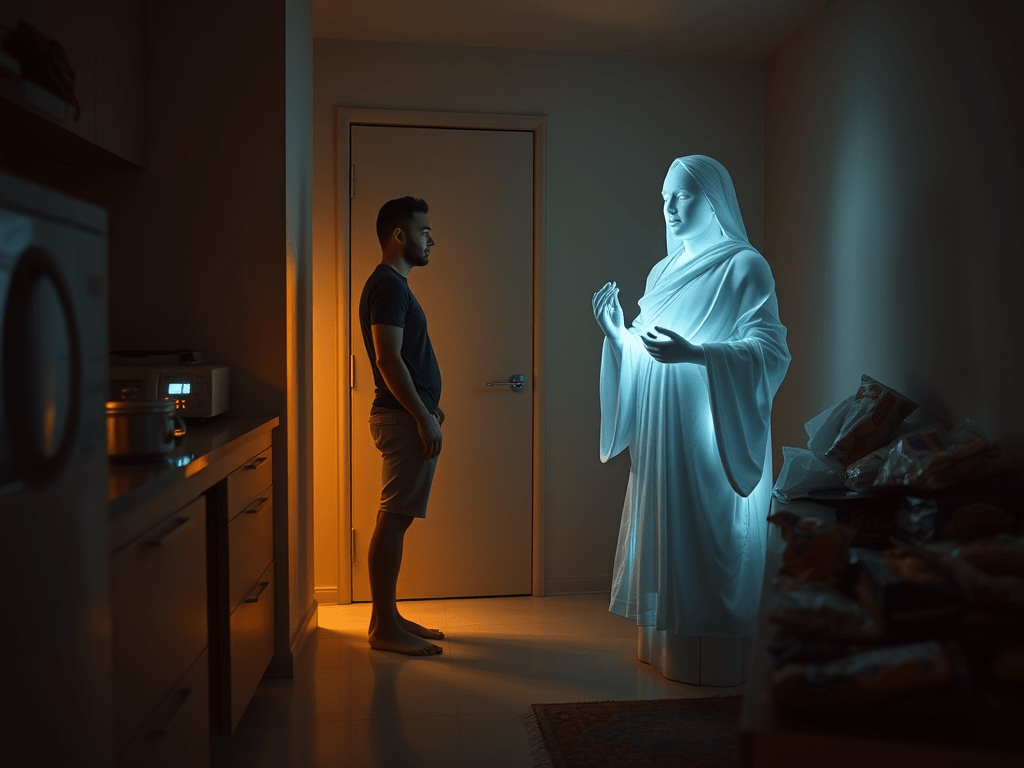
    I’m standing barefoot in the dim kitchenette of our Miami hotel room, illuminated by the dull glow of a microwave clock and the soft snoring of my family behind a paper-thin wall. I am overweight, overserved by anxiety, and currently marinating in a mix of guilt and existential fatigue. I miss Southern California, where I can at least pretend the ocean breeze is part of some reinvention montage.

    Then, out of nowhere—perhaps summoned by my elevated cortisol levels—my invisible guru appears. You know the type: part stoic monk, part irritated life coach, part inner drill sergeant with a taste for poetic slogans.

    He looks at me with eyes that have seen too many late-night snacks and says:


    “Repeat after me—less coffee, less food means more dignity. More focus, more humility, more gratitude, more work means less regret and despair. Are we clear?”

    It’s a slogan so clean and self-righteous it should be stenciled on a CrossFit wall. But fine, I play along. I nod. I even feel a flicker of hope—that slightly delusional warmth that hits right before you decide you’ll never eat bread again.

    But I level with him. “Look,” I say, “I love the aphorism. Truly. But here’s the problem. I forget everything the moment a cookie enters the room. My brain turns into a Vegas slot machine when I’m tired. There’s this compulsive, despairing little imp inside me who waits for just the tiniest whiff of sugar, sloth, or social media to hijack the controls and turn me into a ruinous parody of myself. What do I do with that guy?”

    My guru, undisturbed and frankly unimpressed, delivers the gospel:


    “As you live in accordance with the plan, you will grow stronger. The old ways will become repulsive. The deeper you root yourself in the good, the weaker the bad becomes. Got it?”

    I nod again. Less certain this time, but willing to try. Maybe it’s the humidity. Maybe it’s the quiet. Or maybe, just maybe, it’s the faint hope that I can still wrestle my wreckage into something resembling a life worth living.

    At the very least, I’ll try it out—until breakfast.

  • Confessions of a Washed-Up Watchfluencer: Dreaming of Leaving YouTube and Instagram

    Confessions of a Washed-Up Watchfluencer: Dreaming of Leaving YouTube and Instagram

    For the better part of a decade, I’ve been a talking head on YouTube—waxing unpoetic about dive watches, flipping Seikos like pancakes, and freefalling into endless spirals of horological self-loathing. My channel was never slick. No fancy cuts, no drone shots over crashing waves, no ominous music swelling over macro shots of ceramic bezels. Just me: a man, a camera, and the slow erosion of his dignity.

    I didn’t edit. I didn’t storyboard. I didn’t build a brand. I just rambled into the void, a kind of wristwatch confessional booth where I shared my joy, my shame, and my madness with an audience of fellow obsessives. For a while, it was exhilarating. Like catching your own reflection in a funhouse mirror and mistaking it for truth.

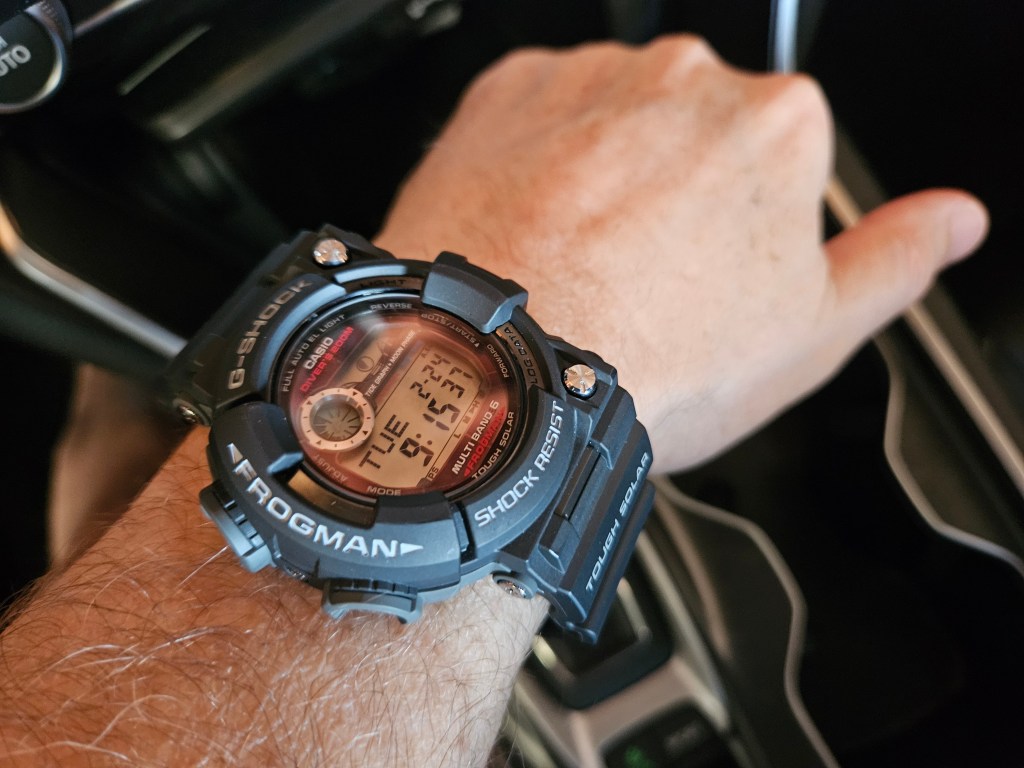
    At my pathological peak, I owned sixty-three “TV-brand” watches—any brand that looked good on camera and bad for your soul. I knew I had a problem when I started hiding watches in drawers and pretending I hadn’t bought another diver. Getting the collection down to five felt like detox. Like crawling out of a swamp in ripped jeans, clutching a G-Shock and whispering, never again.

    And now? I haven’t filmed in a month. The idea of making another video fills me with dread. My subscriber count has flatlined around 10,000. I’m not growing. I’m not evolving. I’m the guy in the garage band who still thinks the right lighting will disguise the fact that he’s 63, wearing a wig, and flexing in a tank top with a fake tan and a borrowed swagger.

    More than stagnation, it’s the cost of content creation that’s choking me. Every video drags me deeper into the watch swamp. I obsess. I fantasize. I compare. I scroll forums at 2 a.m. and start building mental spreadsheets of specs I’ll forget by morning. The longer I film, the more I think about watches, and the more I think about watches, the less I think about anything else.

    Then there’s Instagram—my other digital vice. The cigarette break I take between grading student essays and questioning my life choices. One minute I’m watching a documentary; the next I’m styling a wrist shot, spreading digital envy like cologne. Watch porn. FOMO fuel. I’m not sharing insight. I’m spreading existential rot disguised as lifestyle content.

    The breaking point came last week when two Instagram friends—good guys, honest guys—messaged me with admiration-tinged despair. They loved my collection but felt ashamed of their own modest $300 watches. That’s when I saw it: I wasn’t inspiring anyone. I was curating a highlight reel of hollow indulgence, turning craftsmanship into competition. I don’t want to be that guy. The one whose joy costs others their peace.

    So yes—I’ve been dreaming of leaving. Leaving YouTube. Leaving Instagram. Leaving the digital masquerade where likes masquerade as affection and comments stand in for connection. But here’s the kicker: I don’t want to announce my departure. I don’t want to post some faux-epic “farewell” video where I stare off into the middle distance like a monk who’s just discovered minimalism. That’s not liberation—that’s branding.

    And yet, here I am. Writing this.

    The irony is suffocating.

    What’s my future on YouTube and Instagram? I honestly don’t know. But I’ve caught the scent of something better—something that smells like freedom, like sanity, like the first breath of fresh air after crawling out of a sealed vault.

    In the meantime, there’s the blog. Nine subscribers. Twenty hits a day. Basically the sound of a tree falling in the woods while everyone’s at brunch. But unlike video, writing helps me think. It gives shape to the noise in my head. Like kettlebell workouts or noodling on a keyboard, it’s therapy with fewer side effects and no recurring subscription fee.

    So no, I don’t care about metrics. Not anymore. I just want to be true to myself, however unmarketable that truth might be.

    And if you’re still reading this—thanks. I’m guessing you get it.