Tag: book-review

  • I Am My Own Audiobook: A Washed-Up Reader’s Redemption Arc

    I Am My Own Audiobook: A Washed-Up Reader’s Redemption Arc

    After four decades of teaching college writing, I now find myself plagued by a humiliating truth: my reading habits have withered into something more decorative than devout. In my twenties, I devoured two books a week like a literary piranha. Now, I manage a limp 30-minute bedtime reading session before drooling onto the page like a narcoleptic bookworm. Call it aging, call it digital distraction, or—as I like to tell myself in moments of flattering delusion—call it undiagnosed ADHD. Whatever the cause, my reading stamina has become a cautionary tale.

    If I want to do anything resembling real, rigorous reading, I’ve learned to prop myself between two 27-inch screens like a cyborg monk: one monitor displaying the sacred text, the other open to Google Docs so I can take notes, argue with myself, and shame my inner skimmer into paying attention. This is not pleasure reading. This is performance reading—a controlled environment designed to bully my mind into staying in the room. If a book so much as looks at me funny, I’ll click over to email.

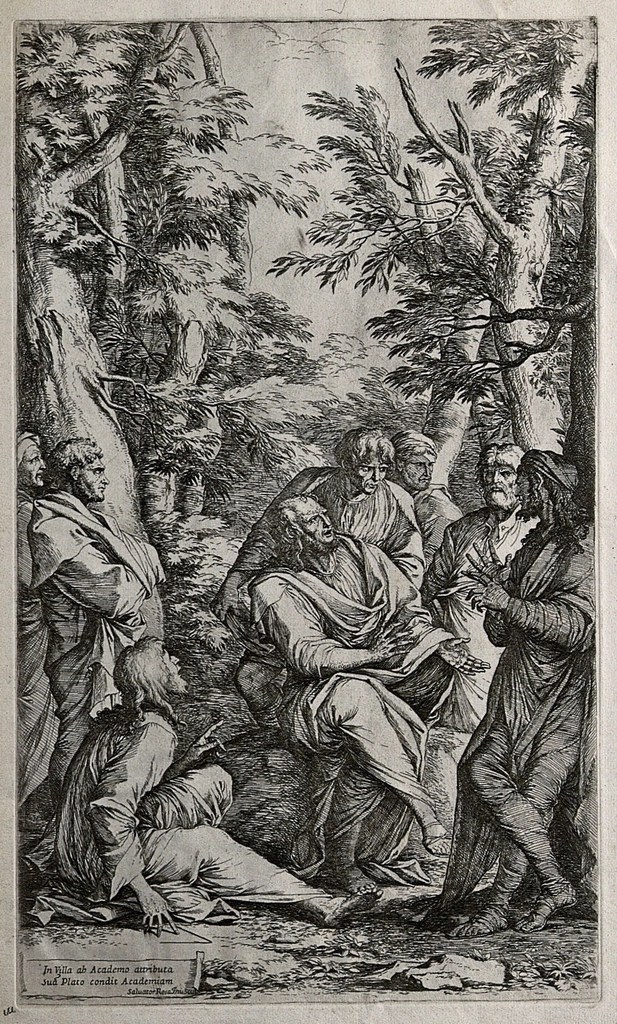
    But something strange has happened: I’ve become a better listener than reader. I now “read” through Audible with more duration and intensity than I’ve mustered with paper in years. Especially with nonfiction, the audiobook format feels less like cheating and more like a form of literary intravenous drip—direct, efficient, and oddly intimate. That’s why a recent blurb in The New Yorker caught my eye: Peter Szendy’s Powers of Reading: From Plato to Audiobooks isn’t just an academic tour through literary history—it’s a philosophical rebranding of the audiobook experience.

    Szendy resurrects a long-lost distinction between two roles: the reader (the person decoding text) and the readee (the listener, the audience of the reading). Since antiquity, he notes, most literature wasn’t read—it was heard. We were, for most of human history, listenees. Silent, solo reading is a relatively recent phenomenon, and yet we’ve somehow crowned it the gold standard of literary engagement. Szendy isn’t buying it. In fact, he argues for the emancipation of the readee—a manifesto that practically throws confetti over the return of orality via Audible.

    And here’s the kicker: even when we read to ourselves, we’re still listenees. We are listening to our own interior narration. We are, in essence, narrating to ourselves. Szendy suggests that when we read, we play both roles: the voice and the ear, the actor and the audience. And when we listen to a book, we are doing something ancient, dignified, and sacred—not some degraded, dumbed-down version of real reading.

    So yes, maybe I’m a fallen reader, a man who used to crush Dostoevsky before breakfast but now requires high-tech scaffolding just to get through a paragraph. But thanks to Szendy, I can now see myself as a kind of restored readee—part monk, part machine, part audiobook in human form. Not a failure of attention, but a return to tradition. And if my bedtime ritual now sounds more like a podcast than a prayer, well… Plato probably would’ve approved.

  • When Books Were Gods: Nostalgia for a Lost Era

    When Books Were Gods: Nostalgia for a Lost Era

    Alice Flaherty opens The Midnight Disease: The Drive to Write, Writer’s Block, and the Creative Brain with a quote from Roland Barthes: “A creative writer is one for whom writing is a problem.”

    Problem? That word hardly does justice to the affliction. A problem is misplacing your car keys or forgetting to pay the water bill. What I have is more like a life swallowed whole, a case study in obsession so severe it borders on the pathological. Writing isn’t just a habit; it’s an all-consuming parasite, a compulsion that, in a just world, would require a 12-step program and a sponsor who confiscates my pens at night.

    But since no one is shipping me off to a remote cabin with nothing but an axe and a survival manual, I’ll have to settle for less extreme interventions—like seeking solace in Flaherty’s musings on the so-called writing “problem.”

    As it turns out, my affliction has a clinical name. Flaherty informs me that neurologists call this compulsion hypergraphia—the unrelenting urge to write. In their view, I suffer from an overactive communication drive, a neurochemical malfunction that ensures my brain is forever churning out words, whether the world wants them or not.

    Yet Flaherty, a physician and a neuroscientist, doesn’t merely dissect the neurology; she also acknowledges the rapture, the ecstasy, the fever dream of writing. She describes the transformative power of literature, how great writers fall under its spell, ascending from the mundane to the sacred, riding some metaphorical magic carpet into the great beyond.

    For me, that moment of possession came courtesy of A Confederacy of Dunces. It wasn’t enough to read the book. I had to write one like it. The indignation, the hilarity, the grotesque majesty of Ignatius J. Reilly burrowed into my psyche like a virus, convincing me I had both a moral duty and the necessary delusions of grandeur to bestow a similarly deranged masterpiece upon humanity.

    And I wasn’t alone. Working at Jackson’s Wine & Spirits in Berkeley, my coworkers and I read Dunces aloud between customers, our laughter turning the store into a kind of literary revival tent. Curious shoppers asked what was so funny, we evangelized, they bought copies, and they’d return, eyes gleaming with gratitude. Ignatius, with his unhinged pontifications, made the world seem momentarily less grim. He proved that literature wasn’t just entertainment—it was an antidote to the slow suffocation of daily life.

    Before Dunces, I thought books were just stories. I didn’t realize they could act as battering rams against Plato’s cave, blasting apart the shadows and flooding the place with light.

    During my time at the wine store, we read voraciously: The Ginger Man, One Hundred Years of Solitude, Moravia’s Contempt, Camus’ Notebooks, Borges’ labyrinthine tales. We never said it out loud, but we all understood—life was a dense fog of absurdity and despair, and books were our MREs, the intellectual rations that kept us alive for another day in the trenches.

    Books were our lifeline. They lifted our spirits, fortified our identities, and sharpened our minds like whetstones against the dull blade of existence. They turned us into a ragtag band of literary zealots, clutching our dog-eared pages like relics, singing the praises of Great Literature with the fervor of the Whos in Whoville—except instead of roasting beast, we feasted on Borges and Camus.

    Which brings us to Flaherty’s lament: the Internet is muscling books out of existence, and when books go, so does a vital piece of our humanity.

    What would my memories of Jackson’s be without the shared reverence for literature? It wasn’t just a passion; it was the glue that bound us to each other and to our customers. The conversations, the discoveries, the camaraderie—none of it could be replicated by an algorithm or a meme.

    How can I not think of this in the context of a country still staggering through its post-pandemic hangover of rage, paranoia, and despair? Where the love of books has been trampled beneath an endless scroll of digital sludge, and where human connection has been reduced to strangers launching spiteful grenades at each other across social media—those lawless arenas ruled by soulless tech lords, their pockets fat with the profits of our collective decline?

    Flaherty confesses that her need to dissect the spark of writing—the thing that makes it so irrepressibly human—was an uncontrollable urge, one that made her question whether she suffered from hypergraphia, postpartum mania, or some deeper compulsion to explore what she calls the “Kingdom of Sorrow” after the devastating loss of her prematurely born twin boys. Her search for the root of her writing obsession reminded me of Rainer Maria Rilke’s advice in Letters to a Young Poet: the only writing worth doing is that which one cannot not do.

    Beyond hypergraphia—an affliction rare enough to keep it from becoming a trendy self-diagnosis—Flaherty also tackles the more mundane but far more common malady of writer’s block. She attributes it to mood disorders, procrastination, repressed anxieties, and perhaps a sprinkle of nihilism. I used to wrestle with writer’s block myself, particularly between short stories, back when I entertained the delusion that I might carve out a name for myself in literary fiction. But whenever I think of writer’s block, I think of the one person I’d most like to share a meal with: Fran Lebowitz.

    Lebowitz’s writer’s block has lasted for decades, so long, in fact, that she’s upgraded it to a “writer’s blockade.” If Blaise Pascal was an acid-tongued intellectual defending faith, Lebowitz is the sharp-tongued patron saint of the New York literati, delivering high-caliber cultural commentary with the precision of a diamond-tipped drill. That she doesn’t write is a cosmic joke. That people care she doesn’t write is part of her legend. That her off-the-cuff witticisms are more electrifying than most books in print makes her, without question, my literary idol.

    And yet, my devotion to Lebowitz only reveals the terminal nature of my writing affliction. If a genie granted me the chance to swap lives with her—to tour the world, bask in standing ovations, and deliver effortless, unfiltered cultural critique to sold-out crowds—but on the condition that I could never write another book, I would turn it down without hesitation. This refusal confirms the depths of my sickness. In this hypothetical scenario, books themselves are mere shadows compared to the brilliance of Lebowitz’s conversation. And yet, here I am, clinging to the shadows, convinced that somewhere in those pages, I will find the thing that makes existence bearable.

    Surely, no specialist can diagnose a disease like this, much less cure it.

    Reading Flaherty’s sharp and introspective book, I found myself circling a familiar question: is the urge to write both a pathology and a gift? This led me straight to The Savage God, A. Alvarez’s bleak yet compelling account of depression, suicide, and literature. Across history, writers afflicted by melancholy, madness, or sheer existential despair have been cast as tragic geniuses, indulgent sinners, or misunderstood romantics, depending on the prevailing religious and literary winds.

    Take Sylvia Plath, the confessional poet who sealed her fate at thirty, or John Kennedy Toole, the tortured author of A Confederacy of Dunces, who asphyxiated himself at thirty-one. Conventional wisdom holds that Toole’s despair stemmed from his inability to publish his novel, but Tom Bissell, in “The Uneasy Afterlife of A Confederacy of Dunces,” suggests a more tangled story—one of creeping paranoia and the pressures of academia, where Toole, at twenty-two, was the youngest professor in Hunter College’s history.

    Like his doomed creator, Ignatius J. Reilly is possessed by the need to write. His screeds, stitched together from the wisdom of Boethius, function less as arguments and more as the existential flailings of a man convinced that writing will bring him salvation. He writes because he must, the way a fish swims—to stay alive.

    Bissell’s most cutting insight isn’t about Toole’s life, but about his novel’s fundamental flaw: Dunces is riddled with indulgences—flabby with adverbs, allergic to narrative structure, and populated with characters so exaggerated they teeter on the edge of cartoonhood. He argues that Dunces is “a novel that might have been considerably more fun to write than it is to read.” This line stopped me cold.

    Why? Because Dunces was my Rosetta Stone, my gateway drug to the idea of becoming a comic novelist. And yet here was the brutal truth: the very book that set me on this path was a wreck of undisciplined excess. If Dunces ruined my life, it did so not because it failed, but because I absorbed its flaws as gospel. I inhaled its bloated exuberance, its unshackled absurdity, and made it my literary template.

    To undergo a religious experience from a flawed book is to risk a kind of artistic contamination—you don’t just inherit its brilliance, you inherit its sins. My writing compulsion is perhaps nothing more than Dunces’ worst tendencies metastasized in my brain.

    And so, as a recovering writing addict, I am forced to sit with this painful revelation and digest it like a bad meal—one that demands an industrial-strength antacid.

  • The Perpetual Orgy of Reading and Writing

    The Perpetual Orgy of Reading and Writing

    After five decades of failed novels, it’s time to liberate myself from this grand folly. And in reading Mario Vargas Llosa’s love letter to Flaubert, The Perpetual Orgy, I’ve unearthed a few useful clues to explain my literary shipwreck.

    What I’ve learned is that Flaubert didn’t love novels—not the world-building, the character arcs, the intricate plots. To him, all that was humbug, a necessary evil. But he needed those scaffolds to reach his true fix—the lapidary, almost erotic thrill of wordcraft itself.

    I get that. I share Flaubert’s delight in sculpting sentences so precise, so gleaming, they feel like they’ve been pried from a pirate’s treasure chest. To witness language arranged with clarity and purpose is a divine experience—a moment where we no longer see the world through a glass darkly, but in all its lucid, dazzling glory.

    The problem? Flaubert had patience. I don’t.

    For him, painstakingly chiseling a 400-page novel into perfection was ecstasy. For me, it’s the literary equivalent of being handed a toothbrush and a can of Comet and told to scrub the entire Pacific Coast Highway from Los Angeles to San Francisco.

    That’s the difference. Well, that—and his staggering genius versus my conspicuous lack of it.

    As I pondered my crippling lack of patience, it dawned on me that while I love many books, what I might love even more—perhaps a little too much—are the flap copy descriptions wrapped around them like literary hors d’oeuvres.

    Take Emmanuel Carrère’s The Kingdom, for example. I am obsessed with the novel, but I am no less obsessed with its book flap, which, in a few taut sentences, delivers a hit of pure linguistic euphoria.

    One paragraph, in particular, hit me like a lightning bolt:

    Shouldering biblical scholarship like a camcorder, Carrère re-creates the climate of the New Testament with the acumen of a seasoned storyteller. In the shoes of Saint Paul and Saint Luke, he plumbs the political, social, and mystical circumstances of their time, chronicling Paul’s evangelizing journeys around the Mediterranean and animating Luke, the self-effacing and elusive author of pivotal parts of the New Testament.

    That word—“plumb”—sent a shiver up my spine. A single verb, perfectly placed, evoking depth, mystery, excavation. It gave me the same adrenaline rush that my family gets from riding Harry Potter and the Forbidden Journey at Universal Studios. I, however, despise amusement parks. My idea of a white-knuckle thrill ride? Loitering in a bookstore all day, devouring book jackets like a literary junkie.

    In this, at least, I share Flaubert’s reverence for language—the obsessive need to get every word exactly right, to make prose sing. What I don’t share is his patience.

    Which is why he wrote masterpieces, and I’m still standing in the bookstore, reading the packaging like a man afraid to unwrap the gift.

  • Comparing Resistance to the Sunken Place in the Movie Get Out and the Life of Frederick Douglass: 3 Essay Prompts

    Comparing Resistance to the Sunken Place in the Movie Get Out and the Life of Frederick Douglass: 3 Essay Prompts

    Here are three argumentative essay prompts suitable for a 9-paragraph essay that explore how Narrative of the Life of Frederick Douglass and Jordan Peele’s Get Out use the concept of the Sunken Place—whether literal or metaphorical—to reveal how racism dehumanizes, and how resistance can lead to liberation and agency.


    Prompt 1: The Fight to Reclaim the Self

    Essay Prompt:
    Both Narrative of the Life of Frederick Douglass and Get Out explore how slavery and racism rob people of their autonomy and identity, trapping them in a psychological “Sunken Place.” Write an argumentative essay analyzing how Douglass and Chris struggle to reclaim their personhood. Whose escape from the Sunken Place carries a more powerful message for modern audiences, and why?

    Key Themes to Consider:

    • Psychological captivity and dehumanization
    • Literacy and perception as tools of resistance
    • Voice vs. voicelessness
    • Breaking free—literal and symbolic escapes

    Prompt 2: Racism as Psychological Warfare

    Essay Prompt:
    Jordan Peele’s Get Out introduces the Sunken Place as a metaphor for the paralyzing effects of racism. Frederick Douglass’s memoir reveals how slavery functioned similarly—as a system designed to psychologically disarm and silence Black people. Write a 9-paragraph essay comparing how each text shows racism operating not just physically, but psychologically, and argue which representation is more effective in showing the true depth of racial oppression.

    Key Themes to Consider:

    • Mind control and learned helplessness
    • Surveillance, control, and social “hypnosis”
    • The role of silence and invisibility
    • Liberation through consciousness and rebellion

    Prompt 3: Resistance as a Path Out of the Sunken Place

    Essay Prompt:
    In both Narrative of the Life of Frederick Douglass and Get Out, the protagonists face overwhelming systems of control—but both find ways to resist. Write an argumentative essay analyzing how Douglass and Chris resist oppression and reclaim power. Which character’s resistance offers a more effective model for overcoming systemic injustice today?

    Key Themes to Consider:

    • Subversion, deception, and rebellion
    • Education vs. survival instinct
    • Heroism and moral courage
    • The journey from victimhood to agency

    Here are three argumentative essay prompts designed for a 9-paragraph essay that compares themes in Malcolm X (1992) and Black Panther (2018). Each prompt invites students to explore how the two films depict Black identity, resistance, and leadership while allowing room for critical thinking, comparison, and rebuttal:


    Prompt 1: Heroism and Resistance

    Essay Prompt:
    Both Malcolm X and Black Panther present Black protagonists who wrestle with systems of oppression and redefine what it means to be a hero. Write an argumentative essay comparing how Malcolm X and T’Challa evolve in their views on resistance and justice. Which film presents a more compelling vision of heroism in the face of racial oppression?

    Guiding Themes:

    • Radical vs. diplomatic resistance
    • Personal transformation as political awakening
    • The burden and responsibility of leadership
    • Sacrifice and moral complexity in defining heroism
  • The Book That Ruined My Life (and Made It Worth Living)

    The Book That Ruined My Life (and Made It Worth Living)

    Alice Flaherty opens The Midnight Disease: The Drive to Write, Writer’s Block, and the Creative Brain with a quote from Roland Barthes: “A creative writer is one for whom writing is a problem.”

    Problem? That word hardly does justice to the affliction. A problem is misplacing your car keys or forgetting to pay the water bill. What I have is more like a life swallowed whole, a case study in obsession so severe it borders on the pathological. Writing isn’t just a habit; it’s an all-consuming parasite, a compulsion that, in a just world, would require a 12-step program and a sponsor who confiscates my pens at night.

    But since no one is shipping me off to a remote cabin with nothing but an axe and a survival manual, I’ll have to settle for less extreme interventions—like seeking solace in Flaherty’s musings on the so-called writing “problem.”

    As it turns out, my affliction has a clinical name. Flaherty informs me that neurologists call this compulsion hypergraphia—the unrelenting urge to write. In their view, I suffer from an overactive communication drive, a neurochemical malfunction that ensures my brain is forever churning out words, whether the world wants them or not.

    Yet Flaherty, a physician and a neuroscientist, doesn’t merely dissect the neurology; she also acknowledges the rapture, the ecstasy, the fever dream of writing. She describes the transformative power of literature, how great writers fall under its spell, ascending from the mundane to the sacred, riding some metaphorical magic carpet into the great beyond.

    For me, that moment of possession came courtesy of A Confederacy of Dunces. It wasn’t enough to read the book. I had to write one like it. The indignation, the hilarity, the grotesque majesty of Ignatius J. Reilly burrowed into my psyche like a virus, convincing me I had both a moral duty and the necessary delusions of grandeur to bestow a similarly deranged masterpiece upon humanity.

    And I wasn’t alone. Working at Jackson’s Wine & Spirits in Berkeley, my coworkers and I read Dunces aloud between customers, our laughter turning the store into a kind of literary revival tent. Curious shoppers asked what was so funny, we evangelized, they bought copies, and they’d return, eyes gleaming with gratitude. Ignatius, with his unhinged pontifications, made the world seem momentarily less grim. He proved that literature wasn’t just entertainment—it was an antidote to the slow suffocation of daily life.

    Before Dunces, I thought books were just stories. I didn’t realize they could act as battering rams against Plato’s cave, blasting apart the shadows and flooding the place with light.

    During my time at the wine store, we read voraciously: The Ginger Man, One Hundred Years of Solitude, Moravia’s Contempt, Camus’ Notebooks, Borges’ labyrinthine tales. We never said it out loud, but we all understood—life was a dense fog of absurdity and despair, and books were our MREs, the intellectual rations that kept us alive for another day in the trenches.

    Books were our lifeline. They lifted our spirits, fortified our identities, and sharpened our minds like whetstones against the dull blade of existence. They turned us into a ragtag band of literary zealots, clutching our dog-eared pages like relics, singing the praises of Great Literature with the fervor of the Whos in Whoville—except instead of roasting beast, we feasted on Borges and Camus.

    Which brings us to Flaherty’s lament: the Internet is muscling books out of existence, and when books go, so does a vital piece of our humanity.

    What would my memories of Jackson’s be without the shared reverence for literature? It wasn’t just a passion; it was the glue that bound us to each other and to our customers. The conversations, the discoveries, the camaraderie—none of it could be replicated by an algorithm or a meme.

    How can I not think of this in the context of a country still staggering through its post-pandemic hangover of rage, paranoia, and despair? Where the love of books has been trampled beneath an endless scroll of digital sludge, and where human connection has been reduced to strangers launching spiteful grenades at each other across social media—those lawless arenas ruled by soulless tech lords, their pockets fat with the profits of our collective decline?

    Flaherty confesses that her need to dissect the spark of writing—the thing that makes it so irrepressibly human—was an uncontrollable urge, one that made her question whether she suffered from hypergraphia, postpartum mania, or some deeper compulsion to explore what she calls the “Kingdom of Sorrow” after the devastating loss of her prematurely born twin boys. Her search for the root of her writing obsession reminded me of Rainer Maria Rilke’s advice in Letters to a Young Poet: the only writing worth doing is that which one cannot not do.

    Beyond hypergraphia—an affliction rare enough to keep it from becoming a trendy self-diagnosis—Flaherty also tackles the more mundane but far more common malady of writer’s block. She attributes it to mood disorders, procrastination, repressed anxieties, and perhaps a sprinkle of nihilism. I used to wrestle with writer’s block myself, particularly between short stories, back when I entertained the delusion that I might carve out a name for myself in literary fiction. But whenever I think of writer’s block, I think of the one person I’d most like to share a meal with: Fran Lebowitz.

    Lebowitz’s writer’s block has lasted for decades, so long, in fact, that she’s upgraded it to a “writer’s blockade.” If Blaise Pascal was an acid-tongued intellectual defending faith, Lebowitz is the sharp-tongued patron saint of the New York literati, delivering high-caliber cultural commentary with the precision of a diamond-tipped drill. That she doesn’t write is a cosmic joke. That people care she doesn’t write is part of her legend. That her off-the-cuff witticisms are more electrifying than most books in print makes her, without question, my literary idol.

    And yet, my devotion to Lebowitz only reveals the terminal nature of my writing affliction. If a genie granted me the chance to swap lives with her—to tour the world, bask in standing ovations, and deliver effortless, unfiltered cultural critique to sold-out crowds—but on the condition that I could never write another book, I would turn it down without hesitation. This refusal confirms the depths of my sickness. In this hypothetical scenario, books themselves are mere shadows compared to the brilliance of Lebowitz’s conversation. And yet, here I am, clinging to the shadows, convinced that somewhere in those pages, I will find the thing that makes existence bearable.

    Surely, no specialist can diagnose a disease like this, much less cure it.

    Reading Flaherty’s sharp and introspective book, I found myself circling a familiar question: is the urge to write both a pathology and a gift? This led me straight to The Savage God, A. Alvarez’s bleak yet compelling account of depression, suicide, and literature. Across history, writers afflicted by melancholy, madness, or sheer existential despair have been cast as tragic geniuses, indulgent sinners, or misunderstood romantics, depending on the prevailing religious and literary winds.

    Take Sylvia Plath, the confessional poet who sealed her fate at thirty, or John Kennedy Toole, the tortured author of A Confederacy of Dunces, who asphyxiated himself at thirty-one. Conventional wisdom holds that Toole’s despair stemmed from his inability to publish his novel, but Tom Bissell, in “The Uneasy Afterlife of A Confederacy of Dunces,” suggests a more tangled story—one of creeping paranoia and the pressures of academia, where Toole, at twenty-two, was the youngest professor in Hunter College’s history.

    Like his doomed creator, Ignatius J. Reilly is possessed by the need to write. His screeds, stitched together from the wisdom of Boethius, function less as arguments and more as the existential flailings of a man convinced that writing will bring him salvation. He writes because he must, the way a fish swims—to stay alive.

    Bissell’s most cutting insight isn’t about Toole’s life, but about his novel’s fundamental flaw: Dunces is riddled with indulgences—flabby with adverbs, allergic to narrative structure, and populated with characters so exaggerated they teeter on the edge of cartoonhood. He argues that Dunces is “a novel that might have been considerably more fun to write than it is to read.” This line stopped me cold.

    Why? Because Dunces was my Rosetta Stone, my gateway drug to the idea of becoming a comic novelist. And yet here was the brutal truth: the very book that set me on this path was a wreck of undisciplined excess. If Dunces ruined my life, it did so not because it failed, but because I absorbed its flaws as gospel. I inhaled its bloated exuberance, its unshackled absurdity, and made it my literary template.

    To undergo a religious experience from a flawed book is to risk a kind of artistic contamination—you don’t just inherit its brilliance, you inherit its sins. My writing compulsion is perhaps nothing more than Dunces’ worst tendencies metastasized in my brain.

    And so, as a recovering writing addict, I am forced to sit with this painful revelation and digest it like a bad meal—one that demands an industrial-strength antacid.

    At the beginning of this book, I claimed that A Confederacy of Dunces ruined my life. It was a ridiculous, melodramatic statement—fatuous, even. But after considering its messy influence over my work, I can’t help but think: there’s more truth in it than I’d like to admit.

  • 3 College Essay Prompts for a Comparison of Frederick Douglass and Malcolm X

    3 College Essay Prompts for a Comparison of Frederick Douglass and Malcolm X

    Here are three essay prompts tailored for a 1,700-word comparative analysis of Frederick Douglass and Malcolm X as literary heroes whose transformation through language empowered them to resist “The Sunken Place” and lead others toward justice:

    1.
    Prompt Title: Rewriting the Self: Douglass and Malcolm X as Architects of Liberation
    Prompt:
    Both Frederick Douglass and Malcolm X underwent radical personal transformations through their acquisition and use of language. In a well-developed essay, compare how Douglass in Narrative of the Life of Frederick Douglass and Malcolm X in The Autobiography of Malcolm X use reading, writing, and oratory as tools to escape what might be called “The Sunken Place”—a psychological and social condition of internalized oppression and learned helplessness. How does language serve as a weapon of self-reinvention and, ultimately, as a vehicle for leading others toward liberation?

    2.
    Prompt Title: From Silence to Speech: The Heroic Voice in Douglass and Malcolm X
    Prompt:
    In both Douglass’s and Malcolm X’s narratives, the journey from silence to speech marks the beginning of their heroism. Analyze how each man’s relationship to language—books, writing, and especially public speech—transforms them from passive subjects of oppression into active agents of change. How do their stories function as “literary transformations,” and how do they use their voices not just to escape the Sunken Place but to pull others out as well?

    3.
    Prompt Title: The Language of Resistance: Literary Heroism in Douglass and Malcolm X
    Prompt:
    Consider Douglass and Malcolm X as literary heroes whose weapon is not brute force but rhetorical and intellectual power. Both men begin in different forms of social invisibility and voicelessness, and both rise through literacy and speech to become revolutionary figures. In a comparative essay, explore how their mastery of language allowed them to diagnose the despair of systemic racism and to create a compelling counter-narrative of dignity, resistance, and hope.

  • Zen and the Art of Overwriting

    Zen and the Art of Overwriting

    I’m fully aware of the irony—here I am, writing a book about why neither you nor I should write a book, all while suspecting that the very act of doing so is just another cruel trick played by the same deranged demon that has spent decades squandering my life. This demon doesn’t care about reason, practicality, or viable creative outlets. No, it thrives on delusion, whispering sweet nothings about literary immortality while leading me, yet again, down another fool’s errand disguised as a grand artistic mission.

    And sure, this book has a certain rigor, a dash of élan, even a seductive frisson that keeps me going—but haven’t I felt this before? Haven’t I mistaken obsession for genius, compulsion for destiny? As much as I’d like to believe this time is different, I can’t shake the creeping suspicion that I’m once again doing the demon’s bidding, marching in circles, convinced I’m breaking new ground.

    For all I know, the writing demon has plucked this topic—why you shouldn’t write a book—the literary equivalent of a half-eaten donut fished out of a dumpster, held it up like a divine relic, and declared, “Behold! The sacred sustenance for the book that will change the world!”

    I have to wonder why this demon remains so incalcitrant, why it refuses to release its grip on my psyche. And I suspect it was baked in during my formative years—the 1970s—when books weren’t just books; they were sacred texts, maps to enlightenment, portals to a better world. Back then, the right book could change everything. And no place embodied this belief more than the Co-Op grocery store in the San Francisco Bay Area, a socialist utopia disguised as a supermarket.

    Co-Op wasn’t just a store—it was a temple of countercultural righteousness, a fluorescent-lit commune where food was political, capitalism was the enemy, and books were the gospel of enlightenment and revolution. The employees, mostly bearded men in survivalist gear and women in flowing skirts, looked like they had just emerged from a transcendental meditation retreat in Big Sur. The store carried everything necessary for the well-intentioned ascetic: wheat germ, carob honey ice cream, tofu, Japanese yams, granola by the truckload. In one corner, you could buy an alfalfa sprout home-growing kit; in another, you could pick up a well-worn copy of Zen and the Art of Motorcycle Maintenance. The book section—small, but potent—was a who’s who of 70s countercultural essentials: The Secret Life of Plants, Chariots of the Gods, The Peter Principle, and the vegetarian bible of all vegetarian bibles, Frances Moore Lappé’s Diet for a Small Planet.

    Shopping at Co-Op was an act of ideological purification. You weren’t just filling your pantry—you were waging war against The Man. Your grocery list was a manifesto. Brown rice instead of white? A stance against industrial food tyranny. Organic honey? A protest against corporate sugar slavery. Granola? The fuel of the revolution.

    But here’s the problem with turning your diet into a moral crusade—it comes with unintended consequences. Specifically, Granola Belly.

    The self-styled revolutionaries of the Co-Op era, those brave warriors against the forces of corporate food oppression, were inadvertently overeating their way to oblivion. Granola, wheat germ, and honey—pure, untainted by corporate greed—were caloric landmines. Yet they shoveled it down in righteous indignation, their burgeoning bellies a testament to their dietary zealotry. They waddled through the aisles, draped in North Face survival gear, looking ready to disappear into the Alaskan wilderness at any moment—if only they weren’t weighed down by their own moral superiority.

    Granola enthusiasts of the 70s were, in essence, a contradiction wrapped in a paradox and coated in raw honey. They raged against consumerism, yet consumed with a ferocity that would make a glutton blush. They preached self-discipline while mainlining carbohydrate ecstasy. They railed against corporate food tyranny, but the only thing expanding faster than their political righteousness was their waistlines.

    But Co-Op wasn’t just about the food—it was about the books. If the aisles were the body of the revolution, the books were its soul. They were blueprints for enlightenment, roadmaps to utopia. Talk to plants, replace animal protein with soy, meditate your way to cosmic awareness, learn the wisdom of the ancient aliens—everything you needed to build a new world was right there, tucked between the sacks of lentils and jars of miso paste.

    Which brings me back to my writing demon.

    Just as the Co-Op faithful believed books could transform civilization, I have spent my life believing the same about my own writing. The demon isn’t just some compulsive need to write—it’s the insatiable hunger for literary immortality, the delusion that one book—one perfectly crafted book—could define me, complete me, redeem me.

    It’s the same old obsession, wrapped in different packaging. My granola bowl is now a manuscript, my utopian blueprint now a satirical screed. I am still that wide-eyed Co-Op kid, convinced that books can reshape the world. But instead of reading the gospel, I am trying—foolishly, obsessively—to write it.

  • Applause Fatigue and Other Addictions

    Applause Fatigue and Other Addictions

    Once The Confessions of a Recovering Writing Addict hits bookstores, I’ll be contractually obligated to endure the book tour circuit. My ideal stop? The Dick Cavett Show. Never mind that it no longer exists—I refuse to let reality get in the way of my delusions of grandeur.

    There I’ll be, perched in a velvet chair, resplendent in a custom-tailored suit that exudes effortless literary gravitas. Cavett, ever the urbane host, will hold up my book and, in his signature droll tone, read my opening line: “I’ve been given the most self-defeating assignment imaginable: I must write a book about my recovery from compulsive writing so that the telling of my recovery violates the terms of my sobriety.”

    He’ll pause, shaking his head in slow-motion admiration, as if momentarily overwhelmed by the sheer genius of what he’s just read. Then, locking eyes with me, he’ll say, “Mr. McMahon, I can say with the utmost confidence that this is the most stunning opening line in the history of literature. I just can’t tell you what a privilege it is to have you here this evening.”

    Not missing a beat, I’ll flash a knowing smile and reply, “Why thank you, Mr. Cavett, it is a pleasure to be here.”

    And that, my friends, will be the apotheosis of my existence. At last, I will be whole, and I will never need to write anything again. 

    Of course, this will never happen. Cavett is 88 years old and long retired, and I have about as much chance of appearing on his show as I do of discovering a lost Hemingway manuscript in my garage. But what’s the point of being a recovering writing addict if I can’t indulge in the occasional vanity-fueled fever dream?

    There’s something to be said for vanity. It fuels ambition, sharpens our skills, and occasionally tricks us into believing we’re on the brink of something great. 

    But there’s also a fine line between vanity and outright intoxication—the kind of fevered delusion that warps reality and blinds us to our own foolish pursuits. That line, precarious and often ignored, is summed up with brutal clarity by Lester Freamon in The Wire when he delivers a verbal gut punch to Jimmy McNulty, a cop too drunk on his own self-importance to see the inevitable crash ahead. Lester doesn’t sugarcoat it: “A parade? A gold watch? A shining Jimmy-McNulty-day moment, when you bring in a case so sweet everybody gets together and says, ‘Aw, shit! He was right all along. Should’ve listened to that man.’ The job won’t save you, Jimmy. It won’t make you whole, it won’t fill your ass up.”

    Freamon’s words aren’t just for McNulty—they’re a public service announcement for every poor soul who believes that work, achievement, or applause will stitch together the holes in their existence. The writing demon, in particular, suffers from this same pathology. It whispers the same lie to every desperate novelist: that one book, the book, will be the great reckoning, the masterpiece that finally justifies the years of toil, obscurity, and rejection. That single, seismic literary triumph will be the author’s redemption arc, a vindication of every abandoned manuscript, every humiliating book-signing with three attendees (one of whom just needed to use the bathroom). The magnitude of this delusion is staggering.

    Of course, if we define religion as an artist imposing their will on the culture so forcefully that they alter it for generations, then yes—certain artists have effectively founded religions. Take Sly Stone, whose music from the early ’70s didn’t just change the sound of funk, soul, and rock—it rewired the DNA of modern music entirely. His influence still echoes today, pulsing through the beats and harmonies of artists who weren’t even alive when There’s a Riot Goin’ On dropped. But did this cultural omnipresence make Sly Stone whole? Far from it. As Questlove’s documentary Sly Lives! (aka The Burden of Black Genius) reveals, Sly Stone’s genius was too expansive and untamed to be neatly packaged. Yet, when the world saw him as a prophet, they tried to shackle him to their own expectations.

    Every political movement, every special interest group wanted to claim a piece of his vision, to make him their voice. But Sly wasn’t a mascot—he was an artist, too grand and complex to be hijacked by anyone’s agenda. The weight of that expectation crushed him.

    And that’s the thing about cultural prophets—whether they’re musicians, writers, or even McNulty-level workaholics. The world cheers them on when they’re building their temples, but those same temples can become cages. The parade never comes. The gold watch doesn’t arrive. The moment of glorious, all-encompassing validation? It’s a mirage. And the writing demon, ever hungry, never learns.

  • Confessions of a Recovering Writing Addict

    Confessions of a Recovering Writing Addict

    I’ve been given the most self-defeating assignment imaginable: I must write a book about my recovery from compulsive writing so that the telling of my recovery violates the terms of my sobriety.

    The first symptoms of my affliction emerged in 1984, when I made the catastrophic mistake of reading A Confederacy of Dunces. John Kennedy Toole’s masterpiece introduced me to Ignatius J. Reilly—a bloated, hot dog–devouring medievalist in a world that had tragically moved on from the 14th century. With the conviction of a deranged prophet, Ignatius stomped through New Orleans, denouncing modernity as if civilization itself were a personal affront. His absurdity was electrifying, a revelation. That was the moment I became possessed.

    This wasn’t some harmless creative itch. This was a full-blown psychosis, the kind that whispers in your ear late at night and tells you this is your purpose. Worse, it took root at the exact moment I was an impressionable young man, inflated with the kind of intellectual vanity that only a 23-year-old can achieve. Watching Ignatius clash with reality, I had an epiphany—comedy wasn’t just entertainment; it was a weapon, a higher calling.

    And then came the real disaster: I became convinced that I was meant to be a satirical novelist. Not in a vague, “wouldn’t that be cool” way, but in a divinely ordained, words-branded-into-my-flesh-with-a-cattle-prod kind of way. It was not a career choice. It was fate.

    And so began my decades-long descent into literary madness.

    ***

    To understand the bloated sense of self-importance that fueled my literary delusions, we need to revisit my place of employment—a temple of pretension where my ego found fertile ground. In the early 1980s, I funded my college education by peddling fine wines and imported beers at Jackson’s Wine & Spirits in Berkeley, conveniently nestled just up the street from the Claremont Hotel on Ashby Avenue. It was the perfect setting for a young man to marinate in delusions of grandeur—surrounded by cork-sniffing sophisticates, armchair sommeliers, and the kind of clientele who believed a well-aged Bordeaux could double as a personality.

    My coworkers were the sort of intellectual show-offs who could reduce an Oxford don to a stammering fool. They held advanced degrees in everything from literature to linguistics, chemistry to musicology, and they wore their academic pedigrees like badges of honor, brandishing them in a booze emporium as if the walls were lined with first editions rather than bottles of Chianti. They’d read Flaubert in the original French and sneered at English translations with the kind of disdain usually reserved for bad table wine. To them, working for any corporation that might dare to track their time was an act of existential surrender. Instead, they peddled fine spirits with an elitism so thick you could bottle it, cork it, and slap a vintage label on it. Their motto? “Service with a smirk.” 

    I wanted to fit in, so I read voraciously, parroting these cultural heavyweights who could debate the nuances of two French Beaujolais for an entire shift while tossing out quotes from Kierkegaard or Camus. Soon enough, I was well on my way to becoming a full-blown snob, the kind who could turn a simple idea into a verbal labyrinth designed to impress rather than clarify. Slow hours found us planted by the registers dissecting the finer points of Nietzsche’s existential dread, Wagner’s bombastic compositions, and Kafka’s literary conundrums. I became intoxicated with my own intellect (mostly because I couldn’t afford the good wine) and used every fifty-dollar word in the book to convince myself I was superior to anyone with a steady paycheck. Working alongside this oddball crew was comfortable and, let’s face it, easy, but it lulled me into a delusion: I might not be wealthy or gainfully employed, but I was intellectually rich, or so I told myself.

    By my mid-twenties, I was perfectly content to be the Nerf football-throwing, Borges-quoting slacker clerk who waxed poetic about the existential themes of Alberto Moravia and the tragic pessimism of Miguel de Unamuno while restocking shelves with Chianti. 

    To further swell my already bloated ego, I spent my early twenties teaching college writing part-time, fancying myself some sort of literary prodigy destined for greatness. Whether I was regaling my students with pompous insights—laced with Nabokovian verbosity—or delivering the same drivel to wine store customers, I reveled in the delusion that I was the gravitational center of the universe. Every word I uttered, every pretentious quip, felt like a gift to the world—never mind that no one had asked for it.

    Thus mired in a fever swamp of self-regard, I began my holy quest, an epic pilgrimage of delusion. Throughout the ’80s and ’90s, I churned out novels at a terrifying speed, convinced that sheer productivity equaled genius. Wow, I must be good at this! I thought, mistaking volume for talent, like a man believing that eating more hot dogs makes him a Michelin-star chef.

    The novels blur together now, a vast landfill of ambition outpacing execution, but three stand out for their sheer absurdity.

    In 1989, I wrote Herculodge, a dystopian satire in which being overweight or displaying cellulite was illegal. This premise, better suited for a five-minute SNL skit, somehow sprawled into a 60,000-word novella, proving that even bad ideas can be tediously stretched to novel length.

    In 1991, I produced Omnivore, the tragic tale of a man who could never find satisfaction eating his own food, forcing him to break into houses and devour leftovers from strangers’ refrigerators. Only through cat burglary could he achieve satiety—a premise that sounds brilliantly unhinged in a John Cheever short story but unbearable at novel length. Unfortunately, I chose the latter, cramming 10 percent story into 90 percent padding, like an overstuffed burrito of literary excess.

    In 1992 while teaching college in the California desert, I lived next to a man who was less a neighbor and more an anthropological oddity—a legal brief-reading, Kenny G-blasting exhibitionist who pranced around the apartment pool in custom-print Speedos while slowly tanning himself into a deep mahogany hue. He became the unwitting inspiration for The Man Who Stopped Dating, my novel about an uncouth playboy who receives a vengeful fruit basket from one of his scorned lovers. A single bite from a deliquescing mango leaves him cursed with a permanent stench, a condition suspiciously similar to fish odor syndrome (trimethylaminuria, for the medically inclined). His hero’s journey becomes a desperate quest to rid himself of the smell, find redemption, and maybe—just maybe—salvage his soul.

    Convinced I had spun pure gold, I went all in—I adapted the story into a screenplay and shelled out a cool two grand to have Hollywood script guru Linda Seger take a scalpel to it. Her verdict? Great premise. Catastrophic structure. Apparently, my masterpiece wasn’t so much a movie as a sprawling narrative train wreck, gasping for subplots, character depth, and the basic bones of a coherent story.

    But did that deter me? Of course not. In my fevered delusion, the mere act of consulting with Hollywood’s premier script doctor meant I was practically in—one fortuitous lunch meeting away from a bidding war over my genius. I could already hear studio execs brawling over my brilliance, assuming they could hold their breath long enough to endure a script about a man who smells like low tide.

    In reality, I wasn’t Hemingway. I wasn’t even a second-rate Elmore Leonard. I was Rupert Pupkin, the delusional failure from The King of Comedy, rehearsing for a fame that was never coming. The difference? At least he had the decency to keep his fantasies in his mother’s basement.

  • 95% of books are just bloated short stories and essays with unnecessary padding

    95% of books are just bloated short stories and essays with unnecessary padding

    As part of my rehabilitation from writing novels I have no business writing, I remind myself of an uncomfortable truth: 95% of books—both fiction and nonfiction—are just bloated short stories and essays with unnecessary padding. How many times have I read a novel and thought, This would have been a killer short story, but as a novel, it’s a slog? How often have I powered through a nonfiction screed only to realize that everything I needed was in the first chapter, and the rest was just an echo chamber of diminishing returns?

    Perhaps someday, I’ll learn to write an exceptional short story—the kind that punches above its weight, the kind that leaves you feeling like you’ve just read a 400-page novel even though it barely clears 30. It takes a rare kind of genius to pull off this magic trick. I think of Alice Munro’s layered portraits of regret, Lorrie Moore’s razor-sharp wit, and John Cheever’s meticulous dissections of suburban despair. I flip through my extra-large edition of The Stories of John Cheever, and three stand out like glittering relics: “The Swimmer,” “The Country Husband,” and “The Jewels of the Cabots.” Each is a self-contained universe, a potent literary multivitamin that somehow delivers all the nourishment of a novel in a single, concentrated dose. Let’s call these rare works Stories That Ate a Novel—compact, ferocious, and packed with enough emotional and intellectual weight to render lesser novels redundant.

    As part of my rehabilitation, I must seek out such stories, study them, and attempt to write them. Not just as an artistic exercise, but as a safeguard against relapse—the last thing I need is another 300-page corpse of a novel stinking up my hard drive.

    But maybe this is more than just a recovery plan. Maybe this is a new mission—championing Stories That Eat Novels. The cultural winds are shifting in my favor. Attention spans, gnawed to the bone by social media, no longer tolerate literary excess. Even the New York Times has noted the rise of the short novel, reporting in “To the Point: Short Novels Dominate International Booker Prize Nominees” that books under 200 pages are taking center stage. We may be witnessing a tectonic shift, an age where brevity is not just a virtue but a necessity.

    For a failed novelist and an unapologetic literary wind-sprinter, this could be my moment. I can already see it—my sleek, ruthless 160-page collection, Stories That Eat Novels, four lapidary masterpieces gleaming like finely cut diamonds. Rehabilitation has never felt so good. Who says a man in his sixties can’t find his literary niche and stage an artistic rebirth? Maybe I wasn’t a failed novelist after all—maybe I was just a short-form assassin waiting for the right age to arrive.