Tag: book-review

  • It’s impossible to overestimate Hugh Hefner’s Influence on 70s Culture

    It’s impossible to overestimate Hugh Hefner’s Influence on 70s Culture

    Mario Vargas Llosa opens his memoir about Flaubert’s masterpiece Madame Bovary with a startling confession: fictional characters have shaped his life more than real people. And among these literary phantoms, none has haunted him like Emma Bovary.

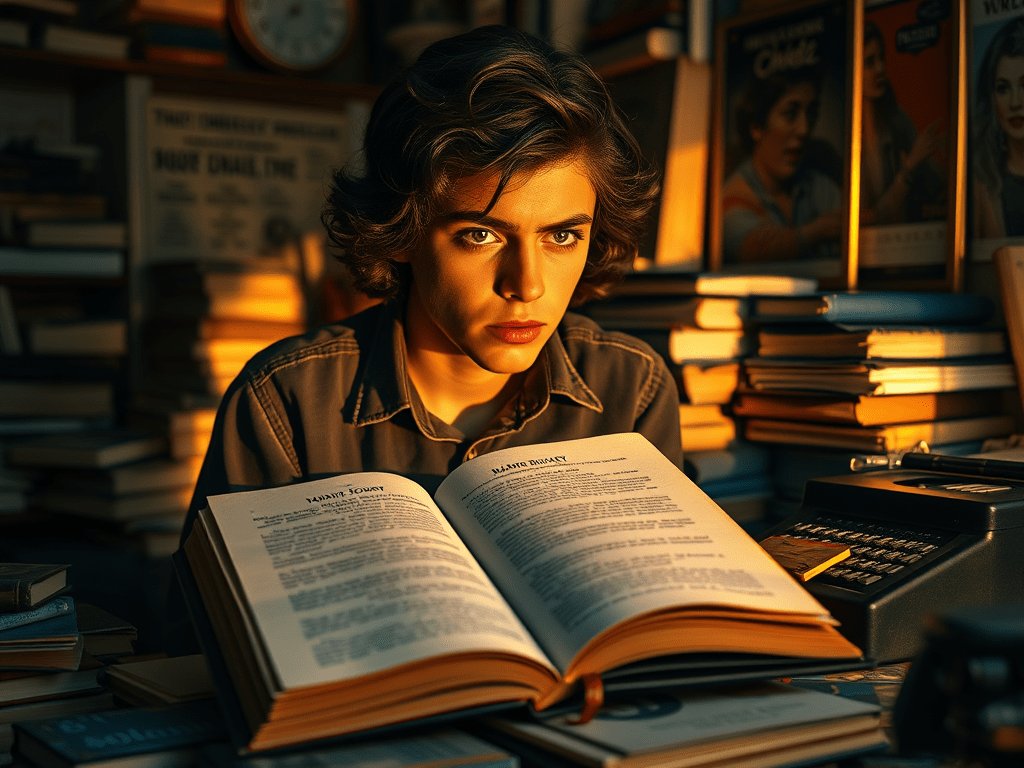
    He first encountered her as a broke student in Paris in 1959, reading Madame Bovary in his cramped, dimly lit apartment, where the novel consumed him like a “magic spell.” This wasn’t just a passing literary crush—Flaubert’s novel hardwired his taste in fiction. Llosa craves symmetry, structure, and bold architecture—stories that begin, unfold, and close like a perfectly executed aria, not those meandering, open-ended narratives that wander aimlessly like a lost tourist in a foreign city. He wants novels that sum up an entire existence, not ones that leave you guessing where the rest of the pages went.

    But his obsession with Madame Bovary isn’t just about its structural perfection. Llosa delights in its savage portrayal of stupidity, hypocrisy, cowardice, and self-complacent mediocrity. He sees Emma Bovary as a tragic hero, a woman who refuses to rot inside the coffin of bourgeois chastity, instead reaching for sensuality, opulence, and a life less suffocating. She fails, of course—spectacularly—but Llosa admires the rebellion even as he watches it collapse.

    His connection to Madame Bovary runs deeper than admiration. He sees himself in Emma. He shares her “stubborn despair, a profound distaste for life,” and her reckless excesses as an emotional counterattack against a cruel, indifferent world. Reading about Emma’s slow, agonizing suicide didn’t just illuminate the novel’s merciless social critique—it gave Llosa a new understanding of his own misery. In that sense, the book wasn’t just a masterpiece—it was a form of catharsis, a lifeboat thrown to him in turbulent waters.

    I recognize this kind of literary possession all too well. I had my own Madame Bovary moment—except it came in the form of A Confederacy of Dunces. When I read it, I saw the excesses of a young man crushed by his own emotional impoverishment, who built a fortress of grandiosity to shield himself from reality. Like Llosa with Emma, I saw a grotesque reflection of my own worst instincts. And, like him, I couldn’t look away.

    Recognizing the worst instincts in others—and in myself—was the fuel behind my ill-fated quest to be a comic novelist, a misadventure that, sadly, yielded nothing but abandoned drafts and existential nausea.

    Still, like Llosa, I found a perverse kind of clarity in my compulsion to chronicle human excess—a knack for spotting the gaudy, the grotesque, and the tragically misguided, then trapping it on the page like a butterfly pinned to a display case.

    If nothing else, I could always recognize an Emma Bovary type—vulgar, kitschy, overdosing on fantasies of grandeur—and I knew how to turn their delusions into cautionary tales, even if my own delusions proved immune to the lesson.

    I’m thinking of Playboy media magnate Hugh Hefner who fancied himself a rebel against bourgeois prudishness. Hugh Hefner, the prophet of smarmy male entitlement and silk-robe swagger. Hefner preached a gospel of unrepentant pleasure-seeking and Playboy-approved cosplay, designed to hypnotize women and soothe fragile male egos.

    And in the sweltering summer of 1977, I met one of Hefner’s most devout disciples: Glenn Leidecker.

    Every Saturday that summer, I practically melted into the scorched earth at Cull Canyon Lake, basted in Hawaiian Tropic Dark Tanning Oil—SPF Zero, because back then skin cancer was just a rumor. The sticky perfume of coconut and bananas was the scent of youth and poor decisions.

    Then there was Leidecker.

    Late twenties. Wavy brown hair, feathered to perfection. A thick, manicured mustache that could have been insured for thousands. An even, leathery tan stretched over a frame wearing nothing but blue Speedo briefs, a gold chain, and a white puka shell necklace draped over his hairy chest. His arsenal of seduction included a white Frisbee, a Playboy-logo cooler, and a boombox blasting the smooth seduction of Foreigner, Fleetwood Mac, and K.C. and The Sunshine Band.

    His moves were choreographed to the point of absurdity. Every Saturday, Leidecker ran the same pickup script on an endless rotation of bikini-clad women. I knew every line by heart: the $500 custom paint job on his Camaro, the humblebrag about his dad’s Bay Area clothing stores, the claim that he’d been managing those stores since high school, and the cherry on top—he was this close to landing a role in a Hollywood martial arts movie. Oh, and let’s not forget the constant invocation of “Parsons Estates,” which he dropped like it was some enchanted kingdom instead of a generic middle-class neighborhood.

    Leidecker wasn’t just a cliché. He was a valedictorian of Smarmy Male University, graduating magna cum laude in Playboy Posturing. His thesis? A cover-to-cover study of Eric Weber’s How to Pick Up Girls!, a sleazy manifesto that encouraged men to relentlessly harass women under the delusion that persistence equals success.

    Week after week, Leidecker reeled in a fresh catch, tossing Frisbees on the grassy knoll with women who didn’t yet realize they were extras in his sad little production. He wasn’t a man; he was a walking Playboy advertisement, the answer to that smug caption, “What sort of man reads Playboy?” Apparently, the kind of man who thinks speedos and gold chains are a mating call.

    I watched the mating ritual from my towel, pretending to read my parents’ dog-eared copy of The Happy Hooker while keeping a close eye on Leidecker. He was mid-Frisbee toss with two blonde girls in matching white bikinis when he let out an alarming, almost comical howl.

    “Oh my God, you stepped on a bee!” one of the girls gasped.

    Sure enough, the poor insect spun helplessly in the grass, stinger spent. But it was Leidecker who was spiraling. Sweat beaded on his bronzed skin, his Playboy cool starting to crack.

    But of course, he couldn’t just admit he was in agony. The kind of man who reads Playboy doesn’t crumble over a bee sting.

    “No big deal,” he puffed, wobbling on his rapidly swelling foot. “Just a little bee sting.”

    By now, his foot had ballooned into something resembling a Christmas ham, and a shiny coat of sweat slicked his once-confident swagger. Still, he insisted, “I’m fine. Really. Let’s keep playing.”

    Because the kind of man who reads Playboy is a warrior. He doesn’t show weakness. He doesn’t feel weakness.

    Until he did.

    Leidecker’s tough-guy act evaporated in an instant. His eyes bulged with panic, his breath turned ragged, and then—like a poorly written action hero meeting his karmic comeuppance—he crumpled to the ground, hyperventilating into anaphylactic shock.

    Did he survive? No idea. But if this were fiction, he’d be stone-cold dead—a sacrificial lamb on the altar of poetic justice: Death by vanity, wrapped up with a neat moral bow. 

    Like Llosa, I’ve always gravitated toward narratives with crisp, decisive endings—no ambiguity, no loose threads, no “life just goes on” cop-outs. I crave stories with bold structures and brutal symmetry, because, deep down, I need them. I need fables, cautionary tales, and tragic blueprints to ward off the self-destructive instincts swirling inside me. If life refuses to provide a clean conclusion, then dammit, fiction will.

  • Mr. Peabody Was My Role Model

    Mr. Peabody Was My Role Model

    In my early teens in the 1970s, I toured the waterbed revolution like a true believer. Friends, neighbors—everyone seemed to have one, and after test-driving these vinyl oceans, I became convinced that a waterbed would deliver me into a life of unimaginable luxury, decadent pleasure, and deep, undisturbed sleep. Reality had other plans.

    I badgered my parents into buying me one, fully expecting a nirvana of relaxation. Instead, I got a glorified swamp. The temperature was either scalding lava or Arctic frost, the thin vinyl leaked like a punctured raft, and the whole thing smelled like a frog orgy in a Louisiana bayou. Worse, any movement triggered an equal and opposite reaction, as if I were engaged in battle with some unseen aquatic force.

    The final insult? A biblical flood. One morning, my leaking disaster destroyed the floorboards, turning my bedroom into a post-hurricane FEMA zone. My dreams of floating into the future of sleep innovation had instead capsized, and I was left with the cold, hard truth: the quest for the ultimate bed would have to begin anew.

    Of course, I couldn’t let this tragedy go undocumented. Some people move on—I, on the other hand, have a compulsion to turn every misadventure into a cautionary tale.

    I blame my childhood TV habits. I was obsessed with The Adventures of Rocky and Bullwinkle, particularly the history lessons from Mr. Peabody and Sherman. With their time-traveling escapades, they examined history through Mr. Peabody’s smug brilliance, making sense of human folly. I can picture them now, entering their time machine, visiting me as my waterbed catastrophe unfolds, and filing the entire debacle under “Lessons in Bad Decision-Making.”

    For me, this is what writing is—a time machine, a way to travel through memory, make sense of chaos, and leave behind an indelible mark. It’s a compulsion, an illness, a disease.

    Trying to understand this affliction, I turned to Anne Lamott for rehabilitation. Bird by Bird: Some Instructions on Writing and Life is mercifully free of false hope. A veteran of countless writing workshops, Lamott tells her students the truth: writing will not bring peace, joy, or serenity. Instead, their lives will be a mess—ruin, hysteria, bad skin, unsightly tics, financial catastrophe—but not peace of mind.

    And yet, she urges them to embrace the suffering, because to suffer for writing is a privilege—a sign that they have “finally arrived.”

    Translation: Writing isn’t a craft. It’s a storm you never escape from, a bad investment you refuse to cut loose, a waterbed that just won’t stop leaking—but you keep lying on it anyway.

    To take up writing is to choose obsession—to engage with ideas, people, and the world with an intensity otherwise unattainable. The alternative? A life of flatline existence, tranquilized and convalescent, a kind of slow-motion death. Writing is a self-inflicted challenge, a constant state of creative warfare, but that’s the point. You’ve chosen a mission as high-stakes as Vikings raiding distant shores because you’re not content to sedate yourself with the comfort of a reliable, unchallenging routine. 

    Yes, you can walk away, consume food, entertainment, and dopamine-rich distractions, and let your mind dissolve into cultural sludge. But the price of that escape is worse than the struggle—an existence marked by vapidity, emptiness, and a soul-draining sense of futility.

    I was reminded of this during a conversation with a Trader Joe’s cashier about her twenty-four-year-old daughter. At nineteen, the girl dropped out of college during COVID and never returned. Now she works at a dispensary, detached and listless, selling products to customers just as zoned out as she is. A perfect circle of disengagement.

    Writing is the opposite: an act of defiance against entropy—a way to make discoveries, clarify the chaos, and refine that clarity into a persona and a voice that matters. Once you get a taste of this life, there is no going back.

    Lamott puts it best: writing is like milking a cow—”the milk is so rich and delicious, and the cow is so glad you did it.” Her goal is not just to teach writing but to make sure that once you’ve milked the cow, you’ll never want to stop.

    I never wanted to stop. Writing isn’t the problem—staying in my lane is.

    I don’t want to burden my wife, friends, or unsuspecting literary agents with yet another unreadable novel, churned out from a delusional obsession, an addiction, a brain warp induced by too many readings of A Confederacy of Dunces. Some might say I should write for therapy, keep a journal for mental hygiene, treating my office like a literary spa where I purge the toxins from my overactive brain.

    That’s not how I operate.

    Writing only feels real if I imagine other people reading it. To write only for myself feels repulsive, deranged—what philosophers call solipsism, where the self becomes the only reality. If I’m the only audience, then I might as well be shouting into a void, a lunatic locked in a room, talking to no one but his own reflection.

    And yet, there’s something almost hopeful in my need for an audience. Strip away the ego factor, and what remains is connection—the belief that words should travel, that they should land inside someone else’s head and stir something awake. For all my curmudgeonly tendencies, I’m no misanthrope. In my darkest moments, I still believe that deep human connections—through writing, music, and art—prove that we haven’t entirely given up on each other.

    I think of George Carlin, who, for all his nihilistic rants, never hid in a cave. He famously said that being born is like getting a front-row ticket to the freak show—but instead of watching in silence, he grabbed a mic and talked about it for hours.

    I can’t write for no one. The thrill of writing is imagining that someone, somewhere, is reading.

    Last night, I listened to Dvořák’s Sixth Symphony on the radio, and it felt electric. Had I streamed it alone, the experience would have been diminished—background noise rather than something shared. Knowing that thousands of others were listening at the same moment made the music more alive, more urgent.

    I can’t tell if this compulsion to share my stories is a normal human impulse or the delusion of a narcissist. I want people to know about my misadventures, my catastrophes, my brief flirtations with transcendence. I want people to see history the way I saw it, the way I lived it. I believe in marking things down for posterity, but I also suspect that if I don’t immortalize my past in print, it might evaporate into the void like it never happened at all.

    Lurking beneath all this is a deeper fear—that something essential to our humanity is slipping away. So I climb into Mr. Peabody’s time machine and set the dial to the summers of 1975 through 1979, when my family and a small army of friends made the annual pilgrimage to Pt. Reyes Beach. Johnson’s Oyster Farm was our temple, and its truck beds overflowed with what seemed like an infinite supply of oysters. From noon to sunset, we ate like gods in exile—barbecued oysters drowning in garlic butter and Tabasco, bottomless baskets of garlic bread, and colossal slabs of moist chocolate cake.

    Ignoring the ominous great white shark warnings, we punctuated our feasting with reckless dives into the waves, emerging from the ocean with our pecs glistening in the sunlight, ready for another round of oysters. In the summer of ’78, I decided not to ride home with my parents. Instead, I hitched a ride in the back of a stranger’s truck, surrounded by a ragtag group of new acquaintances—full-bellied, sun-dazed, and staring up at the stars with our glazed lizard eyes, swapping wild stories like ancient mariners.

    And here’s the thing: nobody took a single picture. There were no selfies, no curated posts to induce FOMO, no frantic attempts to manufacture nostalgia in real time. We were too deep inside the moment to think about how it might look on a screen later. Today, we don’t experience moments—we package them for consumption.

    And maybe that’s why I can’t not write about it. I can’t store my stories in some damp, echoing cave, streaming them to an audience of one. I need them broadcasted, carried on the airwaves, felt in real time by others.

    My disease is incurable.

  • “I am not a novelist. I am a caveman.”

    “I am not a novelist. I am a caveman.”

    I am not a novelist. I am a caveman, a storyteller hunched by the fire, gesturing wildly, my face contorting into grotesque expressions as I spin cautionary tales. My stories warn the tribe of those who lost themselves—souls swallowed by obsessions, passions twisted beyond recognition. I feed off their reaction, stretching the truth, inflating reality with hyperbole to keep their eyes locked on me.

    This caveman energy has defined my forty years of teaching college writing. The classroom’s laughter and gasps convinced me I had the chops to be a comic novelist, but I failed to see the obvious: a twenty-minute monologue is not War and Peace. And yet, I clung to the fantasy of being a novelist-in-waiting, a delusion that only crumbled when I finally took stock of my work.

    What did I find? No One Hundred Years of Solitude, no grand literary masterpiece. Instead, I had a collection of vignettes, sharp, compact, brimming with cautionary tales of the fallen, the delusional, the broken—people lost in fever dreams from which they could not escape. I obsessed over them because they were me—walking, talking omens of my own unraveling, flashing neon signs warning me to correct course before it was too late.

    For years, I mistook my ability to capture madness with clarity and drama as proof I was meant to write novels. But the truth? I was never built for the big circus tent of the novel. My writing came in violent bursts—a torrential downpour of inspiration followed by silence. A flash flood, wreaking havoc for one glorious moment before I moved on to another city, another storm.

    As part of my rehabilitation, I had to accept my nature, not fight it. I had to catalog my flash floods, embrace the writing I was actually designed for, and banish the novelist delusion once and for all. I needed a name that reflected my true form—something fitting for a writer who thrives in short, explosive bursts.

    I had to become Maxwell Shortform, a proud subspecies of Manuscriptus Rex.

    As Maxwell Shortform, I am capable of presenting a ghost story masquerading as regret. Not the cheap, chain-rattling kind of ghost story, but the deeper, more insidious variety—the kind where the specters aren’t dead, just eternally trapped in the past, doomed to replay their moment of ruin over and over like a broken film reel. Regret, after all, is the cruelest kind of haunting. It doesn’t just linger in the shadows; it moves in, redecorates, and turns your soul into its permanent residence. Regret doesn’t just trap people in the past—it embalms them in it, like a fly in amber, forever twitching with regret. As Maxwell Shortform, I have been able to capture the fate of three men I know who, decades later, are still gnashing their teeth over a squandered romantic encounter so catastrophic in their minds, it may as well be their personal Waterloo.

    It was the summer of their senior year, a time when testosterone and bad decisions flowed freely. Driving from Bakersfield to Los Angeles for a Dodgers game, they were winding through the Grapevine when fate, wearing a tie-dye bikini, waved them down. On the side of the road, an overheated vintage Volkswagen van—a sunbaked shade of decayed orange—coughed its last breath. Standing next to it? Four radiant, sun-kissed Grateful Dead followers, fresh from a concert and still floating on a psychedelic afterglow.

    These weren’t just women. These were ethereal, free-spirited nymphs, perfumed in the intoxicating mix of patchouli, wild musk, and possibility. Their laughter tinkled like wind chimes in an ocean breeze, their sun-bronzed shoulders glistening as they waved their bikinis and spaghetti-strap tops in the air like celestial signals guiding sailors to shore.

    My friends, handy with an engine but fatally clueless in the ways of the universe, leaped to action. With grease-stained heroism, they nursed the van back to health, coaxing it into a purring submission. Their reward? An invitation to abandon their pedestrian baseball game and join the Deadhead goddesses at the Santa Barbara Summer Solstice Festival—an offer so dripping with hedonistic promise that even a monk would’ve paused to consider.

    But my friends? Naïve. Stupid. Shackled to their Dodgers tickets as if they were golden keys to Valhalla. With profuse thanks (and, one imagines, the self-awareness of a plank of wood), they declined. They drove off, leaving behind the road-worn sirens who, even now, are probably still dancing barefoot somewhere, oblivious to the tragedy they unwittingly inflicted.

    Decades later, my friends can’t recall a single play from that Dodgers game, but they can describe—down to the last bead of sweat—the precise moment they drove away from paradise. Bring it up, and they revert into snarling, feral beasts, snapping at each other over whose fault it was that they abandoned the best opportunity of their pathetic young lives. Their girlfriends, beautiful and present, might as well be holograms. After all, these men are still spiritually chained to that sun-scorched highway, watching the tie-dye bikini tops flutter in the wind like banners of a lost kingdom.

    Insomnia haunts them. Their nights are riddled with fever dreams of sun-drenched bacchanals that never happened. They wake in cold sweats, whispering the names of women they never actually kissed. Their relationships suffer, their souls remain malnourished, and all because, on that fateful day, they chose baseball over Dionysian bliss.

    Regret couldn’t have orchestrated a better long-term psychological prison if it tried. It’s been forty years, but they still can’t forgive themselves. They never will. And in their minds, somewhere on that dusty stretch of highway, a rusted-out orange van still sits, idling in the sun, filled with the ghosts of what could have been.

    Humans have always craved stories of folly, and for good reason. First, there’s the guilty pleasure of witnessing someone else’s spectacular downfall—our inner schadenfreude finds comfort in knowing it wasn’t us who tumbled into the abyss of human madness. Second, these stories hold up a mirror to our own vulnerability, reminding us that we’re all just one bad decision away from disaster.

    Finally, this tale of missed hedonism, of men forever ensnared in the amber of their own foolishness, is biblical writing in its purest form. Not because it involves scripture or saints, but because it operates on a grand, mythic scale. Here, regret isn’t just an emotion—it’s a cosmic punishment, an exile from paradise so severe it echoes through decades. Like Lot’s wife turning to salt, these men made the fatal error of looking back too late, realizing only in hindsight that they had forsaken a divine gift. Their sorrow is eternal, their torment unrelenting. Even now, they wander through the wasteland of their own remorse, spiritually marooned on that sun-scorched highway, the spectral van idling in their subconscious like a rusted-out relic of their squandered youth. 

    There is no novel here, no book deal, no confetti raining down in celebration. No literary parade in my honor, no breathless NPR interview, not even a sad little short story to be mumbled at a hipster café over oat-milk lattes.

    As Maxwell Shortform, I drift above the world like storm clouds, unleash a torrential downpour of words, and then vanish before anyone can open an umbrella. That is my fate. And accepting my fate is a vital stage of my rehabilitation—learning to embrace the flash flood over the slow, steady river, the brilliant spark over the eternal flame.

  • Interrogating the Motivations to Write

    Interrogating the Motivations to Write

    Alice Flaherty opens The Midnight Disease: The Drive to Write, Writer’s Block, and the Creative Brain with a quote from Roland Barthes: “A creative writer is one for whom writing is a problem.”

    Problem? That word hardly does justice to the affliction. A problem is misplacing your car keys or forgetting to pay the water bill. What I have is more like a life swallowed whole, a case study in obsession so severe it borders on the pathological. Writing isn’t just a habit; it’s an all-consuming parasite, a compulsion that, in a just world, would require a 12-step program and a sponsor who confiscates my pens at night.

    But since no one is shipping me off to a remote cabin with nothing but an axe and a survival manual, I’ll have to settle for less extreme interventions—like seeking solace in Flaherty’s musings on the so-called writing “problem.”

    As it turns out, my affliction has a clinical name. Flaherty informs me that neurologists call this compulsion hypergraphia—the unrelenting urge to write. In their view, I suffer from an overactive communication drive, a neurochemical malfunction that ensures my brain is forever churning out words, whether the world wants them or not.

    Yet Flaherty, a physician and a neuroscientist, doesn’t merely dissect the neurology; she also acknowledges the rapture, the ecstasy, the fever dream of writing. She describes the transformative power of literature, how great writers fall under its spell, ascending from the mundane to the sacred, riding some metaphorical magic carpet into the great beyond.

    For me, that moment of possession came courtesy of A Confederacy of Dunces. It wasn’t enough to read the book. I had to write one like it. The indignation, the hilarity, the grotesque majesty of Ignatius J. Reilly burrowed into my psyche like a virus, convincing me I had both a moral duty and the necessary delusions of grandeur to bestow a similarly deranged masterpiece upon humanity.

    And I wasn’t alone. Working at Jackson’s Wine & Spirits in Berkeley, my coworkers and I read Dunces aloud between customers, our laughter turning the store into a kind of literary revival tent. Curious shoppers asked what was so funny, we evangelized, they bought copies, and they’d return, eyes gleaming with gratitude. Ignatius, with his unhinged pontifications, made the world seem momentarily less grim. He proved that literature wasn’t just entertainment—it was an antidote to the slow suffocation of daily life.

    Before Dunces, I thought books were just stories. I didn’t realize they could act as battering rams against Plato’s cave, blasting apart the shadows and flooding the place with light.

    During my time at the wine store, we read voraciously: The Ginger Man, One Hundred Years of Solitude, Moravia’s Contempt, Camus’ Notebooks, Borges’ labyrinthine tales. We never said it out loud, but we all understood—life was a dense fog of absurdity and despair, and books were our MREs, the intellectual rations that kept us alive for another day in the trenches.

    Books were our lifeline. They lifted our spirits, fortified our identities, and sharpened our minds like whetstones against the dull blade of existence. They turned us into a ragtag band of literary zealots, clutching our dog-eared pages like relics, singing the praises of Great Literature with the fervor of the Whos in Whoville—except instead of roasting beast, we feasted on Borges and Camus.

    Which brings us to Flaherty’s lament: the Internet is muscling books out of existence, and when books go, so does a vital piece of our humanity.

    What would my memories of Jackson’s be without the shared reverence for literature? It wasn’t just a passion; it was the glue that bound us to each other and to our customers. The conversations, the discoveries, the camaraderie—none of it could be replicated by an algorithm or a meme.

    How can I not think of this in the context of a country still staggering through its post-pandemic hangover of rage, paranoia, and despair? Where the love of books has been trampled beneath an endless scroll of digital sludge, and where human connection has been reduced to strangers launching spiteful grenades at each other across social media—those lawless arenas ruled by soulless tech lords, their pockets fat with the profits of our collective decline?

    Flaherty confesses that her need to dissect the spark of writing—the thing that makes it so irrepressibly human—was an uncontrollable urge, one that made her question whether she suffered from hypergraphia, postpartum mania, or some deeper compulsion to explore what she calls the “Kingdom of Sorrow” after the devastating loss of her prematurely born twin boys. Her search for the root of her writing obsession reminded me of Rainer Maria Rilke’s advice in Letters to a Young Poet: the only writing worth doing is that which one cannot not do.

    Beyond hypergraphia—an affliction rare enough to keep it from becoming a trendy self-diagnosis—Flaherty also tackles the more mundane but far more common malady of writer’s block. She attributes it to mood disorders, procrastination, repressed anxieties, and perhaps a sprinkle of nihilism. I used to wrestle with writer’s block myself, particularly between short stories, back when I entertained the delusion that I might carve out a name for myself in literary fiction. But whenever I think of writer’s block, I think of the one person I’d most like to share a meal with: Fran Lebowitz.

    Lebowitz’s writer’s block has lasted for decades, so long, in fact, that she’s upgraded it to a “writer’s blockade.” If Blaise Pascal was an acid-tongued intellectual defending faith, Lebowitz is the sharp-tongued patron saint of the New York literati, delivering high-caliber cultural commentary with the precision of a diamond-tipped drill. That she doesn’t write is a cosmic joke. That people care she doesn’t write is part of her legend. That her off-the-cuff witticisms are more electrifying than most books in print makes her, without question, my literary idol.

    And yet, my devotion to Lebowitz only reveals the terminal nature of my writing affliction. If a genie granted me the chance to swap lives with her—to tour the world, bask in standing ovations, and deliver effortless, unfiltered cultural critique to sold-out crowds—but on the condition that I could never write another book, I would turn it down without hesitation. This refusal confirms the depths of my sickness. In this hypothetical scenario, books themselves are mere shadows compared to the brilliance of Lebowitz’s conversation. And yet, here I am, clinging to the shadows, convinced that somewhere in those pages, I will find the thing that makes existence bearable.

    Surely, no specialist can diagnose a disease like this, much less cure it.

    Reading Flaherty’s sharp and introspective book, I found myself circling a familiar question: is the urge to write both a pathology and a gift? This led me straight to The Savage God, A. Alvarez’s bleak yet compelling account of depression, suicide, and literature. Across history, writers afflicted by melancholy, madness, or sheer existential despair have been cast as tragic geniuses, indulgent sinners, or misunderstood romantics, depending on the prevailing religious and literary winds.

    Take Sylvia Plath, the confessional poet who sealed her fate at thirty, or John Kennedy Toole, the tortured author of A Confederacy of Dunces, who asphyxiated himself at thirty-one. Conventional wisdom holds that Toole’s despair stemmed from his inability to publish his novel, but Tom Bissell, in “The Uneasy Afterlife of A Confederacy of Dunces,” suggests a more tangled story—one of creeping paranoia and the pressures of academia, where Toole, at twenty-two, was the youngest professor in Hunter College’s history.

    Like his doomed creator, Ignatius J. Reilly is possessed by the need to write. His screeds, stitched together from the wisdom of Boethius, function less as arguments and more as the existential flailings of a man convinced that writing will bring him salvation. He writes because he must, the way a fish swims—to stay alive.

    Bissell’s most cutting insight isn’t about Toole’s life, but about his novel’s fundamental flaw: Dunces is riddled with indulgences—flabby with adverbs, allergic to narrative structure, and populated with characters so exaggerated they teeter on the edge of cartoonhood. He argues that Dunces is “a novel that might have been considerably more fun to write than it is to read.” This line stopped me cold.

    Why? Because Dunces was my Rosetta Stone, my gateway drug to the idea of becoming a comic novelist. And yet here was the brutal truth: the very book that set me on this path was a wreck of undisciplined excess. If Dunces ruined my life, it did so not because it failed, but because I absorbed its flaws as gospel. I inhaled its bloated exuberance, its unshackled absurdity, and made it my literary template.

    To undergo a religious experience from a flawed book is to risk a kind of artistic contamination—you don’t just inherit its brilliance, you inherit its sins. My writing compulsion is perhaps nothing more than Dunces’ worst tendencies metastasized in my brain.

    And so, as a recovering writing addict, I am forced to sit with this painful revelation and digest it like a bad meal—one that demands an industrial-strength antacid.

    At the beginning of this book, I claimed that A Confederacy of Dunces ruined my life. It was a ridiculous, melodramatic statement—fatuous, even. But after considering its messy influence over my work, I can’t help but think: there’s more truth in it than I’d like to admit.

  • The Mysterious Woman at the Moscow Zoo

    The Mysterious Woman at the Moscow Zoo

    The morning after landing in Moscow—still basking in the relief that no grim-faced customs officer had pried A Clockwork Orange from my hands—I found myself standing with a dozen other jet-lagged Americans at the Moscow Zoo, led by our perpetually chipper tour guide, Natasha. The air was thick with a mix of animal musk and cigarette smoke, and somewhere in the distance, a public speaker crooned a heart-wrenching Rachmaninoff piano piece, as if the entire city were in a state of elegant despair.

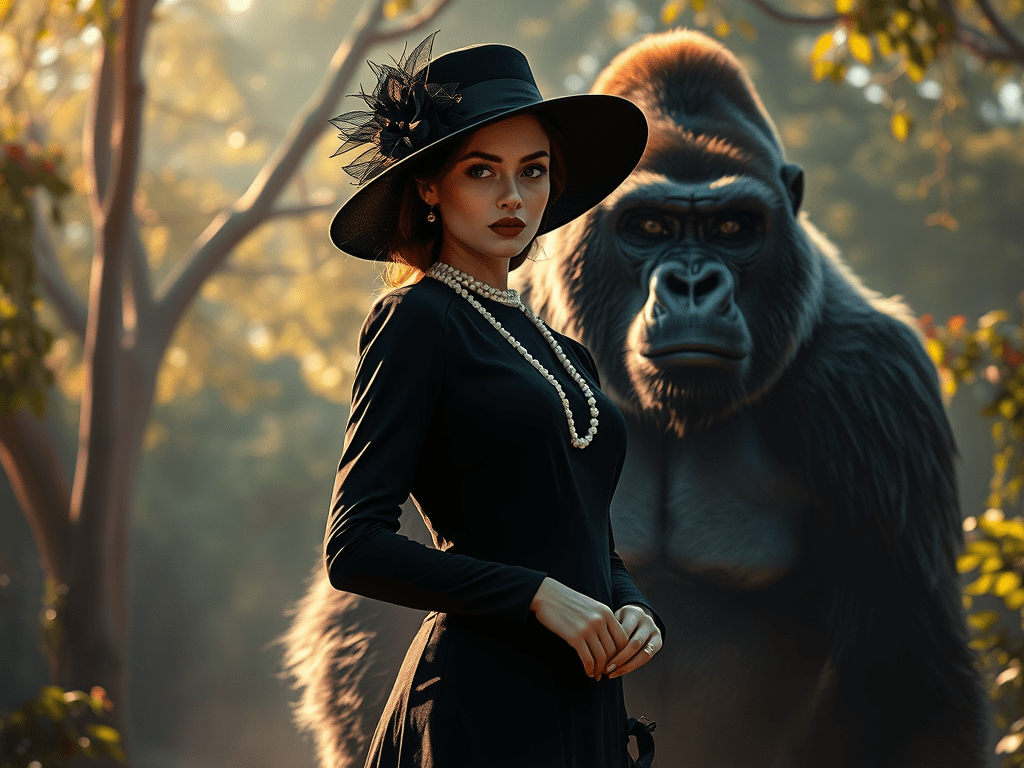
    I stood transfixed before the silverback gorilla, watching as he pounded his enormous, muscle-corded chest inside his moated enclosure, the very embodiment of brute strength and existential boredom. That’s when she appeared—an elegant woman in a black dress so perfectly tailored it looked painted onto her body, a matching black hat perched at a rakish angle, and a string of pearls glistening like a final touch of old-world sophistication. She moved toward me with an effortless grace, her dark eyes alight with something between mischief and intrigue.

    Not only was she stunning—she was smiling. At me. As if we were long-lost confidantes about to dive into a tête-à-tête of world-altering significance. My sleep-deprived, jet-lagged brain struggled to process this impossible scenario: a beautiful Russian woman, dressed for a rendezvous at Café Pushkin rather than a casual afternoon at the zoo, suddenly deciding that I was worth her time. I had come to Moscow expecting bureaucracy, bad food, and a surplus of dour expressions—not this. It was as if I had stumbled into the first act of a Cold War spy thriller, and I had absolutely no idea what my lines were supposed to be.

    “I can tell you’re American,” she said with a sharp accent that sent chills down my spine, “but you look very Russian.”

    This was true. My mother’s family was from Poland and Belarus, and I had dramatic Eastern European features. Even the other tourists on our tour said I looked Russian.

    “Russian men are very strong,” she said. “And you are a weightlifter, of course.”

    Indeed, I was. In fact, before I pivoted to bodybuilding in my mid-teens, I was an award-winning Olympic Weightlifter, and I was very fond of the great Soviet world record breaker Vasily Alekseyev. 

    “Russian women love strong men,” she said, smiling at me.

    I was too flattered by her attention to be suspicious of her ulterior motives, but Natasha saw what was going on, and the goody-two-shoes tour guide with thick spectacles grabbed me by the arm with her strong grip, walked me to some nearby bushes, and warned me that the woman was probably KGB attempting to ensnare me into some kind of kompromat or other. What the trap was Natasha did not say, so it was left to my prurient imagination. 

    While the reality was that Natasha had probably saved me from a lot of grief, I was too enticed by this elegant woman to get her out of my mind. In college, I was too socially awkward and absorbed by my bodybuilding, piano playing, and reading of “dark literature” to date or have what people considered normal socializing, but thousands of miles away from my mundane environment in the San Francisco Bay Area and now in the forbidden Soviet Union, I found myself feeling emboldened around the opposite sex, and I was hungry for a memorable encounter of some kind. What I’m trying to say is that I found myself feeling unusually lusty. My desires compelled me to believe that I had a grand opportunity with this lovely Russian woman at the zoo, and the fact that Natasha had ruined my chances pissed me off in ways that got me in touch with my Inner Silverback. Contrary to Natasha’s warnings, there may have been an outside chance that this mysterious woman simply found me attractive and wanted to get to know me, but her opportunity, and mine, had been repelled by my no-nonsense busy-body tour guide. 

  • Father Time’s Frenemy

    Father Time’s Frenemy

    I often think back to the summer of 2019 when my wife and twin daughters were vacationing in Maui. There, on the beach, I spotted a short, compact man in his mid-seventies parading around in dark blue Speedos with a woman at least fifty years his junior—a striking Mediterranean beauty in her twenties. The guy was trim, well-manscaped, and scampering confidently on the sand like a millionaire who spends half his life in boardrooms and the other half trying to outrun the Grim Reaper. He dove into the waves with the vigor of someone convinced that as long as he keeps moving, Father Time can’t catch him.

    You could smell the wealth on him. He was probably some CEO with a portfolio big enough to buy the illusion of eternal youth. He worked hard and played hard, to quote Hugh Hefner’s mantra. Now, I’m not here to pass judgment on the guy for choosing a partner young enough to be his granddaughter—that’s his business. What fascinates me is this idea that money, discipline, and a little manscaping can somehow hold age at bay, like youth is a rare potion you can sip on to stay forever young.

    But the whole scene was off. He and his youthful companion looked like mismatched puzzle pieces being forced together by sheer willpower. It was as if they were two jagged halves of a broken mirror, stubbornly pressed together despite clearly not fitting. And with each attempt to make it work, the edges chipped away a little more, until all that was left was a pile of shattered glass—a perfect metaphor for trying to cheat time.

    This rich fit man is Father Time’s Frenemy–a guy who pretends he’s on good terms with aging while secretly plotting to outwit it. He may have fooled himself with the “perfect picture” he created, but the eyesore is as plain as day to the rest of us. 

  • Where my literary delusions were born

    Where my literary delusions were born

    To understand the bloated sense of self-importance that fueled my literary delusions, we need to revisit my place of employment—a temple of pretension where my ego found fertile ground. In the early 1980s, I funded my college education by peddling fine wines and imported beers at Jackson’s Wine & Spirits in Berkeley, conveniently nestled just up the street from the Claremont Hotel on Ashby Avenue. It was the perfect setting for a young man to marinate in delusions of grandeur—surrounded by cork-sniffing sophisticates, armchair sommeliers, and the kind of clientele who believed a well-aged Bordeaux could double as a personality.

    My coworkers were the sort of intellectual show-offs who could reduce an Oxford don to a stammering fool. They held advanced degrees in everything from literature to linguistics, chemistry to musicology, and they wore their academic pedigrees like badges of honor, brandishing them in a booze emporium as if the walls were lined with first editions rather than bottles of Chianti. They’d read Flaubert in the original French and sneered at English translations with the kind of disdain usually reserved for bad table wine. To them, working for any corporation that might dare to track their time was an act of existential surrender. Instead, they peddled fine spirits with an elitism so thick you could bottle it, cork it, and slap a vintage label on it. Their motto? “Service with a smirk.” 

    I wanted to fit in, so I read voraciously, parroting these cultural heavyweights who could debate the nuances of two French Beaujolais for an entire shift while tossing out quotes from Kierkegaard or Camus. Soon enough, I was well on my way to becoming a full-blown snob, the kind who could turn a simple idea into a verbal labyrinth designed to impress rather than clarify. Slow hours found us planted by the registers dissecting the finer points of Nietzsche’s existential dread, Wagner’s bombastic compositions, and Kafka’s literary conundrums. I became intoxicated with my own intellect (mostly because I couldn’t afford the good wine) and used every fifty-dollar word in the book to convince myself I was superior to anyone with a steady paycheck. Working alongside this oddball crew was comfortable and, let’s face it, easy, but it lulled me into a delusion: I might not be wealthy or gainfully employed, but I was intellectually rich, or so I told myself.

    By my mid-twenties, I was perfectly content to be the Nerf football-throwing, Borges-quoting slacker clerk who waxed poetic about the existential themes of Alberto Moravia and the tragic pessimism of Miguel de Unamuno while restocking shelves with Chianti. 

    To further swell my already bloated ego, I spent my early twenties teaching college writing part-time, fancying myself some sort of literary prodigy destined for greatness. Whether I was regaling my students with pompous insights—laced with Nabokovian verbosity—or delivering the same drivel to wine store customers, I reveled in the delusion that I was the gravitational center of the universe. Every word I uttered, every pretentious quip, felt like a gift to the world—never mind that no one had asked for it.

    Thus mired in a fever swamp of self-regard, I began my holy quest, an epic pilgrimage of delusion. Throughout the ’80s and ’90s, I churned out novels at a terrifying speed, convinced that sheer productivity equaled genius. Wow, I must be good at this! I thought, mistaking volume for talent, like a man believing that eating more hot dogs makes him a Michelin-star chef.

    The novels blur together now, a vast landfill of ambition outpacing execution, but three stand out for their sheer absurdity.

    In 1989, I wrote Herculodge, a dystopian satire in which being overweight or displaying cellulite was illegal. This premise, better suited for a five-minute SNL skit, somehow sprawled into a 60,000-word novella, proving that even bad ideas can be tediously stretched to novel length.

    In 1991, I produced Omnivore, the tragic tale of a man who could never find satisfaction eating his own food, forcing him to break into houses and devour leftovers from strangers’ refrigerators. Only through cat burglary could he achieve satiety—a premise that sounds brilliantly unhinged in a John Cheever short story but unbearable at novel length. Unfortunately, I chose the latter, cramming 10 percent story into 90 percent padding, like an overstuffed burrito of literary excess.

    In 1992 while teaching college in the California desert, I lived next to a man who was less a neighbor and more an anthropological oddity—a legal brief-reading, Kenny G-blasting exhibitionist who pranced around the apartment pool in custom-print Speedos while slowly tanning himself into a deep mahogany hue. He became the unwitting inspiration for The Man Who Stopped Dating, my novel about an uncouth playboy who receives a vengeful fruit basket from one of his scorned lovers. A single bite from a deliquescing mango leaves him cursed with a permanent stench, a condition suspiciously similar to fish odor syndrome (trimethylaminuria, for the medically inclined). His hero’s journey becomes a desperate quest to rid himself of the smell, find redemption, and maybe—just maybe—salvage his soul.

    Convinced I had spun pure gold, I went all in—I adapted the story into a screenplay and shelled out a cool two grand to have Hollywood script guru Linda Seger take a scalpel to it. Her verdict? Great premise. Catastrophic structure. Apparently, my masterpiece wasn’t so much a movie as a sprawling narrative train wreck, gasping for subplots, character depth, and the basic bones of a coherent story.

    But did that deter me? Of course not. In my fevered delusion, the mere act of consulting with Hollywood’s premier script doctor meant I was practically in—one fortuitous lunch meeting away from a bidding war over my genius. I could already hear studio execs brawling over my brilliance, assuming they could hold their breath long enough to endure a script about a man who smells like low tide.

    In reality, I wasn’t Hemingway. I wasn’t even a second-rate Elmore Leonard. I was Rupert Pupkin, the delusional failure from The King of Comedy, rehearsing for a fame that was never coming. The difference? At least he had the decency to keep his fantasies in his mother’s basement.

  • INTERROGATING THE ALTER EGO OF RACHEL BLOOM IN CRAZY EX-GIRLFRIEND

    INTERROGATING THE ALTER EGO OF RACHEL BLOOM IN CRAZY EX-GIRLFRIEND

    Rachel Bloom weaponizes her alter ego, Rebecca Bunch, to dissect her neuroses with surgical precision, laying bare her obsessions, compulsions, and complete disregard for boundaries. Rebecca isn’t just self-destructive—she’s a human wrecking ball, alienating friends, terrifying acquaintances, and steamrolling her own well-being with reckless abandon. And yet, despite all the chaos, she remains irresistibly lovable, armed with good intentions and a heart too big for her own good.

    Rebecca is a whip-smart New York attorney drowning in success-induced existential despair when fate—or perhaps something more deranged—intervenes. A chance sighting of her old summer camp crush, Josh Chan, sends her into a tailspin of romantic delusion. Suddenly, the only logical course of action isn’t therapy, self-reflection, or even a stiff drink—it’s packing up her entire life and moving to West Covina, California, in pursuit of a man who barely remembers her. What follows is less a fairytale romance and more an operatic descent into obsession, complete with full-blown musical numbers choreographed straight from the fevered depths of her subconscious.

    Once in West Covina, Rebecca lands in a delightfully dysfunctional law firm, where her brilliance is only matched by her ability to make everyone around her deeply uncomfortable. She barrels through life like a caffeinated hurricane, terrifying innocent bystanders with her intellect and intensity, all while chasing an idea of love that exists only in her own head. The show’s most poignant relationship, however, isn’t a romantic one—it’s her friendship with Paula, a sharp-witted, no-nonsense co-worker and mother who, in many ways, fills the maternal void in Rebecca’s life. Paula, trapped in the drudgery of domesticity, finds a thrilling (and slightly concerning) outlet in Rebecca’s increasingly unhinged escapades, turning their dynamic into the show’s emotional anchor.

    At its best, Crazy Ex-Girlfriend thrives on this friendship, an odd yet deeply affecting bond between two women clinging to each other for meaning and validation. But by season four, the show stumbles, bogged down by meandering storylines and an inexplicable reluctance to lean into its greatest strength—Rebecca and Paula’s relationship. The final season drags like an overlong curtain call, but even its missteps can’t erase the brilliance of what came before. At its core, Crazy Ex-Girlfriend is an incisive, darkly hilarious exploration of self-sabotage, redemption, and the uphill battle of getting out of your own way.

  • LIZA TREYGER BELONGS ON STAGE

    LIZA TREYGER BELONGS ON STAGE

    In her Netflix stand-up special Night Owl, Liza Treyger unleashes an hour of manic brilliance, slicing through life’s absurdities with the gleeful energy of a woman who has long accepted—if not fully embraced—her own chaos. Smiling, effervescent, and naturally sarcastic, she delivers a rapid-fire confessional that feels less like a polished comedy routine and more like an open mic night inside her own hyperactive brain.

    She tells us she was born near the Chernobyl meltdown and now has a lifelong thyroid condition, that her attention span has been obliterated by her smartphone, that she’s forfeited all privacy in exchange for algorithm-curated animal videos, and that her Russian father has an uncanny ability to humiliate her by showing up to formal events in wildly inappropriate T-shirts. She doubts she has the temperament for marriage, children, or any relationship that lasts longer than a Bravo reality show season. She adores living in New York, even though she’s been mugged three times. She got an oversized butterfly tattoo—not because she wanted one, but because she was avoiding the soul-crushing task of changing her printer’s toner cartridge. She’s hungry for applause about losing forty pounds, even though she’s gained it all back. She’s openly critical of her therapist for being judgmental, yet she happily judges everyone around her. She has an encyclopedic knowledge of The Real Housewives franchise, capable of reciting random episodes in disturbingly granular detail. And, above all, she might be a bit of a misfit—too addicted to salacious gossip to maintain deep, lasting friendships.

    Treyger is intimidatingly sharp. I like to think I have a respectable level of intelligence, but I’m fairly certain she would find me basic and tedious—a conclusion I’ve already reached about myself, so no harm done. Watching Night Owl felt like a vacation from my own dullness, a thrilling rollercoaster ride through the mind of someone far wittier, sharper, and quicker than I could ever hope to be.

    For someone who claims to be a misfit, she fits perfectly on a comedy stage. The very qualities that alienate her in real life—her inability to stop talking, her obsession with gossip, her unfiltered, razor-sharp takes—are her greatest gifts in front of an audience. I’d listen to her anywhere.

  • An Unexpected Love Story in The Great

    An Unexpected Love Story in The Great

    If you had told me to watch a period drama about the turbulent love life of Peter III and Catherine the Great—one mostly confined to the gilded chambers of a Russian palace—I would have laughed, pointed to my rain gutters, and insisted I had more pressing matters to attend to. And yet, The Great did something miraculous: it took that seemingly dreary premise and spun it into one of the sharpest, most unexpected love stories I’ve ever seen on television.

    Elle Fanning’s Catherine enters the series practically vibrating with resentment, married off to a narcissistic, gluttonous man-child of an emperor played by Nicholas Hoult, whose Peter III treats ruling Russia like an all-you-can-eat buffet of debauchery. He’s selfish, crude, and revels in excess, while she’s a self-serious, idealistic reformer, convinced she’s been cursed with a fool for a husband. On paper, theirs should be a tale of mutual disdain, and indeed, for a while, it is. But then something bizarre and wonderful happens: they fall in love—not with doe-eyed, saccharine declarations, but in a way that feels both tragic and inevitable. They fall in love despite themselves.

    Peter, the arrogant peacock, starts showing unexpected flashes of vulnerability, betraying an almost boyish need to be seen and understood. Catherine, the self-righteous revolutionary, finds herself drawn to his wit, his strange charm, and his surprising capacity for change. They spar like intellectual gladiators, their verbal fencing as much foreplay as it is battle. This is where The Great sets itself apart from every predictable romance that’s ever clogged up a TV screen: the dialogue—crafted with Tony McNamara’s signature razor-sharp wit—isn’t just ornamental, it’s the very foundation of their attraction. They fall in love through language, through their relentless, biting exchanges that crackle with intelligence, irony, and reluctant admiration.

    Over three seasons, The Great delivers the most gut-wrenching, wickedly funny, and beautifully tragic love story I’ve ever seen—a romance built on war, wit, and the deeply human, utterly irrational act of loving someone against your better judgment.