Tag: breakfast

  • Breakfast Grains and Other Existential Threats As I Embark Upon a Two-Month Vacation

    Breakfast Grains and Other Existential Threats As I Embark Upon a Two-Month Vacation

    Today is my last day of class before I’m loosed into a two-month intermission—a stretch of time that must be handled like a late-arrival character in a film. This visitor has a history with me, knows my flaws, and demands that I greet him with something better than the usual slouch and shrug.

    Naturally, I’ll rehab the shoulder, write, and play the piano. Exercise will take care of itself; addiction is nothing if not reliable. Food, however, is the saboteur lurking in my blind spot. My emotional attachments to breakfast grains would make a Freudian blush: buckwheat groats, steel-cut oats, rolled oats, vanilla protein powder, cinnamon, berries, nuts. The whole wholesome choir. Trouble is, those virtuous bowls can turn caloric faster than a Hallmark plot twist.

    These cereals, if I’m honest, are less about hunger and more about the psychic umbilical cord. They point back to Mother, the Womb, or—in Phil Stutz’s terms—the Comfort Zone, the Warm Bath. Linger too long in that morning porridge spa, and the scale begins to stage an intervention. Add in my peculiar habit of finding solace in true-crime documentaries—an activity best described as athletic only in its couch commitment—and the trajectory is clear: weight gain, sloth, entropy.

    Fortunately, I do maintain countermeasures. Kettlebells and the Schwinn Airdyne stand ready like loyal foot soldiers. Reading, writing, and piano practice also help stave off the creeping rot. And yes, I’ll continue shaving, if only to avoid becoming the bearded oracle wandering the streets muttering about glycemic index.

    This two-month hiatus is really a dress rehearsal for retirement, which is now only eighteen months and three semesters away. It would be dishonest to pretend the prospect doesn’t rattle me. Maintaining purpose without the scaffolding of a teaching schedule is its own moral test. I’m fortunate to have reached this threshold, but fortune alone won’t keep me from misusing it. All I can do is stay awake, practice discipline, and ask my Maker for the humility to spend the limited time left with intention rather than drift.

  • The French Toast Zone and Other Dangerous Places

    The French Toast Zone and Other Dangerous Places

    Recently, I watched the new King of the Hill, where the gang has aged into the gentle patina of later life. In one scene, Hank, Peggy, and Bobby are seated at the kitchen table, devouring what looked like French toast or chocolate chip pancakes—something golden, sweet, and unapologetically bad for you. It was an ordinary family breakfast, the kind you imagine smelling from three houses away. Watching it felt like slipping into a warm bath of contentment. These were normal people, enjoying themselves, at ease in the sacred space I call the French Toast Zone.

    The French Toast Zone is the place where life is easy, breakfast is decadent, and you’re at peace with your waistline, your arteries, and your eventual mortality. But step into the biomarker minefield—calories counted, protein ratios calibrated, insulin spikes plotted like military campaigns—and you’re in the Restriction Zone. The mood shifts. Every bite is an act of negotiation with your cholesterol, your bathroom scale, and the grim actuarial math of your lifespan.

    Real life, of course, is not an all-inclusive stay in either zone. Most of us shuttle back and forth—half saint, half sinner—forever bargaining between the delights of German chocolate cake and the promise of three extra years of foggy-eyed longevity. Too much denial, and you die having lived as a monk in a bakery you never entered. Too much indulgence, and you’re trapped on the hedonic treadmill, sprinting after pleasures that get smaller the closer you get.

    Some people manage this dance effortlessly. They live in homeostasis, exercising moderation as naturally as breathing. I have never been one of these blessed creatures. As a teenage bodybuilder who saw biceps as salvation from low self-esteem, I learned early that moderation was for other people. My internal wiring is a one-way circuit from obsession to burnout and back again. I am, in short, Extreme Man.

    Extreme Man has his own archetype—a tragic, sweaty figure charging at his chosen folly until he mutates into something grotesque. Then comes the epiphany, the Damascus jolt that scrambles his molecules and sends him hurtling into a new life mission. It could be religion, music, bodybuilding, stamp collecting—doesn’t matter. Once the lightning strikes, moderation becomes an obscenity. He must convert the world.

    When I was a teenage Olympic weightlifter, I preached squats with the fervor of a street-corner prophet, convinced proper form could change lives. My audience—bewildered, politely nodding—failed to share my revelation. Some Extremes get written off as harmless cranks. Others, gifted with charisma, build religions followed by millions.

    The homeostatic types are often immune to these evangelists. They are already content. But for those of us who never knew balance, the siren call of radical change is intoxicating. We cling to the hope that the right transformation will lift us out of our malaise.

    Neither camp is wholly admirable. The balanced can model moderation—or smug mediocrity. The Extremes can inspire reinvention—or display unhinged egotism. The truth is in the messy middle, where both tendencies collide, and if you’re lucky, you learn from both without being consumed by either.

  • Snackrilege

    Snackrilege

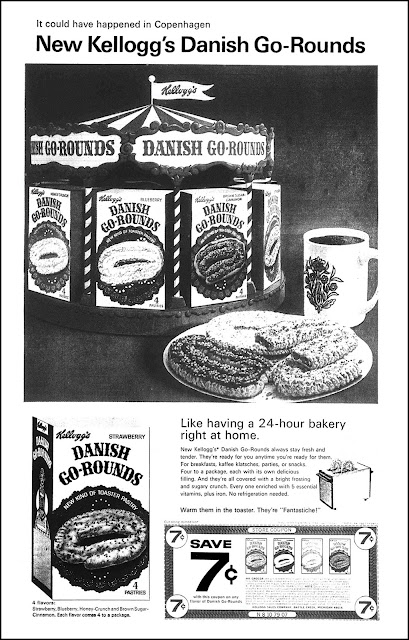
    Introduced by Kellogg’s in 1968, Danish Go-Rounds were like the golden fleece of breakfast pastries. Imagine Pop-Tarts, but with the sophistication of a five-star dessert. The brown sugar-cinnamon Danish Go-Rounds were so addictive, they made crack look like a mere curiosity. At the ungodly hour of 2 a.m., millions of Americans would wake up in cold sweats, their cravings driving them to frenzied searches for the Nectar of the Gods—only to find their precious pastries had vanished into thin air. Then, in a move so baffling it felt like a conspiracy against breakfast enthusiasts everywhere, Kellogg’s pulled the plug on Danish Go-Rounds in the mid-seventies. They kept the Pop-Tarts, those cardboard-like impostors that tasted like they were designed by a committee of flavorless robots. The heartbreak was palpable. It was as if a divine bakery had been shut down and replaced with a factory that churned out glorified toaster insulation. The eradication of Danish Go-Rounds is now remembered as one of the most colossal institutional blunders in history—up there with the fall of Rome and the invention of the Rubik’s Cube. The void they left was so immense, it bored a gaping chasm in my soul. My heart, once full of pastry-filled joy, now echoed with the hollow sound of Pop-Tarts’ lifeless crunch. While Danish Go-Rounds faded into the annals of breakfast history, Pop-Tarts flourished like a tasteless, mass-produced phoenix. This shift symbolized the erosion of artisanal craftsmanship and the triumph of consumer complacency. It heralded the rise of such culinary horrors as Imperial Margarine, Tang, Space Food Sticks, Boone’s Farm Apple Wine, and SlimFast—products so tragic they make a TV dinner look like a gourmet feast. The Gastronomic Time Traveler had to bear witness to this disheartening transition, seeing the demise of pastries that were practically food royalty. In their place, we got a parade of processed atrocities that made the culinary landscape look like a dystopian nightmare. So there I was, left to mourn the loss of Danish Go-Rounds, savoring the bitter taste of what once was, while choking down the unworthy replacements that flooded the market. It was a breakfast apocalypse, and I was living in its soggy aftermath.

    My undying grief over the extinction of Danish Go-Rounds introduced me to Snackrilege–The soul-crushing betrayal one experiences when a beloved snack—usually a glorious artifact of pre-1980s food engineering—is unceremoniously discontinued and replaced with a bland, mass-produced imposter that tastes like cafeteria foam and broken dreams.

    Snackrilege is not just a disappointment; it’s a culinary excommunication. It’s the moment you realize Kellogg’s didn’t just discontinue Danish Go-Rounds—they blasphemed the sacred breakfast pantheon by pretending a Pop-Tart could ever fill that flaky, spiraled void.

    Symptoms of Snackrilege include:

    • Grief rage in the frozen aisle
    • Late-night Google searches for defunct product petitions
    • Emotional hoarding of expired boxes found on eBay
    • Screaming “It used to mean something!” at a toaster

    Snackrilege marks the exact point where food nostalgia turns into holy indignation. It’s not about the pastry. It’s about what we lost—flavor, artistry, and the illusion that breakfast was once made by pastry angels instead of lab interns with degrees in corn syrup engineering.