Tag: chatgpt

  • AI Is a Gym, But the Students Need Muscles

    AI Is a Gym, But the Students Need Muscles

    In his bracing essay “Colleges Are Preparing to Self-Lobotomize,” Michael Clune accuses higher education of handling AI with the institutional equivalent of a drunk chainsaw. The subtitle gives away the game: “The skills that students will need in an age of automation are precisely those that are eroding by inserting AI into the educational process.” Colleges, Clune argues, spent the first three years of generative AI sitting on their hands. Now they are overcorrecting in a frenzy, embedding AI everywhere as if saturation were the same thing as competence. It isn’t. It’s panic dressed up as innovation.

    The prevailing assumption seems to be that if AI is everywhere, mastery will somehow emerge by osmosis. But what’s actually happening is the opposite. Colleges are training students to rely on frictionless services while neglecting the very capacities that make AI usable in any meaningful way: critical thinking, the ability to learn new things, and flexible modes of analysis. The tools are getting smarter; the users are getting thinner.

    Clune faces a genuine rhetorical problem. He keeps insisting that we need abstractions—critical thinking, intellectual flexibility, judgment—but we live in a culture that has been trained to distrust anything abstract. Telling a screen-saturated society to imagine thinking outside screens is like telling a fish to imagine life outside water. The first task, then, is not instruction but translation: What is critical thinking, and how do you sell it to people addicted to immediate, AI-generated results?

    The fish analogy holds. A fish is aquatic; water is not a preference but a prison. A young person raised entirely on screens, prompts, and optimization tools treats that ecosystem as reality itself. Like the fish, they are confined to a single environment. We can name this condition precisely. They are cognitively outsourced, trained to delegate thinking to machines as if this were normal or healthy. They are algovorous, endlessly stimulated by algorithms that quietly erode attention and resilience. They are digitally obligate, unable to function without mediation. By definition, these orientations exclude critical thinking. They produce people who are functional inside digital systems and dysfunctional everywhere else.

    Drop such a person into a college that recklessly embeds AI into every course in the name of being “future-proof,” and you send them into the job market as a fragile, narrow organism. In some fields, they will be unemployable. Clune points to a telling statistic: history majors currently have an unemployment rate roughly half that of recent computer science graduates. The implication is brutal. Liberal arts training produces adaptability. Coding alone does not. As the New York Times put it in a headline Clune cites, “Goodbye, $165,000 Tech Jobs. Student Coders Seek Work at Chipotle.” AI is replacing coders. A life spent inside a tiny digital ecosystem does not prepare you for a world that mutates.

    Is AI the cause of this dysfunction? No. The damage was done long before ChatGPT arrived. I use AI constantly, and I enjoy it. It sharpens my curiosity. It helps me test ideas. It makes me smarter because I am not trapped inside it. I have a life beyond screens. I have read thousands of books. I can zoom in and out—trees and forest—without panic. I have language for my inner life, which means I can diagnose myself when I become maudlin, entropic, dissolute, misanthropic, lugubrious, or vainglorious. I have history, philosophy, and religion as reference points. All of this adds up to what we lazily call “critical thinking,” but what it really means is being fully human.

    Someone who has outsourced thought and imagination from childhood cannot suddenly use AI well. They are neither liberated nor empowered. They are brittle, dependent, and easily replaced.

    Because I am a lifelong weightlifter, I’ll offer a more concrete analogy. AI is a massive, state-of-the-art gym: barbells, dumbbells, Smith machines, hack squats, leg presses, lat pulldowns, pec decks, cable rows, preacher curls—the works. Now imagine you’ve never trained before. You’re twenty-eight, inspired by Instagram physiques, and vaguely determined to “get in shape.” You walk into this cathedral of iron with no plan, no understanding of hypertrophy, recovery, protein intake, progressive overload, or long-term discipline. You are surrounded by equipment, but you are lost. Within a month, you will quit. You’ll join the annual migration of January optimists who vanish by February, leaving the gym once again to the regulars.

    AI is that gym. It will eject most users. Not because it is hostile, but because it demands capacities they never developed. Some people will learn isolated tasks—prompting here, automating there—but only in the way someone learns to push a toaster lever. These tasks should not define a human being. When they do, the result is a Non Player Character: reactive, scripted, interchangeable.

    Young people already understand what an NPC is. That’s why they fear becoming one.

    If colleges recklessly embed AI into every corner of the curriculum, they are not educating thinkers. They are manufacturing NPCs. And for that, they deserve public shame.

  • Stupidification Didn’t Start with AI—It Just Got Faster

    Stupidification Didn’t Start with AI—It Just Got Faster

    What if AI is just the most convenient scapegoat for America’s long-running crisis of stupidification? What if blaming chatbots is simply easier than admitting that we have been steadily accommodating our own intellectual decline? In “Stop Trying to Make the Humanities ‘Relevant,’” Thomas Chatterton Williams argues that weakness, cowardice, and a willing surrender to mediocrity—not technology alone—are the forces hollowing out higher education.

    Williams opens with a bleak inventory of the damage. Humanities departments are in permanent crisis. Enrollment is collapsing. Political hostility is draining funding. Smartphones and social media are pulverizing attention spans, even at elite schools. Students and parents increasingly question the economic value of any four-year degree, especially one rooted in comparative literature or philosophy. Into this already dire landscape enters AI, a ready-made proxy for writing instructors, discussion leaders, and tutors. Faced with this pressure, colleges grow desperate to make the humanities “relevant.”

    Desperation, however, produces bad decisions. Departments respond by accommodating shortened attention spans with excerpts instead of books, by renaming themselves with bloated, euphemistic titles like “The School of Human Expression” or “Human Narratives and Creative Expression,” as if Orwellian rebranding might conjure legitimacy out of thin air. These maneuvers are not innovations. They are cost-cutting measures in disguise. Writing, speech, film, philosophy, psychology, and communications are lumped together under a single bureaucratic umbrella—not because they belong together, but because consolidation is cheaper. It is the administrative equivalent of hospice care.

    Williams, himself a humanities professor, argues that such compromises worsen what he sees as the most dangerous threat of all: the growing belief that knowledge should be cheap, easy, and frictionless. In this worldview, learning is a commodity, not a discipline. Difficulty is treated as a design flaw.

    And of course this belief feels natural. We live in a world saturated with AI tutors, YouTube lectures, accelerated online courses, and productivity hacks promising optimization without pain. It is a brutal era—lonely, polarized, economically unforgiving—and frictionless education offers quick solace. We soothe ourselves with dashboards, streaks, shortcuts, and algorithmic reassurance. But this mindset is fundamentally at odds with the humanities, which demand slowness, struggle, and attention.

    There exists a tiny minority of people who love this struggle. They read poetry, novels, plays, and polemics with the obsessive intensity of a scientist peering into a microscope. For them, the intellectual life supplies meaning, irony, moral vocabulary, civic orientation, and a deep sense of interiority. It defines who they are. These people often teach at colleges or work on novels while pulling espresso shots at Starbucks. They are misfits. They do not align with the 95 percent of the world running on what I call the Hamster Wheel of Optimization.

    Most people are busy optimizing everything—work, school, relationships, nutrition, exercise, entertainment—because optimization feels like survival. So why wouldn’t education submit to the same logic? Why take a Shakespeare class that assigns ten plays in a language you barely understand when you can take one that assigns a single movie adaptation? One professor is labeled “out of touch,” the other “with the times.” The movie-based course leaves more time to work, to earn, to survive. The reading-heavy course feels indulgent, even irresponsible.

    This is the terrain Williams refuses to romanticize. The humanities, he argues, will always clash with a culture devoted to speed, efficiency, and frictionless existence. The task of the humanities is not to accommodate this culture but to oppose it. Their most valuable lesson is profoundly countercultural: difficulty is not a bug; it is the point.

    Interestingly, this message thrives elsewhere. Fitness and Stoic influencers preach discipline, austerity, and voluntary hardship to millions on YouTube. They have made difficulty aspirational. They sell suffering as meaning. Humanities instructors, despite possessing language and ideas, have largely failed at persuasion. Perhaps they need to sell the life of the mind with the same ferocity that fitness influencers sell cold plunges and deadlifts.

    Williams, however, offers a sobering reality check. At the start of the semester, his students are electrified by the syllabus—exploring the American Dream through Frederick Douglass and James Baldwin. The idea thrills them. The practice does not. Close reading demands effort, patience, and discomfort. Within weeks, enthusiasm fades, and students quietly outsource the labor to AI. They want the identity of intellectual rigor without submitting to its discipline.

    After forty years of teaching college writing, this pattern is painfully familiar to me. Students begin buoyant and curious. Then comes the reading. Then comes the checkout.

    Early in my career, I sustained myself on the illusion that I could shape students in my own image—cultivated irony, wit, ruthless critical thinking. I wanted them to desire those qualities and mistake my charisma as proof of their power. That fantasy lasted about a decade. Eventually, realism took over. I stopped needing them to become like me. I just wanted them to pass, transfer, get a job, and survive.

    Over time, I learned something paradoxical. Most of my students are as intelligent as I am in raw terms. They possess sharp BS detectors and despise being talked down to. They crave authenticity. And yet most of them submit to the Hamster Wheel of Optimization—not out of shallowness, but necessity. Limited time, money, and security force them onto the wheel. For me to demand a life of intellectual rigor from them often feels like Don Quixote charging a windmill: noble, theatrical, and disconnected from reality.

    Writers like Thomas Chatterton Williams are right to insist that AI is not the root cause of stupidification. The wheel would exist with or without chatbots. AI merely makes it easier to climb aboard—and makes it spin faster than ever before.


  • The Copy-Paste Generation and the Myth of the Fallen Classroom

    The Copy-Paste Generation and the Myth of the Fallen Classroom

    There is no ambiguity in Ashanty Rosario’s essay title: “I’m a High Schooler. AI Is Demolishing My Education.” If you somehow miss the point, the subtitle elbows you in the ribs: “The end of critical thinking in the classroom.” Rosario opens by confessing what every honest student now admits: she doesn’t want to cheat with AI, but the tools are everywhere, glowing like emergency exits in a burning building. Some temptations are structural.

    Her Exhibit A is a classmate who used ChatGPT to annotate Narrative of the Life of Frederick Douglass. These annotations—supposed evidence of engaged reading—were nothing more than “copy-paste edu-lard,” a caloric substitute for comprehension. Rosario’s frustration reminds me of a conversation with one of my brightest students. On the last day of class, he sat in my office and casually admitted that he uses ChatGPT to summarize all his reading. His father is a professor; he wakes up at five for soccer practice; he takes business calculus for fun. He is not a slacker. He is a time-management pragmatist surviving the 21st century. He reads the AI summaries, synthesizes them, and writes excellent essays. Of course I’d love for him to spend slow hours with books, but he is not living in 1954. He is living in a culture where time is a scarce resource, and AI is his oxygen mask.

    My daughters and their classmates face the same problem with Macbeth. Shakespeare’s language might as well be Martian for a generation raised on TikTok compression and dopamine trickle-feeds. They watch film versions of the play and use AI to decode plot points so they can answer the teacher’s study questions without sounding like they slept through the Renaissance. Some purists will howl that this is intellectual cheating. But as a writing instructor, I suspect the teacher benefits from students who at least know what’s happening—even if their knowledge comes from a chatbot. Expecting a 15-year-old to read Macbeth cold is like assigning tensor calculus to a preschooler. They haven’t done their priors. So AI becomes a prosthetic. A flotation device. A translation machine dropped into a classroom years overdue. To blame AI for the degradation of education is tempting, but it’s also lazy. We live in a society where reading is a luxury good and the leisure class quietly guards the gates.

    In the 1970s, I graduated from a public high school with literacy skills so thin you could read the room through them. I took remedial English my freshman year of college. If I were a student today, dropped into 2025 with those same deficits, I would almost certainly lean on AI just to keep my head above water. The difference is that today’s students aren’t just supplementing—they’re optimizing. They tell me this openly: over ninety percent of my students use AI because their skills don’t match the workload and because, frankly, everyone else is doing it. It’s an arms race of survival, not a moral collapse.

    Still, Rosario is right about the aftermath. She writes: “AI has softened the consequences of procrastination and led many students to avoid doing any work at all. There is little intensity anymore.” When thinking becomes optional, students drift into a kind of algorithmic sleepwalking. They outsource cognition until they resemble NPCs in a glitching video game—avatars performing human imitation rather than human thought. My colleagues and I see it, semester after semester: the fade-out, the disengagement, the slow zombification.

    Colleges are scrambling to respond. Should we police AI with plagiarism detectors? Should we ban laptops and force students to write essays in composition books under watchful eyes like parolees in a literary halfway house? Should we pretend the flood can be stopped with a beach towel?

    Reading Rosario’s lament about “cookie-cutter AI arguments,” I thought of my one visit to Applebee’s in the early 2000s. The menu photos promised ambrosia. The food tasted like something engineered in a lab to be technically edible yet spiritually vacant. Applebee’s was AI before AI—an assembly line of flavorless simulacra. Humanity gravitates toward the easy, the prepackaged, the frictionless. AI didn’t invent mediocrity. It merely handed it a megaphone.

    Rosario, clearly, is not an Applebee’s soul. She’s Michelin-level in a world eager to eat microwaved Hot Pockets. Of course her heart sinks when classmates settle for fast-food literacy. I want to tell her that if she were in high school in the 1970s, she’d still witness an appetite for shortcut learning. The tools would be different, the essays less slick, but the gravitational pull toward mediocrity would be the same. The human temptation to bypass difficulty is not technological—it’s ancestral. AI simply automates the old hunger.

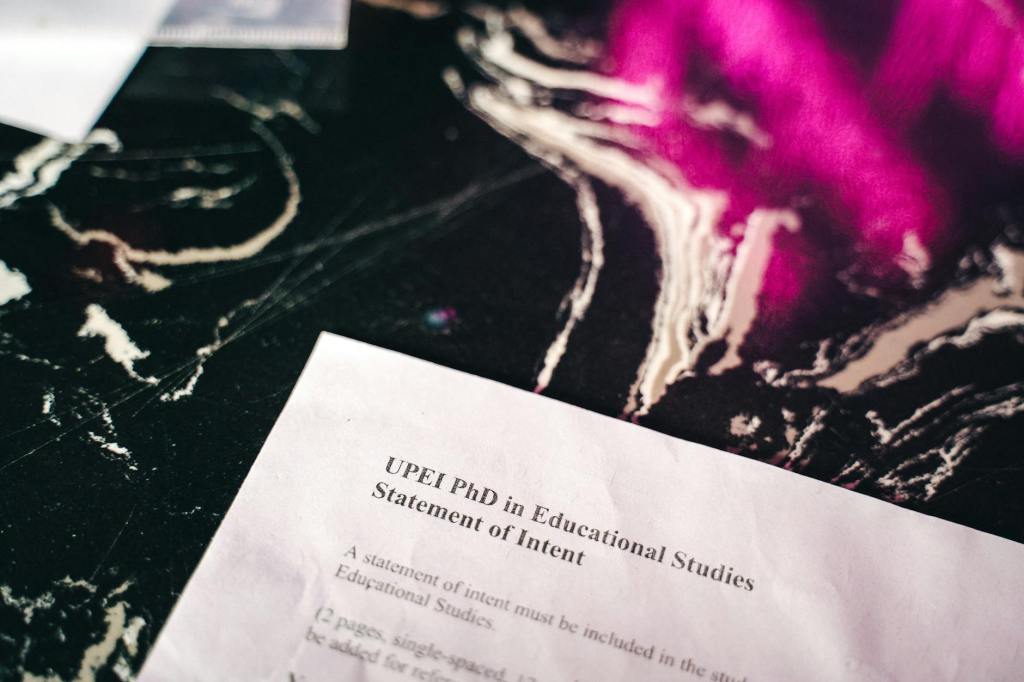
  • Artificial Intelligence and the Collapse of Classroom Thinking (college essay prompt)

    Artificial Intelligence and the Collapse of Classroom Thinking (college essay prompt)

    Artificial intelligence now drafts thesis statements, outlines arguments, rewrites weak prose, and gives students a shortcut past the cognitive struggle that learning used to require. Some critics warn that AI corrodes motivation, weakens mastery, and turns students into spectators of their own minds. Others argue that AI is merely revealing the truth we refused to confront: that modern education was already driven by templates, disengagement, and shallow assessment long before ChatGPT arrived. Still others suggest the two forces interact in a feedback loop—an educational system already limping is now asked to carry a technological weight it cannot bear.

    Write an argumentative essay in which you address the following question:

    To what extent is AI responsible for the erosion of student learning, and to what extent does it merely amplify the structural weaknesses already embedded in contemporary education?

    Your position may argue that:

    • AI is the primary driver of decline,
    • systemic failures are the primary driver,
    • or both forces interact in a way that cannot be separated.
      This is not a binary assignment—your task is to map the relationship between these forces with precision and evidence.

    Assigned Readings

    You must use at least four writers from the following list as central sources in your essay.
    You may also draw from additional credible sources.

    Critics who argue AI is damaging education

    1. Ashanty Rosario — “I’m a High Schooler. AI Is Demolishing My Education.”
    2. Lila Shroff — “The AI Takeover of Education Is Just Getting Started.”
    3. Damon Beres — “AI Has Broken High School and College.”
    4. Michael Clune — “Colleges Are Preparing to Self-Lobotomize.”

    Writers who shift the crisis away from AI

    1. Ian Bogost — “College Students Have Already Changed Forever.”
    2. Tyler Austin Harper — “The Question All Colleges Should Ask Themselves About AI.”
    3. Tyler Austin Harper — “ChatGPT Doesn’t Have to Ruin College.”
    4. John McWhorter — “My Students Use AI. So What?”

    Your Essay Must Include the Following Components

    1. Analyze one critic who argues AI is corrosive.

    Choose one writer who describes how AI erodes motivation, mastery, identity, intellectual struggle, or authentic thinking.
    Identify the mechanism of harm:
    How does AI disrupt learning—and where, exactly, does the breakdown occur?

    2. Analyze one writer who shifts blame away from AI.

    Choose a writer who argues that the crisis originates in curriculum design, academic culture, standardized writing templates, disengagement, or institutional inertia.
    Explain their diagnosis:
    What was broken before AI entered the classroom?

    3. Develop your own argument that maps the relationship between these forces.

    Your task is to explain how AI and the educational system interact.
    Does AI accelerate a decline already underway?
    Does it expose weaknesses the system refuses to address?
    Or does it create problems the system is too brittle to manage?
    Define the threshold:
    When does AI function as a constructive learning tool, and when does it become a crutch that erases struggle and depth?

    4. Include a substantial counterargument and rebuttal.

    Address the strongest opposing viewpoint—not a caricature—and respond with evidence and reasoning.

    Requirements

    • Minimum of 4 credible sources (MLA)
    • At least 4 assigned essays
    • MLA Works Cited
    • An essay that argues, rather than summarizes

    Guiding Question

    What kind of intellectual culture emerges when AI becomes normal—and who (or what) is ultimately responsible for shaping that culture?

  • Gemini Has Taken Away the Mystique from ChatGPT

    Gemini Has Taken Away the Mystique from ChatGPT

    Matteo Wong’s “OpenAI Is in Trouble” reports that Gemini is crushing ChatGPT in the AI race. Marc Benioff of Salesforce spent just two hours on Gemini–all the time he needed to realize he’s leaving ChatGPT after three years. As he wrote on X: “I’ve used ChatGPT every day for 3 years. Just spent 2 hours on Gemini 3. I’m not going back. The leap is insane.” Meanwhile, a troubled Sam Altman has announced a “code red” in a memo to his employees. It appears to be a sink or swim situation. But Wong points out that this is more of a horse race with one company in the lead, then another, and then another, with frequent fluctuations. But even if ChatGPT can gain lost ground, it loses mystique. In the words of Wong: “More than ever, OpenAI seems like just another chatbot company.” 

    One possible cause of ChatGPT losing ground is its focus on commercial ventures, wanting to be “a one-stop-shop for anything” so that the platform helps you in your consumerism. Another factor is its focus on engagement, which has made ChatGPT tweaked in a way as to become a super sycophant. Wong writes: “Those tweaks, in turn, may have made some versions of ChatGPT dangerously obsequious–it has appeared to praise and reinforces some users’ darkest and most absurd ideas–and have been the subject of several lawsuits against OpenAI alleging that ChatGPT fueled delusional spirals and even, in some cases, contributed to suicide.”

    Another challenge for OpenAI is Google’s sheer size. Google can integrate Gemini into its “existing ecosystem” with billions of users. 

    I’ve been on ChatGPT for three years, impressed with it as an editing tool, and confess I have some FOMO when it comes to the current iteration of Gemini. An argument could be made that I should switch to Gemini, not just because it’s embedded in the Google Chrome that I use, but that I shouldn’t get too comfortable with one form of AI, as I have with ChatGPT, over the last three years. It might be wise to see ChatGPT less as a companion and more of a manipulating agent designed to capture my engagement so that I am serving its business interests more than my self-interests. 

    Another voice inside me, though, says Gemini will eventually do the same thing. Unless I find that Gemini will be a game-changer, in ways that ChatGPT isn’t, I suspect both should be treated cautiously: use these platforms as tools but don’t let them hijack your brain. 

  • Confessions of a College Writing Instructor in Transition

    Confessions of a College Writing Instructor in Transition

    Yesterday morning at the college, I ran into the Writing Center director and asked whether AI had thinned out the crowds of students seeking help. To his surprise, the numbers were down only slightly—less than ten percent. I told him I’m retiring in three semesters and have no idea what the job of a writing instructor will look like five years from now. He nodded and said what we’re all thinking: we’re in the middle of a technological tectonic shift, and no one knows where the fault lines lead.

    When I got home, I realized that when I meet my students face-to-face in Spring 2026, I’ll need to level with them. Something like this:

    Hello, Students.

    I won’t sugarcoat it. Writing instructors are in transition, and many of us don’t quite know our role anymore. We’re feeling our way through the dark. To pretend otherwise would be less than honest, and the one thing we need right now is credibility. 

    In this class, you’ll write three essays—each roughly two thousand words. The first examines GLP-1 drugs like Ozempic and the messy question of free will in weight management: are we outsourcing discipline to pharmaceuticals? The second explores our dependence on emerging technologies that claim to build new skills while quietly eroding old ones—a process known as de-skillification. The final essay tackles ultra-processed foods and the accusation that eating them is a form of self-poisoning. We’ll examine that claim in a world where food technology, especially for people on GLP-1 medications, promises affordability, convenience, and enhanced nutrition. All three assignments orbit the same theme: technology’s relentless disruption of daily life.

    And speaking of disruption, we need to talk about large language models—ChatGPT, Gemini, Claude, Llama, and whatever else arrives next Tuesday. It’s obvious that students are already using these tools to write and edit their work. Many of you have used them throughout high school; for you, AI isn’t cheating—it’s normal.

    I don’t expect you to avoid these tools. They’re part of being a functioning human in a rapidly changing world. The real question isn’t whether you use them, but how. If you treat them like wish-granting genies spitting out essays on command, you’ll produce communication with all the nuance of an emoji—slick, shallow, and dead on arrival. If you use AI for quick-and-dirty summaries, your brain will soften like a forgotten banana. But if you treat these tools as collaborators—writers’ room partners who help you brainstorm, clarify arguments, test counterarguments, and refine your prose—then you’re not just surviving college, you’re evolving.

    College is where you learn to use tools that shape your professional future. But it’s also where you sharpen the questions that determine how you live: Why am I here? What does it mean to live well? Those aren’t academic abstractions; they’re the spine of adulthood. You can’t separate your ambitions from your identity.

    AI can’t give you a soul. It can’t recall your first heartbreak, your deepest disappointment, or the electricity of a song that arrived at exactly the right moment. But it can help you articulate experience. It can help you think more clearly about who you are, how you plan to work, and how to live with an intact conscience.

    The critical thinking and communication skills we practice in this class exist for that purpose—and always will.

  • Did AI Break Education—Or Did Education Build the Perfect Tool for Its Own Collapse?

    Did AI Break Education—Or Did Education Build the Perfect Tool for Its Own Collapse?

    Argumentative Essay — 1,700 words

    Artificial intelligence has become the student’s quiet collaborator: it drafts essays, outlines arguments, rewrites weak prose, and produces thesis statements on command. Some critics insist this shift is catastrophic. They claim AI doesn’t just save time—it dissolves motivation, short-circuits difficulty, and converts students into passive operators of synthetic thought.

    Others argue AI merely reveals a truth we’ve avoided: education was already transactional, disengaged, and allergic to authentic inquiry. If a five-paragraph essay can be mass-produced by a bot in seconds, perhaps the problem was never the bot.

    Write an argumentative essay in which you take a position on the real source of the crisis.
    Your essay must answer the following question:

    Is AI dismantling human learning, or is AI a symptom of a system already committed to shallow thinking and assessment-by-template?

    To build your case:

    1. Analyze one critic who sees AI as corrosive.
      Choose one of the writers who frames AI as eroding motivation, mastery, identity, or intellectual development.
      Identify the mechanism of harm:
      How does AI damage learning? Where does the breakdown actually occur?
    2. Contrast them with one writer who shifts the blame elsewhere.
      Choose a writer who argues the deeper crisis is structural, cultural, or pedagogical.
      Show how they reframe the problem:
      Is the issue curriculum design? Academic culture? Literacy itself?
    3. Define the threshold.
      Explain when AI becomes a tool that enhances learning versus a crutch that annihilates it.
      Avoid yes/no binaries—demonstrate how context, assignment design, or student agency changes outcomes.
    4. Include a counterargument–rebuttal section.
      Address the strongest argument against your own position, then respond with evidence and reasoning.
      This should not be a token gesture—it should be the opponent you would actually fear.

    Requirements

    • Minimum 4 credible sources (MLA)
    • At least 2 of the writers listed below must appear as central interlocutors
    • Works Cited in MLA format
    • Your essay must argue, not summarize

    Your mission is not to repeat what the authors said but to confront the deeper question:
    What kind of intellectual culture emerges when AI becomes normal—and who is responsible for shaping it?

    List of Suggested Sources

    Critics who argue AI is damaging education

    1. Ashanty Rosario — “I’m a High Schooler. AI Is Demolishing My Education.”
    2. Lila Shroff — “The AI Takeover of Education Is Just Getting Started.”
    3. Damon Beres — “AI Has Broken High School and College.”
    4. Michael Clune — “Colleges Are Preparing to Self-Lobotomize.”

    Writers who reinterpret the crisis

    1. Ian Bogost — “College Students Have Already Changed Forever.”
    2. Tyler Austin Harper — “The Question All Colleges Should Ask Themselves About AI.”
    3. Tyler Austin Harper — “ChatGPT Doesn’t Have to Ruin College.”
    4. John McWhorter — “My Students Use AI. So What?”
  • Bad But Worth It? De-skilling in the Age of AI (college essay prompt)

    Bad But Worth It? De-skilling in the Age of AI (college essay prompt)

    AI is now deeply embedded in business, the arts, and education. We use it to write, edit, translate, summarize, and brainstorm. This raises a central question: when does AI meaningfully extend our abilities, and when does it quietly erode them?

    In “The Age of De-Skilling,” Kwame Anthony Appiah argues that not all de-skilling is equal. Some forms are corrosive and hollow us out; some are “bad but worth it” because the benefits outweigh the loss; some are so destructive that no benefit can redeem them. In that framework, AI becomes most interesting when we talk about strategic de-skilling: deliberately off-loading certain tasks to machines so we can focus on deeper, higher-level work.

    Write a 1,700-word argumentative essay in which you defend, refute, or complicate the claim that not all dependence on AI is harmful. Take a clear position on whether AI can function as a “bad but worth it” form of de-skilling that frees us for more meaningful thinking—or whether, in practice, it mostly dulls our edge and trains us into passivity.

    Your essay must:

    • Engage directly with Appiah’s concepts of corrosive vs. “bad but worth it” de-skilling.
    • Distinguish between lazy dependence on AI and deliberate collaboration with it.
    • Include a counterargument–rebuttal section that uses at least one example of what we might call Ozempification—people becoming less agents and more “users” of systems. You may draw this example from one or more of the following Black Mirror episodes: “Joan Is Awful,” “Nosedive,” or “Smithereens.”
    • Use at least three sources in MLA format, including Appiah and at least one Black Mirror episode.

    For your supporting paragraphs, you might consider:

    • Cognitive off-loading as optimization
    • Human–AI collaboration in creative or academic work
    • Ethical limits of automation
    • How AI is redefining what counts as “skill”

    Your goal is to show nuanced critical thinking about AI’s role in human skill development. Don’t just declare AI good or bad; use Appiah’s framework to examine when AI’s shortcuts lead to degradation—and when, if used wisely, they might lead to liberation.

    3 building-block paragraph assignments

    1. Concept Paragraph: Explaining Appiah’s De-Skilling Framework

    Assignment:
    Write one well-developed paragraph (8–10 sentences) in which you explain Kwame Anthony Appiah’s distinctions among corrosive de-skilling, “bad but worth it” de-skilling, and de-skilling that is so destructive no benefit can justify it.

    • Use at least one short, embedded quotation from Appiah.
    • Paraphrase his ideas in your own words and clarify the differences between the three categories.
    • End the paragraph by briefly suggesting how AI might fit into one of these categories (without fully arguing your position yet).

    Your goal is to show that you understand Appiah’s framework clearly enough to use it later as the backbone of an argument.


    2. Definition Paragraph: Lazy Dependence vs. Deliberate Collaboration

    Assignment:
    Write one paragraph in which you define and contrast lazy dependence on AI and deliberate collaboration with AI in your own words.

    • Begin with a clear topic sentence that sets up the contrast.
    • Give at least one concrete example of “lazy dependence” (for instance, using AI to dodge thinking, reading, or drafting altogether).
    • Give at least one concrete example of “deliberate collaboration” (for instance, using AI to brainstorm options, check clarity, or off-load repetitive tasks while you still make the key decisions).
    • End the paragraph with a sentence explaining which of these two modes you think is more common among students right now—and why.

    This paragraph will later function as a “conceptual lens” for your body paragraphs.


    3. Counterargument Paragraph: Ozempification and Black Mirror

    Assignment:
    After watching one of the assigned Black Mirror episodes (“Joan Is Awful,” “Nosedive,” or “Smithereens”), write one counterargument paragraph that challenges the optimistic idea of “strategic de-skilling.”

    • Briefly describe a key moment or character from the episode that illustrates Ozempification—a person becoming more of a “user” of a system than an agent of their own life.
    • Explain how this example suggests that dependence on powerful systems (platforms, algorithms, or AI-like tools) can erode self-agency and critical thinking rather than free us.
    • End by posing a difficult question your eventual essay will need to answer—for example: If it’s so easy to slide from strategic use to dependence, can we really trust ourselves with AI?

    Later, you’ll rebut this paragraph in the full essay, but here your job is to make the counterargument as strong and persuasive as you can.

  • The Case for Strategic De-Skilling: Rethinking Skill and Dependence in the Age of AI (a College Writing Prompt)

    The Case for Strategic De-Skilling: Rethinking Skill and Dependence in the Age of AI (a College Writing Prompt)

    Background

    AI is a tool that we use in business, the arts, and education. Since AI is the genie out of the bottle that isn’t going back in, we have to confront the way AI renders us both benefits and liabilities. One liability is de-skilling, the way we lose our personal initiative, self-reliance and critical thinking skills as our dependence on AI makes us reflexively surrender our own thought for a lazy, frictionless existence in which we assert little effort and let AI do most of the work. 

    However, in his essay “The Age of De-Skilling,” Kwame Anthony Appiah correctly points out that not all de-skilling is equal. Some de-skilling is “corrosive,” some de-skilling is bad but worth it for the benefits, and some de-skilling is so self-destructive that no benefits can redeem its devastation. 

    In this context, where AI becomes interesting is the realm of what we call strategic de-skilling. This is a mindful form of de-skilling in which we take AI shortcuts because such shortcuts give us a worthy outcome that justifies the tradeoffs of whatever we lose as individuals dependent on technology. 

    Your Essay Prompt

    Write a 1,700-word argumentative essay that defends, refutes, or complicates the position that not all dependence on AI is ruinous. Argue that strategic de-skilling—outsourcing repetitive or mechanical labor to machines—can expand our mental bandwidth for higher-order creativity and analysis. Use Appiah’s notion of “bad but worth it” de-skilling to claim that AI, when used deliberately, frees us for deeper work rather than dulls our edge.

    Your Supporting Paragraphs

    For your supporting paragraphs, consider the following mapping components: 

    • cognitive off-loading as optimization
    • human-AI collaboration
    • ethical limits of automation
    • redefinition of skill

    Use Specific Case Studies of Strategic De-Skilling

    I recommend you can pick one or two of the following case studies to anchor your essay in concrete evidence:

    1. AI-Assisted Radiology Diagnostics
    AI models like Google’s DeepMind Health or Lunit INSIGHT CXR pre-screen medical images (X-rays, CT scans, MRIs) for anomalies such as lung nodules or breast tumors, freeing radiologists from exhaustive image scanning and letting them focus on diagnosis, context, and patient communication.

    2. Robotic Surgery Systems (e.g., da Vinci Surgical System)
    Surgeons use robotic interfaces to perform minimally invasive procedures with greater precision and less fatigue. The machine steadies the surgeon’s hand and filters tremors—technically a form of de-skilling—but this trade-off allows focus on strategy, anatomy, and patient safety rather than manual dexterity alone.

    3. AI-Driven Legal Research Platforms (Lexis+, Casetext CoCounsel)
    Lawyers now off-load hours of case searching and citation checking to AI tools that summarize precedent. What they lose in raw research grind, they gain in time for argument strategy and nuanced reasoning—shifting legal skill from memorization to interpretation.

    4. Intelligent Tutoring and Grading Systems (Gradescope, Khanmigo)
    Instructors let AI handle repetitive grading or generate practice problems. The loss of constant paper-marking allows teachers to focus on the art of explanation and individualized mentorship. Students, too, can use these systems to get instant feedback, training them to self-diagnose errors rather than depend entirely on human correction.

    5. AI-Based Drug Discovery (DeepMind’s AlphaFold, Insilico Medicine)
    Pharmaceutical researchers no longer spend years modeling protein folding manually. AI predicts structures in hours, speeding up breakthroughs. Scientists relinquish tedious modeling but redirect their expertise toward hypothesis-driven design, ethics, and clinical translation.

    6. Predictive Maintenance in Aviation and Engineering
    Airline engineers now rely on machine-learning algorithms to flag part failures before they occur. Mechanics perform fewer manual inspections but use data analytics to interpret system reports and prevent disasters—redefining “skill” as foresight rather than reaction.

    7. Algorithmic Financial Trading
    Portfolio managers off-load pattern recognition and timing decisions to AI trading bots. Their role shifts from acting as human calculators to setting ethical boundaries, risk thresholds, and macro-strategic goals—skills grounded in judgment, not just speed.

    8. AI-Powered Architecture and Design (Autodesk Generative Design)
    Architects use generative AI to produce hundreds of design iterations that balance structure, sustainability, and cost. The creative act moves from drafting to curating: selecting and refining the most meaningful human aesthetic from machine-generated abundance.

    9. Autonomous Agriculture Systems (John Deere’s See & Spray)
    Farmers now use AI-guided tractors and drones to detect weeds and optimize fertilizer use. They surrender manual fieldwork but gain ecological precision and data-driven management skills that improve yields and sustainability.

    10. AI-Enhanced Music and Film Editing (Adobe Sensei, AIVA, Runway ML)
    Editors and composers off-load technical tedium—color correction, noise reduction, beat synchronization—to AI tools. This frees them to focus on emotional pacing, thematic rhythm, and creative storytelling—the distinctly human layer of artistry.

    Purpose
    Your goal is to demonstrate nuanced critical thinking about AI’s role in human skill development. Show that you understand the difference between lazy dependence and deliberate collaboration. Engage with Appiah’s complicated notion of de-skilling to explore whether AI’s shortcuts lead to degradation—or, when used wisely, to liberation.

  • The Gospel of De-Skilling: When AI Turns Our Minds into Mashed Potatoes

    The Gospel of De-Skilling: When AI Turns Our Minds into Mashed Potatoes

    Kwame Anthony Appiah, in “The Age of De-Skilling,” poses a question that slices to the bone of our moment: Will artificial intelligence expand our minds or reduce them to obedient, gelatinous blobs? The creeping decay of competence and curiosity—what he calls de-skilling—happens quietly. Every time AI interprets a poem, summarizes a theory, or rewrites a sentence for us, another cognitive muscle atrophies. Soon, we risk becoming well-polished ghosts of our former selves. The younger generation, raised on this digital nectar, may never build those muscles at all. Teachers who lived through both the Before and After Times can already see the difference in their classrooms: the dimming spark, the algorithmic glaze in the eyes.

    Yet Appiah reminds us that all progress extracts a toll. When writing first emerged, the ancients panicked. In Plato’s Phaedrus, King Thamus warned that this new technology—writing—would make people stupid. Once words were carved into papyrus, memory would rot, dialogue would wither, nuance would die. The written word, Thamus feared, would make us forgetful and isolated. And in a way, he was right. Writing didn’t make us dumb, but it did fundamentally rewire how we think, remember, and converse. Civilization gained permanence and lost immediacy in the same stroke.

    Appiah illustrates how innovation often improves our craft while amputating our pride in it. A pulp mill worker once knew by touch and scent when the fibers were just right. Now, computers do it better—but the hands are idle. Bakers once judged bread by smell, color, and instinct; now a touchscreen flashes “done.” Precision rises, but connection fades. The worker becomes an observer of their own obsolescence.

    I see this too in baseball. When the robotic umpire era dawns, we’ll get flawless strike zones and fewer bad calls. But we’ll also lose Earl Weaver kicking dirt, red-faced and screaming at the ump until his cap flew. That fury—the human mess—is baseball’s soul. Perfection may be efficient, but it’s sterile.

    Even my seventy-five-year-old piano tuner feels it. His trade is vanishing. Digital keyboards never go out of tune; they just go out of style. Try telling a lifelong pianist to find transcendence on a plastic keyboard. The tactile romance of the grand piano, the aching resonance of a single struck note—that’s not progress you can simulate.

    I hear the same story in sound. I often tune my Tecsun PL-990 radio to KJAZZ, a station where a real human DJ spins records in real time. I’ve got Spotify, of course, but its playlists feel like wallpaper for the dead. Spotify never surprises me, never speaks between songs. It’s all flow, no friction—and my brain goes numb. KJAZZ keeps me alert because a person, not a program, is behind it.

    The same tension threads through my writing life. I’ve been writing and weight-lifting daily since my teens. Both disciplines demand sweat, repetition, and pain tolerance. Neglect one, and the other suffers. But since I began using AI to edit two years ago, the relationship has become complicated. Some days, AI feels like a creative partner—it pushes me toward stylistic risks, surprise turns of phrase, and new tonal palettes. Other days, it feels like a crutch. I toss half-baked paragraphs into the machine and tell myself, “ChatGPT will fix it.” That’s not writing; that’s delegation disguised as art.

    When I hit that lazy stretch, I know it’s time to step away—take a nap, watch Netflix, play piano—anything but write. Because once the machine starts thinking for me, I can feel my brain fog over.

    And yet, I confess to living a double life. There’s my AI-edited self, the gleaming, chiseled version of me—the writer on literary steroids. Then there’s my secret writer: the primitive, unassisted one who writes in a private notebook, in the flickering light of what feels like a mythic waterfall. No algorithms, no polish—just me and the unfiltered soul that remembers how to speak without prompts. This secret life is my tether to the human side of creation. It gives my writing texture, contradiction, blood. When I’m writing “in the raw,” I almost feel sneaky and subversive and whisper to myself: “ChatGPT must never know about this.” 

    Appiah is right: the genie isn’t going back in the bottle. Every advance carries its shadow. According to Sturgeon’s Law, 90% of everything is crap, and AI will follow that rule religiously. Most users will become lazy, derivative, and hollow. But the remaining 10%—the thinkers, artists, scientists, doctors, and musicians who wield it with intelligence—will produce miracles. They’ll also suffer for it. Because every new tool reshapes the hand that wields it, and every gain carries a ghost of what it replaces.

    Technology changes us. We change it back. And somewhere in that endless feedback loop—between the bucket piano tuner, the dirt-kicking manager, and the writer lost between human and machine—something resembling the soul keeps flickering.