
Tag: covid

  • My Accidental COVID Shot

    My Accidental COVID Shot

    It was a sunny morning on the first of October when I sat taking notes in a Kaiser doctor’s office in Carson while my wife and her surgeon reviewed the post-op do’s and don’ts. Nothing over ten pounds for six weeks. No blood-thinning ibuprofen during that time. She could sleep on her side but not her stomach. She could lift her arms over her head. In a week, she would want vitamin E oil for the affected areas. In about a month, silicone scar cream.

    Eventually the conversation drifted from post-op recovery to their shared interest in child-rearing. My wife is a middle-school health and language arts teacher; the doctor has a one-year-old and a three-year-old and is currently serving a life sentence in the maximum-security wing of parenting.

    I grew antsy.

    A week earlier, I had missed my opportunity to get a drive-through flu shot, and at nearly sixty-five I don’t like missing my shots. Vaccinations have become another maintenance item, like rotating the tires or changing the furnace filter. Ignore the schedule long enough and something expensive starts coughing.

    I excused myself, received the blessing of my wife and her doctor, and took the elevator down to Floor One, where I found the vaccine station. I filled out a form, assured everyone that vaccines did not cause me to transform into Mr. Hyde, and sat beside a friendly nurse in her early thirties.

    “You’re okay with Pfizer?” she asked.

    “What are my other choices?”

    “None.”

    “Then don’t offer me Diet Pepsi when there’s only Diet Coke.”

    She laughed.

    The shot burned like hell. It burned even more after the needle came out, but I maintained my dignity, thanked the nurse, and returned to Floor Three, where my wife was waiting in the post-op area.

    I told her about the burning.

    “Did you get a flu shot?” she asked.

    I nodded. Of course I had. I had gone to the flu-shot station she had pointed out earlier.

    “Sounds like you got a COVID shot.”

    “She did say it was Pfizer.”

    “That’s COVID, dude.”

    There are moments when a single sentence rearranges reality.

    We returned to the vaccine station, and sure enough, sitting there in plain sight were two stacks of forms: one for flu and one for COVID.

    I was a car that needed unleaded and had somehow filled itself with diesel.

    Since I was already there—and apparently collecting vaccines like G-Shocks—I decided I might as well get the flu shot too, this time in the opposite arm.

    I rolled up my sleeve.

    “Flex or relax?”

    “Relax,” the nurse said, “or you’ll be sorry.”

    This seemed like excellent advice for vaccines, aging, and perhaps life in general.

    I relaxed.

    I thanked her for both shots and returned to my wife, who reminded me that the last COVID vaccine had turned me into a basket case for about twenty-four hours. This was unfortunate timing. She was recovering from surgery and needed me functioning at something approaching full capacity, not wandering around the house shivering beneath a blanket and announcing that death was imminent.

    I promised that when we got home, I would take three ibuprofen and a nap and prepare myself for whatever punishment my immune system had scheduled for the next twenty-four hours.

    Perhaps I should be grateful. Through a combination of diligence, confusion, and poor signage comprehension, I had knocked out two vaccines in one visit. My shingles vaccinations had been completed six months earlier. Now COVID and flu were checked off the list.

    At nearly sixty-five, you begin to appreciate these small victories. Retirement is approaching, bringing with it enough disruptions, anxieties, medical appointments, identity crises, and mysterious bodily developments without influenza, shingles, or COVID joining the welcoming committee.

    So perhaps I’m ready.

    We shall see.

    Meanwhile, I’m eager to tear off these damn Band-Aids.
  • Viral Nations: How Pandemic Cinema Reflects a World (a College Essay Prompt)

    Viral Nations: How Pandemic Cinema Reflects a World (a College Essay Prompt)

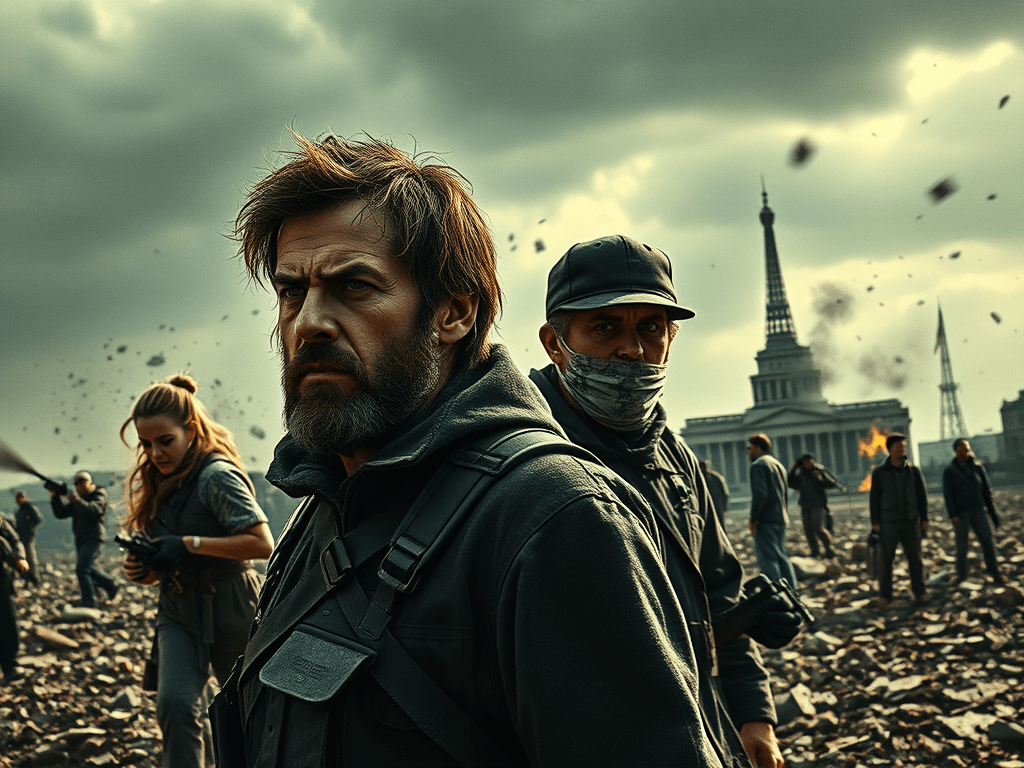
    Both 28 Years Later and World War Z depict the spread of a deadly virus that triggers the collapse of global order. Yet beyond the zombies and infected hordes, these films offer striking metaphors for the chaos, distrust, and political polarization amplified by the COVID-19 pandemic.

    In a well-structured, thesis-driven essay of 1,700 words, compare how each film explores the fragility of major institutions (governments, media, military, science), the spread of misinformation, and the psychological aftermath of global catastrophe. Your analysis should consider how each film allegorizes different aspects of pandemic culture: emotional volatility in 28 Years Later vs. bureaucratic inertia in World War Z.

    You must address the following questions:

    1. How do these films portray public institutions’ response to crisis? What critiques are embedded in those portrayals?
    2. In what ways do these narratives reflect or exaggerate the real-world cultural and political divisions that were intensified by COVID-19?
    3. Do these films offer any hope or solutions, or are they fundamentally cynical about humanity’s ability to cooperate?

    Use specific scenes, dialogue, and cinematic techniques from both films to support your claims. Outside sources are encouraged but not required.

    Here are five sample thesis statements for the prompt comparing 28 Years Later and World War Z as post-COVID allegories, each with clear mapping components:


    1. The Bureaucratic Collapse vs. Emotional Fallout Thesis
    While World War Z depicts a slow-motion collapse of global institutions in the face of a virus that outpaces diplomacy and reason, 28 Years Later focuses on the emotional and ethical wreckage left behind, showing that the true horror of a pandemic lies not in the infection itself but in the unraveling of trust, memory, and social cohesion.


    2. The Misinformation and Fear Contagion Thesis
    Both 28 Years Later and World War Z serve as cultural autopsies of the COVID era, portraying not only viral outbreaks but the parallel contagion of misinformation, fear, and ideological extremism, revealing how modern pandemics are fought as much in echo chambers and comment threads as in laboratories.


    3. The Institutional Failure and Survivalist Morality Thesis
    In their depiction of pandemic response, World War Z shows the impotence of top-down globalism, while 28 Years Later offers a bottom-up view of localized anarchy and survivalist ethics, together illustrating a post-COVID cinematic shift from faith in institutions to tribal resilience and moral ambiguity.


    4. The Pandemic as Psychological Reckoning Thesis
    More than disaster films, 28 Years Later and World War Z use the aesthetics of horror and action to stage a psychological reckoning with the trauma of COVID—28 Years Later captures the rage and exhaustion of a public pushed to its emotional brink, while World War Z visualizes the logistical panic and fractured chain of authority that left millions globally disoriented and unmoored.


    5. The Allegory of Polarization Thesis
    28 Years Later and World War Z reflect the political polarization accelerated by COVID by framing survival as dependent not on unity but on division—on isolation, suspicion, and competing narratives of truth—suggesting that in a fractured society, pandemics don’t create monsters so much as they expose them.