Tag: culture

  • The Reuben Sandwich Standoff

    The Reuben Sandwich Standoff

    In 1983, I was a humble college student working at Jackson’s Wine & Spirits, conveniently located next to the illustrious Claremont Hotel in Berkeley. This wasn’t just any wine store—it had a deli too, where the drama unfolded like a soap opera on rye bread. 

    One fateful afternoon, a man in his fifties, who had the unmistakable air of a New Yorker transplanted to the west coast, waltzed in and ordered a Reuben sandwich.

    Enter George, our deli manager and fellow New Yorker, who was a 300-pound titan with a penchant for thick black-framed glasses and a cigar stub that seemed permanently fused to his lips. George was the kind of guy who could turn ordering a sandwich into a WWE smackdown. George, in his infinite deli wisdom, asked the customer what kind of cheese he wanted on his Reuben.

    This question, apparently, was a direct assault on the customer’s very essence. With all the drama of a Shakespearean tragedy, the customer launched into an impassioned monologue. “A Reuben sandwich is rye bread, corned beef, Swiss cheese, sauerkraut, and Russian dressing!” he proclaimed, as if he were revealing the secret formula to eternal life.

    George, unimpressed by this unsolicited lecture and clearly unamused by the customer’s attempt to rewrite Reuben history, repeated his question: “What kind of cheese do you want?”

    The customer’s face turned the color of a cherry tomato as he launched into his tirade once more, listing the sacred ingredients with the fervor of a man defending his homeland. The two New Yorkers engaged in an epic standoff, a duel of stubbornness, each more entrenched in their own version of Reuben orthodoxy.

    The debate reached such a fever pitch that the customer exploded in a flurry of expletives that could have given a sailor pause and stormed out, declaring he would never do business with a deli that dared question his Reuben expertise.

    To this day, I marvel at the sheer audacity of these two colossal egos. One was denied his lunch, and the other was deprived of a sale, all because neither would concede an inch. It was a lesson in culinary pride and stubbornness—a Reuben sandwich standoff for the ages.
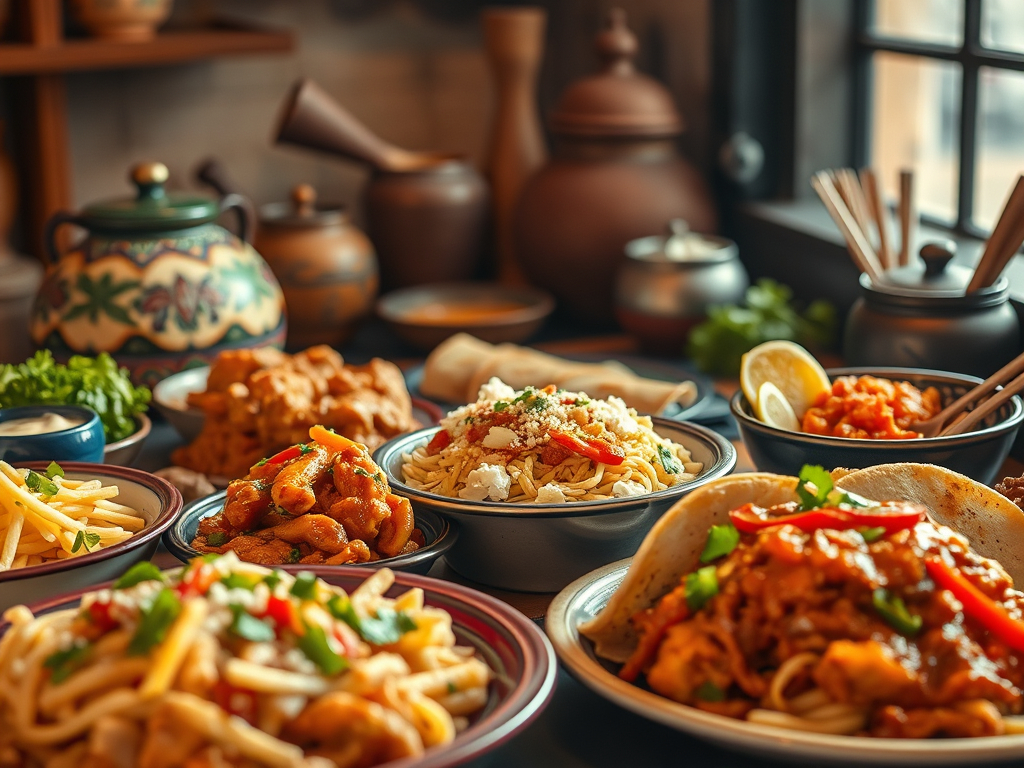
  • Authenticity or Evolution? The Cultural Legacy of Mexican and Chinese Food in America

    Authenticity or Evolution? The Cultural Legacy of Mexican and Chinese Food in America

    This is the third essay prompt for my critical thinking class:

    Authenticity or Evolution? The Cultural Legacy of Mexican and Chinese Food in America

    For many, food is more than sustenance—it is tradition, identity, and history. But what happens when traditional dishes evolve to fit new cultural landscapes? Should Americanized versions of Mexican and Chinese cuisine—from General Tso’s chicken to Tex-Mex burritos—be embraced as a vibrant contribution to culinary history, or dismissed as inauthentic imitations?

    This 1,700-word argumentative essay (MLA format required) invites you to examine how cultural adaptation and survival shape food traditions. Using Gustavo Arellano’s essay “Let White People Appropriate Mexican Food” and Ian Cheney’s documentary The Search for General Tso as key references, along with additional essays on the subject, you will defend, refute, or complicate the claim that labeling these cuisines as “inauthentic” ignores the deeper realities of immigration, adaptation, and resilience.

    Key Questions to Explore:

    • How do American Chinese and modern Mexican cuisines reflect adaptation and survival rather than cultural betrayal?
    • In what ways have these culinary shifts helped immigrant communities overcome economic and social adversity?
    • Does the concept of “authenticity” erase the ingenuity and history behind these evolving dishes?
    • How does food innovation expand cultural influence, making ethnic cuisines more accessible and desirable to broader audiences?

    Required Sources:

    Use a minimum of four sources from the following list, cited in MLA format:

    • Gustavo Arellano – “Let White People Appropriate Mexican Food”
    • Ian Cheney’s documentary – The Search for General Tso
    • Charles W. Hayford – “Who’s Afraid of Chop Suey”
    • Cathy Erway – “More Than ‘Just Takeout’”
    • Kelley Kwok – “‘Not Real Chinese’: Why American Chinese Food Deserves Our Respect”
    • Jiayang Fan – “Searching for America with General Tso”

    Suggested Essay Structure:

    I. Introduction (200-300 words)

    • Introduce the debate over culinary authenticity and how it applies to Mexican and Chinese food in America.
    • Present your thesis—whether you believe these evolving cuisines should be celebrated, criticized, or viewed with a nuanced perspective.
    • Briefly mention the key sources you will use to support your argument.

    II. The Case for Culinary Evolution (400-500 words)

    • Use Arellano’s claim that Mexican cuisine thrives on adaptability to explore how tacos, burritos, and other dishes have been reshaped by cultural influences.
    • Reference The Search for General Tso to highlight how Chinese immigrants adapted their cuisine to American tastes while maintaining entrepreneurial success.
    • Use Erway’s essay to examine how evolving cuisines serve as a source of creativity and pride for immigrant communities.

    III. Overcoming Racism and Economic Hardship (400-500 words)

    • Draw on Jiayang Fan’s argument that Chinese food’s popularity in America is inseparable from immigrant struggles, where adaptation was a tool for survival.
    • Explore how Tex-Mex and Chop Suey—despite being dismissed as “inauthentic”—helped immigrant communities establish visibility and economic stability.

    IV. Challenging the Authenticity Argument (400-500 words)

    • Use Kelley Kwok’s essay to challenge the myth that American Chinese food is “not real Chinese food” and explore what “authentic” really means.
    • Argue that cuisine is never static—traditions themselves were once innovations, influenced by migration and cultural blending.
    • Acknowledge the importance of preserving traditional dishes but emphasize how adaptation allows for survival and cultural expansion.

    V. Counterargument and Rebuttal (300-400 words)

    • Address critics who argue that Americanized versions of ethnic cuisine dilute culture or exploit culinary traditions for profit.
    • Rebut by emphasizing that adaptation does not erase tradition but extends its cultural reach, making food a dynamic part of identity.

    VI. Conclusion (200-300 words)

    • Reaffirm your thesis, reflecting on how evolving cuisines shape multicultural identity and bridge cultural divides.
    • Highlight how food tells a larger story of resilience, creativity, and the blending of cultures in an interconnected world.

    Final Thoughts:

    This essay challenges you to rethink the definition of authenticity in cuisine. By exploring how food evolves through necessity, survival, and creativity, you will craft an argument that goes beyond simplistic debates and acknowledges both the importance of tradition and the power of adaptation.