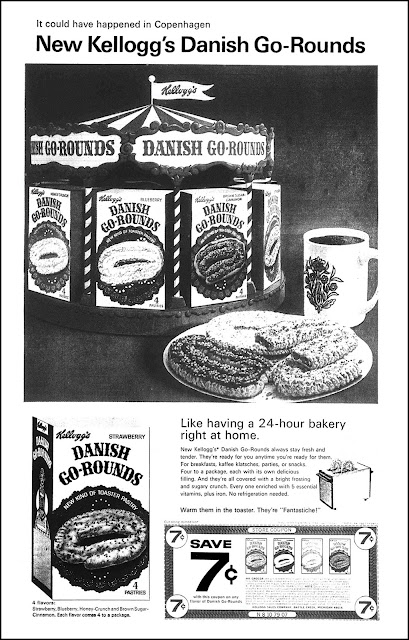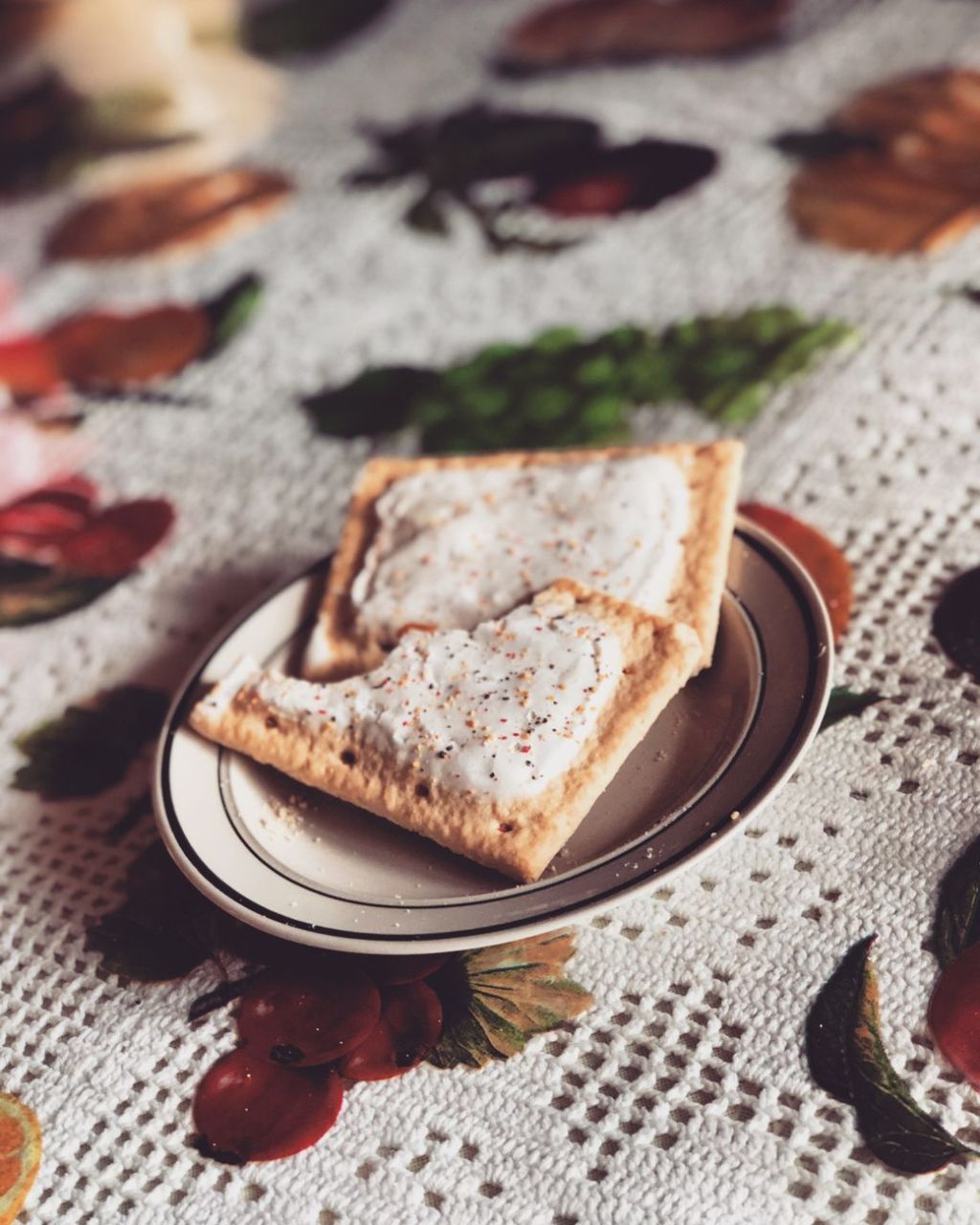
Introduced by Kellogg’s in 1968, Danish Go-Rounds occupied a category all their own. Imagine Pop-Tarts after several years studying pastry in Paris. Their flaky crust gave way to spirals of buttery dough wrapped around cinnamon and brown sugar with a generosity that suggested someone in the Kellogg’s test kitchen still believed breakfast deserved dignity.
Then, sometime in the mid-1970s, they vanished.
Kellogg’s discontinued Danish Go-Rounds while allowing Pop-Tarts to inherit the earth.
I have never recovered.
Pop-Tarts always struck me as breakfast designed by an engineering committee. They possessed all the emotional warmth of corrugated cardboard lightly dusted with cinnamon. They were perfectly adequate, which is often the first warning sign that something wonderful has been sacrificed in the name of efficiency.
The disappearance of Danish Go-Rounds taught me an early lesson about consumer culture. Companies rarely announce that they are replacing excellence with mediocrity. They simply assure you that “customers prefer the new product,” as though an anonymous focus group had voted to replace Mozart with elevator music.
Perhaps they did.
As a child, however, I interpreted the loss with the disproportionate seriousness children reserve for the destruction of sacred things. A glorious breakfast civilization had collapsed. The pastry aristocracy had been guillotined, leaving only processed commoners to occupy the throne.
Looking back, I realize Danish Go-Rounds became more than breakfast.
They became a symbol.
Their disappearance seemed to foreshadow a broader cultural transition, one in which craftsmanship quietly yielded to optimization, distinction surrendered to standardization, and memorable pleasures were gradually replaced by products that offended no one because they inspired no one. Before long came a parade of aggressively modern food innovations: Imperial Margarine, Tang, Space Food Sticks, Boone’s Farm Apple Wine, SlimFast, and enough chemically enhanced convenience foods to make future nutritionists wonder whether the twentieth century had briefly declared war on its own digestive system.
Of course, this is nostalgia talking.
The 1970s produced plenty of culinary atrocities alongside their occasional masterpieces. Memory edits generously. It preserves the triumphs and quietly escorts the embarrassments out the back door.
Still, I cannot think about Danish Go-Rounds without arriving at what I now call Snackrilege.
Snackrilege is the profanation of a beloved food through its discontinuation, reformulation, or replacement with an inferior mass-market substitute, producing the irrational conviction that civilization itself has taken a wrong turn.
Snackrilege is not ordinary disappointment.
It is culinary apostasy.
It is watching a corporation demolish a cathedral and replace it with a parking garage while issuing a cheerful press release explaining that parking is more convenient for everyone.
The object itself hardly matters. One person’s Danish Go-Rounds are another person’s original Butterfinger, Jell-O 1-2-3, Marathon Bar, or McDonald’s fried apple pie. Every generation possesses its own edible relics, foods whose disappearance feels strangely personal because they were quietly woven into the emotional architecture of childhood.
That is why Snackrilege has so little to do with pastries.
What we mourn is not merely the loss of a favorite flavor but the disappearance of a small piece of the world that first taught us comfort, delight, and the reassuring illusion that the best things would always be there waiting for us.
Then one day they aren’t.
And someone hands us a Pop-Tart with a perfectly straight face.