Tag: diet

  • How We Went from Breakfast Mascots to Political Tribes

    How We Went from Breakfast Mascots to Political Tribes

    A few nights ago, I watched Big Vape: The Rise and Fall of Juul, the four-part autopsy of a company that promised salvation from combustible cigarettes and instead managed to hijack a generation’s taste buds. Juul framed itself as a public-health crusader. What it actually built was a sleek delivery system for addiction, turbocharged by flavors engineered to lodge themselves deep in the dopamine circuitry of young brains.

    Former employees and users all pointed to the same thing: mango. Mango wasn’t just a flavor; it was an event. People didn’t vape mango casually. They marinated in it. Mango was the hook.

    Watching this, I was transported back to my own childhood and my first chemical romance: Cap’n Crunch.

    There was something about that unholy alliance of corn flour, palm oil, and brown sugar that short-circuited my will. I didn’t want moderation; I wanted saturation. My parents imposed limits, which only deepened my resolve to grow up as fast as possible so I could make my own enlightened dietary decisions—namely, Cap’n Crunch for breakfast, lunch, and dinner. I failed to notice the irony that a grown man subsisting on sugar cereal would represent not maturity but infantilization.

    Cap’n Crunch’s true genius wasn’t just sweetness. It was proliferation. The same cereal reappeared in endless costumes—Crunch Berries, Peanut Butter Crunch—each one offering the illusion of choice. King Vitamin was the most audacious iteration: Cap’n Crunch in a health halo, a masterclass in rebranding junk as virtue. Lipstick on a pig, poured into a cereal bowl.

    Then there were the mascots. Quisp the Martian. Quake the muscle-bound coal miner. As a child steeped in superhero comics and Hulk fantasies, I gravitated toward Quake. Strength. Power. Identity. I didn’t realize I was choosing a brand avatar, not a breakfast.

    Cereal companies were having a field day. We watched cartoons while eating the very product being advertised between scenes. It never occurred to us that we were being conditioned—trained to celebrate a non-nutritive food substance that dissolved teeth and rewired appetite. The Juul kids didn’t know it either. They thought they were buying into a sleek, adult lifestyle. What they were really purchasing was dependence, with a mango aftertaste.

    What troubles me now is that adults don’t seem any less susceptible.

    Today, many people consume political tribes the way we once consumed sugar cereal and flavored vapor. Politics has been repackaged as lifestyle branding—complete with slogans, merch, cosplay, and dopamine hits. The substance is thin. The stimulation is constant. Critical thinking is nowhere to be found.

    These aren’t political commitments; they’re identity snacks. Sugar rushes masquerading as convictions. Defense of one’s “views” consists of chanting talking points with the same reflexive loyalty I once reserved for Cap’n Crunch. No wonder the country feels like it’s in free fall. We haven’t grown up—we’ve just swapped mascots.

    We are a nation of adult children, hooked on political flavors the way kids were hooked on cereal and Juul users were hooked on mango. Politics has become a consumer product: addictive, polarizing, shallow, and wildly profitable. All dopamine. No nutrition.

  • How a Toilet Seat Ruined My Workout

    How a Toilet Seat Ruined My Workout

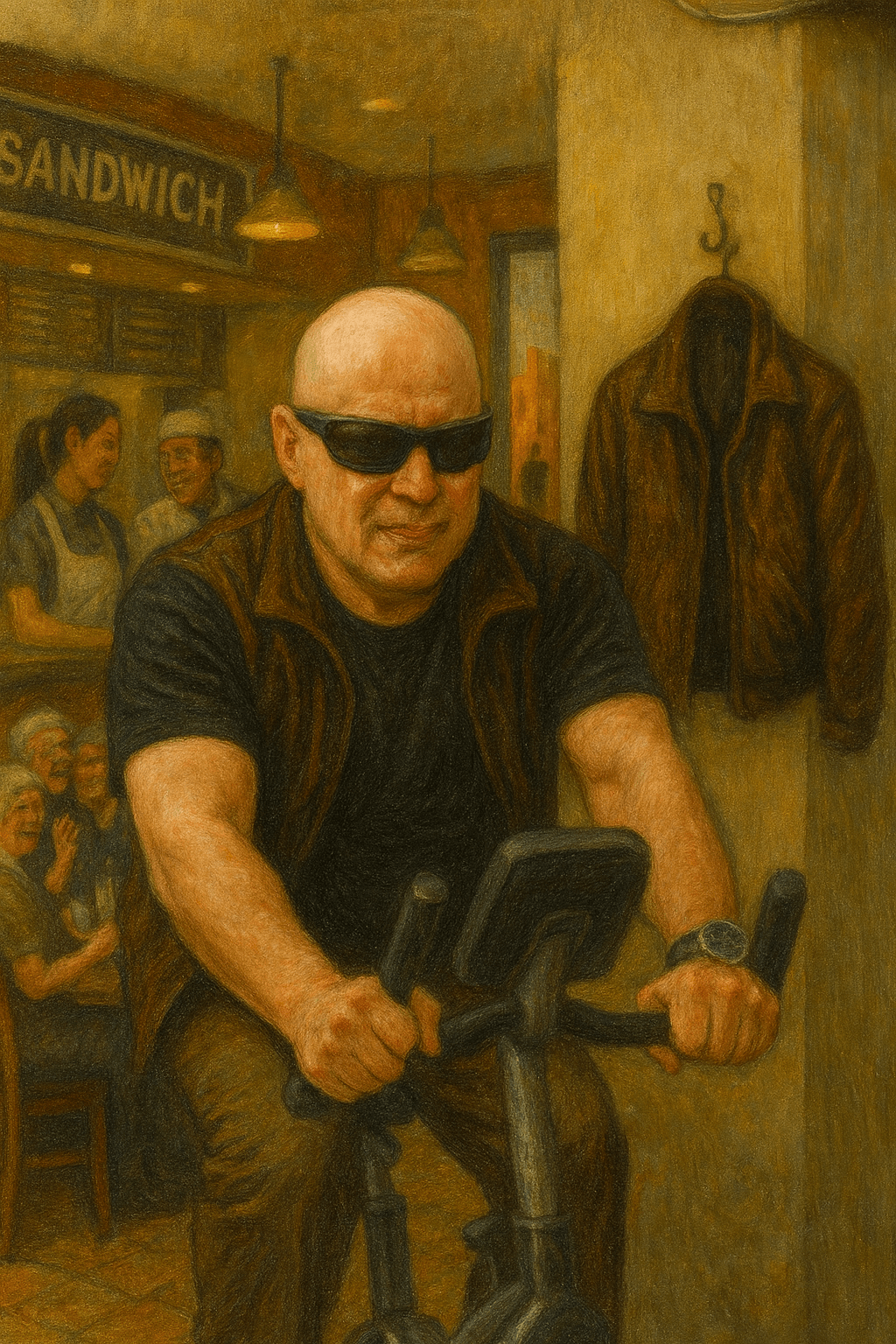
    Eighteen months ago, when I tore my rotator cuff, I made the first of several reluctant concessions to age and anatomy. My one-hour kettlebell workouts dropped from five days a week to three. In their place, I resurrected the Schwinn Airdyne—a machine I trust because it does not care about my feelings. I rode it for 50 to 60 minutes, three or four days a week, and in the early going I had to work hard to burn 600 calories in 54 minutes. Progress came slowly, then grudgingly, then reliably. Soon it took only 48 minutes to hit 600. In the last month, I was regularly landing around 700 calories in 56 minutes.

    Then came yesterday.

    I burned 825 calories in 61 minutes. Nearly 800 calories per hour. That’s not training; that’s an episode. That’s one of those rare days when the body cooperates, the mind goes feral, and the machine quietly accepts its role as accomplice.

    But we need to talk about today.

    Today, I slogged. I crawled. I negotiated with myself minute by minute. I finished with a humiliating 500 calories in 56 minutes—a meager 535 calories per hour. That’s roughly a third less output than yesterday. As someone who motivates himself through numbers, benchmarks, and internal scorekeeping, this wasn’t just disappointing. It was existential.

    Gamification cuts both ways.

    There were, however, mitigating factors. Last night I spent three hours locked in mortal combat with an old toilet seat, sweating through three T-shirts while attempting to remove plastic wing nuts that had apparently fused with time itself. During this campaign, I punched myself in the face with a pair of pliers, opening a respectable gash across my nose. I woke up sore in places no exercise program claims credit for.

    I suspected today’s ride would be compromised. I just didn’t anticipate how compromised. Working out this morning after last night’s ordeal felt like an NFL linebacker playing Monday Night Football and then being asked to suit up again on Thursday night. The schedule was punitive. What I needed was rest—another full day of it.

    To console myself, I did what any reasonable person would do: I cooked the books. Surely that three-hour ordeal burned at least 400 calories. Add that to today’s 500 on the Airdyne and—there it is—900 calories. A full 200 calories over my goal.

    Victory.

    The ledger balances. My bragging rights are being processed. All that remains is a warm bathtub and the quiet satisfaction of knowing that even on an off day, I still managed to win the argument with myself.

  • The Potato Diet and the Gospel According to Mel Brooks

    The Potato Diet and the Gospel According to Mel Brooks

    Recently, I fell down a nutritional rabbit hole and emerged clutching a potato. Not just any potato, but the cooked-then-cooled kind—Idaho and sweet potatoes transformed into resistant starch, that miraculous category of food that sounds like it should be protesting something. Resistant starch, I learned, behaves like a probiotic: it feeds the gut microbiome, supports immunity, improves metabolic health, lowers cholesterol, and may reduce colorectal cancer risk. It even helps regulate appetite hormones, which is a polite way of saying it tells your brain to stop behaving like a feral raccoon.

    There’s a whole taxonomy of resistant-starch foods, but I’m a simple man. I’m focusing on potatoes. I eat them cold from the fridge or gently reheated. Lunch and dinner get a potato. Snacks get a yam blended into yogurt like some deranged Thanksgiving parfait. If it’s an Idaho potato, I dress it up with plain Greek yogurt, nutritional yeast, and a reckless amount of herbs and spices. This is what refinement looks like in 2026.

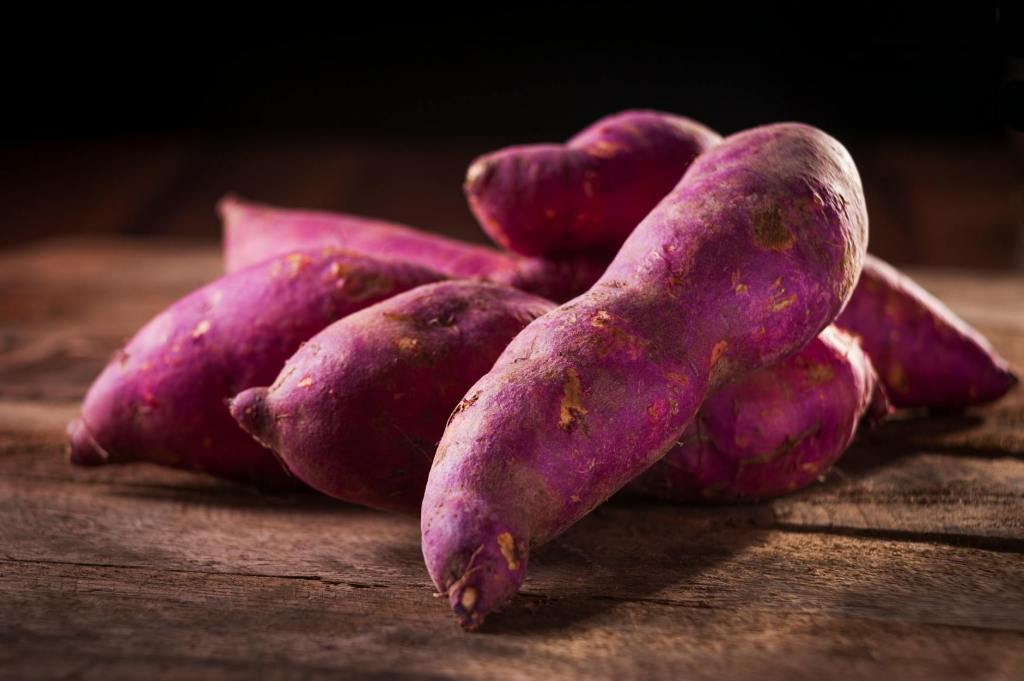
    So far, the results have been suspiciously positive. I feel energized. My gut feels calm and cooperative. I enjoy the strange pleasure of eating potatoes at all hours of the day. The real stars, though, are the yams and sweet potatoes—especially the purple Japanese sweet potatoes, which look like food designed by a medieval alchemist with a sense of humor.

    Then came today.

    On the Schwinn Airdyne, I felt… powerful. Not delusional powerful. Not “I should enter a CrossFit competition” powerful. Just quietly, inexorably strong. I burned 825 calories in 62 minutes. The last time I broke 800 calories on that bike was three years ago, back when my joints were younger and my expectations were less realistic.

    Do I attribute this personal record to my potato regimen? I don’t know. The potatoes could be a placebo. I could be committing the cardinal sin of confusing correlation with causation. More likely, I just had one of those rare days when physiology, psychology, and stubbornness line up like planets.

    I don’t expect to hit 800 calories regularly. Seven hundred is already serious business. Eight hundred requires intent. Eight hundred is a flex. It’s bragging rights territory—the kind of obsessive pursuit Howard Ratner brings to the giant black opal in Uncut Gems, except with less jewelry and more sweat pooling under a stationary bike.

    There was another factor, too. Today’s ride was a response to yesterday.

    My daughters were at Knott’s Berry Farm. My wife was out seeing Leslie Jones. I usually enjoy solitude, but yesterday it curdled. The headlines were bleak. My creative energy flatlined. The world felt slightly out of phase, like a record spinning at the wrong speed. When things get that dark, my internal soundtrack defaults to King Crimson’s “Epitaph”—a song that sounds like it was written for someone weeping against a stone wall at the end of history.

    I got through the night with two documentaries: Mel Brooks: The 99 Year Old Man! and Secret Mall Apartment. One was joyous defiance. The other was a reminder that some people respond to modern despair by secretly building illegal sanctuaries inside dead shopping centers.

    Mel Brooks said something that landed with force. Life is hard. We suffer loss. But piling misery on top of misery—indulging self-pity—only deepens the wound.

    I took that personally. I suspect the 825-calorie burn was my way of replying: I hear you, Mel. I love you. I’m choosing motion over rumination.

    And so I did.

  • The Confessions of a Non-Vegan Vegan

    The Confessions of a Non-Vegan Vegan

    I am a tormented soul, and the battlefield is my plate. I never feel I’m in the right place, and by “place” I mean my eating domain—the psychic terrain between brisket and beans. I was raised on barbecued beef sandwiches, smoky hamburgers, salami hoagies, and charcuterie boards that looked like Renaissance still lifes of cured flesh. And then, over time, my conscience kicked in like a late-arriving bouncer. I began to hear the muffled cries of suffering animals—and the louder groans of my own arteries. I hated that my pleasure depended on the misery of sentient creatures. I wanted clean eating, a clean heart, moral clarity, and the faint sanctimonious glow of vegan virtue hovering above my head like a halo.

    Then I actually paid attention. Veganism, it turns out, isn’t a moral spa retreat; it’s a maze of tradeoffs. Monocrops. Soy fields bulldozing ecosystems. Mice and birds ground into casualties of industrial “compassion.” I realized that evangelizing vegan purity often slides into cultural arrogance—an Instagram-fed smugness that flattens traditions built over centuries of living close to land and climate. Who was I to wag a lentil at an Inuit and say, Have you tried chickpeas? Moral certainty curdled into embarrassment. The world, annoyingly, refused to sort itself into clean categories.

    And then there was love. My family bonds through food, and their love language is meat. Bring home burgers and barbecued chicken and I’m greeted like a returning war hero. Serve curried lentils and I’m exiled to the doghouse with a Tupperware lid for a pillow. So I live as a Non-Vegan Vegan: my heart leans plant-based, but pragmatism, domestic peace, and the gravitational pull of convenience drag me back to the carnivorous center. This is my life—philosophically compromised, nutritionally conflicted, emotionally negotiated. It’s tormented, yes, though still less tormented than the animals sacrificed for the charcuterie board my family will demolish on New Year’s Eve. That thought doesn’t save me. It just makes me chew slower.

  • Discretionary Use Principle

    Discretionary Use Principle

    The Discretionary Use Principle begins with a simple but demanding claim: tools are not inherently good or bad, but they become harmful when used without judgment, proportion, or purpose. Whether we are talking about food, technology, or media, the decisive factor is not purity but discretion—our ability to choose deliberately rather than reflexively. The principle rejects both absolutism and indulgence. It argues instead for a calibrated life, one that privileges nourishment over stimulation, depth over convenience, while still recognizing that modern life occasionally requires shortcuts. This framework is especially useful when thinking about analog versus digital living, where moralized categories often replace careful thinking.

    It is wise to carve out a large, non-negotiable block of each day in which machines are politely but firmly excluded—no screens glowing like anxious faces, no notifications tugging at your sleeve, no algorithm whispering what to want next. Go hike where the trail refuses to optimize itself. Lift weights in a garage with nothing but an AM radio crackling like a distant campfire. Write dreams and grievances by hand in a clothbound notebook while Bach or Coltrane keeps time. This is the analog world, and it feeds parts of the nervous system that silicon cannot reach. In this sense, analog living resembles whole foods: salmon that still tastes like water and muscle, almonds that require chewing, blueberries that stain your fingers. The more time you spend here, the less bloated your spirit becomes. Digital life, by contrast, often behaves like ultra-processed food: frictionless, hyper-palatable, engineered for compulsive return, and strangely unsatisfying no matter how much you consume.

    That analogy works—until it doesn’t. Not all analog living is virtuous, just as not all “whole foods” are benign when eaten without restraint. A steady diet of eggs, clotted cream, or beef heart can quietly undo you. Likewise, not all digital experience is junk. There are serious conversations on social platforms, lucid Substack essays, and educational YouTube channels that sharpen rather than dull attention. The mistake comes when we moralize categories instead of exercising judgment. Ultra-processed food is not a single moral villain; “processed” names a method, not a fate. Steel-cut oats, frozen berries, tofu, canned beans, and whole-grain bread are processed and still nutritionally intact. Even within the ultra-processed aisle, a minimally sweetened protein bar is not the same organism as a fluorescent snack cake designed to bypass satiety. The real danger is not processing itself but the familiar cartel of refined starches, added sugars, industrial fats, flavor engineering, and low nutritional payoff.

    Seen through the Discretionary Use Principle, the lesson is neither to flee the digital world nor to surrender to it. Eat whole foods most of the time. Live analog for long, uninterrupted stretches. But do not shun all processed foods or digital tools out of misplaced virtue. Use them when discretion, efficiency, and purpose demand it. Health—nutritional or psychological—is not preserved by purity tests. It is preserved by attentiveness, proportion, and the ongoing discipline of choosing nourishment over convenience, again and again, without pretending that the choice will ever be automatic.

  • How Ultra-Processed Foods Turn Us Into Weight-Gain Machines

    How Ultra-Processed Foods Turn Us Into Weight-Gain Machines

    Julia Belluz and Kevin Hall’s essay “It’s Not You. It’s the Food.” explores the way the food industry changes our biology so that we are not at fault, in terms of a failure of moral strength or self-discipline, for our weight gain. Rather, ultraprocessed food is. Even if we try to shun the “toxic food environment,” we will find such a move difficult for several reasons. For one, what is “toxic food”? The government, at best, has given us a vague definition. Do we look to influencers? They’re trying to sell supplements more than health. 

    To make their point, the authors use this analogy: “If large swatches of the population were being sickened by a poison released from an industrial plant, no one would suggest that the solution is to just offer home filters, wearables, and supplements. The only real path to restoring health would have to include mandating the removal of the poison from the environment.” 

    The truth is simple, and it’s brutal: You’re on your own: You have to fight like hell to remove ultraprocessed foods from your diet. Kevin Hall’s study shows the more UPFs you eat, the more weight you gain. And the converse is true: The less UPFs you eat, the more weight you lose, especially fat and without effort. 

    The authors observe that when people move to America, they get fat. The common denominator is leaving a low UPFs country to a highly concentrated one. These immigrants get fat and suffer obesity-related diseases. So much for the American Dream.

    Why are UPFs the villain? Because they mess with us–our biology, our hormones, our satiety signals, our gut biome. They turn us into Fat Machines. 

    In America’s rich UPF environment, 70% of available food calories “are deemed hyperpalatable and are in foods designed for the overconsumption that chronically sickens us. They’re also heavily marketed and cheap. Chronic disease hot spots are the most socioeconomically deprived, with food environments akin to toxic waste sites.”

    Knowing the enemy before us, we have to ask ourselves: What do we do? The authors argue that self-discipline doesn’t cut it. We need government regulation. The problem is that we could be dead before anything gets done. Another problem is that the FDA and other institutions don’t seem to have a handle on sound health these days, and even if they did, they’ve lost the trust of the public, many of whom like to cherry-pick their information inside their social media silos. 

    Nevertheless, the authors are adamant about this point: UPFs that “can drive overconsumption should be treated as recreational substances to which we must apply aggressive tax policies, front-of-pack warning labels, marketing restrictions and more, especially for foods marketed to children.”

    Notice the authors didn’t say all UPFs, only the ones designed for overconsumption. Some processed foods such as canned beans, high-protein, flax-seed whole-grain bread, liquid egg whites, and whey protein powder should be spared such government labels. 

    Should we wait for the government to help us in this regard? Probably not. Researcher Kevin Hill quit the N.I.H. after his UPFs studies were censored by the current administration. Not surprisingly, money is a big factor. The authors point out that the global food industry is worth $8 trillion, more than the oil and gas industry. There’s a lot of skin in the game for lobbyists who fund a plethora of politicians. 

    But the science is out: We’re not at fault for our fatness. Food Inc., which makes 70% of their food hyperpalatable for overconsumption to line their pockets, bears much of the blame. Also, failure of government leadership. 

    Brace yourself: Regardless of your economic status, you’re on your own. No one is going to save you. Eating in America is the Wild Wild West. 

  • Not All Ultra-Processed Foods Are Alike

    Not All Ultra-Processed Foods Are Alike

    New Yorker writer Dhruv Khullar opens “Why Is the American Diet So Deadly?” with a truth so obvious it ought to be printed on cereal boxes: Americans are eating themselves into an early grave. No other nation can match our national pride in oversized portions, recreational snacking, and ultra-processed food engineered to hit the brain the way a slot machine hits a Vegas tourist. When the rest of the world wants a modest meal, Americans want something that triggers the dopamine cannon.

    Enter Guillaume Raineri, a French transplant who arrived in Maryland when his wife took a job at the National Institutes of Health. In an earnest attempt to understand American nutrition, he enrolled in a paid diet study—essentially voluntarily entering a culinary escape room. For four weeks, he lived in a controlled environment, eating three meals a day totaling about two thousand calories per meal. 

    Weekdays were gentle on the palate: minimal processing, plenty of whole foods. Fridays, however, were an ambush—UPF theme nights featuring chicken nuggets and PB&J sandwiches, the American sacrament. Raineri’s body protested immediately: bloating, sluggishness, the kind of malaise that suggests your bloodstream is pleading for diplomatic immunity.

    When Khullar visited, study designer Kevin Hall explained the challenge: lumping all ultra-processed foods together is like putting canned kidney beans and gummy bears in the same moral category. Food processing yields genuine benefits—less spoilage, wider availability, and the ability to feed millions at scale—but conflating all UPFs blurs important distinctions. Nutrition heavyweight Walter Willett argues that the focus shouldn’t be on UPFs as a monolith but on overall dietary patterns, especially those rooted in plant-forward whole foods and Mediterranean sensibilities. The core question Hall explores is simple but unsettling: why do people, consciously or unconsciously, eat more when given UPFs?

    The findings aren’t comforting. Participants consuming UPFs ate about 500 more calories a day, experienced spikes in glucose and insulin, and gained weight. Whole-food diets did the opposite: reduced intake, increased satiety, healthier hormone profiles. This complicates the simplistic calories-in/calories-out theory that refuses to die, despite evidence showing that food quality shapes metabolism, hunger hormones, and how our bodies store energy. As Tufts nutrition dean Dariush Mozaffarian puts it, “The dirty little secret is that no one really knows what caused the obesity epidemic”—which becomes even more maddening when you realize Americans now consume slightly fewer calories than they did decades ago, yet obesity continues to climb. GLP-1 drugs may soon rewrite this script entirely.

    UPFs introduce another sinister twist: they don’t just fill our stomachs, they remodel our biology. They recalibrate taste receptors, blunt satiety signals, and create a psychological and physiological FOMO for even more snacks, flavors, and novelty. Some studies, like Willett’s more granular approach, show that UPFs behave differently depending on additives—some beneficial, some neutral, some metabolic chaos grenades. 

    And yet, none of this complexity prevents Americans from gorging on the worst offenders. Doritos, the poster child of engineered hedonism, sell more than a billion bags a year. When you calculate how many collective years of life are sacrificed for that neon-orange dust, you realize our species is perfectly capable of choosing pleasure over longevity.

    Meanwhile, Food Inc. behaves exactly like Big Tech: both industries manufacture addictive junk because attention and appetite are profitable. Social media mirrors the food system: endless junk content, engineered outrage, and influencers who peddle easy purity. YouTube is now overrun by self-anointed nutrition gurus who command you to eat only whole foods and flee all processing. With algorithms breathing down their necks, they don’t dare utter anything nuanced—like the fact that UPFs come in subcategories, some nourishing, some harmless, some devastating. Nuance doesn’t get clicks. Absolutism does.

  • Against Becoming a Whole Food Absolutist

    Against Becoming a Whole Food Absolutist

    I admonish my teen daughters for their “high school” diet–80% of which is ultra-processed. I tell them to learn to prepare and enjoy whole foods, and as I speak these words, I can feel a self-righteous halo glowing over my head. My rectitude is rooted in my knowledge that whole foods are more dense, nutritious and fibrous than processed foods, and as a result whole foods help us achieve satiety–the word for feeling full, an important condition to help us avoid overeating. 

    The problem, however, with self-recitude, is that it can encourage us to become absolutists, zealous, and true believers who drink our own Kool-Aid with such relish that we fail to see how blind and rigid we have become. As whole food absolutists, we may find that our worldview and lifestyle doesn’t align with reality.

    This misalignment is discussed in Olga Khazan’s essay “Avoiding Ultra-Processed Foods Is Completely Unrealistic.” The title is followed by the parenthetical “Especially if you have kids.” 

    As a health reporter, Khazan interrogates her own food choices for her son, some of which she understands will be questionable: peanut-butter puffs, grape-jelly Uncrustables sandwich, mixed-berry oat bites–all ultra-processed. 

    She understands that “hyperpalatable” Ultra-Processed Foods (UPFs) are linked to obesity, glucose spikes, insulin resistance, type 2 diabetes, and other afflictions so serious that UPFs should be treated like cigarettes and labeled with surgeon general warnings. 

    In light of UPF’s dangers, Khazan observes there is a myriad of health mommy influencers making videos on how to make your own healthy versions of goldfish crackers and chicken nuggets and how to prepare toothsome steamed cauliflower and carrot salad for your toddlers.

    In this aspirational world, preparing whole foods may give us bragging rights, but it doesn’t align with the real world: Getting stuff done. When you consider how busy a working parent is in our ultra-competitive Hunger Games society, you realize that taking the time to prepare whole foods is an opportunity cost: Yes, you made homemade goldfish crackers, but you didn’t have time to go to the dry cleaners, drop off a return package of undersized garments to Temu, and stand in line at the pharmacy to pick up your medications. In other words, when you’re living in the real world, you have to capitulate to some UPFs regardless of the fitness mommies wagging their scolding fingers at you.

    But Khazan points out that all this food shaming is making us fail to see the complexity of the ultra-processed food category, which is “too broad and difficult” for us to understand. Bran flakes and candy bars are both considered UPFs, but are they equal? Tofu is often categorized as a UPF, but is it really? Is soy milk bad for you in the same way sugary soda is? In other words, can we put all UPFs in the same category?

    To complicate UPFs further, some are even good for you, including some yogurts, breads, and breakfast cereals. Additionally, some people have food restrictions, because of special dietary needs and food allergies, and their health benefits from some UPFs in their diet. For example, I use Splenda and liquid stevia for my coffee and tea, and my insulin thanks me for it.

    The Shaming Whole Food Mommies should stop wagging their fingers for another reason: Being a parent entails unexpected crises that create time-management problems, which can only be solved with a quick meal, such as putting chicken nuggets in the toaster-oven. To make whole foods palatable can take several hours of preparation. Unless you’re rich and home all day, the time required for this type of preparation may elude you. 

    We’re not just talking about the time to prepare whole foods. We’re talking about cognitive drain. The amount of mental energy to bake chicken nuggets and a plate of celery stalks smeared with peanut butter is infinitesimal compared to prepping for chicken Tikka masala over basmati rice followed by cleaning ten times more dishes than microwaving a quick meal.  

    If you’re rich and you can spend time shopping in the morning and the rest of the day in the luxury of your spacious, state-of-the art home, you have the money, time, and cognitive energy to make tasty whole food dishes. Congratulations, you’re a member of the one percent. The rest of us have to work for a living. Unlike you, we’ve got chicken nuggets in the freezer for emergencies. 

    Have we even talked about the cost of whole foods vs. UPFs? A jar of organic pasta sauce cost more than double the one larded with high-fructose corn syrup. The same goes for salsa, nut butters, tomato sauce, pesto, bone broth, and the list goes on. 

    The Whole Foods Mommy Influencers shamelessly lard us with toxic positivity to “educate” us on healthy eating, but what they’re really doing is a muscle flex–showing us how great their lives are and wanting us to suffer FOMO because we don’t have their time and resources. They’re rubbing our noses in their glorious lifestyle knowing deep down that we don’t have the time and resources to join their rarified tribe. They’re more toxic than a case of UPFs. 

    A saner approach is simple: choose your battles. Cook whole meals when you can. Use common sense. Avoid the truly catastrophic diet—the frappuccino-and-bear-claw lifestyle that leads straight to endocrinological ruin. And when you inevitably reach for a UPF shortcut, don’t flagellate yourself or watch a Mommy Influencer video for penance. Just eat, breathe, and move on. The real world is hard enough without adding shame to the grocery bill.

  • Raising Teens in the Age of Doritos and Doom

    Raising Teens in the Age of Doritos and Doom

    In Food Intelligence, Julia Belluz and Kevin Hall deliver a bleak data point: since 2018, ultra-processed foods—UPFs, the junk with marketing degrees—account for 60 percent of the calories consumed by American adults and nearly two-thirds of what children eat. These edible Frankensteins are now being linked to depression, type 2 diabetes, and early-onset colorectal cancer.

    I have twin daughters in high school who live on donuts, chips, energy drinks, and iced coffees that taste like dessert in a cup. This is their food pyramid of joy. I tread carefully: I don’t want to sound like a puritan in a lab coat or a prophet of intestinal doom. I just want to help without becoming the household killjoy.

    But what is “helpful” when their entire social ecosystem runs on UPFs? If I had to guess, 75 percent of their peer group’s calories come from things that never met a farm or field. Processed food isn’t just addictive—it’s tribal. Sharing snacks is a social contract; refusing one is like rejecting friendship itself.

    Convincing teenagers to stop eating UPFs is about as effective as warning them about “too much screen time.” They’ll nod politely, roll their eyes invisibly, and continue scrolling while demolishing a bag of Flamin’ Hot somethings. Still, I’ll try. I’ll cite the studies, stock the fridge with hummus, guacamole, nut butters, whole-grain crackers, chickpea puffs, trail mix, and protein shakes—an arsenal of virtue they’ll likely ignore.

    Because youth isn’t about balance or moderation. It’s about belonging—through food, fashion, memes, and caffeine. Their need for connection will always outweigh my nutritional sermons. So I’ll do what I can: lay out the facts, offer alternatives, and accept that fighting pop culture is a noble but largely hopeless act of parental theater.

  • Have I Gone Overboard with My Protein Obsession?

    Have I Gone Overboard with My Protein Obsession?

    Five nights ago, I dreamed I was trapped at a houseboat party. The decks heaved with music and laughter; people swayed, bottles clinked, lights shimmered across the water. Somewhere between the bass thump and the spray of cheap champagne, I decided it was time to save everyone. I climbed onto a railing and began lecturing on the virtues of a high-protein diet.

    The crowd ignored me. The more I shouted about the glory of amino acids, the louder the DJ turned the volume. My words scattered across the lake like crumbs for fish. I tried compromise—lowering the daily requirement from 200 grams to 120—but no one cared. Eventually, hoarse and defeated, I realized I’d become a mad prophet of whey protein, screaming into the void. When I woke, I asked myself the obvious question: Had I gone overboard on my protein obsession?

    That question lingered until this morning, when I read Julia Belluz and Kevin Hall’s Food Intelligence: Protein, the “Only True Nutrient.” They argue that our worship of protein is centuries old. In 1853, a Parisian newspaper mocked vegetarians as gaunt weaklings too frail to walk out of a restaurant unaided. A hundred years later, Arnold’s gospel of 250 grams a day turned protein into a civic duty for gym rats. Now, with Google searches and supplement sales hitting record highs—an industry worth $28 billion—protein has become both religion and racket. Everyone preaching its holiness seems to be selling tubs of it.

    Protein has always been marketed as a competitive edge: animal protein supposedly bestows power, plant protein supposedly punishes you with mediocrity. Yet Belluz and Hall dismantle this myth. Plant eaters, they write, can easily get all essential amino acids from a diverse diet—no powders, no “meat extract,” no panic required.

    Even more humbling, they admit that no one actually knows the optimal daily dose. Our bodies, they say, have a built-in governor called “protein leverage,” which drives us to crave roughly what we need. Too little protein and we lose muscle, which shortens life. Too much—especially at the expense of a balanced diet—and we hasten the same end. Somewhere between the extremes lies the sweet spot, but it’s not a round number you can print on a supplement label.

    That answer frustrated me. I like numbers. I like goals. “More” has always felt safer than “enough.” Reading their chapter, I remembered the summer of 1978, when I was sixteen and backstage with Mr. Universe Mike Mentzer before his posing exhibition set to 2001: A Space Odyssey. I asked how much protein he ate. “About a hundred grams,” he said, barely looking up from his shake. I was stunned. Arnold had taught us to eat at least 250.

    “Why not more?” I asked. Mentzer shrugged. “It’ll just make you fat.” Then, with equal candor, he mentioned his steroid stack—Deca-Durabolin included. Even then I could tell: genetics, not shakes, were the true miracle. At five-foot-eight and 225 pounds, he was carved from marble, but it was marble under pressure. He died of heart failure at 49, just five miles from where I live.

    Now I’m 64, taking in 180 grams a day and wondering if I’ve turned protein into a creed. I’m strong for my age but heavier than I’d like. Maybe the excess that built my muscle also built my burden. That houseboat dream feels less like absurdity and more like warning. It’s time to stop shouting about protein and start listening—to appetite, to reason, and maybe to the quiet voice reminding me that balance, not bulking, is the real art form.