Tag: diet

  • The Skinny Kingdom Denied

    The Skinny Kingdom Denied

    When it comes to convincing your healthcare plan to cover GLP-1 drugs like Mounjaro or Ozempic, prepare to enter the bureaucratic Twilight Zone. You might think being thirty or forty pounds overweight with blood pressure, cholesterol, and triglycerides inching toward DEFCON 2 would qualify you for a pharmaceutical lifeline. But no—your semi-morbid condition isn’t morbid enough. You’re not quite in the “Skinny Kingdom” yet. You’re stuck in the purgatory of “almost sick,” where the medical advice is to do what 80% of people can’t manage long-term: lose weight the old-fashioned way. Cue the eye-roll and the salad.

    This is where I live—too metabolically misaligned for comfort, but too “not dying fast enough” for insurance. So without the aid of GLP-1 wonder-drugs, I’ve been forced to build my own survival kit. Enter: the diet blog. Yes, that hackneyed relic of the internet. One evolutionary rung above the YouTube weight-loss vlog, and about one click away from a Pinterest board full of quinoa regret. But here’s my defense: writing this thing keeps me sane. First, let’s acknowledge the stakes. I’m attempting to succeed at something with an 80% failure rate. If journaling helps me thread the needle between health and hoagies, I deserve at least a participation trophy. Second, maybe—just maybe—my hard-earned insights might help someone else. Third, I need a breadcrumb trail for myself. Because when the binge fog clears, I need a record of how I got out of the woods.

    But let’s get this straight: if I’m going to write a diet blog, it comes with rules.
    Rule #1: No hawking miracle powders or gut-cleansing teas. This isn’t a supplement commercial. It’s a field report from the front lines of temptation.
    Rule #2: No ab selfies. No one asked, and no one wants to see the cinematic arc of my belly fat.
    Rule #3: No sanctimonious “one-size-fits-all” advice. What works for me may not work for you. I’m here to offer humility, not doctrine.
    Rule #4: Keep it funny. We live in a world where 2,000-calorie muffins are marketed as breakfast. If you can’t laugh at that, you’re doomed.
    Rule #5: No performative pity. Yes, self-discipline is hard. But I’m not marching across Antarctica—I’m just saying no to a Costco cheesecake. Keep perspective.

    If there’s a unifying thesis to this blog, it’s this: self-indulgence is a false god. The man who eats without limits is not happier—he’s just momentarily sedated. True satisfaction comes from self-possession, not pastry. This isn’t about vanity or some fantasy of being a low-body-fat Spartan. It’s about dignity. The mature eater is the happier eater. And if I have to claw my way there without the help of Ozempic, so be it. I’ll blog my way through the absurdity. One disciplined bite at a time.

  • Gluttonshame

    Gluttonshame

    During the Great Life Purge, flashbacks of gluttony didn’t just sneak up on me—they stormed in like uninvited relatives, loud and unrelenting. Just today, I winced remembering a scene from six months prior, when my wife and I, wrapped in the post-dinner glow of calories and denial, settled in for a couple Arrested Development reruns. The show—a chaotic valentine to familial dysfunction—still felt razor-sharp, sharp enough to leave paper cuts on your frontal lobe.

    As the theme song played, I rose from the couch with the sanctimony of a monk on pilgrimage. I was off to retrieve my so-called “satiety apple,” that smug little orb of virtue allegedly designed to curb cravings without detonating my calorie budget.

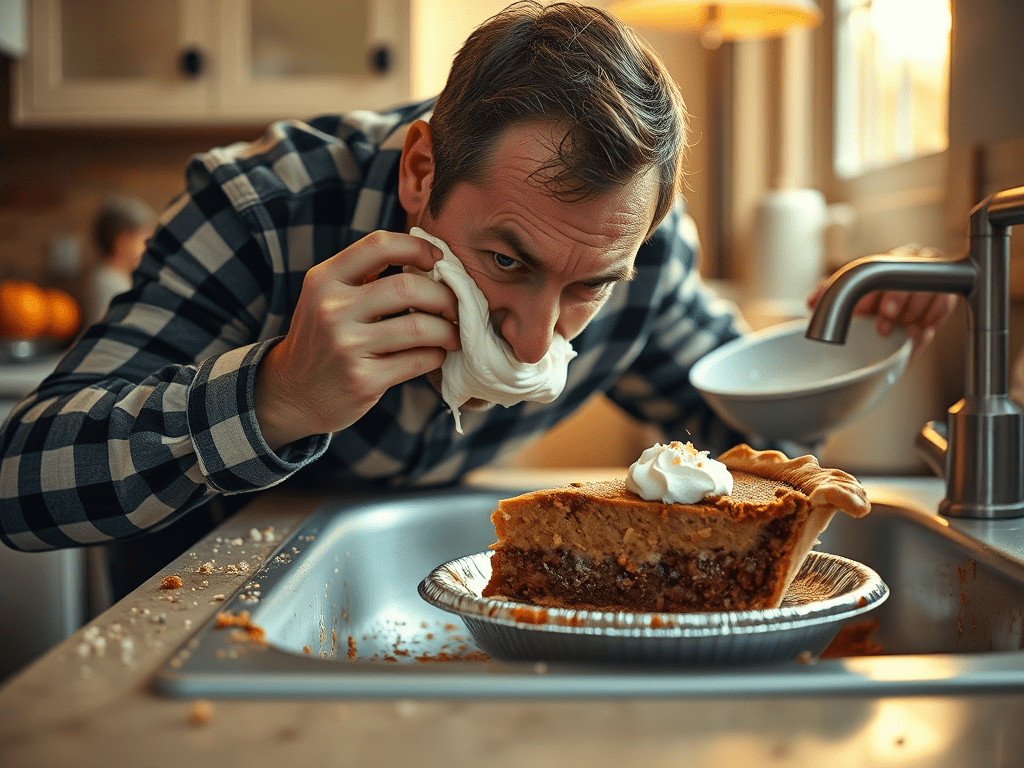
    But then I heard it—a low, seductive hum from the direction of the microwave. There it was: a lone pie box, faintly glowing like radioactive treasure, humming a siren song of buttery crust and spiced filling. I opened the box. Inside, the final slice of Thanksgiving pie waited like a femme fatale in a noir film—dangerous, irresistible, and destined to ruin me.

    I didn’t stand a chance. One second I was a man of discipline; the next, I was hunched over the sink, inhaling that pie like a raccoon who’d broken into a bakery. Crumbs flew. Filling oozed. I was mid-bite, feral and euphoric, when my daughter Alison entered the kitchen.

    She paused, surveyed the carnage, and with surgical precision asked, “When’s the last time you were on a diet?”

    I froze, mid-chew, cheeks ballooned like a chipmunk caught mid-heist. “It’s one slice of pie,” I sputtered, wiping whipped cream off my face. “Hardly a relapse worthy of a family intervention.”

    “Don’t be so defensive,” she replied, with the kind of tonal flatline only teenage girls can weaponize. “I’m just asking—when was the last time you had a strategy?”

    “I didn’t realize you were moonlighting as the historian of my weight management failures,” I muttered, scrambling for dignity.

    “What strategy?” she deadpanned, her eyes sliding toward the now-empty pie tin in the sink like a prosecutor resting her case.

    I opened my mouth in exaggerated mock offense, miming emotional devastation. We laughed, sort of. But her words hit like a sucker punch wrapped in fondant. Despite my kettlebell crusades and protein piety, my daughter saw me for what I was—a man-child undone by pastry.

    The truth hurt because it wasn’t just about pie. It was about a lifetime of performing duets with food, not as nourishment, but as codependence. My relationship with eating wasn’t a partnership; it was a soap opera—a never-ending saga of longing, betrayal, and deeply inappropriate snacking.

    I suffered from food noise—a chronic condition in which the brain becomes a 24-hour food court blaring meal ideas through a megaphone. It wasn’t a craving. It was a full-time broadcast. Even as I wiped pie filling off my shirt, some inner gremlin was planning breakfast, brunch, and an emotionally necessary mid-morning protein bar.

    I had, of course, tried everything. High-protein meals? Check. Fiber-packed produce? Ate it until I squeaked. “Permission to eat favorite foods”? Please. That just gave me moral cover for more cheesecake. As for “hunger cues”—those had long since been drowned in a Wagnerian opera of appetite, where every aria ended in a trip to the fridge.

    I didn’t eat because I was hungry. I ate because I was enchanted. Food was my symphony, and I was its slobbering conductor. While others savored notes of flavor, I devoured entire movements. Pie wasn’t dessert—it was the crescendo. A bag of chips? That was a tragic aria. My kitchen was a concert hall, and I, a helpless Snack Serenader, crooning sonnets to chicken shawarma and tearfully composing odes to sourdough.

    Romantic? Maybe. But make no mistake: this was less about joy than it was about entrapment. I didn’t eat food—I worshipped it. I wasn’t hungry for sustenance—I was desperate for an encore.

    And that’s when the memory landed with full force: the gluttonshame. A post-binge echo of mortification so potent it deserved its own DSM entry. Gluttonshame—the echoing pang of regret triggered by the memory of a food orgy, often witnessed, preferably by someone genetically programmed to judge you—is no passing embarrassment. It sticks, greasy and persistent, like pie filling on a dress shirt. It whispers, “This is why your jeans stage a mutiny every morning.”

    Symptoms? Defensive sarcasm. Performative chuckles. Sudden existential dread. And an uncontrollable urge to delete your food log and relocate to another time zone.

    I felt it all. But if the Great Life Purge taught me anything, it’s that these flashbacks are necessary. They remind me that change doesn’t happen without confession—and a little mockery. Because behind every gluttonshame echo is a man trying, however clumsily, to crawl his way back to self-control—one apple, one salad, one deeply judged slice of pie at a time.

  • Welcome to the Great Life Purge

    Welcome to the Great Life Purge

    When you cut junk food to lose weight, that’s just the beginning. Hundreds of dominoes fall. Welcome to The Great Life Purge—that glorious, semi-manic chain reaction where you set out to cut one small vice and suddenly find yourself Marie Kondo-ing your entire existence with a vengeance.

    You think weight loss is just about dialing back calories and hitting your macros? Think again. This isn’t a tweak. It’s a controlled burn. A purge. A full-blown exorcism of the clutter, chemicals, and chaos posing as comfort. You’re not escaping Fat Jail with a low-carb key and a side of willpower—you’re staging a prison riot and setting the whole institution on fire.

    Think of your life as a garage—no, not one of those Pinterest garages with labeled bins and mounted bikes. I’m talking about a real garage. The kind where a busted leaf blower shares space with a half-used tub of creatine and a pile of shame. That’s your psyche. And mine. Crammed with junk, denial, and forgotten intentions. And now? I’m hauling it all to the curb.

    It started with coffee. I used to down 36 ounces in the morning like a jittery insomniac in a diner scene. Now I’ve cut that to 18. Less milk. Less sweetener. Less gut turmoil. Fewer acid flashbacks from the third cup. Progress.

    Then came lunch. I evicted the canned fish—farewell, mercury-laced mackerel and gout-triggering sardines. My new midday ritual is an arugula salad with tempeh, beans, and cottage cheese—a meal so righteous it practically writes its own self-help book.

    Whey protein? Slashed in half. Just enough to lace my morning yogurt. Sure, I could use more protein, but I’m not going to burn down my 2,400-calorie ceiling just to keep my muscles Instagram-ready.

    Snacks? Gone. Munchdrift—my term for the unplanned snack spiral that sneaks calories into the bloodstream like an embezzler—has been cut off at the source. There’s no room for that soft betrayal anymore.

    Creatine? Down from 6 grams to 3. Why? Because I’m not trying to retain water like a Roman cistern. I’m done with the bloat masquerading as muscle.

    Social media? I nuked 97% of it. That dopamine circus was hijacking my focus, feeding my anxiety, and keeping me stuck in a loop of comparison, craving, and manufactured outrage. Cutting it wasn’t self-care. It was a hostage negotiation with my own sanity.

    Even my workout chalk had to go. Turns out those satisfying powder clouds were drying out my hands and spawning digital ulcers—tiny, furious paper cuts from hell. Three weeks off chalk, and the wounds are retreating like a bad memory.

    And yes—I quit buying watches. Why? Because a bloated watch collection leads to wrist rotation anxiety, which feeds decision fatigue, which then morphs into existential despair that can only be soothed by ice cream. Every anxiety becomes a hunger. I had to cut it at the root.

    Notice the verbs: cut, quit, slashed, purged. This isn’t moderation. This is triage. What started as a diet became a full-scale reckoning. Because once you yank one loose thread, the whole costume of denial begins to unravel. You’re not just quitting sugar and processed carbs—you’re firing the whole cabinet of coping mechanisms.

    The Great Life Purge doesn’t just empty your garage—it changes your address. You’re no longer living in the house of excuses. You’re moving into something leaner, meaner, and unmistakably yours.

    Now, if you’ll excuse me, I have a fat mountain to climb—and I don’t need a sugar crash, a digital ulcer, or a six-watch rotation slowing me down.

  • Losing Weight in Suburbgainia Isn’t Just About Willpower

    Losing Weight in Suburbgainia Isn’t Just About Willpower

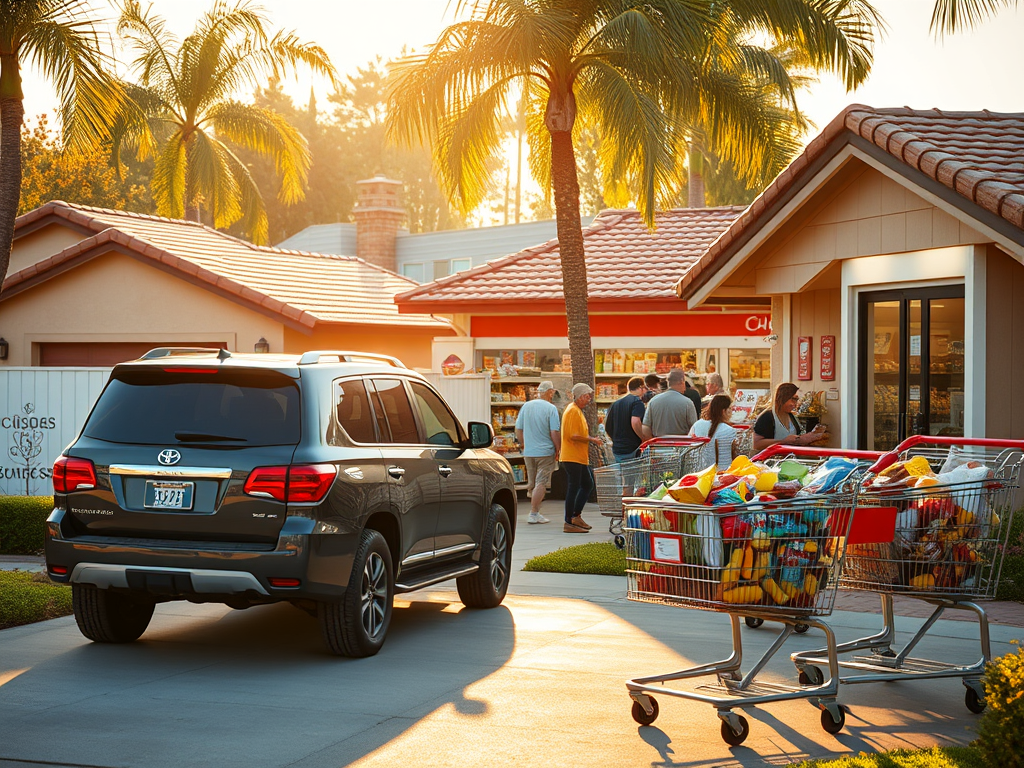
    I live in the padded belly of the beast—a Southern California suburb so manicured and overpriced it feels like a gated community built on a diet of Zillow listings and delusion. Here, tiny homes crouch next to high-performing schools like obedient little dogs, and you can practically hear the sound of families hemorrhaging two-thirds of their salary just for the right to say they live in “one of the most desirable zip codes on Earth.” Never mind the suffocating health insurance premiums, the rent-sized car payments, or the phones that become obsolete faster than the milk expires. Somehow, despite all this, we still manage to gorge ourselves into oblivion.

    And gorge we do—with the kind of unapologetic culinary nihilism that says: Why not chase your statins with a triple-decker guacamole onion ring bacon cheeseburger the size of a toddler’s head? These meals don’t nourish. They sedate. They carpet-bomb the body with a week’s worth of calories and lull us into a coma only broken by the siren song of the ice cream truck chirping its Pavlovian jingle.

    Sedated and bloated, we require appropriate transport. Enter the all-terrain behemoths—SUVs that could ferry a minor league baseball team but are usually occupied by one distracted suburbanite and their half-finished iced mocha. These vehicles aren’t just cars—they’re padded rooms on wheels, egg-shaped mirrors of their drivers’ own expanding silhouettes, stuffed with sensors to correct for our chronic inattention and entertainment centers to distract us from the creeping dread that this might be it.

    Their true purpose? A fantasy of freedom. A lifestyle accessory for people who dream of hitting the open road, yet refuse to drive more than two miles for a pedicure, a Panda Express run, or the latest Marvel sequel. Why venture beyond the safety of the suburb when out there lies gridlock, road rage, parking scarcity, and the occasional wildfire licking the edge of the 405 like it’s auditioning for a role in Dante’s Inferno: The LA Edition?

    So we stay. We scroll. We snack. And when the walls of this sun-bleached hamster cage start closing in, we do what any respectable suburbanite does—we shop.

    The heart of our civic religion is the membership superstore, a concrete cathedral where the faithful line up before opening like doomsday preppers. We flash our membership cards like VIP badges to the apocalypse, and once inside, the frenzy begins: cartloads of triplet-pack peanut butter, bulk tubs of sourdough pretzels, yogurt for an army, and the holy grail—those chocolate cream-filled sandwich cookies that whisper, You’ve earned this.

    Ravenous and under-cabineted, many of us start devouring our haul in the parking lot just to make room for more. We don’t so much eat as conduct calorie triage, clearing shelf space in our bellies before the next Costco pilgrimage. And thus, a problem festers—one so normalized it’s barely acknowledged: obesity.

    But we don’t call it that. Here, being overfed is reframed as being “well-lived.” Belly overhang becomes a badge of leisure. A neck absent from sight is recast as comfort. A visible jawline is regarded with suspicion, even disdain.

    Yet behind this rebranding lies a biochemical horror show: insulin resistance, fat-marbled pancreases, and a Pavlovian addiction to sugary, creamy, sprinkle-laden beverages masquerading as coffee. Our organs are staging quiet rebellions while we sip iced mochas adorned like carnival floats.

    I don’t sketch this grotesque portrait of Suburbia to mock my neighbors. I sketch it because I am them. I, Jeff McMahon, reside in this land of ambient adiposity and quiet desperation—a land I’ve come to call Suburgainia.

    Suburgainia is a soft dystopia stitched together with frozen yogurt kiosks, massage chairs, and drive-thru frappuccinos. It is a place where convenience calcifies into inertia, and waistlines widen in lockstep with our sense of entitlement. It is where obesity isn’t a warning sign—it’s a lifestyle brand.

    Losing weight in Suburgainia isn’t just about willpower—it’s an act of rebellion against a system meticulously designed to keep you soft, slow, and sedated. You can’t change what you refuse to confront, and the truth is this: our environment is a padded cell masquerading as paradise. The enemy isn’t just calories—it’s culture. It’s the drive-thru dopamine, the Costco-induced euphoria, the suburban sprawl that turns a three-block stroll into a vehicular event.

    Real progress begins when we stop romanticizing these indulgences and start recognizing them for what they are: fat traps dressed in convenience, landmines stitched into the elastic waistband of modern life. Reclaiming our health requires more than kale and kettlebells—it demands clear eyes and an honest reckoning with the architecture of excess that surrounds us.

    Somewhere beneath this quilt of belly fat and bulk-pack chicken bakes lives a man with arteries worth saving. But before I can meet him, I have to scale the fat mountain I’ve built—one step, one salad, one unsweetened iced tea at a time.

    Will I make it to the summit without collapsing from myocardial betrayal? I don’t know. But I’ve started the climb. And for now, that’s enough.

  • Victory Lapnesia

    Victory Lapnesia

    For most of my adult life, I’ve been stalked by a sneaky, waistline-widening predator I now call Munchdrift—the stealth snacking habit that brings in a slow-motion avalanche of calories like a drip IV of lard straight to the gut. I didn’t even realize it was happening. One minute, I’m nibbling on a handful of almonds “for heart health,” the next I’m housing a Costco tub of peanut butter with a ladle. Result? I’ve been fat four times. 1996: 235 lbs. 2003: 253 lbs. 2017: 245 lbs. And now, 2025: 247 lbs. Like clockwork. Like a cursed zodiac of self-sabotage.

    I don’t have the luxury of “body acceptance” or any other hashtagged delusion. When I weigh over 230, my body throws a biochemical tantrum: cholesterol, triglycerides, and blood pressure all go full DEFCON 2. This isn’t about self-love. It’s about not dying in the next decade.

    The pattern’s always been the same. I muscle my way down to 200 on 2,400 calories a day, white-knuckling my appetite like I’m defusing a bomb. And then—poof. The discipline vanishes. I get smug. The weight loss high wears off and I forget every methodical trick that got me there. Slowly, entropy creeps in, disguised as “flexibility,” “moderation,” and “deserved treats.” The order collapses. Munchdrift returns. Pride dies. And I wake up bloated and furious, wearing sweatpants that used to hang loose and now plead for mercy.

    Now I’m 63, and I’m done playing Groundhog Day with my waistline. I needed a name for this psychological sabotage—the specific kind of pride-drunk amnesia that ruins everything. And here it is:

    Victory Lapnesia.

    It’s that delusional post-weight-loss fugue state where, drunk on success, I forget every sweaty, hungry, unsexy tactic that got me to 200. Suddenly, the rules become negotiable. “Moderation” sneaks in. Maintenance becomes an endless cheat day. And my once-disciplined mind turns into a TED Talk on rationalization. The result? Munchdrift relapse. Button-flying denial. A renewed subscription to regret, with auto-renew turned on.

    But not this time. I’ve drawn the line. Here are 7 unforgiving strategies to keep Victory Lapnesia from moving back into my love handles like a squatter with squatters’ rights:

    1. Celebrate with Systems, Not Sweets
    No more “I deserve this” cake. That’s how the descent begins—frosted and full of lies. My real reward is knowing what works. So instead of high-fiving myself with a slice of cheesecake, I schedule my next month of meals, workouts, and weigh-ins like a man preparing for war—not a man planning brunch.

    2. Install Post-Goal Protocols
    The scale hitting 200 isn’t the end. It’s the beginning of a long maintenance trench war. I now have a one-page “Maintenance Manifesto” taped to my fridge, my bathroom mirror, and the dashboard of my car. It’s non-negotiable, like brushing teeth or paying taxes.

    3. Rebrand Maintenance as a Project
    Maintenance isn’t a passive state—it’s my next mission. I’ve dubbed it Project Anti-Rebound. Think Marvel meets middle-age. This isn’t about keeping weight off—it’s about defending the citadel of sanity against the invading hordes of snack-based betrayal.

    4. Weigh Myself Like It’s Church
    Sunday mornings. Same time. Same scale. No excuses. I treat the weigh-in like mass: a ritual of reckoning. The scale doesn’t care about my feelings, my schedule, or how “good” I was. It tells the truth like an indifferent god.

    5. Make Munchdrift Illegal
    Snacking is banned. Full stop. No more “just a bite” diplomacy. No handfuls. No desk-side almonds. No post-dinner kitchen loitering. Every bite is logged. Every calorie accounted for. If it’s not a meal, it doesn’t go in my mouth. Period.

    6. Hang My Fat Pants Like a War Trophy
    I’ve kept my largest jeans. They hang like a scarecrow in my closet. A denim warning sign. Every time I feel tempted to “ease up,” I look at them and hear them whisper, We remember who you were. I do too.

    7. Outsource the Shame (Productively)
    I text my weight to a friend every Friday. I blog about my progress for strangers who don’t care but might someday. Shame kept secret is corrosive. Shame shared is accountability. I’ve turned my relapse history into content—and I dare my ego to screw it up again.

    This isn’t a journey anymore. Journeys end. This is a regimen. A regime. A ruthless campaign against the soft tyranny of my own bad habits. Because I’ve learned the hard way: if you don’t fight for maintenance like you fought for weight loss, you’ll lose everything—and you’ll gain it all back.

  • The Reluctant Dieter’s Survival Guide

    The Reluctant Dieter’s Survival Guide

    Cravattenuation Nation: Dispatches from the Snack Trenches

    In 1978, my high school biology teacher Mr. Hennessy—an underqualified martyr with a Napoleon complex and a permanent scent of chalk dust and moral compromise—falsely accused me of cutting class and vindictively tanked my grade from a B to a C. Yet, in a rare moment of non-pettiness, he lobbed a line at the class that clung to my psyche like burnt cheese on a cafeteria tray: “You need two things in life—a job and a philosophy.”

    It took me decades and a thousand acts of minor self-sabotage to grasp what he meant. A true philosophy, I finally decided, wasn’t about quoting Camus in coffee shops or scrawling Latin mottos on vision boards—it was about cultivating a healthy anger at your own slow-motion collapse into chaos. If you weren’t revolted by your own slide into sloth, indulgence, and instant gratification, then congratulations: your dignity had officially left the building.

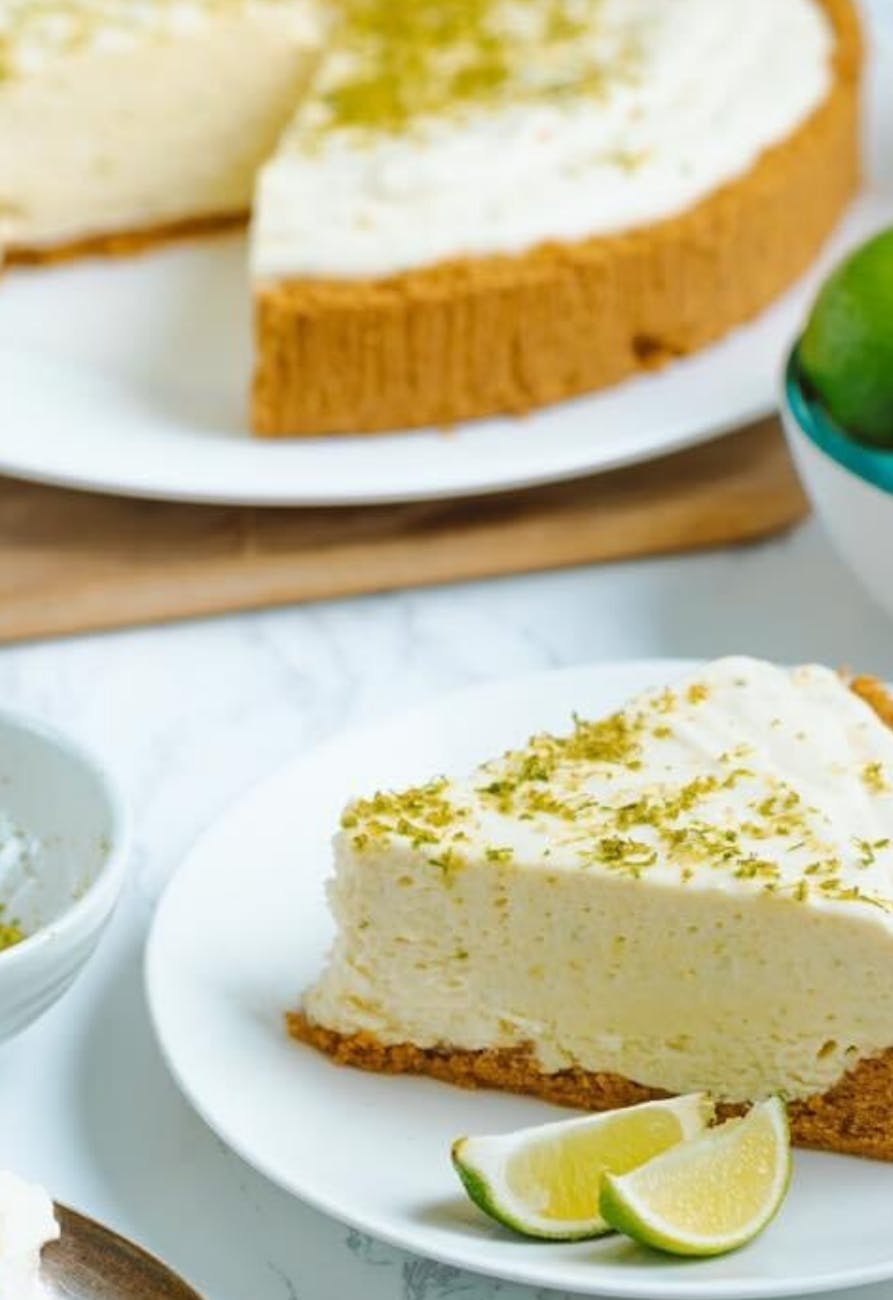
    Flash-forward to a recent humid night in a Miami hotel kitchenette, where I stood barefoot on sticky linoleum, bathed in microwave light and the snoring of my family through a wall that may as well have been made of Kleenex. I was bloated on Cuban oxtail stew, fried sweet plantains, tres leches cake, and key lime pie, anxious, spiritually sagging like a wet hammock. I missed the illusory reinvention vibes of Southern California—where even failure could be filtered through an ocean breeze and a protein smoothie.

    That’s when my invisible guru showed up, conjured by shame, cortisol, and the psychic residue of every unwritten to-do list. Half Stoic monk, half caffeinated boot camp instructor, he looked me dead in the eyes—the eyes of a man who’d seen too many midnight Pop-Tarts—and said, “Repeat after me: Less coffee, less food, more dignity. More focus, more humility, more gratitude, more work—less regret. Got it?”

    It was the kind of slogan you’d find stenciled on a CrossFit wall next to a kettlebell and a shattered dream. But fine, I nodded. I felt that brief, delusional jolt of resolve—the one that comes right before you delete all your food delivery apps and tell your wife you’re going keto again.

    Then I caved and confessed. “Look,” I told him, “I love your gospel. Really. But the moment a cookie enters the room, I turn into a lab rat in a dopamine lab. There’s this gremlin in me—wired for despair and internet snacks—who takes over the moment my blood sugar dips or a notification pings. What do I do with that guy?”

    The guru didn’t blink. He barely moved a muscle, as if quoting from the sacred scroll of Instagram fitness influencers:

     “As you live in accordance with the plan, you’ll grow stronger. The old ways will become revolting. The deeper you root yourself in the good, the weaker the bad becomes.”

    I nodded, sure—but not with conviction. It was more of a sweat-slicked head bob, the kind one gives when pretending to agree while actually fantasizing about cinnamon rolls. Augustine came to mind, that eloquent saint of foot-dragging repentance: “Grant me chastity and continence—but not yet.”

    In my case, it was more like: “Grant me food discipline, but let me demolish a Costco cheesecake first and start clean next fiscal year.”
    And just like that, I saw myself clearly: not a fitness monk, not a nutritional Spartan—just your everyday Reluctant Dieter, dragging my fork through life’s buffet while whispering, “Soon, Lord. But not now.”

    In spite of initial reluctance, on April 10th at the age of sixty-three, fresh off a family vacation in Miami and still spiritually sticky with airport pastrami sandwich guilt, I stepped on the scale and was greeted with a soul-curdling 247 pounds. Yes, some of it is lifelong muscle from half a century of hoisting kettlebells and playing Hercules in the garage. But make no mistake—this number was a slap in the face, a statistical insult to my dignity. Fueled by a righteous anger I can only describe as metabolic revenge, I went to war.

    First, I cut my meals down to three per day and gamified the system like a psychological Jedi. My lunchtime yogurt-and-berries bowl got reassigned as a post-nap “treat,” and a humble apple—normally the most boring fruit in the bowl—was elevated to nightly “dessert,” strategically scheduled for 8 p.m. to give my inner child something to cling to as the kitchen closed. I also slashed my coffee intake from 36 to 18 ounces (don’t worry, I’m still barely human), and dropped my creatine from 6 grams to a mere 3—enough to retain my swole, but not enough to float like a sodium balloon.

    Meanwhile, I came to grips with the ugly truth that I was overstuffing both my freezer and my face. The freezer had become a metaphor for my appetite: jammed with frozen berries, low-carb snacks, and delusions of future discipline. Constantly raiding it created two problems: overconsumption and literal water puddles from a clogged defrost drain. My wife and I emptied the thing out like detoxing hoarders, and miraculously, the fridge stopped weeping. I then purchased a chest freezer for the garage to create a buffer zone—a cold storage moat to protect the kitchen from my impulsive nibbling.

    By April 19, I had dropped to 240 pounds—a loss of seven pounds in nine days, even with an Easter cheat day that involved chocolate cake and blueberry pie, which I regret nothing about. Losing seven pounds seemed like a move in the right direction, a sign of a man with a healthy anger fueling my desire to achieve some self-control. 

      But here’s the real revelation from those ten days: the hunger I thought I was feeling wasn’t hunger—it was performance anxiety from my stomach, a neurotic need to react to every twitch of emptiness like it was a national emergency. That, my friends, is where Cravattenuation comes in.

    Cravattenuation is the noble and necessary art of muting your inner snack gremlin—the one who panics at the first polite growl of your stomach and demands cheese. It’s the mental and metabolic recalibration that teaches you this: real hunger is not a 3 p.m. yawn with a craving for almonds. It’s a deeper emptiness, one you can actually enjoy. Because when you let your appetite stretch out and breathe, you arrive at meals not with guilt or compulsion, but with appetite and joy. Hunger becomes less of a trigger and more of a drumroll.

    Cravattenuation the deliberate process of retraining your body to interpret minor hunger signals not as existential emergencies but as low-priority system notifications: “You might want to eat in a bit” instead of “RAID THE PANTRY OR DIE.” Just as meditation teaches you to sit with discomfort rather than react impulsively, Cravattenuation teaches you that a little hunger isn’t a crisis—it’s foreplay for a better meal.

    We’ve been conditioned by snack culture and anxiety-driven consumption to treat hunger as something to be feared and fixed immediately, like a smoke alarm or a toddler tantrum. But when you practice Cravattenuation, something remarkable happens: your threshold for hunger strengthens, and the urgency softens. You learn to sit with a mild stomach pang without spiraling into carb-lust. Over time, you develop what can only be described as Hunger Discernment: the ability to separate emotional nibble-itching from true physiological need.

    By making your body earn the meal—not through punishment, but patience—you begin to eat with a clarity and joy that’s been missing since the dawn of office vending machines. Food tastes better when you’re actually hungry for it. Not “kinda bored” hungry, not “scrolling through cheese reels” hungry, but real hungry. Cravattenuation helps you not only manage your weight with more ease and grace, it re-enchants the eating experience itself. You’ll start treating meals like mini homecomings rather than pit stops at a dopamine gas station.

    As I snacked less, I enjoyed my meals more. They had more savor than before, and here I had arrived at the desirable condition of Savorosity–what happens when you’ve tamed the snack-demon with Cravattenuation—the fine art of not panicking at the first rumble of your stomach. It’s hunger with manners. You arrive at meals like a guest at a candlelit dinner, not a contestant in a pie-eating contest. You chew like someone who reads books—slowly, curiously, with presence. You’re not chasing a craving. You’re honoring an earned appetite. And you know you’ve crossed into Savorosity when you feel less like a gremlin in a pantry and more like a monk with a spoon.

    But if Savorosity is dinner at a five-star bistro, we must acknowledge its opposite–Munchdrift, which is loitering in the food court of your own life. It’s the slow-motion landslide of indiscriminate nibbling—a cashew here, a dry crust of cheese there, a spoonful of peanut butter just to “hold you over.” It’s hunger as white noise, muffled beneath boredom, impulse, and the kind of existential drift that ends with you staring at an empty bag of pretzels like you just blacked out at a carb rave. In the Munchdrift state, flavor is irrelevant. Appetite never sharpens. Meals become a blur, and you, a passenger on the Grazing Express with no clear destination and no seatbelt.

    This war between Savorosity and Munchdrift isn’t just about food—it’s a philosophical struggle. I arm myself with these lexicon terms the way a weary soldier straps on armor, battling the inner sloth that says, “You’re going to die anyway, so why not faceplant into a tray of brownies?” But that’s a lie dressed in pastry. Because death may be inevitable, but turning into a winded, sweat-drenched metaphor for chaos along the way is not. Dignity matters. So does self-possession. And so does a philosophy of restraint—not one rooted in punishment, but in purpose.

    My old high school biology teacher, Mr. Hennessy—grumpy, flawed, and accidentally wise—once said everyone needs two things: a job and a philosophy. This is mine. Not some monkish denial cult, but a gritty, practical roadmap to push back against entropy. It’s the reluctant dieter’s creed. A form of mature rebellion. And maybe, just maybe, a recipe for actual happiness.

  • Cerealphilia

    Cerealphilia

     Cereal is more than a grain; it’s an existential dream of happiness and the maternal embrace. As kids, we didn’t just eat cereal—we engaged in epic love affairs with cartoon mascots, played mind-bending board games on the back of the box, and embarked on treasure hunts for plastic trinkets buried deep within the sugary abyss. We sent box tops to claim submarines, shirts, hats, and other merchandise that, in hindsight, had all the utility of a chocolate teapot.

    My cereal obsession reached such dizzying heights that I fantasized about growing up to be a Major League baseball star who exclusively dined on cereal for breakfast, lunch, and dinner. In my dreams, I was a grocery store legend, cart packed to the brim with Cap’n Crunch, Franken Berry, Count Chocula, Froot Loops, and Lucky Charms. Cereal was my ticket to mindless self-gratification, whisking me away with Pinocchio to Paradise Island, where we’d lose our minds, sprout donkey ears, and bray like beasts in a symphony of sugary delirium.

    In the 1970s, cereal spun tales of the good life and ultimate success. We gorged on granola, wheat germ, Wheaties, and Special K, convinced we were one spoonful away from becoming paragons of health, fitness, and suburban nirvana. One of the era’s cereal prophets was Euell Gibbons, the outdoor enthusiast who, with a straight face, asked us in Grape-Nuts ads, “Ever eat a pine tree? Many parts are edible.” Gibbons spun a yarn about Grape-Nuts that promised to ground us in the Earth, bestow vitality, and arm us with survival skills fit for a post-apocalyptic rainforest escapade equipped with nothing but a buck knife and a loincloth. In reality, eating the gravel-like cereal resulted in thousands of dentist visits for chipped teeth and a crunch so deafening, it drowned out the morning radio.

    Despite all this, Grape-Nuts still haunt my cravings. The crunch and malty flavor have me hooked. I’ve read that Grape-Nuts are the only store-bought cereal that hasn’t been subjected to extrusion, that nefarious heating process that murders nutrients. Instead, Grape-Nuts are baked like a loaf of bread, ensuring that each bite is a dense, jaw-breaking tribute to my childhood.

    There was a time in my adult life when I raged against the societal norms that prevented me from consuming cereal for all three meals. I longed for cold store-bought cereal for breakfast, oatmeal for lunch, and buckwheat for dinner. I envisioned my cereals adorned with peanut butter, walnuts, chia seeds, hemp seeds, and berries to pack in nutrients and calories. But my plan was thwarted by my wife and twin daughters, who, in their maddeningly rational mindset, refused to partake. Clearly, I was on the brink of an eating disorder, or perhaps my subconscious was grasping for the lost comfort and convenience of my cereal-drenched youth.

    Yuval Noah Harari has plenty to say about our destructive quest for comfort and convenience in Sapiens. He argues that as foragers, hunting animals and gathering fruits, we were sharp, alert, fit like Special-Ops fighters, and generally happy. But when we settled down to farm, convinced we were making life easier, we fell for history’s biggest con. Agriculture, which brought us mountains of grains and cereals, was the dawn of obesity, tooth decay, impotence, arthritis, hernias, scoliosis, rampant thievery, economic disparity, starvation, infectious disease, mass animal cruelty, and misogyny. We weren’t duped by people but by wheat, rice, and potatoes—plants that manipulated us into cultivating them, chaining us to the fickle rhythms of the harvest, and inflicting more misery than any human could.

    Maybe I was getting played by cereal. It wormed its way into my psyche, hijacked my thoughts, and turned me into a zombie who couldn’t watch TV without retreating to the kitchen for a bowl of cold cereal by 7 p.m., seeking the soothing crunch as I stared, glassy-eyed, at the screen.

    My excessive thoughts on cereal point to Cerealphilia–a condition in which love for cereal evolves from innocent childhood affection into a full-blown emotional dependency masquerading as nutritional strategy. Cerealphilia sufferers don’t just eat cereal—they commune with it, fantasize about it, and defend it with the fervor of a late-stage cult member. Symptoms include justifying cold cereal for dinner as “wholesome,” craving the cardboard crunch of Grape-Nuts like a Pavlovian hit, and resenting anyone who dares suggest you diversify your diet. At its core, Cerealphilia is comfort-seeking disguised as health enlightenment, a warm milky bath for the soul stirred with nostalgia, rebellion, and a sprinkle of dietary delusion.

    Diagnostic Checklist for Cerealphilia:

    1. Box-top Hoarding: You’ve considered raiding your attic for vintage box tops in case the Cap’n ever reopens the mail-order treasure vault.
    2. Cereal Monogamy: You’ve eaten Cap’n Crunch in more variations than you’ve had actual romantic partners.
    3. Midnight Communion: Your idea of unwinding involves a mixing bowl of cereal and a trance-like TV binge by 7 p.m.—without fail.
    4. Grape-Nuts Evangelism: You’ve told someone, without irony, that “many parts of a pine tree are edible” while crunching through Grape-Nuts like a woodland druid.
    5. Multi-Box Illusionism: You “rotate” between six cereal boxes to simulate dietary variety while consuming 99% corn and sugar in slightly different shapes.
    6. Mascot Emotional Investment: You’ve had an existential crisis over the retirement of Quake the Coal Miner.
    7. Snack Shame Evasion: You justify an evening bowl by claiming it’s your “light dinner” or “a superior protein vehicle.”
  • Déjà Chew 

    Déjà Chew 

    When I was a kid, my mother indulged my insatiable appetite for sugary cereal, Cap’n Crunch, in all its glorious variations: Cap’n Crunch plain, Cap’n Crunch with Crunch Berries, Peanut Butter Cap’n Crunch, and the audaciously renamed versions that tasted exactly the same: Quisp, Quake, and King Vitamin. I felt a burning compulsion to taste-test all these varieties with the meticulousness of a sommelier sampling dozens of Zinfandels or a fromager savoring different types of Camembert, or a musicologist analyzing hundreds of versions of Rachmaninoff’s Second Symphony. Eating six versions of Cap’n Crunch was my way of embracing the illusion of variety while devouring the same cereal over and over again. I was a preadolescent boy, steadfast in my desire to believe I had choices, yet paradoxically terrified of making any. It’s like hearing about the man who’s on his sixth marriage, each wife a near-carbon copy of the last in appearance, temperament, and personality. The poor sap keeps circling back to the same woman, convincing himself he’s “found someone new” and pinning his hopes on a fresh start. That was me with Cap’n Crunch. I was stuck in a sugary Groundhog Day, endlessly looping through bowls of the same old cereal under different guises. Not only was I stagnant in my food choices, but I was also regressing into a sugar-coated stupor. My love for cereal, which persists to this day, was my way of vanishing into a chosen comfort zone. In that sugary sanctuary, I found both bliss and oblivion, content to float along in a sea of crunchy sameness, convinced I was exploring new culinary frontiers.

    This type of delusional behavior points us to Déjà Chew–the eerie sensation that every “new” cereal tastes exactly like the last one you swore was different. The uncanny sensation of culinary déjà vu happens when, despite the flashy new box, the novelty-shaped marshmallows, or the misleading “limited edition” label, your spoon hits the same old sugary slurry you’ve been eating since the Nixon administration. Déjà Chew convinces you you’re exploring new taste frontiers, when in fact you’re just riding a merry-go-round of processed nostalgia. It’s the foodie equivalent of dating your ex’s identical twin and calling it personal growth. One bite in, you know exactly where this is going—but you chew on, comforted by the illusion of variety and the soothing crunch of your own arrested development.

  • Longing to Return to the Syrupocene Era

    Longing to Return to the Syrupocene Era

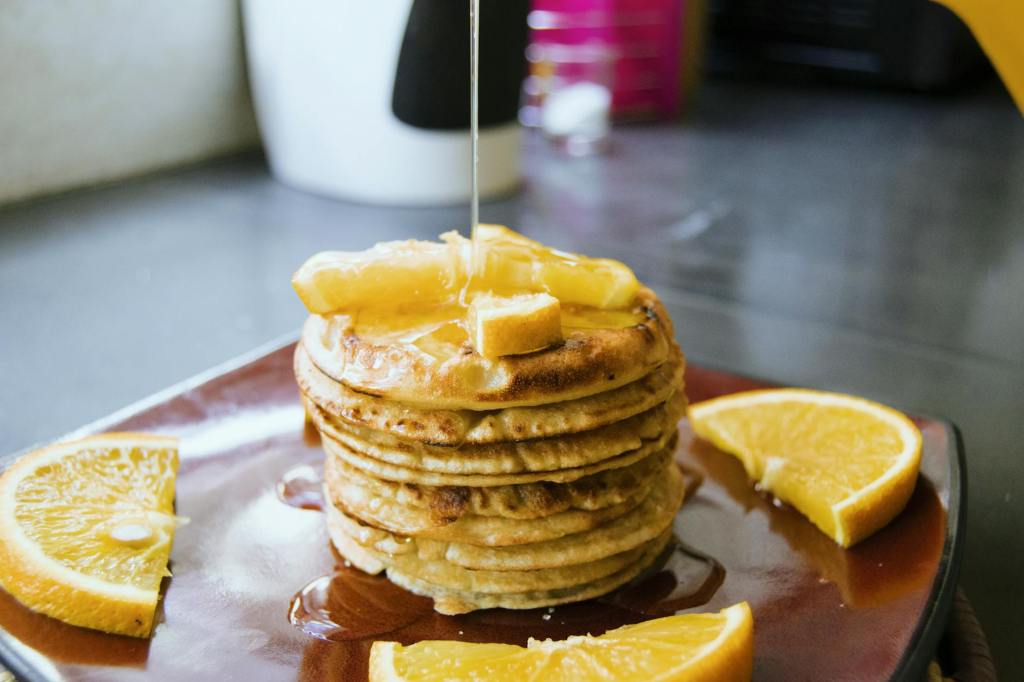
    Back in the 60s and 70s, nutritional concerns were as relevant to us as an old vinyl record in a streaming world. We were blissfully unaware of things like sugar grams and carbohydrate counts. On weekend mornings, my parents would sometimes treat me to a local pancake house, where I indulged in my favorite dish: apple pancakes. Now, picture this: a stack of ten flapjacks, each one a marvel of culinary excess. To say the pile was monumental is like calling Mount Everest a hillock. As I sat next to it, I looked like a hapless Lilliputian standing beside a mountain of golden, buttery goodness. The age-old question had to be asked: Was I going to eat these pancakes, or were they going to consume me in a pancake avalanche? Spoiler alert: I ate them. Every last one. These pancakes were no ordinary breakfast fare. They were brimming with cinnamon-spiced apple compote, slathered in creamy butter, and drenched in what must have been a half-gallon of maple syrup. If I had spilled that syrup, it would have created a sugar tsunami. To wash down this syrupy mountain, I guzzled down several tall glasses of orange juice, which was basically just liquid sugar with a side of citrus. The sheer volume of insulin-spiking sugars and carbohydrates I ingested could have given a modern endocrinologist a cerebral hemorrhage. I was consuming enough sugar to make Willy Wonka look like a health food advocate. After these epic breakfasts, rather than running outside to join my friends in their energetic games, I would slump into bed in a state of what could only be described as a Carbohydrate Coma. I was so catatonic, my friends might as well have been playing a game of “Guess Where’s the Sleeping Kid?” The trauma inflicted on my pancreas was beyond imagination. It was like a small factory working overtime without a break, pumping out insulin at a rate that would have made any modern dietitian faint. In those days, gluttony was a virtue, and self-indulgence was a badge of honor. We reveled in our ignorance, blissfully ignoring the fact that our indulgences would make today’s health-obsessed populace break out in a cold sweat. So there I was, a child of the 60s and 70s, living in an era where pancakes and orange juice were not just meals but monumental feats of indulgence. Our motto was simple: “Why worry about nutritional concerns when you can have another stack of apple pancakes?” Our golden era of gluttony was truly a feast for the ages—literally and metaphorically.

    This memory points us to the Syrupocene Era–a mythic golden age spanning the 1960s and 70s when nutritional ignorance reigned supreme, and breakfast was less a meal and more a caloric Greek tragedy performed in maple-soaked acts. The Syrupocene was a time when food pyramids hadn’t been built, glycemic indexes hadn’t been discovered, and “carb-loading” wasn’t a fitness strategy—it was a lifestyle.

    During the Syrupocene, children guzzled orange juice like it was an IV drip from the gods, consumed pancakes in stacks that could double as insulation, and considered butter a vegetable. It was a utopia of food denialism, where a carbohydrate coma was mistaken for a nap and diabetic shock was just “a sleepy Sunday morning.” The only sugar tracker in town was your mother asking, “Do you want more syrup, honey?”

    The Syrupocene didn’t end with an apocalypse—just a quiet whimper as food labels, cholesterol, and science crept in like puritans at a Mardi Gras parade. But those who lived through it still carry the memory: a wistful ache for the era when gluttony was innocent, ignorance was delicious, and a pancake wasn’t a sin—it was a ten-layered sacrament.

  • My Personal Sane Eating Lexicon: Cravattenuation, Savorosity, and Munchdrift

    My Personal Sane Eating Lexicon: Cravattenuation, Savorosity, and Munchdrift

    On April 10th, fresh off a family vacation in Miami and still spiritually sticky with airport pastrami sandwich guilt, I stepped on the scale and was greeted with a soul-curdling 247 pounds. Yes, some of it is lifelong muscle from half a century of hoisting kettlebells and playing Hercules in the garage. But make no mistake—this number was a slap in the face, a statistical insult to my dignity. Fueled by a righteous anger I can only describe as metabolic revenge, I went to war.

    First, I cut my meals down to three per day and gamified the system like a psychological Jedi. My lunchtime yogurt-and-berries bowl got reassigned as a post-nap “treat,” and a humble apple—normally the most boring fruit in the bowl—was elevated to nightly “dessert,” strategically scheduled for 8 p.m. to give my inner child something to cling to as the kitchen closed. I also slashed my coffee intake from 36 to 18 ounces (don’t worry, I’m still barely human), and dropped my creatine from 6 grams to a mere 3—enough to retain my swole, but not enough to float like a sodium balloon.

    Meanwhile, I came to grips with the ugly truth that I was overstuffing both my freezer and my face. The freezer had become a metaphor for my appetite: jammed with frozen berries, low-carb snacks, and delusions of future discipline. Constantly raiding it created two problems: overconsumption and literal water puddles from a clogged defrost drain. My wife and I emptied the thing out like detoxing hoarders, and miraculously, the fridge stopped weeping. I then purchased a chest freezer for the garage to create a buffer zone—a cold storage moat to protect the kitchen from my impulsive nibbling.

    By April 19, I had dropped to 240 pounds—a loss of seven pounds in nine days, even with an Easter cheat day that involved chocolate cake and blueberry pie, which I regret nothing about. Today I weigh again after my workout, prepared to assess the pastry fallout. But here’s the real revelation from those ten days: the hunger I thought I was feeling wasn’t hunger—it was performance anxiety from my stomach, a neurotic need to react to every twitch of emptiness like it was a national emergency. That, my friends, is where Cravattenuation comes in.

    Cravattenuation is the noble and necessary art of muting your inner snack gremlin—the one who panics at the first polite growl of your stomach and demands cheese. It’s the mental and metabolic recalibration that teaches you this: real hunger is not a 3 p.m. yawn with a craving for almonds. It’s a deeper emptiness, one you can actually enjoy. Because when you let your appetite stretch out and breathe, you arrive at meals not with guilt or compulsion, but with appetite and joy. Hunger becomes less of a trigger and more of a drumroll.

    Cravattenuation the deliberate process of retraining your body to interpret minor hunger signals not as existential emergencies but as low-priority system notifications: “You might want to eat in a bit” instead of “RAID THE PANTRY OR DIE.” Just as meditation teaches you to sit with discomfort rather than react impulsively, Cravattenuation teaches you that a little hunger isn’t a crisis—it’s foreplay for a better meal.

    We’ve been conditioned by snack culture and anxiety-driven consumption to treat hunger as something to be feared and fixed immediately, like a smoke alarm or a toddler tantrum. But when you practice Cravattenuation, something remarkable happens: your threshold for hunger strengthens, and the urgency softens. You learn to sit with a mild stomach pang without spiraling into carb-lust. Over time, you develop what can only be described as Hunger Discernment: the ability to separate emotional nibble-itching from true physiological need.


    The Unexpected Perk:

    By making your body earn the meal—not through punishment, but patience—you begin to eat with a clarity and joy that’s been missing since the dawn of office vending machines. Food tastes better when you’re actually hungry for it. Not “kinda bored” hungry, not “scrolling through cheese reels” hungry, but real hungry. Cravattenuation helps you not only manage your weight with more ease and grace, it re-enchants the eating experience itself. You’ll start treating meals like mini homecomings rather than pit stops at a dopamine gas station.


    Name for the Healthy State: Savorosity

    (savor + satiety + curiosity)

    Savorosity is the elegant state you enter after mastering Cravattenuation—a zone where hunger feels less like a hostage crisis and more like an invitation. It’s when you greet mealtime with curiosity and pleasure, not guilt or compulsion. It’s when you chew slower, taste deeper, and know you’ve arrived not because you gave in to a craving, but because you earned your appetite.

    Cravattenuation gets you there. Savorosity keeps you there. And together, they free you from the tyranny of the pantry’s siren call.

    Of course, the desired state of Savorosity has an opposite condition: Munchdrift, which is the mindless, momentum-driven eating that results from random grazing, emotional nibbling, and culinary boredom. It’s what happens when hunger is no longer a signal but a background noise, muffled by routine snacking and phantom cravings. In the Munchdrift state, meals are neither anticipated nor savored—they’re accidental. A handful of nuts here, a swipe of hummus there, three spoonfuls of cottage cheese at midnight, and suddenly, you’ve eaten 1,200 calories without ever feeling either full or satisfied. The food doesn’t taste bad; it just doesn’t taste like anything—because your palate is bored and your appetite never had a chance to sharpen.

    While Savorosity is marked by intentionality, restraint, and presence, Munchdrift is all drift and no anchor. It’s eating as ambient noise. It’s the cognitive equivalent of scrolling Instagram while watching TV while wondering why you’re still chewing.