Tag: dogs

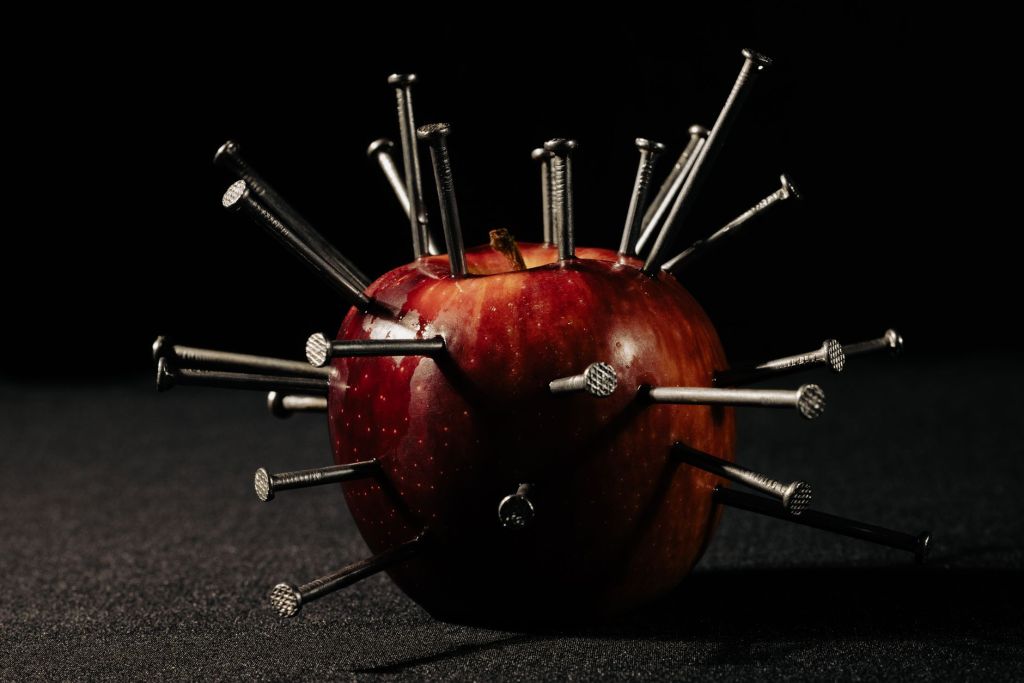
  • The Bad Apple Principle

    The Bad Apple Principle

    This morning, while swinging kettlebells in my garage, I listened to Larry Mantle’s AirTalk. The topic was dogs in restaurants, or more precisely, the small but talented minority of dog owners determined to convince the rest of us that civilization has been overrated.

    The complaints were familiar. Dogs licked strangers’ hands. Seemingly placid dogs lunged at smaller ones. Playful dogs darted under servers carrying trays of hot food. Then came the owners of “service dogs” who informed restaurant staff that the rules were for lesser mortals. Their pets, like minor royalty, possessed diplomatic immunity.

    I suspect more than ninety percent of dog owners are perfectly considerate. They keep their dogs under control, respect boundaries, and would never dream of turning a restaurant into an off-leash park.

    They are also irrelevant.

    Restaurants don’t write policies for them.

    They write policies for the other ten percent.

    That observation led me to a melancholy truth about institutions. Bureaucracies are not designed around our best behavior or even our typical behavior. They are designed around our worst behavior. They must assume that somewhere, someone will abuse every privilege, exploit every loophole, and confuse entitlement with freedom.

    That is The Bad Apple Principle: the misconduct of a small minority determines the restrictions imposed upon the responsible majority.

    The principle explains far more than dogs in restaurants. It explains airport security, locked toothpaste at CVS, liability waivers, plagiarism software, surveillance cameras, password requirements, and a thousand other bureaucratic irritations. Every rule we grumble about has a backstory, and that backstory almost always begins with someone who behaved just badly enough to make the rule inevitable.

    The idea reminded me of a book I devoured when I was ten: Laurence J. Peter’s The Peter Principle. Ever since, I’ve had a weakness for elegant ideas distilled into memorable names.

    Naturally, I immediately imagined writing my own bestseller:

    The Bad Apple Principle: Why Good People Live by Bad People’s Rules.

    Then reality intruded.

    The entire thesis fits comfortably inside a single paragraph.

    Knowing the publishing industry, however, I’m sure a seasoned nonfiction writer could stretch it into fifteen brisk chapters, three airport interviews, a TED Talk, and a podcast tour. My contribution would simply be to wave wistfully from the sidelines, muttering, “Yes, but the title was mine.”
  • One Watch to Rule the Rest

    One Watch to Rule the Rest

    The next evening, under the same milky moonlight and sipping from a chipped mug that looked like it had survived a bar fight, the Watch Master laid it out:

    “If you want salvation,” he said, voice gravelly and smug, “you must walk through fire. And that fire, my friend, is called owning one watch. Not three. Not two. One.”

    He sipped, smirked, and let the pronouncement hang in the air like incense—or maybe judgment.

    My stomach dropped.

    “That would mean no Seiko Astron. Not only that, I’d have to sell six watches and keep just one.”

    He nodded slowly. “Your math is astounding.”

    “But… which one?”

    He tilted his head, as if I were asking him what color the sky was.

    “You already know.”

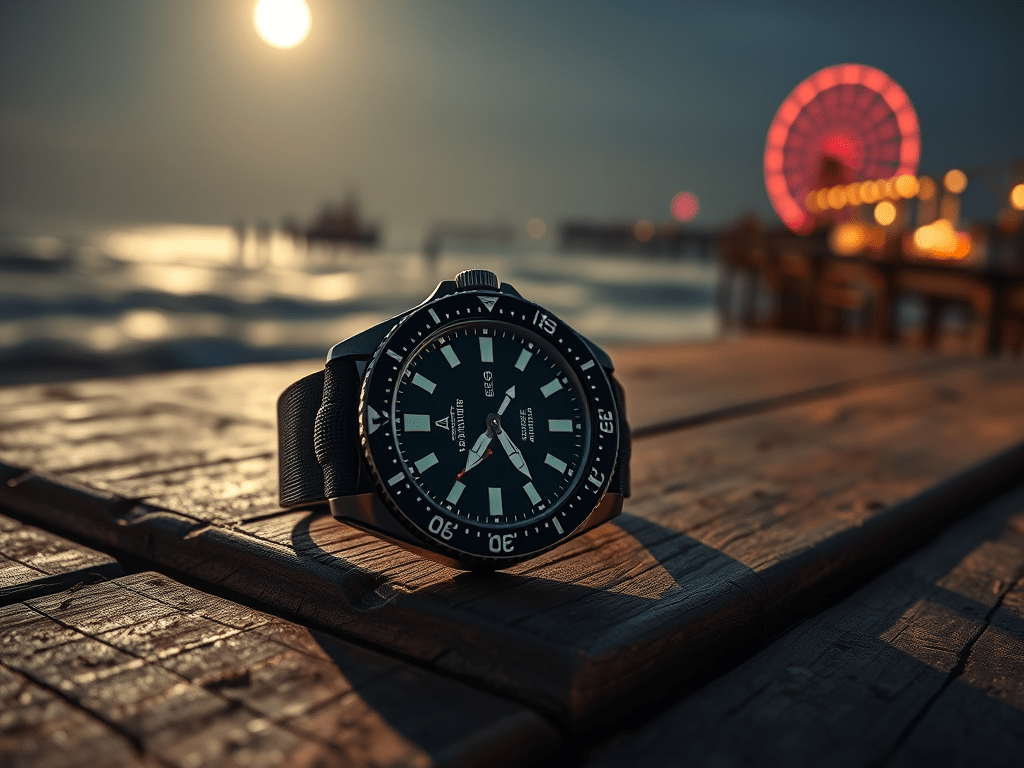
    Of course I did. There’s a photo of me on the Santa Monica Pier, the sun melting into the Pacific behind me, gulls circling overhead, breeze in my face, and on my wrist: the Seiko Uemura, black Divecore strap, rugged and unpretentious. That wasn’t just a picture. It was a mirror. That version of me looked content—anchored. Whole.

    I told the Watch Master about the photo. He nodded like a man who’d just heard someone read their own obituary correctly.

    “Every true addict has a signature watch,” he said. “But most of them are too busy playing collector cosplay to recognize it. Instead, they sabotage their joy, clutter their soul, and call it a ‘hobby.’ Worse, they bond with other broken men, enabling each other with dopamine high-fives. That’s where you are. The fray.”

    “So I’d have to cut ties… abandon my watch circle.”

    “Not a circle. A kennel. A cacophony of barked opinions and Instagram wrist shots. Remember: lie down with dogs, wake up with fleas.”

    “They’re not dogs. They’re human beings.”

    “Sure. Dogs with Venmo.”

    I sighed. “I don’t have many options, do I?”

    “You do,” he said. “You can become the bloated lounge demon from your dream, if that’s the life you want. Slathered in regret, bejeweled in denial.”

    “How do I get out?”

    He leaned in, eyes suddenly sharp.

    “You already know.”

    “Sell the six,” I said. “Feels like amputating my foot.”

    “Better to sell watches than sever limbs. Less blood.”

    “So I walk away. Keep the Uemura. Wear it like old jeans and just… let it be.”

    “You must die to be reborn,” he said, yawning like a lion after a kill. “But only if you want to. Telling people to choose life is exhausting. Go home. Sleep on it. Come back tomorrow.”

    And just like that, he vanished into the darkness of his sagging Victorian like a prophet with bedtime boundaries.