Tag: dopamine

  • Why Your Watch Doesn’t Make You Happy Anymore

    Why Your Watch Doesn’t Make You Happy Anymore

    To understand the madness of the modern watch addict, you’d do well to consult Dopamine Nation by Stanford psychiatrist Anna Lembke, a book that should be shelved somewhere between philosophy, neuroscience, and quiet screaming. Her central thesis? In an age of relentless indulgence, the line between pleasure and pain is not only blurry—it’s the same neurological pathway. You’re not escaping pain with your latest acquisition. You’re feeding it.

    “The smartphone,” she writes, “is the modern-day hypodermic needle.” And the drug? Dopamine—delivered in neat little parcels: TikToks, tweets, memes, and yes, wrist shots of watches you don’t own (yet). If you haven’t met your poison of choice, don’t worry. It’s just a click away.

    Lembke makes the uncomfortable truth clear: The more dopamine hits we seek, the more our brain adapts by reducing our baseline pleasure response. What once thrilled you—your grail watch, your Rolex Explorer, your Seiko with the Wabi-Sabi patina—now barely registers. You’re not chasing pleasure anymore. You’re just trying to feel something.

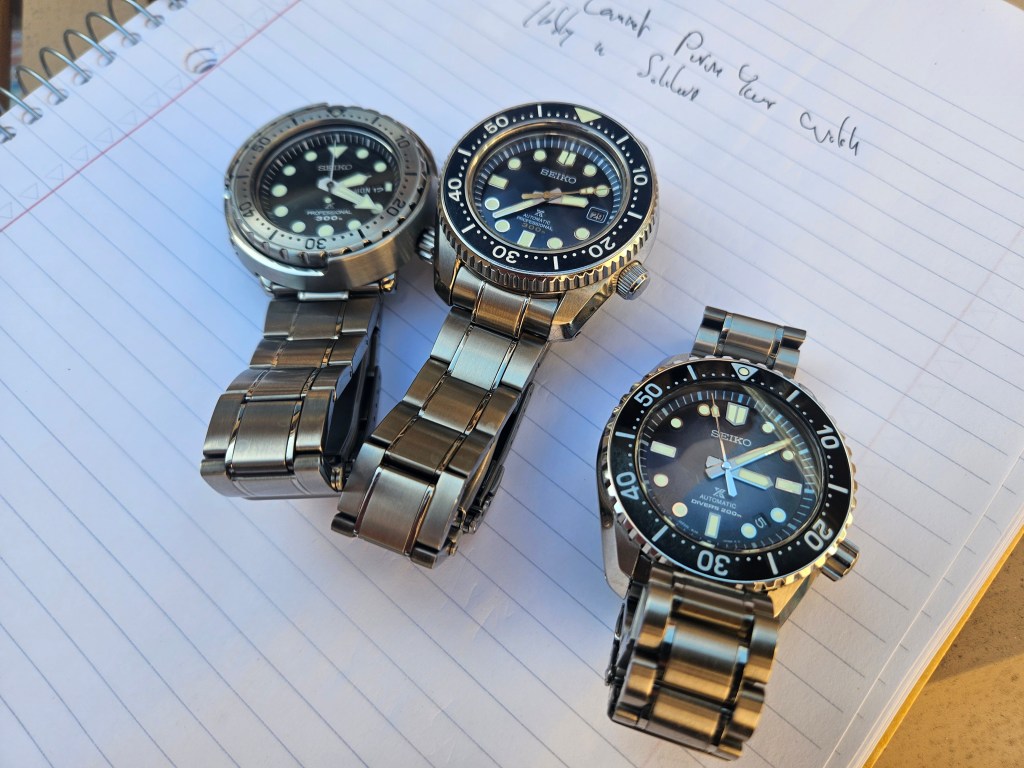
    Watch addicts, of course, understand this intimately. The pursuit of horological perfection starts out innocent enough: a G-Shock here, a vintage diver there. But soon you’re tumbling into the abyss of boutique limited editions and message board enablement, haunted by the need to stay relevant. Because here’s the twist: It’s not just about the watches. It’s about being seen. You post, you review, you flex because if you stop, you vanish. No new watches = no new content = digital extinction.

    And extinction, in a social-media world, feels like death.

    Lembke warns us that addiction thrives in secrecy, in the exhausting double life. The watch addict may present as a tasteful minimalist to family and friends, while secretly rotating 19 watches, five straps deep, waiting for the next “drop.” The addiction is fed by access, and we live in an access economy. New releases are no longer annual events—they’re hourly temptations. The vortex is bottomless. The supply creates the demand.

    Even worse, modern society normalizes this behavior. Everyone is scrolling. Everyone is upgrading. Our addiction to novelty is passed off as taste. Our frenzied consumption masquerades as identity. Lembke borrows from Philip Rieff to explain the deeper shift: “Religious man was born to be saved; psychological man is born to be pleased.” The modern watch collector doesn’t believe in salvation. He believes in configuration.

    But here’s the cruel irony: The more you seek to be pleased, the less capable you are of being pleased. In Lembke’s words: “Hedonism, the pursuit of pleasure for its own sake, leads to anhedonia—the inability to enjoy pleasure of any kind.”

    You can understand the watch addict’s feeble quest when you look at the Horological Dopamine Loop–the self-reinforcing cycle in which acquisition, posting, validation, and anticipation replace enjoyment. The watch no longer delivers pleasure; it merely resets the craving for the next hit.

    What’s the solution? A dopamine fast. Lembke prescribes it like a bitter medicine: Remove the source. Reset the brain. Let it reestablish homeostasis. For the watch addict, this means one thing: a watch fast.

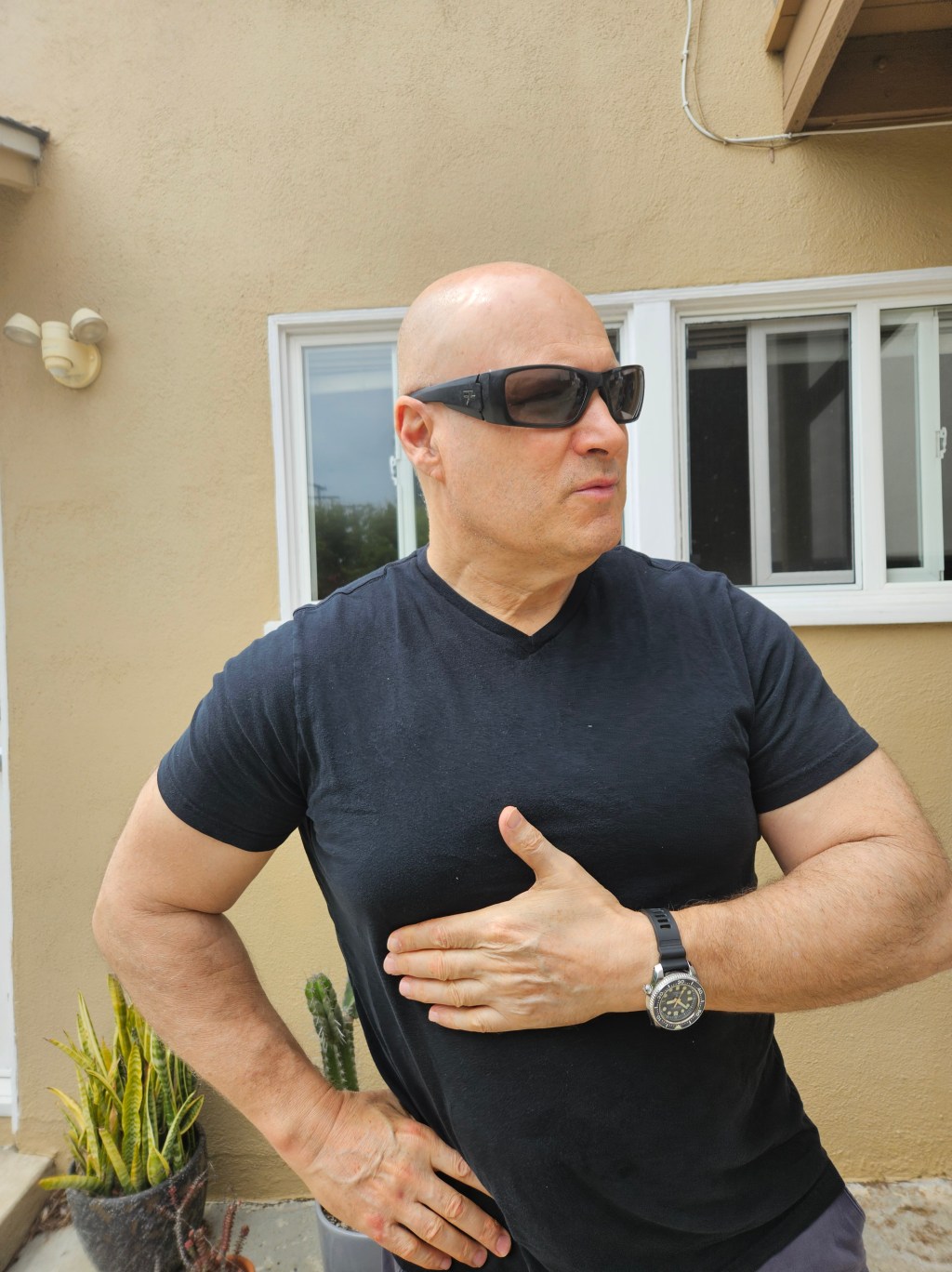
    And yes—it’s brutal. I’ve been a watch obsessive for over twenty years. My longest fast? Six months. And I nearly went feral. New releases tempt. Friends enable. Algorithms whisper. Strap swaps and vintage reissues beckon like sirens. Even the FedEx truck starts to look like a personal tormentor.

    So you get creative. You stash watches in the safe and “rediscover” them. You buy new straps instead of new watches. You try to redirect the compulsion toward something productive: fitness, music, sourdough, monkish austerity. Anything but another chronograph.

    But the real cure, oddly enough, may be conversation—actual human connection. At watch meet-ups, we start out discussing bezels and spring bars, but within ten minutes we’re talking about life: real estate, parenting, knee surgeries, emotional burnout, dinner recipes. We talk for hours. But barely about watches.

    The truth slips out in these moments: we want to be free. We crave community more than we crave sapphire crystals. What began as a shared obsession has become a trap, and these conversations, paradoxically, offer relief from the very addiction that brought us together.

    Imagine a bunch of watch enthusiasts at a watch meet-up and we’re talking about everything but watches. Wrap your head around that.
  • How Not To Turn Into a Pillar of Salt in the Internet Age

    How Not To Turn Into a Pillar of Salt in the Internet Age

    Anna Lembke’s Dopamine Nation didn’t teach me anything comforting. It confirmed what I already suspected: addiction isn’t a habit; it’s a ravenous creature with a bottomless stomach. The more you feed it, the louder it howls. It storm-raids your mental vaults, looting the energy you need for your work, your relationships, and your sense of self. And your family feels the theft—spiritually, emotionally, domestically. Addiction doesn’t just eat you; it nibbles at everyone near you.

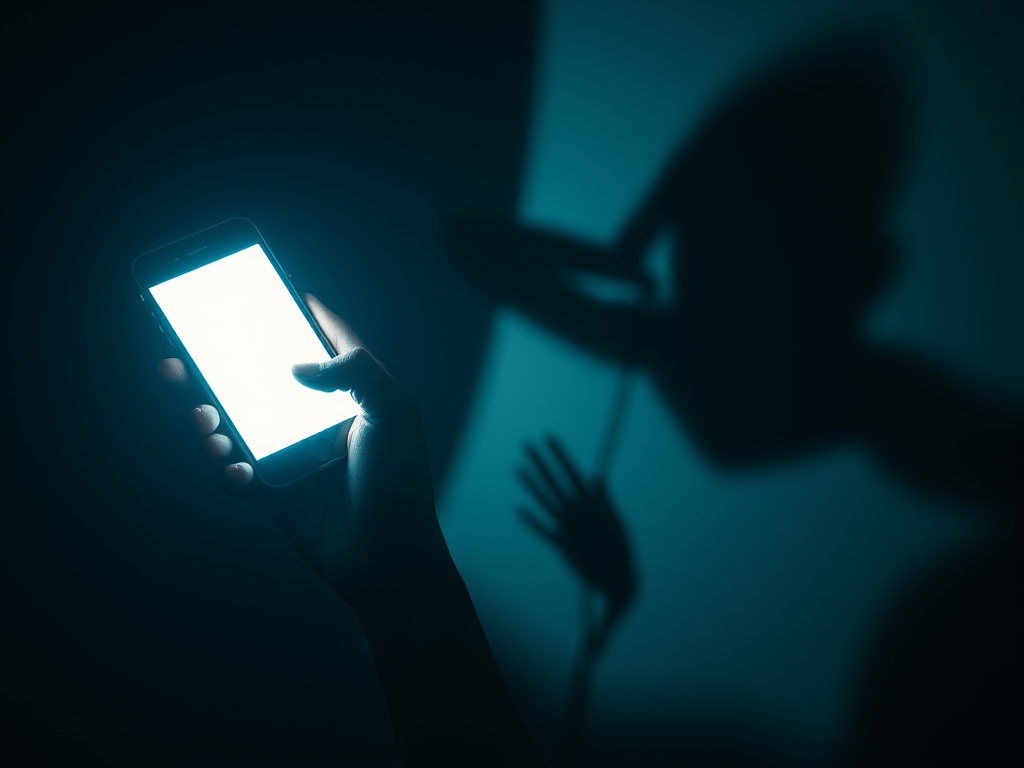
    Even with self-awareness, even with a clear understanding of triggers and a sincere desire for freedom, you don’t get a clean fight. The casino is rigged. Modern dopamine doesn’t drip from a bottle or a needle—it streams through fiber-optic cable. Our phones and laptops, the same devices we use to create, to earn, and to connect, also serve as the slot machines we keep in our pockets. The house never closes, and the drinks are free.

    Lembke tells us to avoid triggers, but what do you do when your trigger is baked into your professional life, disguised as “productivity” and “connection”? Avoidance becomes theater. You can only tiptoe around the swamp for so long before some lonely hour arrives, and curiosity knocks like an old vice with freshly polished shoes. A hit of self-pity, a twitch of boredom, a flicker of FOMO—and suddenly you’re back in the feed trough, gulping pixels like syrup. The crash comes fast: shame, exhaustion, vows of purity. Then the next impulse, the next relapse, the same ancient ritual. Lot’s wife didn’t want to look back; she simply couldn’t resist. Neither can we, sometimes. Salt is surprisingly modern.

    So the task becomes stark: learn to live in this world without turning yourself into a monument of regret. Train your gaze forward. Build the strength to resist that backward glance. The modern life mission isn’t to slay the demon—he regenerates too easily. It’s to starve him, inch by inch, while protecting the scarce, bright energy that makes you human.

    Becoming a human being is a high-stakes game. Learning to live a life in which you don’t become a pillar of salt is one of life’s chief endeavors.

  • Dopamine Nation: Self-Help Without the Fairy Dust

    Dopamine Nation: Self-Help Without the Fairy Dust

    I’ve never trusted the mythology of self-help books—the fairy tale that you identify Problem X, buy a book, read a few hundred pages, and Problem X vanishes. What I do believe is that a self-help book, at best, can make you stare harder at your demon, dull its sharper edges, and maybe hand you a strategy or two to keep it from devouring you whole.

    That’s why Anna Lembke’s Dopamine Nation: Finding Balance in the Age of Indulgence punched me in the gut. Her blunt lesson: dopamine addiction—whether through scrolling, swiping, shopping, or vaping—doesn’t lead to pleasure but to misery, pain, and the hollowing-out of your agency. Reading her, I shuddered at the years I wasted feeding my brain with Internet sugar highs.

    Lembke makes no bones about the world we live in: a digital carnival of “overwhelming abundance.” She puts it starkly: “The smartphone is the modern-day hypodermic needle, delivering digital dopamine 24/7 for a wired generation. If you haven’t met your drug of choice yet, it’s coming soon to a website near you.” Pleasure and pain, she reminds us, are processed in the same brain circuitry—and the more dopamine that flows, the stickier the addiction.

    The horror story isn’t abstract. Her case studies peel the skin off addiction’s double life: secret compulsions, corrosive shame, shattered relationships. Some people are more vulnerable—those with addictive parents, those with mental illness in the family—but Lembke insists access is the true accelerant. The Internet puts a casino in our pocket; supply breeds demand. Worse, social media monetizes outrage until we mistake 24/7 hair-on-fire hysteria for “normal.”

    Lembke’s most grotesque example is Jacob, a sex addict who literally builds himself a “Masturbation Machine.” She confesses she feels horror, compassion—and dread that she herself is not immune. Her verdict is bleak: “Not unlike Jacob, we are all at risk of titillating ourselves to death.” Seventy percent of global deaths, she notes, stem from modifiable behaviors like smoking, gluttony, and sloth. Addiction, in short, is a slow suicide dressed up as entertainment.

    Part of the problem is philosophical. As Philip Rieff noted in The Triumph of the Therapeutic, “Religious man was born to be saved; psychological man is born to be pleased.” We’ve traded the pursuit of goodness for the pursuit of good feelings. Jeffrey Rosen put it more bluntly: classical wisdom insists we should aim to be good, not simply to feel good. Instead, we’re anesthetizing ourselves with meds, therapy-lite, dopamine drip-feeds, and hedonism. And as Lembke observes, hedonism curdles into its opposite: anhedonia, the inability to enjoy anything at all.

    Her prescription? The brutal reset of a “dopamine fast.” Four weeks off your drug of choice to force your brain back to balance. She offers a framework—DOPAMINE (data, objectives, problems, abstinence, mindfulness, insight, next steps, experiment). It’s clever, but the hard truth runs underneath: most addicts, myself included, are not “moderators.” We’re all-or-nothing. For me, the Internet isn’t moderation-friendly; it’s a rabbit hole with no bottom.

    Lembke knows willpower is not enough. She prescribes “self-binding”: physical, chronological, and categorical walls between you and your poison. But in the digital economy—where work and addiction ride on the same Internet rails—such barriers are fragile. Moderation may be the fantasy; abstinence the only real survival strategy.

    So yes, I’m glad I read Dopamine Nation. It clarified the trap, exposed the double life, and framed the fight as both biological and spiritual. But let’s not be naïve. Like all self-help, it’s not a magic pill. At best, it’s a mirror, a warning flare, and a rough map out of the dopamine swamp. The walking out is still on you.

  • The Dopamine Dial: Why Your Grail Watch Can’t Make You Happy

    The Dopamine Dial: Why Your Grail Watch Can’t Make You Happy

    To understand the madness of the modern watch addict, you’d do well to consult Dopamine Nation by Stanford psychiatrist Anna Lembke, a book that should be shelved somewhere between philosophy, neuroscience, and quiet screaming. Her central thesis? In an age of relentless indulgence, the line between pleasure and pain is not only blurry—it’s the same neurological pathway. You’re not escaping pain with your latest acquisition. You’re feeding it.

    “The smartphone,” she writes, “is the modern-day hypodermic needle.” And the drug? Dopamine—delivered in neat little parcels: TikToks, tweets, memes, and yes, wrist shots of watches you don’t own (yet). If you haven’t met your poison of choice, don’t worry. It’s just a click away.

    Lembke makes the uncomfortable truth clear: The more dopamine hits we seek, the more our brain adapts by reducing our baseline pleasure response. What once thrilled you—your grail watch, your Rolex Explorer, your Seiko with the Wabi-Sabi patina—now barely registers. You’re not chasing pleasure anymore. You’re just trying to feel something.

    Watch addicts, of course, understand this intimately. The pursuit of horological perfection starts out innocent enough: a G-Shock here, a vintage diver there. But soon you’re tumbling into the abyss of boutique limited editions and message board enablement, haunted by the need to stay relevant. Because here’s the twist: It’s not just about the watches. It’s about being seen. You post, you review, you flex because if you stop, you vanish. No new watches = no new content = digital extinction.

    And extinction, in a social-media world, feels like death.

    Lembke warns us that addiction thrives in secrecy, in the exhausting double life. The watch addict may present as a tasteful minimalist to family and friends, while secretly rotating 19 watches, five straps deep, waiting for the next “drop.” The addiction is fed by access, and we live in an access economy. New releases are no longer annual events—they’re hourly temptations. The vortex is bottomless. The supply creates the demand.

    Even worse, modern society normalizes this behavior. Everyone is scrolling. Everyone is upgrading. Our addiction to novelty is passed off as taste. Our frenzied consumption masquerades as identity. Lembke borrows from Philip Rieff to explain the deeper shift: “Religious man was born to be saved; psychological man is born to be pleased.” The modern watch collector doesn’t believe in salvation. He believes in configuration.

    But here’s the cruel irony: The more you seek to be pleased, the less capable you are of being pleased. In Lembke’s words: “Hedonism, the pursuit of pleasure for its own sake, leads to anhedonia—the inability to enjoy pleasure of any kind.”

    What’s the solution? A dopamine fast. Lembke prescribes it like a bitter medicine: Remove the source. Reset the brain. Let it reestablish homeostasis. For the watch addict, this means one thing: a watch fast.

    And yes—it’s brutal. I’ve been a watch obsessive for over twenty years. My longest fast? Six months. And I nearly went feral. New releases tempt. Friends enable. Algorithms whisper. Strap swaps and vintage reissues beckon like sirens. Even the FedEx truck starts to look like a personal tormentor.

    So you get creative. You stash watches in the safe and “rediscover” them. You buy new straps instead of new watches. You try to redirect the compulsion toward something productive: fitness, music, sourdough, monkish austerity. Anything but another chronograph.

    But the real cure, oddly enough, may be conversation—actual human connection. At watch meet-ups, we start out discussing bezels and spring bars, but within ten minutes we’re talking about life: real estate, parenting, knee surgeries, emotional burnout, dinner recipes. We talk for hours. But barely about watches.

    The truth slips out in these moments: we want to be free. We crave community more than we crave sapphire crystals. What began as a shared obsession has become a trap, and these conversations, paradoxically, offer relief from the very addiction that brought us together.

    Imagine a bunch of watch enthusiasts at a watch meet-up and we’re talking about everything but watches. Wrap your head around that.
  • We Are Lost Inside the Mentalluvium

    We Are Lost Inside the Mentalluvium

    We are staggering through an unprecedented fugue state—an acute disorientation born of our immersion in the social media Chumstream, a digital shark tank where recycled outrage, trauma bait, and influencer chum swirl together in a frothy, click-hungry frenzy. It’s not a stream so much as a bloody whirlpool, designed to keep us circling, feeding, and forgetting.

    Gurwinder Bhogal, a rare voice of reason in this algorithmic carnival, broke it down on Josh Szeps’ Uncomfortable Conversations. Social media, he said, isn’t just addictive—it’s engineered by tech lords who know exactly how to hijack your brain. Blue light. Intermittent dopamine rewards. Infinite scroll. Welcome to the digital casino, a neon maze with no clocks, no windows, and no exits—only flashing notifications and the creeping sense that your life is being siphoned off one swipe at a time.

    In this fever swamp of the self, people aren’t just bored—they’re bloated. Stuffed with half-digested TED Talk wisdom, viral symptom checklists, and influencer pathology. They gorge on intellectual junk food and, as Bhogal put it, suffer from “intellectual obesity.” Diagnoses become identities, and confusion is recast as empowerment. It’s not that they have ADHD, long Covid, autism, or gender dysmorphia—it’s that they scroll into them, self-diagnosing in real time, latching onto whatever trending malaise grants them a fleeting sense of belonging in the void.

    These are not charlatans. These are casualties. Belief becomes ballast in a digital landscape where nothing is anchored. They wander through the cognitive casino, zombified, dislocated, convinced that a diagnostic label is the same as self-knowledge, and that performative suffering is the highest form of authenticity.

    What we’re experiencing isn’t just burnout. It’s Mentalluvium—the psychic sludge left behind after gorging on content. It’s the mental silt of endless scrolling: micro-identities, algorithm-approved neuroses, and dopamine-smeared fragments of truth. We are not thinking. We are sedimenting.

    If this is hell, it didn’t come with flames. It came with filters.

  • From Gutenberg to Doomscroll: A Brief History of Our Narrative Decline

    From Gutenberg to Doomscroll: A Brief History of Our Narrative Decline

    Richard Seymour, in The Twittering Machine, reminds us that writing was once a sacred act—a cerebral pilgrimage and a cultural compass. It charted the peaks of human enlightenment and the valleys of our collective idiocy. But ever since Gutenberg’s movable type cranked out the first printed tantrum, writing has also been big business. Seymour calls this “print capitalism”—a factory of words that forged what Benedict Anderson dubbed “imagined communities,” and what Yuval Noah Harari might call humanity’s favorite pastime: building civilizations on beautifully told lies.

    But that was then. Enter the computer—a Pandora’s box with a backspace key. We haven’t just changed how we write; we’ve scrambled the very code of our narrative DNA. Seymour scoffs at the term “social media.” He prefers something more honest and unflinching: “shorthand propaganda.” After all, writing was always social—scrolls, letters, manifestos scrawled in exile. The novelty isn’t the connection; it’s the industrialization of thought. Now, we produce a firehose of content—sloppy, vapid, weaponized by ideology, and monetized by tech lords playing dopamine dealers.

    The term “social media” flatters what is more accurately a “social industry”—a Leviathan of data-harvesting, behavioral conditioning, and emotional slot machines dressed in UX sugar-coating. The so-called “friends” we collect are nothing more than pawns in a gamified economy of clout, their every click tracked, sold, and repurposed to make us addicts. Sherry Turkle wasn’t being cute when she warned that our connections were making us lonelier: she was diagnosing a slow psychological implosion.

    We aren’t writing anymore. We’re twitching. We’re chirping. We’re flapping like those emaciated birds in Paul Klee’s the Twittering Machine, spinning an axle we no longer control, bait for the next poor soul. This isn’t communication. It’s entrapment, dressed up in hashtags and dopamine hits.

  • DeDopaminification: Breaking Up with the Machine That Loves You Too Much

    DeDopaminification: Breaking Up with the Machine That Loves You Too Much

    DeDopaminification is the deliberate and uncomfortable process of recalibrating the brain’s reward circuitry after years—sometimes decades—of synthetic overstimulation. It’s what happens when you look your phone in the face and whisper, “It’s not me, it’s you.” In a culture addicted to frictionless pleasure and frictionless communication, DeDopaminification means reintroducing friction on purpose. It’s the detox of the soul, not with celery juice, but with withdrawal from digital dopamine driplines—apps, feeds, alerts, porn, outrage, and validation loops disguised as “engagement.”

    In Alone Together, Sherry Turkle diagnosed the psychic fragmentation wrought by constant digital interaction: we’ve become people who talk less but text more, who perform connection while starving for authenticity. In one of her most haunting observations, she notes how teens feel panicked without their phones—not because they’re afraid of missing messages, but because they fear missing themselves in the mirror of others’ attention. Turkle’s world is one where dopamine dependency isn’t just neurological—it’s existential. We’ve been trained to outsource our worth to the algorithmic gaze.

    Anne Lembke’s Dopamine Nation picks up this thread like a clinical slap to the face. Lembke, a Stanford psychiatrist, makes it plain: the modern world is engineered to overstimulate us into oblivion. Pleasure is no longer earned—it’s swipeable. Whether it’s TikTok, sugar, or digital outrage, our brains are being rewired to expect fireworks where there used to be a slow-burning candle. Lembke writes that to reset our internal reward systems, we must embrace discomfort—yes, want less, enjoy silence, and learn how to sit with boredom like it’s a spiritual practice.

    DeDopaminification is not some puritanical rejection of pleasure. It’s the fight to reclaim pleasure that isn’t bankrupting us. It’s deleting TikTok not because you’re better than it, but because it’s better than you—so good it’s lethal. It’s deciding that your attention span deserves a tombstone with dignity, not a death-by-scroll. It’s not heroic or Instagrammable. In fact, it’s boring, slow, sometimes lonely—but it’s also real. And that’s what makes it revolutionary.

  • The Dopamine Dumpster Fire: How I Went from Literary Scholar to Algorithm Addict

    The Dopamine Dumpster Fire: How I Went from Literary Scholar to Algorithm Addict

    In 1979, I went to college—back when students still read entire books and didn’t skim Nietzsche between TikTok scrolls. By 1986, I had a master’s degree in English and a reading habit so fierce it could scare a librarian. This was the Pre-Digital, Pre-Illiterate Age, and I was both smarter and, dare I say, happier. Then came the internet, like a radioactive vending machine of constant stimulation, and within a decade my attention span was fried, my dopamine receptors scorched, and my brain felt like a squirrel on meth.

    Reading Anna Lembke’s Dopamine Nation: Finding Balance in the Age of Indulgence was like holding a mirror up to my own cognitive and emotional decline—except the mirror was cracked and buzzing with notification pings. Lembke, a Stanford psychiatrist with a scalpel-sharp intellect, writes that we live in a world of “overwhelming abundance,” where the smartphone is the modern hypodermic needle, delivering micro-hits of dopamine at all hours like a dealer with unlimited supply and no off switch. Her message is clear: addiction isn’t a fringe problem—it’s the central operating system of modern life.

    Lembke’s insight that “pleasure and pain are processed in the same part of the brain” makes you rethink every moment of scrolling, snacking, shopping, and spiraling. The more dopamine you chase, the more pain you invite in through the back door. It’s like sprinting on a treadmill made of banana peels—every gain is followed by a crash. According to Lembke, addiction rewires your brain to seek shortcuts, and in the process, you become a hollowed-out shell of your former self, one push notification away from an existential crisis.

    I didn’t need convincing. Twenty-five years of living online has made my mind a junk drawer of fragmented thoughts and snack-sized emotions. Lembke explains that many addicts live a double life, a private underworld of shame and secrecy that eats away at their integrity. That rang uncomfortably true. She points to risk factors like having a parent with addiction or mental illness. Bingo. Both my parents were alcoholics, and my mother had bipolar disorder—my genetic cocktail came shaken, stirred, and garnished with a panic attack.

    But the biggest risk factor, Lembke argues, is access. We’re all mainlining the internet every day. The supply has become the demand. The dopamine economy, she says, thrives on overconsumption, normalized by the fact that everyone else is doing it. If your entire community is obsessed with likes, outrage, and FOMO-fueled consumerism, it starts to feel… reasonable. Normal. Even patriotic.

    Social media isn’t just a distraction; it’s a full-blown Outrage Machine, built to keep our emotional hair on fire 24/7. We are like feral raccoons pawing at glowing rectangles, convinced that salvation lies in another dopamine hit—another comment, another package, another numbing episode of low-stakes content. Our collective descent is so absurd it would be funny if it weren’t so bleak.

    Lembke leans on the wisdom of cultural critic Philip Rieff, who observed that we’ve moved from “religious man” to “psychological man”—from seeking salvation to chasing pleasure. Add to that Jeffrey Rosen’s The Pursuit of Happiness, which reminds us that classical philosophy defined happiness not as feeling good, but as being good—the moral life, not the moist towelette of consumer satisfaction.

    But that idea, in our current therapeutic culture, sounds about as appealing as a cold shower in February. We’ve been taught to medicate our moods, sedate our angst, and wrap our trauma in soft blankets of “self-care” that often amount to binge-watching and overeating. Our modern mantra is: “If it hurts, scroll faster.” The result? A crisis of meaning, a society allergic to discomfort, and a spiritual vacuum that smells faintly of Axe Body Spray.

    Lembke calls this the paradox of hedonism: the more you chase pleasure, the less capable you become of feeling it. Hedonism leads to anhedonia—a state in which nothing satisfies. You eat the cake, buy the thing, get the like, and feel… nothing. It’s like winning a prize that turns into a cockroach when you unwrap it.

    Ever since reading Dopamine Nation, I’ve been haunted by a single, searing thought: Maybe I shouldn’t try to feel good. Maybe I should try to be good. But this, in a consumer culture built on instant gratification, feels like a betrayal of the social contract. We’re not just addicted—we’re indoctrinated.

    So here I am, a relic of the Pre-Digital Age, nursing my overstimulated brain, trying to claw my way out of the dopamine pit with a few dog-eared paperbacks and a shortwave radio. Because the real question isn’t how to feel better—but how to live better in a world that confuses stimulation for meaning and pleasure for purpose.

    And if that makes me sound like a cranky monk with Wi-Fi, so be it. I’d rather be a lucid cynic than another dopamine casualty with a glowing screen and dead eyes.