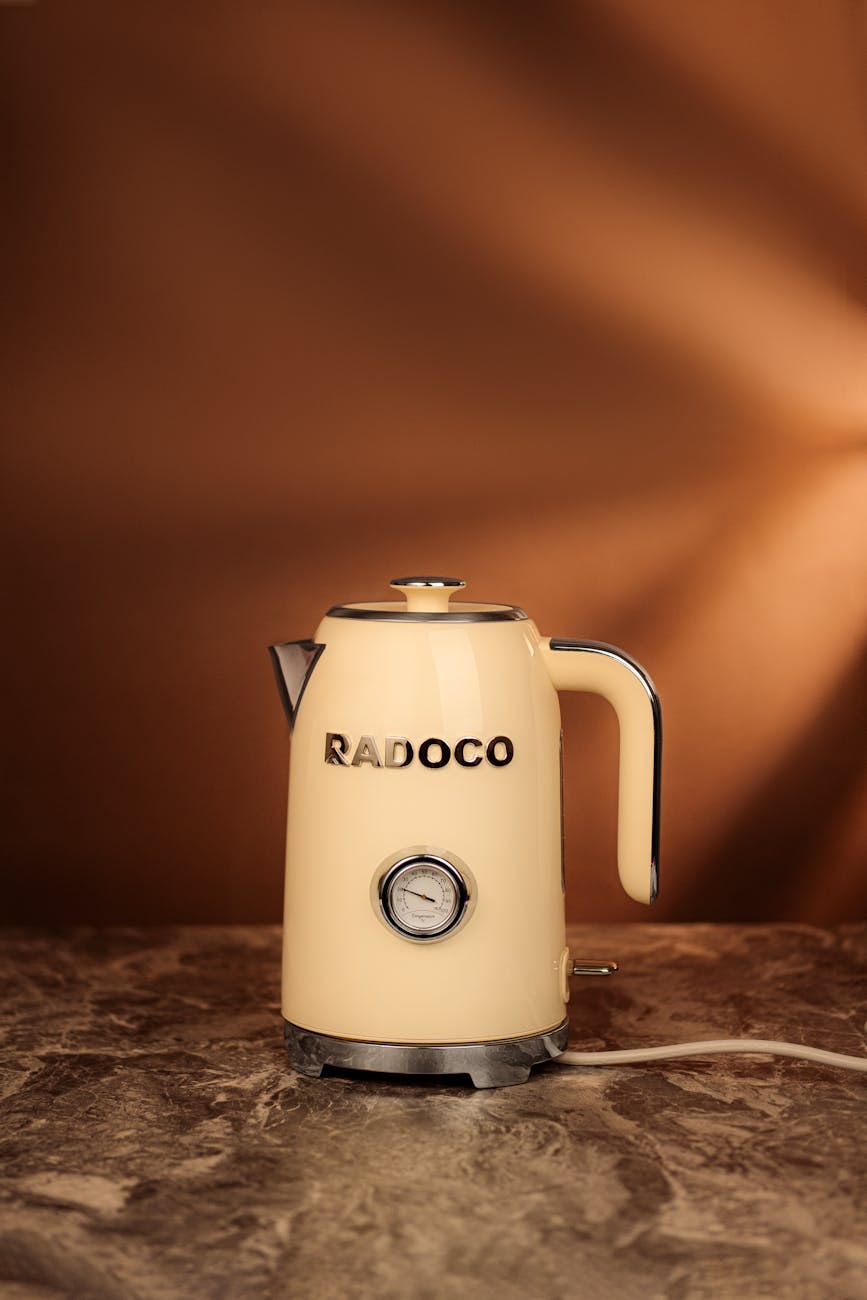
For three years, my kitchen and I lived in quiet harmony. The outlets behaved. The appliances coexisted. The breaker, that silent arbiter of domestic peace, stayed in its lane.
Then the electric tea kettle staged a coup.
It began innocently enough. I’d flip the switch to boil water—an act so mundane it barely registers as effort—and suddenly half the kitchen would go dark. The microwave surrendered. The toaster went mute. The refrigerator went dark. The breaker, like a bouncer tired of excuses, shut everything down with a single decisive click.
At first, I suspected treachery in the wiring. Then I wondered if the breaker had grown old and irritable. But the evidence pointed, with increasing clarity, to the most polite appliance on the counter: the electric kettle.
When I removed the kettle from the equation, the kitchen returned to its former civility. No trips. No outages. No drama. The tyrant had been identified.
Here’s what I learned, and what most people don’t realize:
An electric kettle is one of the most power-hungry appliances in your kitchen.
As your electric kettle ages, its heating element becomes less efficient and it draws more amperage than it did originally.
I live in an old house that probably has a 15-amp circuit. My house needs an upgrade that includes dedicated 20-amp kitchen lines.
Most electric kettles draw around 1500 watts. On a standard 120-volt circuit, that’s roughly 12 to 13 amps—nearly the entire capacity of a typical 15-amp circuit.
In other words, when you turn on an electric kettle, you’re not adding a polite guest to the party. You’re inviting a heavyweight who immediately eats most of the food and demands the stereo.
For years, my kitchen tolerated the kettle. Then, seemingly overnight, it didn’t. Nothing dramatic changed. No sparks, no smoke, no cinematic failure.
What changed was margin.
Circuits don’t fail like lightbulbs. They drift. A little more load here. A little more resistance there. Maybe the kettle’s heating element aged and became less efficient, drawing slightly more current. Maybe I added a device or two without noticing. Maybe the breaker itself became more sensitive after years of heat cycles.
Individually, these are minor shifts. Together, they push the system past its limit.
Before:
The circuit was operating just under capacity.
Now:
The kettle pushed it just over.
And breakers don’t negotiate. They enforce.
At this point, a reasonable person might reach for a surge protector. That would be a mistake.
Surge protectors guard against voltage spikes—lightning, grid fluctuations, the occasional electrical tantrum. They do not increase how much power a circuit can handle.
Plugging a kettle into a surge protector is like giving a sumo wrestler a nicer chair. It doesn’t make him lighter.
My solution, for now, is a stovetop kettle.
It feels like a step backward, but it’s actually a step sideways. The load shifts away from a single electrical circuit and spreads out through the stove. No breaker trips. No negotiations with the grid. Just water, heat, and a whistle that doesn’t require a reset button.
There’s even a strange side benefit: boiling water now takes a minute of attention. You wait. You listen. The process regains a small measure of dignity.
This summer when my electrician friend visits from Dallas, I’ll upgrade the kitchen circuits. Modern kitchens are built for modern demands—multiple 20-amp lines, distributed loads, appliances that can coexist without staging a power struggle.
In other words:
I’m not fixing the kettle. I’m upgrading the system that failed to contain it.
If your breaker trips when you use an electric kettle, the problem is probably not mysterious, and it’s probably not dangerous—assuming the breaker is doing its job.
It’s arithmetic.
- Electric kettle: ~1500 watts
- Circuit capacity: limited
- Other appliances: already drawing power
Add them together, and something has to give.
We like to think our homes are stable, predictable systems. But they’re more like negotiations—between demand and capacity, convenience and constraint.
My kettle didn’t break my kitchen. It revealed it.
 Cinemorphosis