Tag: family

  • Stop Chasing the Perfect Watch–It Doesn’t Exist

    Stop Chasing the Perfect Watch–It Doesn’t Exist

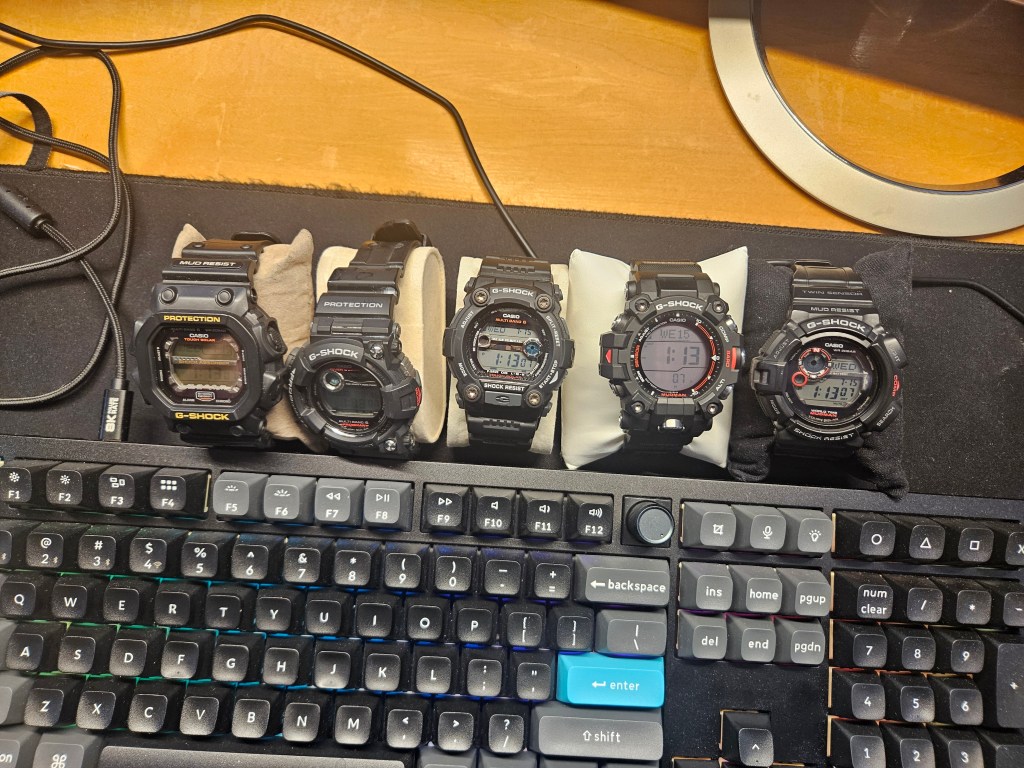
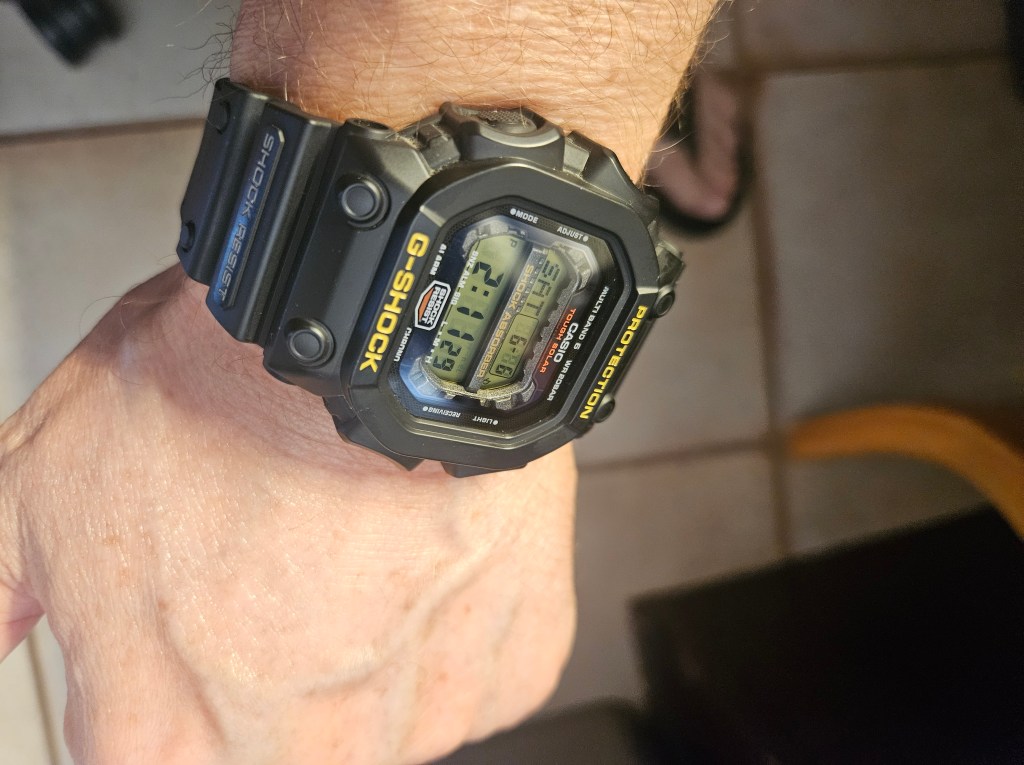
    I love the digital displays on my Casio G-Shock Frogman GWF-1000 and Casio G-Shock GW-7900. They tell me the time with blunt authority. No interpretation. No ceremony. Just numbers that land in the brain like a verdict.

    And yet, apparently, that isn’t enough.

    Somewhere along the way I developed a new appetite—no, let’s call it what it is, greed. I don’t just want clear numerals anymore. I want absurdly large numerals. I want wrist-mounted billboards. I want a wall clock strapped to my arm so I can read the time from across the room like a man who refuses to participate in subtlety.

    Naturally, the good people of G-Shock Nation pointed me toward the Casio G-Shock GW-9500 Mudman. The Mudman, they said, has the numbers. Big, bold, unapologetic digits that look like they were designed for someone who has lost patience with squinting.

    And they’re right—mostly.

    Mudman owners speak about their watch with a curious mix of affection and confession. They praise the size of the numerals, the rugged build, the sheer presence of the thing. Then, almost sheepishly, they admit that the display can blur at certain angles, that the duplex layering introduces a faint haze, that it’s not quite as clean as they’d like. They dock it a star. Four out of five.

    Then they shrug and say they love it anyway.

    That’s the part that matters.

    Because it raises a question most of us spend years avoiding: is there such a thing as a five-star watch?

    I’ve finally accepted the answer. There isn’t. There are only trade-offs you can tolerate without resentment.

    I’ve been chasing a very specific fantasy: huge numerals, high contrast, perfect viewing angles, and zero cognitive load. A watch that doesn’t need to be read so much as absorbed. A watch that behaves like a wall clock—instant, effortless, undeniable. What I’ve discovered is that watches can deliver three of those qualities with confidence. They just can’t deliver all four at once.

    My GW-7900 comes closest to frictionless clarity. Its display is stable, legible, and immediate. But the digits, while excellent, don’t quite scratch that billboard itch. The Mudman 9500 pushes in the opposite direction. It gives me the numbers—big, thick, impossible to ignore—but introduces a new problem: at certain angles, the display hesitates. Instead of receiving the time, I have to negotiate with it.

    Then there are the Pro Trek models, with their crisp, high-contrast STN displays. Technically superior. Visually disciplined. And yet, in their refinement, they lose that blunt, wall-clock immediacy. They are precise, but not emphatic.

    What fascinates me is how quickly Mudman owners make peace with imperfection. They acknowledge the flaws, subtract a star, and keep wearing the watch. That’s not compromise in the defeated sense. It’s acceptance. They’ve decided which imperfection they can live with, and they’ve moved on.

    That realization forced me to confront what I’m actually chasing. It isn’t a watch. It’s a state of mind—frictionless time perception. I want to glance at my wrist and have the time imposed on me without effort, hesitation, or ambiguity. But a wristwatch isn’t built for that ideal. It’s constrained by size, power, durability, and the stubborn limits of display technology. Something always gives.

    There is, to be fair, a strong case for the Mudman. Bigger numerals do make the time easier to read most of the time. Its toughness invites confidence. Its design has a certain muscular charisma. For many people, that combination outweighs the occasional moment of haze or glare.

    But I’ve had to admit something about myself: I value consistency over peak performance. A watch that is occasionally perfect but intermittently irritating will wear me down. I don’t want to negotiate with my watch. I want to glance and know.

    So the conclusion is both obvious and oddly liberating. There is no perfect watch. Once you accept that, the chase loses its urgency. You stop looking for the mythical five-star object and start making deliberate choices.

    The real question isn’t, “Which watch gets me closest to perfection?”

    It’s this: Which imperfection can I live with—and still enjoy checking the time a hundred times a day?

  • Watch Straps, Paradise, and the Return of Mother

    Watch Straps, Paradise, and the Return of Mother

    Last night I found myself standing on a hill in Hawaii, the kind of place real estate agents describe as “transcendent” and charge accordingly. Below me, the ocean moved with rehearsed elegance—waves rolling in like they had been coached for the occasion. A tech billionaire, naturally, had invited my family and me to his New Year’s Eve party. In dreams, invitations arrive without explanation and are accepted without skepticism.

    Inside his mansion was a room devoted entirely to appetizers—a cathedral of small bites. I approached it with the zeal of a man who believes abundance is a moral right. Everything was sampled, nothing spared. Then I came upon a glass bowl filled with what appeared to be black licorice. I took a bite and immediately discovered I had made a categorical error. It wasn’t licorice. It was a bowl of rubber watch straps. I had, with full dental commitment, chewed into one of them like a lab animal testing the limits of its environment.

    The billionaire did not react. He stood in the next room, calmly painting a model holding yoga poses—his attention fixed, his world undisturbed. Either he hadn’t noticed, or he lived in a realm where a man biting into a watch strap barely registers as an event.

    Then my mother appeared.

    She has been gone for six years, but in the dream she returned without ceremony, as if death were a clerical error that had been quietly corrected. I greeted her with genuine joy and surprising composure, as though we had simply missed a few phone calls. She told me she was going for a swim. I said I’d join her later, the way one postpones something assumed to be indefinitely available.

    Time, as it does in dreams, rearranged itself. Someone came running to say she had cut her finger on coral. A doctor—there is always a doctor at these gatherings—offered to come with me, iodine and bandages in hand. But as we descended toward the water, word arrived that she had already been treated and had left for California.

    Meanwhile, I had waded into the ocean. The water was warm, enveloping, almost indulgent in its softness. It reached my chest and held me there, like something that preferred I not leave. Faced with the choice between urgency and comfort, I chose comfort. I stayed in the water. My mother, once again, slipped out of reach.

    What kind of dream arranges such a sequence? A billionaire’s excess, a son’s carelessness, a mother’s brief return and second departure. If I had to impose meaning, I’d say the ocean felt less like scenery and more like origin—a return to something pre-verbal, pre-ambition, pre-everything. Call it the womb, call it nature, call it a memory the body keeps when the mind forgets.

    But I hesitate to turn it into a sermon about mortality. Not every dream in one’s sixties needs to carry a funeral program in its back pocket. Perhaps it was about regeneration. Or the persistent illusion that what we lose might reappear long enough to test how we respond.

    I hope my dream was not some portent of mortality. But whatever the case, I’m glad the tech billionaire didn’t send security after me for leaving bite marks in one of his rubber watch straps. 

  • Abducted by My Hygienist, Grounded by Reality

    Abducted by My Hygienist, Grounded by Reality

    My dentist—one year younger than I am, which in our age bracket feels less like a difference and more like a rounding error—peered into my mouth and delivered his verdict with clinical calm: two abrasions, self-inflicted, the result of brushing with the zeal of a man trying to erase his past. They would need fillings. Then, without missing a beat, he pivoted from my dental erosion to his own existential one. At sixty-three, he said, fatigue had begun to collect in the corners of his life. Travel, once a pleasure, had become an ordeal. He had lost interest in vacations altogether.

    He offered evidence. His sister-in-law had been stranded in Dubai while missiles stitched the sky over Iran. When she finally escaped, her flight climbed higher than usual to avoid the problem of being blown out of the sky—a detail that tends to sour the in-flight experience. Twenty hours later she landed in Dallas, dazed and displaced, only to discover she still needed to purchase a separate ticket to get home to Los Angeles. The modern vacation: a geopolitical obstacle course with snacks.

    I told him I understood completely. I, too, have entered the era of strategic energy management. I work out five days a week, yes—but I also schedule two naps a day with the seriousness of board meetings. Europe, at this point, feels less like a destination and more like a test of endurance. Cabo I can handle—two hours, a controlled burst. Miami, perhaps, if I marshal my resources. But a transatlantic flight? The return on investment collapses. The juice is no longer worth the squeeze.

    While we were discussing the slow recalibration of ambition, his technician went to work on my teeth with a collection of instruments that sounded like extraterrestrial diplomats arguing through a metal wall. Half sedated by the hum and whine, I drifted into the plausible conclusion that I had been abducted. Not metaphorically—literally. I was on a ship, somewhere above the atmosphere, being examined by beings who had mastered interstellar travel but still hadn’t figured out how to make dental procedures pleasant.

    Eventually, they released me—back into the chair, back into my life—with instructions to gargle fluoride and abstain from food and water for thirty minutes. The kind of post-op protocol that suggests the aliens, for all their advancements, remain deeply committed to inconvenience.

  • My 57-Minute Relationship with the G-Shock GW-6900

    My 57-Minute Relationship with the G-Shock GW-6900

    I got home at 5:00 p.m. to find my Amazon package waiting for me like a promise I didn’t remember making. Inside: the G-Shock GW-6900, the much-celebrated Three-Eyed Monster. I unboxed it, performed the usual initiation rituals—set it to LAX, marched through the modes, customized everything like a man preparing a command center—and then attempted the simplest task imaginable: return to Timekeeping.

    Impossible.

    No matter what I pressed, held, or pleaded with, the watch snapped back to UTC like a bureaucrat rejecting incomplete paperwork. I consulted the manual. I consulted YouTube. I even consulted AI, that modern oracle of last resort. Nothing. The watch refused to cooperate, as if it had been programmed with a small but firm sense of contempt.

    Meanwhile, the physical object itself began to lose its charm under scrutiny. Next to the Frogman and the 7900, the 6900 felt… cheap and underfed. Lighter, cheaper, less resolved. The strap clung to my wrist like it had second thoughts about the relationship—barely long enough, noticeably less comfortable. This wasn’t a heroic tool watch. This was a compromise wearing a reputation.

    The decision arrived with unusual clarity: return it.

    By 5:57 p.m., I had already processed its return on Amazon, dropped it off at the nearby UPS, and said good riddance. It is now on its way back to wherever failed expectations are processed. I had made the round trip—anticipation, confusion, disappointment, rejection—in under an hour. A full consumer arc compressed into a sitcom episode.

    Now the house is quiet again. Seven watches remain. The cognitive clutter has thinned. No more scrolling through modes like a man trapped in a digital maze. No more negotiating with a watch that refuses to tell time on command.

    The 6900 is gone.

    And for the first time today, everything is exactly where it should be, and I can now move forward with my life. 

    Update:

    Two friends messaged me to explain that with the 6900 you don’t press the upper left button to exit UTC and get into Timekeeping. You press the upper right button, so the watch was probably not defective. But it was so inferior to the 7900 in terms of build quality and strap length that I’m glad I returned it.

  • The Morning Crisis No One Talks About: Choosing the Wrong Watch

    The Morning Crisis No One Talks About: Choosing the Wrong Watch

    You wake up, shuffle to the coffee maker, and open the watch box.

    Inside, a dozen small mechanical personalities stare back at you, each silently asking the same question: Why not me?

    You freeze.

    The seconds tick. Your coffee overflows. Your toast burns. Your heart rate climbs. This is not a simple accessory choice. This is a moral decision. Identity is at stake. Judgment will be rendered.

    Welcome to Watch-Rotation Anxiety, a condition built from four reliable pressures.

    First, the cognitive load: the sheer mental friction of choosing one watch from many. What should be a two-second decision becomes a committee meeting.

    Second, the creeping suspicion that whatever you choose is wrong. The diver feels too casual. The dress watch feels pretentious. The field watch feels underdressed for a meeting that probably won’t matter but might.

    Third, the guilt. The untouched watches sit in the box like neglected pets. You imagine them fading, unloved, wondering what they did to deserve exile.

    Fourth, the compensation ritual: multiple swaps. Morning diver. Midday GMT. Afternoon chronograph. Evening dress piece. By dinner you’ve worn four watches and bonded with none. The day becomes horological speed-dating—lots of introductions, no relationships.

    Some collectors attempt to outsmart the anxiety with systems. They create rotation schedules—actual calendars mapping two- or three-week cycles. Monday: black dial. Tuesday: titanium. Wednesday: vintage. The calendar decides so the mind doesn’t have to.

    Others rely on a more mystical framework. If Tuesday feels blue, a blue dial must be worn. If Sunday carries a gray mood, only gray will do. The week becomes a chromatic destiny, and the watch simply obeys.

    And then there are the cautionary tales.

    A friend of mine in Laguna Beach—successful, disciplined, financially immune to consequences—once owned a dozen Swiss luxury pieces. Each morning he would lay them out, tilt them toward the light, evaluate them against his suit, his meetings, his mood. What began as appreciation became ritual. What began as ritual became burden. What began as burden became madness.

    One day he solved the problem decisively.

    He gave them all away.

    He still wears watches now—but only those given to him by clients. Which has created a new, more specialized condition. Before every business lunch he must ask himself: Which watch did this person give me?

    In his case, Watch-Rotation Anxiety has not disappeared.

    It has simply evolved into something more professional.

    Client-Recognition Anxiety: the quiet fear that the wrong wrist might cost you the account.

  • Absolutes and the Ruin of Watch Collecting

    Absolutes and the Ruin of Watch Collecting

    It’s often said that comparison is the mother of misery. No matter how high you climb in any pursuit, there’s always someone perched above you, dangling their boots over the edge. The distance between you and them can feel vast—so vast it erases the climb you already made. In watch collecting, this happens fast. You finally land your grail: a Seiko GMT diver that cost real money, money that made you flinch. You admire it. You feel complete. Then a friend casually flashes a five-thousand-dollar Grand Seiko and—poof—your triumph collapses. You don’t feel lucky. You feel inadequate.

    If comparison is the mother of misery, then she has a meddlesome sister. Call her Aunt Absolute. Aunt Absolute is just as ruinous. She whispers that contentment requires perfection. Not just a great watch, but the right watch. Not just a collection, but the collection. The correct rotation. The correct strap. The correct bracelet. She promises peace once everything clicks into place forever.

    This hunger for absolutes usually rides shotgun with an OCD streak in the hobby. The flaw in that mindset is simple: the hobby refuses to stay still. Tastes change. Knowledge deepens. Bodies age. Jobs shift. Moods fluctuate. Absolutes hate variables, and watch collecting is nothing but variables. To the absolutist, change feels like threat, and threat breeds anxiety. In its ugliest form, that anxiety convinces you your collection is one wrong move away from collapse. Sell a watch. Swap a strap. Wear a bracelet again. The whole thing topples. This is Jenga Anxiety—the chronic fear that a single adjustment will destabilize not just your watches, but the identity you’ve built around them. Adaptability feels like fragility. Experimentation feels like self-destruction.

    I lived under Aunt Absolute’s roof for about two years. I refused bracelets entirely. Every watch sat on Divecore FKM straps. The system was clean. The rules were rigid. I was happy—until the FKM “forever chemical” scare cracked the foundation. I reassessed. I adjusted. Now four watches live on straps and four on bracelets. The collection breathes. I have options. And yes, I forgot how good a bracelet can feel until I let myself enjoy one again.

    That experiment proved something important. I didn’t need absolutes to enjoy the hobby. I didn’t need perfection. Flexibility wasn’t failure—it was freedom. The watches didn’t lose meaning when the rules softened. They gained it.

    Will I stay flexible, or will I drift back toward absolutism? History suggests vigilance is required. But if I feel Aunt Absolute tugging at my sleeve again, I’ll remind myself of a simple truth: absolutism is the aunt of misery.

  • When Your Bodybuilding Past Still Haunts You

    When Your Bodybuilding Past Still Haunts You

    Last night I dreamed I was illegally transporting a piano.

    This was not a metaphorical illegality. It was a regulatory one. The kind involving helpers, permits, and fines. According to Dream Law, moving a piano required two assistants. I only had one. If caught, I’d be cited. Possibly shamed. I loaded the piano anyway—my beautiful, expensive ebony instrument—into the back of an open truck and drove it from the Bay Area to Southern California, white-knuckled and guilty, like a man smuggling contraband Chopin.

    I was living, temporarily, on a compound owned by a vaguely unsavory man. He was tall, pinch-faced, and always wore a blue suit, the uniform of people who know things you don’t want to know. He had the aura of a community fixer—part mentor, part hustler, part moral hazard. He gave me piano lessons, encouraged me to keep lifting weights, and introduced me to restaurants with the enthusiasm of someone laundering taste through generosity. 

    On the day I was supposed to leave, my anxiety peaked. Rain was coming. The piano sat exposed in the truck bed like a sacrificial offering. One good storm and the ebony would swell, crack, die. I panicked. The trickster waved it off. Go eat lunch, he said. By the time you’re done, the rain might stop. This was either sage advice or the kind of line uttered by men who profit from delay.

    I drove to a nearby restaurant. It was mobbed. People stood outside drinking champagne as if waiting for a table were a lifestyle choice. Inside, servers were popping bottles at a frantic pace—corks flying, foam spilling, the atmosphere halfway between celebration and collapse.

    Then I saw it.

    Mounted beside the menu was a massive poster advertising a local bodybuilding exhibition. And there I was. Not the man I am now. Not the sixty-four-year-old who qualifies for senior discounts and considers fiber intake a moral issue. This was me in my mid-twenties: thick, swollen, carved out of stubborn protein and vanity. A human monument to leg day. I was the marquee attraction.

    The trickster, it turned out, had signed me up to pose in a bodybuilding exhibition without telling me.

    How did he know I’d be staying long enough to star in this marquee event? How did he know the rain would delay me? How did he still have a photo of a body I no longer inhabited? 

    When the diners saw me standing outside, recognition rippled through the room. Glasses paused midair. Heads turned. Then applause broke out. Cheers. My name—my old name—chanted with conviction. I tried to explain. I gestured at my face, my posture, the subtle collapse of time. I wanted to tell them I wasn’t that man anymore. That I now stretch before standing. That I wake up injured. That my biggest competition is inflammation.

    They refused to listen.

    The cheering swallowed my protests. Reality bent. And I understood, I would be showing up to that exhibition—dragging with me a body, an identity, and a past I no longer owned, but which apparently still had bookings.

  • I Forgot the Song, But the Song Didn’t Forget Me

    I Forgot the Song, But the Song Didn’t Forget Me

    Last night I dreamed I was attending an English Department meeting held, for reasons no dream ever explains, in a recreation room with an adjoining outdoor patio. The setting suggested morale had once been a priority, sometime around 1987.

    Inside the rec room, my friend S pressed a pair of earbuds into my hand. They were attached—not metaphorically, but literally—to a CD, which already felt like an archaeological artifact.
    “Do you know this song?” she asked.

    The music was exquisite. Airy. Radiant. It carried that dangerous quality of being both unfamiliar and deeply known, as if it had once lived inside me and quietly moved out without leaving a forwarding address. I admitted I didn’t recognize it.

    She looked at me with the gentlest possible contempt.
    “You burned this for me ten years ago.”

    I felt properly humiliated. Not embarrassed—abased. As if I’d forgotten the name of a childhood friend or my own middle initial. Then she summoned the band’s leader the way dreams do—no door, no introduction, just a man appearing fully formed.

    He was in his late forties, courteous, faintly exhausted, with the posture of someone who has spent years loading gear into vans at 2 a.m. I apologized to him for not recognizing his work. I blamed streaming—how it turns music into sonic wallpaper, a perpetual ambient fog where nothing has to be remembered because everything is always available. In a fit of dream-piety, I vowed to delete every streaming account I owned and return to vinyl, to sacred listening, to LPs spinning on absurdly expensive turntables like a penitent monk.

    He nodded shyly, as if he’d heard this promise before, and vanished.

    The departmental meeting began outside on the patio, but I lingered inside the rec room instead. I changed into a swimsuit for reasons that felt urgent at the time. I ate snacks—salty, comforting, vaguely institutional—and watched my colleagues through the glass as they discussed the usual bullet points: outcomes, alignment, initiatives. I meant to join them. Truly. But the snacks induced a narcotic drowsiness, and I collapsed onto a yellow beanbag chair like a defeated child at a daycare center. I fell asleep.

    When I woke, the meeting was still going on.

    Wrapped in a towel over my bathing suit, I finally wandered outside. My younger colleagues informed me I needed to sign the attendance sheet to get my FLEX hours. Unfortunately, the sign-up sheet had already been placed in a wooden box and sent to Human Resources, which in dream logic felt ominous and final, like evidence sealed in a cold case.

    The secretary waved it off. She would “put me in the system.”

    I thanked her. The meeting droned on. Words floated by without meaning. And all I could think about was that music—its beauty, its ache, its brief visitation. And then, with a second, sharper jolt of recognition, I realized I had forgotten it again.

    The song.
    The band.

    Gone.

  • The $80 Radio That Beat the Big Boys

    The $80 Radio That Beat the Big Boys

    Five mornings a week, I work out in my garage—kettlebells clanging, yoga mat unrolled, joints negotiating a ceasefire. The soundtrack is Larry Mantle on LAist 89.3 FM, broadcasting from Pasadena. This matters because Torrance is not Pasadena, and 89.3 is a notoriously fragile signal here. It fades, ghosts, sulks. Catching it cleanly is less a matter of tuning than of faith.

    Then there’s the noise. Torrance mornings are an industrial symphony: garbage trucks reversing, leaf blowers screaming like jet engines, lawnmowers revving, cars tearing past as if late for something existential. Any garage radio that can’t project authority is immediately demoted to paperweight.

    I briefly considered going big—dropping $300 on a Tecsun S-8800 field radio, a machine that looks like it should come with a government-issued lanyard. But after cycling a parade of smaller radios through the garage, I landed—almost sheepishly—on the Qodosen DX-286. And it has been an ambush.

    On FM, the Qodosen is a brute. It grabs 89.3 at full strength and refuses to let go. Its 3-watt speaker is loud without being cruel, present without being shrill. Placed in just the right corner of the garage, away from interference, it becomes a small, defiant monument to good engineering. Unfettered, it sings.

    The most embarrassing part is that I once returned it.

    I didn’t trust it. An $80 radio performing this well felt like a trick. Too good to be true. I convinced myself it was a short-lived overachiever—high performance, early death. So I sent it back and went crawling to my more expensive radios: the Tecsun PL-660, the PL-680. Fine machines. Respectable. And yet, one by one, they lost the FM battle and the speaker war.

    The absence of the Qodosen grew louder than the radios I owned.

    Eight months ago, I rebought it, tail between my legs. It has been my garage companion ever since. Morning after morning, it cuts through the din and delivers Larry Mantle like clockwork. Kettlebells swing. Downward dogs are held. The signal holds.

    Sometimes the best gear isn’t the one with the most gravitas or the highest price tag. Sometimes it’s the small, stubborn box you didn’t believe in—until it refused to be ignored.

  • The Submarine That Got Me Punished

    The Submarine That Got Me Punished

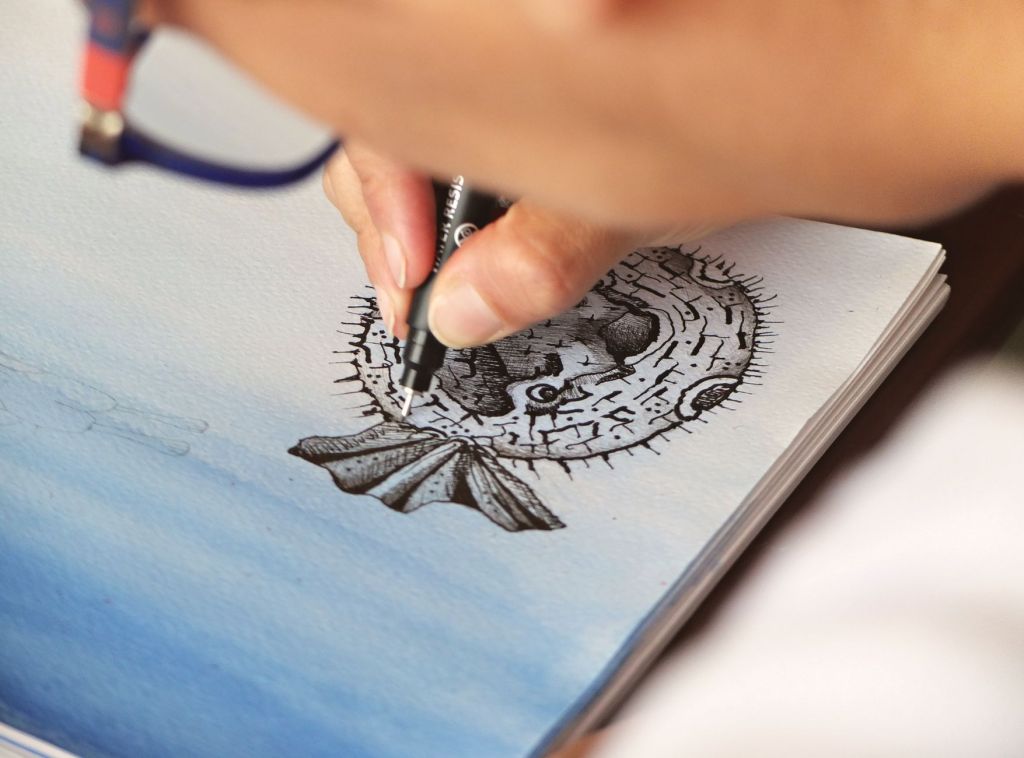
    One afternoon in Mrs. Eckhart’s fifth-grade class, I finished my reading questions early and found myself with a full hour to kill. So I did what any quietly restless child with access to art paper would do: I drew a gigantic submarine.

    It was glorious. The hull bristled with portal windows, and inside each window lived a tiny, talkative world. Every occupant had something urgent to say. One man was making pancakes and inviting others over. A woman, her hair set in curlers, announced she was in no condition to be seen. Another guy sulked over a bowl of cereal because the box promised a free toy and delivered nothing. Someone tried to nap in a hammock but complained about the noise. A girl had a strip of apple skin lodged between her teeth and was losing her mind over it. There were at least a dozen such figures—boasting, whining, confessing, performing.

    It was a floating anthology of minor human grievances.

    I was proud of it. I felt like I was getting valuable training for my future career writing for Mad Magazine. I was quiet. I was finished with my work. I was bothering no one.

    Then Mrs. Eckhart appeared.

    She moved down the aisle between desks, paused, and studied my drawing. I waited for praise—some acknowledgment of creativity, wit, talent. Instead, I got disdain. Her red hair was stacked into a bouffant, her eyebrows arched in judgment.

    “Is this how you spend your time in my class?”

    “But I finished the assignment,” I said. “I was working quietly.”

    She ignored that and began reading my dialogue bubbles aloud, dripping sarcasm into every line. The class erupted in laughter—not the good kind, the kind that comes from watching someone get filleted by authority.

    Then she delivered the verdict.

    “Your parents should know how you’re spending your time in my classroom.”

    She flipped the page over and wrote a note explaining my offense. I was to take it home, secure parental signatures, and return it like evidence.

    That evening, after dinner, I showed my father the drawing.

    He was livid.

    “You pissed off your teacher,” he said.

    “I don’t know why,” I said. “I finished my work. I was quiet.”

    “It doesn’t matter. You insulted her.”

    “I don’t get it.”

    “By finishing early and doodling, you implied her work was too easy. You disrespected her.”

    “But I didn’t say anything. I just drew.”

    “It doesn’t matter if you’re right,” he said. “What matters is you made her angry. In life, it’s better to be smart than to be right.”

    “I thought those were the same thing.”

    “Not always. Go to your room. Write her an apology.”

    I wrote the apology. But even then, I knew—deep down—I had done nothing wrong. In fact, to this day, that submarine remains the best use of time I ever managed in her class.

    The truth was simple: Mrs. Eckhart didn’t like me. I was brooding, inward, melancholic. She sensed something in me she found intolerable. Once, after she criticized a homework assignment, I tried to explain myself.

    “You have an excuse for everything, don’t you?” she snapped.

    If all my teachers had felt that way, I might accept the diagnosis. But they didn’t. Every other teacher thought I was polite, attentive, fine. There was something specific between us that never resolved.

    Sometimes hostility is not psychological; it’s biblical. It has no cause, no logic, no cure.

    I think of the excellent movie The Banshees of Inisherin. Colm abruptly ends his friendship with Padraic. No grievance. No inciting incident. “I just don’t like you anymore.” That’s it. Padraic hasn’t changed. Colm simply finds him unbearable.

    After nearly forty years of teaching, I know this pattern well. I’ve been popular, well-liked, even beloved by students—but that hasn’t spared me the occasional student who radiated pure contempt. Once, friendly students asked if I noticed a guy in the back who glowered at me all semester. I told them yes. Every so often, someone decides you are intolerable. There is no appeal process.

    In those cases, effort only makes things worse. Trying to win favor intensifies the repulsion. The Chinese phrase captures it perfectly: mei ban fa—nothing can be done.

    Do I resent Mrs. Eckhart? A little. She was an authority figure with a visceral dislike for a ten-year-old boy. But what endures most isn’t bitterness. It’s joy.

    That submarine was alive. It was funny. It was mine. No note home, no scolding, no pinch-faced teacher can take that away.