Tag: fashion

  • Chunky: The Candy Bar That Gaslit My Taste Buds

    Chunky: The Candy Bar That Gaslit My Taste Buds

    Of all the confections that have ever graced my palm, none haunts my imagination quite like the Chunky bar. It’s not a candy bar so much as a relic—an absurd, silver-foiled ingot you’d expect to pry loose from a cursed dwarven mine, guarded by balrogs and bureaucracy.

    Let’s start with the shape. The Chunky is a squat, lumpy pyramid—a candy bar built like it wants to be a paperweight. Peanuts and raisins form the bulk of its crude alchemy, though earlier iterations flaunted Brazil nuts and cashews, adding to its ancient mystique.

    The taste? Off. Not bad exactly, but certainly not seductive. Its faintly bitter, vaguely disappointing flavor has a curious effect: you start to convince yourself that this underwhelming mouthful must be good for you. A health food in disguise. A sweet for contrarians. Like chewing on moral fiber.

    Then there’s the weight. The Chunky carries mass. It sits in your hand with the cold confidence of a Seiko diver watch on a stainless-steel bracelet. There’s a heft to it—an aura of seriousness. No one double-fists a Chunky on a whim. You eat one as an act of personal philosophy.

    To deepen its enigma, the Chunky has become scarce. Since the ’90s, it’s been largely exiled from gas station shelves, spotted only in the digital wilds of the Internet. It’s no longer a candy bar—it’s a rumor. A memory. A grail. And even when you do track one down and unwrap it in a moment of nostalgic triumph, you’re struck with the bitter realization: you’re not reliving a taste. You’re chasing a ghost.

    The truth is, you’re more in love with the idea of the Chunky bar than the thing itself. Its greatest ingredient is projection. It is candy-as-concept. The chunky grail.

    And so, like a certain kind of watch obsessive—those who hunt for the mythical One Perfect Timepiece, the Holy Grail Diver that will satisfy all wrist cravings—you may find that what you’re after is not an object, but an ideal. The Chunky isn’t a candy bar. It’s a mirror. A reminder that the real addiction lies not in sugar or steel, but in fantasy.
  • The Cult of Cool: How Fashion Brands Turned Insecurity Into Gold

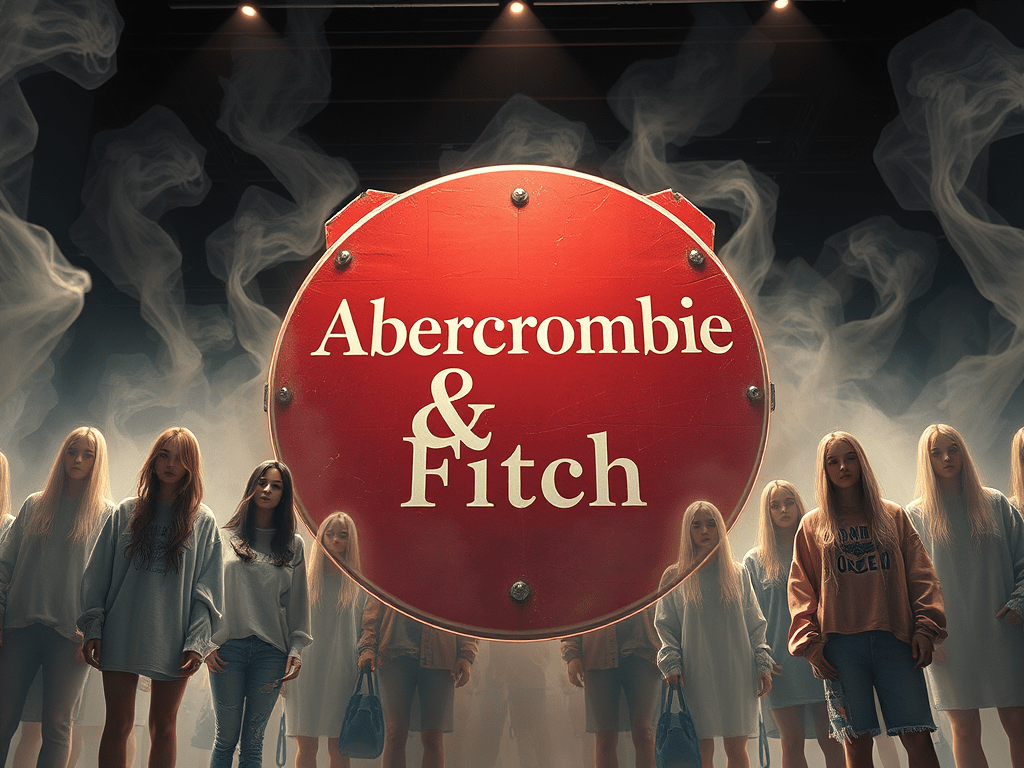
    The Cult of Cool: How Fashion Brands Turned Insecurity Into Gold

    Three documentaries—White Hot: The Rise & Fall of Abercrombie & Fitch, Brandy Hellville and the Cult of Fast Fashion, and Trainwreck: The Cult of American Apparel—reveal a sobering truth: some of the most iconic youth fashion brands haven’t just sold clothes; they’ve trafficked in identity, manipulated insecurity, and run full-scale psychological cons dressed up as marketing.

    These brands built empires on seductive illusions—creating tight-knit aspirational worlds where beauty, desirability, and social status were pre-packaged into a logo and sold at a premium. The catch? Entry required blind conformity to a narrow aesthetic, behavioral uniformity, and uncritical loyalty. This wasn’t fashion—it was Groupthink in skinny jeans. And behind it all pulsed the emotional engine of modern consumer culture: FOMO, the fear of being left out, unseen, unchosen.

    White Hot, reviewed by Ben Kenigsberg, focuses on Abercrombie’s marketing of “aspirational frattiness”—a euphemism for white exclusivity wrapped in khaki shorts and cologne. It was a smug, muscular nostalgia trip to a sanitized, all-white upper-class fantasy where thinness, wealth, and preppy arrogance were the unspoken requirements for membership.

    At the helm was CEO Mike Jeffries, a marketing savant whose obsession with aesthetic purity bordered on cultic. Under his reign, the company embraced racist T-shirts, discriminatory hiring practices, and a toxic definition of “cool.” His executive team mirrored his vision so fully they might as well have been in a bunker, smiling and nodding as the walls caught fire. Groupthink didn’t just enable the brand’s rise—it ensured its blindness to its own downfall.

    Why revisit Abercrombie now? Because its story is a pre-Instagram case study in the mechanics of cult marketing: how insecurity is mined, branded, and sold back to consumers at 400% markup. My students in the 90s already saw through the ruse—complaining the shirts fell apart in the armpits within a week. What mattered wasn’t the clothing but the illusion of status sewn into every threadbare seam.

    Ultimately, White Hot offers a rare glimpse of justice: a cool brand undone by its own arrogance, its aesthetic no longer aspirational but pitiful. The Abercrombie collapse isn’t just a business story—it’s a warning. When branding becomes religion and coolness becomes a weapon, consumers become disciples in a theology of self-erasure.

  • Wristwatches and Wastelands: How Fashion Can Hollow You Out

    Wristwatches and Wastelands: How Fashion Can Hollow You Out

    Amy Larocca, a fashion journalist with twenty years of runway reportage under her belt, understands the psychological scaffolding beneath a well-tailored sleeve. “Fashion,” she writes in How to Be Well, “is about beauty, of course, but it is also about the desire to elevate daily life from its more banal limitations, to consciously and actively share something about how you’d like to be perceived by the rest of the world.”

    And that, my friend, is exactly where the trouble starts.

    Take a stroll through the horological asylum known as the watch community. What starts as an appreciation for precision craftsmanship often spirals into a neurotic fixation. A dive watch isn’t just for telling time—it’s for announcing to the world that you’re rugged, refined, and possibly ready to harpoon something. The desire to “elevate daily life” with just the right wrist candy turns into a slow-motion personality collapse. It becomes a lifestyle audition for an identity you don’t actually inhabit.

    The trap is cunning. At first, fashion promises transformation: a sharper silhouette, a touch of mystique, a sense of control in a chaotic world. But when the performance replaces the person—when dressing well becomes a proxy for purpose—you’re not elevating your life. You’re embalming it in linen and leather.

    The real tragedy isn’t vanity. It’s the way compulsive self-curation smothers empathy. Narcissism isn’t just annoying—it’s lonely. It dislocates you from community, connection, and anything approaching transcendence. A meaningful life, if it’s worth living at all, doesn’t orbit around the mirror.

    To be clear: there’s nothing wrong with looking sharp. Be fit, be stylish, radiate confidence. But when your wardrobe becomes your worldview—when you dress not to express but to impress—you trade depth for dazzle. You don’t become interesting. You become exhausting.

  • The Beautiful Unwearable

    The Beautiful Unwearable

    Do you own a Beautiful Unwearable? If so, you already know the cruel paradox: the watch that steals your breath every time you look at it, yet somehow never makes it onto your wrist.

    Picture this: you’re hypnotized by a $2,000 Seiko Astron—a stunner whose build quality punches well above its weight class, easily rivaling watches priced four digits higher. Every gleam of that GPS-synced, zirconia ceramic bezel sends a little burst of dopamine through your bloodstream. So you do what any horological romantic would do: you pull the trigger. A week later, it’s in your hands, fresh from Japan, glinting like a Bond villain’s cufflink.

    And then… nothing.

    You stare at it. You admire it. You photograph it from five angles under different lighting conditions. But when it’s time to choose a watch to wear—on a walk, to the store, or even to teach class—it’s always your rugged dive watch that gets the call. The Astron? It’s too dressy, too refined, too… aspirational. Like buying a tuxedo when your calendar is a wasteland of Costco runs and Zoom meetings.

    So it sits. Day after day. In its cushioned little coffin, gorgeous and neglected, whispering, “You’re not worthy of me.” Unlike wall art, it can’t be displayed; unlike a tool watch, it doesn’t beg to be worn. It becomes horological purgatory—a $2,000 museum piece trapped in a drawer.

    Personally? I’ve never bought an Astron. Why? Because I’ve already mentally lived this scenario. I’ve played out the whole Shakespearean arc in my head: love at first sight, the impulsive purchase, the honeymoon glow… followed by guilt, alienation, and silent shame. I don’t need a Beautiful Unwearable in my collection to know it would haunt me like a luxury ghost.